Okara Market Size & Growth Forecast 2027–2036, By Segments (Application, Usage, Distribution Channel), Regional Demand Trends (North America, Asia Pacific, Europe), Key Country Insights (U.S., Japan, South Korea, Germany, France, Italy), and Competitive Landscape
Market Size and Growth Outlook
Okara Market size was over USD 4.43 Billion in 2026 and is likely to grow at 4.97% CAGR between 2027 and 2036, crossing USD 7.2 Billion by 2036. The industry revenue for 2027 is assessed at USD 4.61 Billion.
Get more details on this report
Request Free Sample ReportOkara Market Intelligence Snapshot
Regional Market Dynamics
- Asia Pacific held 39.53% in 2026, supported by strong soybean processing, plant-based nutrition demand, food-processing capabilities, and growing use of sustainable functional ingredients.
- North America is growing fastest as manufacturers pursue plant-based formulations, food-waste reduction, circular ingredient sourcing, and soybean-derived applications across bakery, snacks, and meat alternatives.
Segment Momentum
- The food and beverage industry held a 61.54% market share in 2026, driven by growing use of okara in bakery products, beverages, dairy alternatives, and other plant-based, nutrient-rich food formulations.
- Online retail is growing fastest as consumers increasingly prefer convenient home delivery, broader product selection, and easier access to specialty and plant-based okara products through e-commerce platforms.
Market Expansion Drivers
- Rising plant-based food adoption increasing demand for soy-based functional ingredients
- Growing health awareness driving incorporation of fiber-rich food byproducts in diets
- Expanding food processing industry integrating soy byproducts into sustainable protein formulations
Leading Market Participants
- Prominent companies in the okara market include Pulmuone Co., Ltd. (South Korea), Vitasoy International Holdings Limited (Hong Kong), House Foods Group Inc. (Japan), Kikkoman Corporation (Japan), Morinaga Nutritional Foods, Inc. (United States), Sunrise Nutrachem Group Co., Ltd. (China), Taifun-Tofu GmbH (Germany), San-J International, Inc. (United States), Takai Tofu & Soymill Co., Ltd. (Japan)
Global Market Forecast Snapshot
Market Outlook
- 2026 Market Size: USD 4.43 Billion
- 2027 Estimated Market Size: USD 4.61 Billion
- Projected Market Size: USD 7.2 Billion by 2036
- Growth Forecast: 4.97% CAGR (2027-2036)
Regional and Segment Outlook
- Leading Regional Market: Asia Pacific
- High-Growth Regional Hub: North America
- Core Revenue Segment: Food & Beverage Industry (Application) | Bread (Usage) | Supermarkets and Hypermarkets (Distribution Channel)
- Emerging Opportunity Segment: Food Processing (Application) | Bread (Usage) | Online Retail (Distribution Channel)
Market Growth Drivers and Industry Trends
Rising plant-based food adoption increasing demand for soy-based functional ingredients
The growing shift toward plant-based diets is expanding interest in soy-derived ingredients, which will drive the okara market growth by creating new opportunities for functional food applications. Food manufacturers are incorporating okara into products seeking enhanced nutritional profiles, improved texture, and sustainable ingredient alternatives. As consumers increasingly prioritize plant-based protein sources and naturally derived ingredients, okara is gaining attention as a versatile byproduct that supports the development of healthier food formulations.
Growing health awareness driving incorporation of fiber-rich food byproducts in diets
Increasing consumer focus on digestive wellness and balanced nutrition is encouraging the use of fiber-rich ingredients, as the okara market growth is supported by rising demand for nutrient-dense food components. Okara provides dietary fiber and beneficial nutritional characteristics that make it suitable for inclusion in functional foods, baked goods, and health-oriented products. Manufacturers are exploring its potential to enhance nutritional value while responding to consumer preferences for minimally processed and wellness-focused dietary options.
Expanding food processing industry integrating soy byproducts into sustainable protein formulations
The increasing emphasis on resource efficiency within food production is encouraging processors to utilize soy byproducts more effectively, which will propel the okara market growth. Food companies are integrating okara into sustainable formulations to reduce agricultural waste and develop alternative protein-rich products. Its compatibility with various processing techniques allows manufacturers to create innovative food solutions that align with circular economy principles and evolving sustainability expectations.
| Growth Driver | Impact on CAGR | Regulatory Influence | Geographic Relevance | Adoption Rate | Impact Timeline |
|---|---|---|---|---|---|
| Rising plant-based food adoption increasing demand for soy-based functional ingredients | 2% | Low | Asia Pacific, North America | Medium | Mid Term |
| Growing health awareness driving incorporation of fiber-rich food byproducts in diets | 1.6% | Low | Asia Pacific, Europe | Medium | Mid Term |
| Expanding food processing industry integrating soy byproducts into sustainable protein formulations | 1.4% | Low | Asia Pacific | Emerging | Long Term |
Unlock insights tailored to your business with our bespoke market research solutions.
Click to get your customized report now.
Regional Demand Dynamics
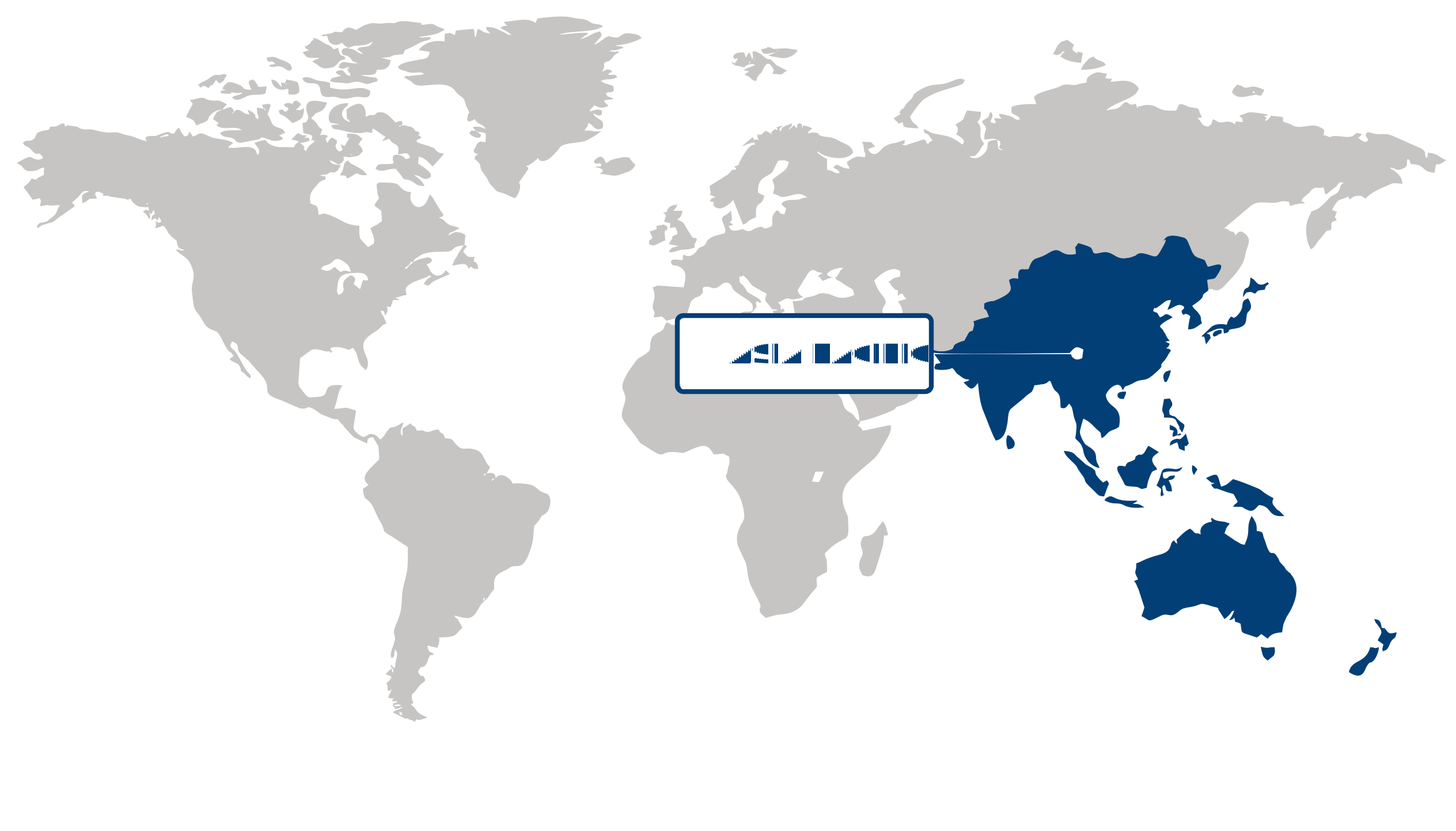
Asia Pacific (Largest Region)
Asia Pacific held the largest share of the okara market, accounting for 39.53% in 2026, supported by the region’s strong soybean processing industry and widespread use of soybean-derived products in food applications. Okara, a nutrient-rich byproduct of soybean processing, is increasingly being utilized as an ingredient in food products because of its fiber and protein content. Growing consumer interest in plant-based nutrition and efforts to reduce food-processing waste are creating additional opportunities for okara utilization. Expanding food processing capabilities and rising demand for functional and sustainable ingredients are also encouraging greater commercial use of okara across the region.
North America (Fastest-Growing Region)
North America is the fastest-growing region, driven by increasing consumer interest in plant-based foods, sustainable ingredients, and products with enhanced nutritional value. Food manufacturers are exploring ways to incorporate soybean-derived ingredients into bakery, snack, meat-alternative, and other formulations, creating opportunities for greater utilization of okara. The region’s focus on food waste reduction and circular approaches to ingredient sourcing is further encouraging the conversion of processing byproducts into commercially valuable food ingredients. Growing innovation in plant-based product development is expected to support broader demand for okara-based applications.
| Parameter | North America | Asia Pacific | Europe | Latin America | MEA |
|---|---|---|---|---|---|
| Innovation Hub i Scale Nascent Developing Advanced | |||||
| Cost-Sensitive Region i Scale Low Medium High | |||||
| Regulatory Environment i Scale Restrictive Neutral Supportive | |||||
| Demand Drivers i Scale Weak Moderate Strong | |||||
| Development Stage i Scale Emerging Developing Developed | |||||
| Adoption Rate i Scale Low Medium High | |||||
| New Entrants / Startups i Scale Sparse Moderate Dense | |||||
| Macro Indicators i Scale Weak Stable Strong |
Key Country Insights
United States 🇺🇸
Functional Ingredient ExpansionThe U.S. okara market is gaining attention as food manufacturers incorporate plant-based ingredients into bakery, snacks, and nutrition products. Companies in the U.S. are exploring okara to improve fiber content while supporting ingredient upcycling and sustainable product development initiatives.
Germany 🇩🇪
Sustainable Food InnovationGermany is expanding the use of okara in functional foods through circular economy and clean-label product development. German food manufacturers increasingly evaluate okara as a nutritious ingredient that aligns with resource efficiency and consumer demand for plant-based formulations.
Japan 🇯🇵
Traditional Ingredient ModernizationJapan continues to build on established soy food traditions by introducing okara into contemporary food and beverage applications. Japanese manufacturers focus on improving ingredient functionality, shelf stability, and consumer appeal while reducing food processing waste.
South Korea 🇰🇷
Plant-Based Product DevelopmentSouth Korea is incorporating okara into innovative food formulations as demand grows for plant-based and health-oriented products. Food producers in South Korea are developing value-added applications that improve nutritional profiles while supporting more efficient utilization of soybean by-products.
France 🇫🇷
Clean-Label Ingredient AdoptionFrance is encouraging the use of okara in bakery, dairy alternatives, and nutritional products that emphasize natural ingredient profiles. French manufacturers increasingly integrate okara into product innovation strategies that combine sustainability objectives with evolving consumer preferences.
Italy 🇮🇹
Value-Added Food ApplicationsItaly is exploring okara as a functional ingredient for specialty foods, baked goods, and nutrition-focused formulations. Italian food producers prioritize product differentiation through fiber-rich ingredients that complement sustainable manufacturing and efficient raw material utilization.
Segment Leadership and Growth Trends
Okara Market Share (%), by Application, 2026
Go beyond the chart, access full insights & data tables
Request Free Sample ReportApplication Segment Analysis: Food & Beverage Industry (Largest Segment) vs Food Processing (Fastest-Growing Segment)
The food and beverage industry dominated the okara market, accounting for 61.54% of the market share in 2026. Its leading position is supported by the increasing use of okara as a nutritious ingredient in bakery products, beverages, snacks, dairy alternatives, and functional foods. Manufacturers are incorporating okara into product formulations to enhance dietary fiber and plant-based protein content while responding to growing consumer demand for sustainable and value-added food ingredients. The expanding popularity of plant-based nutrition and clean-label products continues to reinforce the segment's market leadership.
Food processing is emerging as the fastest-growing application segment as processors increasingly utilize okara to develop innovative food formulations and reduce raw material waste. Its versatility enables incorporation into a broad range of processed foods while supporting product differentiation and improved nutritional profiles. Rising emphasis on sustainable manufacturing practices and circular food production models is further accelerating the adoption of okara across food processing operations.
Usage Segment Analysis: Bread (Largest & Fastest-Growing Segment)
The bread segment led the okara market in 2026 and also emerged as the fastest-growing usage category. Its strong market position is driven by the increasing incorporation of okara into bread formulations to enhance fiber content, improve nutritional value, and support the growing demand for healthier bakery products. Consumers are increasingly seeking functional bakery items that combine improved taste with enhanced nutritional benefits, encouraging manufacturers to expand the use of okara in bread production. Ongoing innovation in plant-based bakery formulations continues to strengthen the segment's leadership.
Distribution Channel Segment Analysis: Supermarkets and Hypermarkets (Largest Segment) vs Online Retail (Fastest-Growing Segment)
Supermarkets and hypermarkets represented the largest distribution channel segment in 2026 within the okara market. Their leadership is supported by extensive product assortments, convenient shopping experiences, and strong consumer trust, enabling shoppers to easily access a wide variety of okara-based products. The ability to showcase both established and emerging brands while offering immediate product availability continues to sustain the importance of these retail formats.
The okara market is witnessing the fastest growth through the online retail distribution channel as consumers increasingly prefer the convenience of digital shopping and home delivery. Online platforms provide broader product selection, easier product comparisons, and improved access to specialty and plant-based food products that may not be widely available through conventional retail outlets. Expanding e-commerce adoption and growing consumer interest in health-focused food products continue to support the rapid growth of this channel.
| Segment | Sub-Segment | Largest Segment | Fastest Growing |
|---|---|---|---|
| Application | Household / Retail, Food & Beverage Industry, HoReCa, Food Processing | Food & Beverage Industry | Food Processing |
| Usage | Bread, Noodles, Others | Bread | Bread |
| Distribution Channel | Supermarkets and Hypermarkets, Online Retail, Convenience Stores, Others | Supermarkets and Hypermarkets | Online Retail |
Competitive Landscape and Market Positioning
Leading companies in the okara market:
- Pulmuone Co., Ltd. (South Korea)
- Vitasoy International Holdings Limited (Hong Kong)
- House Foods Group, Inc. (Japan)
- Kikkoman Corporation (Japan)
- Morinaga Nutritional Foods, Inc. (United States)
- Sunrise Nutrachem Group Co., Ltd. (China)
- Taifun-Tofu GmbH (Germany)
- San-J International, Inc. (United States)
- Takai Tofu & Soymill Co., Ltd. (Japan)
Competition in the okara market is moving beyond traditional ingredient supply toward value-added positioning driven by sustainability, nutrition, and product innovation. Producers are increasingly seeking ways to transform a by-product into a commercially attractive ingredient, creating differentiation through processing capabilities, quality consistency, and alignment with changing consumer preferences. Smaller specialists are finding opportunities by targeting functional food applications, while larger food manufacturers are exploring broader integration of plant-based ingredients into their portfolios. The market is gradually favoring participants that can overcome historical perceptions of okara as a low-value material and establish stronger supply chains around waste reduction and resource efficiency.
| Company | Market Share | Company Revenue | Revenue CAGR (%) | Product Portfolio | Geographic Presence | Innovation / R&D Focus | Strategic Developments |
|---|---|---|---|---|---|---|---|
| Pulmuone Co. Ltd. (South Korea) | |||||||
| Vitasoy International Holdings Limited (Hong Kong) | |||||||
| House Foods Group Inc. (Japan) | |||||||
| Kikkoman Corporation (Japan) | |||||||
| Morinaga Nutritional Foods Inc. (United States) | |||||||
| Sunrise Nutrachem Group Co. Ltd. (China) | |||||||
| Taifun-Tofu GmbH (Germany) | |||||||
| San-J International Inc. (United States) | |||||||
| Takai Tofu & Soymill Co. Ltd. (Japan) |
Industry Development/News
| Company Name | Date | Key Development |
|---|---|---|
| Mottainai | Aug-25 | The food technology company expanded its upcycled ingredient platform by scaling the commercial production of okara-derived products. The capacity expansion includes developing advanced plant-based meat alternatives from soy pulp byproducts, directly driving technology adoption and commercialization within the sustainable ingredient sector. |
| Jiro-Meat | May-24 | The Singaporean startup advanced its commercialization strategy by scaling the production infrastructure for its upcycled soy pulp product line. The investment focused on stabilizing manufacturing capacity for okara-based meat alternatives ahead of broader market distribution and commercial retail entry. |
| Okumura Engineering Corp | Feb-21 | The company commercialized Okara curry flakes as a clean-label, functional food ingredient targeting the health-conscious consumer segment. The product launch represents a material application innovation that introduces okara into new grocery categories and diversifies the competitive landscape of the market. |
Customize Your Report
Explore examples of how this report can be tailored to different research needs, including custom segments, additional topics or chapters, and related reports. Click a section of the wheel or its numbered marker to explore the available options.
Okara Market — Custom Segments
| Segment | Sub-Segment |
|---|---|
| Product Form | Fresh Okara, Dried Okara, Powdered Okara, Processed Okara Ingredients |
| Production Standard | Conventional, Organic, Non-GMO |
| Price Tier | Economy, Mid-Range, Premium |
Okara Market — Custom TOC
| Custom Chapter | Custom Details |
|---|---|
| Okra Cultivation & Supply Outlook |
|
| Processing & Value-Addition Opportunities |
|
| Export Market Attractiveness |
|
Need a different cut of the data?
Request Custom ResearchWhat is the current revenue of the okara market?
How is the okara industry size expected to evolve during the forecast period?
How is the shift toward plant-based foods driving growth in the okara market?
Why is sustainable food processing increasing commercial interest in okara?
Which application segment accounted for the largest share of the okara market?
Why is online retail the fastest-growing distribution channel in the okara market?
What makes Asia Pacific the leading market for okara?
Why is North America expected to be the fastest-growing okara market?
Which companies are driving growth in the okara landscape?
Our Clients
"The report provided a thorough look at market trends, technological advancements, and the competitive landscape. The depth of insights was really valuable."
ITC Limited
"We would highly recommend Fundamental Business Insights & Consulting to anyone looking for reliable, detailed, and comprehensive market research in the Food industry."
Tyson Foods
"The clarity and presentation of the information were commendable. The report was delivered timely, which made the overall experience smooth and convenient."
Mondelēz International
Our Research Team & Methodology
Every Fundamental Business Insights report is built by a dedicated vertical research team, validated through a structured primary-and-secondary methodology, and reviewed for accuracy before it reaches you.
Research Team Overview
Prepared by the Food & Beverage Research Team
Delivery
Published
Demand
Available
Support
Trust & Compliance
Research Domains
10 coverage areasResearch Intelligence
| Source | Reference |
|---|---|
| Food and Agriculture Organization (FAO) | www.fao.org |
| World Health Organization (WHO) | www.who.int |
| U.S. Food & Drug Administration (FDA) | www.fda.gov |
| European Food Safety Authority (EFSA) | www.efsa.europa.eu |
| U.S. Department of Agriculture (USDA) | www.usda.gov |
| Codex Alimentarius Commission | www.fao.org/fao-who-codexalimentarius |
| International Organization for Standardization (ISO) | www.iso.org |
| AOAC INTERNATIONAL | www.aoac.org |
| Institute of Food Technologists (IFT) | www.ift.org |
| International Dairy Foods Association (IDFA) | www.idfa.org |
| International Sweeteners Association (ISA) | www.sweeteners.org |
| International Probiotics Association (IPA) | internationalprobiotics.org |
| Good Food Institute (GFI) | gfi.org |
| American Feed Industry Association (AFIA) | www.afia.org |
| International Feed Industry Federation (IFIF) | ifif.org |
| Specialty Food Association (SFA) | www.specialtyfood.com |
| Brewers Association | www.brewersassociation.org |
| International Bottled Water Association (IBWA) | bottledwater.org |
| International Alliance for Dietary/Food Supplement Associations (IADSA) | www.iadsa.org |
| OECD Agriculture & Food | www.oecd.org/agriculture |
Research Workflow & Quality Assurance
Data Collection
Verified information gathered through primary and secondary research.
Data Triangulation
Cross-validation using multiple independent data sources.
Forecast Modelling
Market estimates developed using historical trends and analytical models.
Analyst Validation
Findings reviewed by domain experts for accuracy and consistency.
Editorial & Quality Review
Final editorial, quality, and compliance checks before publication.
Final Publication
Released after successful completion of the internal review process.
Report Coverage
📊 Market Assessment
- Market Size & Forecast
- Market Segmentation
- Regional Analysis
- Growth Drivers & Challenges
- Market Dynamics
🏢 Competitive Intelligence
- Competitive Landscape
- Company Profiles
- Competitive Benchmarking
- Mergers & Acquisitions
- Market Share Analysis or Key Company Strategies
🔍 Strategic Analysis
- Value Chain Analysis
- Porter's Five Forces
- PESTLE Analysis
- Pricing Trends
- Supply-Demand Analysis
🚀 Future Outlook
- Technology Landscape
- Regulatory Landscape
- Investment & Funding Landscape
- Emerging Opportunities
- Future Market Outlook
Have a question about this report or need a custom scope?
Request Customization