Zirconia Beads Market Size & Forecasts 2026-2035, By Segments (Type, Manufacturing Process, Size, Application, End-User Industry), Growth Opportunities, Innovation Landscape, Regulatory Shifts, Strategic Regional Insights (U.S., Japan, China, South Korea, UK, Germany, France), and Competitive Dynamics (Saint-Gobain, Tosoh Corporation, Zircoa Inc., MO-SCI Corporation, Asahi Glass)
Market Size and Growth Outlook
Zirconia Beads Market size is expected to advance from USD 594.44 million in 2025 to USD 1.24 billion by 2035, registering a CAGR of more than 7.6% across 2026-2035. By 2026, the industry is anticipated to generate USD 634.04 million in revenue.
Get more details on this report
Request Free Sample ReportZirconia Beads Market Intelligence Snapshot
Regional Market Dynamics
Segment Momentum
Market Expansion Drivers
Leading Market Participants
Global Market Forecast Snapshot
Market Outlook
Regional and Segment Outlook
Market Growth Drivers and Industry Trends
The zirconia beads market is increasingly shaped by rising demand in ceramics and catalyst applications, driven by the quest for materials that offer superior durability and chemical resistance. Major ceramics manufacturers such as CoorsTek and NGK Spark Plug Company have publicly highlighted the performance benefits zirconia beads bring to advanced ceramic production, enhancing product longevity and thermal stability. This trend reflects a shift in consumer and industrial preferences towards more resilient and efficient components, particularly in automotive and electronics sectors. For established players, this opens pathways to deepen collaborations with ceramic producers and innovate product lines tailored to specialized industrial needs, while new entrants can capitalize on niche applications requiring customized bead specifications. As technological refinement continues, zirconia beads will play an increasingly critical role in high-value ceramic products, underpinning sustained market evolution.
Expansion of Industrial and Chemical Manufacturing
The zirconia beads market is benefiting substantially from the ongoing expansion of industrial and chemical manufacturing, where these beads serve critical roles in grinding, milling, and catalytic processes. Leading chemical firms like BASF and DuPont have integrated zirconia beads into continuous manufacturing setups to optimize particle size reduction and catalyst support, improving process efficiency and product uniformity. This trend corresponds with broader economic shifts towards complex chemical formulations and stricter quality control standards. Market incumbents stand to gain by strengthening supply chains and enhancing bead performance to meet specialized process demands, whereas new entrants can leverage innovative manufacturing techniques or regional footprints to serve emerging industrial clusters. With industrial production intensifying globally, zirconia beads are well-positioned to become an indispensable element in modernized chemical processing workflows.
Innovations in High-Performance Zirconia Beads
Technological innovation in high-performance zirconia beads is redefining the zirconia beads market, with advancements focusing on enhanced wear resistance, purity, and customizability. Companies like Tosoh Corporation and Saint-Gobain are actively investing in R&D to produce beads with optimized microstructures that improve milling efficiency and catalyst effectiveness. Such innovations align with stricter regulatory environments and demand for sustainable materials that reduce contamination and waste in manufacturing cycles. Established players can leverage these technological breakthroughs to offer differentiated solutions, reinforcing market leadership, while startups have opportunities to innovate rapidly in specialized applications such as biotech and electronics. As continuous improvements unfold, innovation will remain a key competitive lever in shaping the market’s trajectory toward higher performance standards.
Industry Restraints:
High Energy Consumption and Manufacturing Costs
The zirconia beads market faces considerable constraints from the energy-intensive and costly manufacturing processes inherent to producing high-purity zirconium dioxide. The requirement for advanced facilities and raw material refinement drives operational expenditures upward, as noted in recent disclosures by Tosoh Corporation, a leading ceramic materials producer. This limits price competitiveness, especially against alternative bead materials with simpler production demands. New entrants confront significant capital barriers, while incumbents must balance cost optimization with product quality imperatives. The ongoing volatility in energy prices and stricter environmental regulations imposed by agencies such as the U.S. Environmental Protection Agency (EPA) further intensify these pressures. Moving forward, manufacturers that adopt energy-efficient technologies or innovate process improvements will better navigate cost constraints, but the industry-wide shift toward lower emissions is expected to maintain elevated operational costs, restraining rapid market expansion.
Raw Material Availability and Geopolitical Supply Risks
The zirconia beads market is heavily influenced by the supply security of zirconium ore, which is geographically concentrated in specific regions like South Africa and Australia. Disruptions due to geopolitical tensions, trade restrictions, or export tariffs—as witnessed in past export bans and export quota regulations enforced by entities like the South African Department of Mineral Resources and Energy—introduce volatility and scarcity, complicating reliable sourcing. This unpredictability not only inflates input costs but also challenges production planning and customer fulfillment for manufacturers such as Saint-Gobain ZirPro. For newcomers, securing dependable raw material supply chains poses additional market entry risks. Unless diversified sourcing strategies and recycling methods gain traction, these resource-driven supply vulnerabilities will persist, compelling market participants to incorporate buffer inventories and adaptive procurement strategies as standard practices in the foreseeable future.
| Growth Driver | Impact on CAGR | Regulatory Influence | Geographic Relevance | Adoption Rate | Impact Timeline |
|---|---|---|---|---|---|
| Demand in ceramics and catalyst applications | 3.00% | Short term (≤ 2 yrs) | Asia Pacific, North America | Medium | Fast |
| Industrial and chemical manufacturing expansion | 2.50% | Medium term (2–5 yrs) | Europe, North America | Medium | Moderate |
| Innovations in high-performance zirconia beads | 2.10% | Long term (5+ yrs) | Asia Pacific, Europe | Low | Slow |
Explore Growth Opportunities
Request Free Sample ReportRegional Demand Dynamics
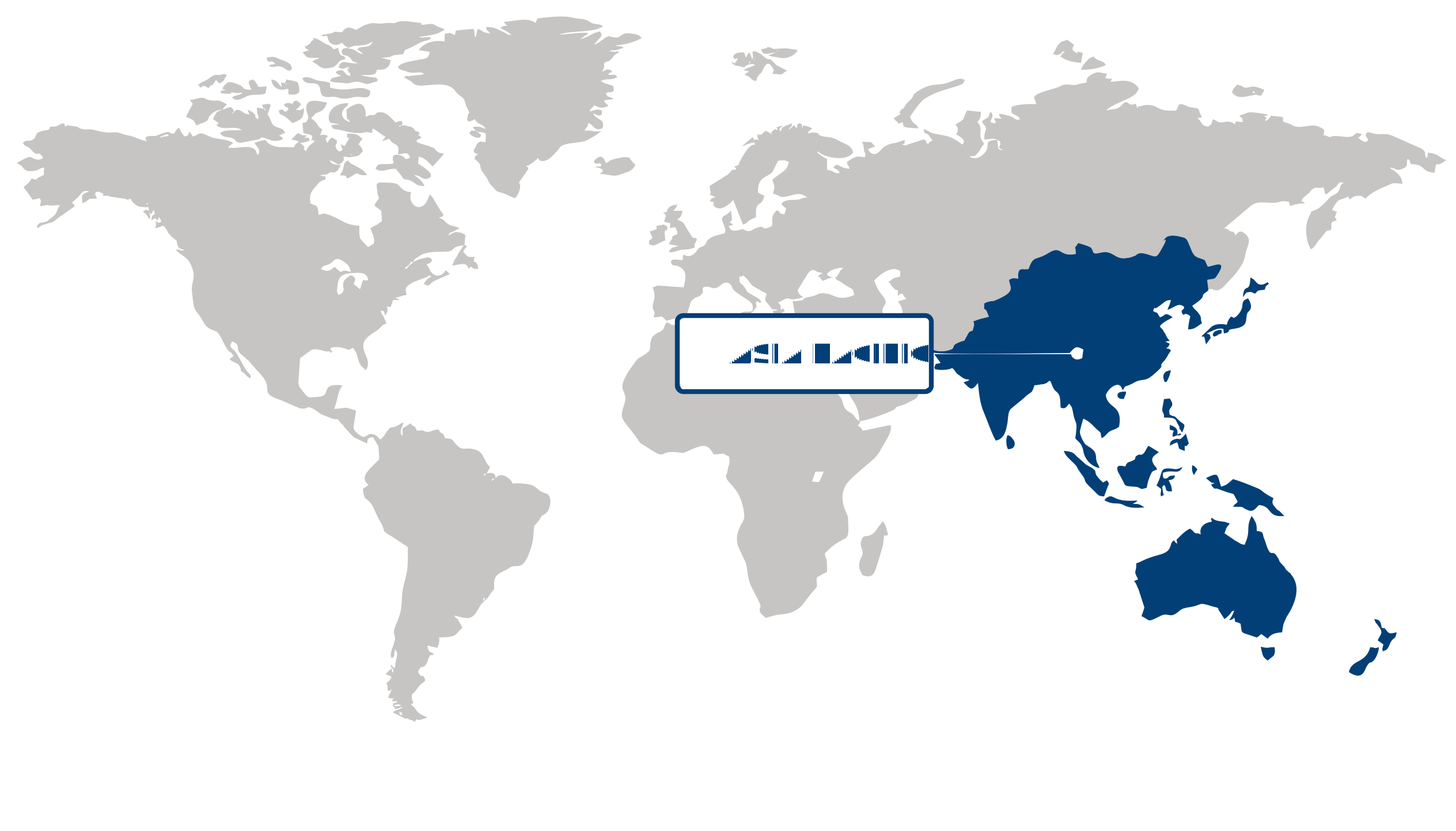
Asia Pacific dominated the zirconia beads market, capturing over 45.9% of the global share in 2025 and emerging as the fastest-growing region with an 8.9% CAGR. The region’s leadership is primarily driven by the surging demand from ceramics, paints, and coatings industries for fine grinding applications. For instance, companies like Tosoh Corporation and Nippon Paint have ramped up production, enhancing product quality through technological innovations in zirconia bead utilization. Additionally, the region benefits from integrated supply chains and robust industrial infrastructure supporting these sectors, alongside increasing investments aimed at sustainable manufacturing practices highlighted by the Japan External Trade Organization (JETRO). These dynamics propel Asia Pacific as a crucial zone for advanced material consumption, indicating continued growth opportunities fueled by rising consumer spending, digitization, and resilience in manufacturing despite global disruptions.
Japan plays a pivotal role in the Asia Pacific zirconia beads market, leveraging its advanced ceramics industries and stringent regulatory standards to maintain superior product quality. Companies like Sumitomo Electric have demonstrated innovative bead formulations enhancing grinding precision, which aligns with market demands for high-performance coatings and fine ceramics. Japan’s emphasis on research and development, supported by the Ministry of Economy, Trade, and Industry (METI), enriches the regional supply chain ecosystem, attracting global players focused on precision manufacturing. This strategic positioning strengthens Asia Pacific’s overall market prospects by fostering technology transfer and bolstering competitive advantages in zirconia bead applications.
China anchors the zirconia beads market growth within Asia Pacific through its expansive industrial base and escalating demand from paints and coatings manufacturers. The country’s rapid urbanization and infrastructure development spur substantial consumption of fine grinding materials, with leading firms like China National Building Material Group (CNBM) publicly investing in production capacity expansions. Additionally, China’s regulatory focus on sustainable manufacturing practices, endorsed by the Ministry of Ecology and Environment, encourages adoption of high-quality zirconia beads that optimize resource efficiency. These trends enhance China’s contribution to the region’s market dominance, underpinning Asia Pacific’s role as a global nucleus for zirconia bead production and consumption.
North America Market Analysis:
North America held a substantial share in the zirconia beads market, driven by its advanced manufacturing infrastructure and robust industrial base. The region’s demand is fueled by the increasing adoption of zirconia beads in high-precision applications such as electronics, pharmaceuticals, and advanced ceramics. Rising consumer preference for durable and high-performance materials, alongside stringent environmental regulations promoting sustainable production, has encouraged manufacturers to innovate and optimize their zirconia bead offerings. For example, 3M’s continuous enhancement of abrasive technologies demonstrates North America’s commitment to operational excellence and material innovation. Moreover, the integration of digital manufacturing and supply chain advancements by companies like Saint-Gobain reinforces supply reliability. These factors position North America as a critical market, offering ongoing growth opportunities as the shift toward sustainable, high-quality materials intensifies across industrial sectors.
The U.S. plays a pivotal role in North America’s zirconia beads market, bolstered by strong R&D capabilities and diverse end-user industries. The country’s emphasis on clean technology and precision manufacturing supports the extensive use of zirconia beads in aerospace components and biomedical devices, where material performance is paramount. Regulatory frameworks, such as those enforced by the Environmental Protection Agency (EPA), incentivize sustainable production methods, encouraging manufacturers to adopt zirconia beads for environmentally friendly abrasives. Strategic investments from companies like Norton Abrasives exemplify innovation-led growth, with tailored bead solutions enhancing efficiency and durability. The U.S. market’s dynamic blend of technological advancement and stringent quality standards continues to drive demand, reinforcing North America’s competitive edge in the zirconia beads industry.
Europe Market Trends:
Europe maintained a notable presence in the zirconia beads market, driven by its advanced manufacturing landscape and increasing adoption of precision materials across sectors such as healthcare, automotive, and electronics. The region benefits from stringent quality regulations and rising emphasis on eco-friendly production, evident from initiatives advocated by the European Chemicals Agency (ECHA). Supply chain innovations, including localized production hubs, have bolstered operational efficiencies amid recent global disruptions, supporting steady demand growth. Moreover, evolving consumer preferences toward durable and high-performance materials have stimulated investment in zirconia bead applications. Corporate strategies highlighted in press releases from industry leaders like CeramTec reflect a commitment to leveraging Europe’s skilled workforce and digital manufacturing capabilities. With sustained regulatory support and innovation investment, Europe is positioned to capitalize on expanding niche markets and industrial digitization trends.
Germany plays a pivotal role in Europe’s zirconia beads market as a manufacturing powerhouse prioritizing precision and quality standards. The country’s robust industrial base and research ecosystem facilitate rapid innovation and adoption of zirconia beads in sectors such as automotive catalysis and medical devices. The German Federal Ministry for Economic Affairs and Climate Action’s programs to support high-tech materials have accelerated technology transfer and commercialization efforts, as reflected in corporate updates from companies like SGL Carbon. Furthermore, Germany’s efficient supply chain infrastructure and commitment to sustainable materials enhance its competitive edge. This strategic environment makes Germany a critical node for advancing Europe’s zirconia beads market, underpinning regional growth with refined expertise and innovation capabilities.
France contributes significantly to the European zirconia beads market, benefiting from strong government support for advanced ceramics and materials innovation through agencies like the French National Research Agency (ANR). The market growth in France is fueled by rising demand in electronics manufacturing and environmental technologies, where zirconia beads enhance performance and durability. French companies such as Saint-Gobain have showcased product developments aligned with stringent EU environmental directives, reinforcing the market’s sustainability focus. Additionally, the cultural emphasis on R&D and integration of digital industrial solutions fosters competitive differentiation within the region. France’s active participation in collaborative EU research projects signals its role in shaping future-oriented material technologies, thereby enhancing Europe’s zirconia beads market potential.
| Parameter | North America | Asia Pacific | Europe | Latin America | MEA |
|---|---|---|---|---|---|
| Innovation Hub i Scale Nascent Developing Advanced | |||||
| Cost-Sensitive Region i Scale Low Medium High | |||||
| Regulatory Environment i Scale Restrictive Neutral Supportive | |||||
| Demand Drivers i Scale Weak Moderate Strong | |||||
| Development Stage i Scale Emerging Developing Developed | |||||
| Adoption Rate i Scale Low Medium High | |||||
| New Entrants / Startups i Scale Sparse Moderate Dense | |||||
| Macro Indicators i Scale Weak Stable Strong |
Segment Leadership and Growth Trends
Zirconia Beads Market Share (%), by Type, 2026
Go beyond the chart, access full insights & data tables
Request Free Sample ReportDense zirconia beads held the largest share in the zirconia beads market in 2025, driven by robust demand for high-energy milling, grinding, and fine powder processing across coatings, ceramics, and pharmaceutical sectors. This segment’s leadership is reinforced by its exceptional mechanical strength and chemical inertness, meeting customer preferences for durable and contamination-free materials. Supply chain efficiencies and continued investments by manufacturers such as Tosoh Corporation ensure consistent quality and availability, underpinning strong competitive dynamics. The Japan-based company’s product innovations and strategic collaborations further validate dense beads’ critical role. Established firms benefit from scale and technical expertise, while emerging players find openings in niche applications and regional markets. Given ongoing advancements in material science and enduring demand for precision processing, dense zirconia beads are poised to sustain their prominence in multiple high-value industries.
Analysis by Manufacturing Process
Wet processing represented the largest share in the zirconia beads market in 2025, reflecting its superiority in producing beads with high uniformity, chemical stability, and optimal ceramic grinding performance. The preference for wet-processed beads is largely due to stringent industry standards, including those emphasized by the U.S. Food and Drug Administration (FDA) for pharmaceutical-grade materials. Leading manufacturers such as Saint-Gobain leverage wet processing to enhance product reliability and sustainability, aligning with eco-friendly production trends and digital quality control systems. This segment offers significant strategic advantages through customizable bead characteristics tailored to diverse industrial requirements. As regulatory frameworks tighten and applications in precision fields grow, wet processing is set to remain a cornerstone for zirconia bead fabrication, sustaining its market dominance and fostering innovation.
Analysis by Size
Micro beads (up to 1mm) dominated the zirconia beads market in 2025, benefiting from expanding demand for precision milling and nano-suspension preparations in pharmaceuticals, coatings, and electronics. Their fine particle size meets evolving customer requirements for uniform dispersion and enhanced surface area, crucial for advanced drug formulations and high-performance coatings. Corporations like Tosoh and 3M have emphasized micro beads in product pipelines, supported by advances in nanoengineering and material characterization technologies. The segment’s growth is accentuated by shifting manufacturing paradigms toward miniaturization and high-precision processes, which offer strategic entry points for both established firms and startups focusing on cutting-edge applications. With persistent innovation in micro-scale material processing and cross-sector demand, micro beads are expected to maintain vital relevance in the zirconia beads market’s near to mid-term evolution.
| Segment | Sub-Segment | Largest Segment | Fastest Growing |
|---|---|---|---|
| Type | Dense Zirconia Beads, Porous Zirconia Beads, Zirconia Silicate Beads | ||
| Manufacturing Process | Wet Processing, Dry Processing, High-Temperature Processing | ||
| Size | Micro Beads (up to 1mm), Small Beads (1mm - 5mm), Medium Beads (5mm - 10mm), Large Beads (over 10mm) | ||
| Application | Ceramics, Paints and Coatings, Cosmetics, Pharmaceuticals, Industrial Micro-Milling | ||
| End-User Industry | Aerospace, Automotive, Construction, Healthcare, Electronics |
Unlock insights tailored to your business with our bespoke market research solutions.
Click to get your customized report now.
Competitive Landscape and Market Positioning
The competitive landscape is characterized by a dynamic interplay of product innovation and strategic partnerships. Top players are actively enhancing their material formulations and expanding application scope through concerted investments in research and sophisticated production technologies. Collaborative ventures and technology-sharing agreements foster enhanced market reach and product differentiation. Recent introductions of high-performance zirconia beads tailored for demanding fields like pharmaceuticals and electronics underscore a commitment to evolving customer needs. Moreover, integration among suppliers and end-users strengthens barriers to entry while propelling incumbents ahead in innovation and quality standards, thereby intensifying the competitive milieu.
Strategic / Actionable Recommendations for Regional Players
In North America, market participants should intensify collaborations with technology innovators and expand engagement with high-growth industrial sectors demanding superior performance materials. Embracing flexible manufacturing processes could address evolving client specifications swiftly, creating avenues for premium positioning against entrenched competitors.
Within the Asia Pacific region, leveraging advancements in material science alongside establishing localized partnerships could catalyze penetration into emerging markets. Engagement with academic institutions for cutting-edge R&D and targeting burgeoning electronics and biomedical sub-segments can amplify innovation and market relevance.
European players would benefit from emphasizing sustainable production methods and aligning closely with stringent regulatory dynamics to bolster credibility. Strategic alliances centered on novel material applications, particularly in automotive and aerospace sectors, can diversify revenue streams while reinforcing competitive differentiation.
| Company | Market Share | Company Revenue | Revenue CAGR (%) | Product Portfolio | Geographic Presence | Innovation / R&D Focus | Strategic Developments |
|---|---|---|---|---|---|---|---|
| No companies available. | |||||||
Customize Your Report
Explore examples of how this report can be tailored to different research needs, including custom segments, additional topics or chapters, and related reports. Click a section of the wheel or its numbered marker to explore the available options.
Zirconia Beads Market — Custom Segments
| Segment | Sub-Segment |
|---|---|
| No segment data available. | |
Zirconia Beads Market — Custom TOC
| Custom Chapter | Chapter Details | ||
|---|---|---|---|
| No custom TOC data available. | |||
Need a different cut of the data?
Request Custom ResearchWhat is the projected value of the zirconia beads industry by 2035?
Which global region commands the highest percentage of the zirconia beads market?
Which region shows the most rapid acceleration in the zirconia beads sector?
How much is the dense zirconia beads segment expected to grow in the zirconia beads industry beyond 2025?
What factors give wet processing segment a competitive edge in the zirconia beads sector?
Which is the largest sub-segment within the size segment for zirconia beads industry?
Why does ceramics sub-segment dominate the application segment of zirconia beads sector?
How does electronics segment fare in the zirconia beads industry?
Who are the leading players in the zirconia beads landscape?
Our Clients
"The report helped us understand emerging consumer trends in our product category. It clarified where to focus innovation for the next product launch."
LyondellBasell
"The regional forecast section was incredibly useful. We were able to identify two new potential partners in Europe thanks to the vendor mapping you included."
SABIC
"We appreciated how actionable the recommendations were. It guided us to improve supply chain resilience."
Olin Corporation
Our Research Team & Methodology
Every Fundamental Business Insights report is built by a dedicated vertical research team, validated through a structured primary-and-secondary methodology, and reviewed for accuracy before it reaches you.
Research Team Overview
Prepared by the Chemicals & Materials Research Team
Delivery
Published
Demand
Available
Support
Trust & Compliance
Research Intelligence
| Source | Reference |
|---|---|
| American Chemistry Council (ACC) | www.americanchemistry.com |
| European Chemical Industry Council (Cefic) | cefic.org |
| International Council of Chemical Associations (ICCA) | icca-chem.org |
| European Chemicals Agency (ECHA) | echa.europa.eu |
| U.S. Environmental Protection Agency (EPA) | www.epa.gov |
| ASTM International | www.astm.org |
| International Organization for Standardization (ISO) | www.iso.org |
| National Institute of Standards and Technology (NIST) | www.nist.gov |
| Plastics Industry Association (PLASTICS) | www.plasticsindustry.org |
| European Biplastics | www.european-bioplastics.org |
| The Adhesive and Sealant Council (ASC) | www.ascouncil.org |
| National Association of Corrosion Engineers (AMPP) | www.ampp.org |
| Society of Plastics Engineers (SPE) | www.4spe.org |
| International Fertilizer Association (IFA) | www.fertilizer.org |
| CropLife International | croplife.org |
| Packaging Europe | packagingeurope.com |
| Flexible Packaging Association (FPA) | www.flexpack.org |
| Battery Council International (BCI) | batterycouncil.org |
| International Copper Association (ICA) | internationalcopper.org |
| World Steel Association | worldsteel.org |
Research Workflow & Quality Assurance
Data Collection
Verified information gathered through primary and secondary research.
Data Triangulation
Cross-validation using multiple independent data sources.
Forecast Modelling
Market estimates developed using historical trends and analytical models.
Analyst Validation
Findings reviewed by domain experts for accuracy and consistency.
Editorial & Quality Review
Final editorial, quality, and compliance checks before publication.
Final Publication
Released after successful completion of the internal review process.
Report Coverage
📊 Market Assessment
- Market Size & Forecast
- Market Segmentation
- Regional Analysis
- Growth Drivers & Challenges
- Market Dynamics
🏢 Competitive Intelligence
- Competitive Landscape
- Company Profiles
- Competitive Benchmarking
- Mergers & Acquisitions
- Market Share Analysis or Key Company Strategies
🔍 Strategic Analysis
- Value Chain Analysis
- Porter's Five Forces
- PESTLE Analysis
- Pricing Trends
- Supply-Demand Analysis
🚀 Future Outlook
- Technology Landscape
- Regulatory Landscape
- Investment & Funding Landscape
- Emerging Opportunities
- Future Market Outlook
Have a question about this report or need a custom scope?
Request Customization