Textile Enzymes Market Size & Forecasts 2026-2035, By Segments (Application, Type), Growth Opportunities, Innovation Landscape, Regulatory Shifts, Strategic Regional Insights (U.S., Japan, China, South Korea, UK, Germany, France), and Competitive Dynamics (Novozymes, DSM, Amano Enzyme, DuPont, AB Enzymes)
Market Size and Growth Outlook
Textile Enzymes Market size is projected to grow steadily from USD 564.73 million in 2025 to USD 973.82 million by 2035, demonstrating a CAGR exceeding 5.6% through the forecast period (2026-2035). The 2026 revenue is estimated at USD 592.18 million.
Get more details on this report
Request Free Sample ReportTextile Enzymes Market Intelligence Snapshot
Regional Market Dynamics
Segment Momentum
Market Expansion Drivers
Leading Market Participants
Global Market Forecast Snapshot
Market Outlook
Regional and Segment Outlook
Market Growth Drivers and Industry Trends
The rising volume of textile manufacturing, particularly in Asia-Pacific and South America, is a primary growth driver for the textile enzymes market. As countries like India and Brazil scale up production to meet increasing global and domestic demand, enzyme applications are increasingly integrated for processes such as bio-polishing and denim finishing. According to the Indian Ministry of Textiles, government incentives supporting textile clusters have amplified production capacities, indirectly boosting enzyme adoption. This trend allows both established enzyme suppliers and niche biotechnology firms to innovate enzyme solutions tailored for regional textile types and processes. Growth in manufacturing hubs creates a fertile environment for collaboration between textile mills and enzyme producers, reinforcing supply chain resilience and fostering co-development. Market participants should focus on localized enzyme formulations and scalable delivery models to capture expanding demand driven by evolving textile output.
Advancements in Enzyme Formulation for Enhanced Process Efficiency
Innovations in enzyme technology that increase catalytic efficiency and substrate specificity are significantly shaping the textile enzymes market. Companies such as Novozymes and DSM have developed tailored enzymes that reduce water and energy consumption, aligning with stricter environmental regulations promoted by agencies like the European Chemicals Agency (ECHA). These advancements not only improve fabric quality but also lower operational costs, responding to competitive pressures and consumer preferences for sustainable products. For incumbents, investing in R&D to optimize enzyme performance across diverse textile substrates offers differentiation opportunities, while new entrants can leverage formulation innovation to disrupt traditional chemical finishing processes. Continued technological progress and regulatory emphasis on eco-friendly manufacturing will incentivize broader adoption of advanced enzyme solutions.
Increasing Enzyme Adoption in Emerging Textile Markets
Emerging markets are accelerating the uptake of textile enzymes as local manufacturers seek to improve sustainability and meet global buyer standards. In countries like Vietnam and Bangladesh, industry associations such as the Bangladesh Garment Manufacturers and Exporters Association (BGMEA) highlight enzyme use as a cost-effective alternative to harsh chemicals, enhancing environmental compliance and worker safety. The shift is driven by brand pressure and international trade policies demanding greener supply chains. This creates strategic openings for enzyme producers to establish early relationships, customize formulations for local fabric types, and offer technical support—thereby overcoming adoption barriers. The persistence of compliance-driven incentives in these expanding markets indicates sustained enzyme integration, positioning both multinational enzyme companies and innovative startups to benefit from evolving textile processing paradigms.
Industry Restraints:
Stringent Regulatory Frameworks and Compliance Costs
Navigating the complex and evolving regulatory landscape significantly restrains the growth of the textile enzymes market. Strict environmental and safety standards imposed by agencies such as the European Chemicals Agency (ECHA) under REACH regulations require extensive testing and documentation, increasing compliance costs and prolonging product launch timelines. For instance, Novozymes, a leading biotech firm, has emphasized increased regulatory scrutiny as a barrier to faster innovation adoption. These compliance demands disproportionately challenge smaller startups lacking extensive resources to meet certification requirements, thereby favoring incumbent players with established regulatory expertise. Consequently, this dynamic slows market entry and limits product diversity. Going forward, unless regulatory harmonization or clearer guidance emerges, companies must prioritize regulatory agility and invest in compliance infrastructure, which will remain critical to navigating market expansion.
Raw Material Supply Fluctuations and Production Bottlenecks
The textile enzymes market faces notable constraints from inconsistent supply of key microbial strains and raw materials, crucial for enzyme synthesis, affected by global agricultural variability and logistic disruptions. For example, the reliance on fermentation feedstocks like corn and sugarcane exposes producers such as DuPont to feedstock price volatility and climatic risks highlighted in reports from the Food and Agriculture Organization (FAO). Such supply chain fragility leads to production inefficiencies and higher operational costs, discouraging investment in capacity expansion. Established firms must build resilient sourcing strategies, while new entrants encounter elevated entry barriers due to supply chain complexity. This restraint is likely to persist, compelling market participants to explore alternative raw materials and localized manufacturing models to mitigate supply-chain-driven vulnerabilities.
| Growth Driver | Impact on CAGR | Regulatory Influence | Geographic Relevance | Adoption Rate | Impact Timeline |
|---|---|---|---|---|---|
| Growing textile manufacturing & enzyme applications | 2.20% | Short term (≤ 2 yrs) | Asia Pacific, Europe | Medium | Fast |
| Innovation in enzyme formulations for efficiency | 1.80% | Medium term (2–5 yrs) | Europe, North America | Low | Moderate |
| Adoption in emerging textile markets | 1.60% | Long term (5+ yrs) | Asia Pacific; Spillover: Latin America | Low | Moderate |
Explore Growth Opportunities
Request Free Sample ReportRegional Demand Dynamics
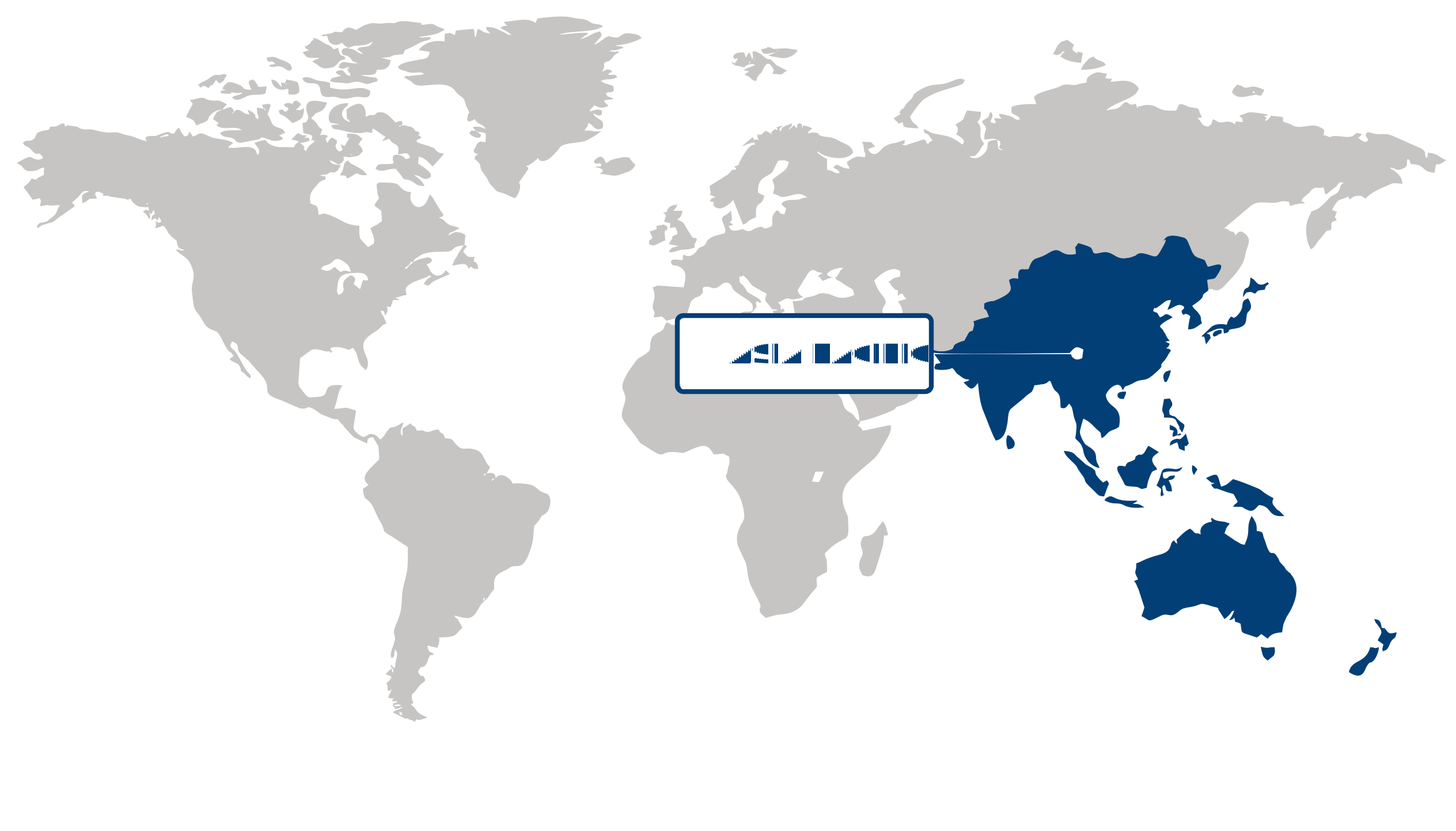
The Asia Pacific textile enzymes market captured over 35% of the global share in 2025, emerging as both the largest and fastest-growing region with a robust CAGR of 7.5%. This dominant position is driven by a massive textile manufacturing base concentrated in countries like China and India, coupled with a growing emphasis on sustainable processing techniques. Leading textile producers such as Arvind Limited in India have highlighted enzyme-based treatments to reduce water and chemical usage, reflecting a broader regional shift towards eco-friendly production. Additionally, government initiatives like China’s 14th Five-Year Plan promote greener industrial practices, reinforcing demand for enzymatic solutions. The region’s expanding middle class and rising consumer preferences for sustainable fashion further fuel market expansion. Looking ahead, Asia Pacific offers significant opportunities as manufacturers increasingly integrate advanced biotechnology to enhance efficiency and meet regulatory sustainability mandates.
China anchors the Asia Pacific textile enzymes market through its unparalleled role as the world’s largest textile exporter. The nationwide focus on environmentally responsible manufacturing—evident from policies by the Ministry of Ecology and Environment—encourages adoption of enzymes that lower hazardous effluents, creating a regulatory tailwind. Textile giants such as Huafang Group are investing in enzyme-based technologies to meet both domestic and international sustainability standards, reinforcing China’s central position. This integration of innovation and compliance underscores China's pivotal role in the regional market’s growth trajectory and sustainability transition.
Japan is positioned as a pivotal hub in Asia Pacific for high-value specialty textile enzymes, driven by advanced technological capabilities and stringent environmental regulations. Companies like Amano Enzyme Inc. leverage cutting-edge research to develop highly efficient enzymatic solutions tailored to fine textiles, which aligns with growing consumer demand for premium sustainable fabrics. Japan’s mature industrial ecosystem and emphasis on quality assurance facilitate rapid innovation cycles. This dynamic fosters strategic opportunities in textile enzymes by setting benchmarks in environmentally friendly and performance-enhanced textile processing, enhancing the region’s leadership in sustainable textile manufacturing.
North America Market Analysis:
North America emerged as the fastest-growing region in the textile enzymes market, registering a robust CAGR of 8.5%. This impressive growth is primarily driven by the rising consumer preference for sustainable and eco-friendly textile products. The region’s well-established textile and apparel industries are increasingly adopting enzyme-based processes to achieve energy efficiency and reduce chemical usage, aligning with stringent environmental regulations set by the U.S. Environmental Protection Agency (EPA). Companies such as Novozymes and DuPont have actively expanded their enzyme product offerings tailored for North American manufacturers, emphasizing operational advancements and innovation. Additionally, the demand for premium quality textiles combined with growing investments in green technologies by industry leaders highlights the region's potential. North America’s capacity to integrate digital transformation in textile processing further amplifies market opportunities, making it a critical hub for cutting-edge enzyme applications.
The United States plays a pivotal role within North America’s textile enzymes market, driven by its expansive textile manufacturing sector and stringent sustainability standards. The growing consumer awareness around biodegradable and low-impact clothing catalyzes enzyme adoption to replace harsh chemicals and enable efficient wet processing. The National Institute of Standards and Technology (NIST) has supported enzyme-based innovations to enhance textile durability and environmental compliance, helping manufacturers improve product quality and comply with evolving regulatory norms. Market leaders like Corteva Agriscience have capitalized on this trend by deploying enzyme technologies that reduce water and energy consumption in denim and cotton processing. The U.S. commitment to sustainable manufacturing and ongoing research investments reinforce North America’s leadership and present significant opportunities for strategic expansion in the textile enzymes market.
Europe Market Trends:
Europe maintained a notable presence in the textile enzymes market, driven by its strong emphasis on sustainable manufacturing and stringent environmental regulations. The region's textile industry increasingly integrates enzyme-based solutions to enhance fabric quality while minimizing chemical waste, as highlighted by the European Chemicals Agency’s initiatives promoting eco-friendly processing methods. Rising consumer preference for sustainable apparel and the commitment of leading European textile manufacturers like Lenzing AG to circular economy principles further bolster demand. Advances in enzyme technologies implemented through collaborations between industry leaders and research institutions, such as those facilitated by the European Commission’s Horizon programs, have enhanced operational efficiencies. These factors position Europe strategically to leverage innovation and regulatory momentum, underscoring its potential as an opportunity-rich market in textile enzymes.
Germany plays a pivotal role in Europe's textile enzymes market, underpinned by its robust industrial base and proactive regulatory environment. The German Textile and Fashion Union has been instrumental in encouraging sustainable production practices, accelerating adoption of enzyme applications that reduce water consumption and chemical use. Major players like BASF and Novozymes have expanded enzyme portfolios targeting the German textile sector, reflecting growing market sophistication and demand for high-performance biochemical solutions. Additionally, Germany’s advanced logistics infrastructure supports efficient supply chains essential for timely enzyme distribution. This combination of industrial innovation and regulatory support suggests Germany will continue to drive regional adoption, reinforcing Europe’s competitive stance in textile enzymes.
France represents a significant market within Europe’s textile enzymes landscape, characterized by its dynamic fashion industry’s increasing alignment with eco-conscious practices. The French Environment and Energy Management Agency (ADEME) promotes cleaner manufacturing technologies, facilitating textile enzyme integration to improve environmental outcomes. Companies such as Arkema have introduced enzyme-enhanced formulations tailored to French textile producers seeking to meet evolving consumer expectations for sustainability and product quality. France's rich cultural emphasis on premium quality and innovation further stimulates enzyme adoption as manufacturers differentiate through technologically advanced, environmentally responsible textiles. Consequently, France’s evolving market conditions enhance the overall attractiveness of Europe as a center for growth in textile enzymes, supporting sustained regional momentum.
| Parameter | North America | Asia Pacific | Europe | Latin America | MEA |
|---|---|---|---|---|---|
| Innovation Hub i Scale Nascent Developing Advanced | |||||
| Cost-Sensitive Region i Scale Low Medium High | |||||
| Regulatory Environment i Scale Restrictive Neutral Supportive | |||||
| Demand Drivers i Scale Weak Moderate Strong | |||||
| Development Stage i Scale Emerging Developing Developed | |||||
| Adoption Rate i Scale Low Medium High | |||||
| New Entrants / Startups i Scale Sparse Moderate Dense | |||||
| Macro Indicators i Scale Weak Stable Strong |
Segment Leadership and Growth Trends
Textile Enzymes Market Share (%), by Application, 2026
Go beyond the chart, access full insights & data tables
Request Free Sample ReportBio-polishing represented the largest share in the textile enzymes market in 2025, primarily driven by the rising demand for smoother fabric finishes and enhanced textile quality. This segment leads due to its ability to improve fabric aesthetics by removing protruding fibers, which aligns with consumer preferences for premium, comfortable textiles and supports manufacturers' goals of delivering superior end-products. Regulatory encouragement for sustainable textile processing by the European Chemicals Agency (ECHA) also bolsters its adoption, as bio-polishing reduces chemical waste compared to conventional treatments. Established firms benefit from refining their product portfolios with eco-friendly solutions, while emerging players can capitalize on niche demands for high-quality performance fabrics. Given the ongoing emphasis on sustainability and quality in global textile supply chains, bio-polishing is expected to retain its critical role in textile finishing processes.
Analysis by Type
Cellulase held the largest share in the textile enzymes market in 2025, fueled by its widespread application in fabric softening and surface modification. The catalytic properties of cellulase enzymes enable efficient bio-polishing and denim finishing, meeting the growing consumer demand for soft, durable textiles with minimal environmental footprint. Industry initiatives like Novozymes’ push for enzyme innovation highlight technological advancements enhancing cellulase efficacy and cost-efficiency while aligning with stricter wastewater discharge regulations from the U.S. Environmental Protection Agency (EPA). This offers strategic advantages to incumbents in scaling sustainable production and allows new entrants to differentiate through specialized enzyme formulations. Continued investment in cellulase technology and regulatory momentum will sustain this segment’s importance as textile manufacturers increasingly adopt enzyme-driven processes to optimize fabric quality and ecological compliance.
| Segment | Sub-Segment | Largest Segment | Fastest Growing |
|---|---|---|---|
| Application | Bio-Polishing, Desizing, Bioscouring, Enzymatic Bleaching, Others | ||
| Type | Amylase, Cellulase, Pectinase, Catalase, Laccase, Others |
Unlock insights tailored to your business with our bespoke market research solutions.
Click to get your customized report now.
Competitive Landscape and Market Positioning
The competitive landscape exhibits a dynamic interplay of strategic partnerships and investments focused on technological innovation and market penetration. Players such as Novozymes and DSM have deepened their commitment to R&D, advancing enzyme variants with improved performance under diverse textile processing conditions. Meanwhile, entities like AB Enzymes and Advanced Enzymes have enhanced their market presence through collaborations that foster innovation across emerging textile segments. Larger chemical conglomerates like BASF and DuPont continue to extend capabilities by integrating enzyme technologies with sustainable product lines, enhancing their competitive differentiation. Additionally, companies such as Amano Enzyme and Enzyme Development Corporation are positioning themselves through targeted product expansions and regional alliances, collectively driving a more sophisticated and responsive enzyme portfolio ecosystem within the textile sector.
Strategic / Actionable Recommendations for Regional Players
North American stakeholders should consider aligning with global enzyme innovators to bridge technology gaps while focusing on automation and enzyme formulations compatible with eco-conscious textile manufacturing trends. By leveraging emerging bioengineering techniques and collaborating with material science firms, players can enhance value propositions amid intensifying sustainability demands. In parallel, targeting specialized segments within performance and technical textiles may provide avenues for differentiation.
In the Asia Pacific region, where textile manufacturing remains robust, local enzyme producers and integrators can capitalize on rising demand by deepening collaborations with international enzyme developers. Embracing cutting-edge bioprocess technologies and tailoring products to diverse regional textile fibers and processing techniques will be crucial. Expanding into high-growth sub-segments such as functional and smart textiles presents additional opportunities to capture market share through innovation-driven approaches.
European firms are well-positioned to consolidate leadership by intensifying investments in sustainable enzyme development, especially those minimizing environmental impact in textile finishing processes. Strengthening cross-border alliances and engaging in circular economy initiatives can bolster competitiveness. Furthermore, focusing on high-value enzyme applications that address stringent regulatory requirements and consumer preference for eco-friendly textiles will support enduring market relevance.
| Company | Market Share | Company Revenue | Revenue CAGR (%) | Product Portfolio | Geographic Presence | Innovation / R&D Focus | Strategic Developments |
|---|---|---|---|---|---|---|---|
| No companies available. | |||||||
Customize Your Report
Explore examples of how this report can be tailored to different research needs, including custom segments, additional topics or chapters, and related reports. Click a section of the wheel or its numbered marker to explore the available options.
Textile Enzymes Market — Custom Segments
| Segment | Sub-Segment |
|---|---|
| No segment data available. | |
Textile Enzymes Market — Custom TOC
| Custom Chapter | Chapter Details | ||
|---|---|---|---|
| No custom TOC data available. | |||
Need a different cut of the data?
Request Custom ResearchHow much is the textile enzymes market worth?
How is the textile enzymes industry expected to grow over the next 10 years?
Which region captures the largest portion of the textile enzymes market value?
Which region shows the most rapid acceleration in the textile enzymes sector?
Why does bio-polishing sub-segment dominate the application segment of textile enzymes sector?
How much is the cellulase segment expected to grow in the textile enzymes industry beyond 2025?
What are the key competitors in the textile enzymes landscape?
Our Clients
"The report helped us understand emerging consumer trends in our product category. It clarified where to focus innovation for the next product launch."
LyondellBasell
"The regional forecast section was incredibly useful. We were able to identify two new potential partners in Europe thanks to the vendor mapping you included."
SABIC
"We appreciated how actionable the recommendations were. It guided us to improve supply chain resilience."
Olin Corporation
Our Research Team & Methodology
Every Fundamental Business Insights report is built by a dedicated vertical research team, validated through a structured primary-and-secondary methodology, and reviewed for accuracy before it reaches you.
Research Team Overview
Prepared by the Chemicals & Materials Research Team
Delivery
Published
Demand
Available
Support
Trust & Compliance
Research Intelligence
| Source | Reference |
|---|---|
| American Chemistry Council (ACC) | www.americanchemistry.com |
| European Chemical Industry Council (Cefic) | cefic.org |
| International Council of Chemical Associations (ICCA) | icca-chem.org |
| European Chemicals Agency (ECHA) | echa.europa.eu |
| U.S. Environmental Protection Agency (EPA) | www.epa.gov |
| ASTM International | www.astm.org |
| International Organization for Standardization (ISO) | www.iso.org |
| National Institute of Standards and Technology (NIST) | www.nist.gov |
| Plastics Industry Association (PLASTICS) | www.plasticsindustry.org |
| European Biplastics | www.european-bioplastics.org |
| The Adhesive and Sealant Council (ASC) | www.ascouncil.org |
| National Association of Corrosion Engineers (AMPP) | www.ampp.org |
| Society of Plastics Engineers (SPE) | www.4spe.org |
| International Fertilizer Association (IFA) | www.fertilizer.org |
| CropLife International | croplife.org |
| Packaging Europe | packagingeurope.com |
| Flexible Packaging Association (FPA) | www.flexpack.org |
| Battery Council International (BCI) | batterycouncil.org |
| International Copper Association (ICA) | internationalcopper.org |
| World Steel Association | worldsteel.org |
Research Workflow & Quality Assurance
Data Collection
Verified information gathered through primary and secondary research.
Data Triangulation
Cross-validation using multiple independent data sources.
Forecast Modelling
Market estimates developed using historical trends and analytical models.
Analyst Validation
Findings reviewed by domain experts for accuracy and consistency.
Editorial & Quality Review
Final editorial, quality, and compliance checks before publication.
Final Publication
Released after successful completion of the internal review process.
Report Coverage
📊 Market Assessment
- Market Size & Forecast
- Market Segmentation
- Regional Analysis
- Growth Drivers & Challenges
- Market Dynamics
🏢 Competitive Intelligence
- Competitive Landscape
- Company Profiles
- Competitive Benchmarking
- Mergers & Acquisitions
- Market Share Analysis or Key Company Strategies
🔍 Strategic Analysis
- Value Chain Analysis
- Porter's Five Forces
- PESTLE Analysis
- Pricing Trends
- Supply-Demand Analysis
🚀 Future Outlook
- Technology Landscape
- Regulatory Landscape
- Investment & Funding Landscape
- Emerging Opportunities
- Future Market Outlook
Have a question about this report or need a custom scope?
Request Customization