Probiotic Yogurt Market Size & Growth Forecast 2027–2036, By Segments (Source, Flavor, Fat Content, Distribution Channel), Regional Demand Trends (North America, Asia Pacific, Europe), Key Country Insights (U.S., Japan, South Korea, Germany, France, Italy), and Competitive Landscape
Market Size and Growth Outlook
Probiotic Yogurt Market size stood at USD 3.1 Billion in 2026 and is predicted to grow at 6.89% CAGR from 2027 to 2036, attaining USD 6.04 Billion by 2036. The industry revenue for 2027 is assessed at USD 3.28 Billion.
Get more details on this report
Request Free Sample ReportProbiotic Yogurt Market Intelligence Snapshot
Regional Market Dynamics
- Asia Pacific held 40.93% in 2026 and remains the fastest-growing region, supported by rising digestive wellness awareness, functional food demand, retail expansion, and product diversification.
- Growing urbanization, changing dietary preferences, and stronger health consciousness are encouraging consumers to incorporate probiotic yogurt into everyday diets.
Segment Momentum
- The animal based segment accounted for 61.44% of the market in 2026, benefiting from established dairy production, consumer familiarity, reliable fermentation characteristics, and broad availability across retail and foodservice channels.
- The low fat segment is growing fastest as consumers prioritize healthier eating, weight management, and heart-conscious diets while manufacturers improve formulations that maintain the taste and texture of probiotic yogurt.
Market Expansion Drivers
- Rising digestive health awareness driving functional dairy consumption globally
- Expanding retail health food segments increasing probiotic yogurt shelf penetration
- Growing plant-based probiotic innovation expanding non-dairy yogurt alternatives
Leading Market Participants
- Key companies in the probiotic yogurt market include Danone S.A. (France), Nestlé S.A. (Switzerland), Chobani LLC (United States), Yakult Honsha Co., Ltd. (Japan), General Mills Inc. (United States), Fage International S.A. (Greece), Arla Foods amba (Denmark), Lactalis Group (France), FrieslandCampina (Netherlands), Sodiaal Group (France)
Global Market Forecast Snapshot
Market Outlook
- 2026 Market Size: USD 3.1 Billion
- 2027 Estimated Market Size: USD 3.28 Billion
- Projected Market Size: USD 6.04 Billion by 2036
- Growth Forecast: 6.89% CAGR (2027-2036)
Regional and Segment Outlook
- Leading Regional Market: Asia Pacific
- High-Growth Regional Hub: Asia Pacific
- Core Revenue Segment: Animal Based (Source) | Flavoured (Flavor) | Regular (Fat Content) | Hypermarket and Supermarkets (Distribution Channel)
- Emerging Opportunity Segment: Plant Based (Source) | Flavoured (Flavor) | Low Fat (Fat Content) | Online (Distribution Channel)
Market Growth Drivers and Industry Trends
Rising digestive health awareness driving functional dairy consumption globally
Growing consumer focus on gut health and preventive wellness is reshaping dietary preferences, which will drive the probiotic yogurt market growth through increased demand for functional dairy products. Consumers are increasingly seeking foods that provide nutritional benefits beyond basic nourishment, encouraging the adoption of yogurt products containing beneficial cultures that support digestive wellness. This shift is prompting manufacturers to expand product offerings with health-focused formulations that align with evolving lifestyle choices and wellness priorities.
Expanding retail health food segments increasing probiotic yogurt shelf penetration
The rapid development of health-oriented retail categories is improving product visibility and accessibility, enabling the probiotic yogurt market growth across supermarkets, specialty stores, and online channels. Retailers are dedicating more shelf space to functional foods as consumers increasingly look for convenient wellness products during routine shopping. Broader distribution networks and improved availability are helping probiotic yogurt reach a wider consumer base while supporting greater adoption in both developed and emerging markets.
Growing plant-based probiotic innovation expanding non-dairy yogurt alternatives
Innovation in plant-derived formulations is creating new opportunities within the functional food sector, and expanding non-dairy alternatives will boost the probiotic yogurt market demand among consumers seeking diverse dietary options. Manufacturers are developing probiotic yogurt variants using plant-based ingredients to address preferences related to lactose sensitivity, vegan lifestyles, and sustainable food choices. These product developments are broadening category appeal while encouraging experimentation among health-conscious consumers.
| Growth Driver | Impact on CAGR | Regulatory Influence | Geographic Relevance | Adoption Rate | Impact Timeline |
|---|---|---|---|---|---|
| Rising digestive health awareness driving functional dairy consumption globally | 2% | Moderate | Europe, Asia Pacific | High | Near Term |
| Expanding retail health food segments increasing probiotic yogurt shelf penetration | 1.8% | Low | North America, Europe | High | Near Term |
| Growing plant-based probiotic innovation expanding non-dairy yogurt alternatives | 1.7% | Low | North America, Asia Pacific | Emerging | Mid Term |
Unlock insights tailored to your business with our bespoke market research solutions.
Click to get your customized report now.
Regional Demand Dynamics
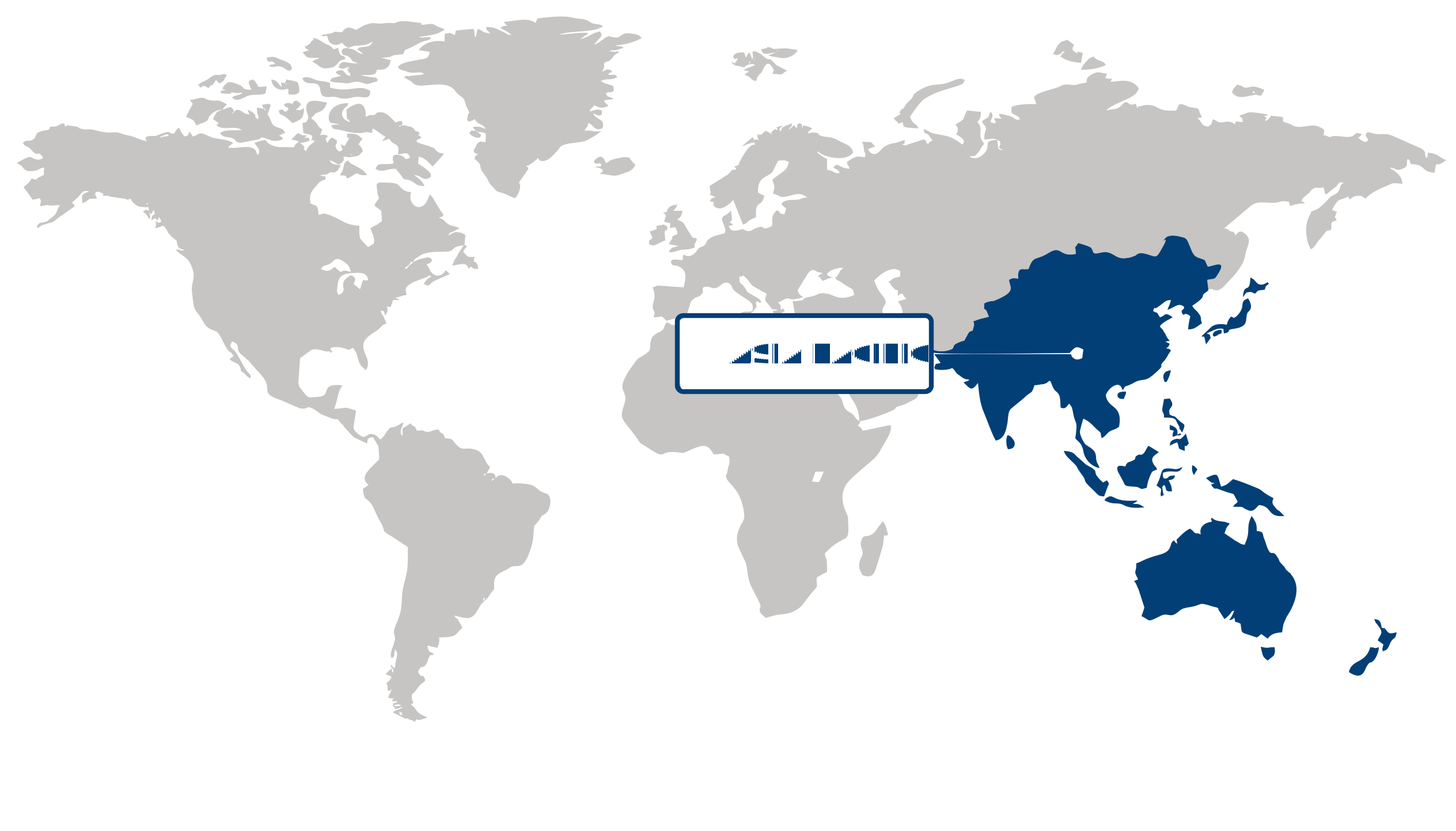
Asia Pacific (Largest & Fastest-Growing Region)
Asia Pacific accounted for 40.93% of the probiotic yogurt market in 2026 and is also expected to remain the fastest-growing regional market, supported by rising awareness of digestive wellness and the nutritional benefits associated with probiotic foods. Growing urbanization, changing dietary preferences, and increasing consumer interest in functional foods are encouraging demand for probiotic yogurt across the region. Expanding retail availability and greater product diversification are further improving consumer access, while rising health consciousness is strengthening the role of probiotic products in everyday diets.
| Parameter | North America | Asia Pacific | Europe | Latin America | MEA |
|---|---|---|---|---|---|
| Innovation Hub i Scale Nascent Developing Advanced | |||||
| Cost-Sensitive Region i Scale Low Medium High | |||||
| Regulatory Environment i Scale Restrictive Neutral Supportive | |||||
| Demand Drivers i Scale Weak Moderate Strong | |||||
| Development Stage i Scale Emerging Developing Developed | |||||
| Adoption Rate i Scale Low Medium High | |||||
| New Entrants / Startups i Scale Sparse Moderate Dense | |||||
| Macro Indicators i Scale Weak Stable Strong |
Key Country Insights
United States 🇺🇸
Functional Nutrition FocusThe U.S. probiotic yogurt market emphasizes functional nutrition, clean-label formulations, and high-protein dairy products. Manufacturers in the U.S. continue expanding product varieties with digestive health benefits while investing in premium retail and e-commerce distribution.
Germany 🇩🇪
Quality Dairy InnovationGermany prioritizes premium dairy quality and scientifically supported probiotic formulations. German producers focus on product consistency, natural ingredients, and value-added yogurt offerings that align with consumer preference for wellness-oriented daily nutrition.
Japan 🇯🇵
Gut Health FormulationsJapan maintains strong demand for probiotic yogurt through continuous product refinement and microbiome-focused innovation. Japanese manufacturers invest in clinically recognized probiotic strains and convenient product formats that support regular daily consumption.
South Korea 🇰🇷
Premium Wellness ProductsSouth Korea advances the probiotic yogurt market with premium functional dairy products and innovative flavor combinations. Companies in South Korea strengthen consumer engagement through health-focused branding and convenient ready-to-drink probiotic yogurt offerings.
France 🇫🇷
Traditional Dairy ExpertiseFrance combines established dairy expertise with growing demand for functional nutrition. French producers increasingly introduce probiotic yogurt products featuring natural ingredients, premium textures, and formulations designed to enhance everyday digestive wellness.
Italy 🇮🇹
Authentic Dairy PremiumizationItaly strengthens its probiotic yogurt market by blending traditional dairy craftsmanship with modern health positioning. Italian manufacturers focus on premium formulations, clean ingredient profiles, and differentiated products that appeal to health-conscious consumers.
Segment Leadership and Growth Trends
Probiotic Yogurt Market Share (%), by Source, 2026
Go beyond the chart, access full insights & data tables
Request Free Sample ReportSource Segment Analysis: Animal Based (Largest Segment) vs Plant Based (Fastest-Growing Segment)
The animal based source segment dominated the probiotic yogurt market with a 61.44% share in 2026. Traditional dairy-based yogurt continues to benefit from established consumer familiarity, well-developed production infrastructure, and naturally suitable fermentation characteristics that support probiotic cultures. Its widespread availability, consistent texture, and broad product variety maintain strong demand across retail and foodservice channels.
The plant based source segment is expected to expand at the fastest rate as consumers increasingly adopt dairy alternatives driven by dietary preferences, lactose intolerance, and interest in sustainable food choices. Innovation in formulations using oat, almond, coconut, and soy bases is improving product quality and expanding consumer acceptance. Growing demand for vegan and flexitarian food products is further supporting rapid segment growth.
Flavor Segment Analysis: Flavoured (Largest & Fastest-Growing Segment)
The flavoured segment led the probiotic yogurt market and accounted for 66.72% of the market share in 2026. Its leadership is supported by strong consumer preference for products offering enhanced taste, greater product variety, and broader appeal across different age groups. Manufacturers continue introducing fruit-based, dessert-inspired, and regionally inspired flavor combinations to strengthen product differentiation while encouraging repeat purchases. Ongoing innovation in natural flavor ingredients and functional formulations is expected to reinforce the segment's position as both the largest and fastest-growing category.
Fat Content Segment Analysis: Regular (Largest Segment) vs Low Fat (Fastest-Growing Segment)
Holding the largest share of the probiotic yogurt market, the regular fat content segment dominated in 2026 with a market share of 58.51%. Consumers continue to favor regular yogurt because of its rich texture, balanced taste, and compatibility with traditional probiotic formulations. Its widespread availability and established consumer acceptance across breakfast, snack, and dessert applications continue to support sustained demand.
The low fat segment is anticipated to witness the fastest growth as consumers increasingly prioritize healthier eating habits while maintaining interest in probiotic nutrition. Rising awareness of balanced diets, weight management, and heart-conscious food choices is encouraging greater adoption of reduced-fat yogurt products. Manufacturers are also introducing improved formulations that preserve taste and texture, supporting broader acceptance of low-fat probiotic yogurt offerings.
| Segment | Sub-Segment | Largest Segment | Fastest Growing |
|---|---|---|---|
| Source | Animal Based, Plant Based | Animal Based | Plant Based |
| Flavor | Unflavoured, Flavoured | Flavoured | Flavoured |
| Fat Content | Regular, Low Fat, Fat Free | Regular | Low Fat |
| Distribution Channel | Hypermarket and Supermarkets, Specialty Stores, Convenience Stores, Online, Others | Hypermarket and Supermarkets | Online |
Competitive Landscape and Market Positioning
Prominent players in the probiotic yogurt market:
- Danone S.A. (France)
- Nestlé S.A. (Switzerland)
- Chobani LLC (United States)
- Yakult Honsha Co., Ltd. (Japan)
- General Mills, Inc. (United States)
- Fage International S.A. (Greece)
- Arla Foods amba (Denmark)
- Lactalis Group (France)
- FrieslandCampina (Netherlands)
- Sodiaal Group (France)
Consumer demand for functional foods is encouraging manufacturers to compete through formulation expertise rather than relying solely on conventional product differentiation. Greater emphasis is being placed on developing probiotic cultures with enhanced stability, improving taste and texture, and incorporating clean-label ingredients that appeal to health-conscious consumers without compromising product quality. Competitive momentum is also shaped by refrigerated distribution efficiency, innovation in packaging formats, and the ability to introduce products that address evolving dietary preferences across retail and foodservice channels. Suppliers capable of combining nutritional credibility with consistent product quality are strengthening their position in an increasingly innovation-driven marketplace.
| Company | Market Share | Company Revenue | Revenue CAGR (%) | Product Portfolio | Geographic Presence | Innovation / R&D Focus | Strategic Developments |
|---|---|---|---|---|---|---|---|
| Danone S.A. (France) | |||||||
| Nestlé S.A. (Switzerland) | |||||||
| Chobani LLC (United States) | |||||||
| Yakult Honsha Co. Ltd. (Japan) | |||||||
| General Mills Inc. (United States) | |||||||
| Fage International S.A. (Greece) | |||||||
| Arla Foods amba (Denmark) | |||||||
| Lactalis Group (France) | |||||||
| FrieslandCampina (Netherlands) | |||||||
| Sodiaal Group (France) |
Industry Development/News
| Company Name | Date | Key Development |
|---|---|---|
| Morinaga Milk | Jul-26 | Morinaga Milk validated the scientific positioning of its Bifidobacterium longum BB536 probiotic strain through clinical trial results linking daily consumption to slower biological aging, enhancing the therapeutic credibility and commercial value of its functional ingredient. |
| CP-Meiji | Mar-26 | CP-Meiji introduced a natural-flavored probiotic yogurt with no added sugar, targeting the clean-label functional food segment and expanding its competitive presence in health-focused product variations. |
| Danone North America | Jan-26 | Danone North America initiated a $4 million manufacturing expansion at its Texas facility to increase production capacity for regional yogurt brands, including its Activia probiotic line, supporting growing consumer demand for functional dairy products. |
| Activia (Danone) | Aug-25 | Activia expanded its functional gut health portfolio through the launch of the Proactive Yogurt line, which integrates live probiotics with prebiotic fiber to capture a highly differentiated and wellness-focused consumer segment. |
| Lactalis USA | Jul-25 | Lactalis USA expanded its yogurt operations through the acquisition of General Mills' U.S. yogurt portfolio, including the Yoplait brand, materially strengthening its competitive positioning and scale in the North American functional dairy segment. |
| TH true MILK | Mar-25 | TH true MILK expanded its functional dairy portfolio by introducing a low-sugar probiotic yogurt drink formulation, addressing shifting consumer health preferences toward reduced-sugar functional beverages. |
| CP-Meiji | Jul-24 | CP-Meiji extended its regional market reach by launching a premium Greek-style probiotic yogurt featuring the Bifidobacterium lactis HN019 strain in Singapore, driving market penetration within the premium functional dairy category. |
| Nounós Creamery | Mar-24 | Nounós Creamery introduced a probiotic yogurt utilizing Greiner Packaging's recyclable K3 cardboard-plastic container, executing a technology integration that addresses growing consumer demand for sustainable packaging in the premium dairy sector. |
Customize Your Report
Explore examples of how this report can be tailored to different research needs, including custom segments, additional topics or chapters, and related reports. Click a section of the wheel or its numbered marker to explore the available options.
Probiotic Yogurt Market — Custom Segments
| Segment | Sub-Segment |
|---|---|
| Target Consumer | General Adult Consumers, Children, Older Adults, Athletes & Fitness Consumers, Health-Conscious Consumers |
| Packaging Format | Cups, Pouches, Bottles, Tubs, Multi-Packs |
| Price Tier | Economy, Mid-Range, Premium |
Probiotic Yogurt Market — Custom TOC
| Custom Chapter | Custom Details |
|---|---|
| Consumer Health & Wellness Demand Strategy |
|
| Refrigerated Distribution & Cold-Chain Strategy |
|
| Innovation Pathways in Functional Yogurt |
|
Need a different cut of the data?
Request Custom ResearchWhat is the current size of the probiotic yogurt market?
How is the probiotic yogurt industry size expected to evolve during the forecast period?
How is consumer wellness behavior influencing the probiotic yogurt market?
Why are plant-based innovations becoming important in the probiotic yogurt market?
Which source segment dominates the probiotic yogurt market?
Why is the low fat segment the fastest-growing by fat content?
What makes Asia Pacific the leading probiotic yogurt market?
How is consumer behavior supporting probiotic yogurt adoption in Asia Pacific?
Who are the leading players in the probiotic yogurt landscape?
Our Clients
"The report provided a thorough look at market trends, technological advancements, and the competitive landscape. The depth of insights was really valuable."
ITC Limited
"We would highly recommend Fundamental Business Insights & Consulting to anyone looking for reliable, detailed, and comprehensive market research in the Food industry."
Tyson Foods
"The clarity and presentation of the information were commendable. The report was delivered timely, which made the overall experience smooth and convenient."
Mondelēz International
Our Research Team & Methodology
Every Fundamental Business Insights report is built by a dedicated vertical research team, validated through a structured primary-and-secondary methodology, and reviewed for accuracy before it reaches you.
Research Team Overview
Prepared by the Food & Beverage Research Team
Delivery
Published
Demand
Available
Support
Trust & Compliance
Research Domains
10 coverage areasResearch Intelligence
| Source | Reference |
|---|---|
| Food and Agriculture Organization (FAO) | www.fao.org |
| World Health Organization (WHO) | www.who.int |
| U.S. Food & Drug Administration (FDA) | www.fda.gov |
| European Food Safety Authority (EFSA) | www.efsa.europa.eu |
| U.S. Department of Agriculture (USDA) | www.usda.gov |
| Codex Alimentarius Commission | www.fao.org/fao-who-codexalimentarius |
| International Organization for Standardization (ISO) | www.iso.org |
| AOAC INTERNATIONAL | www.aoac.org |
| Institute of Food Technologists (IFT) | www.ift.org |
| International Dairy Foods Association (IDFA) | www.idfa.org |
| International Sweeteners Association (ISA) | www.sweeteners.org |
| International Probiotics Association (IPA) | internationalprobiotics.org |
| Good Food Institute (GFI) | gfi.org |
| American Feed Industry Association (AFIA) | www.afia.org |
| International Feed Industry Federation (IFIF) | ifif.org |
| Specialty Food Association (SFA) | www.specialtyfood.com |
| Brewers Association | www.brewersassociation.org |
| International Bottled Water Association (IBWA) | bottledwater.org |
| International Alliance for Dietary/Food Supplement Associations (IADSA) | www.iadsa.org |
| OECD Agriculture & Food | www.oecd.org/agriculture |
Research Workflow & Quality Assurance
Data Collection
Verified information gathered through primary and secondary research.
Data Triangulation
Cross-validation using multiple independent data sources.
Forecast Modelling
Market estimates developed using historical trends and analytical models.
Analyst Validation
Findings reviewed by domain experts for accuracy and consistency.
Editorial & Quality Review
Final editorial, quality, and compliance checks before publication.
Final Publication
Released after successful completion of the internal review process.
Report Coverage
📊 Market Assessment
- Market Size & Forecast
- Market Segmentation
- Regional Analysis
- Growth Drivers & Challenges
- Market Dynamics
🏢 Competitive Intelligence
- Competitive Landscape
- Company Profiles
- Competitive Benchmarking
- Mergers & Acquisitions
- Market Share Analysis or Key Company Strategies
🔍 Strategic Analysis
- Value Chain Analysis
- Porter's Five Forces
- PESTLE Analysis
- Pricing Trends
- Supply-Demand Analysis
🚀 Future Outlook
- Technology Landscape
- Regulatory Landscape
- Investment & Funding Landscape
- Emerging Opportunities
- Future Market Outlook
Have a question about this report or need a custom scope?
Request Customization