Molded Underfill Material Market Size & Forecasts 2026-2035, By Segments (Product Type, Application, End-user), Growth Opportunities, Innovation Landscape, Regulatory Shifts, Strategic Regional Insights (U.S., Japan, China, South Korea, UK, Germany, France), and Competitive Dynamics (Henkel, 3M, Sumitomo Bakelite, Shikoku Chemicals, Mitsui Chemicals)
Market Size and Growth Outlook
Molded Underfill Material Market size is predicted to expand from USD 9.28 billion in 2025 to USD 16.31 billion by 2035, with growth underpinned by a CAGR above 5.8% between 2026 and 2035. The industry revenue outlook for 2026 is USD 9.75 billion.
Get more details on this report
Request Free Sample ReportMolded Underfill Material Market Intelligence Snapshot
Regional Market Dynamics
Segment Momentum
Market Expansion Drivers
Leading Market Participants
Global Market Forecast Snapshot
Market Outlook
Regional and Segment Outlook
Market Growth Drivers and Industry Trends
The surge in semiconductor packaging and assembly activities is revolutionizing the molded underfill material market, driven by escalating consumer electronics consumption and evolving design complexities. According to the Semiconductor Industry Association, the rise in multi-chip modules and 3D packaging necessitates advanced underfill materials to enhance device reliability and mechanical stability. This trend presents established manufacturers with opportunities to innovate materials that support finer pitches and higher thermal performance. For new entrants, specializing in niche formulations that cater to emerging packaging technologies can carve out competitive advantages. As semiconductor device complexity continues to intensify, the molded underfill material market will evolve alongside these advancements, prioritizing solutions that enable superior interconnect protection with minimal thermal and mechanical stress.
Expansion in Automotive and High-Reliability Electronics
Growth in automotive electronics and other high-reliability sectors like aerospace and healthcare is significantly shaping the molded underfill material market. The International Automotive Task Force’s (IATF) standards emphasize durability and long-term performance, driving demand for molded underfill materials capable of withstanding harsh environments and extreme temperature fluctuations. This dynamic compels suppliers to develop enhanced formulations tailored for stringent reliability criteria, enabling manufacturers to meet evolving regulatory and safety demands. For market players, this expands avenues for collaboration with automotive OEMs and aerospace firms seeking robust solutions. With increasing electrification and automation trends, the molded underfill material market will remain critical in supporting the integrity of high-stress electronic assemblies.
Development of Low-Stress, High-Performance Underfill Materials
Innovations in low-stress, high-performance underfill materials are a pivotal growth driver for the molded underfill material market, as manufacturers respond to challenges in minimizing thermal expansion mismatch and improving device longevity. Dow Chemical’s recent press release highlights breakthroughs in epoxies that reduce warpage while maintaining superior mechanical strength, reflecting industry-wide efforts to enhance material properties. This development opens strategic avenues for companies to differentiate product offerings through material science innovation, addressing stringent requirements from high-density packaging and consumer electronics sectors. Moving forward, the market will favor suppliers who combine enhanced performance with scalable production capabilities, positioning these advanced materials as essential enablers in next-generation semiconductor packaging solutions.
Industry Restraints:
Environmental and Regulatory Compliance Challenges
Stringent environmental regulations concerning chemical composition and emissions significantly restrict the molded underfill material market’s development. Compliance with laws such as the European Union’s REACH (Registration, Evaluation, Authorization, and Restriction of Chemicals) and the U.S. EPA’s Toxic Substances Control Act imposes costly testing and reformulation requirements on manufacturers. For instance, Henkel has publicly emphasized reformulating epoxy-based underfill materials to meet evolving VOC (volatile organic compound) limits, which delays product rollouts and raises production costs. This regulatory pressure heightens barriers to entry and strains established players' innovation pipelines by demanding resource-intensive compliance efforts. Given the increasing global focus on sustainability and chemical safety, this restraint will likely intensify, compelling market participants to prioritize environmentally friendly formulations and invest heavily in compliance infrastructure over the next several years.
Supply Chain and Raw Material Volatility
Volatility in raw material supply, especially for specialty silicones and epoxy resins, constrains the molded underfill material market’s growth by causing production inefficiencies and cost unpredictability. The pandemic-induced disruptions and geopolitical tensions have been documented by the Semiconductor Industry Association (SIA) as key factors creating raw material shortages, which in turn lead to longer lead times and elevated prices for underfill manufacturers like Sumitomo Chemical. Such supply chain fragility challenges both incumbents and new entrants by complicating capacity planning and pricing strategies, weakening competitiveness. In response, market players are compelled to diversify sourcing and develop more resilient procurement frameworks. This supply instability is expected to persist amid ongoing global trade uncertainties, continuing to act as a significant barrier to rapid market expansion through the near term.
| Growth Driver | Impact on CAGR | Regulatory Influence | Geographic Relevance | Adoption Rate | Impact Timeline |
|---|---|---|---|---|---|
| Increasing semiconductor packaging and assembly demand | 2.00% | Short term (≤ 2 yrs) | Asia Pacific, North America | Medium | Fast |
| Expansion in automotive and high-reliability electronics | 1.80% | Medium term (2–5 yrs) | Europe, Asia Pacific | Medium | Moderate |
| Development of low-stress, high-performance underfill materials | 1.50% | Long term (5+ yrs) | Europe, North America | Low | Slow |
Unlock insights tailored to your business with our bespoke market research solutions.
Click to get your customized report now.
Regional Demand Dynamics
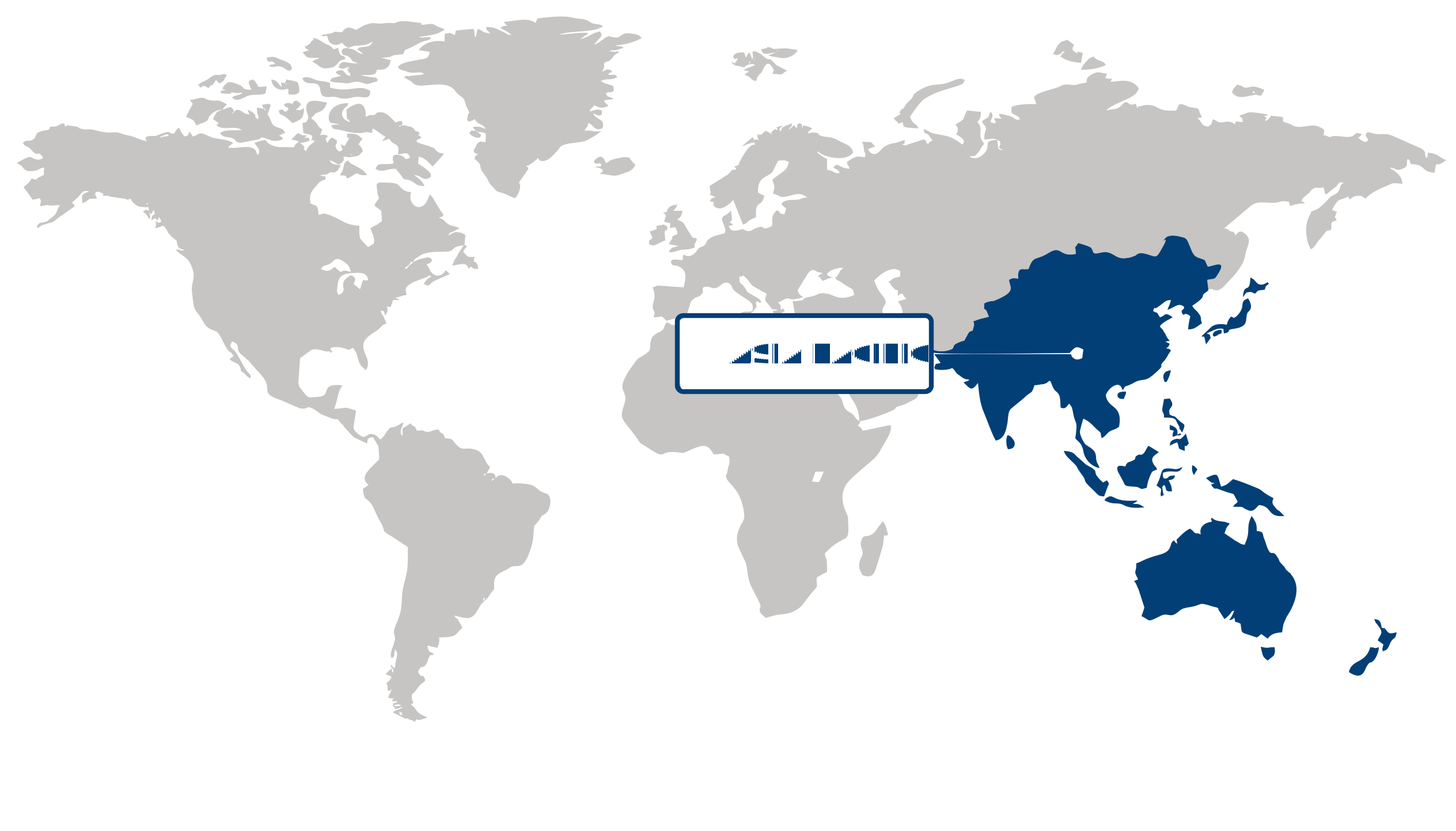
Asia Pacific dominated the molded underfill material market in 2025, capturing approximately 50% of the global share and exhibiting the fastest growth with an 8.7% CAGR. This region’s leadership is driven primarily by the strong presence of major semiconductor foundries concentrated in East Asia, fostering robust demand for advanced packaging solutions. Companies such as Taiwan Semiconductor Manufacturing Company (TSMC) and Samsung Electronics have expanded their capacities, as noted in their 2024 corporate disclosures, fueling downstream demand for molded underfill materials. Additionally, the region’s investments in digital transformation and supply chain resiliency support substantial growth opportunities. Government backing for innovation in countries like South Korea and Singapore further accelerates adoption, making Asia Pacific a critical hub for high-reliability semiconductor packaging. Looking ahead, sustained industrial upgrading and increasing end-use applications in automotive electronics and 5G infrastructure underscore Asia Pacific’s strategic advantage in the molded underfill material market.
Japan plays a pivotal role in the Asia Pacific molded underfill material market, leveraging its advanced manufacturing ecosystem and rigorous quality standards. The country’s focus on automotive and industrial automation sectors, highlighted by corporate strategies from companies such as Sumitomo Chemical, enhances demand for high-performance underfill materials tailored to durability and thermal management. Japan’s regulatory framework encourages sustainable and energy-efficient materials, positioning it as an innovation leader within the region. Furthermore, collaborations between government research entities like the National Institute of Advanced Industrial Science and Technology (AIST) and private firms drive material innovations aligned with next-generation semiconductor packaging technologies. Japan’s emphasis on precision and reliability reinforces Asia Pacific’s comprehensive market dominance by integrating high-value specialty applications with broader semiconductor trends.
China anchors Asia Pacific’s molded underfill material market growth through unparalleled scale in semiconductor manufacturing and government-led industrial policies. The country’s significant investments under the “Made in China 2025” initiative and the National Integrated Circuit Industry Development Outline stimulate domestic foundry output, as evidenced by company expansions such as SMIC’s capacity announcements. This scale generates substantial downstream material demand, while the evolving regulatory environment emphasizes supply chain security and localization of critical materials. Chinese manufacturers increasingly adopt molded underfill materials for diverse applications from consumer electronics to automotive semiconductors, driving competitive dynamics and innovation. China’s market momentum enhances regional opportunities by broadening end-use segments and accelerating material performance improvements essential to Asia Pacific’s continued leadership in the global molded underfill material market.
North America Market Analysis:
North America held a substantial share in the molded underfill material market, driven primarily by the region’s advanced semiconductor manufacturing and electronics assembly sectors. The presence of key original equipment manufacturers (OEMs) and semiconductor foundries in the U.S. and Canada has catalyzed demand for high-performance underfill materials to enhance device reliability and thermal management. Increasing investment in 5G infrastructure, electric vehicles, and IoT devices has further fueled adoption, with companies such as Intel and Texas Instruments expanding capacities, as reported in their recent corporate disclosures. Additionally, stringent regulatory standards set by the U.S. Environmental Protection Agency have encouraged the use of environmentally compliant materials, propelling innovation in sustainable molded underfill solutions. North America’s sophisticated supply chain networks and focus on advanced manufacturing technologies reinforce its strategic position, making the region a pivotal market with considerable potential for growth in high-reliability electronics applications.
The U.S. remains a dominant player within North America’s molded underfill material market, supported by robust consumer electronics demand and strong government funding for next-generation semiconductor technologies. American firms benefit from a conducive regulatory landscape that promotes innovation, such as incentives for advanced manufacturing under the Department of Commerce’s CHIPS Act. Companies like Micron Technology have highlighted investments in new fabrication plants, necessitating tailored underfill materials to meet stringent performance and durability criteria. Moreover, evolving consumer preferences toward smaller, more efficient devices drive manufacturers to integrate molded underfill materials that enhance component miniaturization. This dynamic not only consolidates the U.S. market’s leadership but also strengthens North America’s overall market outlook, providing investors and strategists with valuable entry points in a technologically progressive environment.
Europe Market Trends:
Europe maintained a notable presence in the molded underfill material market, driven by its blend of advanced manufacturing and stringent environmental standards. The region’s focus on sustainability and regulatory frameworks, such as those enforced by the European Chemicals Agency (ECHA), has accelerated the adoption of eco-friendly and high-performance underfill solutions in semiconductor packaging. Additionally, Europe's robust automation and Industry 4.0 initiatives, supported by entities like the European Commission, have enhanced operational efficiencies and innovation capacity across supply chains. The concentration of leading electronics manufacturers in countries like Germany and France ensures steady demand growth, further fueled by rising applications in automotive electronics and consumer devices. These dynamics collectively underscore Europe’s strategic role and suggest expanding opportunities for suppliers prioritizing compliance and technological integration in the molded underfill material market.
Germany stands as a pivotal driver within the molded underfill material market in Europe, with its advanced automotive and industrial electronics sectors demanding high-reliability packaging solutions. German companies benefit from strong collaborative efforts between research hubs such as Fraunhofer Institute and semiconductor firms, fostering innovations that improve material performance and processing efficiency. Moreover, the country’s emphasis on sustainability aligns with tighter European regulations, reinforcing adoption of greener underfill materials. According to the German Federal Ministry for Economic Affairs and Climate Action, strategic investments in digital infrastructure and manufacturing modernization continue to bolster this growth. Consequently, Germany’s leadership in engineering and regulatory compliance positions it as a cornerstone for scaling advanced molded underfill applications across the European market.
France plays a vital role in the molded underfill material market through its dynamic electronics manufacturing and growing commitment to environmentally responsible production. The country’s innovation ecosystem, supported by entities like Bpifrance and the National Research Agency, encourages development of novel materials optimized for performance and eco-compatibility. Furthermore, the French government’s initiatives toward digital transformation and semiconductor sovereignty under the “France 2030” plan emphasize local supply chain strengthening and advanced packaging technologies. These efforts, articulated in press releases by companies such as STMicroelectronics, highlight France’s drive to meet both market demand and regulatory expectations. As such, France’s growing technical expertise and policy backing enhance Europe’s prospects in the molded underfill material market, offering investors strategic access to a technologically progressive environment.
| Parameter | North America | Asia Pacific | Europe | Latin America | MEA |
|---|---|---|---|---|---|
| Innovation Hub i Scale Nascent Developing Advanced | |||||
| Cost-Sensitive Region i Scale Low Medium High | |||||
| Regulatory Environment i Scale Restrictive Neutral Supportive | |||||
| Demand Drivers i Scale Weak Moderate Strong | |||||
| Development Stage i Scale Emerging Developing Developed | |||||
| Adoption Rate i Scale Low Medium High | |||||
| New Entrants / Startups i Scale Sparse Moderate Dense | |||||
| Macro Indicators i Scale Weak Stable Strong |
Segment Leadership and Growth Trends
Molded Underfill Material Market Share (%), by Product Type, 2026
Go beyond the chart, access full insights & data tables
Request Free Sample ReportThe epoxy-based segment held the largest share in the molded underfill material market in 2025, driven by its superior thermal stability, mechanical strength, and cost-effectiveness. These properties align well with customer demands for durable, reliable packaging solutions that also optimize production costs, supporting broader industry adoption. Companies like Henkel and DuPont emphasize epoxy formulations in their product portfolios, highlighting regulatory compliance with RoHS standards and global supply chain robustness. This segment offers strategic advantages by enabling manufacturers to balance performance with affordability, catering to diverse end markets. Given ongoing advancements in epoxy chemistry and sustained preference for cost-efficient thermal management, the epoxy-based segment is expected to maintain leadership in molding underfill materials in the near to medium term.
Analysis by Application
The flip chips segment dominated the molded underfill material market due to widespread adoption in high-performance computing, consumer electronics, and automotive sectors. This surge is linked to flip chips’ ability to support enhanced electrical performance and miniaturization trends driven by digital transformation and stringent product lifecycle demands. Leading semiconductor firms like Intel and Samsung have integrated flip-chip technologies at scale, supported by international standards from JEDEC that encourage reliability and industry-wide interoperability. For established and emerging players, this segment presents opportunities in catering to growing markets for 5G devices and automotive electronics. The continuous push for device miniaturization and increasing computational power ensures that flip-chip applications will remain pivotal to future market dynamics.
Analysis by End-user
Consumer electronics represented the largest share in the molded underfill material market, fueled by rising demand for miniaturized smartphones, tablets, and wearable devices that necessitate advanced underfill solutions for durability and thermal management. The segment's growth is augmented by consumer preferences for lightweight, compact gadgets and intense product refresh cycles typical of the technology sector. Companies such as Apple and Sony regularly announce innovations that incorporate high-performance molded underfills, reflecting compliance with stringent environmental policies like those from the U.S. Environmental Protection Agency (EPA). This segment offers strategic scope for both incumbents and new entrants to leverage rapid technological evolution and supply chain efficiencies. The consumer electronics segment will likely sustain its market dominance as device complexity and user expectations continue to escalate.
| Segment | Sub-Segment | Largest Segment | Fastest Growing |
|---|---|---|---|
| Product Type | Epoxy-Based, Silicone-Based, Others | ||
| Application | Flip Chips, Ball Grid Array (BGA), Chip Scale Packaging (CSP) | ||
| End-user | Consumer Electronics, Automotive Electronics, Industrial Electronics, Telecommunication, Medical Devices |
Competitive Landscape and Market Positioning
The competitive environment is defined by proactive collaborations, portfolio expansions, and technology-driven advancements among these top players. Several have integrated complementary technologies to address challenges associated with thermal management and mechanical stress in electronic assemblies. Cross-border partnerships fortify supply chains and enhance R&D capacities, enabling rapid introduction of next-generation underfill solutions. The continuous refinement of chemical compositions and process innovations positions companies favorably against intense market pressures, fostering differentiation grounded in product reliability and performance consistency. Collectively, these strategic moves elevate the competitive dynamics and accelerate technological integration across the sector.
Strategic / Actionable Recommendations for Regional Players
North American entities stand to benefit by aligning with technology developers specializing in nano-scale materials and additive manufacturing, thereby enriching product portfolios to satisfy stringent reliability criteria in sectors like aerospace and automotive electronics.
In the Asia Pacific, firms could capitalize on the surging electronics manufacturing ecosystem by fostering alliances with semiconductor fabricators, enabling co-development initiatives that tailor underfill characteristics to specific device architectures, further anchoring their market foothold.
European market participants are advised to harness sustainable chemistry trends by collaborating with green technology innovators, enhancing environmental compliance while differentiating offerings through eco-efficient material solutions that appeal to regulatory-focused clients.
| Company | Market Share | Company Revenue | Revenue CAGR (%) | Product Portfolio | Geographic Presence | Innovation / R&D Focus | Strategic Developments |
|---|---|---|---|---|---|---|---|
| No companies available. | |||||||
Industry Development/News
| Company Name | Date | Key Development |
|---|
Customize Your Report
Explore examples of how this report can be tailored to different research needs, including custom segments, additional topics or chapters, and related reports. Click a section of the wheel or its numbered marker to explore the available options.
Molded Underfill Material Market — Custom Segments
| Segment | Sub-Segment |
|---|---|
| No segment data available. | |
Molded Underfill Material Market — Custom TOC
| Custom Chapter | Custom Details | ||
|---|---|---|---|
| No custom TOC data available. | |||
Need a different cut of the data?
Request Custom ResearchWhat are the growth projections for the molded underfill material industry?
What is the leading region in terms of molded underfill material market share?
Where has the molded underfill material sector recorded the sharpest year-over-year increase?
Where is the epoxy-based segment seeing the strongest adoption within the molded underfill material industry?
When did flip chips sub-segment emerge as the largest sub-segment in the application segment of molded underfill material sector?
Why is the consumer electronics segment leading in the molded underfill material industry?
Who are the leading players in the molded underfill material landscape?
Our Clients
"Working with FBI has been a good experience. The market report provided a holistic view, covering everything from emerging trends to potential risks."
Semtech Corporation
"The experience was highly positive. The team showcased remarkable flexibility in adapting to our specific needs and delivered report that perfectly aligned with all our requirements."
TSMC
"What really stood out to me was how clearly and promptly the Fundamental Business Insights team communicated throughout. It made the collaboration feel effortless."
NXP Semiconductors
Our Research Team & Methodology
Every Fundamental Business Insights report is built by a dedicated vertical research team, validated through a structured primary-and-secondary methodology, and reviewed for accuracy before it reaches you.
Research Team Overview
Prepared by the Electronics & Semiconductors Research Team
Delivery
Published
Demand
Available
Support
Trust & Compliance
Research Domains
10 coverage areasResearch Intelligence
| Source | Reference |
|---|---|
| Semiconductor Industry Association (SIA) | www.semiconductors.org |
| SEMI | www.semi.org |
| JEDEC Solid State Technology Association | www.jedec.org |
| IEEE | www.ieee.org |
| IPC – Association Connecting Electronics Industries | www.ipc.org |
| International Electrotechnical Commission (IEC) | www.iec.ch |
| International Organization for Standardization (ISO) | www.iso.org |
| U.S. Bureau of Industry and Security (BIS) | www.bis.gov |
| U.S. Patent and Trademark Office (USPTO) | www.uspto.gov |
| European Patent Office (EPO) | www.epo.org |
| Taiwan Semiconductor Industry Association (TSIA) | www.tsia.org.tw |
| World Semiconductor Trade Statistics (WSTS) | www.wsts.org |
| International Energy Agency (IEA) | www.iea.org |
| GSMA | www.gsma.com |
| 3GPP | www.3gpp.org |
| ITU (International Telecommunication Union) | www.itu.int |
| Omdia (public insights) | omdia.tech.informa.com |
| Display Supply Chain Consultants (DSCC) | www.displaysupplychain.com |
| U.S. Department of Energy (DOE) | www.energy.gov |
| NIST (National Institute of Standards and Technology) | www.nist.gov |
Research Workflow & Quality Assurance
Data Collection
Verified information gathered through primary and secondary research.
Data Triangulation
Cross-validation using multiple independent data sources.
Forecast Modelling
Market estimates developed using historical trends and analytical models.
Analyst Validation
Findings reviewed by domain experts for accuracy and consistency.
Editorial & Quality Review
Final editorial, quality, and compliance checks before publication.
Final Publication
Released after successful completion of the internal review process.
Report Coverage
📊 Market Assessment
- Market Size & Forecast
- Market Segmentation
- Regional Analysis
- Growth Drivers & Challenges
- Market Dynamics
🏢 Competitive Intelligence
- Competitive Landscape
- Company Profiles
- Competitive Benchmarking
- Mergers & Acquisitions
- Market Share Analysis or Key Company Strategies
🔍 Strategic Analysis
- Value Chain Analysis
- Porter's Five Forces
- PESTLE Analysis
- Pricing Trends
- Supply-Demand Analysis
🚀 Future Outlook
- Technology Landscape
- Regulatory Landscape
- Investment & Funding Landscape
- Emerging Opportunities
- Future Market Outlook
Have a question about this report or need a custom scope?
Request Customization