Latent Tuberculosis Infection Detection Market Size & Growth Forecast 2027–2036, By Segments (Test Type, Application, End-use, Brand), Regional Demand Trends (North America, Asia Pacific, Europe), Key Country Insights (U.S., Japan, South Korea, Germany, France, Italy), and Competitive Landscape
Market Size and Growth Outlook
Latent Tuberculosis Infection Detection Market size was assessed at USD 2.1 billion in 2026 and is poised to grow at a 5.61% CAGR between 2027 and 2036, surpassing USD 3.62 billion by 2036. The industry revenue for 2027 is calculated at USD 2.2 billion.
Get more details on this report
Request Free Sample ReportLatent Tuberculosis Infection Detection Market Intelligence Snapshot
Regional Market Dynamics
- Asia Pacific held a 46.00% share in 2026, supported by large-scale screening programs, sustained testing demand, and broad diagnostic activity across laboratories, hospitals, and public health initiatives.
- North America is projected to grow at a 6.22% CAGR as targeted screening, preventive care integration, and wider adoption of advanced diagnostic methods increase testing demand among at-risk populations.
Segment Momentum
- The Tuberculin Skin Test leads with a 67.9% share in 2026 due to widespread clinical familiarity, established screening programs, and continued use in large-scale testing environments across routine care pathways.
- Household contacts are the fastest-growing segment as exposure-based screening gains importance, with early identification of infection risk driving stronger uptake of targeted latent tuberculosis detection and follow-up care.
Market Expansion Drivers
- Government TB eradication initiatives and increased funding expanding diagnostic screening programs globally.
- Rising prevalence of latent TB and HIV co-infection driving demand for early detection diagnostics.
- Expansion of advanced immunoassay and molecular diagnostic technologies improving detection accuracy and accessibility.
Leading Market Participants
- Leading companies in the latent tuberculosis infection detection market include QIAGEN N.V. (Netherlands), bioMérieux SA (France), Revvity, Inc. (United States), SD Biosensor, Inc. (South Korea), Sanofi S.A. (France), ARKRAY, Inc. (Japan), Serum Institute of India Pvt. Ltd. (India), Wantai BioPharm Co., Ltd. (China), Lionex GmbH (Germany), Par Pharmaceutical, Inc. (United States).
Global Market Forecast Snapshot
Market Outlook
- 2026 Market Size: USD 2.1 billion
- 2027 Estimated Market Size: USD 2.2 billion.
- Projected Market Size: USD 3.62 billion by 2036
- Growth Forecast: 5.61% CAGR (2027-2036)
Regional and Segment Outlook
- Leading Regional Market: Asia Pacific
- High-Growth Regional Hub: North America
- Core Revenue Segment: Tuberculin Skin Test (TST) (Test Type) | PLHIV (Application) | Diagnostic Laboratories (End-use) | QFT-Plus (QuantiFERON-TB Gold Plus) (Brand)
- Emerging Opportunity Segment: Interferon Gamma Released Assay (IGRA) (Test Type) | Household Contacts with Pulmonary TB (Application) | Diagnostic Laboratories (End-use) | QFT-Plus (QuantiFERON-TB Gold Plus) (Brand)
Market Growth Drivers and Industry Trends
Government TB eradication initiatives and increased funding expanding diagnostic screening programs globally
Government-led tuberculosis eradication initiatives and greater public health funding are strengthening screening infrastructure, which will drive the latent tuberculosis infection detection market growth by expanding access to diagnostic services across high-burden and vulnerable populations. National TB control programs increasingly emphasize active case finding, contact investigation, preventive treatment, and systematic screening among individuals with elevated exposure risks. Increased allocation of healthcare resources also supports the procurement of diagnostic tests, laboratory equipment, mobile screening services, and workforce training, enabling healthcare systems to identify latent infections before they progress to active disease. Integration of screening into community health programs, hospitals, primary care facilities, and targeted population-based initiatives can further improve testing coverage, particularly in regions where TB remains a persistent public health concern. These efforts also encourage standardized diagnostic pathways and broader adoption of screening protocols among healthcare providers.
Rising prevalence of latent TB and HIV co-infection driving demand for early detection diagnostics
The growing burden of latent TB infection among people living with HIV is increasing the need for timely screening, making this epidemiological overlap an important factor that will propel the latent tuberculosis infection detection market. Individuals with compromised immune function face a greater risk of progression from latent infection to active tuberculosis, creating a strong clinical rationale for identifying infection before disease symptoms emerge. Healthcare programs serving HIV-positive populations therefore require dependable diagnostic approaches that can support routine screening, risk assessment, and preventive treatment decisions. Greater integration of TB and HIV services is also improving opportunities for testing within specialized clinics and community-based healthcare settings, while heightened clinical awareness of co-infection risks encourages healthcare professionals to prioritize screening for high-risk patients. The need for early identification is particularly relevant where delayed diagnosis can increase transmission risks and complicate treatment management.
Expansion of advanced immunoassay and molecular diagnostic technologies improving detection accuracy and accessibility
Technological progress in immunoassay and molecular diagnostic platforms is enhancing the ability to identify tuberculosis infection with greater consistency, supporting the latent tuberculosis infection detection market through improved diagnostic performance and broader testing accessibility. Modern immunological assays can provide practical alternatives to conventional testing approaches, while molecular technologies offer opportunities for more sophisticated detection workflows within laboratories and healthcare facilities. Improvements in assay design, automation, sample processing, and diagnostic workflows can reduce operational complexity and support greater testing efficiency. Portable and decentralized diagnostic solutions can additionally extend screening capabilities beyond centralized laboratories, benefiting remote communities and healthcare settings with limited diagnostic infrastructure. As healthcare systems seek more reliable methods for identifying individuals who may benefit from preventive intervention, the availability of advanced testing technologies strengthens diagnostic capacity across different levels of care.
| Growth Driver | Impact on CAGR | Regulatory Influence | Geographic Relevance | Adoption Rate | Impact Timeline |
|---|---|---|---|---|---|
| Government TB eradication initiatives and increased funding expanding diagnostic screening programs globally | 2.00% | High | Asia Pacific, North America | High | Near Term |
| Rising prevalence of latent TB and HIV co-infection driving demand for early detection diagnostics | 1.80% | High | Asia Pacific, Africa | High | Mid Term |
| Expansion of advanced immunoassay and molecular diagnostic technologies improving detection accuracy and accessibility | 1.60% | Moderate | North America, Europe | Emerging | Long Term |
Unlock insights tailored to your business with our bespoke market research solutions.
Click to get your customized report now.
Regional Demand Dynamics
Asia Pacific (Largest Region)
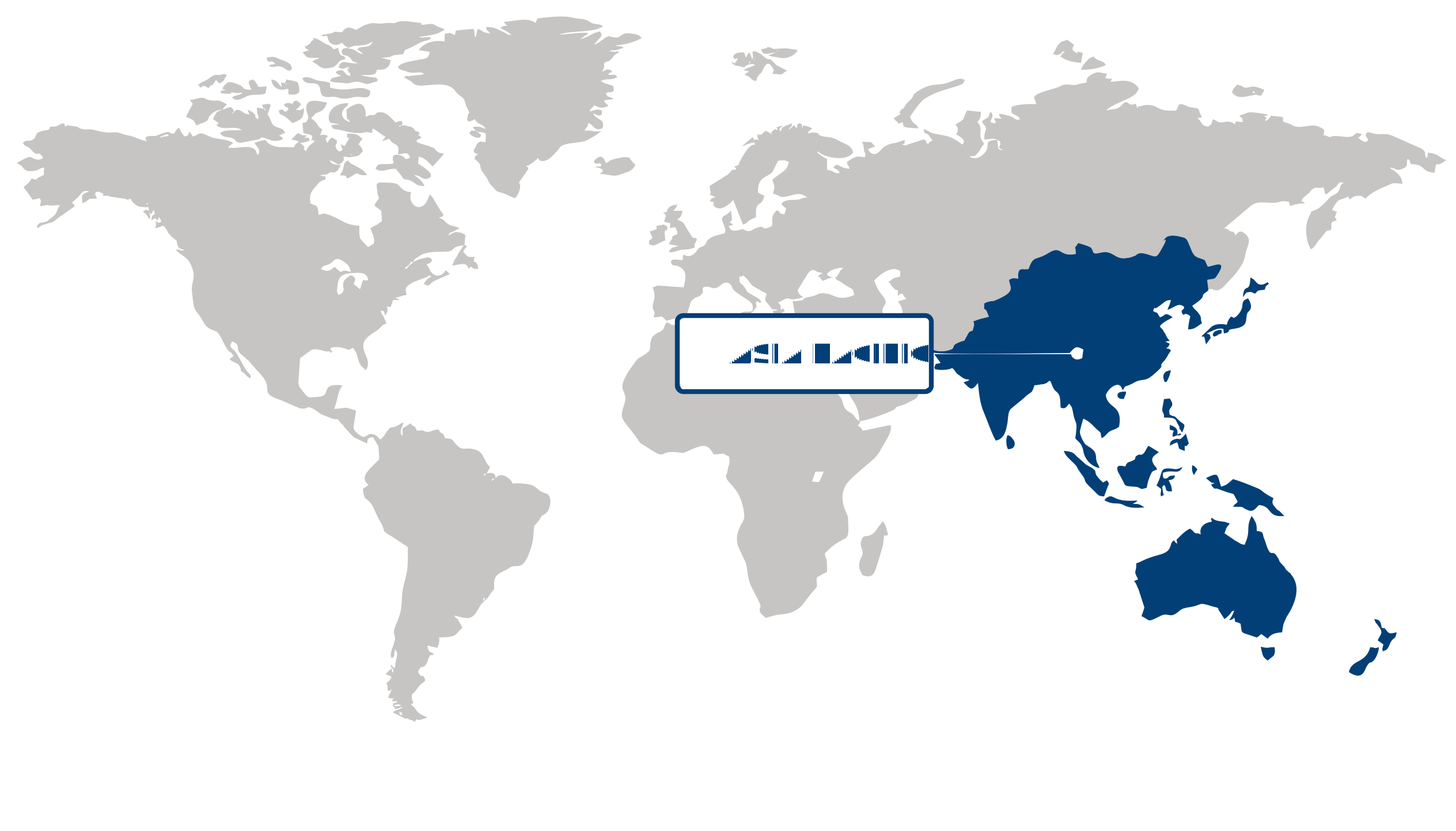
The latent tuberculosis infection detection market in Asia Pacific held the largest share of 46.00% in 2026, supported by the region's substantial tuberculosis burden, expanding diagnostic infrastructure, and increasing emphasis on identifying infections before progression to active disease. Greater adoption of screening programs across hospitals, public health facilities, and high-risk populations is strengthening demand for reliable detection technologies. Improvements in laboratory capacity, healthcare access, and disease surveillance are also supporting broader diagnostic coverage, particularly across countries where tuberculosis remains an important public health concern. Growing government focus on disease control and increasing clinical awareness of preventive treatment pathways are further reinforcing the need for effective latent infection identification.
North America (Fastest-Growing Region)
North America represents the fastest-growing region, driven by stronger screening initiatives, advanced diagnostic capabilities, and greater integration of tuberculosis risk assessment into routine healthcare. Healthcare providers are increasingly emphasizing targeted testing for populations with elevated exposure or clinical risk, creating demand for accurate and efficient detection methods. Advanced laboratory infrastructure and well-established infectious disease management systems facilitate adoption of modern diagnostic technologies, while public health programs continue to support early identification and preventive intervention. Increasing migration from tuberculosis-endemic regions and continued attention to healthcare-associated infection control are also contributing to demand for latent infection testing.
| Parameter | North America | Asia Pacific | Europe | Latin America | MEA |
|---|---|---|---|---|---|
| Innovation Hub i Scale Nascent Developing Advanced | |||||
| Cost-Sensitive Region i Scale Low Medium High | |||||
| Regulatory Environment i Scale Restrictive Neutral Supportive | |||||
| Demand Drivers i Scale Weak Moderate Strong | |||||
| Development Stage i Scale Emerging Developing Developed | |||||
| Adoption Rate i Scale Low Medium High | |||||
| New Entrants / Startups i Scale Sparse Moderate Dense | |||||
| Macro Indicators i Scale Weak Stable Strong |
Key Country Insights
Germany 🇩🇪
Precision Diagnostic AdoptionGermany emphasizes accurate latent tuberculosis infection detection through standardized testing protocols and laboratory quality assurance. Healthcare institutions are adopting modern diagnostic tools that improve clinical decision-making and screening efficiency.
France 🇫🇷
Risk-Based Detection StrategyFrance is reinforcing latent tuberculosis infection detection through focused screening of at-risk individuals and improved diagnostic pathways. Healthcare authorities encourage accurate testing to strengthen preventive care and reduce future disease burden.
Italy 🇮🇹
Expanded Clinical ScreeningItaly is enhancing latent tuberculosis infection detection by increasing screening within healthcare facilities and vulnerable populations. Diagnostic providers are supporting clinicians with dependable testing solutions that facilitate timely preventive treatment decisions.
Japan 🇯🇵
Preventive Testing FocusJapan supports latent tuberculosis infection detection through preventive screening initiatives targeting vulnerable patient groups. Healthcare providers are emphasizing reliable diagnostic methods that enable timely preventive treatment before disease progression.
South Korea 🇰🇷
Public Health SurveillanceSouth Korea continues strengthening latent tuberculosis infection detection through coordinated surveillance programs and expanded diagnostic capacity. Clinical laboratories are supporting broader screening efforts with efficient and standardized testing practices.
United States 🇺🇸
Targeted Screening ProgramsThe U.S. latent tuberculosis infection detection market prioritizes screening among high-risk populations using advanced diagnostic technologies. Healthcare providers continue refining testing strategies that enable earlier intervention and support public health objectives.
Segment Leadership and Growth Trends
Latent Tuberculosis Infection Detection Market Share (%), by Test Type, 2026
Go beyond the chart, access full insights & data tables
Request Free Sample ReportTest Type Segment Analysis: Tuberculin Skin Test (TST) (Largest Segment) vs Interferon Gamma Released Assay (IGRA) (Fastest-Growing Segment)
The tuberculin skin test (TST) segment dominated the latent tuberculosis infection detection market with a 67.9% share in 2026. Its established role in tuberculosis screening, broad clinical familiarity, and suitability for identifying individuals who may require further evaluation contribute to its strong market position. TST remains an important diagnostic approach in settings where accessible and established screening methods are prioritized. Continued tuberculosis control initiatives and the need for screening among populations at elevated risk further sustain utilization of this testing method.
Interferon gamma released assay (IGRA) is the fastest-growing test type, supported by growing interest in blood-based approaches for latent tuberculosis detection. IGRAs offer advantages in settings where more convenient testing and improved specificity are valued, particularly when prior exposure to tuberculosis-related vaccines or environmental mycobacteria can complicate interpretation of skin testing. Increasing adoption of advanced diagnostic methods, together with efforts to improve screening efficiency, is strengthening the role of IGRA-based testing in latent infection detection.
Application Segment Analysis: PLHIV (Largest Segment) vs Household Contacts with Pulmonary TB (Fastest-Growing Segment)
In the latent tuberculosis infection detection market, the PLHIV segment accounted for the largest share, reaching 44.73% in 2026. People living with HIV face heightened vulnerability to tuberculosis and therefore require effective screening and early identification of latent infection as part of comprehensive disease management. Greater emphasis on integrated HIV and tuberculosis programs supports the use of latent infection testing within this population. Strengthening screening practices and preventive approaches for high-risk groups continues to reinforce the importance of PLHIV as a major application segment.
Household contacts with pulmonary TB represent the fastest-growing application segment, reflecting increased attention to individuals who have experienced close exposure to infectious tuberculosis cases. Screening household contacts can help identify latent infection and support timely preventive intervention, thereby strengthening broader transmission-control efforts. Public health strategies increasingly emphasize contact investigation and proactive identification of exposed individuals. This focus is creating greater demand for accessible and reliable latent tuberculosis detection among household contacts.
| Segment | Sub-Segment | Largest Segment | Fastest Growing |
|---|---|---|---|
| Test Type | Tuberculin Skin Test (TST), Interferon Gamma Released Assay (IGRA) | Tuberculin Skin Test (TST) | Interferon Gamma Released Assay (IGRA) |
| Application | Household Contacts with Pulmonary TB, PLHIV, Others | PLHIV | Household Contacts with Pulmonary TB |
| End-use | Diagnostic Laboratories, Hospitals/clinics, Academic & Research Institutions | Diagnostic Laboratories | Diagnostic Laboratories |
| Brand | QFT-Plus (QuantiFERON-TB Gold Plus), Others | QFT-Plus (QuantiFERON-TB Gold Plus) | QFT-Plus (QuantiFERON-TB Gold Plus) |
Competitive Landscape and Market Positioning
Major players in the latent tuberculosis infection detection market:
1. QIAGEN N.V. (Netherlands)
2. bioMérieux SA (France)
3. Revvity Inc. (United States)
4. SD Biosensor Inc. (South Korea)
5. Sanofi S.A. (France)
6. ARKRAY Inc. (Japan)
7. Serum Institute of India Pvt. Ltd. (India)
8. Wantai BioPharm Co. Ltd. (China)
9. Lionex GmbH (Germany)
10. Par Pharmaceutical Inc. (United States)
The latent tuberculosis infection detection market is evolving through improved diagnostic tools that enhance early identification and screening accuracy. Continuous innovation is strengthening test sensitivity and reliability. Expanding research collaborations are also accelerating development of next-generation diagnostic solutions.
| Company | Market Share | Company Revenue | Revenue CAGR (%) | Product Portfolio | Geographic Presence | Innovation / R&D Focus | Strategic Developments |
|---|---|---|---|---|---|---|---|
| QIAGEN N.V. (Netherlands) | |||||||
| bioMérieux SA (France) | |||||||
| Revvity Inc. (United States) | |||||||
| SD Biosensor Inc. (South Korea) | |||||||
| Sanofi S.A. (France) | |||||||
| ARKRAY Inc. (Japan) | |||||||
| Serum Institute of India Pvt. Ltd. (India) | |||||||
| Wantai BioPharm Co. Ltd. (China) | |||||||
| Lionex GmbH (Germany) | |||||||
| Par Pharmaceutical Inc. (United States). |
Industry Development/News
| Company Name | Date | Key Development |
|---|---|---|
| Revvity | Apr-25 | Revvity received FDA clearance for the Auto-Pure 2400 system integrated with the T-SPOT.TB assay, enabling higher-throughput IGRA testing in U.S. reference laboratories. The development strengthens the company’s automated TB screening capabilities and supports scaling of latent TB diagnostic workflows. |
| QIAGEN | Mar-25 | QIAGEN filed a patent infringement lawsuit against bioMérieux to protect its QuantiFERON technology in latent tuberculosis testing. The legal action reflects efforts to defend intellectual property and maintain competitive positioning in the IGRA-based TB diagnostics market. |
| Revvity | Feb-25 | Revvity received FDA approval for an improved automated latent TB infection testing workflow integrating the Auto-Pure liquid handling platform with the T-SPOT TB assay. The approval enhances laboratory automation and increases testing efficiency and throughput in clinical settings using IGRA-based TB diagnostics. |
| bioMérieux | Apr-24 | bioMérieux obtained CE marking for its VIDAS KUBE automated immunoassay system, including support for VIDAS TB-IGRA testing. The approval expands the company’s automated tuberculosis screening capabilities and enhances its presence in latent TB diagnostic workflows across clinical laboratories. |
| QIAGEN | Mar-24 | QIAGEN entered a global partnership with the International Panel Physicians Association to educate panel physicians on updated tuberculosis screening requirements, with emphasis on IGRA-based testing. The initiative supports broader adoption and standardization of latent TB screening practices among international healthcare providers. |
| Revvity | Nov-23 | Revvity launched its T-SPOT TB test in India at MICROCON, expanding access to IGRA-based latent TB screening in a high-burden market. The company positioned the assay as the only FDA-approved ELISPOT-based IGRA test, reinforcing its competitive differentiation in TB diagnostics. |
| QIAGEN | Feb-23 | QIAGEN achieved CE marking under the EU IVDR regulation for its QuantiFERON-TB Gold Plus test, replacing the previous IVDD framework. The certification strengthens regulatory compliance and supports continued commercialization of its leading IGRA-based tuberculosis blood test in the European market. |
Customize Your Report
Explore examples of how this report can be tailored to different research needs, including custom segments, additional topics or chapters, and related reports. Click a section of the wheel or its numbered marker to explore the available options.
Latent Tuberculosis Infection Detection Market — Custom Segments
| Segment | Sub-Segment |
|---|---|
| Patient Risk Category | High-Risk Contacts, Immunocompromised Individuals, Healthcare Workers, High-Risk Populations |
| Testing Purpose | Pre-Employment Screening, Pre-Treatment Screening, Contact Investigation, Routine Screening |
| Test Procurement Model | Direct Institutional Procurement, Distributor-Based Procurement, Public Health Program Procurement |
Latent Tuberculosis Infection Detection Market — Custom TOC
| Custom Chapter | Custom Details |
|---|---|
| Global TB Screening Strategy Assessment |
|
| High-Risk Population Testing Opportunities |
|
| Point-of-Care Testing Opportunity Assessment |
|
Need a different cut of the data?
Request Custom ResearchHow big is the latent tuberculosis infection detection market?
How is the latent tuberculosis infection detection industry projected to perform over the next decade?
How are government-led TB screening initiatives influencing demand in the latent tuberculosis infection detection market?
How is diagnostic technology advancement improving adoption of latent tuberculosis infection detection solutions?
Why does the Tuberculin Skin Test remain the dominant test type in latent tuberculosis detection?
What is driving increased screening among household contacts with pulmonary TB?
Why does Asia Pacific dominate the latent tuberculosis infection detection market?
What is driving North America's growth in the latent tuberculosis infection detection market?
Who are the major participants shaping the latent tuberculosis infection detection landscape?
Our Clients
"The team took the time to understand our specific business needs and delivered a report that was well aligned with our objectives. Their expertise and understanding of the industry were clearly reflected in the quality and relevance of the insights provided."
Siemens Healthcare
"Our experience in acquiring the research report has been excellent. The depth of analysis, and actionable insights provided have been extremely valuable in supporting our ongoing R&D efforts."
GC Biopharma
"The report offered a comprehensive view of the market trends. The in-depth segmentation and analysis of emerging opportunities gave us a better understanding of the market."
Medtronic
Our Research Team & Methodology
Every Fundamental Business Insights report is built by a dedicated vertical research team, validated through a structured primary-and-secondary methodology, and reviewed for accuracy before it reaches you.
Research Team Overview
Prepared by the Healthcare & Medical Devices Research Team
Delivery
Published
Demand
Available
Support
Trust & Compliance
Research Domains
10 coverage areasResearch Intelligence
| Source | Reference |
|---|---|
| World Health Organization (WHO) | www.who.int |
| U.S. Food & Drug Administration (FDA) | www.fda.gov |
| European Medicines Agency (EMA) | www.ema.europa.eu |
| Centers for Disease Control and Prevention (CDC) | www.cdc.gov |
| National Institutes of Health (NIH) | www.nih.gov |
| National Center for Biotechnology Information (NCBI) | www.ncbi.nlm.nih.gov |
| PubMed | pubmed.ncbi.nlm.nih.gov |
| ClinicalTrials.gov | clinicaltrials.gov |
| International Organization for Standardization (ISO) | www.iso.org |
| ASTM International | www.astm.org |
| Advanced Medical Technology Association (AdvaMed) | www.advamed.org |
| Medical Device Innovation Consortium (MDIC) | mdic.org |
| Biotechnology Innovation Organization (BIO) | www.bio.org |
| International Federation of Pharmaceutical Manufacturers & Associations (IFPMA) | www.ifpma.org |
| U.S. Pharmacopeia (USP) | www.usp.org |
| European Directorate for the Quality of Medicines & HealthCare (EDQM) | www.edqm.eu |
| World Organisation for Animal Health (WOAH) | www.woah.org |
| American Hospital Association (AHA) | www.aha.org |
| OECD Health | www.oecd.org/health |
| World Bank Data | data.worldbank.org |
Research Workflow & Quality Assurance
Data Collection
Verified information gathered through primary and secondary research.
Data Triangulation
Cross-validation using multiple independent data sources.
Forecast Modelling
Market estimates developed using historical trends and analytical models.
Analyst Validation
Findings reviewed by domain experts for accuracy and consistency.
Editorial & Quality Review
Final editorial, quality, and compliance checks before publication.
Final Publication
Released after successful completion of the internal review process.
Report Coverage
📊 Market Assessment
- Market Size & Forecast
- Market Segmentation
- Regional Analysis
- Growth Drivers & Challenges
- Market Dynamics
🏢 Competitive Intelligence
- Competitive Landscape
- Company Profiles
- Competitive Benchmarking
- Mergers & Acquisitions
- Market Share Analysis or Key Company Strategies
🔍 Strategic Analysis
- Value Chain Analysis
- Porter's Five Forces
- PESTLE Analysis
- Pricing Trends
- Supply-Demand Analysis
🚀 Future Outlook
- Technology Landscape
- Regulatory Landscape
- Investment & Funding Landscape
- Emerging Opportunities
- Future Market Outlook
Have a question about this report or need a custom scope?
Request Customization