IoT Gateway Devices Market Size & Forecasts 2026-2035, By Segments (End User, Application, Connectivity), Growth Opportunities, Innovation Landscape, Regulatory Shifts, Strategic Regional Insights (U.S., Japan, China, South Korea, UK, Germany, France), and Competitive Dynamics (Amazon, Cisco, Advantech, Siemens, Huawei)
Market Size and Growth Outlook
IoT Gateway Devices Market size is projected to expand significantly, moving from USD 2.74 billion in 2025 to USD 3.87 billion by 2035, with a CAGR of 3.5% during the 2026-2035 forecast period. The expected revenue for 2026 is USD 2.82 billion.
Get more details on this report
Request Free Sample ReportIoT Gateway Devices Market Intelligence Snapshot
Regional Market Dynamics
Segment Momentum
Market Expansion Drivers
Leading Market Participants
Global Market Forecast Snapshot
Market Outlook
Regional and Segment Outlook
Market Growth Drivers and Industry Trends
The growing deployment of IoT gateway devices in smart home and industrial environments is a pivotal driver for the iot gateway devices market. Consumer demand for enhanced convenience and energy efficiency in homes, alongside industrial sectors' quest for operational automation and predictive maintenance, is accelerating adoption. Companies like Siemens and Honeywell have emphasized smart factory solutions incorporating gateways to streamline data transmission and device management. This evolution enables incumbent players to deepen their ecosystem integration, while new entrants can innovate tailored solutions for niche verticals such as smart grids or connected appliances. As both residential and industrial infrastructure increasingly digitize, the market is positioned to benefit from scalable gateway deployments that address diverse connectivity requirements with real-time data processing demands.
Synergistic Integration with Edge Computing and Cloud Platforms
The convergence of IoT gateway devices with edge computing and cloud services is reshaping the iot gateway devices market by enabling localized data processing combined with cloud-based analytics and storage. Tech leaders like Microsoft Azure and AWS IoT have accelerated partnerships with gateway manufacturers to support hybrid architectures that reduce latency and enhance decision-making at the source. This fusion allows for more efficient management of burgeoning IoT data volumes, creating considerable openings for established cloud providers to broaden their IoT portfolios and for gateway specialists to develop interoperable, flexible devices. As enterprises seek to optimize data flows and computing distribution, the market will witness progressive adoption of gateways engineered for seamless multi-platform integration and scalability.
Advancements in Security and Protocol Standardization
Heightened concerns around IoT security and emerging protocol standardization are critical to advancing the iot gateway devices market. Governments and institutions such as the National Institute of Standards and Technology (NIST) have issued frameworks emphasizing robust security practices for IoT ecosystems, fostering trust and compliance. Industry alliances, for instance, the Connectivity Standards Alliance, are driving unified protocols that simplify integration across heterogeneous devices and networks. This environment incentivizes incumbent firms to invest in secure, compliant gateways and presents opportunities for disruptors offering cutting-edge cybersecurity features and protocol adaptability. Continuous progress in this domain is expected to catalyze wider IoT adoption, as stakeholders prioritize safeguarding the integrity and interoperability of distributed intelligent networks.
Industry Restraints:
Data Privacy and Security Concerns
Data privacy and security remain a critical restraint on the IoT gateway devices market, given the heightened risk of cyberattacks targeting network entry points. The National Institute of Standards and Technology (NIST) underscores vulnerabilities in edge computing devices, warning that inadequate security protocols can lead to data breaches and operational disruptions. This concern deters adoption among enterprises in highly regulated sectors such as healthcare and finance, where sensitive data handling is paramount. For established firms, the need for continuous investment in advanced encryption and authentication technologies increases operational costs, while new entrants face elevated barriers to market entry due to compliance complexities. Consequently, security challenges are expected to sustain cautious procurement strategies, compelling vendors to prioritize resilient, standardized security frameworks to build trust and expand market penetration.
Fragmented Regulatory Environments
The IoT gateway market is hindered by fragmented regulatory landscapes across regions, complicating global deployment strategies. The European Union’s GDPR, the U.S. Federal Communications Commission’s spectrum regulations, and China’s Cybersecurity Law create a patchwork of compliance mandates that require device customization and certification. According to the International Telecommunication Union (ITU), inconsistent regulations slow innovation cycles and elevate time-to-market, pressuring vendors to adopt region-specific designs and increasing production costs. For multinational operators, this complexity limits scalability and delays ROI realization. As governments intensify regulation around data sovereignty and network integrity, market players must enhance regulatory intelligence and develop adaptable, modular hardware solutions to navigate evolving legal frameworks effectively in the foreseeable future.
| Growth Driver | Impact on CAGR | Regulatory Influence | Geographic Relevance | Adoption Rate | Impact Timeline |
|---|---|---|---|---|---|
| Deployment of IoT gateway devices for smart home and industrial applications | 1.50% | Short term (≤ 2 yrs) | North America, Asia Pacific; Spillover: Europe | Medium | Fast |
| Integration with edge computing and cloud platforms | 1.00% | Medium term (2–5 yrs) | North America, Europe; Spillover: Asia Pacific | Low | Moderate |
| Security and protocol standardization for IoT devices | 1.00% | Long term (5+ yrs) | Europe, Asia Pacific; Spillover: North America | High | Moderate |
Unlock insights tailored to your business with our bespoke market research solutions.
Click to get your customized report now.
Regional Demand Dynamics
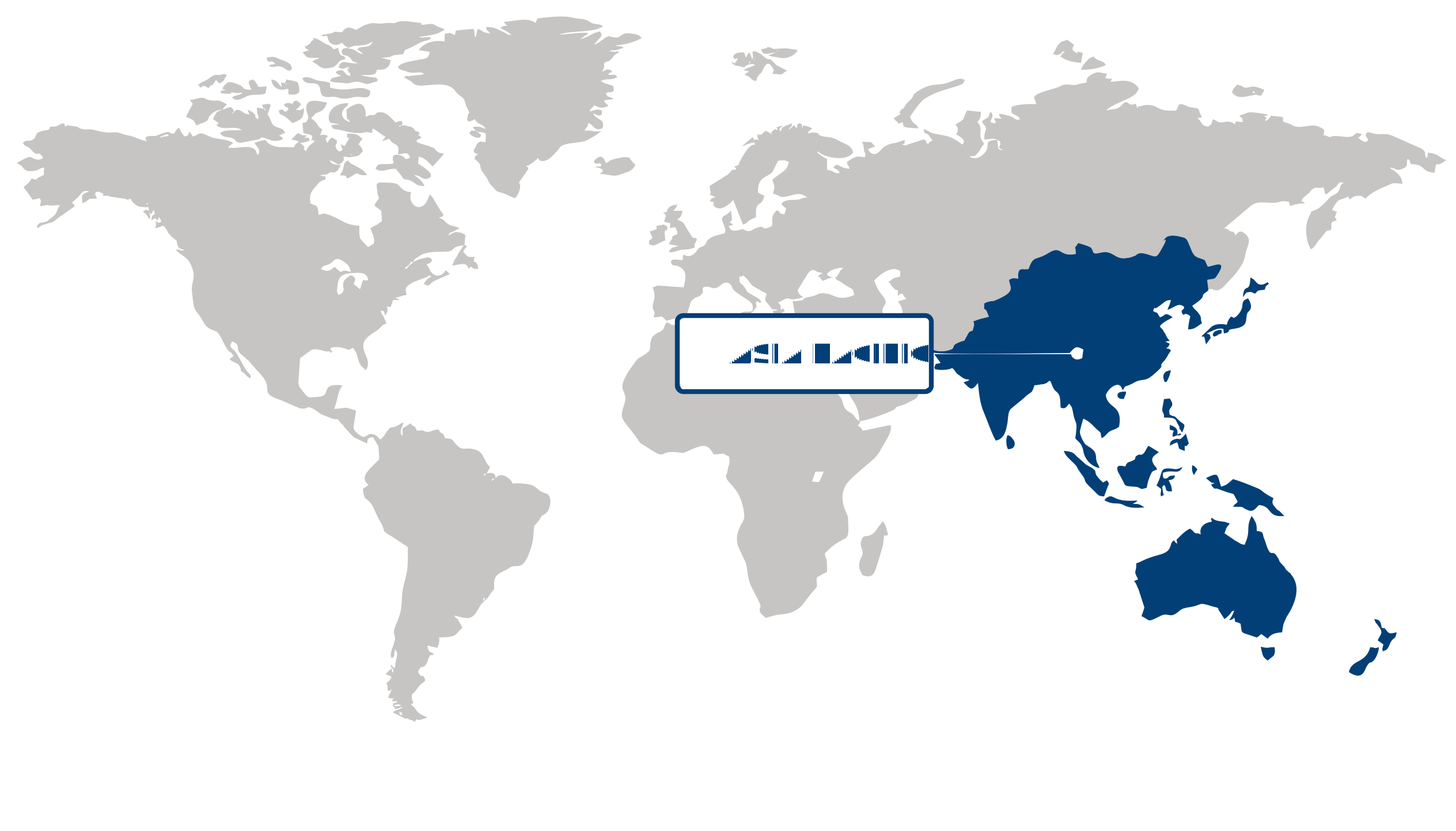
The Asia Pacific region dominated the global iot gateway devices market by capturing over 35% of the share in 2025, making it both the largest and fastest-growing market with a 5.25% CAGR. This leadership is primarily driven by rapid industrial automation and extensive IoT infrastructure deployments across key sectors such as manufacturing, smart cities, and logistics. For instance, Japan’s Ministry of Economy, Trade and Industry (METI) has aggressively promoted smart factory initiatives, while China’s Ministry of Industry and Information Technology (MIIT) has facilitated wide-scale IoT integration in urban planning and industry. This robust growth intertwines with enhanced digital transformation, strategic government incentives, and a skilled workforce driving operational advancements. These synergistic dynamics position Asia Pacific as a hub for innovation and modernization in the iot gateway devices market, offering significant opportunities as enterprises and governments continue scaling connected ecosystems.
Japan is positioned as a pivotal hub in Asia Pacific’s iot gateway devices market, spearheading smart manufacturing and automation. The country’s emphasis on robotics and AI integration, as highlighted by announcements from Fanuc Corporation and the Japan External Trade Organization (JETRO), supports steady demand for sophisticated gateways enabling seamless data exchange across industrial IoT networks. This combined with stringent regulatory standards fosters high adoption rates, encouraging tech evolution and competitive prowess. Japan’s leadership in precision manufacturing and advanced infrastructure underlines its strategic importance, reinforcing Asia Pacific’s overall growth trajectory in the iot gateway devices market by anchoring innovation and high-value deployments.
China anchors the Asia Pacific iot gateway devices market through widespread adoption across urban and industrial landscapes, driven by comprehensive government-led IoT policies. The MIIT’s “New Infrastructure” campaign accelerates gateway deployments in smart cities and verticals such as logistics and energy, supported by robust domestic supply chains and competitive pricing strategies from giants like Huawei and ZTE. Furthermore, the increasing IoT device density in commercial and consumer segments reflects shifting preferences towards connected ecosystems. China’s scale and momentum amplify Asia Pacific’s dominance in the iot gateway devices market, underscoring the region’s strategic potential to capture future growth fueled by technology expansion and policy-driven investments.
North America Market Analysis:
North America held a commanding share in the IoT gateway devices market, driven by its advanced digital infrastructure and robust industrial base. The region’s integration of IoT solutions across manufacturing, healthcare, and smart city projects has accelerated demand for sophisticated gateway devices that enable seamless data transmission and edge computing capabilities. Regulatory frameworks from entities like the U.S. Federal Communications Commission (FCC) have fostered a secure and standardized environment, encouraging rapid adoption. Additionally, investments from technology leaders such as Cisco and Intel towards enhancing IoT ecosystems are indicative of the region’s strategic focus on innovation and network reliability. This combination of strong infrastructure, regulatory support, and technological leadership makes North America well-positioned to sustain its significant market presence and capitalize on growing opportunities in industrial automation and smart infrastructure sectors.
The U.S. plays a pivotal role in cementing North America’s dominance in the IoT gateway devices market, propelled by substantial R&D and early adoption of cutting-edge technologies. The country’s emphasis on edge computing, supported by initiatives from the National Institute of Standards and Technology (NIST), facilitates advanced data processing at the network edge, optimizing operational efficiency and reducing latency. Consumer demand for connected devices, coupled with enterprise shifts towards cloud and hybrid networks, has boosted gateway device sales, particularly in sectors like energy and transportation. Furthermore, competitive dynamics featuring firms such as Verizon and Microsoft ensure continuous innovation and deployment of scalable IoT solutions. This landscape not only reinforces the U.S.' leadership but also amplifies North America’s overall potential as a strategic hub for next-generation IoT gateway developments.
Europe Market Trends:
Europe held a substantial share in the IoT gateway devices market, underscoring its role as a pivotal hub for industrial innovation and digital integration. The region benefits from technologically advanced manufacturing sectors and robust infrastructure supporting the deployment of connected devices. Increasing investments driven by initiatives from the European Commission for digital transformation and sustainable industrial practices have spurred demand for efficient data aggregation solutions at the network edge. Regulatory frameworks emphasizing data security and interoperability, evidenced by guidance from the European Telecommunications Standards Institute (ETSI), further incentivize adoption of sophisticated gateway devices. Additionally, Europe's emphasis on green technologies ensures that IoT gateways align with energy-efficient protocols, enhancing their appeal across industrial verticals. With global supply chains gradually stabilizing and a skilled workforce embracing Industry 4.0, Europe is poised to capitalize on expanding IoT gateway opportunities driven by smart manufacturing and smart city developments.
Germany plays a leading role within Europe’s IoT gateway devices market, propelled by its industrial base's early adoption of automation and stringent quality standards. The country’s emphasis on Industrie 4.0 integrates IoT gateways as critical infrastructure for real-time data processing and predictive maintenance, as highlighted in recent innovations shared by Siemens AG. Germany’s competitive manufacturing landscape and strong SME sector fuel demand for scalable gateway solutions that enhance operational visibility while ensuring compliance with the Federal Network Agency’s regulatory requirements. Moreover, German government-backed initiatives like the Plattform Industrie 4.0 coalition foster collaboration across technology suppliers and manufacturers, accelerating innovation in IoT gateways. This strategic focus positions Germany as a key contributor to Europe’s overall growth, enhancing the region’s technological leadership in IoT deployments.
France serves as a vital complement to Europe’s IoT gateway devices market through its expanding smart infrastructure and digital ecosystem transformation. The French government's proactive support through programs such as “France 2030” underscores efforts to boost IoT adoption across urban planning and industrial automation sectors. French enterprises, including Schneider Electric, have emphasized developing interoperable gateway platforms that facilitate seamless data communication amid rising demand for renewable energy integration and urban mobility solutions. Meanwhile, initiatives by the French Agency for the Digital Economy (Agence du Numérique) underscore the country’s commitment to fostering a digital environment supportive of IoT innovation and security standards. France’s evolving regulatory landscape and growing technological ecosystem amplify Europe’s capacity to deliver comprehensive IoT gateway solutions addressing diversified sectoral needs.
| Parameter | North America | Asia Pacific | Europe | Latin America | MEA |
|---|---|---|---|---|---|
| Innovation Hub i Scale Nascent Developing Advanced | |||||
| Cost-Sensitive Region i Scale Low Medium High | |||||
| Regulatory Environment i Scale Restrictive Neutral Supportive | |||||
| Demand Drivers i Scale Weak Moderate Strong | |||||
| Development Stage i Scale Emerging Developing Developed | |||||
| Adoption Rate i Scale Low Medium High | |||||
| New Entrants / Startups i Scale Sparse Moderate Dense | |||||
| Macro Indicators i Scale Weak Stable Strong |
Segment Leadership and Growth Trends
IoT Gateway Devices Market Share (%), by End User, 2026
Go beyond the chart, access full insights & data tables
Request Free Sample ReportThe industrial segment held the largest share in the IoT gateway devices market in 2025, primarily propelled by the surge in industrial automation and Industry 4.0 adoption that necessitates reliable gateway connectivity. This leadership reflects a strong preference among manufacturing and process industries to streamline operations and enhance real-time data exchange, supporting digital transformation initiatives. Agencies such as the Industrial Internet Consortium underscore the importance of these gateways in enabling smart factories. The segment offers strategic opportunities for both established players expanding IIoT portfolios and startups innovating in edge computing integration. Given ongoing investments in smart manufacturing and regulatory emphasis on operational efficiency, the industrial segment is set to maintain its pivotal role in advancing IoT gateway deployments.
Analysis by Application
Wearable devices represented the largest share of the IoT gateway devices market in 2025, driven by robust consumer demand for health and fitness tracking integrated with IoT connectivity. This dominance stems from evolving lifestyle trends toward personalized wellness and continuous health monitoring, supported by advances in miniaturization and battery technology. The Consumer Technology Association highlights rising adoption rates of wearables as a testament to this trend. This segment provides fertile ground for companies focusing on seamless user experiences and data security, vital in healthcare applications. As IoT gateways continue to enhance device interoperability and remote monitoring capabilities, the wearable device segment will remain crucial in capturing growing consumer interest and regulatory momentum on digital health innovation.
Analysis by Connectivity
Wi-Fi connectivity represented the largest share in the IoT gateway devices market in 2025, underpinned by its widespread adoption for high-speed, reliable IoT communications across diverse industry verticals. Its leadership is reinforced by customer preference for scalable and easy-to-deploy networks that integrate seamlessly with existing infrastructure, facilitating efficient data transmission. Regulatory bodies such as the Wi-Fi Alliance continue to promote standards that enhance security and interoperability, supporting increased enterprise adoption. This connectivity segment offers strategic advantages for vendors prioritizing robust network solutions to support digital ecosystems. With continual technological enhancements in Wi-Fi protocols and expanding deployments in smart buildings and industrial environments, Wi-Fi is positioned to sustain its dominant presence in IoT gateway connectivity.
| Segment | Sub-Segment | Largest Segment | Fastest Growing |
|---|---|---|---|
| End User | Industrial, Consumer | ||
| Application | Wearable Device, Automotive, Building Automation, Others | ||
| Connectivity | Bluetooth, Wi-Fi, ZigBee, Ethernet, Others |
Competitive Landscape and Market Positioning
The competitive environment is marked by intensified focus on innovation and ecosystem expansion among these leaders. New product introductions blending edge computing and enhanced security are reshaping market expectations. Collaborative ventures between cloud service pioneers and hardware manufacturers bolster seamless IoT deployment. Investments in R&D drive tailored solutions for verticals such as smart cities, manufacturing, and energy. Moreover, strategic mergers and alliances enhance geographic reach and technology integration, fostering differentiation. These initiatives contribute to dynamic market positioning, with companies vying to deliver comprehensive, interoperable gateway solutions that address evolving connectivity and data processing demands.
Strategic / Actionable Recommendations for Regional Players
In North America, firms should deepen collaboration with cloud and AI service providers to refine edge analytics within IoT gateways. Emphasis on scalable, secure platforms tailored to diverse enterprises will capitalize on regional digital transformation trends. Targeting sectors like healthcare and smart infrastructure offers high-impact opportunities.
For Asia Pacific, leveraging the region’s manufacturing strength by advancing ruggedized and cost-effective gateway devices can secure competitive advantage. Partnering with telecom operators for integrated 5G-enabled solutions supports broader adoption across smart cities and industrial IoT segments.
European players benefit from aligning with sustainability initiatives and energy efficiency demands, enhancing gateway functionalities with advanced data analytics for green technologies. Collaborations with established industrial enterprises can accelerate innovation in manufacturing and smart grid applications, reinforcing leadership in eco-conscious IoT deployments.
| Company | Market Share | Company Revenue | Revenue CAGR (%) | Product Portfolio | Geographic Presence | Innovation / R&D Focus | Strategic Developments |
|---|---|---|---|---|---|---|---|
| No companies available. | |||||||
Industry Development/News
| Company Name | Date | Key Development |
|---|
Customize Your Report
Explore examples of how this report can be tailored to different research needs, including custom segments, additional topics or chapters, and related reports. Click a section of the wheel or its numbered marker to explore the available options.
IoT Gateway Devices Market — Custom Segments
| Segment | Sub-Segment |
|---|---|
| No segment data available. | |
IoT Gateway Devices Market — Custom TOC
| Custom Chapter | Custom Details | ||
|---|---|---|---|
| No custom TOC data available. | |||
Need a different cut of the data?
Request Custom ResearchHow much is the IoT gateway devices industry expected to grow by 2035?
In which region is the IoT gateway devices market share the greatest?
What region has posted the highest CAGR in the IoT gateway devices sector?
How does industrial segment fare in the IoT gateway devices industry?
What share does wearable device segment hold in the IoT gateway devices sector as of 2025?
Where is the wi-fi segment seeing the strongest adoption within the IoT gateway devices industry?
Which companies are driving growth in the IoT gateway devices landscape?
Our Clients
"The team demonstrated a great understanding of our business needs, and the reports were tailored to address our specific concerns and objectives."
Infosys
"The report was up-to-date with the latest industry trends and technological advancements. The detailed competitive landscape analysis was quite helpful."
Zebra Technologies
"The data presented in the report was accurate and well-researched. I also found the market dynamics section particularly useful."
Arlo Technologies
Our Research Team & Methodology
Every Fundamental Business Insights report is built by a dedicated vertical research team, validated through a structured primary-and-secondary methodology, and reviewed for accuracy before it reaches you.
Research Team Overview
Prepared by the Smart Technologies Research Team
Delivery
Published
Demand
Available
Support
Trust & Compliance
Research Domains
10 coverage areasResearch Intelligence
| Source | Reference |
|---|---|
| National Institute of Standards and Technology (NIST) | www.nist.gov |
| International Organization for Standardization (ISO) | www.iso.org |
| Institute of Electrical and Electronics Engineers (IEEE) | www.ieee.org |
| Internet Engineering Task Force (IETF) | www.ietf.org |
| World Wide Web Consortium (W3C) | www.w3.org |
| Cloud Security Alliance (CSA) | cloudsecurityalliance.org |
| Open Source Initiative (OSI) | opensource.org |
| Linux Foundation | www.linuxfoundation.org |
| FinOps Foundation | www.finops.org |
| PCI Security Standards Council | www.pcisecuritystandards.org |
| SWIFT | www.swift.com |
| Financial Stability Board (FSB) | www.fsb.org |
| GSMA | www.gsma.com |
| International Telecommunication Union (ITU) | www.itu.int |
| OWASP Foundation | owasp.org |
| MITRE | www.mitre.org |
| World Economic Forum (WEF) | www.weforum.org |
| OECD Digital Economy | www.oecd.org/digital |
| World Bank Data | data.worldbank.org |
| U.S. Census Bureau | www.census.gov |
Research Workflow & Quality Assurance
Data Collection
Verified information gathered through primary and secondary research.
Data Triangulation
Cross-validation using multiple independent data sources.
Forecast Modelling
Market estimates developed using historical trends and analytical models.
Analyst Validation
Findings reviewed by domain experts for accuracy and consistency.
Editorial & Quality Review
Final editorial, quality, and compliance checks before publication.
Final Publication
Released after successful completion of the internal review process.
Report Coverage
📊 Market Assessment
- Market Size & Forecast
- Market Segmentation
- Regional Analysis
- Growth Drivers & Challenges
- Market Dynamics
🏢 Competitive Intelligence
- Competitive Landscape
- Company Profiles
- Competitive Benchmarking
- Mergers & Acquisitions
- Market Share Analysis or Key Company Strategies
🔍 Strategic Analysis
- Value Chain Analysis
- Porter's Five Forces
- PESTLE Analysis
- Pricing Trends
- Supply-Demand Analysis
🚀 Future Outlook
- Technology Landscape
- Regulatory Landscape
- Investment & Funding Landscape
- Emerging Opportunities
- Future Market Outlook
Have a question about this report or need a custom scope?
Request Customization