Food Packaging Technology & Equipment Market Size & Forecasts 2026-2035, By Segments (Material, Type, Application), Growth Opportunities, Innovation Landscape, Regulatory Shifts, Strategic Regional Insights (U.S., Japan, China, South Korea, UK, Germany, France), and Competitive Dynamics (IMA, Tetra Pak, Bosch Packaging Technology, Multivac, Ishida)
Market Size and Growth Outlook
Food Packaging Technology & Equipment Market size is estimated to increase from USD 48.26 billion in 2025 to USD 95.83 billion by 2035, supported by a CAGR exceeding 7.1% during 2026-2035. In 2026, revenues are forecast to reach USD 51.26 billion.
Get more details on this report
Request Free Sample ReportFood Packaging Technology & Equipment Market Intelligence Snapshot
Regional Market Dynamics
Segment Momentum
Market Expansion Drivers
Leading Market Participants
Global Market Forecast Snapshot
Market Outlook
Regional and Segment Outlook
Market Growth Drivers and Industry Trends
The rising preference for packaged and convenience foods is catalyzing significant advancements in the food packaging technology & equipment market. As consumers increasingly seek on-the-go, ready-to-eat options, manufacturers are compelled to innovate packaging solutions that extend shelf life and enhance product safety without compromising convenience. The International Food Information Council highlights consumer demand for freshness and portion control, prompting vendors to optimize packaging formats, such as resealable pouches and single-serve containers. This evolution opens strategic opportunities for incumbents to differentiate through enhanced designs while enabling startups to introduce niche packaging catering to emerging dietary lifestyles. Companies that swiftly adapt to shifting eating habits will solidify their market positions as consumption trends continue to favor convenience-centric solutions globally.
Automation and Digitalization in Food Processing
Automation and digital transformation are reshaping the food packaging technology & equipment market by driving efficiency, precision, and traceability across production lines. Leading industry players like Tetra Pak emphasize their use of AI and IoT-enabled machinery to reduce downtime and improve packaging accuracy, meeting stringent safety standards and rising output demands. This technological integration allows faster adaptation to product variations and regulatory compliance while minimizing errors and waste. For established companies, embracing digital workflows enhances operational agility, whereas newcomers can leverage agile, software-driven systems to compete effectively. As digital innovation becomes integral to supply chain resilience and cost control, the food packaging sector is set to benefit from continuous enhancements in smart machinery and data-driven process optimization.
Long-Term Adoption of Sustainable and Smart Packaging
Sustainability is a crucial force propelling transformation in the food packaging technology & equipment market, driven by regulatory pressures and growing consumer eco-consciousness. Organizations like the Ellen MacArthur Foundation advocate for circular economy principles, encouraging adoption of recyclable, biodegradable, and compostable packaging materials. Global brands such as Nestlé have committed to 100% recyclable or reusable packaging by 2025, prompting equipment manufacturers to develop compatible machinery capable of handling innovative substrates and smart features like embedded freshness sensors. This shift offers strategic differentiation opportunities for forward-thinking companies to lead in eco-friendly innovation while attracting environmentally aware customers. As regulatory frameworks tighten worldwide, embedding sustainability into packaging technologies will transition from a competitive edge to a baseline requirement in the industry.
Industry Restraints:
Stringent Regulatory and Compliance Requirements
The complexity and variability of food safety regulations across regions pose a significant barrier to innovation and market expansion in food packaging technology & equipment. Compliance with diverse standards such as the U.S. Food and Drug Administration’s (FDA) Food Contact Substance regulations and the European Union’s Regulation (EC) No 1935/2004 demands significant investment in research, testing, and certification processes. For example, manufacturers must continually adapt packaging materials to meet evolving restrictions on substances deemed harmful or non-recyclable, as outlined by the European Chemicals Agency (ECHA). These regulatory burdens increase operational costs and delay time-to-market, disproportionately affecting smaller entrants who lack the resources of established players like Amcor and Sealed Air. Consequently, companies face strategic pressure to invest in regulatory expertise and compliance infrastructure. Moving forward, the intensification of global harmonization efforts and stricter environmental mandates will maintain regulatory rigor as a gatekeeper shaping technological development and market accessibility.
Sustainability and Environmental Impact Constraints
Rising consumer and governmental demand for sustainable packaging solutions is impeding conventional food packaging technology adoption due to the challenge of balancing eco-friendly materials with performance and cost-effectiveness. Organizations such as the Ellen MacArthur Foundation emphasize the urgent need for circular economy principles, pressuring companies to replace single-use plastics with biodegradable or recyclable alternatives. However, many sustainable materials have limitations in durability, shelf-life extension, and compatibility with existing equipment, leading to operational inefficiencies and higher production expenses. For instance, Nestlé has publicly acknowledged difficulties in scaling fully recyclable packaging while maintaining food safety standards. This constraint forces incumbents to invest heavily in innovative R&D, while newcomers must navigate elevated entry barriers rooted in technology validation and supply chain adaptation. Going forward, the sustainability imperative will continue to drive incremental advances, posing a persistent challenge for market participants aiming to balance ecological responsibility with commercial viability.
| Growth Driver | Impact on CAGR | Regulatory Influence | Geographic Relevance | Adoption Rate | Impact Timeline |
|---|---|---|---|---|---|
| Growth in packaged and convenience food consumption | 2.00% | Short term (≤ 2 yrs) | North America, APAC | Low | Fast |
| Automation and digitalization in food processing | 1.50% | Medium term (2–5 yrs) | Europe, North America | Medium | Moderate |
| Long-term adoption of sustainable and smart packaging | 1.00% | Long term (5+ yrs) | Europe, APAC | High | Moderate |
Unlock insights tailored to your business with our bespoke market research solutions.
Click to get your customized report now.
Regional Demand Dynamics
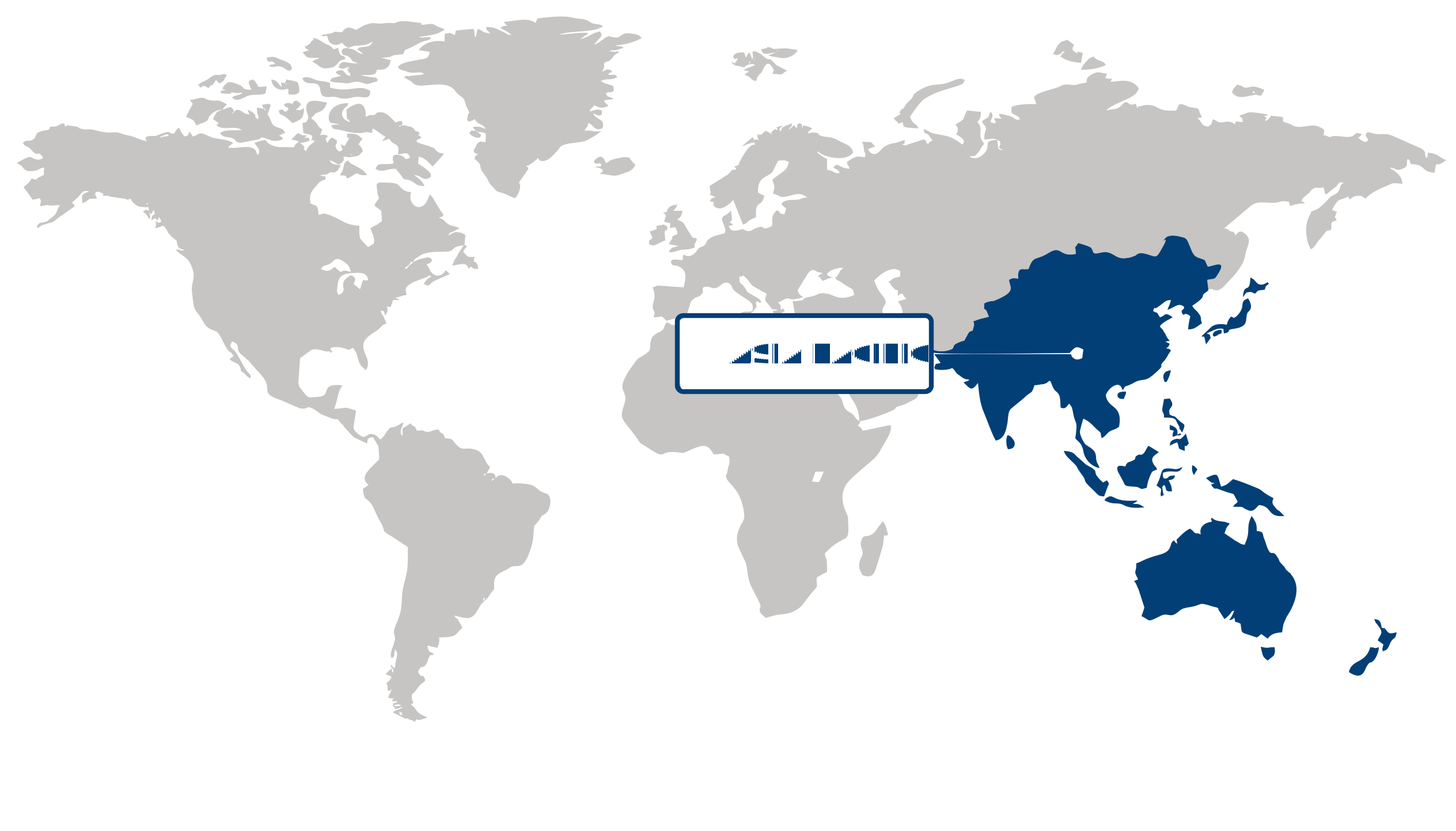
Asia Pacific dominated the food packaging technology & equipment market in 2025, capturing more than 45.28% of the global share and exhibiting the fastest growth with an 8.65% CAGR. This leadership stems primarily from rapid industrialization and the expansion of food processing industries across the region. Increasing urbanization and rising disposable incomes drive demand for convenient and safe food packaging solutions. Regulatory bodies like the Food Safety and Standards Authority of India and China’s National Health Commission have implemented stringent packaging standards, enhancing market adoption. Additionally, local manufacturers, such as Japan’s Toppan Printing and China’s Winpak, are investing heavily in advanced, sustainable packaging technologies to address consumer preferences and environmental concerns. These dynamics, combined with the region’s robust digital infrastructure and improving supply chain efficiencies, create a fertile landscape for continued innovation and market expansion.
Japan serves as a pivotal hub in the Asia Pacific food packaging technology & equipment market, leveraging its advanced manufacturing capabilities and stringent food safety policies to drive growth. The country’s emphasis on reducing food waste through smart packaging solutions, evidenced by companies like Fuji Seal International, aligns with broader regional sustainability trends. Japan’s aging population also influences demand for convenience-oriented, user-friendly packaging. These factors position Japan as a strategic innovation center, influencing regional packaging standards and technology dissemination. The country’s expertise strengthens Asia Pacific’s competitive edge and supports the regional market’s trajectory toward more sophisticated, efficient packaging systems.
China anchors the Asia Pacific food packaging technology & equipment market’s rapid growth through its vast food processing sector and expansive consumer base. Government initiatives, including the “Made in China 2025” plan, emphasize technological modernization and sustainability in packaging, fostering demand for automated and eco-friendly equipment. Local firms such as Zhejiang Huayuan Packaging utilize cutting-edge machinery to meet rising standards and consumer expectations for safety and environmental responsibility. China’s growing e-commerce ecosystem further spurs demand for protective, innovative packaging formats. This large-scale industrial and regulatory momentum enhances China’s role as a regional powerhouse, creating significant opportunities for market players to capitalize on evolving food safety norms and consumer lifestyles across Asia Pacific.
North America Market Analysis:
North America held a commanding share in the food packaging technology & equipment market, driven by the region’s robust industrial base and high consumer demand for convenience and sustainability. Increasing investments in advanced packaging solutions that extend shelf life and reduce environmental impact are fueled by stringent regulatory frameworks such as those from the U.S. Food and Drug Administration (FDA) and Environment and Climate Change Canada. Leading packaging manufacturers like WestRock and Sealed Air have ramped up innovation in biodegradable and intelligent packaging, responding to evolving consumer preferences for eco-friendly products. The region’s well-established supply chains and digital integration in manufacturing further enhance operational efficiencies and market responsiveness. Going forward, North America offers significant opportunities as the convergence of regulatory rigor, technological advancement, and sustainability initiatives continue to reshape packaging solutions, supporting growth in both large-scale food processing and emerging artisanal food sectors.
The U.S. plays a pivotal role in North America’s food packaging technology & equipment market, largely propelled by heightened consumer awareness around food safety and sustainability. U.S. regulatory agencies, particularly the FDA, enforce rigorous standards that stimulate demand for sophisticated packaging technologies such as active and smart packaging. Moreover, major corporations including Amcor and Bemis Company are leading digital transformation efforts by incorporating IoT-enabled packaging lines to improve traceability and quality control. Cultural preferences for convenience foods and robust food service sectors bolster market demand, while government incentives promoting biodegradable materials underscore a strong pivot toward sustainability. This strategic positioning in the U.S. enhances North America’s market leadership by reinforcing the adoption of innovative, compliant, and consumer-aligned packaging technologies across the region.
Europe Market Trends:
Europe held a commanding share in the food packaging technology & equipment market, driven by its diverse consumer base and a mature regulatory environment that emphasizes sustainability and food safety. The region’s commitment to reducing plastic waste, as reinforced by the European Commission’s Circular Economy Action Plan, has catalyzed innovation in biodegradable and recyclable packaging solutions, prompting manufacturers to adopt advanced machinery that supports eco-friendly materials. Additionally, rising consumer demand for convenience foods and premium packaging has led to investments in automation and digitalization to enhance operational efficiency and traceability. The European Food Safety Authority’s stringent regulations further encourage the adoption of cutting-edge technologies to ensure compliance. With increasing collaborations between industry leaders and technological innovators, Europe offers significant opportunities for businesses focused on sustainable and technologically sophisticated packaging equipment.
Germany plays a pivotal role in the food packaging technology & equipment market within Europe, propelled by its robust manufacturing sector and emphasis on precision engineering. The country’s strong focus on Industry 4.0 initiatives, championed by the Federal Ministry for Economic Affairs and Climate Action, facilitates the integration of smart packaging machinery equipped with IoT-enabled features. German consumer preferences for high-quality and sustainable food packaging also drive demand for equipment capable of handling biodegradable films and flexible packaging formats. Providers such as Bosch Packaging Technology, through recent press releases, have underscored their commitment to innovation in eco-friendly packaging machinery. Germany’s leadership in automation and sustainability sets a benchmark, reinforcing the region’s overall competitive edge.
France maintains a notable presence in the food packaging technology & equipment market, underpinned by its dynamic agro-food industry and evolving regulatory landscape. The French government’s National Strategy for the Circular Economy prioritizes the reduction of single-use plastics, creating incentives for manufacturers to transition toward innovative packaging solutions supported by advanced equipment. French consumers’ increasing preference for organic and fresh foods encourages the deployment of aseptic and vacuum packaging technologies that extend shelf life without preservatives. Companies like Syntegon Technology highlighted in corporate releases their expansion in France through localized service hubs to support growing demand for sustainable packaging technologies. France’s focus on regulatory compliance and consumer-driven innovation enhances the region’s appeal for strategic investments in food packaging equipment.
| Parameter | North America | Asia Pacific | Europe | Latin America | MEA |
|---|---|---|---|---|---|
| Innovation Hub i Scale Nascent Developing Advanced | |||||
| Cost-Sensitive Region i Scale Low Medium High | |||||
| Regulatory Environment i Scale Restrictive Neutral Supportive | |||||
| Demand Drivers i Scale Weak Moderate Strong | |||||
| Development Stage i Scale Emerging Developing Developed | |||||
| Adoption Rate i Scale Low Medium High | |||||
| New Entrants / Startups i Scale Sparse Moderate Dense | |||||
| Macro Indicators i Scale Weak Stable Strong |
Segment Leadership and Growth Trends
Food Packaging Technology & Equipment Market Share (%), by Material, 2026
Go beyond the chart, access full insights & data tables
Request Free Sample ReportPlastics represented the largest share in the food packaging technology & equipment market in 2025, driven primarily by their versatility, cost-effectiveness, and superior protective qualities. This segment's leadership reflects strong consumer demand for lightweight, durable packaging solutions that extend shelf life while reducing damage during transit. Regulatory guidelines from agencies like the U.S. Food and Drug Administration (FDA) have facilitated safe use of plastics in food contact applications, encouraging broad adoption across the supply chain. Sustainability initiatives from major players such as Amcor focusing on recyclable plastics also underline evolving industry priorities. This segment offers strategic advantages through innovation in polymer blends and barrier technologies, enabling both incumbents and new entrants to meet diverse packaging requirements efficiently. Given ongoing advancements in circular economy practices and regulatory alignment, plastics are poised to maintain a pivotal role in food packaging in the foreseeable future.
Analysis by Type
Biodegradable packaging held the largest share within the food packaging technology & equipment market in 2025, buoyed by mounting sustainability concerns and tightening regulations on single-use plastics worldwide. Governments such as the European Commission have implemented directives incentivizing eco-friendly materials, accelerating investment in biodegradable technologies. Consumer awareness about environmental impact has shifted preferences towards compostable and bio-based packaging, compelling manufacturers to innovate actively. Industry leaders like Tetra Pak have launched biodegradable solutions, reinforcing competitive positioning while aligning with circular economy principles. This segment presents clear growth opportunities for firms able to meet stringent biodegradability standards and evolving consumer expectations. As global regulatory frameworks and sustainability commitments gain momentum, biodegradable packaging will continue to command significance, supporting broader environmental objectives in food packaging.
Analysis by Application
Convenience foods accounted for the largest share in the food packaging technology & equipment market in 2025, propelled by rising consumer demand for ready-to-eat and easy-to-handle food products requiring specialized packaging solutions. Urbanization trends and changing lifestyles have increased demand for packaging that ensures freshness, portion control, and extended shelf life. The Food and Agriculture Organization (FAO) has highlighted convenience packaging as critical to reducing food waste through optimized preservation. This segment benefits from innovations in modified atmosphere packaging and user-friendly formats, creating competitive differentiation opportunities. Both established firms and start-ups can leverage digital transformation in packaging for enhanced consumer engagement. Given ongoing shifts in consumption patterns and advances in packaging technology, the convenience foods segment is expected to retain its dominant role in aligning with modern food consumption behaviors.
| Segment | Sub-Segment | Largest Segment | Fastest Growing |
|---|---|---|---|
| Material | Plastics, Metal, Paper & Paperboard, Glass & Wood | ||
| Type | Biodegradable, Aseptic, Active, Controlled, Intelligent | ||
| Application | Confectionery Products, Dairy & Dairy Products, Fruits & Vegetables, Convenience Foods, Poultry, Seafood, & Meat Products |
Competitive Landscape and Market Positioning
The competitive landscape is shaped by strategic moves that accelerate innovation and market expansion. Collaboration patterns among key players foster technology sharing and broaden product portfolios, enabling rapid adaptation to the dynamic food industry. For instance, targeted alliances and acquisitions have enhanced capabilities in automation and sustainable materials. Concurrently, intensive investment in research has facilitated the incorporation of smart packaging features and eco-friendly components, differentiating offerings. New product introductions often reflect responsiveness to changing regulatory frameworks and consumer demands, reinforcing market positioning. Consequently, these efforts collectively drive continuous improvement in packaging efficiency, safety, and environmental footprint.
Strategic / Actionable Recommendations for Regional Players
North American players can strengthen their footprint by forming cross-industry partnerships with technology providers to harness IoT and AI for smarter packaging solutions. Emphasizing investments in recyclable and biodegradable materials will also resonate with growing sustainability preferences among consumers and regulators.
In the Asia Pacific region, capitalizing on rapid urbanization and increasing demand for ready-to-eat products requires agile adaptation of packaging designs that prioritize convenience and shelf life extension. Collaborations with local food producers and technology innovators can accelerate market penetration and customization.
European stakeholders should continue advancing circular economy principles by integrating renewable resources and enhancing package reuse systems. Engaging with regulatory bodies and research institutions will support compliance and fuel innovation in environmentally conscious packaging technologies.
| Company | Market Share | Company Revenue | Revenue CAGR (%) | Product Portfolio | Geographic Presence | Innovation / R&D Focus | Strategic Developments |
|---|---|---|---|---|---|---|---|
| No companies available. | |||||||
Industry Development/News
| Company Name | Date | Key Development |
|---|
Customize Your Report
Explore examples of how this report can be tailored to different research needs, including custom segments, additional topics or chapters, and related reports. Click a section of the wheel or its numbered marker to explore the available options.
Food Packaging Technology & Equipment Market — Custom Segments
| Segment | Sub-Segment |
|---|---|
| No segment data available. | |
Food Packaging Technology & Equipment Market — Custom TOC
| Custom Chapter | Custom Details | ||
|---|---|---|---|
| No custom TOC data available. | |||
Need a different cut of the data?
Request Custom ResearchWhat is the expected industry size of food packaging technology & equipment by 2035?
Which region holds the largest share of the food packaging technology & equipment market?
What region has posted the highest CAGR in the food packaging technology & equipment sector?
What share does plastics segment hold in the food packaging technology & equipment sector as of 2025?
Where is the biodegradable segment seeing the strongest adoption within the food packaging technology & equipment industry?
When did convenience foods sub-segment emerge as the largest sub-segment in the application segment of food packaging technology & equipment sector?
What are the key competitors in the food packaging technology & equipment landscape?
Our Clients
"The report provided a thorough look at market trends, technological advancements, and the competitive landscape. The depth of insights was really valuable."
ITC Limited
"We would highly recommend Fundamental Business Insights & Consulting to anyone looking for reliable, detailed, and comprehensive market research in the Food industry."
Tyson Foods
"The clarity and presentation of the information were commendable. The report was delivered timely, which made the overall experience smooth and convenient."
Mondelēz International
Our Research Team & Methodology
Every Fundamental Business Insights report is built by a dedicated vertical research team, validated through a structured primary-and-secondary methodology, and reviewed for accuracy before it reaches you.
Research Team Overview
Prepared by the Food & Beverage Research Team
Delivery
Published
Demand
Available
Support
Trust & Compliance
Research Domains
10 coverage areasResearch Intelligence
| Source | Reference |
|---|---|
| Food and Agriculture Organization (FAO) | www.fao.org |
| World Health Organization (WHO) | www.who.int |
| U.S. Food & Drug Administration (FDA) | www.fda.gov |
| European Food Safety Authority (EFSA) | www.efsa.europa.eu |
| U.S. Department of Agriculture (USDA) | www.usda.gov |
| Codex Alimentarius Commission | www.fao.org/fao-who-codexalimentarius |
| International Organization for Standardization (ISO) | www.iso.org |
| AOAC INTERNATIONAL | www.aoac.org |
| Institute of Food Technologists (IFT) | www.ift.org |
| International Dairy Foods Association (IDFA) | www.idfa.org |
| International Sweeteners Association (ISA) | www.sweeteners.org |
| International Probiotics Association (IPA) | internationalprobiotics.org |
| Good Food Institute (GFI) | gfi.org |
| American Feed Industry Association (AFIA) | www.afia.org |
| International Feed Industry Federation (IFIF) | ifif.org |
| Specialty Food Association (SFA) | www.specialtyfood.com |
| Brewers Association | www.brewersassociation.org |
| International Bottled Water Association (IBWA) | bottledwater.org |
| International Alliance for Dietary/Food Supplement Associations (IADSA) | www.iadsa.org |
| OECD Agriculture & Food | www.oecd.org/agriculture |
Research Workflow & Quality Assurance
Data Collection
Verified information gathered through primary and secondary research.
Data Triangulation
Cross-validation using multiple independent data sources.
Forecast Modelling
Market estimates developed using historical trends and analytical models.
Analyst Validation
Findings reviewed by domain experts for accuracy and consistency.
Editorial & Quality Review
Final editorial, quality, and compliance checks before publication.
Final Publication
Released after successful completion of the internal review process.
Report Coverage
📊 Market Assessment
- Market Size & Forecast
- Market Segmentation
- Regional Analysis
- Growth Drivers & Challenges
- Market Dynamics
🏢 Competitive Intelligence
- Competitive Landscape
- Company Profiles
- Competitive Benchmarking
- Mergers & Acquisitions
- Market Share Analysis or Key Company Strategies
🔍 Strategic Analysis
- Value Chain Analysis
- Porter's Five Forces
- PESTLE Analysis
- Pricing Trends
- Supply-Demand Analysis
🚀 Future Outlook
- Technology Landscape
- Regulatory Landscape
- Investment & Funding Landscape
- Emerging Opportunities
- Future Market Outlook
Have a question about this report or need a custom scope?
Request Customization