Coconut Oil Market Size & Forecasts 2026-2035, By Segments (Source, Nature, Application, Product Type), Growth Opportunities, Innovation Landscape, Regulatory Shifts, Strategic Regional Insights (U.S., Japan, China, South Korea, UK, Germany, France), and Competitive Dynamics (Wilmar International, Cargill, VVF, Patanjali Ayurved, Parachute)
Market Size and Growth Outlook
Coconut Oil Market size is estimated to increase from USD 7.3 billion in 2025 to USD 15.33 billion by 2035, supported by a CAGR exceeding 7.7% during 2026-2035. In 2026, revenues are forecast to reach USD 7.8 billion.
Get more details on this report
Request Free Sample ReportCoconut Oil Market Intelligence Snapshot
Regional Market Dynamics
Segment Momentum
Market Expansion Drivers
Leading Market Participants
Global Market Forecast Snapshot
Market Outlook
Regional and Segment Outlook
Market Growth Drivers and Industry Trends
The growing consumer preference for natural and organic personal care products is a critical growth driver for the coconut oil market. Consumers increasingly seek ingredients perceived as healthier and environmentally sustainable, aligning with trends highlighted by the Organic Trade Association’s 2023 report emphasizing a surge in organic personal care sales. Coconut oil’s multifunctional properties and natural origin cater to this demand, enabling companies like The Body Shop to expand product lines incorporating coconut oil as a key ingredient. Established players benefit by leveraging brand credibility around clean-label formulations, while newcomers can enter niche segments offering certified organic coconut oil products. This evolving consumer mindset ensures sustained market expansion as personal care brands further integrate coconut oil, supported by stricter regulations on synthetic additives mandating cleaner ingredient profiles.
Expansion in Food, Cosmetics, and Nutraceutical Applications
Diversification of coconut oil use beyond traditional cooking has significantly propelled the coconut oil market, with rising incorporation in food, cosmetics, and nutraceuticals. The U.S. Food and Drug Administration’s recognition of medium-chain triglycerides (MCTs) from coconut oil as beneficial supports its growing adoption in functional foods and dietary supplements. Similarly, L'Oréal’s recent product launches incorporating coconut oil for skin and hair benefits reflect the cosmetic sector’s embrace of this ingredient. This broadening usage fosters opportunities for innovation in product development, allowing established firms to diversify portfolios and startups to capitalize on health-conscious consumer segments. The multi-sector penetration strengthens the coconut oil market’s resilience and relevance in increasingly health-focused global markets.
Technological Advancements in Extraction and Cold-Press Processing
Innovations in extraction technologies, particularly cold-press processing, have revolutionized the coconut oil market by enabling higher quality, nutrient-rich products. Companies like Nutiva and Organic India emphasize cold-pressed virgin coconut oil to retain natural antioxidants and fatty acids, differentiating their offerings from refined alternatives. Improvements in processing efficiency also reduce waste and environmental impact, aligning with sustainability priorities reported by the Food and Agriculture Organization (FAO). These advancements lower production costs and enhance product appeal in premium segments, presenting strategic advantages for both incumbents upgrading facilities and new entrants specializing in artisanal or organic coconut oil. The continued refinement of extraction methods signals ongoing quality enhancement and sustainability integration shaping the market’s future.
Industry Restraints:
Volatility in Raw Material Supply and Pricing
The coconut oil market is significantly constrained by the instability in raw coconut supply, driven by weather disruptions, pest outbreaks, and limited arable land in key producing countries like the Philippines and Indonesia. The Food and Agriculture Organization (FAO) highlights that cyclones and drought cycles periodically reduce coconut yields, creating supply bottlenecks and price spikes. This volatility inflates production costs and challenges procurement planning, deterring consistent investment in capacity expansions and product innovation. For incumbents, fluctuating input costs squeeze profit margins, while entrants face uncertainty in securing reliable raw materials at predictable prices, dampening market entry enthusiasm. As climate change intensifies, these supply dynamics are expected to exacerbate, necessitating that market players invest in sustainable sourcing practices and supply chain diversification to maintain competitiveness.
Stringent Regulatory Frameworks on Health and Environmental Claims
Increasing scrutiny by regulatory authorities such as the U.S. Food and Drug Administration (FDA) and the European Food Safety Authority (EFSA) on health claims related to saturated fats, including those found in coconut oil, presents a formidable barrier to market growth. These agencies have issued warnings and restricted marketing language, reflecting broader public health concerns over cardiovascular risks, which in turn generate consumer skepticism despite coconut oil’s marketing as a natural and multifunctional product. This regulatory environment compels companies to invest heavily in rigorous research and compliance monitoring, increasing operational costs and time-to-market for new products. For startups and smaller firms, navigating such complex compliance landscapes can stymie innovation and restrict promotional opportunities. Moving forward, compliance with evolving health and sustainability regulations will remain a critical determinant of market success and brand credibility.
| Growth Driver | Impact on CAGR | Regulatory Influence | Geographic Relevance | Adoption Rate | Impact Timeline |
|---|---|---|---|---|---|
| Rising demand for natural and organic personal care products | 2.80% | Short term (≤ 2 yrs) | Asia Pacific, North America; Spillover: Europe | Low | Fast |
| Expansion in food, cosmetics, and nutraceutical applications | 2.50% | Medium term (2–5 yrs) | Asia Pacific, Europe; Spillover: North America | Low | Moderate |
| Technological advancements in extraction and cold-press processing | 2.40% | Long term (5+ yrs) | Europe, North America; Spillover: Asia Pacific | Low | Slow |
Unlock insights tailored to your business with our bespoke market research solutions.
Click to get your customized report now.
Regional Demand Dynamics
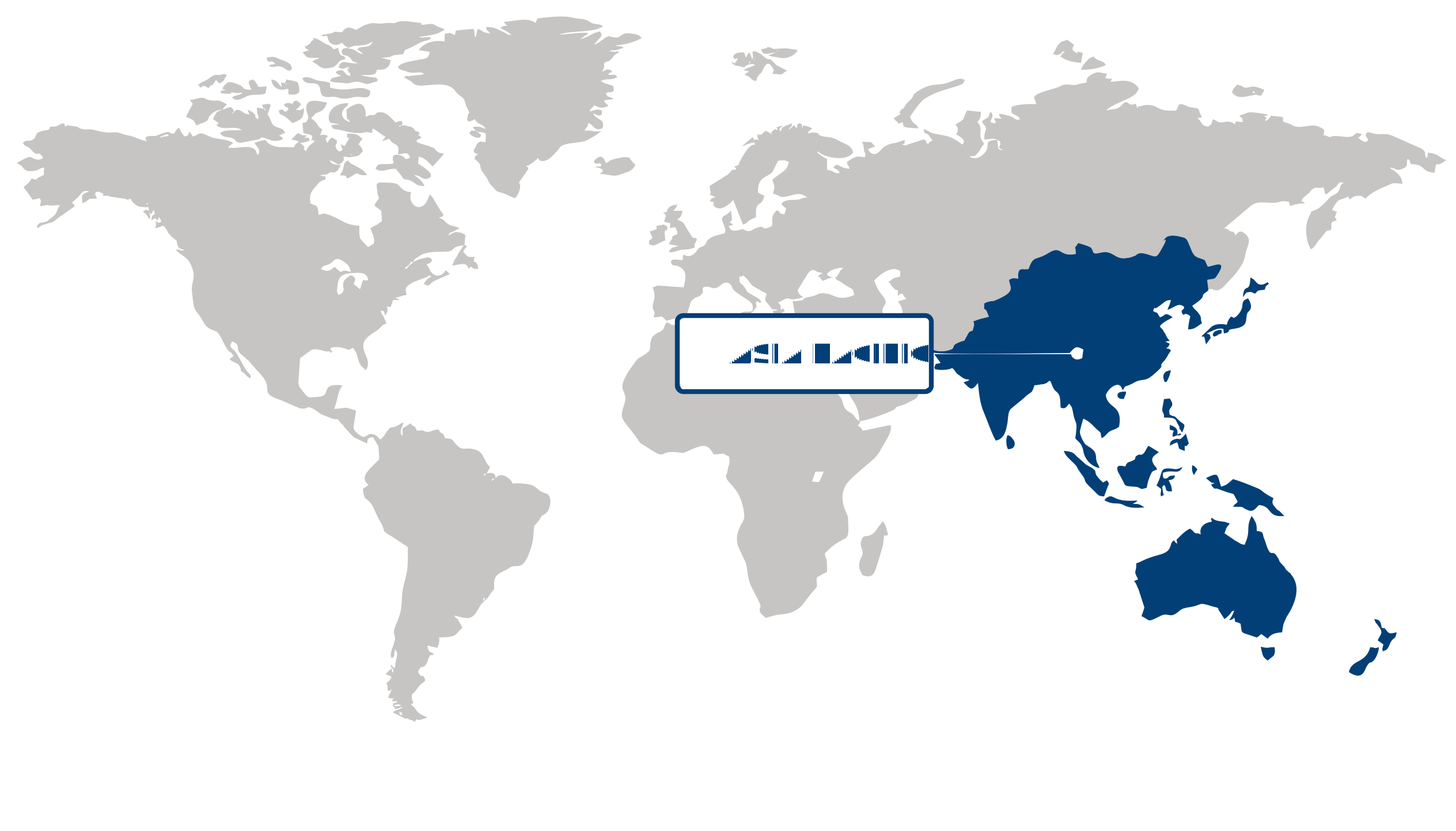
The Asia Pacific region captured over 40% of the global coconut oil market in 2025, establishing itself as the largest market globally. This dominance is driven primarily by high production levels and the ingrained cultural usage of coconut oil in culinary sectors. Countries such as the Philippines and Indonesia maintain substantial coconut plantations, enabling consistent supply and cost advantages, highlighted by data from the Philippine Coconut Authority. Additionally, traditional preferences for coconut oil in cooking and personal care products reinforce steady consumer demand. The region's resilience, bolstered by localized consumption patterns and evolving export capabilities, positions it for sustained relevance. Industry developments documented by the Asian and Pacific Coconut Community (APCC) illustrate ongoing investments in processing technology and quality enhancements, augmenting competitive positioning. As new health and wellness trends gain traction across urban centers, the Asia Pacific coconut oil market offers considerable growth potential, balancing tradition with modern consumer expectations.
Japan is positioned as a pivotal hub in the Asia Pacific coconut oil market, driven by increasing consumer interest in natural and health-oriented products. The Japanese market shows a nuanced demand for premium and organic coconut oil variants used in health supplements and skincare, supported by import data from the Japan External Trade Organization (JETRO). Regulatory frameworks in Japan encourage product safety and quality assurance, prompting companies like Fuji Oil Co., Ltd. to innovate and diversify offerings. This environment fosters sophisticated consumer segments seeking clean-label ingredients, connecting closely with wellness trends. Japan’s strategic focus on quality and innovation complements regional production strengths, enhancing the overall Asia Pacific market value chain and attracting investment in advanced product formulations.
China plays a crucial role in shaping the Asia Pacific coconut oil market with its vast consumer base increasingly embracing healthier dietary oils. Despite not being a leading producer, China imports substantial volumes of coconut oil, primarily facilitated by eased trade policies and rising urban health consciousness noted by the China Chamber of Commerce of Foodstuffs and Native Produce. Chinese consumers favor multifunctional uses of coconut oil, encompassing cooking, cosmetics, and traditional medicine applications, reflecting broader lifestyle shifts. Domestic firms such as COFCO Corporation actively expand their natural oils portfolio, leveraging digital platforms to tap into a growing e-commerce market. China’s expanding demand reinforces regional supply chains and underscores Asia Pacific’s unique capacity to integrate cultural, economic, and technological drivers in the coconut oil market landscape.
Europe Market Analysis:
Europe emerged as the fastest-growing region in the coconut oil market, registering a robust CAGR of 8.9%. This rapid expansion is primarily driven by the escalating demand for clean beauty and natural cosmetic ingredients, reflecting a broader consumer shift toward sustainable and eco-friendly personal care products. European consumers are increasingly prioritizing ingredient transparency, ethical sourcing, and organic certifications, as noted in the European Commission’s recent Green Deal initiatives promoting sustainable production and consumption. Market leaders such as Cargill and BASF have capitalized on this trend by innovating bio-based formulations incorporating coconut oil, further stimulating growth. Additionally, stringent regulatory frameworks enforced by the European Chemicals Agency (ECHA) are prompting brands to replace synthetic additives with natural alternatives, amplifying coconut oil’s appeal. With rising consumer consciousness and policy support converging, Europe is poised to sustain its leadership, offering lucrative opportunities for companies investing in clean and natural ingredient portfolios.
Germany holds a pivotal role in Europe’s coconut oil market, driven largely by its well-established natural cosmetics sector and sophisticated consumer base that values ingredient authenticity and environmental responsibility. German companies like Dr. Hauschka and Weleda are leveraging coconut oil’s versatility in skincare formulations, aligning with consumers' preference for cruelty-free and vegan products as highlighted in the Federal Ministry for Economic Affairs and Climate Action reports. The country’s stringent product standards and robust retail distribution networks enhance market penetration, facilitating premium pricing and brand loyalty. Moreover, increased digital engagement through e-commerce platforms amplifies consumer access to specialty natural products. Germany’s leadership in regulatory compliance and sustainability practices strengthens Europe’s regional momentum, reinforcing its status as a strategic hub for natural cosmetic ingredients.
France, another key player, complements regional growth with its iconic beauty and luxury personal care industries increasingly adopting coconut oil due to consumer demand for gentle, multi-functional ingredients. French regulatory bodies like the Agence Nationale de Sécurité du Médicament et des Produits de Santé (ANSM) maintain rigorous cosmetic safety frameworks, which encourage transparent labeling and sustainability claims. Brands such as L’Oréal and Yves Rocher are innovating with coconut oil to address sensitive skin and anti-aging formulations, tapping into the clean beauty trend. The cultural emphasis on wellness and natural living supports widespread acceptance and premiumization of coconut oil-based products. By fostering innovation and consumer trust, France significantly amplifies Europe’s trajectory in the coconut oil market, underlining the region’s competitive advantage in natural cosmetic ingredients.
North America Market Trends:
North America held a commanding share in the coconut oil market, driven by shifting consumer preferences towards natural and organic personal care and food products. Increasing health consciousness and rising demand for clean-label ingredients have bolstered coconut oil’s appeal as a multifunctional ingredient across the beauty and food sectors. Regulatory endorsements around product safety by the U.S. Food and Drug Administration (FDA) and initiatives promoting sustainable agricultural sourcing by the U.S. Department of Agriculture (USDA) have reinforced market confidence. Additionally, digital transformation efforts by key players such as Nutiva have enhanced consumer reach and traceability, amplifying brand trust. Robust distribution networks and high disposable incomes further sustain market momentum. Given these dynamics, North America is poised to remain a significant arena for innovation and premium product launches in the coconut oil market.
The U.S., as the largest market within North America, plays a pivotal role in shaping coconut oil market dynamics. The country’s growing preference for plant-based and organic products is exemplified by Whole Foods Market’s expanding coconut oil offerings, capitalizing on consumer demand for clean wellness solutions. Regulatory frameworks from the FDA ensure stringent quality standards, thereby driving premiumization and competitive intensity among manufacturers. This environment encourages product innovation and strategic partnerships, as seen in strategic expansions by brands like Viva Naturals. The U.S.’s strong e-commerce infrastructure aids seamless distribution, enhancing accessibility and consumer engagement. Consequently, the country not only anchors North America’s current market size but also amplifies regional growth prospects through evolving consumption trends and regulatory support.
| Parameter | North America | Asia Pacific | Europe | Latin America | MEA |
|---|---|---|---|---|---|
| Innovation Hub i Scale Nascent Developing Advanced | |||||
| Cost-Sensitive Region i Scale Low Medium High | |||||
| Regulatory Environment i Scale Restrictive Neutral Supportive | |||||
| Demand Drivers i Scale Weak Moderate Strong | |||||
| Development Stage i Scale Emerging Developing Developed | |||||
| Adoption Rate i Scale Low Medium High | |||||
| New Entrants / Startups i Scale Sparse Moderate Dense | |||||
| Macro Indicators i Scale Weak Stable Strong |
Segment Leadership and Growth Trends
Coconut Oil Market Share (%), by Source, 2026
Go beyond the chart, access full insights & data tables
Request Free Sample ReportDry Coconut held the largest share in the coconut oil market in 2025, driven primarily by strong demand across food and personal care segments due to its versatile applications and cultural preference in many regions. This segment benefits from traditional consumption patterns and established supply chains in coconut-producing countries like the Philippines and Indonesia, as highlighted in reports from the Food and Agriculture Organization (FAO). Additionally, the growing appeal of dry coconut oil in natural skincare formulations and culinary uses provides strategic opportunities for both multinational corporations and local producers. Given its deep-rooted presence and adaptability, dry coconut oil is poised to maintain relevance by catering to evolving consumer tastes and expanding in emerging markets focused on natural, multifunctional ingredients.
Analysis by Nature
The organic segment represented the largest share in the coconut oil market in 2025, reflecting a marked shift toward clean-label and sustainably sourced edible and cosmetic products. Rising consumer awareness around health, environmental impact, and ethical sourcing, supported by certifications from organizations like USDA Organic and EU Organic, reinforces this segment's leadership. The organic coconut oil supply chain has benefited from enhanced traceability and digital transparency initiatives adopted by key producers such as Organic India. This trend offers competitive advantages for firms innovating in eco-friendly packaging and product differentiation. With ongoing consumer preference for natural, chemical-free products, the organic segment is expected to continue driving market dynamics through the near future.
Analysis by Application
Food & Beverages dominated the coconut oil market in 2025, fueled by increasing incorporation of coconut oil for its functional properties and perceived health benefits in cooking, baking, and ready-to-eat products. Industry developments from companies like Nestlé and Mondelez International demonstrate an expanding use case for coconut oil as a sustainable alternative to traditional fats. Consumer trend analysis from the International Food Information Council (IFIC) underscores growing demand for plant-based and clean-label ingredients, strengthening this segment's position. The food & beverage segment presents notable opportunities for innovation in product formulation and supply chain optimization, supporting both established players and startups focused on health-conscious consumers. Its continued relevance is secured by sustained interest in natural ingredients amidst rising global health awareness.
| Segment | Sub-Segment | Largest Segment | Fastest Growing |
|---|---|---|---|
| Source | Wet Coconut, Dry Coconut | ||
| Nature | Organic, Conventional | ||
| Application | Cosmetics & Personal Care, Pharmaceuticals, Nutritional Products, Food & Beverages | ||
| Product Type | Virgin, Refined, Bleached, & Deodorized (RBD), Crude |
Competitive Landscape and Market Positioning
The competitive landscape showcases these players actively enhancing their market footprint through diverse strategic moves. Collaborations and alliances have accelerated product portfolio expansion, while targeted acquisitions in upstream and downstream segments have strengthened supply chain control. Initiatives focusing on sustainable sourcing and product differentiation have propelled innovation, meeting evolving consumer demands. Moreover, investments in refining technologies and R&D have enabled the development of value-added variants, enhancing competitiveness. These efforts cultivate resilient positioning amid rising health consciousness and sustainability trends, underscoring the dynamic nature of competition within the coconut oil industry.
Strategic / Actionable Recommendations for Regional Players
In North America, firms could amplify growth by forging partnerships that enhance organic and clean-label product portfolios, tapping into consumer preference for natural wellness products. Embracing advanced processing technologies may yield differentiated offerings, strengthening competitive appeal in health-driven markets.
Within the Asia Pacific, expanding collaboration with agricultural producers and integrating technology to improve yield and quality can reinforce supply reliability. Focusing on premium segments like certified organic or functional oils may unlock high-margin opportunities amid growing regional health awareness.
European players may benefit from aligning with sustainability frameworks and circular economy principles, appealing to environmentally conscious consumers. Investing in innovation to develop multifunctional coconut oil derivatives or blends could stimulate market expansion and consolidate leadership against rising competition.
| Company | Market Share | Company Revenue | Revenue CAGR (%) | Product Portfolio | Geographic Presence | Innovation / R&D Focus | Strategic Developments |
|---|---|---|---|---|---|---|---|
| No companies available. | |||||||
Industry Development/News
| Company Name | Date | Key Development |
|---|
Customize Your Report
Explore examples of how this report can be tailored to different research needs, including custom segments, additional topics or chapters, and related reports. Click a section of the wheel or its numbered marker to explore the available options.
Coconut Oil Market — Custom Segments
| Segment | Sub-Segment |
|---|---|
| No segment data available. | |
Coconut Oil Market — Custom TOC
| Custom Chapter | Custom Details | ||
|---|---|---|---|
| No custom TOC data available. | |||
Need a different cut of the data?
Request Custom ResearchWhat is the expected industry size of coconut oil by 2035?
Which geographical area accounts for the highest portion of the coconut oil market?
Which region shows the most rapid acceleration in the coconut oil sector?
Where is the dry coconut segment seeing the strongest adoption within the coconut oil industry?
When did organic sub-segment emerge as the largest sub-segment in the nature segment of coconut oil sector?
Why is the food & beverages segment leading in the coconut oil industry?
Why does virgin sub-segment dominate the product type segment of coconut oil sector?
Who are the major participants shaping the coconut oil landscape?
Our Clients
"The report provided a thorough look at market trends, technological advancements, and the competitive landscape. The depth of insights was really valuable."
ITC Limited
"We would highly recommend Fundamental Business Insights & Consulting to anyone looking for reliable, detailed, and comprehensive market research in the Food industry."
Tyson Foods
"The clarity and presentation of the information were commendable. The report was delivered timely, which made the overall experience smooth and convenient."
Mondelēz International
Our Research Team & Methodology
Every Fundamental Business Insights report is built by a dedicated vertical research team, validated through a structured primary-and-secondary methodology, and reviewed for accuracy before it reaches you.
Research Team Overview
Prepared by the Food & Beverage Research Team
Delivery
Published
Demand
Available
Support
Trust & Compliance
Research Domains
10 coverage areasResearch Intelligence
| Source | Reference |
|---|---|
| Food and Agriculture Organization (FAO) | www.fao.org |
| World Health Organization (WHO) | www.who.int |
| U.S. Food & Drug Administration (FDA) | www.fda.gov |
| European Food Safety Authority (EFSA) | www.efsa.europa.eu |
| U.S. Department of Agriculture (USDA) | www.usda.gov |
| Codex Alimentarius Commission | www.fao.org/fao-who-codexalimentarius |
| International Organization for Standardization (ISO) | www.iso.org |
| AOAC INTERNATIONAL | www.aoac.org |
| Institute of Food Technologists (IFT) | www.ift.org |
| International Dairy Foods Association (IDFA) | www.idfa.org |
| International Sweeteners Association (ISA) | www.sweeteners.org |
| International Probiotics Association (IPA) | internationalprobiotics.org |
| Good Food Institute (GFI) | gfi.org |
| American Feed Industry Association (AFIA) | www.afia.org |
| International Feed Industry Federation (IFIF) | ifif.org |
| Specialty Food Association (SFA) | www.specialtyfood.com |
| Brewers Association | www.brewersassociation.org |
| International Bottled Water Association (IBWA) | bottledwater.org |
| International Alliance for Dietary/Food Supplement Associations (IADSA) | www.iadsa.org |
| OECD Agriculture & Food | www.oecd.org/agriculture |
Research Workflow & Quality Assurance
Data Collection
Verified information gathered through primary and secondary research.
Data Triangulation
Cross-validation using multiple independent data sources.
Forecast Modelling
Market estimates developed using historical trends and analytical models.
Analyst Validation
Findings reviewed by domain experts for accuracy and consistency.
Editorial & Quality Review
Final editorial, quality, and compliance checks before publication.
Final Publication
Released after successful completion of the internal review process.
Report Coverage
📊 Market Assessment
- Market Size & Forecast
- Market Segmentation
- Regional Analysis
- Growth Drivers & Challenges
- Market Dynamics
🏢 Competitive Intelligence
- Competitive Landscape
- Company Profiles
- Competitive Benchmarking
- Mergers & Acquisitions
- Market Share Analysis or Key Company Strategies
🔍 Strategic Analysis
- Value Chain Analysis
- Porter's Five Forces
- PESTLE Analysis
- Pricing Trends
- Supply-Demand Analysis
🚀 Future Outlook
- Technology Landscape
- Regulatory Landscape
- Investment & Funding Landscape
- Emerging Opportunities
- Future Market Outlook
Have a question about this report or need a custom scope?
Request Customization