Wool Insulation Market Size & Growth Forecast 2027–2036, By Segments (Product Type, End-Use, Application, Form), Regional Demand Trends (North America, Asia Pacific, Europe), Key Country Insights (U.S., Japan, South Korea, Germany, France, Italy), and Competitive Landscape
Market Size and Growth Outlook
Wool Insulation Market size was around USD 3.38 Billion in 2026 and is slated to grow at 4.86% CAGR from 2027 to 2036, crossing USD 5.43 Billion by 2036. The industry revenue for 2027 is calculated at USD 3.52 Billion.
Get more details on this report
Request Free Sample ReportWool Insulation Market Intelligence Snapshot
Regional Market Dynamics
- Europe led in 2026 through strong emphasis on energy efficiency, sustainable construction, building performance requirements, and renovation of older building stock.
- Expanding construction, urbanization, sustainable building investment, and growing environmental awareness are increasing interest in renewable insulation materials across Asia Pacific.
Segment Momentum
- Mineral wool insulation accounted for 72.77% of the market in 2026, driven by its thermal efficiency, fire resistance, acoustic performance, durability, and ability to support energy-efficient building construction.
- Thermal insulation is the fastest-growing application as building owners prioritize energy conservation, improved thermal performance, and sustainable construction, increasing demand for insulation that reduces heating and cooling requirements.
Market Expansion Drivers
- Growth in sustainable construction materials driving adoption of natural insulation solutions
- Increasing residential and commercial construction activity boosting insulation demand
- Rising energy efficiency standards encouraging eco-friendly thermal insulation adoption
Leading Market Participants
- Major companies in the wool insulation market include Rockwool International A/S (Denmark), Saint-Gobain SE (France), Knauf Insulation (Germany), Owens Corning (USA), Johns Manville (USA), Fletcher Insulation (Australia), Armacell International S.A. (Luxembourg), Soprema Group (France)
Global Market Forecast Snapshot
Market Outlook
- 2026 Market Size: USD 3.38 Billion
- 2027 Estimated Market Size: USD 3.52 Billion
- Projected Market Size: USD 5.43 Billion by 2036
- Growth Forecast: 4.86% CAGR (2027-2036)
Regional and Segment Outlook
- Leading Regional Market: Europe
- High-Growth Regional Hub: Asia Pacific
- Core Revenue Segment: Mineral Wool Insulation (Product Type) | Residential (End-Use) | Acoustic Insulation (Application) | Rigid Boards (Form)
- Emerging Opportunity Segment: Sheep's Wool Insulation (Product Type) | Commercial (End-Use) | Thermal Insulation (Application) | Spray Foam (Form)
Market Growth Drivers and Industry Trends
Growth in sustainable construction materials driving adoption of natural insulation solutions
The increasing emphasis on environmentally responsible building practices is creating favorable conditions for natural insulation materials across residential and commercial construction projects. The wool insulation market growth is driven by rising preference for renewable and biodegradable building products that help reduce the environmental footprint of construction while maintaining effective thermal and acoustic performance. Architects, builders, and property developers are incorporating natural insulation into green building designs to support sustainable sourcing objectives and improve indoor environmental quality. Wool insulation also appeals to projects seeking low-impact materials due to its renewable origin, moisture-regulating characteristics, and ability to contribute to healthier indoor living environments without relying heavily on synthetic alternatives.
Increasing residential and commercial construction activity boosting insulation demand
Expanding construction activity across housing developments, office buildings, educational institutions, and public infrastructure is generating consistent demand for insulation products that enhance building comfort and operational performance. This trend will propel the wool insulation market growth as new construction and renovation projects increasingly prioritize thermal management, noise reduction, and occupant well-being. Growing investments in urban development and modernization are encouraging builders to integrate insulation solutions that improve year-round indoor conditions while supporting long-term building durability. The need to comply with evolving construction standards has also increased the adoption of insulation materials capable of delivering reliable performance across diverse climatic conditions and building applications.
Rising energy efficiency standards encouraging eco-friendly thermal insulation adoption
Governments and regulatory authorities are strengthening building energy performance requirements to reduce energy consumption and lower emissions from residential and commercial properties. Within this regulatory environment, the wool insulation market is benefiting from greater demand for insulation materials that improve thermal efficiency while aligning with sustainability objectives. Property owners and developers are increasingly selecting eco-friendly insulation to reduce heating and cooling loads, enhance building envelope performance, and meet green construction certifications. Natural wool insulation offers effective temperature regulation alongside renewable material advantages, making it a practical choice for projects focused on balancing environmental responsibility with building performance.
| Growth Driver | Impact on CAGR | Regulatory Influence | Geographic Relevance | Adoption Rate | Impact Timeline |
|---|---|---|---|---|---|
| Growth in sustainable construction materials driving adoption of natural insulation solutions | 1.9% | Moderate | Europe, North America | Medium | Mid Term |
| Increasing residential and commercial construction activity boosting insulation demand | 1.6% | Low | Asia Pacific, Middle East & Africa | High | Near Term |
| Rising energy efficiency standards encouraging eco-friendly thermal insulation adoption | 1.4% | High | Europe, North America | Medium | Mid Term |
Unlock insights tailored to your business with our bespoke market research solutions.
Click to get your customized report now.
Regional Demand Dynamics
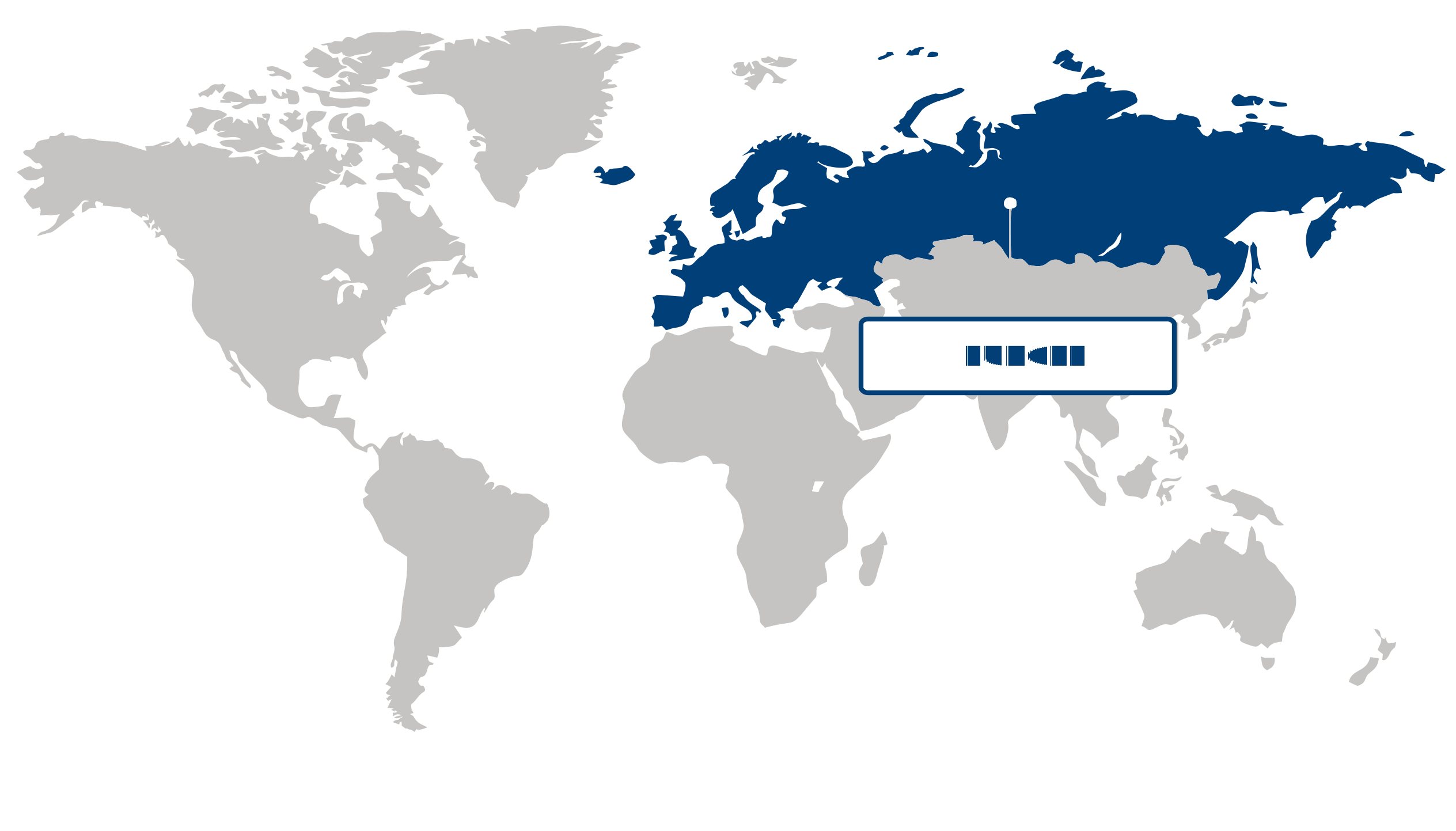
Europe (Largest Region)
Europe held the largest share of the wool insulation market in 2026, benefiting from strong emphasis on energy efficiency, sustainable construction, and environmentally responsible building materials. Wool insulation aligns with the region’s growing preference for renewable and low-impact materials while offering thermal regulation and moisture-management properties suitable for residential and commercial buildings. Stringent building performance requirements and efforts to reduce energy consumption are encouraging the adoption of effective insulation solutions. Renovation of older building stock, alongside increasing consumer interest in healthier and more sustainable indoor environments, is further supporting demand for natural insulation materials.
Asia Pacific (Fastest-Growing Region)
Asia Pacific is poised for the fastest growth as construction activity, urbanization, and awareness of energy-efficient buildings continue to expand across the region. Increasing investment in residential, commercial, and infrastructure development is creating opportunities for insulation products that can improve building performance and indoor comfort. Growing environmental awareness is also encouraging interest in renewable alternatives to conventional insulation materials. As governments, developers, and consumers place greater emphasis on sustainable construction and reduced building energy consumption, wool-based insulation is gaining relevance as a natural material within the region’s evolving building-material landscape.
| Parameter | North America | Asia Pacific | Europe | Latin America | MEA |
|---|---|---|---|---|---|
| Innovation Hub i Scale Nascent Developing Advanced | |||||
| Cost-Sensitive Region i Scale Low Medium High | |||||
| Regulatory Environment i Scale Restrictive Neutral Supportive | |||||
| Demand Drivers i Scale Weak Moderate Strong | |||||
| Development Stage i Scale Emerging Developing Developed | |||||
| Adoption Rate i Scale Low Medium High | |||||
| New Entrants / Startups i Scale Sparse Moderate Dense | |||||
| Macro Indicators i Scale Weak Stable Strong |
Key Country Insights
United States 🇺🇸
Sustainable Building FocusThe U.S. is expanding the use of wool insulation in residential and commercial construction where energy efficiency and healthier indoor environments are priorities. Manufacturers are strengthening supply partnerships and product certifications to support green building specifications.
Germany 🇩🇪
Circular Material IntegrationGermany emphasizes wool insulation for low-carbon construction and circular building practices. Local demand encourages suppliers to improve recycled content, thermal performance, and compliance with stringent building efficiency requirements.
Japan 🇯🇵
Space-Efficient InsulationJapan prioritizes wool insulation solutions that deliver thermal and acoustic performance in compact residential and renovation projects. Producers are adapting products for easy installation while meeting demanding quality and fire safety expectations.
South Korea 🇰🇷
Energy Retrofit SolutionsSouth Korea is increasing the application of wool insulation in building modernization projects focused on energy conservation. Suppliers are introducing higher-performance materials suited to evolving construction standards and sustainable development initiatives.
France 🇫🇷
Eco-Construction MaterialsFrance promotes wool insulation within environmentally conscious building projects where natural materials are gaining preference. Manufacturers are enhancing product traceability and environmental credentials to align with sustainable construction practices.
Italy 🇮🇹
Heritage Renovation SupportItaly integrates wool insulation into restoration and residential renovation projects requiring effective thermal performance without compromising architectural integrity. Suppliers focus on versatile insulation systems compatible with both traditional and modern construction methods.
Segment Leadership and Growth Trends
Wool Insulation Market Share (%), by Product Type, 2026
Go beyond the chart, access full insights & data tables
Request Free Sample ReportProduct Type Segment Analysis: Mineral Wool Insulation (Largest Segment) vs Sheep's Wool Insulation (Fastest-Growing Segment)
The mineral wool insulation segment dominated the wool insulation market and accounted for a 72.77% share in 2026. Its leadership is supported by its excellent thermal efficiency, fire resistance, acoustic performance, and long-term durability across residential, commercial, and industrial buildings. The material's ability to improve energy efficiency while meeting stringent building performance requirements has made it a preferred insulation solution for a broad range of construction projects. Continued emphasis on sustainable and energy-efficient buildings further reinforces its strong market position.
The sheep's wool insulation segment is the fastest-growing product category as demand rises for renewable, biodegradable, and environmentally responsible building materials. Its natural moisture-regulating properties, indoor air quality benefits, and low environmental impact are attracting growing interest among architects, builders, and homeowners pursuing sustainable construction practices. Increasing awareness of eco-friendly insulation solutions continues to support expansion within this segment.
End-Use Segment Analysis: Residential (Largest Segment) vs Commercial (Fastest-Growing Segment)
The residential segment held a 60.42% share in 2026, making it the largest end-use category. Rising focus on home energy efficiency, indoor comfort, and sustainable housing construction has encouraged the widespread use of wool insulation products in residential buildings. Growing renovation activities and stricter building efficiency standards have also contributed to sustained demand for high-performance insulation materials within the housing sector.
The commercial segment is emerging as the fastest-growing end-use category due to increasing investment in energy-efficient offices, educational institutions, healthcare facilities, and other commercial buildings. Greater emphasis on reducing operational energy consumption, improving occupant comfort, and complying with green building standards is driving broader adoption of wool insulation products across commercial construction projects.
Application Segment Analysis: Acoustic Insulation (Largest Segment) vs Thermal Insulation (Fastest-Growing Segment)
The acoustic insulation segment held the largest share in 2026, reflecting increasing demand for effective sound control in residential, commercial, and institutional buildings. Wool insulation materials are widely valued for their sound-absorbing properties, helping improve indoor comfort and reduce noise transmission between spaces. Growing urbanization and the construction of high-density buildings continue to support strong demand for acoustic insulation applications.
In the wool insulation market, the thermal insulation segment is the fastest-growing application as building owners and developers increasingly prioritize energy conservation and improved thermal performance. Wool insulation's ability to regulate indoor temperatures while reducing heating and cooling requirements aligns with evolving sustainability goals and energy-efficient construction practices. Continued adoption of green building principles is expected to strengthen demand for thermal insulation applications.
| Segment | Sub-Segment | Largest Segment | Fastest Growing |
|---|---|---|---|
| Product Type | Sheep's Wool Insulation, Mineral Wool Insulation | Mineral Wool Insulation | Sheep's Wool Insulation |
| End-Use | Residential, Commercial, Industrial | Residential | Commercial |
| Application | Thermal Insulation, Acoustic Insulation, Fire Insulation, Vapor Barrier Insulation | Acoustic Insulation | Thermal Insulation |
| Form | Batts and Blankets, Loose Fill, Rigid Boards, Spray Foam | Rigid Boards | Spray Foam |
Competitive Landscape and Market Positioning
Prominent players in the wool insulation market:
- Rockwool International A/S (Denmark)
- Saint-Gobain SE (France)
- Knauf Insulation (Germany)
- Owens Corning (USA)
- Johns Manville (USA)
- Fletcher Insulation (Australia)
- Armacell International S.A. (Luxembourg)
- Soprema Group (France)
Sustainability is influencing competitive behavior in the wool insulation market, but suppliers are increasingly distinguishing themselves through consistent thermal performance, product quality, and ease of installation rather than environmental credentials alone. Manufacturers are refining processing techniques to improve durability, moisture management, and compatibility with modern building practices, expanding the appeal of wool-based insulation across residential and commercial construction. At the same time, competition is strengthening around dependable sourcing, certified material standards, and the ability to provide solutions that satisfy increasingly demanding building performance requirements while maintaining the natural characteristics valued by environmentally conscious buyers.
| Company | Market Share | Company Revenue | Revenue CAGR (%) | Product Portfolio | Geographic Presence | Innovation / R&D Focus | Strategic Developments |
|---|---|---|---|---|---|---|---|
| Rockwool International A/S (Denmark) | |||||||
| Saint-Gobain SE (France) | |||||||
| Knauf Insulation (Germany) | |||||||
| Owens Corning (USA) | |||||||
| Johns Manville (USA) | |||||||
| Fletcher Insulation (Australia) | |||||||
| Armacell International S.A. (Luxembourg) | |||||||
| Soprema Group (France) |
Industry Development/News
| Company Name | Date | Key Development |
|---|---|---|
| ROCKWOOL | Sep-25 | ROCKWOOL partnered with Swisslog to integrate a fully automated high-bay warehouse at its Neuburg an der Donau production facility. This logistics infrastructure investment modernizes internal material handling processes, reducing reliance on manual operations and enhancing the efficiency of the facility's supply chain and distribution capabilities. |
| Saint-Gobain | Aug-25 | Saint-Gobain commenced construction of its fifth mineral wool insulation plant and seventh float glass line in Oragadam, Chennai. Representing the company's largest investment in the Asia-Pacific region, the near net-zero facility is designed to meet growing demand for sustainable building insulation through advanced Industry 4.0 manufacturing technologies. |
| Knauf Insulation | Nov-24 | Knauf Insulation completed a £40 million-plus modernization project at its glass mineral wool manufacturing plant in St Helens, UK. The facility upgrade incorporated new forming technology, significantly enhancing the plant's manufacturing precision and output capacity for high-performance insulation products. |
| ROCKWOOL | Oct-24 | ROCKWOOL acquired Wetherby Building Systems, a UK-based specialist in external wall insulation and building envelope solutions. The acquisition expands ROCKWOOL's technical capabilities and strengthens its competitive market position in comprehensive thermal and aesthetic façade systems for the construction sector. |
| ROCKWOOL | Aug-24 | ROCKWOOL initiated a Rs 550 crore investment in a new stone wool manufacturing facility in Cheyyar, Tamil Nadu, to support regional demand in Southern India. The greenfield plant, which reached mid-construction status by September 2025, is designed to produce 50,000 tonnes of insulation annually and serves as a critical strategic hub for the company’s South Asian operations. |
| ROCKWOOL | May-24 | ROCKWOOL Technical Insulation launched ProRox® PS 965, an advanced stone wool insulation product equipped with integrated corrosion-resistant technology. The development expands the company's portfolio for specialized industrial applications, offering enhanced protection for critical infrastructure in sectors requiring high-performance thermal and anti-corrosion solutions. |
| ROCKWOOL | Mar-24 | ROCKWOOL introduced a stone wool insulation material specifically engineered for industrial piping systems, featuring an integrated corrosion inhibitor. This technical innovation addresses infrastructure degradation in extreme environments, extending the service life of industrial assets while maintaining superior thermal performance for heating and cooling applications. |
| Saint-Gobain | Feb-21 | Saint-Gobain Isover launched "Geowall," a stone wool insulation product designed for external wall applications in residential and commercial construction. The innovation combines thermal, acoustic, and fire-resistant properties with improved environmental sustainability, marking a strategic advancement in the company's building material portfolio. |
Customize Your Report
Explore examples of how this report can be tailored to different research needs, including custom segments, additional topics or chapters, and related reports. Click a section of the wheel or its numbered marker to explore the available options.
Wool Insulation Market — Custom Segments
| Segment | Sub-Segment |
|---|---|
| Procurement Channel | Direct Manufacturer Sales, Building Material Distributors, Insulation Contractors, Retail & E-commerce |
| Project Stage | New Construction, Renovation & Retrofit, Replacement & Refurbishment |
| Building Energy Performance Target | Standard Energy Performance, High-Efficiency Buildings, Net-Zero & Passive Buildings |
Wool Insulation Market — Custom TOC
| Custom Chapter | Custom Details |
|---|---|
| Sustainable Building Material Adoption |
|
| Retrofit Market Opportunity Assessment |
|
| Circularity & End-of-Life Recovery |
|
Need a different cut of the data?
Request Custom ResearchHow much is the wool insulation market worth?
How will the wool insulation industry grow in terms of size and CAGR by 2036?
Why are sustainable construction practices driving greater adoption of wool insulation?
How are energy efficiency standards influencing purchasing decisions in the wool insulation market?
Why is mineral wool insulation the largest product segment in the wool insulation market?
What is driving the rapid growth of thermal insulation applications in the wool insulation market?
What is driving Europe's leadership in the wool insulation market?
Why is Asia Pacific expected to be the fastest-growing region?
What are the key competitors in the wool insulation landscape?
Our Clients
"Your insights on workforce structures were spot-on. The analysis on mid-to-senior level roles validated some of our hiring decisions and highlighted gaps."
Ateliers De France
"The report gave us insights on competitors in the market. It helped our team refine our bidding strategy for upcoming contracts."
Clark Construction
"The reports provided a deep dive into market trends, and competitive landscape. The strategic insights and recommendations have been very helpful."
Rudolph and Sletten
Our Research Team & Methodology
Every Fundamental Business Insights report is built by a dedicated vertical research team, validated through a structured primary-and-secondary methodology, and reviewed for accuracy before it reaches you.
Research Team Overview
Prepared by the Construction & Manufacturing Research Team
Delivery
Published
Demand
Available
Support
Trust & Compliance
Research Domains
10 coverage areasResearch Intelligence
| Source | Reference |
|---|---|
| International Organization for Standardization (ISO) | www.iso.org |
| ASTM International | www.astm.org |
| National Institute of Standards and Technology (NIST) | www.nist.gov |
| International Code Council (ICC) | www.iccsafe.org |
| American Concrete Institute (ACI) | www.concrete.org |
| American Institute of Steel Construction (AISC) | www.aisc.org |
| Construction Industry Institute (CII) | www.construction-institute.org |
| Associated General Contractors of America (AGC) | www.agc.org |
| Association of Equipment Manufacturers (AEM) | www.aem.org |
| Building Owners and Managers Association (BOMA) | www.boma.org |
| American Society of Civil Engineers (ASCE) | www.asce.org |
| National Ready Mixed Concrete Association (NRMCA) | www.nrmca.org |
| International Facility Management Association (IFMA) | www.ifma.org |
| World Green Building Council (WorldGBC) | worldgbc.org |
| International Federation of Consulting Engineers (FIDIC) | fidic.org |
| International Labour Organization (ILO) | www.ilo.org |
| American Society of Mechanical Engineers (ASME) | www.asme.org |
| Society of Manufacturing Engineers (SME) | www.sme.org |
| National Association of Home Builders (NAHB) | www.nahb.org |
| European Construction Industry Federation (FIEC) | www.fiec.eu |
Research Workflow & Quality Assurance
Data Collection
Verified information gathered through primary and secondary research.
Data Triangulation
Cross-validation using multiple independent data sources.
Forecast Modelling
Market estimates developed using historical trends and analytical models.
Analyst Validation
Findings reviewed by domain experts for accuracy and consistency.
Editorial & Quality Review
Final editorial, quality, and compliance checks before publication.
Final Publication
Released after successful completion of the internal review process.
Report Coverage
📊 Market Assessment
- Market Size & Forecast
- Market Segmentation
- Regional Analysis
- Growth Drivers & Challenges
- Market Dynamics
🏢 Competitive Intelligence
- Competitive Landscape
- Company Profiles
- Competitive Benchmarking
- Mergers & Acquisitions
- Market Share Analysis or Key Company Strategies
🔍 Strategic Analysis
- Value Chain Analysis
- Porter's Five Forces
- PESTLE Analysis
- Pricing Trends
- Supply-Demand Analysis
🚀 Future Outlook
- Technology Landscape
- Regulatory Landscape
- Investment & Funding Landscape
- Emerging Opportunities
- Future Market Outlook
Have a question about this report or need a custom scope?
Request Customization