Wine Packaging Market Size & Growth Forecast 2027–2036, By Segments (Packaging Type, Type, Distribution Channel, Material), Regional Demand Trends (North America, Asia Pacific, Europe), Key Country Insights (U.S., Japan, South Korea, Germany, France, Italy), and Competitive Landscape
Market Size and Growth Outlook
Wine Packaging Market size was over USD 6.88 Billion in 2026 and is likely to grow at 6.57% CAGR between 2027 and 2036, crossing USD 13 Billion by 2036. The industry revenue for 2027 is calculated at USD 7.26 Billion.
Get more details on this report
Request Free Sample ReportWine Packaging Market Intelligence Snapshot
Regional Market Dynamics
- Europe held a 51.94% share in 2026, supported by its established wine ecosystem, premiumization, sustainability priorities, and strong distribution networks.
- Asia Pacific is expanding rapidly as wine consumption, disposable incomes, modern retail, and hospitality channels increase demand for convenient, attractive, and sustainable packaging.
Segment Momentum
- Offline channels lead the market because consumers prefer evaluating wine products in liquor stores, supermarkets, and specialty retailers, supported by immediate availability and personalized customer service.
- Primary packaging held a 53% market share in 2026 and is the fastest-growing packaging type, supported by innovations that protect wine quality while meeting demand for convenient and sustainable packaging solutions.
Market Expansion Drivers
- Consumer preference for eco-friendly packaging accelerating sustainable wine container adoption
- Shift toward lightweight recyclable materials reducing logistics costs and emissions
- Growth in direct-to-consumer wine sales increasing innovative packaging demand
Leading Market Participants
- Key players in the wine packaging market include Amcor plc (Australia), Ardagh Group S.A. (Luxembourg), Verallia S.A. (France), Vetropack Holding AG (Switzerland), Vidrala S.A. (Spain), Saverglass (France), Guala Closures S.p.A. (Italy), Smurfit Kappa Group plc (Ireland), International Paper Company (United States), Berlin Packaging LLC (United States)
Global Market Forecast Snapshot
Market Outlook
- 2026 Market Size: USD 6.88 Billion
- 2027 Estimated Market Size: USD 7.26 Billion
- Projected Market Size: USD 13 Billion by 2036
- Growth Forecast: 6.57% CAGR (2027-2036)
Regional and Segment Outlook
- Leading Regional Market: Europe
- High-Growth Regional Hub: Asia Pacific
- Core Revenue Segment: Primary (Packaging Type) | Bag-in-box (Type) | Offline (Distribution Channel) | Glass (Material)
- Emerging Opportunity Segment: Primary (Packaging Type) | Bag-in-box (Type) | Online (Distribution Channel) | Paper and Paper Board (Material)
Market Growth Drivers and Industry Trends
Consumer preference for eco-friendly packaging accelerating sustainable wine container adoption
Growing environmental awareness among consumers is reshaping purchasing behavior, and the wine packaging market growth is increasingly supported by demand for packaging solutions that reduce environmental impact without compromising product quality. Buyers are paying greater attention to recyclable, renewable, and lower-impact materials when selecting wine products, encouraging producers to redesign packaging portfolios in line with sustainability objectives. This shift also strengthens brand positioning by aligning with environmentally conscious retail channels and hospitality businesses that prioritize responsible sourcing. Packaging manufacturers are therefore expanding the availability of sustainable container formats, renewable raw materials, and improved production processes that help reduce waste while maintaining product protection throughout distribution.
Shift toward lightweight recyclable materials reducing logistics costs and emissions
As supply chains become more cost-sensitive, the transition to lighter packaging formats will drive the wine packaging market growth by helping producers lower transportation expenses while improving operational efficiency. Reduced package weight enables higher shipping volumes, decreases fuel consumption across logistics networks, and minimizes handling challenges during storage and distribution. At the same time, recyclable materials support circular economy initiatives and simplify end-of-life recovery, making them attractive to both manufacturers and regulatory stakeholders. Material innovations are also allowing packaging suppliers to maintain durability and product integrity while optimizing weight and resource utilization.
Growth in direct-to-consumer wine sales increasing innovative packaging demand
The rapid expansion of online retail channels has transformed fulfillment requirements, and the wine packaging market is benefiting from rising demand for packaging specifically designed for direct shipment to consumers. Wine producers increasingly require containers that provide enhanced protection against breakage during parcel delivery while maintaining an appealing presentation upon arrival. Packaging developers are responding with formats that combine cushioning, tamper resistance, and convenient handling features suited to individual deliveries and subscription shipments. Greater emphasis on consumer experience is also encouraging packaging designs that improve ease of opening, storage, and product differentiation across digital sales channels.
| Growth Driver | Impact on CAGR | Regulatory Influence | Geographic Relevance | Adoption Rate | Impact Timeline |
|---|---|---|---|---|---|
| Consumer preference for eco-friendly packaging accelerating sustainable wine container adoption | 2% | Moderate | Europe, North America | High | Near Term |
| Shift toward lightweight recyclable materials reducing logistics costs and emissions | 1.8% | Moderate | Europe, Asia Pacific | High | Mid Term |
| Growth in direct-to-consumer wine sales increasing innovative packaging demand | 1.6% | Low | North America, Europe | Medium | Mid Term |
Unlock insights tailored to your business with our bespoke market research solutions.
Click to get your customized report now.
Regional Demand Dynamics
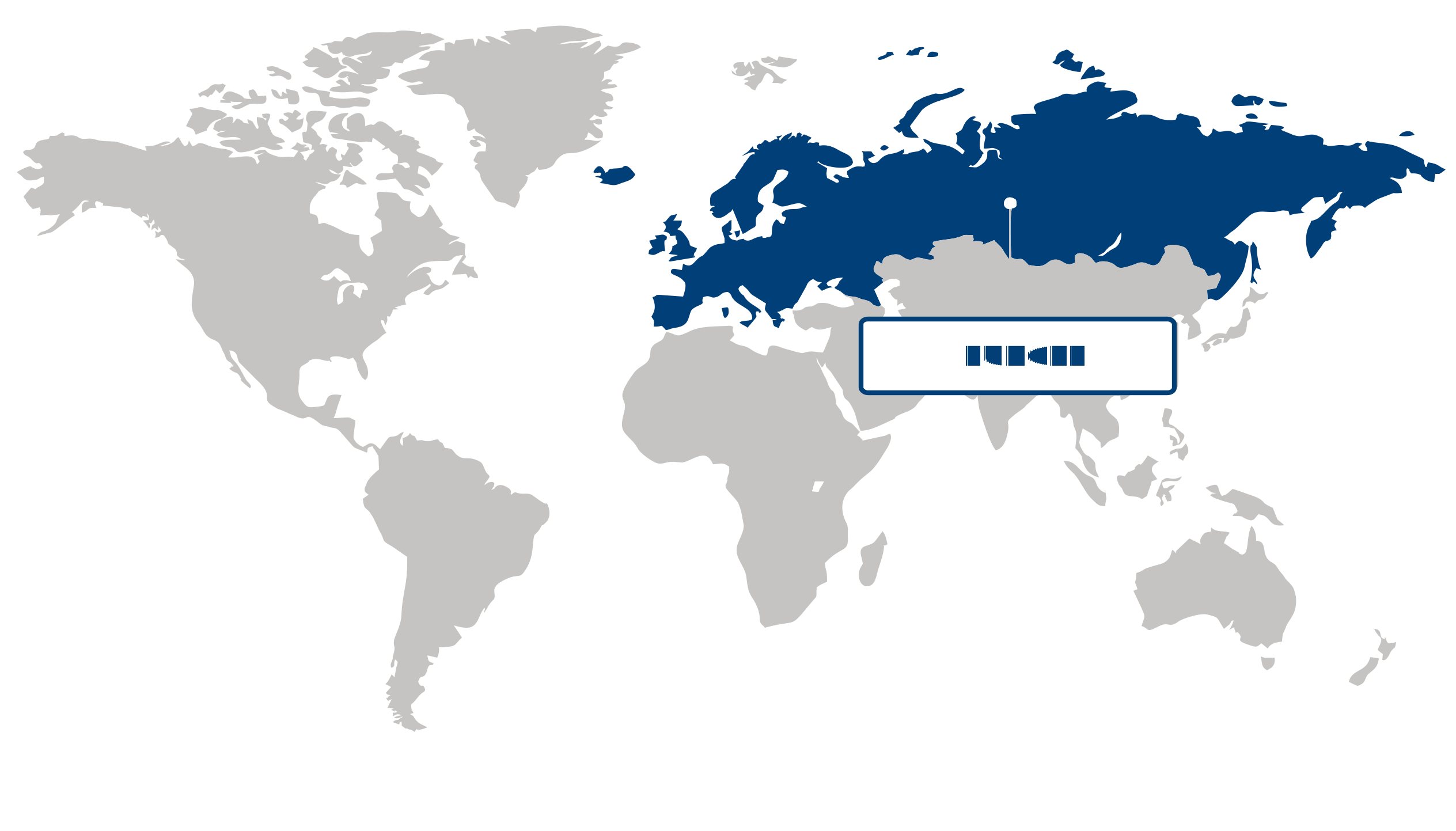
Europe (Largest Region)
Holding the largest share of the wine packaging market, Europe accounted for 51.94% in 2026, reflecting its well-established wine production and consumption ecosystem. The region’s strong winemaking heritage supports consistent demand for packaging solutions across still and sparkling wine categories, while premiumization continues to increase the importance of packaging aesthetics, quality, and brand differentiation. Sustainability is also shaping packaging decisions as producers and consumers place greater emphasis on recyclable materials, lightweight formats, and resource-efficient packaging. Established distribution networks and regulatory attention toward environmental performance further encourage innovation in wine packaging across the region.
Asia Pacific (Fastest-Growing Region)
Asia Pacific is positioned as the fastest-growing region, supported by expanding wine consumption, changing consumer preferences, and the development of modern retail and hospitality channels. Rising disposable incomes in several economies are creating greater interest in premium and imported wines, while younger consumers are contributing to broader experimentation with wine as a lifestyle beverage. These trends are encouraging producers and distributors to invest in packaging formats that combine convenience, visual appeal, product protection, and sustainability. The continued development of food and beverage infrastructure is expected to create additional opportunities for packaging suppliers serving the regional wine market.
| Parameter | North America | Asia Pacific | Europe | Latin America | MEA |
|---|---|---|---|---|---|
| Innovation Hub i Scale Nascent Developing Advanced | |||||
| Cost-Sensitive Region i Scale Low Medium High | |||||
| Regulatory Environment i Scale Restrictive Neutral Supportive | |||||
| Demand Drivers i Scale Weak Moderate Strong | |||||
| Development Stage i Scale Emerging Developing Developed | |||||
| Adoption Rate i Scale Low Medium High | |||||
| New Entrants / Startups i Scale Sparse Moderate Dense | |||||
| Macro Indicators i Scale Weak Stable Strong |
Key Country Insights
United States 🇺🇸
Premium Packaging InnovationThe U.S. wine packaging market emphasizes lightweight glass, alternative formats, and premium labeling to improve sustainability and consumer appeal. U.S. producers and packaging suppliers continue investing in differentiated designs that support both retail and direct-to-consumer wine sales.
Germany 🇩🇪
Sustainable Bottle EngineeringGermany prioritizes recyclable packaging materials and efficient bottle manufacturing to meet environmental objectives across the wine value chain. German packaging companies focus on reducing material use while maintaining durability and premium product presentation.
Japan 🇯🇵
Premium Presentation FocusJapan values refined wine packaging with strong attention to aesthetics, convenience, and product protection for domestic and imported wines. Japanese packaging suppliers increasingly develop compact, high-quality solutions suited to premium retail and gifting segments.
South Korea 🇰🇷
Retail Format ExpansionSouth Korea is expanding wine packaging demand through modern retail channels and changing consumer purchasing habits. South Korean packaging providers emphasize attractive labeling and convenient packaging formats that align with premium imported wine offerings.
France 🇫🇷
Heritage Packaging ExpertiseFrance maintains strong demand for packaging that preserves wine quality while reflecting regional identity and premium branding. French producers increasingly adopt sustainable bottles and recyclable materials without compromising traditional product presentation.
Italy 🇮🇹
Premium Export PackagingItaly prioritizes durable and visually distinctive wine packaging to support international distribution and premium brand positioning. Italian manufacturers continue refining bottle designs and sustainable packaging materials that enhance export competitiveness.
Segment Leadership and Growth Trends
Wine Packaging Market Share (%), by Packaging Type, 2026
Go beyond the chart, access full insights & data tables
Request Free Sample ReportPackaging Type Segment Analysis: Primary (Largest & Fastest-Growing Segment)
The wine packaging market was led by the primary packaging segment, which held a 53% share in 2026 while also emerging as the fastest-growing packaging type. Primary packaging plays a critical role in protecting wine quality, preserving product integrity, and extending shelf life throughout storage and transportation. Continued innovation in packaging materials, growing emphasis on product differentiation, and increasing consumer demand for convenient and sustainable packaging solutions are further strengthening the adoption of primary packaging across the industry.
Type Segment Analysis: Bag-in-box (Largest & Fastest-Growing Segment)
The bag-in-box type segment held the largest position in 2026 and also represented the fastest-growing segment within the wine packaging market. Its growing popularity is driven by its ability to preserve product freshness after opening, reduce packaging weight, and improve transportation efficiency. Increasing consumer acceptance of convenient packaging formats, coupled with sustainability initiatives and demand for cost-effective distribution, continues to support the expansion of bag-in-box packaging across retail and commercial channels.
Distribution Channel Segment Analysis: Offline (Largest Segment) vs Online (Fastest-Growing Segment)
The offline distribution channel was the largest segment in 2026, supported by the strong presence of liquor stores, supermarkets, specialty retailers, and hospitality outlets where consumers prefer to evaluate wine products before purchase. Established retail networks, immediate product availability, and personalized customer service continue to reinforce the importance of physical sales channels within the wine industry.
In the wine packaging market, the online distribution channel is the fastest-growing segment. The expansion of e-commerce platforms, increasing digital purchasing behavior, and improved logistics for beverage delivery are encouraging greater online sales. Businesses are also leveraging digital channels to reach wider consumer audiences, introduce premium product selections, and enhance purchasing convenience, contributing to the rapid growth of this segment.
| Segment | Sub-Segment | Largest Segment | Fastest Growing |
|---|---|---|---|
| Packaging Type | Primary, Secondary | Primary | Primary |
| Type | Bottles, Barrels & Kegs, Bag-in-box, Boxes & Cartons, Labels, Others | Bag-in-box | Bag-in-box |
| Distribution Channel | Online, Offline | Offline | Online |
| Material | Glass, Metal, Paper and Paper Board, Plastic, Others | Glass | Paper and Paper Board |
Competitive Landscape and Market Positioning
Prominent players in the wine packaging market:
- Amcor plc (Australia)
- Ardagh Group S.A. (Luxembourg)
- Verallia S.A. (France)
- Vetropack Holding AG (Switzerland)
- Vidrala S.A. (Spain)
- Saverglass (France)
- Guala Closures S.p.A. (Italy)
- Smurfit Kappa Group plc (Ireland)
- International Paper Company (United States)
- Berlin Packaging LLC (United States)
Sustainability objectives and premium product positioning are reshaping competitive dynamics throughout the wine packaging market. Packaging suppliers are balancing demands for lower environmental impact with the need to preserve product quality, brand identity, and consumer appeal, encouraging greater innovation in material selection, lightweight designs, and decorative finishing technologies. At the same time, competition increasingly extends beyond the container itself as producers seek packaging solutions that improve logistics efficiency, support premium shelf presentation, and align with evolving regulatory and consumer expectations, rewarding suppliers capable of integrating design, manufacturing, and functional performance into a cohesive offering.
| Company | Market Share | Company Revenue | Revenue CAGR (%) | Product Portfolio | Geographic Presence | Innovation / R&D Focus | Strategic Developments |
|---|---|---|---|---|---|---|---|
| Amcor plc (Australia) | |||||||
| Ardagh Group S.A. (Luxembourg) | |||||||
| Verallia S.A. (France) | |||||||
| Vetropack Holding AG (Switzerland) | |||||||
| Vidrala S.A. (Spain) | |||||||
| Saverglass (France) | |||||||
| Guala Closures S.p.A. (Italy) | |||||||
| Smurfit Kappa Group plc (Ireland) | |||||||
| International Paper Company (United States) | |||||||
| Berlin Packaging LLC (United States) |
Industry Development/News
| Company Name | Date | Key Development |
|---|---|---|
| Smurfit Westrock | May-25 | Smurfit Westrock reported Q1 sales of USD 7,656 million while executing structural optimization through the addition of converting plants and the closure of 500,000 tons of paper capacity. |
| ProMach | Feb-25 | ProMach established a dedicated Wine and Spirits Solutions Group to integrate packaging lines and enhance direct-to-consumer operational efficiency across the sector. |
| Ardagh Glass Packaging-Europe | Oct-24 | Ardagh Glass Packaging-Europe introduced lightweight wine bottles manufactured in Germany, incorporating up to 80% recycled glass cullet to lower carbon emissions by 12%. The 750ml Bordeaux and Schlegel containers feature multiple finish and color options to enhance customer versatility within the European market. |
| Aldi | Mar-24 | Aldi launched the UK supermarket sector's first own-brand flat recycled PET wine bottles, weighing 63g and produced from 100% recycled material. The design improves storage and transportation efficiency, achieving a reduction of 42 tonnes in overall bottle weight to support corporate sustainability goals. |
Customize Your Report
Explore examples of how this report can be tailored to different research needs, including custom segments, additional topics or chapters, and related reports. Click a section of the wheel or its numbered marker to explore the available options.
Wine Packaging Market — Custom Segments
| Segment | Sub-Segment |
|---|---|
| Winery Size | Large Wineries, Medium-Sized Wineries, Small & Boutique Wineries |
| Wine Type | Still Wine, Sparkling Wine, Fortified Wine, Dessert & Specialty Wine |
| Sustainability Profile | Conventional Packaging, Lightweight Packaging, Recyclable Packaging, Reusable Packaging, Bio-Based Packaging |
Wine Packaging Market — Custom TOC
| Custom Chapter | Custom Details |
|---|---|
| Sustainable Packaging Transition |
|
| Premium Wine Packaging Strategy |
|
| Packaging Format Switching Analysis |
|
Need a different cut of the data?
Request Custom ResearchHow much is the wine packaging market worth?
What is the expected industry size of wine packaging by 2036?
How are sustainability priorities reshaping wine packaging material choices?
How is direct-to-consumer wine sales changing packaging requirements?
Why does offline remain the largest distribution channel in the wine packaging market?
What is driving the rapid growth of primary packaging in the wine packaging market?
What makes Europe the leading wine packaging market?
Why is Asia Pacific emerging as the fastest-growing wine packaging region?
What are the key competitors in the wine packaging landscape?
Our Clients
"The report provided a thorough look at market trends, technological advancements, and the competitive landscape. The depth of insights was really valuable."
ITC Limited
"We would highly recommend Fundamental Business Insights & Consulting to anyone looking for reliable, detailed, and comprehensive market research in the Food industry."
Tyson Foods
"The clarity and presentation of the information were commendable. The report was delivered timely, which made the overall experience smooth and convenient."
Mondelēz International
Our Research Team & Methodology
Every Fundamental Business Insights report is built by a dedicated vertical research team, validated through a structured primary-and-secondary methodology, and reviewed for accuracy before it reaches you.
Research Team Overview
Prepared by the Food & Beverage Research Team
Delivery
Published
Demand
Available
Support
Trust & Compliance
Research Domains
10 coverage areasResearch Intelligence
| Source | Reference |
|---|---|
| Food and Agriculture Organization (FAO) | www.fao.org |
| World Health Organization (WHO) | www.who.int |
| U.S. Food & Drug Administration (FDA) | www.fda.gov |
| European Food Safety Authority (EFSA) | www.efsa.europa.eu |
| U.S. Department of Agriculture (USDA) | www.usda.gov |
| Codex Alimentarius Commission | www.fao.org/fao-who-codexalimentarius |
| International Organization for Standardization (ISO) | www.iso.org |
| AOAC INTERNATIONAL | www.aoac.org |
| Institute of Food Technologists (IFT) | www.ift.org |
| International Dairy Foods Association (IDFA) | www.idfa.org |
| International Sweeteners Association (ISA) | www.sweeteners.org |
| International Probiotics Association (IPA) | internationalprobiotics.org |
| Good Food Institute (GFI) | gfi.org |
| American Feed Industry Association (AFIA) | www.afia.org |
| International Feed Industry Federation (IFIF) | ifif.org |
| Specialty Food Association (SFA) | www.specialtyfood.com |
| Brewers Association | www.brewersassociation.org |
| International Bottled Water Association (IBWA) | bottledwater.org |
| International Alliance for Dietary/Food Supplement Associations (IADSA) | www.iadsa.org |
| OECD Agriculture & Food | www.oecd.org/agriculture |
Research Workflow & Quality Assurance
Data Collection
Verified information gathered through primary and secondary research.
Data Triangulation
Cross-validation using multiple independent data sources.
Forecast Modelling
Market estimates developed using historical trends and analytical models.
Analyst Validation
Findings reviewed by domain experts for accuracy and consistency.
Editorial & Quality Review
Final editorial, quality, and compliance checks before publication.
Final Publication
Released after successful completion of the internal review process.
Report Coverage
📊 Market Assessment
- Market Size & Forecast
- Market Segmentation
- Regional Analysis
- Growth Drivers & Challenges
- Market Dynamics
🏢 Competitive Intelligence
- Competitive Landscape
- Company Profiles
- Competitive Benchmarking
- Mergers & Acquisitions
- Market Share Analysis or Key Company Strategies
🔍 Strategic Analysis
- Value Chain Analysis
- Porter's Five Forces
- PESTLE Analysis
- Pricing Trends
- Supply-Demand Analysis
🚀 Future Outlook
- Technology Landscape
- Regulatory Landscape
- Investment & Funding Landscape
- Emerging Opportunities
- Future Market Outlook
Have a question about this report or need a custom scope?
Request Customization