Wide Bandgap Semiconductors Market Size & Growth Forecast 2027–2036, By Segments (Material, End-use Industry), Regional Demand Trends (North America, Asia Pacific, Europe), Key Country Insights (U.S., Japan, South Korea, Germany, France, Italy), and Competitive Landscape
Market Size and Growth Outlook
Wide Bandgap Semiconductors Market size stood at USD 2.62 Billion in 2026 and is predicted to grow at 11.23% CAGR from 2027 to 2036, reaching USD 7.59 Billion by 2036. The industry revenue for 2027 is estimated at USD 2.87 Billion.
Get more details on this report
Request Free Sample ReportWide Bandgap Semiconductors Market Intelligence Snapshot
Regional Market Dynamics
- Asia Pacific leads through extensive semiconductor manufacturing capabilities, strong power electronics demand, and expanding electric vehicle and electronics manufacturing ecosystems.
- North America is the fastest-growing region, driven by electrification, renewable energy, advanced power management, domestic semiconductor investment, and resilient supply-chain initiatives.
Segment Momentum
- Silicon Carbide (SiC) accounted for 40.93% of the market in 2026 due to its superior thermal conductivity, high breakdown voltage, and efficient performance in high-power applications such as electric vehicles, renewable energy systems, and industrial drives.
- Gallium Nitride (GaN) is growing fastest because its high switching speed, lower power losses, and compact design support increasing demand for fast chargers, telecommunications infrastructure, and high-frequency electronic applications.
Market Expansion Drivers
- Rapid EV adoption driving demand for high-efficiency silicon carbide power electronics
- Expansion of fast-charging infrastructure increasing requirement for high-voltage GaN and SiC devices
- Data center energy efficiency and 5G rollout accelerating wide bandgap semiconductor integration
Leading Market Participants
- Leading companies in the wide bandgap semiconductors market include Infineon Technologies AG (Germany), STMicroelectronics N.V. (Switzerland), Wolfspeed Inc. (United States), ROHM Co., Ltd. (Japan), Mitsubishi Electric Corporation (Japan), Texas Instruments Incorporated (United States), ON Semiconductor Corporation (United States), Renesas Electronics Corporation (Japan), Navitas Semiconductor Corporation (United States), Fuji Electric Co., Ltd. (Japan)
Global Market Forecast Snapshot
Market Outlook
- 2026 Market Size: USD 2.62 Billion
- 2027 Estimated Market Size: USD 2.87 Billion
- Projected Market Size: USD 7.59 Billion by 2036
- Growth Forecast: 11.23% CAGR (2027-2036)
Regional and Segment Outlook
- Leading Regional Market: Asia Pacific
- High-Growth Regional Hub: North America
- Core Revenue Segment: Silicon Carbide (SiC) (Material) | Automotive (End-use Industry)
- Emerging Opportunity Segment: Gallium Nitride (GaN) (Material) | Automotive (End-use Industry)
Market Growth Drivers and Industry Trends
Rapid EV adoption driving demand for high-efficiency silicon carbide power electronics
Accelerating electric vehicle adoption is increasing the need for power semiconductor technologies that improve energy efficiency, charging performance, and vehicle range. The wide bandgap semiconductors market growth is driven by rising integration of silicon carbide-based components in electric drivetrains, inverters, and power management systems. These semiconductor materials enable better thermal performance and reduced energy losses compared with conventional solutions, supporting the development of more efficient electric mobility platforms.
Expansion of fast-charging infrastructure increasing requirement for high-voltage GaN and SiC devices
The rapid deployment of electric vehicle charging networks is creating demand for semiconductor devices capable of handling higher power levels with improved reliability. Expansion of fast-charging infrastructure will propel the wide bandgap semiconductors market growth as charging equipment manufacturers adopt GaN and SiC technologies for efficient power conversion and improved system performance. These materials support compact, high-voltage designs that help reduce charging limitations and improve energy management in next-generation charging systems.
Data center energy efficiency and 5G rollout accelerating wide bandgap semiconductor integration
Increasing digital infrastructure demand is encouraging the adoption of semiconductor technologies that deliver higher efficiency in power-intensive applications. The wide bandgap semiconductors market is gaining momentum as data centers and 5G networks require advanced power components to manage energy consumption, thermal performance, and system reliability. Wide bandgap materials enable more efficient power conversion in communication and computing infrastructure, supporting the transition toward high-performance electronic systems.
| Growth Driver | Impact on CAGR | Regulatory Influence | Geographic Relevance | Adoption Rate | Impact Timeline |
|---|---|---|---|---|---|
| Rapid EV adoption driving demand for high-efficiency silicon carbide power electronics | 3.1% | High | Asia Pacific, Europe, North America | High | Near Term |
| Expansion of fast-charging infrastructure increasing requirement for high-voltage GaN and SiC devices | 2.8% | High | North America, Europe, Asia Pacific | High | Near Term |
| Data center energy efficiency and 5G rollout accelerating wide bandgap semiconductor integration | 2.5% | High | North America, Asia Pacific | High | Mid Term |
Unlock insights tailored to your business with our bespoke market research solutions.
Click to get your customized report now.
Regional Demand Dynamics
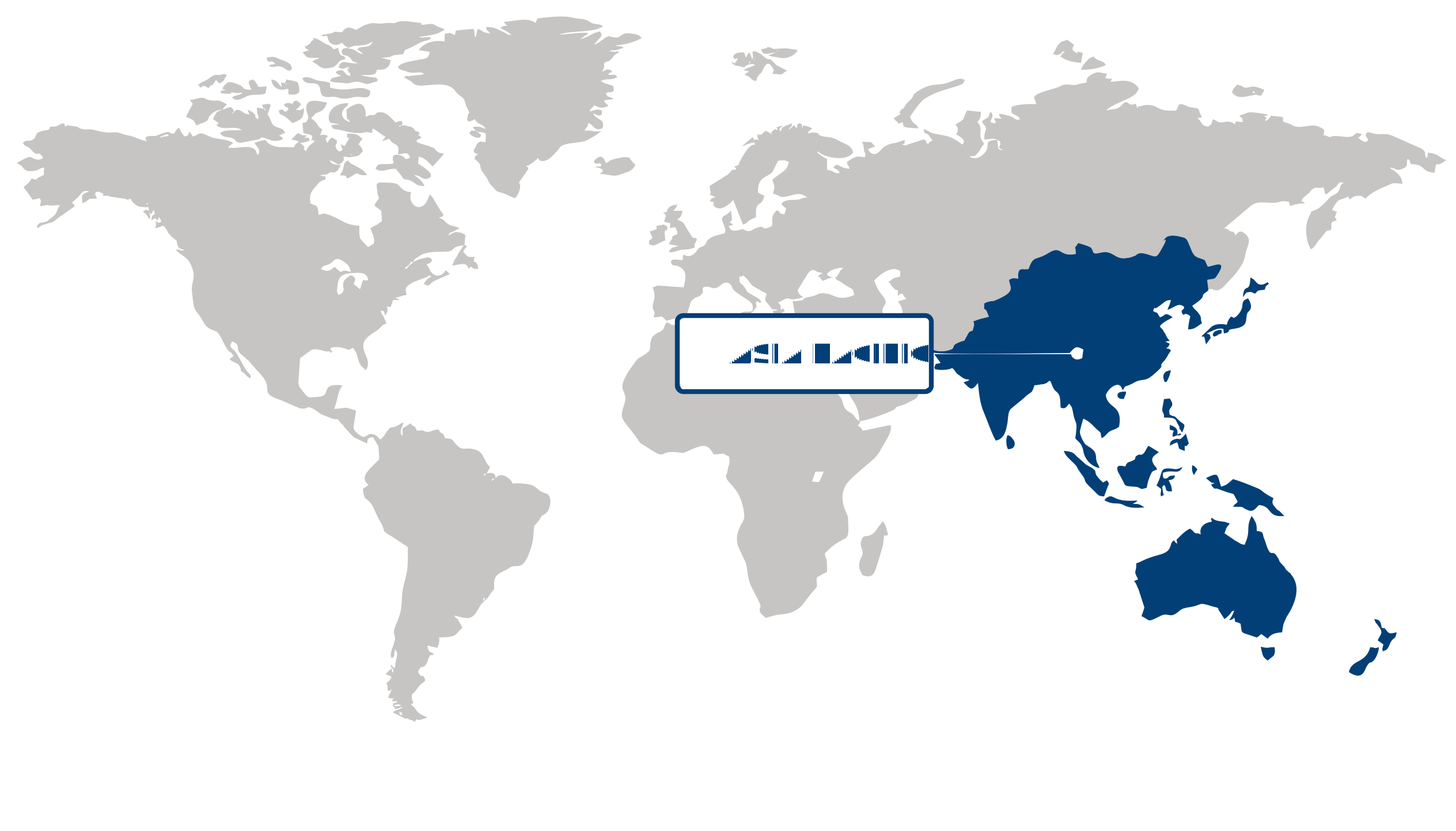
Asia Pacific (Largest Region)
The wide bandgap semiconductors market was led by Asia Pacific in 2026, supported by extensive semiconductor manufacturing capabilities and strong demand for power electronics across automotive, consumer electronics, industrial equipment, and renewable energy applications. The region’s expanding electric vehicle ecosystem and investments in efficient power conversion technologies are increasing the need for semiconductor materials capable of operating at higher temperatures and voltages while improving energy efficiency. Continued development of electronics manufacturing infrastructure and power management systems is reinforcing regional demand for wide bandgap technologies.
North America (Fastest-Growing Region)
North America is emerging as the fastest-growing region as electrification, renewable energy deployment, and advanced power management requirements accelerate adoption of wide bandgap semiconductor technologies. These materials offer advantages for high-efficiency applications in electric mobility, charging infrastructure, data centers, aerospace systems, and grid-related equipment. Increasing investment in domestic semiconductor capabilities and growing emphasis on resilient supply chains are further encouraging development and deployment of advanced power semiconductor solutions.
| Parameter | North America | Asia Pacific | Europe | Latin America | MEA |
|---|---|---|---|---|---|
| Innovation Hub i Scale Nascent Developing Advanced | |||||
| Cost-Sensitive Region i Scale Low Medium High | |||||
| Regulatory Environment i Scale Restrictive Neutral Supportive | |||||
| Demand Drivers i Scale Weak Moderate Strong | |||||
| Development Stage i Scale Emerging Developing Developed | |||||
| Adoption Rate i Scale Low Medium High | |||||
| New Entrants / Startups i Scale Sparse Moderate Dense | |||||
| Macro Indicators i Scale Weak Stable Strong |
Key Country Insights
United States 🇺🇸
High-Power Electronics FocusThe U.S. is strengthening adoption of wide bandgap semiconductors across electric vehicles, renewable energy, aerospace, and defense applications. Investment centers on improving power efficiency, thermal performance, and domestic semiconductor manufacturing capabilities.
Germany 🇩🇪
Industrial Power ConversionGermany is expanding the use of wide bandgap semiconductors in automotive electrification, industrial automation, and energy systems. Manufacturers prioritize high-efficiency power conversion technologies that support advanced electric mobility and industrial power electronics.
Japan 🇯🇵
Advanced Device EngineeringJapan continues developing wide bandgap semiconductor technologies for automotive, consumer electronics, and industrial equipment. Companies emphasize material quality, device reliability, and efficient manufacturing processes to enable next-generation power electronics.
South Korea 🇰🇷
EV Power ElectronicsSouth Korea is integrating wide bandgap semiconductors into electric vehicles, charging infrastructure, and advanced electronics. Semiconductor manufacturers are enhancing device performance to improve energy efficiency, compact system design, and high-frequency operation.
France 🇫🇷
Clean Energy ApplicationsFrance is promoting wide bandgap semiconductors for renewable energy systems, transportation electrification, and industrial power management. Market activity focuses on improving converter efficiency and supporting advanced power electronics across strategic industries.
Italy 🇮🇹
Efficient Power SystemsItaly is increasing the adoption of wide bandgap semiconductors in industrial machinery, renewable energy, and electric mobility applications. Manufacturers seek higher switching efficiency and compact power electronics that improve overall system performance.
Segment Leadership and Growth Trends
Wide Bandgap Semiconductors Market Share (%), by Material, 2026
Go beyond the chart, access full insights & data tables
Request Free Sample ReportMaterial Segment Analysis: Silicon Carbide (SiC) (Largest Segment) vs Gallium Nitride (GaN) (Fastest-Growing Segment)
Holding the largest share of the wide bandgap semiconductors market, the silicon carbide (SiC) segment accounted for 40.93% in 2026. Its leadership is supported by the material’s superior thermal conductivity, high breakdown voltage, and ability to operate efficiently under high-temperature and high-power conditions. These characteristics make silicon carbide particularly suitable for power electronics used in electric vehicles, industrial motor drives, renewable energy systems, and grid infrastructure. Continued investments in energy-efficient technologies and the growing emphasis on improving power conversion efficiency further reinforce the segment’s dominant position.
The gallium nitride (GaN) segment is expected to witness the fastest growth owing to its high switching speed, lower power losses, and compact form factor. Increasing adoption of fast-charging consumer electronics, advanced telecommunications infrastructure, and high-frequency radio frequency applications is creating strong demand for gallium nitride devices. As industries continue to prioritize smaller, lighter, and more energy-efficient electronic systems, the expanding use of gallium nitride across next-generation power supplies and communication technologies is expected to accelerate its market growth.
End-use Industry Segment Analysis: Automotive (Largest & Fastest-Growing Segment)
The automotive segment led the wide bandgap semiconductors market with a 33.16% share in 2026 and also emerged as the fastest-growing end-use industry. Rising production of electric and hybrid vehicles has significantly increased demand for advanced power semiconductor materials capable of delivering higher efficiency, improved thermal performance, and greater power density. Wide bandgap semiconductors are increasingly integrated into traction inverters, onboard chargers, and battery management systems to enhance vehicle performance while reducing energy losses. Continuous advancements in vehicle electrification, stricter energy efficiency standards, and growing investments in high-performance automotive electronics are expected to sustain the segment’s strong growth trajectory.
| Segment | Sub-Segment | Largest Segment | Fastest Growing |
|---|---|---|---|
| Material | Silicon Carbide (SiC), Gallium Nitride (GaN), Aluminum Nitride (AlN), Diamond, Others | Silicon Carbide (SiC) | Gallium Nitride (GaN) |
| End-use Industry | Automotive, Consumer Electronics, Telecommunications, Energy & Utility, Aerospace & Defense, Others | Automotive | Automotive |
Competitive Landscape and Market Positioning
Key companies in the wide bandgap semiconductors market:
- Infineon Technologies AG (Germany)
- STMicroelectronics N.V. (Switzerland)
- Wolfspeed, Inc. (United States)
- ROHM Co., Ltd. (Japan)
- Mitsubishi Electric Corporation (Japan)
- Texas Instruments Incorporated (United States)
- ON Semiconductor Corporation (United States)
- Renesas Electronics Corporation (Japan)
- Navitas Semiconductor Corporation (United States)
- Fuji Electric Co., Ltd. (Japan)
The wide bandgap semiconductors market is moving through a transition where competitive advantage is increasingly tied to technological maturity, supply resilience, and application expertise. Manufacturers are differentiating through advancements in device efficiency, thermal performance, and integration capabilities as industries seek higher-performance power systems for electrification and advanced electronics. The competitive field is also expanding beyond traditional semiconductor strengths, with companies building deeper expertise across automotive, renewable energy, and industrial applications to capture demand from sectors requiring next-generation power management solutions.
| Company | Market Share | Company Revenue | Revenue CAGR (%) | Product Portfolio | Geographic Presence | Innovation / R&D Focus | Strategic Developments |
|---|---|---|---|---|---|---|---|
| Infineon Technologies AG (Germany) | |||||||
| STMicroelectronics N.V. (Switzerland) | |||||||
| Wolfspeed Inc. (United States) | |||||||
| ROHM Co. Ltd. (Japan) | |||||||
| Mitsubishi Electric Corporation (Japan) | |||||||
| Texas Instruments Incorporated (United States) | |||||||
| ON Semiconductor Corporation (United States) | |||||||
| Renesas Electronics Corporation (Japan) | |||||||
| Navitas Semiconductor Corporation (United States) | |||||||
| Fuji Electric Co. Ltd. (Japan) |
Industry Development/News
| Company Name | Date | Key Development |
|---|---|---|
| Sino Powder (Henan) | Jun-26 | Sino Powder signed an agreement with the Zhengzhou High-tech Zone to establish China’s first fully integrated ultra-wide bandgap semiconductor industrial chain. The project, backed by a 1.5 billion yuan investment, will focus on mass-producing diamond-based semiconductor substrates, aiming to transition the region from a synthetic diamond hub to a specialized semiconductor material manufacturer. |
| Heron Power | Feb-26 | Heron Power secured $140 million in Series B funding to scale the manufacturing of its solid-state transformer technology. The capital will support the construction of a U.S.-based production facility, enabling the company to integrate next-generation power semiconductors into power grid infrastructure to improve efficiency for AI and data center applications. |
| Cyient Semiconductors | Dec-25 | Cyient Semiconductors acquired a 74% stake in Kinetic Technologies for $85 million. This acquisition grants Cyient ownership of critical product IP in power management and interface solutions, marking a strategic transition from a design services provider to a custom silicon manufacturer within the high-growth AI and industrial power supply chain. |
| Mitsubishi Electric | Dec-25 | Mitsubishi Electric announced plans to expand its power electronics business in India, with a specific strategic priority on silicon carbide (SiC) and gallium nitride (GaN) technologies. This investment reinforces the company’s long-term commitment to capturing the growing market for high-efficiency power semiconductors in industrial and automotive electrification. |
| GlobalFoundries | Nov-25 | GlobalFoundries is realigning its GaN manufacturing strategy in response to TSMC’s planned exit from GaN wafer foundry services by 2027. By strengthening collaborations with partners like Navitas, the company is positioning itself to scale U.S.-based GaN production capacity to meet the growing demand for wide bandgap power electronics. |
| Infineon Technologies | Nov-25 | Infineon Technologies partnered with SolarEdge to develop high-efficiency solid-state transformer technology for AI data center infrastructure. The collaboration leverages Infineon’s advanced wide bandgap power semiconductor portfolio to reduce energy transmission losses and improve power density in large-scale data center architectures. |
| Infineon Technologies | Feb-25 | Infineon Technologies commenced production of silicon carbide (SiC) power devices using 200 mm wafer technology. This technological milestone enhances production scalability and cost-efficiency for high-voltage applications such as electric vehicles and renewable energy, accelerating the industry shift toward larger-diameter wafer manufacturing to meet surging power semiconductor demand. |
| Element Six | Sep-24 | Element Six has been selected to lead DARPA’s Ultra-Wide Bandgap Semiconductors program. The initiative focuses on engineering diamond-based substrates and junction technologies, aiming to overcome the thermal and power-density limitations of current materials to enable next-generation, high-performance electronics in extreme environments. |
Customize Your Report
Explore examples of how this report can be tailored to different research needs, including custom segments, additional topics or chapters, and related reports. Click a section of the wheel or its numbered marker to explore the available options.
Wide Bandgap Semiconductors Market — Custom Segments
| Segment | Sub-Segment |
|---|---|
| Device Type | Power Diodes, Power MOSFETs, Schottky Diodes, HEMTs, Other Device Types |
| Voltage Class | Low Voltage, Medium Voltage, High Voltage |
| Packaging Type | Discrete Packages, Module Packages, Integrated Packages |
Wide Bandgap Semiconductors Market — Custom TOC
| Custom Chapter | Custom Details |
|---|---|
| Silicon-to-Wide Bandgap Transition Roadmap |
|
| SiC vs. GaN Application Economics |
|
| Power Electronics Adoption Pathways |
|
Need a different cut of the data?
Request Custom ResearchWhat is the market valuation of wide bandgap semiconductors?
What is the projected value of the wide bandgap semiconductors industry by 2036?
How is electric vehicle adoption accelerating demand for wide bandgap semiconductors?
Which infrastructure trends are expanding deployment opportunities for wide bandgap semiconductors?
Why does Silicon Carbide (SiC) lead the wide bandgap semiconductors market?
Why is Gallium Nitride (GaN) the fastest-growing material segment?
What supports Asia Pacific's leadership in wide bandgap semiconductors?
Which factors are accelerating wide bandgap semiconductor growth in North America?
Which companies dominate the wide bandgap semiconductors landscape?
Our Clients
"Working with FBI has been a good experience. The market report provided a holistic view, covering everything from emerging trends to potential risks."
Semtech Corporation
"The experience was highly positive. The team showcased remarkable flexibility in adapting to our specific needs and delivered report that perfectly aligned with all our requirements."
TSMC
"What really stood out to me was how clearly and promptly the Fundamental Business Insights team communicated throughout. It made the collaboration feel effortless."
NXP Semiconductors
Our Research Team & Methodology
Every Fundamental Business Insights report is built by a dedicated vertical research team, validated through a structured primary-and-secondary methodology, and reviewed for accuracy before it reaches you.
Research Team Overview
Prepared by the Electronics & Semiconductors Research Team
Delivery
Published
Demand
Available
Support
Trust & Compliance
Research Domains
10 coverage areasResearch Intelligence
| Source | Reference |
|---|---|
| Semiconductor Industry Association (SIA) | www.semiconductors.org |
| SEMI | www.semi.org |
| JEDEC Solid State Technology Association | www.jedec.org |
| IEEE | www.ieee.org |
| IPC – Association Connecting Electronics Industries | www.ipc.org |
| International Electrotechnical Commission (IEC) | www.iec.ch |
| International Organization for Standardization (ISO) | www.iso.org |
| U.S. Bureau of Industry and Security (BIS) | www.bis.gov |
| U.S. Patent and Trademark Office (USPTO) | www.uspto.gov |
| European Patent Office (EPO) | www.epo.org |
| Taiwan Semiconductor Industry Association (TSIA) | www.tsia.org.tw |
| World Semiconductor Trade Statistics (WSTS) | www.wsts.org |
| International Energy Agency (IEA) | www.iea.org |
| GSMA | www.gsma.com |
| 3GPP | www.3gpp.org |
| ITU (International Telecommunication Union) | www.itu.int |
| Omdia (public insights) | omdia.tech.informa.com |
| Display Supply Chain Consultants (DSCC) | www.displaysupplychain.com |
| U.S. Department of Energy (DOE) | www.energy.gov |
| NIST (National Institute of Standards and Technology) | www.nist.gov |
Research Workflow & Quality Assurance
Data Collection
Verified information gathered through primary and secondary research.
Data Triangulation
Cross-validation using multiple independent data sources.
Forecast Modelling
Market estimates developed using historical trends and analytical models.
Analyst Validation
Findings reviewed by domain experts for accuracy and consistency.
Editorial & Quality Review
Final editorial, quality, and compliance checks before publication.
Final Publication
Released after successful completion of the internal review process.
Report Coverage
📊 Market Assessment
- Market Size & Forecast
- Market Segmentation
- Regional Analysis
- Growth Drivers & Challenges
- Market Dynamics
🏢 Competitive Intelligence
- Competitive Landscape
- Company Profiles
- Competitive Benchmarking
- Mergers & Acquisitions
- Market Share Analysis or Key Company Strategies
🔍 Strategic Analysis
- Value Chain Analysis
- Porter's Five Forces
- PESTLE Analysis
- Pricing Trends
- Supply-Demand Analysis
🚀 Future Outlook
- Technology Landscape
- Regulatory Landscape
- Investment & Funding Landscape
- Emerging Opportunities
- Future Market Outlook
Have a question about this report or need a custom scope?
Request Customization