White Oil Market Size & Forecasts 2026-2035, By Segments (Application), Growth Opportunities, Innovation Landscape, Regulatory Shifts, Strategic Regional Insights (U.S., Japan, China, South Korea, UK, Germany, France), and Competitive Dynamics (ExxonMobil, Shell, BP, Chevron, TotalEnergies)
Market Size and Growth Outlook
White Oil Market size is set to grow from USD 2.79 billion in 2025 to USD 4.5 billion by 2035, reflecting a CAGR greater than 4.9% through 2026-2035. Industry revenues in 2026 are estimated at USD 2.91 billion.
Get more details on this report
Request Free Sample ReportWhite Oil Market Intelligence Snapshot
Regional Market Dynamics
Segment Momentum
Market Expansion Drivers
Leading Market Participants
Global Market Forecast Snapshot
Market Outlook
Regional and Segment Outlook
Market Growth Drivers and Industry Trends
The white oil market is increasingly propelled by growing consumption in personal care, pharmaceutical, and food industries, driven by heightened consumer preference for high-purity, safe ingredients. For instance, companies such as Croda International emphasize the use of white oil in skincare formulations due to its hypoallergenic properties, aligning with stricter regulatory standards from agencies like the U.S. Food and Drug Administration. This trend reflects broader shifts toward cleaner, safer product portfolios globally. Established manufacturers can capitalize on this by expanding specialty-grade white oil offerings, while new entrants may differentiate through certified compliance and sustainable sourcing. As consumers continue prioritizing product safety and quality, demand within these sectors will sustain long-term growth, reinforcing the white oil market’s critical role in formulation across regulated industries.
Technological Advancements in White Oil Refining and Production
Innovations in refining technology are enhancing white oil’s purity and production efficiency, playing a pivotal role in the white oil market’s transformation. Companies such as ExxonMobil have integrated advanced hydrocracking and multi-stage purification techniques, improving product consistency and reducing environmental impact. Regulatory bodies like the European Chemicals Agency encourage such technological upgrades by tightening contaminant limits, thus raising market entry standards. These advancements open significant avenues for incumbents to lower operational costs while satisfying stringent quality demands. New market entrants equipped with cutting-edge processes stand to gain competitive advantage. The continued modernization of production facilities will anchor future white oil supply chains, enabling adaptability amid evolving compliance frameworks and sustainability imperatives.
Expansion in Industrial Applications and Emerging Markets
Industrial end-use expansion, particularly in emerging economies, constitutes a key growth driver for the white oil market as manufacturing sectors diversify and scale up. The strategic push by companies like INEOS to penetrate markets in Asia-Pacific reflects rising demand for white oil in metalworking fluids, textile treatments, and mechanical lubrication. Such diversification aligns with increased infrastructure investments and industrial modernization policies observed in regions like India and Southeast Asia. This dynamic fosters competitive opportunities for firms to develop tailored solutions, balancing cost and quality for industrial users. Continued urbanization and industrial output growth in these markets suggest sustained white oil demand escalation, positioning the market to benefit from evolving industrial landscapes and new industrial segments.
Industry Restraints:
Stringent Regulatory and Environmental Standards
Regulatory pressures significantly constrain the white oil market by imposing rigorous quality, purity, and environmental compliance requirements. Agencies such as the U.S. Food and Drug Administration (FDA) and the European Chemicals Agency (ECHA) enforce strict controls on white oil use in pharmaceuticals, cosmetics, and food packaging, raising operational complexities and costs. For instance, ExxonMobil’s disclosures highlight the high capital expenditure necessary for compliance with evolving purity and volatile organic compound (VOC) regulations. This restricts smaller producers struggling to meet certification mandates, limiting market entry and innovation. Established players must continually invest in upgrading facilities, slowing product diversification. As environmental scrutiny intensifies, these regulatory frameworks will remain a critical barrier, compelling companies to balance compliance costs with market expansion strategies, solidifying regulatory adaptation as a core competency.
Feedstock Supply Volatility and Cost Pressures
White oil production is directly affected by fluctuations in crude oil and hydrocarbon feedstock availability and pricing, creating supply chain constraints that impede market growth. Major refiners like Royal Dutch Shell have noted that crude oil price volatility—exacerbated by geopolitical tensions and shifts in global demand—disrupts white oil manufacturing economics, resulting in inconsistent supply and margin pressures. This unpredictability challenges manufacturers’ ability to offer stable pricing and meet volume commitments, particularly impacting new entrants with less flexible supply chains. Strategic implications include increased reliance on long-term contracts and diversification of feedstock sources to mitigate exposure. Given ongoing market upheavals in upstream oil markets, feedstock-related constraints will persist, compelling white oil producers to adopt agile procurement strategies and cost management measures.
| Growth Driver | Impact on CAGR | Regulatory Influence | Geographic Relevance | Adoption Rate | Impact Timeline |
|---|---|---|---|---|---|
| Rising demand from personal care, pharmaceutical, and food sectors | 1.50% | Short term (≤ 2 yrs) | North America, Europe | Medium | Fast |
| Technological advancements in white oil refining and production | 1.40% | Medium term (2–5 yrs) | Asia Pacific, Europe | Medium | Moderate |
| Expansion in industrial applications and emerging markets | 2.00% | Long term (5+ yrs) | Asia Pacific, Latin America | Low | Moderate |
Unlock insights tailored to your business with our bespoke market research solutions.
Click to get your customized report now.
Regional Demand Dynamics
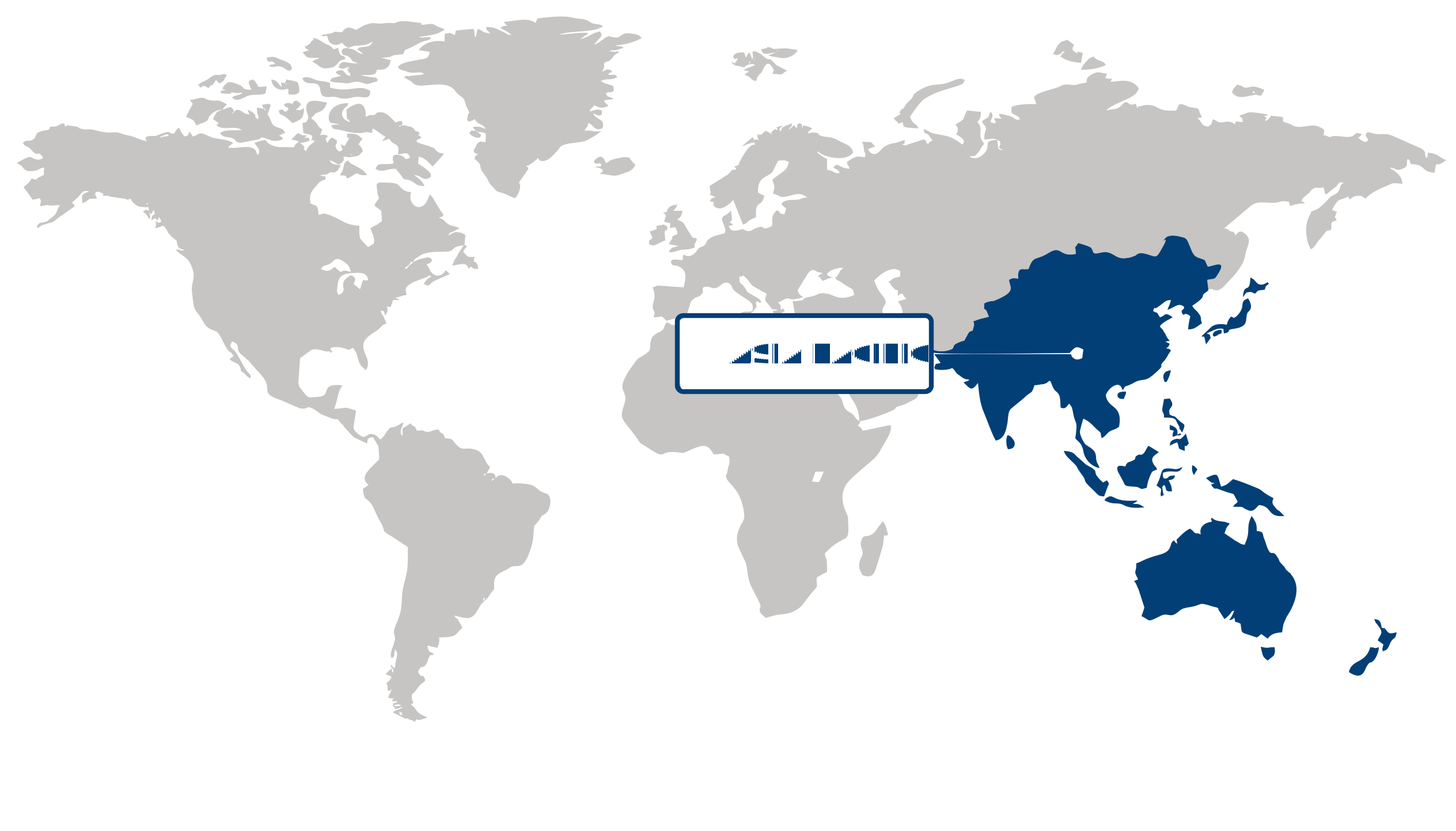
Asia Pacific dominated the white oil market in 2025, capturing more than 55% of the global share and exhibiting the highest growth rate with a CAGR of 7.29%. This region’s leadership is primarily propelled by the expanding pharmaceutical and personal care industries, which are increasingly reliant on white oil’s purity and safety characteristics. The surge in demand is also supported by rising consumer spending on health and wellness products, as noted in a report by the Japan External Trade Organization (JETRO), as well as improvements in supply chain infrastructure across Southeast Asia. Additionally, regulatory frameworks promoting stringent quality and safety standards in countries like Singapore and South Korea have incentivized manufacturers to scale operations here. These dynamics are further bolstered by increasing digital integration in manufacturing processes, enabling real-time quality control in major industrial hubs. With continuous innovation and growing middle-class spending power, Asia Pacific offers significant opportunities for sustained white oil market expansion.
Japan serves as a pivotal hub in the Asia Pacific white oil market, leveraging its advanced pharmaceutical sector to drive demand for high-grade white oil products. The country benefits from strict regulations enforced by the Ministry of Health, Labour and Welfare, ensuring compliance with safety and purity standards crucial for personal care formulations. Kao Corporation’s recent announcement of expanding their manufacturing footprint in Japan reflects growing domestic demand and the emphasis on product innovation. Meanwhile, technological advancements in refining and sustainable sourcing practices are positioning Japan as a center for high-quality white oil production. This strategic role not only strengthens Japan’s market influence but also reinforces broader regional growth by setting quality benchmarks and fostering innovation.
China plays a critical role in Asia Pacific’s white oil market as a rapidly growing production and consumption hub shaped by rising middle-class consumerism and expanding pharmaceutical and personal care manufacturing. Government initiatives such as the 14th Five-Year Plan emphasize boosting domestic pharmaceutical capabilities and regulatory modernization, which have encouraged both local and international companies to increase production capacity. Sinopec’s recent investment in upgrading refining units to meet stricter environmental and purity standards underscores the country’s commitment to quality enhancement. Additionally, robust e-commerce growth facilitates wider distribution of white oil-based personal care products, responding to shifting consumer preferences. China’s scale and evolving infrastructure thus amplify Asia Pacific’s regional dominance and highlight its critical influence on global white oil supply chains.
North America Market Analysis:
North America held a commanding share in the white oil market, underscored by robust demand from pharmaceutical, cosmetics, and food industries. The region’s sophistication in manufacturing and stringent regulatory landscape, led by oversight from the U.S. Food and Drug Administration (FDA), ensure high product quality and safety standards, boosting consumer confidence. Increasing consumer preference for premium personal care products with mineral oil-based formulations, coupled with ongoing innovation by major players like ExxonMobil Chemical, sustains market momentum. Furthermore, North America’s advanced logistics infrastructure enables efficient supply chain management, reducing lead times and fostering stronger distributor relationships. These dynamics, reinforced by rising health and wellness trends, position the region as a critical hub for white oil applications. With ongoing investments in sustainable refining technologies reported by Chevron Phillips Chemical, North America is well-placed to capitalize on evolving global market needs and maintain its influential role.
The United States dominates North America’s white oil market, driven primarily by expanding pharmaceutical and personal care segments. Regulatory rigor enforced by the FDA mandates stringent purity levels, encouraging manufacturers to source high-grade white oils, which increases overall demand. The consumer shift towards clean-label and hypoallergenic skincare products, highlighted in recent Johnson & Johnson press releases, has amplified white oil’s role as a preferred ingredient. Additionally, U.S.-based companies have accelerated digital transformation in their production and distribution channels, enhancing operational efficiencies amid supply chain disruptions. This focus on quality and innovation, supported by initiatives from the American Petroleum Institute (API), strengthens the U.S. market’s strategic significance, reinforcing North America’s position as a key player in the global white oil landscape.
Europe Market Trends:
Europe maintained a notable presence in the white oil market, securing a substantial share driven by the region’s mature industrial infrastructure and stringent regulatory environment. Increased demand from personal care, pharmaceutical, and food-grade segments reflects evolving consumer preferences toward high-purity and safety-compliant products. The European Chemicals Agency’s (ECHA) updated REACH regulations have prompted manufacturers to enhance product quality and sustainability credentials, reinforcing market competitiveness. Operational advancements, such as digitalized supply chains adopted by companies like Borealis AG, have improved efficiency and transparency across the continent. Furthermore, shifting consumer awareness towards eco-friendly alternatives has encouraged producers to innovate with low-impact refining processes, underscoring Europe’s resilience amidst global market fluctuations. With ongoing regulatory support and technological integration, Europe offers significant opportunities for white oil market growth aligned with both compliance and consumer-driven quality demands.
Germany plays a pivotal role in Europe’s white oil market, largely due to its robust manufacturing base and leadership in chemical innovation. The country’s demand is bolstered by diversified end-use industries, including automotive lubricants and cosmetics, supported by K+S Aktiengesellschaft’s investments in refining technologies that comply with stringent environmental standards. Germany’s focus on reducing carbon footprints integrates with the broader EU Green Deal framework, incentivizing producers to adopt energy-efficient production methods, thereby enhancing market competitiveness. This strategic alignment positions Germany as a critical hub that not only drives domestic consumption but also influences regional supply chains and quality benchmarks, reinforcing Europe’s overall market stability and growth prospects.
France represents a significant contributor to the European white oil market, characterized by steady growth grounded in its expanding pharmaceutical and personal care sectors. French regulatory authorities, such as the Agence Nationale de Sécurité du Médicament (ANSM), oversee strict compliance that shapes product formulation and quality assurance, encouraging local manufacturers like TotalEnergies to prioritize innovation in product purity and sustainability. Additionally, consumer trends toward natural and safe additives stimulate demand for white oil variants with higher refinement standards. These dynamics consolidate France’s role in enhancing the regional market’s responsiveness to evolving safety and performance criteria, thereby supporting Europe’s position as a leader in high-quality white oil production and application.
| Parameter | North America | Asia Pacific | Europe | Latin America | MEA |
|---|---|---|---|---|---|
| Innovation Hub i Scale Nascent Developing Advanced | |||||
| Cost-Sensitive Region i Scale Low Medium High | |||||
| Regulatory Environment i Scale Restrictive Neutral Supportive | |||||
| Demand Drivers i Scale Weak Moderate Strong | |||||
| Development Stage i Scale Emerging Developing Developed | |||||
| Adoption Rate i Scale Low Medium High | |||||
| New Entrants / Startups i Scale Sparse Moderate Dense | |||||
| Macro Indicators i Scale Weak Stable Strong |
Segment Leadership and Growth Trends
White Oil Market Share (%), by Application, 2026
Go beyond the chart, access full insights & data tables
Request Free Sample ReportPersonal Care & Cosmetics sub-segment dominated the white oil market in 2025, capturing the largest share due to the rising demand for highly refined oils in skincare and cosmetic formulations. This leadership stems from consumers’ increasing preference for safe, hypoallergenic, and non-comedogenic ingredients, which white oils provide by virtue of their high purity and stability. Regulatory milestones such as stringent cosmetic safety standards enforced by the U.S. Food and Drug Administration (FDA) and the European Chemicals Agency (ECHA) further underscore the segment’s credibility and adoption. Key players like Croda International plc and INOLEX have announced product innovations leveraging white oils to meet diverse formulation needs, strengthening competitive dynamics. The segment offers strategic advantages for incumbents to reinforce brand trust and for new entrants to capitalize on niche personal care trends. Given sustained consumer focus on gentle yet effective skincare and ongoing digital transformation in product marketing, this segment is poised to maintain its prominence in the foreseeable future.
| Segment | Sub-Segment | Largest Segment | Fastest Growing |
|---|---|---|---|
| Application | Food Industry, Personal Care & Cosmetics, Plastics & Polymers, Pharmaceuticals, Textile, Others |
Competitive Landscape and Market Positioning
The competitive landscape among these top players is characterized by numerous collaborative ventures and a strong emphasis on innovation-driven growth. Cross-border partnerships and strategic alignment on sustainability goals have enhanced resource optimization and expanded market reach for several companies, thereby boosting their resilience amid fluctuating raw material prices. Simultaneously, significant investments in specialized refining technologies and product diversification allow firms like Chevron and BP to tailor offerings to emerging industrial applications, distinguishing themselves from competitors. The ongoing consolidation activity, including asset acquisitions and joint ventures, reflects a concerted effort to secure supply chain robustness and integrate advanced R&D capabilities. This intricate interplay of strategic initiatives reinforces competitive positioning and accelerates the pace of technological advancement within the white oil segment.
Strategic / Actionable Recommendations for Regional Players
North American stakeholders should pursue synergistic collaborations that integrate advanced refining technologies and sustainable practices to further elevate product differentiation. Capitalizing on strong industrial networks and technological innovation hubs can enhance responsiveness to evolving regulatory frameworks and customer preferences. Fostering alliances with technology providers will optimize cost structures and create avenues for high-purity grades tailored to niche markets.
In the Asia Pacific region, capitalizing on rapidly expanding industrial sectors demands a focus on scalable production capabilities paired with stringent quality management. Regional entities can benefit from tapping into cross-border supply chain partnerships to meet diverse market requirements efficiently. Emphasizing manufacturing flexibility and adopting cutting-edge process enhancements will support growth in lubricants, pharmaceuticals, and cosmetics applications where white oil demand is intensifying.
European players are poised to strengthen competitive advantage by embedding sustainability principles deeper into their operational models. Collaborating with research institutions can accelerate the development of next-generation, environmentally compatible white oils. Moreover, targeting premium segments through innovation in formulation and certification standards will facilitate access to discerning end-use markets, reinforcing leadership amidst tightening regulatory landscapes.
| Company | Market Share | Company Revenue | Revenue CAGR (%) | Product Portfolio | Geographic Presence | Innovation / R&D Focus | Strategic Developments |
|---|---|---|---|---|---|---|---|
| No companies available. | |||||||
Industry Development/News
| Company Name | Date | Key Development |
|---|
Customize Your Report
Explore examples of how this report can be tailored to different research needs, including custom segments, additional topics or chapters, and related reports. Click a section of the wheel or its numbered marker to explore the available options.
White Oil Market — Custom Segments
| Segment | Sub-Segment |
|---|---|
| No segment data available. | |
White Oil Market — Custom TOC
| Custom Chapter | Custom Details | ||
|---|---|---|---|
| No custom TOC data available. | |||
Need a different cut of the data?
Request Custom ResearchHow large is the white oil market?
How is the white oil industry projected to perform over the next decade?
Which global region commands the highest percentage of the white oil market?
Which region leads in terms of year-over-year growth for the white oil sector?
When did personal care & cosmetics sub-segment emerge as the largest sub-segment in the application segment of white oil sector?
Who holds a significant market share in the white oil landscape?
Our Clients
"The report helped us understand emerging consumer trends in our product category. It clarified where to focus innovation for the next product launch."
LyondellBasell
"The regional forecast section was incredibly useful. We were able to identify two new potential partners in Europe thanks to the vendor mapping you included."
SABIC
"We appreciated how actionable the recommendations were. It guided us to improve supply chain resilience."
Olin Corporation
Our Research Team & Methodology
Every Fundamental Business Insights report is built by a dedicated vertical research team, validated through a structured primary-and-secondary methodology, and reviewed for accuracy before it reaches you.
Research Team Overview
Prepared by the Chemicals & Materials Research Team
Delivery
Published
Demand
Available
Support
Trust & Compliance
Research Domains
10 coverage areasResearch Intelligence
| Source | Reference |
|---|---|
| American Chemistry Council (ACC) | www.americanchemistry.com |
| European Chemical Industry Council (Cefic) | cefic.org |
| International Council of Chemical Associations (ICCA) | icca-chem.org |
| European Chemicals Agency (ECHA) | echa.europa.eu |
| U.S. Environmental Protection Agency (EPA) | www.epa.gov |
| ASTM International | www.astm.org |
| International Organization for Standardization (ISO) | www.iso.org |
| National Institute of Standards and Technology (NIST) | www.nist.gov |
| Plastics Industry Association (PLASTICS) | www.plasticsindustry.org |
| European Biplastics | www.european-bioplastics.org |
| The Adhesive and Sealant Council (ASC) | www.ascouncil.org |
| National Association of Corrosion Engineers (AMPP) | www.ampp.org |
| Society of Plastics Engineers (SPE) | www.4spe.org |
| International Fertilizer Association (IFA) | www.fertilizer.org |
| CropLife International | croplife.org |
| Packaging Europe | packagingeurope.com |
| Flexible Packaging Association (FPA) | www.flexpack.org |
| Battery Council International (BCI) | batterycouncil.org |
| International Copper Association (ICA) | internationalcopper.org |
| World Steel Association | worldsteel.org |
Research Workflow & Quality Assurance
Data Collection
Verified information gathered through primary and secondary research.
Data Triangulation
Cross-validation using multiple independent data sources.
Forecast Modelling
Market estimates developed using historical trends and analytical models.
Analyst Validation
Findings reviewed by domain experts for accuracy and consistency.
Editorial & Quality Review
Final editorial, quality, and compliance checks before publication.
Final Publication
Released after successful completion of the internal review process.
Report Coverage
📊 Market Assessment
- Market Size & Forecast
- Market Segmentation
- Regional Analysis
- Growth Drivers & Challenges
- Market Dynamics
🏢 Competitive Intelligence
- Competitive Landscape
- Company Profiles
- Competitive Benchmarking
- Mergers & Acquisitions
- Market Share Analysis or Key Company Strategies
🔍 Strategic Analysis
- Value Chain Analysis
- Porter's Five Forces
- PESTLE Analysis
- Pricing Trends
- Supply-Demand Analysis
🚀 Future Outlook
- Technology Landscape
- Regulatory Landscape
- Investment & Funding Landscape
- Emerging Opportunities
- Future Market Outlook
Have a question about this report or need a custom scope?
Request Customization