Water Treatment Systems Market Size & Forecasts 2026-2035, By Segments (Treatment Types), Growth Opportunities, Innovation Landscape, Regulatory Shifts, Strategic Regional Insights (U.S., Japan, China, South Korea, UK, Germany, France), and Competitive Dynamics (Veolia, Suez, Xylem, Pentair, Danaher)
Market Size and Growth Outlook
Water Treatment Systems Market size is forecasted to reach USD 96.5 billion by 2035, rising from USD 41.52 billion in 2025, at a CAGR of more than 8.8% between 2026 and 2035. In 2026, revenue is projected at USD 44.7 billion.
Get more details on this report
Request Free Sample ReportWater Treatment Systems Market Intelligence Snapshot
Regional Market Dynamics
Segment Momentum
Market Expansion Drivers
Leading Market Participants
Global Market Forecast Snapshot
Market Outlook
Regional and Segment Outlook
Market Growth Drivers and Industry Trends
The escalating global demand for freshwater, driven by urbanization and industrial expansion, is critically shaping the water treatment systems market. Organizations like the United Nations World Water Assessment Programme underscore growing water scarcity risks, prompting stricter resource management and heightened treatment needs. This dynamic compels both established firms and new entrants to innovate efficient, scalable solutions addressing limited water supplies. Companies such as Veolia highlight their strategic investments in sustainable water reuse technologies, reflecting a broader market pivot towards circular water economies. As freshwater resources tighten, businesses that can deliver cost-effective, high-performance treatment options will gain competitive advantage, especially in water-stressed regions. Ongoing resource constraints will sustain demand for these systems, anchoring water treatment innovation as a strategic priority.
Adoption of Advanced Treatment Technologies
Technological innovation, particularly in membrane filtration, UV purification, and IoT-enabled monitoring, is accelerating transformation within the water treatment systems market. Xylem Inc.’s deployment of smart sensors for real-time water quality analytics exemplifies how digital integration enhances operational efficiency and compliance. These advances respond to evolving regulatory frameworks worldwide, such as the U.S. Environmental Protection Agency’s tightened water quality standards, which drive demand for sophisticated treatment capabilities. For incumbents, investing in R&D and partnerships to embed digital and automated solutions can secure market leadership, while startups can exploit niche opportunities by developing novel, cost-effective technologies. This continuous modernization trend positions the market to offer smarter, more adaptable systems aligned with evolving water use and regulatory landscapes.
Expansion of Municipal and Industrial Water Infrastructure
Governments and private sectors worldwide are substantially increasing investments in water infrastructure to meet rising urban and industrial water needs, influencing the water treatment systems market’s trajectory. For instance, the European Commission’s NextGenerationEU fund allocates significant capital towards modernizing water networks, advancing decentralized treatment, and enhancing wastewater management. This surge in infrastructure development creates vast opportunities for water treatment providers to supply integrated, high-capacity systems. Established players benefit from large-scale contracts, while emerging companies can capture value by targeting modular or specialized solutions suited to varied infrastructure contexts. As infrastructure projects proliferate, the market is set to gain momentum from these foundational upgrades, reinforcing sustainable water management as integral to future urban and industrial resilience.
Industry Restraints:
High Capital Investment and Operational Costs
The water treatment systems market is significantly restrained by the high initial capital expenditure and substantial ongoing operational costs associated with advanced treatment technologies. These financial barriers limit adoption, especially among small to medium-sized enterprises and in developing regions where budget constraints are critical. According to a report by the International Water Association (IWA), the upfront investment for state-of-the-art membrane filtration and reverse osmosis systems remains a major hurdle. This restricts market penetration and innovation diffusion, creating a competitive challenge for new entrants that lack considerable financial resources. Established players must balance pricing pressures with cost efficiency to maintain market share, complicating strategic investments. Moving forward, innovations that reduce capital intensity and improve operational efficiency will be pivotal, but the cost barrier will likely persist as a defining market constraint through the medium term.
Stringent Regulatory and Environmental Compliance
Stringent regulatory frameworks governing water quality and environmental discharge standards impose significant constraints on the water treatment systems market. Compliance demands—enforced by agencies such as the U.S. Environmental Protection Agency (EPA) and the European Chemicals Agency (ECHA)—often require costly retrofitting, complex monitoring, and certification processes. This regulatory burden can delay project timelines and deter smaller providers from market participation. For instance, the EPA’s tightening of permissible contaminant levels directly elevates technology complexity and compliance expenses, favoring incumbents with existing capabilities. Strategically, this necessitates continuous adaptation and investment in R&D to meet evolving standards, raising entry barriers and influencing competitive dynamics. Given ongoing global emphasis on sustainability and public health, regulatory stringency will increasingly shape technology choices and operational strategies in the near to medium term.
| Growth Driver | Impact on CAGR | Regulatory Influence | Geographic Relevance | Adoption Rate | Impact Timeline |
|---|---|---|---|---|---|
| Rising global water demand and scarcity concerns | 3.00% | Short term (≤ 2 yrs) | Asia Pacific, North America; Spillover: Europe | Medium | Fast |
| Adoption of advanced treatment technologies | 2.80% | Medium term (2–5 yrs) | North America, Europe; Spillover: Asia Pacific | Medium | Moderate |
| Expansion of municipal and industrial water infrastructure | 3.00% | Long term (5+ yrs) | Europe, Asia Pacific; Spillover: North America | Low | Moderate |
Unlock insights tailored to your business with our bespoke market research solutions.
Click to get your customized report now.
Regional Demand Dynamics
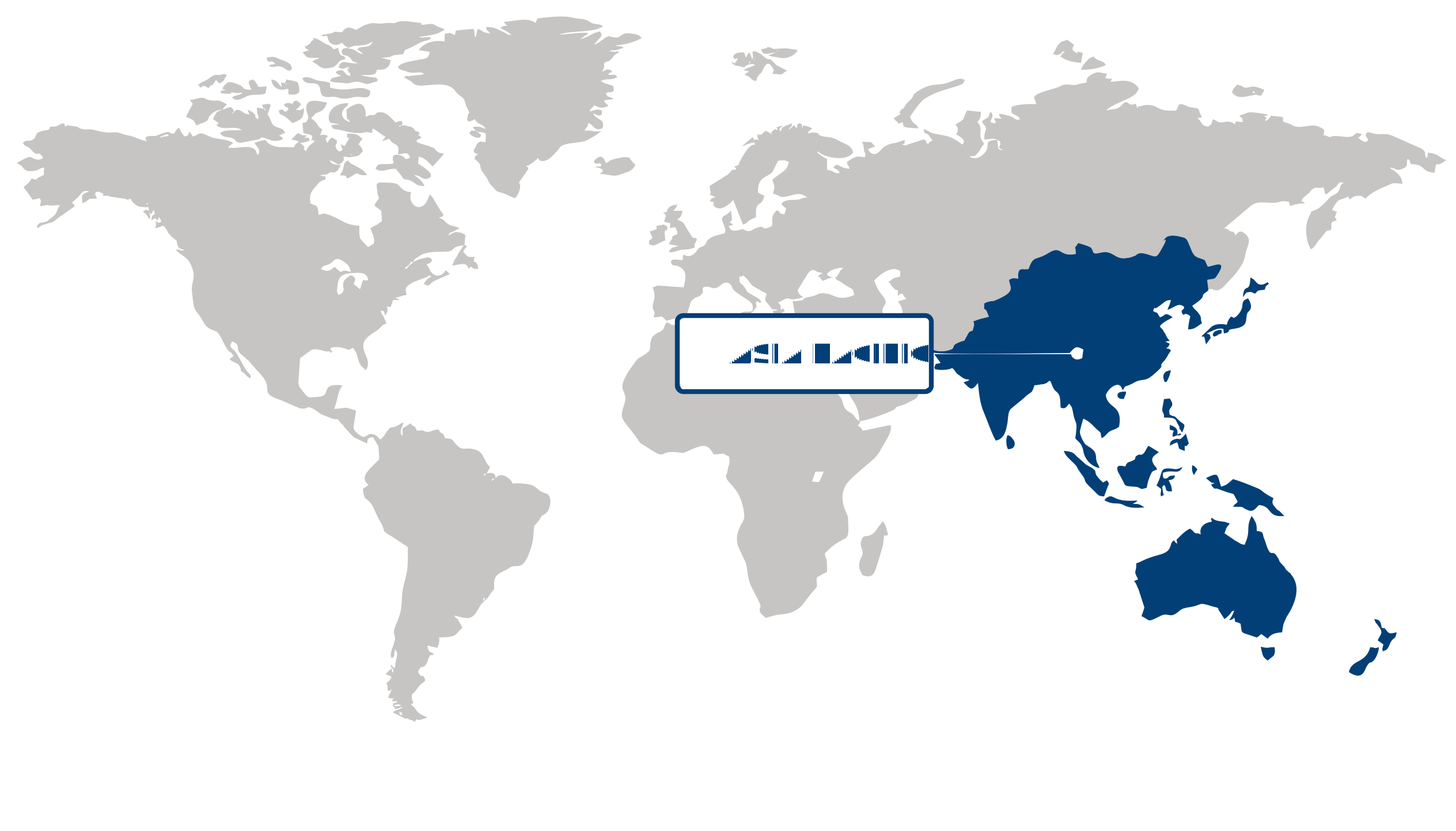
The Asia Pacific water treatment systems market captured over 36.3% of the global share in 2025, marking it as the largest and fastest-growing region with a CAGR of 10.56%. This leadership stems primarily from rapid urbanization and significant investments in municipal and industrial wastewater treatment infrastructure. Countries across the region are progressively adopting advanced treatment technologies to address water scarcity challenges and stringent environmental regulations, as highlighted by recent projects led by the Asian Development Bank. Additionally, rising awareness regarding sustainable water management, coupled with digital integration in operational processes, further propels demand. The robust industrial expansion in sectors such as manufacturing and chemicals intensifies wastewater output, necessitating sophisticated treatment solutions. These dynamics position Asia Pacific as a prime market for innovative water treatment technologies, offering substantial growth opportunities for investors and technology providers aiming to capitalize on evolving regional water management priorities.
Japan plays a pivotal role in the Asia Pacific water treatment systems market, driven by its advanced regulatory framework and technological innovation capacity. The country’s emphasis on sustainable water management, supported by initiatives from the Ministry of the Environment, spearheads adoption of cutting-edge treatment solutions, including membrane bioreactors and IoT-enabled monitoring systems. Japan’s aging infrastructure propels modernization efforts, creating demand for both municipal and industrial treatment upgrades. This mature yet evolving market serves as a strategic testing ground for new technologies, influencing broader regional adoption.
China anchors the regional landscape through aggressive investments in wastewater infrastructure aligned with national environmental policies such as the Zero Pollution Action Plan. The extensive push for urban sanitation, especially in tier-2 and tier-3 cities, alongside rising industrial wastewater volumes, drives expansive deployment of treatment systems. Companies like China Everbright International actively expand their project portfolios to meet surging demand. This dynamic not only reinforces China’s market dominance but also amplifies Asia Pacific’s overall growth trajectory by accelerating technological deployment and operational excellence in water treatment.
North America Market Analysis:
North America maintained a substantial share in the water treatment systems market, driven by heightened regulatory emphasis on water quality and sustainability initiatives. The region’s mature industrial base, coupled with increased investments in upgrading aging water infrastructure, underpins steady demand. Regulatory frameworks enforced by the U.S. Environmental Protection Agency (EPA) and increased public spending on potable and wastewater treatment have catalyzed adoption of advanced treatment technologies. Additionally, the digital transformation of water management systems and the rise of smart water solutions reflect shifting preferences toward more efficient, data-driven operations. Market participants benefit from North America’s robust supply chains and established vendor networks, which facilitate rapid deployment of innovative treatment systems. This dynamic landscape positions North America as a key market for companies aiming to leverage evolving water standards and environmental sustainability mandates.
The United States plays a central role in reinforcing North America’s prominence in the water treatment systems market. U.S. federal and state-level policies, such as updates to the Safe Drinking Water Act and the Water Infrastructure Finance and Innovation Act, stimulate demand for advanced filtration and disinfection technologies. The country’s consumer market increasingly favors sustainable water solutions, as evidenced by investment announcements from companies like Xylem Inc. and Veolia North America, underscoring commitment to eco-efficient treatment systems. Furthermore, U.S. utilities’ growing adoption of digital water technologies, including IoT-enabled monitoring by organizations like the American Water Works Association, accelerates operational efficiency and regulatory compliance. These factors collectively bolster the country’s capacity to shape regional water treatment trends, offering investors and strategists tangible avenues for growth within North America.
Europe Market Trends:
Europe maintained a notable presence in the water treatment systems market, driven by increasing emphasis on sustainable water management and stringent regulatory frameworks that promote advanced purification technologies. The region benefits from well-established infrastructure and a growing shift toward digitalization in water treatment operations, as highlighted by the European Environment Agency’s latest reports on water quality standards. Investment in smart water solutions and recycling initiatives by leading European firms such as Veolia Environnement underscores a rising consumer preference for eco-friendly and energy-efficient systems. Additionally, shifting economic policies encouraging circular water economies enhance operational resilience and supply chain efficiencies. These dynamics position Europe for moderate growth, supported by expanding demand in municipal and industrial sectors, creating substantial opportunities for technology providers and investors focusing on innovation and compliance.
Germany plays a pivotal role within Europe’s water treatment systems market, propelled by its consistent focus on industrial wastewater treatment and high adoption rates of cutting-edge membrane technology. The country's regulatory environment, enforced by the Federal Ministry for the Environment, Nature Conservation and Nuclear Safety, mandates rigorous discharge limits, fostering demand for advanced filtration and monitoring solutions. German companies such as Siemens Water Technologies exemplify innovation through integrated digital platforms that optimize treatment efficiency and reduce operational costs. Moreover, Germany’s strong manufacturing base and robust R&D ecosystem ensure steady progress in system reliability and scalability. Strategically, Germany’s leadership in technology adoption and environmental compliance underpins broader regional growth trends, making it a critical market for stakeholders targeting sustainable water treatment expansion in Europe.
France sustains moderate growth in the water treatment systems market, characterized by proactive governmental policies that emphasize resource conservation and pollution control. The French Agency for Biodiversity’s recent initiatives promote enhanced treatment of both urban and agricultural wastewater, reflecting a cultural and regulatory commitment to safeguarding water resources. French utilities like SUEZ actively invest in smart water networks and decentralized treatment solutions, catering to evolving consumer expectations for transparency and environmental stewardship. This demand is further shaped by demographic trends favoring urbanization and water reuse programs. France’s blend of public-private collaboration and technological innovation aligns with broader European sustainability goals, consolidating its role as a key market for emerging water treatment technologies and market participants aiming to leverage regional momentum.
| Parameter | North America | Asia Pacific | Europe | Latin America | MEA |
|---|---|---|---|---|---|
| Innovation Hub i Scale Nascent Developing Advanced | |||||
| Cost-Sensitive Region i Scale Low Medium High | |||||
| Regulatory Environment i Scale Restrictive Neutral Supportive | |||||
| Demand Drivers i Scale Weak Moderate Strong | |||||
| Development Stage i Scale Emerging Developing Developed | |||||
| Adoption Rate i Scale Low Medium High | |||||
| New Entrants / Startups i Scale Sparse Moderate Dense | |||||
| Macro Indicators i Scale Weak Stable Strong |
Segment Leadership and Growth Trends
Water Treatment Systems Market Share (%), by Treatment Types, 2026
Go beyond the chart, access full insights & data tables
Request Free Sample ReportMembrane treatment held the largest share in the water treatment systems market in 2025, driven primarily by widespread adoption of advanced filtration technologies to meet stricter water purity standards. This segment's leadership stems from its effectiveness in removing contaminants with high precision, aligning with growing regulatory emphasis on water quality from bodies such as the U.S. Environmental Protection Agency and the European Chemicals Agency. Increasing awareness among industrial and municipal customers about sustainable water reuse and conservation has accelerated demand for membrane solutions. Supply chain enhancements have also improved membrane availability and cost-efficiency, enabling both established firms and new entrants to capitalize on expanding application scopes. With ongoing technological innovations, including integrative digital monitoring and low-energy membranes announced by companies like Siemens Water Technologies, this segment is poised to maintain dominance as water quality regulations tighten and environmental concerns intensify globally.
| Segment | Sub-Segment | Largest Segment | Fastest Growing |
|---|---|---|---|
| Treatment Types | Chemical Treatment, Membrane Treatment, Physical Treatment |
Competitive Landscape and Market Positioning
The competitive landscape is shaped by ongoing collaborations and strategic integrations among these top players, fostering enhanced technological innovation and expanded service capabilities. Investments in advanced filtration, membrane technologies, and digital monitoring systems reflect a commitment to addressing evolving water quality demands. By integrating newer solutions into existing frameworks and broadening geographic reach through partnerships or acquisitions, these entities reinforce their market leadership while differentiating themselves across specialized applications. Such activities collectively elevate the pace of innovation and enable agile responses to regional regulations and customer-specific needs, solidifying competitive advantages.
Strategic / Actionable Recommendations for Regional Players
In North America, capitalizing on increased infrastructure funding and digital transformation offers opportunities for deeper alliances with technology innovators and municipal stakeholders. Developing modular, smart water systems tailored for urban and industrial use can further distinguish market presence while addressing sustainability mandates.
Across Asia Pacific, forming partnerships with local governments and technology incubators can accelerate deployment of cost-effective treatment solutions amid rapid industrialization. Focus on scalable, energy-efficient systems will resonate with regional priorities, supporting expansion into underserved markets.
European players should emphasize integration of circular economy principles and advanced resource recovery techniques by collaborating with environmental research institutions. Prioritizing customization for stringent compliance environments can enhance value propositions and maintain leadership in mature, regulation-driven markets.
| Company | Market Share | Company Revenue | Revenue CAGR (%) | Product Portfolio | Geographic Presence | Innovation / R&D Focus | Strategic Developments |
|---|---|---|---|---|---|---|---|
| No companies available. | |||||||
Industry Development/News
| Company Name | Date | Key Development |
|---|
Customize Your Report
Explore examples of how this report can be tailored to different research needs, including custom segments, additional topics or chapters, and related reports. Click a section of the wheel or its numbered marker to explore the available options.
Water Treatment Systems Market — Custom Segments
| Segment | Sub-Segment |
|---|---|
| No segment data available. | |
Water Treatment Systems Market — Custom TOC
| Custom Chapter | Custom Details | ||
|---|---|---|---|
| No custom TOC data available. | |||
Need a different cut of the data?
Request Custom ResearchHow is the water treatment systems industry size expected to evolve during the forecast period?
Which geographic area exhibits the highest level of water treatment systems market penetration?
Which region is experiencing the fastest growth in the water treatment systems sector?
How does membrane treatment segment fare in the water treatment systems industry?
Which companies dominate the water treatment systems landscape?
Our Clients
"The team at Fundamental Business Insights & Consulting demonstrated a commitment to excellence, not only in the quality of the report but also in their client-centric approach."
FANUC
"The level of detail in the market segmentation provided were particularly noteworthy. The detailed country-level insights were also very helpful."
B&R Industrial Automation GmbH
"The consultant took the time to understand our specific business objectives, ensuring that the reports were tailored to address our unique challenges and opportunities."
KUKA SE & Co. KGaA
Our Research Team & Methodology
Every Fundamental Business Insights report is built by a dedicated vertical research team, validated through a structured primary-and-secondary methodology, and reviewed for accuracy before it reaches you.
Research Team Overview
Prepared by the Industrial Automation & Equipment Research Team
Delivery
Published
Demand
Available
Support
Trust & Compliance
Research Domains
10 coverage areasResearch Intelligence
| Source | Reference |
|---|---|
| International Society of Automation (ISA) | www.isa.org |
| International Organization for Standardization (ISO) | www.iso.org |
| National Institute of Standards and Technology (NIST) | www.nist.gov |
| IEEE | www.ieee.org |
| VDMA (German Mechanical Engineering Industry Association) | www.vdma.org |
| Association for Advancing Automation (A3) | www.automate.org |
| International Federation of Robotics (IFR) | ifr.org |
| ASME (American Society of Mechanical Engineers) | www.asme.org |
| ASHRAE | www.ashrae.org |
| American Society of Heating, Refrigerating and Air-Conditioning Engineers (ASHRAE) | www.ashrae.org |
| Material Handling Industry (MHI) | www.mhi.org |
| OSHA (Occupational Safety and Health Administration) | www.osha.gov |
| National Fire Protection Association (NFPA) | www.nfpa.org |
| ASTM International | www.astm.org |
| International Electrotechnical Commission (IEC) | www.iec.ch |
| Open Process Automation Forum (The Open Group) | www.opengroup.org/open-process-automation-forum |
| AGMA (American Gear Manufacturers Association) | www.agma.org |
| Association of Equipment Manufacturers (AEM) | www.aem.org |
| Food and Agriculture Organization (FAO) | www.fao.org |
| International Labour Organization (ILO) | www.ilo.org |
Research Workflow & Quality Assurance
Data Collection
Verified information gathered through primary and secondary research.
Data Triangulation
Cross-validation using multiple independent data sources.
Forecast Modelling
Market estimates developed using historical trends and analytical models.
Analyst Validation
Findings reviewed by domain experts for accuracy and consistency.
Editorial & Quality Review
Final editorial, quality, and compliance checks before publication.
Final Publication
Released after successful completion of the internal review process.
Report Coverage
📊 Market Assessment
- Market Size & Forecast
- Market Segmentation
- Regional Analysis
- Growth Drivers & Challenges
- Market Dynamics
🏢 Competitive Intelligence
- Competitive Landscape
- Company Profiles
- Competitive Benchmarking
- Mergers & Acquisitions
- Market Share Analysis or Key Company Strategies
🔍 Strategic Analysis
- Value Chain Analysis
- Porter's Five Forces
- PESTLE Analysis
- Pricing Trends
- Supply-Demand Analysis
🚀 Future Outlook
- Technology Landscape
- Regulatory Landscape
- Investment & Funding Landscape
- Emerging Opportunities
- Future Market Outlook
Have a question about this report or need a custom scope?
Request Customization