Waste to Diesel Market Size & Forecasts 2026-2035, By Segments (Source, Technology), Growth Opportunities, Innovation Landscape, Regulatory Shifts, Strategic Regional Insights (U.S., Japan, China, South Korea, UK, Germany, France), and Competitive Dynamics (GreenDiesel Inc, BioFuel Technologies, EcoSynth Corp, RenewPetro Ltd, CleanFuel Systems)
Market Size and Growth Outlook
Waste to Diesel Market size is forecast to climb from USD 693.58 million in 2025 to USD 1.92 billion by 2035, expanding at a CAGR of over 10.7% during 2026-2035. Industry revenue in 2026 is projected at USD 759.76 million.
Get more details on this report
Request Free Sample ReportWaste to Diesel Market Intelligence Snapshot
Regional Market Dynamics
Segment Momentum
Market Expansion Drivers
Leading Market Participants
Global Market Forecast Snapshot
Market Outlook
Regional and Segment Outlook
Market Growth Drivers and Industry Trends
The rapid expansion of waste-to-diesel plants is reshaping the waste to diesel market by increasing production capacity and regional accessibility. Companies such as Renewable Energy Group and Byogy Renewables have unveiled new facilities strategically located near urban centers, reducing feedstock transportation costs and enhancing supply chain resilience. This geographic diversification aligns with rising consumer demand for greener fuels and corporate ESG commitments. The increased plant footprint also encourages local partnerships, enabling waste aggregators and energy firms to collaborate more effectively. For investors and strategists, this growth represents an opportunity to capitalize on economies of scale and strengthen market presence. As more players scale operations, competition will likely intensify, driving innovation in operational efficiency and feedstock versatility, thereby solidifying waste to diesel as a core segment of the renewable fuels industry.
Government Policies & Incentives for Biofuels
Robust government policies and incentives have been pivotal in accelerating the adoption of waste to diesel technologies, directly influencing market dynamics. The U.S. Environmental Protection Agency’s Renewable Fuel Standard (RFS) and the European Union’s Renewable Energy Directive (RED II) mandate higher biofuel blending targets, motivating refiners and producers to invest in waste-derived diesel. Subsidies and tax credits, such as the U.S. Section 45Q carbon capture tax credit, further offset capital and operational expenses, improving project feasibility. These regulatory frameworks not only reduce financial barriers but also signal long-term commitment to sustainable fuels, enticing new entrants and fostering collaboration between public and private sectors. Stakeholders leveraging these policies can gain significant competitive advantage by securing feedstock supply chains and accelerating infrastructure development, while remaining aligned with tightening environmental standards globally.
Advanced Waste-to-Diesel Conversion Technologies
Innovations in conversion technologies are critical growth drivers shaping the waste to diesel market, enhancing product yield and feedstock flexibility. Companies like LanzaTech and Velocys are pioneering catalytic and gas fermentation processes that optimize the conversion of diverse waste streams—including municipal solid waste and agricultural residues—into high-quality diesel. This technological progress addresses previous cost and scalability challenges, enabling producers to target a broader set of raw materials and meet stricter emissions criteria. The integration of digital monitoring and process automation has further improved operational efficiency and reduced downtime. For both incumbents and startups, investing in these advanced systems offers strategic differentiation, unlocking new revenue streams and strengthening sustainability credentials. Continued innovation promises to refine cost structures and accelerate the market’s transition towards circular fuel economies.
Industry Restraints:
Feedstock Collection and Supply Chain Inefficiencies
The waste to diesel market faces significant challenges from the complex logistics of securing consistent, high-quality feedstock. Variability in waste composition and decentralized sources create operational inefficiencies, inflating costs and complicating process standardization. According to the U.S. Environmental Protection Agency (EPA), inconsistent feedstock quality leads to fluctuating output yield and heightened pre-processing requirements, restraining economies of scale. These supply chain bottlenecks pressure both incumbent players and startups to invest heavily in infrastructure and technology, raising barriers to entry. Companies like Neste emphasize the need for integrated supply agreements but struggle with fragmented waste streams. Going forward, unless there is broader collaboration between waste suppliers, municipalities, and processors, these inefficiencies will continue to limit scalability and profitability in the waste to diesel sector.
Regulatory and Policy Uncertainties
Navigating the evolving regulatory landscape poses a critical restraint on the waste to diesel market’s growth trajectory. Policies on emission standards, feedstock eligibility, and renewable fuel credits vary across regions, creating compliance complexities and delayed project timelines. The International Energy Agency (IEA) highlights that inconsistent incentives and stringent certification requirements can deter investment, particularly among smaller players lacking regulatory expertise. For example, the Renewable Fuel Standard (RFS) in the U.S. has specific criteria that waste-to-diesel projects must meet, often resulting in protracted approval processes. This uncertainty compels companies such as Diamond Green Diesel to build flexible compliance frameworks, increasing operational costs. In the near term, policy inconsistency is set to maintain a cautious market environment, with participants prioritizing regulatory agility and advocacy to mitigate risks.
| Growth Driver | Impact on CAGR | Regulatory Influence | Geographic Relevance | Adoption Rate | Impact Timeline |
|---|---|---|---|---|---|
| Expansion of Waste-to-Diesel Plants | 3.50% | Short term (≤ 2 yrs) | Europe, North America; Spillover: Asia Pacific | Medium | Moderate |
| Government Policies & Incentives for Biofuels | 3.60% | Medium term (2–5 yrs) | Europe, North America; Spillover: Asia Pacific | High | Fast |
| Advanced Waste-to-Diesel Conversion Technologies | 3.60% | Long term (5+ yrs) | Asia Pacific, Europe; Spillover: North America | Medium | Moderate |
Unlock insights tailored to your business with our bespoke market research solutions.
Click to get your customized report now.
Regional Demand Dynamics
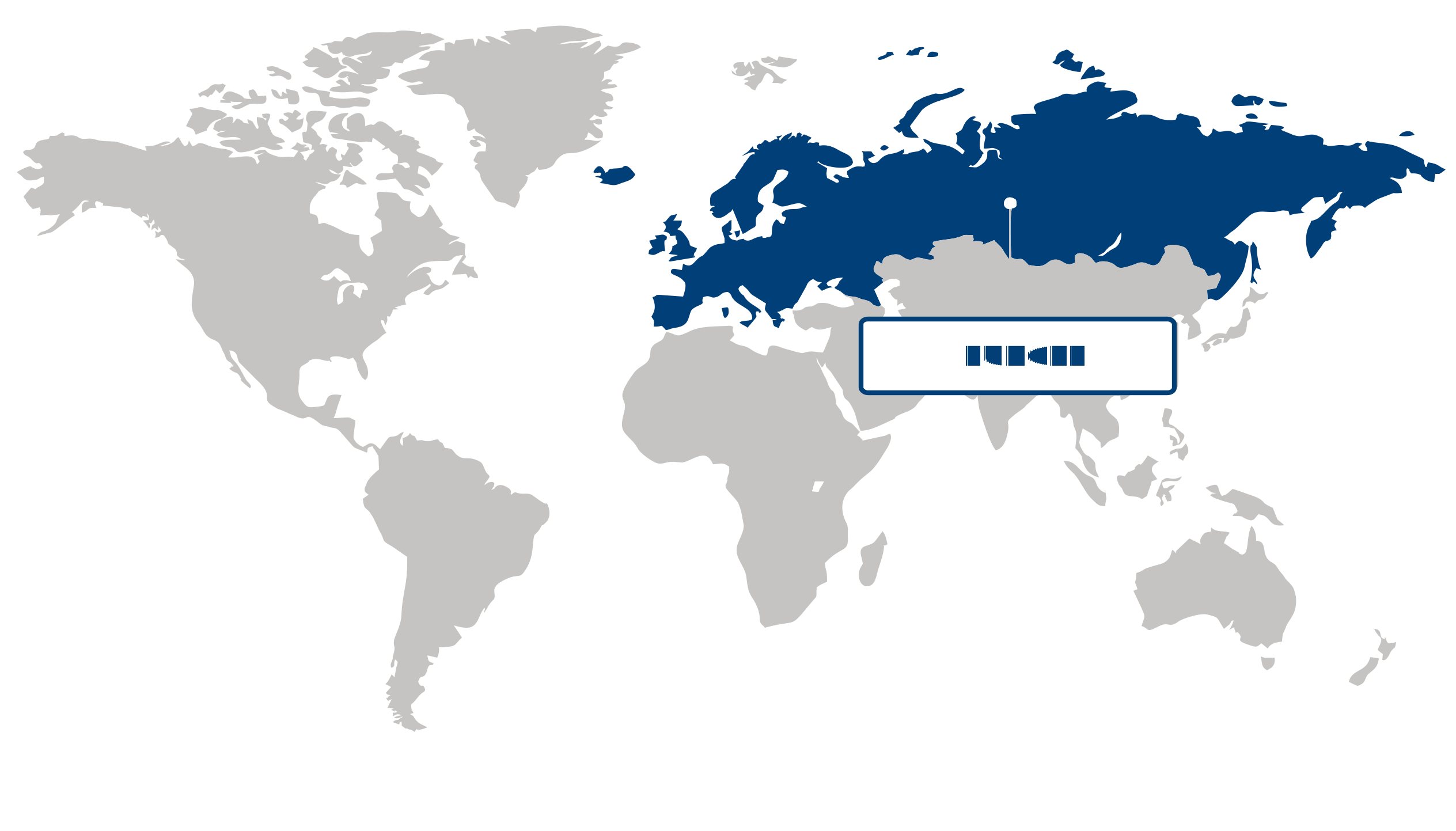
Europe dominated the waste to diesel market in 2025, representing more than 45.8% of the global share. The region’s leadership is anchored by its robust waste-management infrastructure and well-established renewable fuel policies, fostering a conducive environment for waste-to-diesel initiatives. The European Commission’s directives on circular economy and renewable energy targets, alongside supportive funding frameworks such as the European Green Deal, have accelerated adoption. Furthermore, evolving consumer preferences toward sustainable fuels and increased corporate commitments to carbon neutrality amplify demand. Technological advancements in feedstock processing and supply chain optimization, highlighted by Neste’s expansions in Finland, underscore operational progress. Europe’s regulatory rigor ensures quality standards and market stability, encouraging investments. Looking ahead, these factors position Europe as a persistent hub for innovation and expansion in the waste to diesel market, promising significant opportunities for stakeholders committed to sustainable energy solutions.
Germany anchors the European waste to diesel market, driven by its sophisticated waste collection systems and stringent environmental policies. Federal initiatives like the German Renewable Energy Sources Act (EEG) incentivize the production of second-generation biofuels, facilitating partnerships between waste management firms and energy producers such as Verbio. Growing industrial demand for cleaner fuels, combined with strong governmental grants, enables continuous scaling of waste-to-diesel capacity. The country's technological leadership in biomass conversion offers a competitive edge, attracting investments that reinforce Europe’s market dominance.
France plays a pivotal role in the European waste to diesel market through its aggressive policy framework supporting renewable energy and circular economy goals. The French Environment and Energy Management Agency (ADEME) endorses numerous pilot projects integrating waste-to-liquid fuels within national energy strategies. Consumer awareness campaigns and incentives have stimulated adoption in both transport and industrial sectors. Furthermore, collaborations between French energy firms like TotalEnergies and waste processors exemplify strategic market approaches. France’s proactive stance complements European ambitions, buoying regional resilience and growth in the waste to diesel market.
North America Market Analysis:
North America emerged as the fastest-growing region in the waste to diesel market, registering a robust CAGR of 12.1%. This remarkable growth is primarily fueled by intensified landfill diversion initiatives and strong federal incentives aimed at promoting sustainable diesel production. Increasingly stringent environmental regulations and a widespread commitment to reducing carbon footprints have galvanized investments in waste-to-diesel technologies. The U.S. Environmental Protection Agency’s Renewable Fuel Standard (RFS) program, for instance, incentivizes biofuel use, thereby encouraging market expansion. Furthermore, advancements in catalytic and conversion technologies have optimized efficiency, lowering production costs and enhancing adoption. The region’s sophisticated infrastructure and mature supply chains further underpin rapid industrial scale-up, making North America a pivotal landscape for innovation and deployment of waste to diesel solutions. Given the ongoing policy momentum and rising corporate sustainability commitments, North America presents substantial long-term opportunities for investors and stakeholders seeking to capitalize on environmentally sustainable fuel alternatives.
The U.S. plays a central role in North America’s waste to diesel market, owing to its proactive federal incentives such as the Renewable Diesel Tax Credit and grants supporting landfill gas-to-fuel projects. These policies have spurred increased industrial investments while encouraging greater participation from renewable energy companies like Neste and REG Life Sciences. Consumer demand is also shifting towards greener fuel alternatives, influenced by heightened environmental awareness and state-level mandates, such as California's Low Carbon Fuel Standard. Combined with leading research institutes advancing conversion technologies, the U.S. fosters a competitive yet collaborative ecosystem. This dynamic ensures the country remains at the forefront of producing commercially viable diesel from waste, reinforcing North America’s regional dominance and expanding market potential for waste-to-diesel innovations.
Asia Pacific Market Trends:
The Asia Pacific region maintained a notable presence in the waste to diesel market, driven by its accelerating shift toward sustainable energy alternatives amid escalating environmental concerns. This region’s significance stems from its large industrial base and growing urbanization, which generate considerable organic and plastic waste suitable for conversion. Local governments, such as Japan’s Ministry of the Environment, have reinforced policies encouraging circular economy practices, fostering investments in waste-to-fuel technologies. Innovations in catalytic processes and enhanced supply chain integration, highlighted by collaborations like those between Japan’s JXTG Nippon Oil & Energy and technology startups, demonstrate operational advancements that enhance efficiency. Moreover, rising consumer awareness and tightening emission standards by authorities like China’s Ministry of Ecology and Environment further bolster market demand. With these multidimensional dynamics, Asia Pacific is positioned to unlock substantial growth potential, providing strategic avenues for technology providers and energy firms aiming to capitalize on evolving regulatory frameworks and sustainability imperatives.
Japan plays a pivotal role in Asia Pacific’s waste to diesel market, leveraging its advanced technological infrastructure and rigorous environmental mandates. The country’s government, through agencies such as the New Energy and Industrial Technology Development Organization (NEDO), has supported pilot projects converting municipal waste to diesel, underscoring innovation-driven growth. Japan’s consumers exhibit considerable preference for low-carbon fuels, reflected in initiatives by companies like Idemitsu Kosan, which emphasize waste valorization to meet domestic fuel demands. Furthermore, Japan’s sophisticated logistics networks facilitate efficient feedstock collection and fuel distribution, enhancing project viability. This technological and regulatory synergy positions Japan as a trendsetter, encouraging regional stakeholders to adopt integrated waste-to-fuel solutions, thereby reinforcing Asia Pacific’s overall potential in this sector.
China's expanding role in the waste to diesel market is anchored in its substantial waste generation and robust policy environment promoting renewable energy adoption. State-backed initiatives by the National Development and Reform Commission (NDRC) encourage the integration of waste conversion to diesel within broader carbon neutrality agendas. Leading energy corporations, such as CNPC, invest heavily in scaling waste-to-diesel facilities, driven by shifting industrial energy consumption patterns and increasing regulatory pressure from bodies like the Ministry of Ecology and Environment. China’s large consumer base exhibits gradual acceptance of cleaner fuels, supporting the transition from conventional diesel. The country’s substantial capital deployment in technology modernization and supply chain expansion underscores its capacity to influence market dynamics regionally. Consequently, China’s developments are instrumental in advancing Asia Pacific’s strategic opportunity to evolve into a global hub for waste-to-diesel innovation and deployment.
| Parameter | North America | Asia Pacific | Europe | Latin America | MEA |
|---|---|---|---|---|---|
| Innovation Hub i Scale Nascent Developing Advanced | |||||
| Cost-Sensitive Region i Scale Low Medium High | |||||
| Regulatory Environment i Scale Restrictive Neutral Supportive | |||||
| Demand Drivers i Scale Weak Moderate Strong | |||||
| Development Stage i Scale Emerging Developing Developed | |||||
| Adoption Rate i Scale Low Medium High | |||||
| New Entrants / Startups i Scale Sparse Moderate Dense | |||||
| Macro Indicators i Scale Weak Stable Strong |
Segment Leadership and Growth Trends
Waste to Diesel Market Share (%), by Source, 2026
Go beyond the chart, access full insights & data tables
Request Free Sample ReportPlastic waste represented the largest share in the waste to diesel market in 2025, driven by abundant feedstock availability and superior conversion efficiency. This segment leads as plastic waste is a universally prevalent challenge in urban and industrial ecosystems, creating high demand for sustainable fuel solutions. Regulatory milestones, such as mandates from the European Environment Agency targeting plastic waste reduction, complement growing corporate commitments toward circular economy models. Firms like Plastic Energy have demonstrated scalable pyrolysis facilities transforming mixed plastic waste into high-quality diesel, reinforcing competitive positioning. The ample supply chain of post-consumer plastics ensures consistent feedstock, favoring both established refiners and innovative startups aiming to optimize cost structures. As global regulatory frameworks tighten and consumers increasingly prioritize sustainability, the plastic waste segment’s resilience is assured, securing its dominance in the waste to diesel market moving forward.
Analysis by Technology
Pyrolysis held the largest share in the waste to diesel market, attributed to its broad applicability across diverse waste streams and modular scalability. This technology’s versatility facilitates integration within varying plant capacities, meeting diverse demand patterns from industrial to municipal clients. Innovations in thermal efficiency and digital process controls, as evidenced by Shell’s recent announcement on pyrolysis optimization, have boosted throughput and fuel quality, reinforcing industrial confidence. Regulatory authorities such as the U.S. Environmental Protection Agency endorse pyrolysis for its lower emissions profile compared to incineration, enhancing its sustainability credentials. This technology’s adaptability enables both incumbents and emerging technology providers to pursue niche and mass-market opportunities alike. As municipal and industrial sustainability targets remain a priority, pyrolysis’s technological robustness ensures its continued relevance in the evolving waste to diesel market landscape.
| Segment | Sub-Segment | Largest Segment | Fastest Growing |
|---|---|---|---|
| Source | Municipal Waste, Oil & Fat Waste, Plastic Waste | ||
| Technology | Pyrolysis, Incineration, Gasification, Depolymerization |
Competitive Landscape and Market Positioning
The competitive dynamics among these top-tier companies reveal a landscape shaped by integration of cutting-edge conversion technologies and collaborative ventures that expand operational footprints. Many have enhanced their market stance by streamlining supply chains and introducing specialized diesel variants derived from diverse waste sources. Cross-border alliances and strategic acquisitions serve to augment capacity while accelerating innovation cycles, fostering resilience amid fluctuating regulatory and economic environments. This emphasis on technological refinement and collaborative growth cements their leadership and drives continuous performance improvements.
Strategic / Actionable Recommendations for Regional Players
North American entities might benefit from intensifying partnerships with waste management firms and technology innovators, capitalizing on existing infrastructure to optimize feedstock processing and scale production efficiently. Adapting to evolving policy frameworks and integrating carbon-reduction technologies could further enhance competitive advantage.
In Asia Pacific, pursuing collaborations that harness regional biomass diversity and leverage digitalization in process monitoring may unlock operational efficiencies. Aligning with emerging governmental incentives focused on sustainability could stimulate expansion in markets where diesel demand is robust.
European companies should consider deepening innovation through investment in next-generation catalysts and process automation to refine fuel quality and lower production costs. Engaging with policy bodies to shape supportive regulatory environments will also be critical in maintaining long-term market relevance.
| Company | Market Share | Company Revenue | Revenue CAGR (%) | Product Portfolio | Geographic Presence | Innovation / R&D Focus | Strategic Developments |
|---|---|---|---|---|---|---|---|
| No companies available. | |||||||
Industry Development/News
| Company Name | Date | Key Development |
|---|
Customize Your Report
Explore examples of how this report can be tailored to different research needs, including custom segments, additional topics or chapters, and related reports. Click a section of the wheel or its numbered marker to explore the available options.
Waste to Diesel Market — Custom Segments
| Segment | Sub-Segment |
|---|---|
| No segment data available. | |
Waste to Diesel Market — Custom TOC
| Custom Chapter | Custom Details | ||
|---|---|---|---|
| No custom TOC data available. | |||
Need a different cut of the data?
Request Custom ResearchWhat is the forecasted size of the waste to diesel industry?
Which region holds the largest share of the waste to diesel market?
Which region has emerged as the fastest-growing for the waste to diesel sector?
Why is the plastic waste segment leading in the waste to diesel industry?
Why does pyrolysis sub-segment dominate the technology segment of waste to diesel sector?
Which companies are driving growth in the waste to diesel landscape?
Our Clients
"The information presented in the report was genuinely insightful. The data was clear and easy to understand, which made it much easier to interpret the findings."
Amara Raja Group
"The responsiveness and professionalism exhibited by the team were exemplary. They were readily available to address queries, provide clarifications, and offer additional insights."
ONGC
"The reports offered a comprehensive analysis of various segments within the market. The detailed insights into market trends, and regulatory landscapes were excellent."
TotalEnergies
Our Research Team & Methodology
Every Fundamental Business Insights report is built by a dedicated vertical research team, validated through a structured primary-and-secondary methodology, and reviewed for accuracy before it reaches you.
Research Team Overview
Prepared by the Energy & Power Research Team
Delivery
Published
Demand
Available
Support
Trust & Compliance
Research Domains
10 coverage areasResearch Intelligence
| Source | Reference |
|---|---|
| International Energy Agency (IEA) | www.iea.org |
| U.S. Energy Information Administration (EIA) | www.eia.gov |
| International Renewable Energy Agency (IRENA) | www.irena.org |
| International Electrotechnical Commission (IEC) | www.iec.ch |
| International Organization for Standardization (ISO) | www.iso.org |
| IEEE | www.ieee.org |
| CIGRE (International Council on Large Electric Systems) | www.cigre.org |
| World Energy Council (WEC) | www.worldenergy.org |
| U.S. Department of Energy (DOE) | www.energy.gov |
| International Atomic Energy Agency (IAEA) | www.iaea.org |
| American Petroleum Institute (API) | www.api.org |
| Society of Petroleum Engineers (SPE) | www.spe.org |
| Hydrogen Council | hydrogencouncil.com |
| Battery Council International (BCI) | batterycouncil.org |
| Global Wind Energy Council (GWEC) | gwec.net |
| SolarPower Europe | www.solarpowereurope.org |
| World Bioenergy Association (WBA) | worldbioenergy.org |
| International Hydropower Association (IHA) | www.hydropower.org |
| Edison Electric Institute (EEI) | www.eei.org |
| National Renewable Energy Laboratory (NREL) | www.nrel.gov |
Research Workflow & Quality Assurance
Data Collection
Verified information gathered through primary and secondary research.
Data Triangulation
Cross-validation using multiple independent data sources.
Forecast Modelling
Market estimates developed using historical trends and analytical models.
Analyst Validation
Findings reviewed by domain experts for accuracy and consistency.
Editorial & Quality Review
Final editorial, quality, and compliance checks before publication.
Final Publication
Released after successful completion of the internal review process.
Report Coverage
📊 Market Assessment
- Market Size & Forecast
- Market Segmentation
- Regional Analysis
- Growth Drivers & Challenges
- Market Dynamics
🏢 Competitive Intelligence
- Competitive Landscape
- Company Profiles
- Competitive Benchmarking
- Mergers & Acquisitions
- Market Share Analysis or Key Company Strategies
🔍 Strategic Analysis
- Value Chain Analysis
- Porter's Five Forces
- PESTLE Analysis
- Pricing Trends
- Supply-Demand Analysis
🚀 Future Outlook
- Technology Landscape
- Regulatory Landscape
- Investment & Funding Landscape
- Emerging Opportunities
- Future Market Outlook
Have a question about this report or need a custom scope?
Request Customization