Waste Heat Boiler Market Size & Forecasts 2026-2035, By Segments (Orientation, Temperature, End-User, Source), Growth Opportunities, Innovation Landscape, Regulatory Shifts, Strategic Regional Insights (U.S., Japan, China, South Korea, UK, Germany, France), and Competitive Dynamics (General Electric, Babcock & Wilcox, Mitsubishi Heavy Industries, Siemens Energy, Doosan Heavy Industries)
Market Size and Growth Outlook
Waste Heat Boiler Market size is forecast to climb from USD 1.22 billion in 2025 to USD 2.66 billion by 2035, expanding at a CAGR of over 8.1% during 2026-2035. Industry revenue in 2026 is projected at USD 1.31 billion.
Get more details on this report
Request Free Sample ReportWaste Heat Boiler Market Intelligence Snapshot
Regional Market Dynamics
Segment Momentum
Market Expansion Drivers
Leading Market Participants
Global Market Forecast Snapshot
Market Outlook
Regional and Segment Outlook
Market Growth Drivers and Industry Trends
Industrial sectors increasingly prioritize energy efficiency, leveraging waste heat utilization projects to cut operational costs and reduce environmental impact. The waste heat boiler market benefits as manufacturers and heavy industries implement systems to reclaim residual heat, driven by companies like Siemens and General Electric investing in cogeneration and waste heat recovery solutions. This evolution aligns with shifting consumer and stakeholder expectations for greener practices and cost optimization. Established players can capitalize on large-scale projects in cement, steel, and chemical industries, while new entrants can target niche applications or emerging industrial segments. The ongoing global pivot towards circular economy principles will sustain demand as industries expand integration of waste heat recovery to enhance overall process sustainability and competitiveness.
Policy & Incentive Support for Waste Heat Recovery
Governments worldwide are intensifying regulatory frameworks and offering financial incentives to promote waste heat recovery, fostering market expansion for waste heat boilers. For instance, the U.S. Department of Energy’s Advanced Manufacturing Office provides grants and tax credits for installing energy-efficient technologies, encouraging firms to adopt waste heat boilers. Such policy shifts address carbon reduction targets and energy security concerns, reinforcing market growth by lowering entry barriers and operational costs. Strategic opportunities arise for incumbents to collaborate with institutions on compliance-driven projects, while startups can leverage subsidies to accelerate innovation deployment. As regulatory landscapes tighten, especially in regions committed to net-zero goals, supported adoption of waste heat boilers will remain a key lever for industrial decarbonization.
Advanced Waste Heat Boiler Technologies
Technological advancements in waste heat boilers, including improved heat transfer surfaces and integration with digital monitoring systems, are transforming the market landscape. Companies like Mitsubishi Heavy Industries are pioneering compact, high-efficiency boilers that enhance energy recovery with reduced footprint, responding to industry demands for both performance and space efficiency. Additionally, IoT-enabled diagnostics create new value through predictive maintenance and optimized operation, aligning with the broader digital transformation trend in manufacturing. Such innovation offers sustained competitive advantages for established manufacturers and attractive entry points for technology-focused startups. Continued R&D momentum, paired with growing demand for smarter, more adaptable energy systems, promises to further elevate the waste heat boiler market as a critical component in sustainable industrial infrastructure.
Industry Restraints:
High Capital Expenditure Requirements
The substantial upfront investment required for waste heat boiler systems remains a major barrier to market adoption, particularly among small and medium-sized enterprises. The capital intensity arises from the specialized design, advanced materials, and integration complexities necessary to retrofit or install these systems in existing industrial processes. For instance, Siemens’ financial disclosures highlight the significant initial costs involved, often deterring companies from prioritizing such projects amid tight budgets. This financial hurdle restricts market penetration by narrowing the pool of viable buyers to those with access to considerable capital or financing options. For incumbents and entrants alike, navigating high capital demands complicates strategic planning and elongates payback periods, dampening enthusiasm for new developments. Looking ahead, while government incentives like the U.S. Department of Energy’s grants provide some relief, capital expenditure pressures will likely persist as a defining constraint on widespread waste heat boiler deployment in the near term.
Regulatory and Environmental Compliance Complexity
Stringent environmental regulations governing emissions and energy efficiency impose intricate compliance challenges that hamper market expansion of waste heat boilers. Agencies such as the Environmental Protection Agency (EPA) enforce rigorous standards that vary regionally, creating a complex landscape for manufacturers to design adaptable solutions. For example, the EU’s Industrial Emissions Directive mandates rigorous monitoring and emission thresholds, compelling suppliers to invest heavily in R&D to meet these evolving requirements. This regulatory burden increases both time-to-market and operational costs, complicating supply chain management and limiting agility for market players. Established firms must continuously innovate to maintain compliance, while newcomers face high barriers when navigating intricate certification processes. Moving forward, escalating environmental mandates will intensify pressure on market participants, promoting innovation but simultaneously constraining rapid commercialization and broad-based adoption of waste heat recovery technologies.
| Growth Driver | Impact on CAGR | Regulatory Influence | Geographic Relevance | Adoption Rate | Impact Timeline |
|---|---|---|---|---|---|
| Industrial Waste Heat Utilization Projects | 2.70% | Short term (≤ 2 yrs) | North America, Europe; Spillover: Asia Pacific | Medium | Moderate |
| Policy & Incentive Support for Waste Heat Recovery | 2.80% | Medium term (2–5 yrs) | Europe, North America; Spillover: Asia Pacific | High | Fast |
| Advanced Waste Heat Boiler Technologies | 2.60% | Long term (5+ yrs) | Asia Pacific, Europe; Spillover: North America | Medium | Moderate |
Unlock insights tailored to your business with our bespoke market research solutions.
Click to get your customized report now.
Regional Demand Dynamics
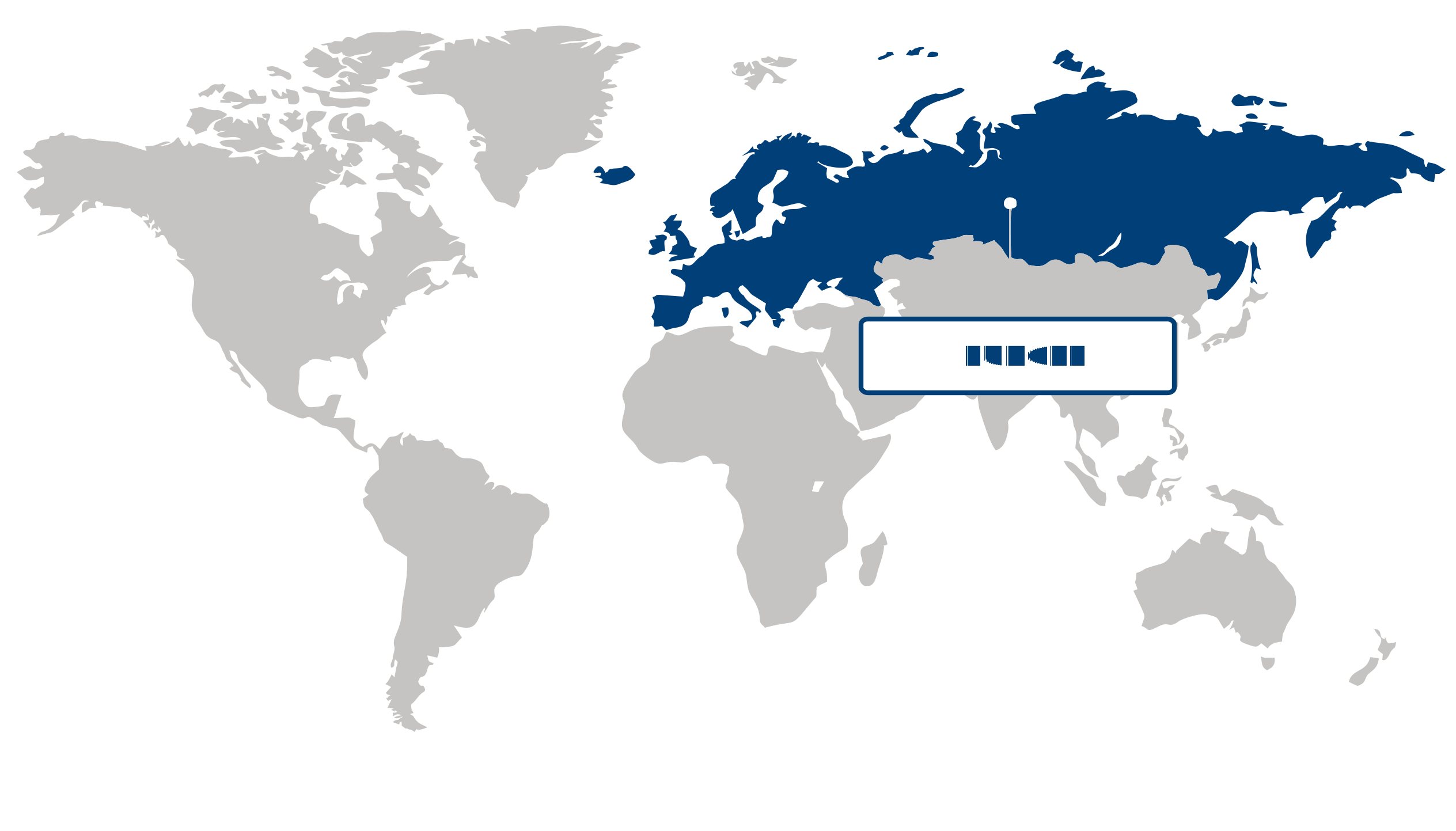
Europe dominated the waste heat boiler market in 2025, capturing approximately 39.4% of the global share and exhibiting a robust 9% CAGR, making it the largest and fastest-growing region. This leadership stems largely from stringent policy-backed energy recovery mandates and financial incentives implemented across the region, which compel industrial sectors to adopt efficient heat recovery solutions. Countries within Europe have accelerated investments in sustainable energy technologies, supported by frameworks from the European Environment Agency and the European Commission, driving demand for waste heat boilers. Additionally, advancements in operational efficiency and the push for decarbonization during economic recovery phases further bolster market expansion. These regulatory and innovation ecosystems position Europe as a fertile ground for sustained growth and technological uptake in the waste heat boiler market, promising significant opportunities for market participants focused on clean energy transitions and industrial efficiency.
Germany plays a pivotal role in Europe's waste heat boiler market, underpinned by aggressive energy efficiency regulations and strong industrial demand. The German Environment Agency’s initiatives to reduce carbon emissions through energy recovery solutions have propelled local manufacturers such as Viessmann and Bosch to enhance waste heat recovery systems. Furthermore, Germany’s manufacturing landscape, especially in automotive and chemicals, leverages policy-driven incentives to deploy waste heat boilers, yielding higher competitiveness. Such momentum translates into leadership within Europe’s broader market, reinforcing the region’s growth trajectory.
France complements this dynamic by integrating waste heat boilers into its energy resilience strategy, driven by commitments from the French Ministry for the Ecological Transition toward carbon neutrality. French energy service companies like Engie have participated in multiple projects deploying waste heat recovery systems in heavy industry, reflecting refined consumer demand for eco-efficient solutions. This strategic focus underlines France’s critical contribution to Europe’s emerging opportunities in the waste heat boiler market, emphasizing sustainable industrial modernization aligned with regional mandates.
Asia Pacific Market Analysis:
Asia Pacific emerged as the fastest-growing region in the waste heat boiler market, registering a robust CAGR of 7.5%. The region's rapid industrialization and stringent environmental regulations are pivotal growth drivers. Governments across Asia Pacific, particularly in Japan and China, are intensifying efforts to reduce industrial energy consumption and carbon emissions, catalyzing widespread adoption of waste heat recovery technologies. For instance, Japan’s Ministry of Economy, Trade and Industry (METI) has promoted energy efficiency via subsidies for waste heat boiler installations in manufacturing plants. In addition, the region’s expanding manufacturing hubs and technological advancements in boiler design have heightened demand for efficient, sustainable waste heat recovery solutions. Asia Pacific's intricate supply chains and evolving energy policies continue to attract investment, positioning the region for long-term market prominence and innovation in waste heat boiler applications.
Japan stands as a key player in Asia Pacific's waste heat boiler market, driven by its advanced industrial base and proactive energy conservation policies. Japanese firms such as Mitsubishi Heavy Industries have developed cutting-edge waste heat boilers tailored for steel and chemical sectors, aligning with national goals enforced by METI to curtail greenhouse gas emissions. Domestic manufacturers prioritize operational efficiency and compliance with the country's rigorous environmental standards, enhancing technology integration and system reliability. The cultural emphasis on sustainability and innovation further accelerates adoption, while Japan’s robust infrastructure supports seamless deployment of advanced systems. These dynamics reinforce Japan’s role as an innovation hub, underpinning broader regional advancement and investment opportunities in waste heat boiler technologies.
China’s waste heat boiler market growth reflects the country’s massive industrial scale and governmental push toward green manufacturing. The National Development and Reform Commission’s (NDRC) policies to upgrade energy efficiency in heavy industries have spurred widespread installation of waste heat recovery boilers. Chinese manufacturers increasingly incorporate digital monitoring and automation technologies to optimize performance amidst rising energy costs and environmental scrutiny. Market competition is intense, with domestic firms like Dongfang Boiler Group leveraging scale advantages and strategic partnerships to expand market share. Furthermore, urbanization and large-scale industrial parks facilitate logistical efficiencies, accelerating technology adoption. China’s progressive policy environment and growing demand for sustainable industrial solutions strategically bolster Asia Pacific’s leadership in the waste heat boiler market.
North America Market Trends:
North America held a commanding share in the waste heat boiler market, driven by its advanced industrial landscape and stringent environmental standards. The region’s emphasis on energy efficiency and carbon emissions reduction, coupled with evolving regulations from the U.S. Environmental Protection Agency (EPA), has pushed industries to adopt waste heat recovery solutions aggressively. Additionally, significant investments in modernization of power plants and expansion in manufacturing sectors enhance demand for efficient thermal management systems. Companies like General Electric and Siemens have introduced innovative waste heat boiler technologies tailored for North American requirements, reflecting operational advancements and digital integration trends. With growing emphasis on sustainable industrial operations and regulatory compliance, North America is poised to offer substantial opportunities for waste heat boiler market players focused on green energy solutions and operational optimization.
The U.S. plays a pivotal role within North America’s waste heat boiler market, underpinned by its leadership in energy-intensive industries and robust environmental policies. The Department of Energy’s Industrial Technologies Program has actively promoted waste heat recovery adoption, while major corporations, including Caterpillar and Honeywell, have launched state-of-the-art waste heat boiler systems to improve plant efficiency. Additionally, regional incentives and tax credits for energy-saving projects further stimulate market growth. This dynamic landscape, supported by ongoing innovation and rigorous regulatory frameworks detailed by the U.S. EPA, positions the U.S. as a critical driver of North America’s opportunity horizon, reinforcing the region’s strategic importance in advancing waste heat boiler deployment.
| Parameter | North America | Asia Pacific | Europe | Latin America | MEA |
|---|---|---|---|---|---|
| Innovation Hub i Scale Nascent Developing Advanced | |||||
| Cost-Sensitive Region i Scale Low Medium High | |||||
| Regulatory Environment i Scale Restrictive Neutral Supportive | |||||
| Demand Drivers i Scale Weak Moderate Strong | |||||
| Development Stage i Scale Emerging Developing Developed | |||||
| Adoption Rate i Scale Low Medium High | |||||
| New Entrants / Startups i Scale Sparse Moderate Dense | |||||
| Macro Indicators i Scale Weak Stable Strong |
Segment Leadership and Growth Trends
Waste Heat Boiler Market Share (%), by Orientation, 2026
Go beyond the chart, access full insights & data tables
Request Free Sample ReportThe waste heat boiler market saw horizontal orientation hold the largest share in 2025, driven by its widespread adoption linked to easier installation and maintenance in industrial plants. This preference reflects operational efficiencies sought by industries, where streamlined integration and minimal downtime are critical. Regulatory frameworks promoting energy conservation, such as guidelines from the U.S. Department of Energy, further encourage horizontal boiler usage by emphasizing cost-effective retrofit solutions. Leading manufacturers like Babcock & Wilcox have showcased innovations in modular horizontal designs, enhancing market competitiveness. For both entrenched firms and new entrants, this segment offers strategic opportunities to develop adaptable systems meeting diverse industrial demands. Given ongoing industrial expansion and increasing maintenance cost sensitivities, horizontal orientation is poised to maintain prominence through continuous optimization and alignment with evolving operational practices.
Analysis by Temperature
High-temperature segments represented the largest share in the waste heat boiler market in 2025, buoyed by the critical role of high-temperature waste heat recovery in maximizing energy efficiency. Industries demanding robust thermal performance, notably those with stringent energy standards inspired by agencies such as the International Energy Agency (IEA), increasingly deploy systems capable of operating at elevated temperatures to reduce fuel consumption and carbon footprints. Advanced materials and thermal design improvements from companies like Doosan Heavy Industries have enabled scalable solutions addressing durability and efficiency. This segment's focus on sustainable energy use aligns with global decarbonization efforts, presenting attractive entry points for innovators prioritizing high-performance and environmentally compliant technologies. The high-temperature segment’s relevance will persist as industries intensify energy recovery initiatives amid tightening environmental regulations and rising operational costs.
Analysis by End-User
The waste heat boiler market’s largest share in 2025 was held by the power generation utilities segment, driven by the sector’s intensified commitment to waste heat recovery to reduce fuel expenses and emissions. Utility companies, influenced by mandates such as the U.S. Environmental Protection Agency’s Clean Power Plan, have accelerated adoption of waste heat boilers to enhance plant efficiency and meet sustainability goals. Industry leaders including GE Power have highlighted their focus on integrating waste heat recovery within combined cycle plants to optimize output. This segment benefits from the dual pressure of rising energy costs and regulatory oversight, creating substantial opportunities for technology providers offering turnkey, scalable solutions. Given the ongoing global shift toward cleaner, more efficient power generation, this segment is expected to sustain and expand its market dominance, supported by evolving grid modernization and decarbonization strategies.
| Segment | Sub-Segment | Largest Segment | Fastest Growing |
|---|---|---|---|
| Orientation | Horizontal, Vertical | ||
| Temperature | High, Medium, Ultra High | ||
| End-User | Power Generation Utilities, Oil & Gas, Primary Metals, Chemical, Non-Metallic Minerals | ||
| Source | Gas Engine, Oil Engine, Incinerator, Gas Turbine, Steel Plant, Cement Plant Kiln, Glass Furnace |
Competitive Landscape and Market Positioning
The competitive landscape in this market is marked by active engagement in innovation, partnerships, and capacity expansion among the top players. Collaborations often target integrating digital monitoring and control technologies to improve system reliability and plant efficiency. Simultaneously, several key manufacturers are expanding product portfolios with next-generation heat recovery boilers designed to handle higher-temperature exhaust gases and complex industrial requirements. These initiatives reflect a convergence of engineering innovation and market adaptation, allowing firms to optimize value chains while responding effectively to evolving regulatory frameworks and end-user demands focused on sustainability.
Strategic / Actionable Recommendations for Regional Players
In North America, stakeholders should focus on fostering alliances with technology innovators to enhance smart waste heat recovery systems. Capitalizing on the region’s strong industrial base and regulatory emphasis on emissions reduction can accelerate adoption of advanced, digitally integrated boilers.
For the Asia Pacific, where industrial expansion continues to surge, local players can benefit from embracing modular and scalable solutions tailored for diverse manufacturing sectors. Collaborations with global manufacturers can facilitate knowledge transfer and access to cutting-edge technology, sharpening competitive advantage.
In Europe, it is pivotal to align product innovation with stringent environmental policies by incorporating renewable integration and energy efficiency enhancements. Strengthening partnerships within the sustainable energy ecosystem can support differentiation and compliance, driving growth amid increasing demand for eco-friendly industrial equipment.
| Company | Market Share | Company Revenue | Revenue CAGR (%) | Product Portfolio | Geographic Presence | Innovation / R&D Focus | Strategic Developments |
|---|---|---|---|---|---|---|---|
| No companies available. | |||||||
Industry Development/News
| Company Name | Date | Key Development |
|---|
Customize Your Report
Explore examples of how this report can be tailored to different research needs, including custom segments, additional topics or chapters, and related reports. Click a section of the wheel or its numbered marker to explore the available options.
Waste Heat Boiler Market — Custom Segments
| Segment | Sub-Segment |
|---|---|
| No segment data available. | |
Waste Heat Boiler Market — Custom TOC
| Custom Chapter | Custom Details | ||
|---|---|---|---|
| No custom TOC data available. | |||
Need a different cut of the data?
Request Custom ResearchWhat is the forecasted size of the waste heat boiler industry?
Which geographical area accounts for the highest portion of the waste heat boiler market?
Where has the waste heat boiler sector recorded the sharpest year-over-year increase?
Why is the horizontal segment leading in the waste heat boiler industry?
Why does high sub-segment dominate the temperature segment of waste heat boiler sector?
How much is the power generation utilities segment expected to grow in the waste heat boiler industry beyond 2025?
What factors give gas turbine segment a competitive edge in the waste heat boiler sector?
Who are the leading players in the waste heat boiler landscape?
Our Clients
"The information presented in the report was genuinely insightful. The data was clear and easy to understand, which made it much easier to interpret the findings."
Amara Raja Group
"The responsiveness and professionalism exhibited by the team were exemplary. They were readily available to address queries, provide clarifications, and offer additional insights."
ONGC
"The reports offered a comprehensive analysis of various segments within the market. The detailed insights into market trends, and regulatory landscapes were excellent."
TotalEnergies
Our Research Team & Methodology
Every Fundamental Business Insights report is built by a dedicated vertical research team, validated through a structured primary-and-secondary methodology, and reviewed for accuracy before it reaches you.
Research Team Overview
Prepared by the Energy & Power Research Team
Delivery
Published
Demand
Available
Support
Trust & Compliance
Research Domains
10 coverage areasResearch Intelligence
| Source | Reference |
|---|---|
| International Energy Agency (IEA) | www.iea.org |
| U.S. Energy Information Administration (EIA) | www.eia.gov |
| International Renewable Energy Agency (IRENA) | www.irena.org |
| International Electrotechnical Commission (IEC) | www.iec.ch |
| International Organization for Standardization (ISO) | www.iso.org |
| IEEE | www.ieee.org |
| CIGRE (International Council on Large Electric Systems) | www.cigre.org |
| World Energy Council (WEC) | www.worldenergy.org |
| U.S. Department of Energy (DOE) | www.energy.gov |
| International Atomic Energy Agency (IAEA) | www.iaea.org |
| American Petroleum Institute (API) | www.api.org |
| Society of Petroleum Engineers (SPE) | www.spe.org |
| Hydrogen Council | hydrogencouncil.com |
| Battery Council International (BCI) | batterycouncil.org |
| Global Wind Energy Council (GWEC) | gwec.net |
| SolarPower Europe | www.solarpowereurope.org |
| World Bioenergy Association (WBA) | worldbioenergy.org |
| International Hydropower Association (IHA) | www.hydropower.org |
| Edison Electric Institute (EEI) | www.eei.org |
| National Renewable Energy Laboratory (NREL) | www.nrel.gov |
Research Workflow & Quality Assurance
Data Collection
Verified information gathered through primary and secondary research.
Data Triangulation
Cross-validation using multiple independent data sources.
Forecast Modelling
Market estimates developed using historical trends and analytical models.
Analyst Validation
Findings reviewed by domain experts for accuracy and consistency.
Editorial & Quality Review
Final editorial, quality, and compliance checks before publication.
Final Publication
Released after successful completion of the internal review process.
Report Coverage
📊 Market Assessment
- Market Size & Forecast
- Market Segmentation
- Regional Analysis
- Growth Drivers & Challenges
- Market Dynamics
🏢 Competitive Intelligence
- Competitive Landscape
- Company Profiles
- Competitive Benchmarking
- Mergers & Acquisitions
- Market Share Analysis or Key Company Strategies
🔍 Strategic Analysis
- Value Chain Analysis
- Porter's Five Forces
- PESTLE Analysis
- Pricing Trends
- Supply-Demand Analysis
🚀 Future Outlook
- Technology Landscape
- Regulatory Landscape
- Investment & Funding Landscape
- Emerging Opportunities
- Future Market Outlook
Have a question about this report or need a custom scope?
Request Customization