Virtual Network Operator Market Size & Growth Forecast 2027–2036, By Segments (Offering, Service, End User), Regional Demand Trends (North America, Asia Pacific, Europe), Key Country Insights (U.S., Japan, South Korea, Germany, France, Italy), and Competitive Landscape
Market Size and Growth Outlook
Virtual Network Operator Market size was more than USD 109.66 Billion in 2026 and is set to grow at 7.42% CAGR between 2027 and 2036, exceeding USD 224.34 Billion by 2036. The industry revenue for 2027 is calculated at USD 116.57 Billion.
Get more details on this report
Request Free Sample ReportVirtual Network Operator Market Intelligence Snapshot
Regional Market Dynamics
- Europe held 37.8% in 2026, supported by mature telecommunications infrastructure, high mobile penetration, strong connectivity demand, and regulatory frameworks encouraging competition.
- Asia Pacific is the fastest-growing region, driven by expanding mobile connectivity, smartphone adoption, digitalization, enterprise connectivity needs, and improving network coverage.
Segment Momentum
- MVNOs lead the market due to lower infrastructure investment needs, flexible service models, competitive pricing, and growing demand for customized mobile offerings.
- The Enterprise segment is growing fastest as businesses adopt customized connectivity solutions for distributed workforces, connected devices, and scalable digital operations.
Market Expansion Drivers
- Rising mobile data consumption accelerating demand for flexible virtual network services
- Expansion of enterprise mobile subscriptions driving managed connectivity solutions adoption
- 5G rollout and network virtualization enabling scalable telecom service models globally
Leading Market Participants
- Major companies in the virtual network operator market include Vodafone Group plc (United Kingdom), Telefónica S.A. (Spain), KDDI Corporation (Japan), Orange S.A. (France), BT Group plc (United Kingdom), TracFone Wireless, Inc. (United States), Lyca Mobile Group (United Kingdom), Giffgaff Limited (United Kingdom)
Global Market Forecast Snapshot
Market Outlook
- 2026 Market Size: USD 109.66 Billion
- 2027 Estimated Market Size: USD 116.57 Billion
- Projected Market Size: USD 224.34 Billion by 2036
- Growth Forecast: 7.42% CAGR (2027-2036)
Regional and Segment Outlook
- Leading Regional Market: Europe
- High-Growth Regional Hub: Asia Pacific
- Core Revenue Segment: Mobile Virtual Network Operator (MVNO) (Offering) | Prepaid (Service) | Consumer (End User)
- Emerging Opportunity Segment: Mobile Virtual Network Operator (MVNO) (Offering) | Postpaid (Service) | Enterprise (End User)
Market Growth Drivers and Industry Trends
Rising mobile data consumption accelerating demand for flexible virtual network services
Rapid growth in mobile data usage is increasing the need for telecom service models that can scale capacity and adapt offerings without requiring every provider to operate a full physical network infrastructure, supporting the virtual network operator market. Consumers are using more data-intensive services such as video streaming, cloud applications, mobile gaming, and connected-device services, creating demand for flexible connectivity packages across different user segments. Virtual operators can respond by leasing network capacity and tailoring plans around specific customer needs, including low-cost data packages, specialized services, and targeted regional offerings. This model also allows providers to adjust tariffs, service bundles, and distribution strategies more quickly than traditional network expansion programs, making virtual connectivity particularly attractive in competitive mobile markets where data consumption patterns continue to diversify.
Expansion of enterprise mobile subscriptions driving managed connectivity solutions adoption
Businesses are increasingly managing distributed workforces, connected equipment, field operations, and mobile devices, creating greater demand for centrally managed connectivity and supporting the virtual network operator market. Enterprise-focused virtual operators can package mobile subscriptions with services such as device management, connectivity monitoring, usage controls, and tailored data plans, allowing organizations to manage diverse mobile requirements through a more unified service arrangement. The model is particularly useful for companies operating across multiple locations or requiring connectivity for large fleets of devices, where traditional mobile plans may provide limited flexibility. As enterprises increasingly treat mobile connectivity as part of their broader digital infrastructure, virtual operators can differentiate through customized service configurations, centralized account management, and solutions designed around specific operational requirements.
5G rollout and network virtualization enabling scalable telecom service models globally
The deployment of 5G networks and increasing virtualization of telecom infrastructure are creating more flexible foundations for service providers, strengthening the virtual network operator market by lowering barriers to differentiated connectivity offerings. Network virtualization allows operators to utilize underlying infrastructure more dynamically, supporting service configurations that can be adapted according to customer requirements without relying exclusively on dedicated physical resources. 5G also expands the potential application base through higher-performance mobile broadband, connected devices, industrial connectivity, and emerging digital services. Virtual operators can use these capabilities to develop specialized plans and connectivity propositions for consumers, enterprises, and machine-to-machine applications while leveraging established network infrastructure. Greater availability of programmable and virtualized network resources is therefore broadening the range of service models that can be developed without requiring extensive physical network ownership.
| Growth Driver | Impact on CAGR | Regulatory Influence | Geographic Relevance | Adoption Rate | Impact Timeline |
|---|---|---|---|---|---|
| Rising mobile data consumption accelerating demand for flexible virtual network services | 2.4% | Moderate | Asia Pacific, Europe | High | Near Term |
| Expansion of enterprise mobile subscriptions driving managed connectivity solutions adoption | 2.1% | Moderate | North America, Europe | High | Mid Term |
| 5G rollout and network virtualization enabling scalable telecom service models globally | 2.6% | High | Asia Pacific, Europe | High | Near Term |
Unlock insights tailored to your business with our bespoke market research solutions.
Click to get your customized report now.
Regional Demand Dynamics
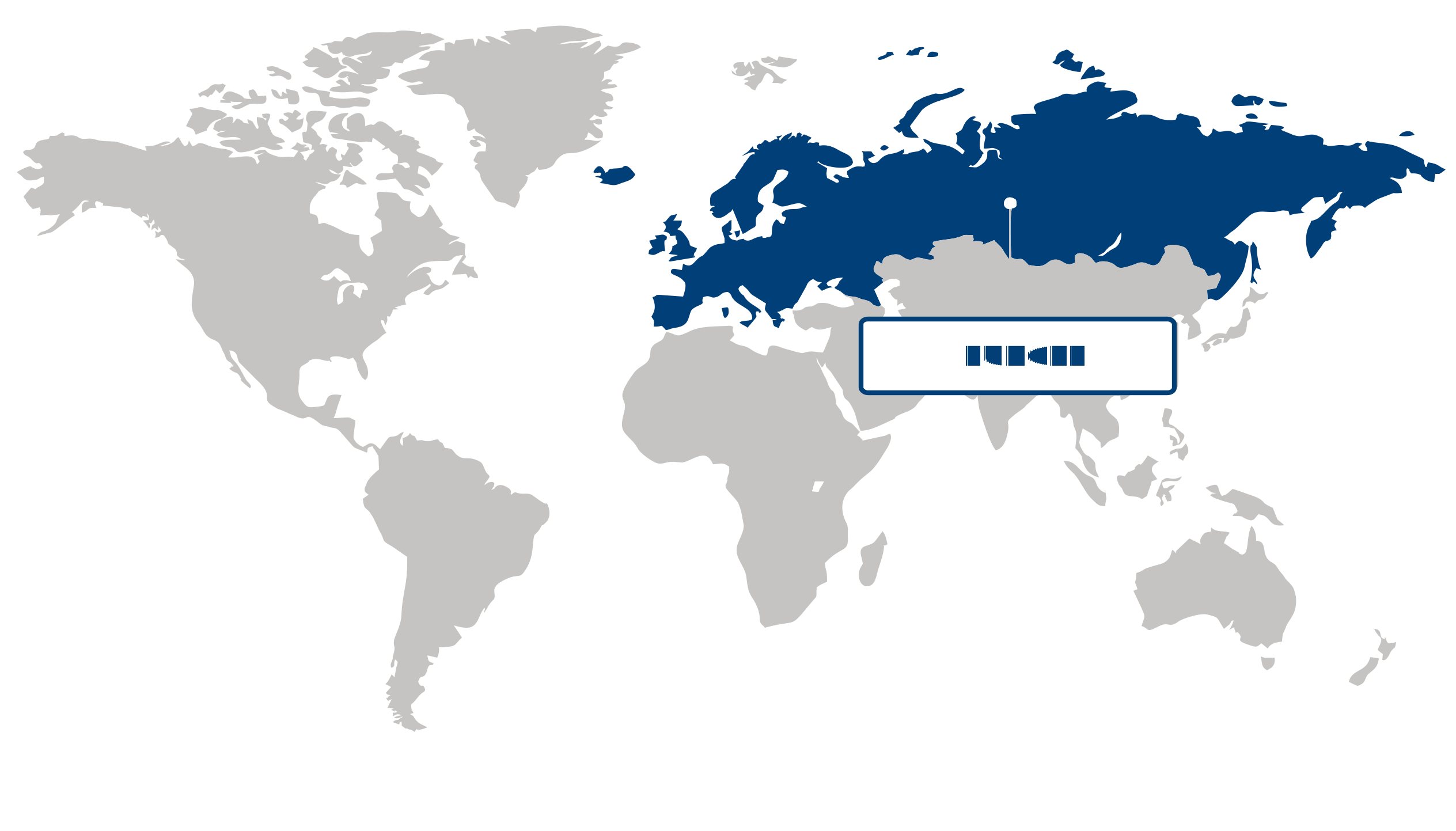
Europe (Largest Region)
Europe held the largest share of the virtual network operator market at 37.8% in 2026, reflecting its mature telecommunications ecosystem, high mobile penetration, and well-developed digital infrastructure. Strong consumer demand for flexible connectivity solutions, combined with a competitive communications environment, has supported the expansion of virtual network operators. The presence of established mobile networks and regulatory frameworks that encourage competition and market accessibility further enables operators to develop differentiated offerings. Increasing reliance on mobile connectivity across consumer and business applications is also reinforcing demand for cost-effective and flexible network services.
Asia Pacific (Fastest-Growing Region)
Asia Pacific is expected to register the fastest growth, driven by expanding mobile connectivity, digitalization, and the rapid development of telecommunications infrastructure across emerging economies. Increasing smartphone adoption and greater demand for affordable mobile services are creating favorable conditions for virtual network operators to broaden their customer base. The region's expanding digital economy, growing enterprise connectivity requirements, and increasing competition among telecom service providers are further encouraging flexible network models. Continued improvements in network coverage and access are expected to strengthen opportunities for virtual operators across the region.
| Parameter | North America | Asia Pacific | Europe | Latin America | MEA |
|---|---|---|---|---|---|
| Innovation Hub i Scale Nascent Developing Advanced | |||||
| Cost-Sensitive Region i Scale Low Medium High | |||||
| Regulatory Environment i Scale Restrictive Neutral Supportive | |||||
| Demand Drivers i Scale Weak Moderate Strong | |||||
| Development Stage i Scale Emerging Developing Developed | |||||
| Adoption Rate i Scale Low Medium High | |||||
| New Entrants / Startups i Scale Sparse Moderate Dense | |||||
| Macro Indicators i Scale Weak Stable Strong |
Key Country Insights
United States 🇺🇸
Digital Service ExpansionThe U.S. virtual network operator market continues expanding through flexible mobile service offerings targeting consumer and enterprise segments. Providers focus on differentiated pricing models, digital customer engagement, and value-added connectivity services.
Germany 🇩🇪
Enterprise Connectivity SolutionsGermany emphasizes virtual network operator services that address enterprise mobility and specialized communication requirements. Market participants invest in digital platforms and customized service portfolios to strengthen customer retention.
Japan 🇯🇵
Niche Subscriber StrategiesJapan supports virtual network operators through targeted service offerings for specific customer groups and digital-first business models. Providers emphasize service quality, bundled offerings, and efficient network partnerships to enhance competitiveness.
South Korea 🇰🇷
Digital Mobility ServicesSouth Korea advances virtual network operator offerings through digitally managed mobile plans and technology-enabled customer experiences. Providers focus on flexible subscription models and innovative mobile services supported by advanced telecommunications infrastructure.
France 🇫🇷
Value-Based Mobile OffersFrance encourages virtual network operators to differentiate through competitive pricing and specialized customer packages. Operators continue enhancing digital service capabilities while expanding partnerships with established network infrastructure providers.
Italy 🇮🇹
Flexible Telecom ModelsItaly's virtual network operator market is shaped by demand for affordable mobile services and tailored subscriber offerings. Providers prioritize digital onboarding, simplified service management, and targeted plans designed for diverse consumer segments.
Segment Leadership and Growth Trends
Virtual Network Operator Market Share (%), by Offering, 2026
Go beyond the chart, access full insights & data tables
Request Free Sample ReportOffering Segment Analysis: Mobile Virtual Network Operator (MVNO) (Largest & Fastest-Growing Segment)
The mobile virtual network operator (MVNO) segment held the largest share of the virtual network operator market in 2026 while also emerging as the fastest-growing offering. Its leadership is driven by the ability to provide mobile communication services without owning network infrastructure, enabling operators to enter markets with lower capital investment and greater operational flexibility. Increasing consumer demand for competitively priced mobile plans, customized service offerings, and value-added digital services continues to support MVNO expansion. Growing partnerships with network operators and the rapid adoption of data-centric mobile services are expected to further reinforce the segment's strong market position.
Service Segment Analysis: Prepaid (Largest Segment) vs Postpaid (Fastest-Growing Segment)
The prepaid segment accounted for the largest share in 2026 due to its affordability, flexible usage options, and widespread appeal among cost-conscious consumers. Users benefit from greater control over communication expenses without long-term contractual commitments, making prepaid services particularly attractive across diverse customer groups. The availability of varied recharge plans and easy accessibility continues to sustain the segment's dominant position.
The postpaid segment is expected to witness the fastest growth in the virtual network operator market as consumers and businesses increasingly seek premium service packages with higher data allowances, bundled digital services, and uninterrupted connectivity. Growing demand for long-term subscription plans, enhanced customer support, and integrated mobile solutions is driving increased adoption of postpaid offerings.
End User Segment Analysis: Consumer (Largest Segment) vs Enterprise (Fastest-Growing Segment)
The consumer segment represented the largest share in 2026, supported by the broad adoption of virtual network operator services for voice, messaging, and mobile data connectivity. Competitive pricing, flexible subscription models, and tailored plans for different user groups have strengthened consumer preference for virtual network operator services, contributing to sustained market leadership.
The enterprise segment is emerging as the fastest-growing end-user category in the virtual network operator market. Businesses are increasingly adopting customized connectivity solutions to support distributed workforces, connected devices, and digital business operations. Rising demand for secure communication services, scalable network management, and specialized enterprise mobility solutions continues to accelerate growth across this segment.
| Segment | Sub-Segment | Largest Segment | Fastest Growing |
|---|---|---|---|
| Offering | Mobile Virtual Network Operator (MVNO), Fixed Virtual Network Operator (FVNO) | Mobile Virtual Network Operator (MVNO) | Mobile Virtual Network Operator (MVNO) |
| Service | Prepaid, Postpaid | Prepaid | Postpaid |
| End User | Consumer, Enterprise | Consumer | Enterprise |
Competitive Landscape and Market Positioning
Key companies in the virtual network operator market:
- Vodafone Group plc (United Kingdom)
- Telefónica S.A. (Spain)
- KDDI Corporation (Japan)
- Orange S.A. (France)
- BT Group plc (United Kingdom)
- TracFone Wireless, Inc. (United States)
- Lyca Mobile Group (United Kingdom)
- Giffgaff Limited (United Kingdom)
The virtual network operator market is being reshaped by a shift toward differentiated service models rather than basic connectivity offerings. Providers are competing through flexible pricing structures, targeted customer segments, and enhanced digital experiences that allow them to address specific consumer and enterprise needs. As network access becomes increasingly commoditized, competitive strength is moving toward brand positioning, customer engagement capabilities, and the ability to integrate value-added services without relying on large-scale infrastructure ownership. The market continues to create opportunities for agile participants that can quickly adapt offerings to changing usage patterns and emerging connectivity demands.
| Company | Market Share | Company Revenue | Revenue CAGR (%) | Product Portfolio | Geographic Presence | Innovation / R&D Focus | Strategic Developments |
|---|---|---|---|---|---|---|---|
| Vodafone Group plc (United Kingdom) | |||||||
| Telefónica S.A. (Spain) | |||||||
| KDDI Corporation (Japan) | |||||||
| Orange S.A. (France) | |||||||
| BT Group plc (United Kingdom) | |||||||
| TracFone Wireless Inc. (United States) | |||||||
| Lyca Mobile Group (United Kingdom) | |||||||
| Giffgaff Limited (United Kingdom) |
Industry Development/News
| Company Name | Date | Key Development |
|---|---|---|
| Tech Mahindra | Feb-24 | Deployed a greenfield mobile virtual network solution for Swiss telecom operator Sunrise, enabling zero-touch MVNE operations and robust data protection measures aligned with General Data Protection Regulation requirements to secure data integrity. |
| iBus Group | Jan-24 | Explored a virtual network operator deal with Vodafone Idea to capture private 5G network opportunities while focusing on raising additional funds to expand digital infrastructure and Internet of Things services and solutions. |
Customize Your Report
Explore examples of how this report can be tailored to different research needs, including custom segments, additional topics or chapters, and related reports. Click a section of the wheel or its numbered marker to explore the available options.
Virtual Network Operator Market — Custom Segments
| Segment | Sub-Segment |
|---|---|
| Business Model | Reseller MVNO, Light MVNO, Full MVNO |
| Geographic Footprint | National Operators, Regional Operators, Multi-Country Operators |
| Target Vertical | Retail & Consumer Services, Financial Services, Travel & Hospitality, Logistics & Transportation, Healthcare & Public Services, Other Industry Verticals |
Virtual Network Operator Market — Custom TOC
| Custom Chapter | Custom Details |
|---|---|
| MVNO Business Model Benchmarking |
|
| Enterprise and IoT MVNO Opportunity Assessment |
|
| Digital Distribution and Channel Transformation |
|
Need a different cut of the data?
Request Custom ResearchWhat is the market size of virtual network operator?
What is the anticipated CAGR of the virtual network operator industry?
How is rising enterprise mobility reshaping service strategies in the virtual network operator market?
Why are 5G and network virtualization expanding opportunities for virtual network operators?
Why does the Mobile Virtual Network Operator segment dominate the virtual network operator market?
How is the Enterprise segment creating new opportunities in the virtual network operator market?
Why does Europe lead the virtual network operator market?
How is Asia Pacific driving faster growth in virtual network operators?
Which organizations are considered leaders in the virtual network operator landscape?
Our Clients
"The team demonstrated a great understanding of our business needs, and the reports were tailored to address our specific concerns and objectives."
Infosys
"The report was up-to-date with the latest industry trends and technological advancements. The detailed competitive landscape analysis was quite helpful."
Zebra Technologies
"The data presented in the report was accurate and well-researched. I also found the market dynamics section particularly useful."
Arlo Technologies
Our Research Team & Methodology
Every Fundamental Business Insights report is built by a dedicated vertical research team, validated through a structured primary-and-secondary methodology, and reviewed for accuracy before it reaches you.
Research Team Overview
Prepared by the Smart Technologies Research Team
Delivery
Published
Demand
Available
Support
Trust & Compliance
Research Domains
10 coverage areasResearch Intelligence
| Source | Reference |
|---|---|
| National Institute of Standards and Technology (NIST) | www.nist.gov |
| International Organization for Standardization (ISO) | www.iso.org |
| Institute of Electrical and Electronics Engineers (IEEE) | www.ieee.org |
| Internet Engineering Task Force (IETF) | www.ietf.org |
| World Wide Web Consortium (W3C) | www.w3.org |
| Cloud Security Alliance (CSA) | cloudsecurityalliance.org |
| Open Source Initiative (OSI) | opensource.org |
| Linux Foundation | www.linuxfoundation.org |
| FinOps Foundation | www.finops.org |
| PCI Security Standards Council | www.pcisecuritystandards.org |
| SWIFT | www.swift.com |
| Financial Stability Board (FSB) | www.fsb.org |
| GSMA | www.gsma.com |
| International Telecommunication Union (ITU) | www.itu.int |
| OWASP Foundation | owasp.org |
| MITRE | www.mitre.org |
| World Economic Forum (WEF) | www.weforum.org |
| OECD Digital Economy | www.oecd.org/digital |
| World Bank Data | data.worldbank.org |
| U.S. Census Bureau | www.census.gov |
Research Workflow & Quality Assurance
Data Collection
Verified information gathered through primary and secondary research.
Data Triangulation
Cross-validation using multiple independent data sources.
Forecast Modelling
Market estimates developed using historical trends and analytical models.
Analyst Validation
Findings reviewed by domain experts for accuracy and consistency.
Editorial & Quality Review
Final editorial, quality, and compliance checks before publication.
Final Publication
Released after successful completion of the internal review process.
Report Coverage
📊 Market Assessment
- Market Size & Forecast
- Market Segmentation
- Regional Analysis
- Growth Drivers & Challenges
- Market Dynamics
🏢 Competitive Intelligence
- Competitive Landscape
- Company Profiles
- Competitive Benchmarking
- Mergers & Acquisitions
- Market Share Analysis or Key Company Strategies
🔍 Strategic Analysis
- Value Chain Analysis
- Porter's Five Forces
- PESTLE Analysis
- Pricing Trends
- Supply-Demand Analysis
🚀 Future Outlook
- Technology Landscape
- Regulatory Landscape
- Investment & Funding Landscape
- Emerging Opportunities
- Future Market Outlook
Have a question about this report or need a custom scope?
Request Customization