Transparent Display Market Size & Forecasts 2026-2035, By Segments (Display Size, Technology, Product, Resolution, Vertical), Growth Opportunities, Innovation Landscape, Regulatory Shifts, Strategic Regional Insights (U.S., Japan, China, South Korea, UK, Germany, France), and Competitive Dynamics (Samsung Display, LG Display, BOE Technology, Nippon Electric Glass, Panasonic)
Market Size and Growth Outlook
Transparent Display Market size is expected to advance from USD 78.36 billion in 2025 to USD 136.41 billion by 2035, registering a CAGR of more than 5.7% across 2026-2035. By 2026, the industry is anticipated to generate USD 82.24 billion in revenue.
Get more details on this report
Request Free Sample ReportTransparent Display Market Intelligence Snapshot
Regional Market Dynamics
Segment Momentum
Market Expansion Drivers
Leading Market Participants
Global Market Forecast Snapshot
Market Outlook
Regional and Segment Outlook
Market Growth Drivers and Industry Trends
The increasing use of transparent displays in automotive and retail signage is a key growth driver shaping the transparent display market. Automotive manufacturers such as BMW and Audi have integrated transparent display technology into windshields and dashboards to enhance driver information without obstructing visibility. Similarly, retail giants like Samsung Electronics deploy transparent displays for dynamic storefront advertising, enabling immersive customer engagement. These applications respond to shifting consumer preferences for interactive and seamless experiences. For incumbents, this trend offers opportunities to deepen partnerships with automotive OEMs and retailers, while new entrants can carve niches by specializing in customizable transparent display solutions. With mounting interest in experiential retail and smarter vehicle interfaces, transparent display adoption will continue to accelerate in these sectors.
Technological Progress in Transparent OLED and LCD Displays
Advancements in transparent OLED and LCD technologies are pivotal to the transparent display market’s evolution, addressing challenges of brightness, resolution, and energy efficiency. Companies including LG Display and BOE have announced breakthroughs in maintaining high image quality while enhancing transparency levels, enabling broader commercial viability. These innovations align with consumer demand for sleeker, more integrated digital screens across environments, from smart homes to public spaces. The heightened technical sophistication reduces barriers to adoption and manufacturing costs, creating openings for startups to innovate in niche segments and for established manufacturers to expand product portfolios. Continuous R&D investments by leading panel makers signal sustained momentum in transparent display capabilities, solidifying their role in next-generation digital interfaces.
Integration with Augmented and Virtual Reality Applications
The transparent display market is significantly impacted by the integration with AR/VR applications in consumer electronics, propelled by firms like Microsoft with its HoloLens and Magic Leap’s spatial computing devices. Transparent displays enhance immersive user experiences by overlaying digital content onto real-world views, capitalizing on increasing consumer engagement with mixed reality technologies. The shift towards remote collaboration, gaming, and training tools supports demand for lightweight, transparent display solutions that blend virtual imagery seamlessly. This integration provides strategic leverage for players developing AR/VR hardware, enabling differentiation through superior display transparency and responsiveness. As AR/VR ecosystems expand, the transparent display market stands to benefit from cross-industry alliances and innovation focused on enhancing visual fidelity and user comfort.
Industry Restraints:
High Production Costs and Manufacturing Complexities
The transparent display market faces significant limitations due to the high costs and technical difficulties inherent in producing such advanced screens. The integration of transparent OLED and LCD technologies demands specialized materials and precision manufacturing processes, which elevate operational expenses and result in lower initial yields. For instance, Samsung Display's reports on their transparent OLED panels highlight ongoing challenges in achieving consistent transparency and brightness levels without escalating costs. These factors restrict mass adoption, particularly among price-sensitive consumer electronics sectors, and pose entry barriers for new firms lacking economies of scale. Market incumbents must invest heavily in research and process optimization to remain competitive. Going forward, cost reduction efforts through material innovation and improved fabrication techniques will be critical to overcoming this restraint, but such advances are likely to emerge gradually, thus tempering rapid market expansion.
Limited Content Ecosystem and Application Development
Another pivotal restraint is the nascent stage of software ecosystems and content tailored specifically for transparent displays. Unlike traditional displays, these screens require new user interface designs and content optimized for see-through viewing modes, a demand only partially addressed by current app developers. The World Wide Web Consortium (W3C) has acknowledged the need for standards supporting such novel display forms, yet adoption among developers remains low due to uncertain ROI and technical complexity. This gap slows market maturity, as consumer hesitation persists without compelling, differentiated user experiences, creating a catch-22 for device manufacturers and app creators alike. This dynamic challenges both established technology providers and startups aiming to create engaging solutions. In the medium term, collaboration between hardware vendors and software developers will be essential to build a vibrant content ecosystem, which will be a decisive factor for the transparent display’s commercial success.
| Growth Driver | Impact on CAGR | Regulatory Influence | Geographic Relevance | Adoption Rate | Impact Timeline |
|---|---|---|---|---|---|
| Increasing use of transparent displays in automotive and retail signage | 2.00% | Short term (≤ 2 yrs) | North America, Europe; Spillover: Asia Pacific | Medium | Fast |
| Advancements in transparent OLED and LCD technologies | 1.80% | Medium term (2–5 yrs) | Asia Pacific, North America | Medium | Moderate |
| Integration with AR/VR applications in consumer electronics | 1.20% | Long term (5+ yrs) | North America, Europe; Spillover: Asia Pacific | Low | Slow |
Unlock insights tailored to your business with our bespoke market research solutions.
Click to get your customized report now.
Regional Demand Dynamics
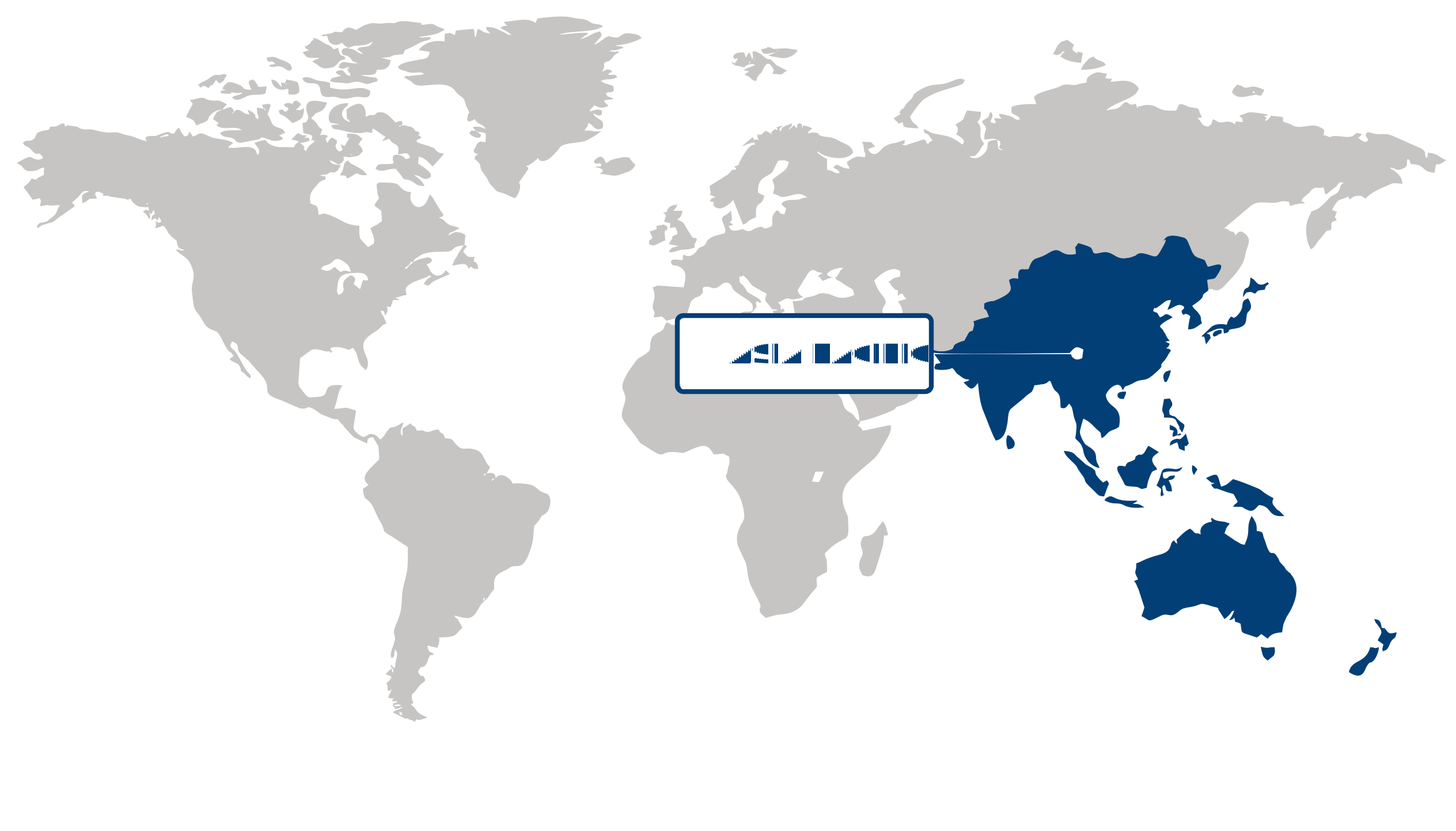
Asia Pacific dominated the transparent display market, capturing approximately 42% of the global share in 2025, and stands as the largest and fastest-growing region with a CAGR of 7%. This leadership derives from the substantial R&D investments in consumer electronics, a burgeoning automotive sector’s interest in heads-up displays (HUDs), and expansive manufacturing capabilities across the region. China’s large-scale production, combined with Japan’s technological innovation, creates a robust ecosystem for transparent display deployment, complemented by supportive government policies fostering digital transformation and smart mobility solutions. Industry players like Panasonic and BOE Technology Group have publicly highlighted their commitment to advancing transparent display technologies, reinforcing the region’s competitive advantage. Looking ahead, Asia Pacific’s integrated supply chains and rising demand for immersive and interactive displays will drive continued growth and innovation, offering significant market opportunities for investors and strategists.
Japan is positioned as a pivotal hub in Asia Pacific’s transparent display market, leveraging its advanced R&D infrastructure and strong consumer electronics legacy. The country’s automotive sector, led by companies such as Toyota and Honda, is actively integrating heads-up displays to enhance driver safety and experience, as emphasized in the Ministry of Economy, Trade and Industry’s strategic innovation programs. Additionally, Japan’s focus on sustainability and energy-efficient displays aligns with evolving consumer preferences for eco-friendly technology, which contributes to steady demand in both commercial and industrial segments. This dynamic positions Japan as a critical technology incubator, complementing regional scale and reinforcing Asia Pacific’s overall market strength.
China anchors the Asia Pacific transparent display market with its unmatched manufacturing scale and fast-growing consumer base. The nation’s rapid urbanization and expanding middle class drive demand for innovative digital displays in retail, smart homes, and automotive sectors, as reported by China’s Ministry of Industry and Information Technology. Moreover, major firms like BOE Technology and TCL have ramped up transparency display production capacity while investing in process innovation, ensuring cost-effective solutions and swift commercialization. China’s integration of digital infrastructure and favorable export policies solidify its role as a supply powerhouse, amplifying regional opportunities and supporting Asia Pacific’s dominance in the transparent display market.
North America Market Analysis:
North America maintained notable market presence in the transparent display market, driven by significant growth fueled by increasing demand for advanced retail and automotive applications. This region benefits from a mature technological infrastructure and high consumer awareness that bolsters adoption of innovative display solutions. Investment in smart city projects and digital transformation initiatives by organizations such as the U.S. Department of Transportation, promoting heads-up displays for safer driving, highlights regulatory alignment with transparent display applications. Additionally, consumer preference for immersive retail experiences supports integration of transparent displays into storefronts and in-store advertising, as seen with Walmart’s pilot programs for interactive windows. North America’s robust innovation ecosystem, supported by leaders like Apple and Google investing in display technology, positions the region for continued expansion. The convergence of consumer, regulatory, and technological momentum affords significant opportunities for transparent display market growth, establishing North America as a key hub for commercialization and innovation.
The U.S. plays a central role in advancing the transparent display market through a combination of strong consumer demand and supportive policy frameworks. Early adoption of transparent displays in automotive HUDs is exemplified by automotive OEMs such as Tesla and Ford integrating these technologies into their vehicles to enhance driver safety and infotainment. The U.S. also experiences expanding use in retail and signage enabled by high discretionary spending and digital transformation trends, driven by companies including Amazon and Best Buy. Government incentives for smart infrastructure, highlighted by Federal Highway Administration grants, further accelerate deployment. These dynamics foster a competitive environment encouraging continuous R&D investment and partnerships, solidifying the U.S. as a strategic driver in North America’s transparent display growth trajectory.
Europe Market Trends:
Europe maintained a significant share in the transparent display market, driven by the region’s robust industrial base and progressive regulatory environment. European consumers' increasing preference for innovative, energy-efficient digital solutions aligns with transparent display adoption across retail, automotive, and public sectors. The European Commission’s emphasis on sustainability and digital transformation, reflected in policies encouraging smart infrastructure and green technology integration, further supports market demand. Additionally, advancements by firms like Bosch and Siemens in transparent display applications underscore the region’s dynamic technological landscape. Strong logistics networks and skilled talent pools enhance operational efficiency, enabling swift product development and deployment. This convergence of factors positions Europe as a pivotal arena for transparent display market growth, especially as enterprises and cities advance connected, visually immersive experiences.
Germany plays a central role in Europe’s transparent display market, leveraging its deep manufacturing expertise and innovation culture. German companies, exemplified by Continental AG’s investments in transparent automotive displays, propel demand through sophisticated applications in vehicles and industrial machinery. The country’s strong policy focus on Industry 4.0 and digitalization fosters rapid integration of transparent display technologies in smart factories and urban settings. Additionally, German consumer purchasing power supports premium product adoption, encouraging further innovation. This leadership enhances Europe’s overall competitive advantage, making Germany essential for scaling and refining transparent display solutions across the region.
France emerges as a key market within Europe’s transparent display landscape, driven by its emphasis on smart city initiatives and luxury retail experiences. French firms such as Orange and Dassault Systèmes actively incorporate transparent display technologies into digital signage and interactive displays that cater to evolving consumer engagement strategies. Support from governmental programs promoting digital innovation and environmental stewardship reinforces adoption within public infrastructure and transportation sectors. The country’s creative design industries also fuel demand for aesthetically advanced transparent displays, complementing technical capabilities. France’s growing market exemplifies Europe’s broader opportunities to combine cultural innovation with technology to expand transparent display applications, enhancing regional market potential.
| Parameter | North America | Asia Pacific | Europe | Latin America | MEA |
|---|---|---|---|---|---|
| Innovation Hub i Scale Nascent Developing Advanced | |||||
| Cost-Sensitive Region i Scale Low Medium High | |||||
| Regulatory Environment i Scale Restrictive Neutral Supportive | |||||
| Demand Drivers i Scale Weak Moderate Strong | |||||
| Development Stage i Scale Emerging Developing Developed | |||||
| Adoption Rate i Scale Low Medium High | |||||
| New Entrants / Startups i Scale Sparse Moderate Dense | |||||
| Macro Indicators i Scale Weak Stable Strong |
Segment Leadership and Growth Trends
Transparent Display Market Share (%), by Display Size, 2026
Go beyond the chart, access full insights & data tables
Request Free Sample ReportThe transparent display market is led in 2025 by the large display size segment, which holds the largest share due to strong demand for expansive transparent panels in retail environments, museums, and digital signage applications. This segment benefits from evolving consumer preferences favoring immersive and interactive experiences enabled by bigger transparent screens. Retailers and cultural institutions prioritize high-impact visual engagement, driving investments in large transparent displays. Supply chain enhancements enabling scalable production of sizeable transparent panels further underpin this leadership, as evidenced by Samsung Display’s recent launches tailored for large-format applications. Strategic opportunities arise here for both incumbents and innovative entrants to capitalize on the expanding demand for premium, large-scale displays. Given ongoing trends in experiential marketing and public installations, the large display segment is poised to maintain its relevance as experience-driven customer engagement intensifies.
Analysis by Technology
The transparent display market is dominated by the transparent OLED screens segment, which holds the largest share in 2025 owing to OLED’s superior transparency, flexibility, and exceptional visual performance. These intrinsic advantages align with shifting industry dynamics emphasizing lightweight, bendable, and energy-efficient displays to meet evolving design aesthetics and functional requirements. Leading manufacturers such as LG Display and JOLED underscore OLED’s technological edge through continuous R&D investments and commercial rollouts, supported by favorable regulatory frameworks promoting energy efficiency. This segment offers robust strategic value to market players aiming to deliver differentiated products in sectors ranging from automotive to consumer electronics. Transparent OLED technology’s blend of innovation and practicality secures its critical role amid increasing digital transformation efforts worldwide.
Analysis by Product
The digital signage segment represents the largest share in the transparent display market for 2025, propelled by the rapid adoption of transparent displays in advertising and interactive retail experiences. The segment’s leadership reflects a broader trend of digitization in consumer touchpoints, where engaging, visually striking transparent signage enhances brand visibility and customer interaction. Market leaders such as LG and Panasonic have announced deployments integrating transparent displays to transform retail environments and public spaces. This shift aligns with urbanization trends and evolving shopper behaviors favoring immersive, contactless, and visually dynamic interfaces. The expanding possibilities in digital signage provide fertile ground for established firms to innovate and for startups to disrupt with tailored solutions. Driven by continuous adoption in commercial and public venues, the digital signage segment is set to sustain its prominence as a key growth vector in the transparent display market.
| Segment | Sub-Segment | Largest Segment | Fastest Growing |
|---|---|---|---|
| Display Size | Small, Medium, Large | ||
| Technology | Transparent LCD Screens, Transparent OLED Screens, Switchable Technology, Others | ||
| Product | HMD, HUD, Smart Appliance, Digital Signage | ||
| Resolution | Ultra HD, Full HD, HD, Others | ||
| Vertical | Industrial, Retail & Hospitality, Automotive, Aerospace & Defense, Transportation, Healthcare, Sports & Entertainment, Others |
Competitive Landscape and Market Positioning
The competitive environment among these leading companies is marked by a focus on enhancing transparency and resolution, alongside improving energy efficiency and integration adaptability. Strategic moves involve cultivating technology synergies through collaborative ventures that expedite product development cycles and market entry. Initiatives targeting multi-modal display integration signal a shift towards wearable and automotive applications, reinforcing market diversifications. Investment in proprietary production processes and innovative materials underpins competitive differentiation, while joint efforts between glass manufacturers and panel producers bolster optimized component compatibility. These endeavors collectively elevate product sophistication, enabling market leaders to secure premium positioning and respond adeptly to evolving consumer demands.
Strategic / Actionable Recommendations for Regional Players
North American market players should deepen ties with glass and electronics innovators to enhance material performance and expand transparent display applications in automotive and retail sectors. Collaborations with technology startups and research institutions can accelerate adoption of emerging display functionalities, such as augmented reality integration, fostering leadership in niche innovation zones.
In the Asia Pacific region, players could benefit from intensifying investment in flexible and large-area transparent display manufacturing processes. Aligning with regional supply chain partners and targeting rapidly growing smart city and commercial infrastructure markets will unlock higher value opportunities while mitigating competitive pressures through localized innovation hubs.
European entities are well-positioned to harness advanced materials science and precision engineering expertise, focusing on energy-efficient and sustainable transparent display solutions. Partnering with digital signage and architectural firms may facilitate broader commercialization, particularly in premium commercial and industrial segments where performance and environmental criteria are paramount.
| Company | Market Share | Company Revenue | Revenue CAGR (%) | Product Portfolio | Geographic Presence | Innovation / R&D Focus | Strategic Developments |
|---|---|---|---|---|---|---|---|
| No companies available. | |||||||
Industry Development/News
| Company Name | Date | Key Development |
|---|
Customize Your Report
Explore examples of how this report can be tailored to different research needs, including custom segments, additional topics or chapters, and related reports. Click a section of the wheel or its numbered marker to explore the available options.
Transparent Display Market — Custom Segments
| Segment | Sub-Segment |
|---|---|
| No segment data available. | |
Transparent Display Market — Custom TOC
| Custom Chapter | Custom Details | ||
|---|---|---|---|
| No custom TOC data available. | |||
Need a different cut of the data?
Request Custom ResearchWhat is the projected value of the transparent display industry by 2035?
Which global region commands the highest percentage of the transparent display market?
Which area is showing the greatest surge in transparent display sector?
How much is the large segment expected to grow in the transparent display industry beyond 2025?
What factors give transparent OLED screens segment a competitive edge in the transparent display sector?
Which is the largest sub-segment within the product segment for transparent display industry?
Why does ultra HD sub-segment dominate the resolution segment of transparent display sector?
How does retail & hospitality segment fare in the transparent display industry?
Which companies dominate the transparent display landscape?
Our Clients
"Working with FBI has been a good experience. The market report provided a holistic view, covering everything from emerging trends to potential risks."
Semtech Corporation
"The experience was highly positive. The team showcased remarkable flexibility in adapting to our specific needs and delivered report that perfectly aligned with all our requirements."
TSMC
"What really stood out to me was how clearly and promptly the Fundamental Business Insights team communicated throughout. It made the collaboration feel effortless."
NXP Semiconductors
Our Research Team & Methodology
Every Fundamental Business Insights report is built by a dedicated vertical research team, validated through a structured primary-and-secondary methodology, and reviewed for accuracy before it reaches you.
Research Team Overview
Prepared by the Electronics & Semiconductors Research Team
Delivery
Published
Demand
Available
Support
Trust & Compliance
Research Domains
10 coverage areasResearch Intelligence
| Source | Reference |
|---|---|
| Semiconductor Industry Association (SIA) | www.semiconductors.org |
| SEMI | www.semi.org |
| JEDEC Solid State Technology Association | www.jedec.org |
| IEEE | www.ieee.org |
| IPC – Association Connecting Electronics Industries | www.ipc.org |
| International Electrotechnical Commission (IEC) | www.iec.ch |
| International Organization for Standardization (ISO) | www.iso.org |
| U.S. Bureau of Industry and Security (BIS) | www.bis.gov |
| U.S. Patent and Trademark Office (USPTO) | www.uspto.gov |
| European Patent Office (EPO) | www.epo.org |
| Taiwan Semiconductor Industry Association (TSIA) | www.tsia.org.tw |
| World Semiconductor Trade Statistics (WSTS) | www.wsts.org |
| International Energy Agency (IEA) | www.iea.org |
| GSMA | www.gsma.com |
| 3GPP | www.3gpp.org |
| ITU (International Telecommunication Union) | www.itu.int |
| Omdia (public insights) | omdia.tech.informa.com |
| Display Supply Chain Consultants (DSCC) | www.displaysupplychain.com |
| U.S. Department of Energy (DOE) | www.energy.gov |
| NIST (National Institute of Standards and Technology) | www.nist.gov |
Research Workflow & Quality Assurance
Data Collection
Verified information gathered through primary and secondary research.
Data Triangulation
Cross-validation using multiple independent data sources.
Forecast Modelling
Market estimates developed using historical trends and analytical models.
Analyst Validation
Findings reviewed by domain experts for accuracy and consistency.
Editorial & Quality Review
Final editorial, quality, and compliance checks before publication.
Final Publication
Released after successful completion of the internal review process.
Report Coverage
📊 Market Assessment
- Market Size & Forecast
- Market Segmentation
- Regional Analysis
- Growth Drivers & Challenges
- Market Dynamics
🏢 Competitive Intelligence
- Competitive Landscape
- Company Profiles
- Competitive Benchmarking
- Mergers & Acquisitions
- Market Share Analysis or Key Company Strategies
🔍 Strategic Analysis
- Value Chain Analysis
- Porter's Five Forces
- PESTLE Analysis
- Pricing Trends
- Supply-Demand Analysis
🚀 Future Outlook
- Technology Landscape
- Regulatory Landscape
- Investment & Funding Landscape
- Emerging Opportunities
- Future Market Outlook
Have a question about this report or need a custom scope?
Request Customization