Top 10 Power Generation Technologies Market Size & Forecasts 2026-2035, By Segments (Generation), Growth Opportunities, Innovation Landscape, Regulatory Shifts, Strategic Regional Insights (U.S., Japan, China, South Korea, UK, Germany, France), and Competitive Dynamics (Siemens Energy, General Electric, Mitsubishi Power, Schneider Electric, ABB)
Market Size and Growth Outlook
Top 10 Power Generation Technologies Market size is predicted to expand from USD 1.81 billion in 2025 to USD 3.37 billion by 2035, with growth underpinned by a CAGR above 6.4% between 2026 and 2035. The industry revenue outlook for 2026 is USD 1.91 billion.
Get more details on this report
Request Free Sample ReportTop 10 Power Generation Technologies Market Intelligence Snapshot
Regional Market Dynamics
Segment Momentum
Market Expansion Drivers
Leading Market Participants
Global Market Forecast Snapshot
Market Outlook
Regional and Segment Outlook
Market Growth Drivers and Industry Trends
The increasing focus on upgrading aging infrastructure is reshaping the top 10 power generation technologies market as utilities and governments seek to enhance efficiency and reliability. For instance, the U.S. Department of Energy’s Grid Modernization Initiative emphasizes retrofitting legacy plants to support cleaner energy integration and improve grid stability. This shift aligns with growing consumer demand for uninterrupted, sustainable power and reflects competitive pressures to lower operational costs. Established players can leverage their expertise to retrofit existing assets, while new entrants specializing in advanced equipment and digital retrofitting technologies find fertile ground. As infrastructure renewal gains momentum globally, driven by long-term infrastructure investment plans like Europe’s Recovery and Resilience Facility, modernization will remain pivotal in facilitating a sustainable transition and unlocking new operational efficiencies.
Policy Support for Renewable Integration
Robust regulatory frameworks incentivizing renewable energy are accelerating adoption across the top 10 power generation technologies market. The European Commission’s Fit for 55 package, for example, mandates increased renewable shares and emissions reduction targets, prompting utilities to accelerate solar, wind, and hydro installations. Such policies shift investment towards clean technologies and influence consumer and corporate sustainability practices, fundamentally altering competitive dynamics. Incumbents must adapt through portfolio diversification or strategic partnerships, while startups can capitalize on niche innovations in renewables deployment and grid services. As governments refine carbon pricing and provide subsidies, this policy-driven environment will continue to dictate market entry and expansion strategies, underpinning structural shifts in power generation portfolios across regions.
Advanced Generation Technologies R&D
Investment in research and development of next-generation technologies such as small modular reactors (SMRs), enhanced geothermal systems, and green hydrogen production is transforming the top 10 power generation technologies market. The International Energy Agency’s Technology Collaboration Programme highlights growing R&D efforts from leading firms like GE and Siemens Energy, focused on accelerating commercialization of cleaner, more flexible solutions. These innovations respond to evolving demand for decarbonized and resilient energy systems and unlock strategic differentiation opportunities in an increasingly competitive landscape. Established players can harness R&D advancements to rejuvenate their offerings, whereas agile entrants benefit from lower barriers to pilot and scale breakthrough technologies. With public-private collaborations strengthening, the emphasis on advanced technology innovation signals a shift towards a diversified and low-carbon power generation mix globally.
Industry Restraints:
Capital Intensity and Financing Challenges
The significant upfront capital expenditure required for many top power generation technologies, particularly nuclear, offshore wind, and advanced thermal plants, remains a formidable barrier to market expansion. These projects often face extended development timelines and uncertain returns, constraining investment appetite. For instance, the International Energy Agency (IEA) highlights that prolonged permitting and construction delays inflate costs, exacerbating financial risk. This environment particularly disadvantages new entrants and smaller players, who struggle to secure funding amid cautious lenders and stringent credit conditions. Legacy incumbents face pressure to optimize capital allocation, balancing innovation with fiscal prudence. Moving forward, the capital-intensive nature of these technologies will continue to incentivize strategic partnerships and public-private financing mechanisms, shaping the competitive landscape and potentially privileging firms with strong capital access and government backing.
Regulatory and Policy Uncertainty
Inconsistent and evolving regulatory frameworks hinder adoption and scale-up across multiple power generation segments, especially emerging technologies like hydrogen and small modular reactors. Changes in subsidy regimes, grid interconnection standards, and emission policies—documented in reports by the U.S. Department of Energy and the European Commission—create operational ambiguity and complicate long-term project viability assessments. For established players, this uncertainty impedes strategic planning, while new entrants grapple with unpredictable market entry conditions. Responding to such volatility requires agile compliance strategies and active engagement with policymakers. Given current geopolitical shifts and energy transition dynamics, the regulatory landscape is expected to remain fluid, necessitating continuous adaptation and potentially slowing technology deployment across the sector in the near to medium term.
| Growth Driver | Impact on CAGR | Regulatory Influence | Geographic Relevance | Adoption Rate | Impact Timeline |
|---|---|---|---|---|---|
| Modernization of Power Generation Assets | 2.00% | Short term (≤ 2 yrs) | North America, Europe; Spillover: Asia Pacific | Medium | Moderate |
| Policy Support for Renewable Integration | 2.20% | Medium term (2–5 yrs) | Europe, North America; Spillover: Asia Pacific | High | Fast |
| Advanced Generation Technologies R&D | 2.20% | Long term (5+ yrs) | Asia Pacific, Europe; Spillover: North America | Medium | Moderate |
Unlock insights tailored to your business with our bespoke market research solutions.
Click to get your customized report now.
Regional Demand Dynamics
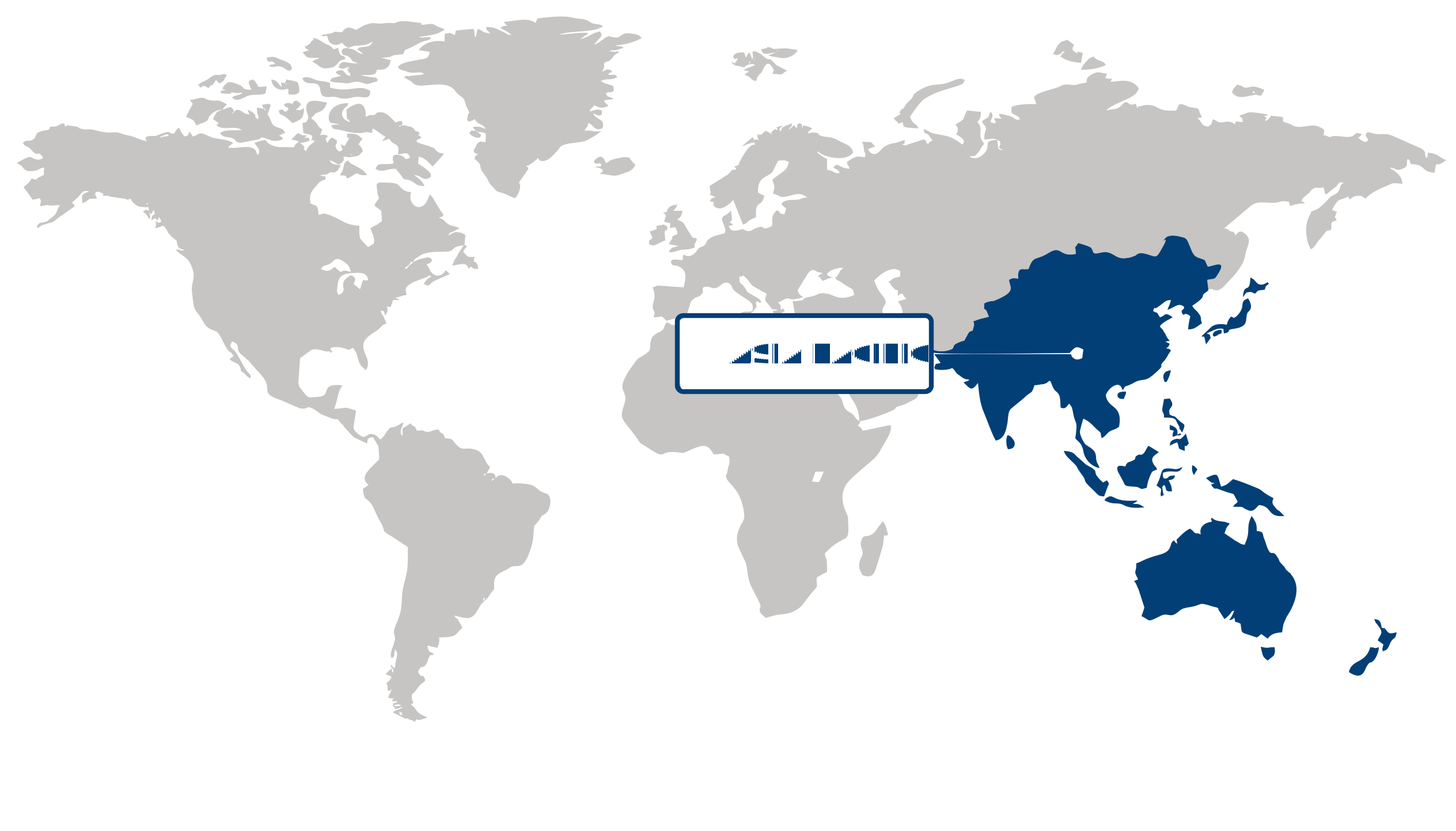
Asia Pacific dominated the top 10 power generation technologies market, capturing approximately 46% of the global share in 2025 and exhibiting the fastest growth with a 7.68% CAGR. This leadership stems from massive energy demand driven by rapid industrialization and urban expansion, alongside robust investments in renewable energy projects. The region’s emphasis on sustainability, reinforced by policy initiatives from entities like the Asia-Pacific Economic Cooperation (APEC), has accelerated adoption of advanced technologies such as solar, wind, and hydro power. Moreover, digital transformation efforts and efficient supply chain management within key manufacturing hubs bolster operational advancements. For instance, China’s commitment to peak carbon emissions by 2030 and carbon neutrality by 2060, as outlined by the National Energy Administration, illustrates strategic regulatory support. These factors collectively position Asia Pacific as a pivotal market, offering expansive opportunities for innovation and capitalizing on evolving energy paradigms.
Japan anchors the Asia Pacific top 10 power generation technologies market with its focus on diversifying its energy mix amidst stringent environmental regulations and aging infrastructure challenges. The nation has intensified investments in next-generation nuclear and offshore wind projects, with the Ministry of Economy, Trade and Industry (METI) driving policy frameworks to optimize energy security alongside decarbonization goals. Japan’s consumer markets favor energy efficiency and resilience, evidenced by collaborations such as the Fukushima Renewable Energy Institute’s initiatives on smart grid technologies. These developments underscore Japan’s role in enhancing regional technological sophistication, contributing to the broader growth ecosystem. Strategically, Japan’s innovation-driven approach complements Asia Pacific’s overall market dynamics, reinforcing sustainable growth trajectories within the top 10 power generation technologies spectrum.
China is positioned as the powerhouse of the Asia Pacific top 10 power generation technologies market, propelled by its unparalleled scale of renewable energy investments and ongoing grid modernization endeavors. The country’s aggressive policies, including the Renewable Energy Law and ambitious targets set forth by the National Development and Reform Commission (NDRC), stimulate capacity expansions in solar, wind, and hydropower sectors. China's evolving regulatory landscape encourages diverse energy procurement strategies and international partnerships, exemplified by State Grid Corporation’s global infrastructure projects. This scale-intensive demand, coupled with rapid urbanization and industrial growth, fuels competitive intensity and technological deployment across the region. China’s market momentum significantly amplifies Asia Pacific’s leadership in power generation innovation, cementing it as an essential arena for investors and technology developers alike.
North America Market Analysis:
North America emerged as the fastest-growing region in the top 10 power generation technologies market, led by a robust CAGR of 7.8%. The region’s lucrative growth is driven by increasing investments in renewable and advanced energy technologies, propelled by strong regulatory support and a growing corporate commitment to sustainability. Efforts such as the U.S. Inflation Reduction Act encourage deployment of solar, wind, and energy storage solutions, reshaping utility portfolios. Companies like NextEra Energy and government agencies including the U.S. Department of Energy have accelerated innovation, fostering enhanced grid resilience and digital integration. These dynamics respond to shifting consumer demand towards cleaner energy options and stringent emissions reduction targets mandated by regional policies. As North America continues to harness abundant natural resources and leverage technological advancements, it presents significant opportunities for scaling diverse power generation technologies to meet future energy needs sustainably.
The U.S. plays a pivotal role in North America’s top 10 power generation technologies market, spearheading demand for renewable and distributed energy solutions. Federal initiatives like the Bipartisan Infrastructure Law have catalyzed infrastructure modernization, while state-level policies such as California’s ambitious clean energy goals amplify market growth. The U.S. benefits from a mature technological ecosystem, exemplified by the rapid deployment of advanced battery storage and grid digitalization unveiled by companies like Tesla and Southern Company. Consumer preferences have increasingly favored clean energy, prompting utilities to adapt business models and strategic investments accordingly. These efforts underscore the U.S. as a critical innovation and market expansion hub, reinforcing North America’s broader trajectory toward a sustainable and technologically advanced power generation landscape.
Europe Market Trends:
Europe maintained a notable presence in the top 10 power generation technologies market, driven by its diverse energy mix and stringent environmental policies. The region’s commitment to accelerating the transition from fossil fuels toward renewables reflects growing consumer demand for cleaner energy and the influence of EU directives promoting decarbonization. Leading initiatives such as the European Green Deal and Germany’s Energiewende have fostered innovation and investment, helping scale technologies like wind, solar, and biomass. Regulatory support from entities such as the European Commission encourages modernization of grid infrastructure and digital integration, enhancing operational efficiency. Additionally, Europe's advanced industrial base and skilled workforce enable competitive production and deployment of cutting-edge power generation technologies. Given these dynamics, Europe offers substantial opportunities for investors and strategists focused on sustainable energy growth and technology diversification through the next decade.
Germany holds a pivotal role in the top 10 power generation technologies market in Europe, driven by its aggressive renewable energy targets and policy frameworks. The country’s Energiewende initiative, as detailed by the Federal Ministry for Economic Affairs and Energy, prioritizes phasing out nuclear power while expanding wind and solar capacity, reflecting widespread public acceptance and corporate commitment to sustainability. German utilities like RWE and E.ON are investing heavily in innovation and grid modernization, supporting a resilient and flexible energy system. Such efforts underline Germany’s position as a testbed for integrating variable renewable energies, making it a critical contributor to regional growth in power generation technologies. Strategically, Germany’s leadership accelerates technology adoption and supply chain localization, reinforcing Europe’s overall market potential.
France represents a strategic player in the top 10 power generation technologies market within Europe, shaped by its strong nuclear infrastructure alongside increasing renewable deployment. The French government, through entities like EDF (Électricité de France), balances maintaining stable nuclear output with expanding offshore wind farms and solar power projects, responding to evolving energy policies announced by the Ministry of Ecological Transition. Consumer preferences for low-carbon energy and France’s export ambitions boost investments in next-generation technologies and digital grid solutions. This dual approach enhances system reliability and sustainability, providing a complementary dimension to Europe’s diverse energy portfolio. France’s evolving power landscape not only addresses domestic energy security but also reinforces the region’s collective momentum toward a decarbonized future.
| Parameter | North America | Asia Pacific | Europe | Latin America | MEA |
|---|---|---|---|---|---|
| Innovation Hub i Scale Nascent Developing Advanced | |||||
| Cost-Sensitive Region i Scale Low Medium High | |||||
| Regulatory Environment i Scale Restrictive Neutral Supportive | |||||
| Demand Drivers i Scale Weak Moderate Strong | |||||
| Development Stage i Scale Emerging Developing Developed | |||||
| Adoption Rate i Scale Low Medium High | |||||
| New Entrants / Startups i Scale Sparse Moderate Dense | |||||
| Macro Indicators i Scale Weak Stable Strong |
Segment Leadership and Growth Trends
Top 10 Power Generation Technologies Market Share (%), by Generation, 2026
Go beyond the chart, access full insights & data tables
Request Free Sample ReportGas turbine held largest share in the top 10 power generation technologies market in 2025, underscoring its dominance among generation segments. This leadership stems primarily from the flexibility and efficiency offered by natural gas-based power plants, which cater effectively to variable electricity demand and complement renewable integration. Regulatory support, such as incentives for cleaner fossil fuel technologies from the U.S. Department of Energy, reinforces the segment’s competitive positioning. Additionally, advancements in digital monitoring and predictive maintenance from companies like General Electric enhance operational reliability, further driving adoption. The segment attracts both established utilities and emerging independent power producers aiming to balance cost and emission goals. Given ongoing shifts toward decarbonization combined with natural gas’s role as a transition fuel, gas turbines are poised to remain central to power generation strategies in the near to medium term.
| Segment | Sub-Segment | Largest Segment | Fastest Growing |
|---|---|---|---|
| Generation | Gas Turbine, Steam Turbine, Nuclear Power Reactor, Gas Engine, Concentrating Solar Power, Others |
Competitive Landscape and Market Positioning
The competitive environment is characterized by substantial innovation and integration efforts. Leading firms are engaging in collaborative ventures and enhancing technological capabilities through targeted developments in hydrogen-fired turbines, smart grid systems, and energy storage. The pursuit of digital transformation and decarbonization is driving the introduction of next-generation equipment and services. Strategic alliances and the consolidation of complementary competencies amplify their reach and adaptability in shifting regulatory landscapes. This dynamism fortifies their competitive edge and accelerates adoption of cleaner and more efficient power generation solutions.
Strategic / Actionable Recommendations for Regional Players
Market participants in North America could benefit from deepening partnerships with technology innovators and expanding offerings that integrate renewables with grid modernization. Emphasizing modular and scalable solutions could enhance responsiveness to decentralized energy demands.
In Asia Pacific, capitalizing on emerging technologies such as green hydrogen and hybrid renewable systems while aligning with infrastructure growth can unlock growth avenues. Collaboration with local governments to navigate regulatory environments and leverage large-scale projects will be advantageous.
For Europe, strengthening capabilities in smart grid technologies and energy storage, coupled with cross-border cooperation within the EU, would support sustainability goals. Focusing on digitalization and leveraging policy frameworks designed to accelerate green energy transition can further consolidate market standing.
| Company | Market Share | Company Revenue | Revenue CAGR (%) | Product Portfolio | Geographic Presence | Innovation / R&D Focus | Strategic Developments |
|---|---|---|---|---|---|---|---|
| No companies available. | |||||||
Industry Development/News
| Company Name | Date | Key Development |
|---|
Customize Your Report
Explore examples of how this report can be tailored to different research needs, including custom segments, additional topics or chapters, and related reports. Click a section of the wheel or its numbered marker to explore the available options.
Top 10 Power Generation Technologies Market — Custom Segments
| Segment | Sub-Segment |
|---|---|
| No segment data available. | |
Top 10 Power Generation Technologies Market — Custom TOC
| Custom Chapter | Custom Details | ||
|---|---|---|---|
| No custom TOC data available. | |||
Need a different cut of the data?
Request Custom ResearchWhat are the growth projections for the top 10 power generation technologies industry?
Which region emerges as the top contributor to the top 10 power generation technologies market revenue?
Which region has emerged as the fastest-growing for the top 10 power generation technologies sector?
What factors give gas turbine segment a competitive edge in the top 10 power generation technologies sector?
Which companies dominate the top 10 power generation technologies landscape?
Our Clients
"The information presented in the report was genuinely insightful. The data was clear and easy to understand, which made it much easier to interpret the findings."
Amara Raja Group
"The responsiveness and professionalism exhibited by the team were exemplary. They were readily available to address queries, provide clarifications, and offer additional insights."
ONGC
"The reports offered a comprehensive analysis of various segments within the market. The detailed insights into market trends, and regulatory landscapes were excellent."
TotalEnergies
Our Research Team & Methodology
Every Fundamental Business Insights report is built by a dedicated vertical research team, validated through a structured primary-and-secondary methodology, and reviewed for accuracy before it reaches you.
Research Team Overview
Prepared by the Energy & Power Research Team
Delivery
Published
Demand
Available
Support
Trust & Compliance
Research Domains
10 coverage areasResearch Intelligence
| Source | Reference |
|---|---|
| International Energy Agency (IEA) | www.iea.org |
| U.S. Energy Information Administration (EIA) | www.eia.gov |
| International Renewable Energy Agency (IRENA) | www.irena.org |
| International Electrotechnical Commission (IEC) | www.iec.ch |
| International Organization for Standardization (ISO) | www.iso.org |
| IEEE | www.ieee.org |
| CIGRE (International Council on Large Electric Systems) | www.cigre.org |
| World Energy Council (WEC) | www.worldenergy.org |
| U.S. Department of Energy (DOE) | www.energy.gov |
| International Atomic Energy Agency (IAEA) | www.iaea.org |
| American Petroleum Institute (API) | www.api.org |
| Society of Petroleum Engineers (SPE) | www.spe.org |
| Hydrogen Council | hydrogencouncil.com |
| Battery Council International (BCI) | batterycouncil.org |
| Global Wind Energy Council (GWEC) | gwec.net |
| SolarPower Europe | www.solarpowereurope.org |
| World Bioenergy Association (WBA) | worldbioenergy.org |
| International Hydropower Association (IHA) | www.hydropower.org |
| Edison Electric Institute (EEI) | www.eei.org |
| National Renewable Energy Laboratory (NREL) | www.nrel.gov |
Research Workflow & Quality Assurance
Data Collection
Verified information gathered through primary and secondary research.
Data Triangulation
Cross-validation using multiple independent data sources.
Forecast Modelling
Market estimates developed using historical trends and analytical models.
Analyst Validation
Findings reviewed by domain experts for accuracy and consistency.
Editorial & Quality Review
Final editorial, quality, and compliance checks before publication.
Final Publication
Released after successful completion of the internal review process.
Report Coverage
📊 Market Assessment
- Market Size & Forecast
- Market Segmentation
- Regional Analysis
- Growth Drivers & Challenges
- Market Dynamics
🏢 Competitive Intelligence
- Competitive Landscape
- Company Profiles
- Competitive Benchmarking
- Mergers & Acquisitions
- Market Share Analysis or Key Company Strategies
🔍 Strategic Analysis
- Value Chain Analysis
- Porter's Five Forces
- PESTLE Analysis
- Pricing Trends
- Supply-Demand Analysis
🚀 Future Outlook
- Technology Landscape
- Regulatory Landscape
- Investment & Funding Landscape
- Emerging Opportunities
- Future Market Outlook
Have a question about this report or need a custom scope?
Request Customization