Thick Film Ceramic Substrates Market Size & Forecasts 2026-2035, By Segments (Material Type, End-user, Application), Growth Opportunities, Innovation Landscape, Regulatory Shifts, Strategic Regional Insights (U.S., Japan, China, South Korea, UK, Germany, France), and Competitive Dynamics (CoorsTek, Kyocera, Murata Manufacturing, CeramTec, TDK Corporation)
Market Size and Growth Outlook
Thick Film Ceramic Substrates Market size is likely to expand from USD 10.62 billion in 2025 to USD 16.18 billion by 2035, posting a CAGR above 4.3% across 2026-2035. The industry’s revenue potential for 2026 is USD 11.01 billion.
Get more details on this report
Request Free Sample ReportThick Film Ceramic Substrates Market Intelligence Snapshot
Regional Market Dynamics
Segment Momentum
Market Expansion Drivers
Leading Market Participants
Global Market Forecast Snapshot
Market Outlook
Regional and Segment Outlook
Market Growth Drivers and Industry Trends
The thick film ceramic substrates market is increasingly propelled by the surging need for advanced electronic substrates that support miniaturized and highly integrated circuits. Consumer electronics manufacturers, such as Samsung Electronics and Panasonic, emphasize enhanced performance and durability in their product lines, driving substrate innovation. The shift toward smarter devices with greater processing capabilities necessitates substrates with superior thermal management and electrical insulation, positioning thick film ceramics as essential enablers. This demand encourages both established players and new entrants to invest in R&D for substrates that meet stringent performance standards, improving market competitiveness. As the electronics sector adapts to rapid technological progress, innovation in substrate materials will remain a critical focus, sustaining growth momentum in the thick film ceramic substrates market.
Expansion in Automotive Electronics and Power Modules
The automotive industry's pivot to electrification and advanced driver assistance systems (ADAS) is a significant growth driver for the thick film ceramic substrates market. Companies like Bosch and Infineon Technologies integrate thick film ceramic substrates into power modules to enhance efficiency and reliability in electric vehicles (EVs). Regulatory pressures to reduce emissions and improve vehicle safety accelerate the adoption of robust substrates capable of withstanding harsh operating conditions. This shift opens strategic avenues for suppliers to deepen partnerships within the automotive supply chain and develop customized solutions that address emerging EV and hybrid powertrain requirements. Given the ongoing evolution of automotive electronics, substrates that combine performance and cost-effectiveness will remain vital, supporting sustained expansion across market segments.
Innovation in High-Temperature and High-Reliability Ceramics
Advancements in high-temperature and high-reliability ceramics represent a transformative growth driver within the thick film ceramic substrates market, as industries demand components that reliably perform under extreme conditions. Leading research institutions and companies such as Kyocera and CoorsTek are developing substrate materials suited for aerospace, industrial power electronics, and renewable energy applications, where thermal endurance and long-term stability are mandatory. These innovations cater to evolving regulatory standards emphasizing operational safety and environmental sustainability. Both incumbents and new market entrants can leverage these breakthroughs to differentiate their product portfolios and penetrate sectors requiring stringent quality assurance. The continued emphasis on material innovation assures that the thick film ceramic substrates market will evolve in alignment with increasingly rigorous industrial and environmental demands.
Industry Restraints:
High Production Complexity and Associated Costs
The manufacturing of thick film ceramic substrates demands precise control over material composition, screen printing, and firing processes, making production complex and capital-intensive. This complexity limits scalability and slows innovation by escalating operational inefficiencies and raising entry barriers. For example, Kyocera’s technical disclosures highlight the critical need for specialized equipment and expertise to maintain product consistency, hindering smaller players and deterring prospective entrants. Industry participants must invest heavily in R&D and production capabilities, constraining agility in adapting to market shifts. As product miniaturization and performance standards advance, cost pressures linked to process refinement are expected to persist, compelling firms to prioritize operational efficiencies and strategic partnerships to maintain competitiveness.
Raw Material Supply Volatility and Geopolitical Risks
Thick film ceramic substrates rely heavily on critical raw materials like alumina and palladium, sourced from geopolitically sensitive regions, exposing the market to supply disruptions and price volatility. According to the United States Geological Survey (USGS), fluctuations in rare earth and precious metal availability have periodically constrained raw material procurement, inflating costs and causing production bottlenecks for key players such as Murata Manufacturing. This instability complicates supply chain planning and imposes risk premiums, particularly affecting manufacturers dependent on just-in-time sourcing. Moving forward, sustained geopolitical tensions and resource nationalism are likely to perpetuate supply fragility, incentivizing market incumbents to diversify supply bases and invest in alternative materials research to mitigate these constraints.
| Growth Driver | Impact on CAGR | Regulatory Influence | Geographic Relevance | Adoption Rate | Impact Timeline |
|---|---|---|---|---|---|
| Rising demand for advanced electronic substrates | 1.50% | Short term (≤ 2 yrs) | Asia Pacific, North America | Medium | Fast |
| Expansion in automotive electronics and power modules | 1.50% | Medium term (2–5 yrs) | Europe, Asia Pacific | Medium | Moderate |
| Innovation in high-temperature and high-reliability ceramics | 1.30% | Long term (5+ yrs) | Europe, North America | Low | Slow |
Unlock insights tailored to your business with our bespoke market research solutions.
Click to get your customized report now.
Regional Demand Dynamics
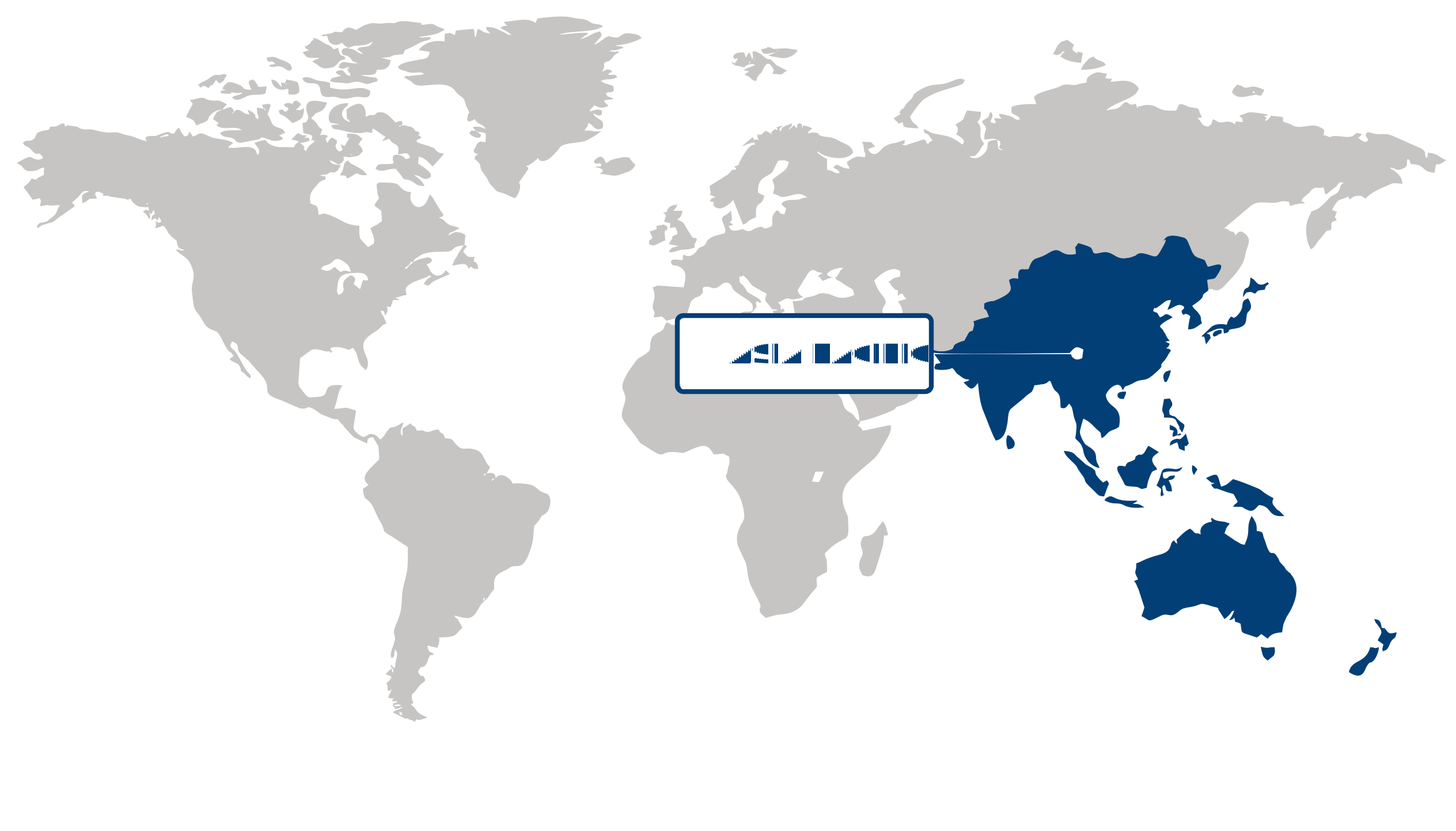
Asia Pacific dominated the thick film ceramic substrates market in 2025, representing approximately 48% of the global share and exhibiting the fastest growth with a 5.2% CAGR. This leadership is primarily driven by the region's robust electronics manufacturing base, which supports escalating demand for consumer electronics such as smartphones, wearables, and IoT devices. For instance, the Electronics and Information Technology Industry Association of India highlights significant investments in semiconductor and electronic component fabrication in the region. Additionally, progressive policy frameworks in nations like South Korea and Taiwan streamline supply chains, enhancing operational efficiency amid global trade challenges. These dynamics, coupled with technological advancements from companies like Panasonic and Murata Manufacturing, underpin the region's market dominance. Going forward, Asia Pacific presents significant opportunities for innovation and expansion, fueled by a tech-savvy consumer base and ongoing digital transformation initiatives that are expected to sustain market momentum.
Japan serves as a pivotal hub in the Asia Pacific thick film ceramic substrates market, benefiting from its advanced R&D capabilities and stringent quality standards demanded by automotive and industrial electronics sectors. Hitachi High-Tech’s latest corporate release underscores Japan's leadership in precision manufacturing of ceramic substrates tailored for high-reliability applications, elevating industry benchmarks. Meanwhile, regulatory environments promote sustainability-focused innovations, aligning with global electronic waste reduction efforts, thereby encouraging adoption of thick film technologies with improved lifecycle performance. This positions Japan as a critical driver sustaining regional competitiveness. Similarly, China plays a central role by leveraging its massive consumer electronics demand and extensive manufacturing infrastructure. China’s Ministry of Industry and Information Technology reports continuous expansion in electronic production capacity, supported by local champions such as BOE Technology and TCL. Strategic investments in supply chain resilience and automation enhance throughput, consolidating China's influence within the region and amplifying collective growth in the thick film ceramic substrates market.
North America Market Analysis:
North America maintained a significant share in the thick film ceramic substrates market, driven by the region’s advanced electronics manufacturing landscape and strong demand from automotive and aerospace sectors. The integration of smart electronics and increased investments in defense technology have heightened reliance on reliable, high-performance substrates that support miniaturization and durability. U.S. government initiatives encouraging semiconductor manufacturing expansion, as reported by the U.S. Department of Commerce, have further bolstered the supply chain resilience and innovation in substrate materials. In addition, the region’s emphasis on sustainability and energy-efficient electronics is influencing material preferences, promoting thicker films for enhanced thermal management. Given these dynamics and continued R&D investments by leading North American firms like Amphenol and TTM Technologies, the market is poised for stable growth with lucrative opportunities especially in high-reliability industrial applications.
The U.S. plays a pivotal role in North America’s thick film ceramic substrates market, propelled by high consumer demand for connected devices and advancements in electric vehicle technologies. The U.S. regulatory environment, underscored by the National Institute of Standards and Technology’s (NIST) push for advanced manufacturing innovation, facilitates development of substrates that meet strict performance and reliability standards. Major players such as Skyworks Solutions and Qorvo capitalize on these frameworks to design substrates supporting RF module integration. Additionally, growing adoption of 5G infrastructure upgrades accelerates demand for substrates with superior electrical properties, while supply chain expansions reduce lead times, enhancing market responsiveness. These factors position the U.S. not only as a major consumer but also as a technological frontrunner that strengthens North America’s competitive advantage in this sector.
Europe Market Trends:
Europe maintained a notable presence in the thick film ceramic substrates market, driven by its strong manufacturing base and innovation in electronics. The region’s focus on industrial automation, automotive electronics, and telecommunication infrastructure has sustained steady demand for robust substrate solutions. Regulatory frameworks emphasizing environmental compliance, as outlined by the European Chemicals Agency (ECHA), have prompted manufacturers to optimize material compositions, enhancing product sustainability. Additionally, the digital transformation wave across European industries is spurring investments in advanced electronic components requiring reliable substrates. Supply chain resilience, bolstered by localized production hubs, further supports market stability despite global uncertainties. Organizations like Infineon Technologies have recently expanded their semiconductor manufacturing capabilities in Europe, demonstrating the region’s commitment to innovation in thick film ceramic technologies. Looking ahead, Europe's combination of technological expertise and evolving industrial needs positions it for sustained moderate growth with significant opportunities in customized substrate applications.
Germany plays a pivotal role in the thick film ceramic substrates market, backed by its leadership in automotive electronics and industrial automation sectors. The country’s rigorous standards for product quality and environmental sustainability influence substrate manufacturing trends, encouraging innovation in ceramic formulations to meet stringent criteria. For instance, Bosch’s announcement on integrating thick film substrates in sensor modules highlights Germany’s tech-driven demand. Furthermore, Germany’s well-established manufacturing ecosystems, supported by the German Federal Ministry for Economic Affairs and Climate Action, facilitate efficient supply chains and skilled workforce availability, enhancing production scalability. The strategic focus on electrification and Industry 4.0 further accelerates substrate adoption in electronic assemblies. Consequently, Germany’s robust industrial environment and technological advancements substantially contribute to expanding Europe’s overall market potential in thick film ceramic substrates.
France acts as an important player in the thick film ceramic substrates market in Europe, with growth fueled by its dynamic electronics and aerospace industries. The nation’s emphasis on research and development, exemplified by collaborations involving the French National Centre for Scientific Research (CNRS), fosters technological innovations in ceramic substrate materials tailored for high-reliability applications. France’s proactive approach to sustainability regulations, driven by the Ministry of Ecological Transition, encourages manufacturers to enhance the eco-friendliness of substrates, thereby aligning with evolving consumer and regulatory expectations. Moreover, French companies such as STMicroelectronics invest in production techniques that integrate thick film ceramic substrates to improve device performance. These initiatives underscore France’s expanding role in the regional market, reinforcing Europe’s moderate growth trajectory through targeted innovation and regulatory adaptation.
| Parameter | North America | Asia Pacific | Europe | Latin America | MEA |
|---|---|---|---|---|---|
| Innovation Hub i Scale Nascent Developing Advanced | |||||
| Cost-Sensitive Region i Scale Low Medium High | |||||
| Regulatory Environment i Scale Restrictive Neutral Supportive | |||||
| Demand Drivers i Scale Weak Moderate Strong | |||||
| Development Stage i Scale Emerging Developing Developed | |||||
| Adoption Rate i Scale Low Medium High | |||||
| New Entrants / Startups i Scale Sparse Moderate Dense | |||||
| Macro Indicators i Scale Weak Stable Strong |
Segment Leadership and Growth Trends
Thick Film Ceramic Substrates Market Share (%), by Material Type, 2026
Go beyond the chart, access full insights & data tables
Request Free Sample ReportAlumina represented the largest share in the thick film ceramic substrates market in 2025, driven chiefly by its cost-effectiveness and superior thermal conductivity. This combination positions alumina as the preferred choice for thick-film substrates, meeting both performance and budget considerations. Growing demand from sectors requiring efficient heat dissipation and electrical insulation aligns with alumina’s attributes, while supply chain stability from established producers ensures consistent availability. According to press releases from Kyocera and CoorsTek, advancements in ceramic processing further enhance alumina’s competitive edge. The segment offers significant strategic advantages, enabling established manufacturers to optimize production costs and newcomers to enter with scalable technologies. Given ongoing emphasis on thermal management in electronics and industrial devices, alumina's relevance and leadership in this market are expected to persist, fueled by evolving customer preferences for reliable, economical substrate materials.
Analysis by End-User
Consumer electronics held the largest share in the thick film ceramic substrates market in 2025, propelled by rapid industry expansion and a mounting requirement for thermally stable, high-performance substrates in increasingly compact devices. The demand for miniaturization and reliable thermal management in smartphones, wearables, and IoT devices fuels this growth, further influenced by digital transformation trends reshaping device architectures. Product innovations announced by Samsung Electronics and Sony underscore the strategic importance of ceramic substrates in enabling next-generation consumer electronics. Supply chains are adapting to support just-in-time manufacturing, satisfying dynamic consumer tastes and stringent quality standards. For both incumbents and new entrants, this segment presents opportunities to capitalize on fast-paced market dynamics and evolving user expectations. The continued evolution toward more complex, performance-intensive consumer gadgets ensures sustained demand for thick film ceramic substrates.
Analysis by Application
Automotive electronics dominated the thick film ceramic substrates market in 2025, underpinned by accelerating electrification and enhanced electronic content in vehicles. The segment benefits directly from stringent regulatory frameworks promoting clean energy and advanced safety features that require robust, thermally efficient substrate solutions. Leading automakers such as Tesla and Bosch have publicly emphasized the integration of advanced thick film ceramic technologies in their electronic control units and powertrain components. Consumer demand for safer, smarter vehicles, combined with OEMs’ investment in electrification, continues to drive substrate requirements. The segment offers strategic growth avenues for both legacy suppliers and innovative startups focusing on automotive-grade quality and reliability. Given the automotive industry's ongoing transition and regulatory pressures, this application will remain vital in the medium term as vehicles grow more electrified and electronically sophisticated.
| Segment | Sub-Segment | Largest Segment | Fastest Growing |
|---|---|---|---|
| Material Type | Alumina, Aluminum Nitride, Beryllium Oxide, Others | ||
| End-user | Automotive, Industrial, Consumer Electronics, Aerospace & Defense | ||
| Application | Power Electronics, Hybrid Circuits, LEDs, Automotive Electronics, Industrial Equipment |
Competitive Landscape and Market Positioning
The competitive landscape is marked by dynamic strategic movements among these key players, who continuously refine product lines and enhance manufacturing precision to maintain technological edge. Collaborative efforts and selective acquisitions augment their capabilities, enabling integration of advanced ceramic formulations and improved substrate reliability. Technology development initiatives, particularly around materials with superior thermal and electrical properties, position these firms to meet escalating demands in 5G communications and automotive electronics. These approaches reinforce market competitiveness, with Roger Corporation and Ferro intensifying niche innovations, while others pursue broadened global outreach and diversified end-use sectors.
Strategic / Actionable Recommendations for Regional Players
In North America, companies should pursue alliances with technology innovators to accelerate development of substrates tailored for burgeoning 5G infrastructure and automotive electrification. Leveraging advanced manufacturing technologies offers pathways to enhance product differentiation and capture specialized industrial segments.
For Asia Pacific players, deepening engagement in localized R&D can unlock materials innovations specific to high-growth consumer electronics and smart automotive markets. Collaborations across supply chains can amplify scale advantages while incorporating sustainable production practices may elevate competitive standing.
European entities could benefit from focusing on high-reliability applications by integrating emerging composite materials. Strengthening cross-border partnerships will support knowledge exchange and expand access to critical automotive and industrial customers demanding premium substrate solutions.
| Company | Market Share | Company Revenue | Revenue CAGR (%) | Product Portfolio | Geographic Presence | Innovation / R&D Focus | Strategic Developments |
|---|---|---|---|---|---|---|---|
| No companies available. | |||||||
Industry Development/News
| Company Name | Date | Key Development |
|---|
Customize Your Report
Explore examples of how this report can be tailored to different research needs, including custom segments, additional topics or chapters, and related reports. Click a section of the wheel or its numbered marker to explore the available options.
Thick Film Ceramic Substrates Market — Custom Segments
| Segment | Sub-Segment |
|---|---|
| No segment data available. | |
Thick Film Ceramic Substrates Market — Custom TOC
| Custom Chapter | Custom Details | ||
|---|---|---|---|
| No custom TOC data available. | |||
Need a different cut of the data?
Request Custom ResearchHow will the thick film ceramic substrates industry grow in terms of size and CAGR by 2035?
Which region shows the largest market footprint in the thick film ceramic substrates market?
Which area is showing the greatest surge in thick film ceramic substrates sector?
Why is the alumina segment leading in the thick film ceramic substrates industry?
Why does consumer electronics sub-segment dominate the end-user segment of thick film ceramic substrates sector?
How much is the automotive electronics segment expected to grow in the thick film ceramic substrates industry beyond 2025?
What are the key competitors in the thick film ceramic substrates landscape?
Our Clients
"Working with FBI has been a good experience. The market report provided a holistic view, covering everything from emerging trends to potential risks."
Semtech Corporation
"The experience was highly positive. The team showcased remarkable flexibility in adapting to our specific needs and delivered report that perfectly aligned with all our requirements."
TSMC
"What really stood out to me was how clearly and promptly the Fundamental Business Insights team communicated throughout. It made the collaboration feel effortless."
NXP Semiconductors
Our Research Team & Methodology
Every Fundamental Business Insights report is built by a dedicated vertical research team, validated through a structured primary-and-secondary methodology, and reviewed for accuracy before it reaches you.
Research Team Overview
Prepared by the Electronics & Semiconductors Research Team
Delivery
Published
Demand
Available
Support
Trust & Compliance
Research Domains
10 coverage areasResearch Intelligence
| Source | Reference |
|---|---|
| Semiconductor Industry Association (SIA) | www.semiconductors.org |
| SEMI | www.semi.org |
| JEDEC Solid State Technology Association | www.jedec.org |
| IEEE | www.ieee.org |
| IPC – Association Connecting Electronics Industries | www.ipc.org |
| International Electrotechnical Commission (IEC) | www.iec.ch |
| International Organization for Standardization (ISO) | www.iso.org |
| U.S. Bureau of Industry and Security (BIS) | www.bis.gov |
| U.S. Patent and Trademark Office (USPTO) | www.uspto.gov |
| European Patent Office (EPO) | www.epo.org |
| Taiwan Semiconductor Industry Association (TSIA) | www.tsia.org.tw |
| World Semiconductor Trade Statistics (WSTS) | www.wsts.org |
| International Energy Agency (IEA) | www.iea.org |
| GSMA | www.gsma.com |
| 3GPP | www.3gpp.org |
| ITU (International Telecommunication Union) | www.itu.int |
| Omdia (public insights) | omdia.tech.informa.com |
| Display Supply Chain Consultants (DSCC) | www.displaysupplychain.com |
| U.S. Department of Energy (DOE) | www.energy.gov |
| NIST (National Institute of Standards and Technology) | www.nist.gov |
Research Workflow & Quality Assurance
Data Collection
Verified information gathered through primary and secondary research.
Data Triangulation
Cross-validation using multiple independent data sources.
Forecast Modelling
Market estimates developed using historical trends and analytical models.
Analyst Validation
Findings reviewed by domain experts for accuracy and consistency.
Editorial & Quality Review
Final editorial, quality, and compliance checks before publication.
Final Publication
Released after successful completion of the internal review process.
Report Coverage
📊 Market Assessment
- Market Size & Forecast
- Market Segmentation
- Regional Analysis
- Growth Drivers & Challenges
- Market Dynamics
🏢 Competitive Intelligence
- Competitive Landscape
- Company Profiles
- Competitive Benchmarking
- Mergers & Acquisitions
- Market Share Analysis or Key Company Strategies
🔍 Strategic Analysis
- Value Chain Analysis
- Porter's Five Forces
- PESTLE Analysis
- Pricing Trends
- Supply-Demand Analysis
🚀 Future Outlook
- Technology Landscape
- Regulatory Landscape
- Investment & Funding Landscape
- Emerging Opportunities
- Future Market Outlook
Have a question about this report or need a custom scope?
Request Customization