Thermoelectric Generator Market Size & Forecasts 2026-2035, By Segments (Source, Application), Growth Opportunities, Innovation Landscape, Regulatory Shifts, Strategic Regional Insights (U.S., Japan, China, South Korea, UK, Germany, France), and Competitive Dynamics (Gentherm, II-VI Incorporated, Hi-Z Technology, Tellurex Corp, Ferrotec)
Market Size and Growth Outlook
Thermoelectric Generator Market size is expected to advance from USD 988.96 million in 2025 to USD 2.66 billion by 2035, registering a CAGR of more than 10.4% across 2026-2035. By 2026, the industry is anticipated to generate USD 1.08 billion in revenue.
Get more details on this report
Request Free Sample ReportThermoelectric Generator Market Intelligence Snapshot
Regional Market Dynamics
Segment Momentum
Market Expansion Drivers
Leading Market Participants
Global Market Forecast Snapshot
Market Outlook
Regional and Segment Outlook
Market Growth Drivers and Industry Trends
The growing emphasis on industrial waste heat recovery is a pivotal driver of the thermoelectric generator market, as manufacturers seek to improve operational efficiency and reduce carbon footprints. Industrial sectors like steel, cement, and glass production produce significant excess heat, which can be effectively harnessed using thermoelectric generators, as highlighted by Siemens in their recent sustainability brief. This adoption reflects a broader trend toward circular economy models and resource optimization. Strategic opportunities arise for established energy firms to integrate thermoelectric solutions into existing systems, while new entrants can innovate modular designs tailored to specific industrial settings. Given ongoing regulatory pressure for emission reductions and cost containment, the thermoelectric generator market stands to benefit from continued uptake in industrial applications.
Policy Support & Energy Efficiency Incentives
Governmental policies incentivizing energy efficiency are shaping the trajectory of the thermoelectric generator market by reducing investment risk and accelerating commercialization. Initiatives such as the U.S. Department of Energy’s Advanced Manufacturing Office programs offer grants and tax credits that encourage industries to adopt thermoelectric technologies. These regulations align with global commitments to lower greenhouse gas emissions, creating an environment favorable to the deployment of thermoelectric generators. Established companies with resources to leverage subsidies can scale production rapidly, while startups gain funding pathways to commercial viability. The evolving policy landscape signals sustained market momentum driven by public sector endorsement of clean energy technologies.
Technological Advancements in Thermoelectric Materials
Breakthroughs in thermoelectric materials, including high-performance skutterudites and nanostructured bismuth telluride, are redefining the thermoelectric generator market’s potential by improving conversion efficiency and durability. Research institutions like the National Renewable Energy Laboratory (NREL) have publicized advancements that reduce material costs and enable operation at higher temperatures. These innovations enable new applications across automotive and aerospace sectors, challenging incumbents to adapt while opening product niches for agile entrants focused on smart materials. The continuous enhancement of thermoelectric materials reflects a critical pathway for market growth, supported by collaborations between academia and industry ensuring a pipeline of commercially viable solutions.
Industry Restraints:
Low Energy Conversion Efficiency
The inherently low energy conversion efficiency of thermoelectric generators (TEGs) critically limits their broader adoption, restricting market growth. Despite advances in thermoelectric materials, conversion rates typically remain below 10%, which reduces the economic viability compared to competing energy technologies. The U.S. Department of Energy has highlighted efficiency challenges as a key barrier, noting that significant energy losses limit TEG applications to niche roles like waste heat recovery rather than primary power generation. This inefficiency imposes operational constraints and longer return on investment periods, deterring large-scale industrial and consumer uptake. For both incumbents such as Alphabet’s X Development and emerging players, this means prioritizing R&D to enhance material performance or exploring hybrid system integrations to stay competitive. Over the medium term, incremental material science improvements are expected, but efficiency limitations will continue shaping TEG market segmentation and slow mass-market penetration.
High Material and Manufacturing Costs
Thermoelectric generators face market headwinds from the high cost of premium materials such as bismuth telluride and rare-earth elements, along with complex fabrication processes. According to the International Energy Agency, these cost factors significantly restrict scalability and make TEGs less competitive against conventional energy solutions like combustion engines and photovoltaics. The reliance on scarce or geopolitically sensitive raw materials also exposes manufacturers—including industry leaders like Gentherm and II-VI Incorporated—to supply chain volatility and price fluctuations. These economic pressures complicate budgeting for scaling production and may deter investors from funding expansion efforts. Strategically, firms must balance efforts between cost reduction via novel composites or additive manufacturing techniques and maintaining product performance. Looking ahead, unless breakthrough cost efficiencies emerge, these financial constraints will remain a persistent barrier for wider commercial adoption and market expansion.
| Growth Driver | Impact on CAGR | Regulatory Influence | Geographic Relevance | Adoption Rate | Impact Timeline |
|---|---|---|---|---|---|
| Adoption in Industrial Waste Heat Recovery | 3.50% | Short term (≤ 2 yrs) | Europe, North America; Spillover: Asia Pacific | Medium | Moderate |
| Policy Support & Energy Efficiency Incentives | 3.50% | Medium term (2–5 yrs) | Europe, North America; Spillover: Asia Pacific | High | Moderate |
| Technological Advancements in Thermoelectric Materials | 3.40% | Long term (5+ yrs) | Asia Pacific, Europe; Spillover: North America | Medium | Moderate |
Unlock insights tailored to your business with our bespoke market research solutions.
Click to get your customized report now.
Regional Demand Dynamics
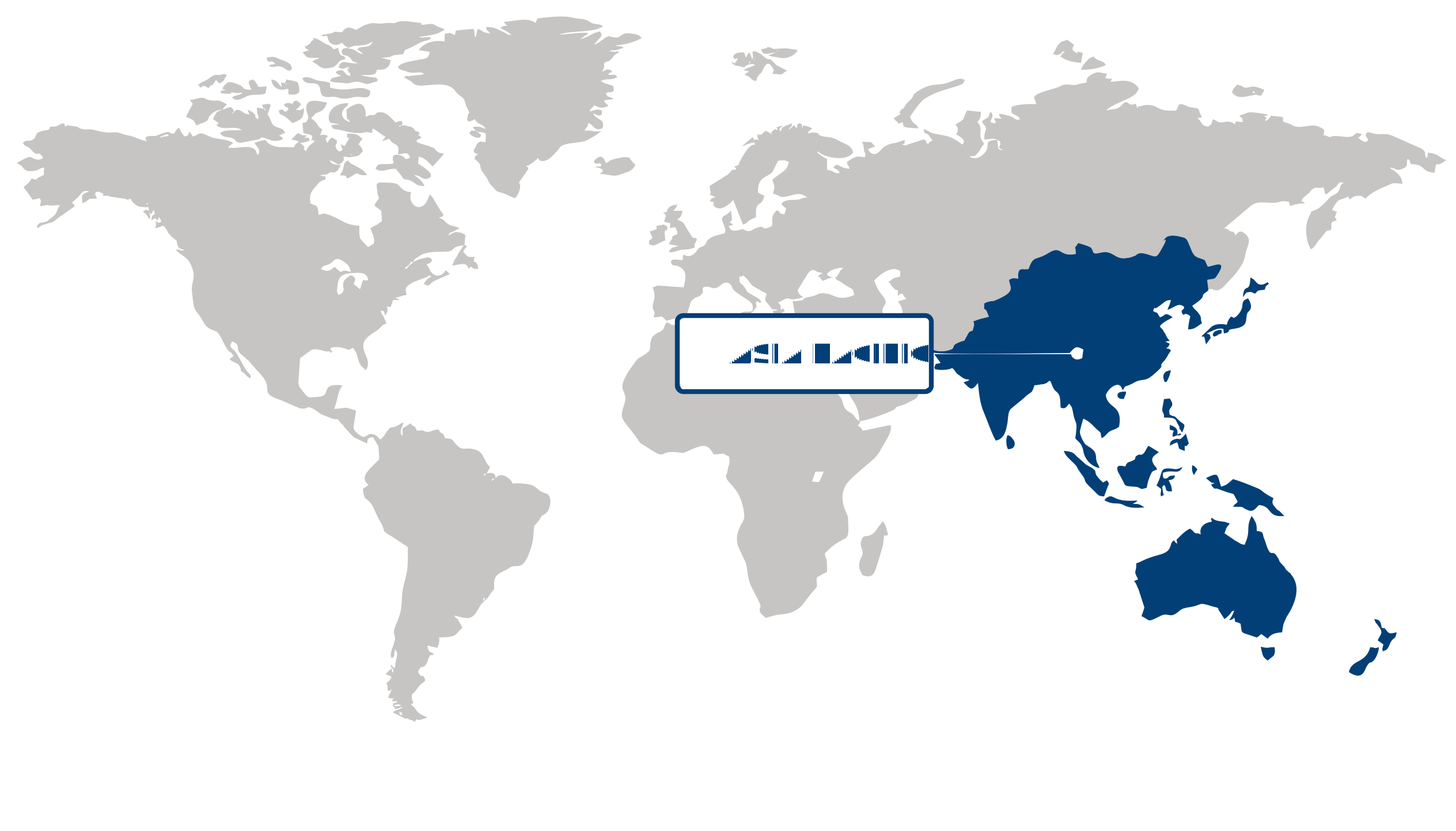
Asia Pacific dominated the thermoelectric generator market, capturing approximately 41% of the global share in 2025. This leadership is primarily driven by the region’s robust electronics manufacturing industry and extensive waste heat generation from industrial activities. Countries like South Korea and Taiwan have established advanced semiconductor and electronics sectors that fuel demand for thermoelectric solutions, backed by government incentives and sustainability policies aimed at enhancing energy efficiency. According to the Japan External Trade Organization (JETRO), the region's focus on reducing carbon footprints in manufacturing further accelerates adoption. The integration of cutting-edge technologies in supply chains and the region’s resilience amid global economic fluctuations position Asia Pacific as a critical hub, offering significant growth avenues for market participants investing in thermoelectric generator innovations.
Japan is positioned as a pivotal hub in the Asia Pacific thermoelectric generator market, leveraging its advanced industrial infrastructure and stringent energy efficiency regulations. The country’s commitment to reducing industrial carbon emissions, supported by policies from the Ministry of Economy, Trade and Industry (METI), encourages widespread application of thermoelectric generators in sectors such as automotive and electronics manufacturing. Corporate initiatives, like Toshiba's recent investment in thermoelectric R&D, underline Japan's strategic push to improve waste heat recovery technologies. This focus not only sustains domestic demand but also drives technological advancements that reinforce Asia Pacific’s regional prominence.
China anchors Asia Pacific’s thermoelectric generator market with its vast manufacturing base and aggressive energy-saving mandates. The government's 14th Five-Year Plan emphasizes industrial sustainability and energy efficiency, promoting thermoelectric technology adoption across heavy industries like steel and cement production. Leading companies such as China Huadian Corporation have incorporated thermoelectric generators into power plants to harness waste heat, increasing operational efficiency. This dynamic, combined with a large domestic market and expanding export opportunities, underpins China’s role as a growth engine, further strengthening the Asia Pacific region's influential position within the global thermoelectric generator market.
North America Market Analysis:
North America emerged as the fastest-growing region in the thermoelectric generator market, registering a robust CAGR of 12.33%. This dynamic expansion is primarily driven by surging investments in clean energy technologies and a well-established advanced R&D infrastructure. The region’s commitment to sustainability, backed by policy incentives from agencies such as the U.S. Department of Energy and innovation efforts by organizations like the National Renewable Energy Laboratory (NREL), has stimulated significant demand for efficient, waste-heat recovery solutions, including thermoelectric generators. Additionally, technological advancements integrating thermoelectric systems into automotive and aerospace sectors further underpin regional growth. As industries intensify decarbonization efforts and prioritize energy efficiency, North America presents significant potential for market players to capitalize on evolving consumer preferences, lucrative government subsidies, and a robust ecosystem fostering cutting-edge clean energy innovations.
The U.S. plays a critical role within North America’s thermoelectric generator market due to its substantial investment in clean energy and pioneering R&D capabilities. U.S.-based entities have driven the adoption of thermoelectric technology across automotive and industrial segments, supported by the Department of Energy’s funding initiatives aimed at optimizing waste heat recovery systems. For instance, General Motors’ announcement of integrating thermoelectric modules into vehicle exhaust systems underscores a shift toward energy efficiency that aligns with federal emissions reduction targets. Moreover, American consumers and corporations are increasingly favoring sustainable technologies, reinforcing demand and innovation cycles. This strategic positioning of the U.S. highlights untapped opportunities for stakeholders to leverage policy support and advanced technology clusters, reinforcing North America’s leadership in the global thermoelectric generator market.
Europe Market Trends:
Europe maintained a notable presence in the thermoelectric generator market, exhibiting moderate growth driven by its robust emphasis on sustainable energy solutions and stringent environmental regulations. The region’s commitment to reducing carbon emissions, supported by frameworks such as the European Green Deal, has catalyzed investment in alternative power generation technologies. Corporations like Siemens and ABB have actively integrated thermoelectric innovations to enhance energy efficiency across industrial applications. Regulatory bodies including the European Environment Agency have further reinforced adoption by recommending energy recovery measures. Moreover, Europe's diversified manufacturing base and advanced R&D infrastructure contribute to steady demand shifts favoring cleaner, decentralized energy solutions. These dynamics, coupled with the region’s emphasis on digital transformation and industrial automation, underscore Europe’s strategic position as a growth hub in the thermoelectric generator market, presenting significant opportunities for stakeholders prioritizing sustainability and technological advancement.
Germany plays a pivotal role within the European thermoelectric generator market, propelled by its industrial sector’s drive towards energy efficiency and decarbonization. The German government’s Energiewende policy fosters renewable integration and energy recovery, directly supporting thermoelectric applications in manufacturing and transportation. Companies like Bosch and Infineon Technologies have announced projects leveraging thermoelectric technology to optimize waste heat recovery, reflecting strong commercial and technological momentum. Germany’s well-established supply chain and high innovation capacity ensure scaling potential, reinforcing its status as a regional leader. Consequently, Germany’s strategic focus on sustainable industrial practices and innovation makes it a cornerstone in expanding Europe’s thermoelectric generator market footprint.
France also contributes meaningfully to Europe’s thermoelectric generator market, with its growing investment in clean energy and increased public-private partnerships driving adoption. The country’s energy transition goals under the Multiannual Energy Plan (PPE) promote energy efficiency initiatives where thermoelectric technology can play a critical role, particularly within transportation and building sectors. Entities such as EDF have supported pilot projects integrating thermoelectric generators to harness waste heat from power plants, showcasing practical applications aligned with regulatory incentives. France’s emphasis on innovation ecosystems and collaboration enhances its competitive intensity while facilitating knowledge exchange. This collaborative yet policy-driven environment positions France as an important regional growth center, bolstering Europe’s overall potential in the thermoelectric generator market.
| Parameter | North America | Asia Pacific | Europe | Latin America | MEA |
|---|---|---|---|---|---|
| Innovation Hub i Scale Nascent Developing Advanced | |||||
| Cost-Sensitive Region i Scale Low Medium High | |||||
| Regulatory Environment i Scale Restrictive Neutral Supportive | |||||
| Demand Drivers i Scale Weak Moderate Strong | |||||
| Development Stage i Scale Emerging Developing Developed | |||||
| Adoption Rate i Scale Low Medium High | |||||
| New Entrants / Startups i Scale Sparse Moderate Dense | |||||
| Macro Indicators i Scale Weak Stable Strong |
Segment Leadership and Growth Trends
Thermoelectric Generator Market Share (%), by Source, 2026
Go beyond the chart, access full insights & data tables
Request Free Sample ReportWaste heat recovery represented the largest share in the thermoelectric generator market in 2025, driven by escalating demand for systems that convert otherwise wasted thermal energy into electrical power. This segment leads as industries and power plants increasingly prioritize energy efficiency and sustainability, aligning with global regulatory pressure from agencies like the U.S. Department of Energy promoting waste heat utilization technologies. Additionally, advances in thermoelectric materials and integrated system designs from firms such as Alphabet’s X lab have enhanced conversion efficiency, meeting growing customer preferences for low-carbon solutions. The segment offers strategic advantages by enabling both established industrial players and startups to tap into cost-saving and environmental compliance opportunities. Given ongoing investments in energy recovery infrastructure and tightening emission norms worldwide, waste heat recovery is poised to maintain its market leadership in the foreseeable future.
Analysis by Application
The automotive segment dominated the thermoelectric generator market in 2025, fueled by rising adoption of thermoelectric systems in vehicles to augment fuel efficiency and energy recovery. Automakers, including Toyota and General Motors, increasingly integrate these generators to capture exhaust heat, reflecting a broader shift towards electrification and stricter fuel economy standards mandated by entities such as the European Environment Agency. Customer demand for greener transport solutions and the competitive impetus to reduce carbon footprints underscore this segment’s prominence. The automotive application opens strategic pathways for suppliers to collaborate on innovative designs fitting diverse vehicle types. With global emphasis on reducing vehicular emissions and ongoing advancements in thermoelectric technology for enhanced power output, the automotive segment remains critical for sustaining momentum within the thermoelectric generator market.
| Segment | Sub-Segment | Largest Segment | Fastest Growing |
|---|---|---|---|
| Source | Waste Heat Recovery, Energy Harvesting, Direct Power Generation, Co-Generation | ||
| Application | Automotive, Aerospace & Defense, Industrial, Others |
Competitive Landscape and Market Positioning
The competitive landscape reveals pronounced emphasis on product differentiation and technology integration among the leading firms. Several players have expanded their portfolios through targeted collaborations and adoption of novel thermoelectric materials, improving device efficiencies and operational flexibility. For instance, Hi-Z Technology’s focus on advanced semiconductor modules complements Tellurex Corp's efforts to optimize generator architectures. Meanwhile, Gentherm and ThermoEnergy Corporation focus on embedding smart sensor technologies, enhancing system intelligence across applications. This continuous refinement not only fosters resilience against competition but also accelerates innovation trajectories, reinforcing their leadership in niche sub-segments and emergent applications.
Strategic / Actionable Recommendations for Regional Players
North America’s players should explore synergistic partnerships with automotive and wearable tech companies to integrate thermoelectric solutions into emerging consumer electronics and vehicle thermal management systems, while intensifying investments in scalable manufacturing techniques to reduce costs and bolster market responsiveness.
In Asia Pacific, leveraging material science breakthroughs and aligning with government-backed sustainability initiatives can unlock growth, especially by targeting industrial waste heat recovery and rural electrification projects that benefit from low-maintenance, durable thermoelectric solutions.
European players are advised to deepen collaboration with research institutions specializing in eco-efficient technologies, focusing on modular designs and IoT-enabled energy harvesting devices, which can address stringent environmental regulations and evolving energy efficiency demands across commercial and residential sectors.
| Company | Market Share | Company Revenue | Revenue CAGR (%) | Product Portfolio | Geographic Presence | Innovation / R&D Focus | Strategic Developments |
|---|---|---|---|---|---|---|---|
| No companies available. | |||||||
Industry Development/News
| Company Name | Date | Key Development |
|---|
Customize Your Report
Explore examples of how this report can be tailored to different research needs, including custom segments, additional topics or chapters, and related reports. Click a section of the wheel or its numbered marker to explore the available options.
Thermoelectric Generator Market — Custom Segments
| Segment | Sub-Segment |
|---|---|
| No segment data available. | |
Thermoelectric Generator Market — Custom TOC
| Custom Chapter | Custom Details | ||
|---|---|---|---|
| No custom TOC data available. | |||
Need a different cut of the data?
Request Custom ResearchWhat is the projected value of the thermoelectric generator industry by 2035?
In which region is the thermoelectric generator market most concentrated?
In which region is the thermoelectric generator sector expanding most rapidly?
What factors give waste heat recovery segment a competitive edge in the thermoelectric generator sector?
Which is the largest sub-segment within the application segment for thermoelectric generator industry?
Which companies are driving growth in the thermoelectric generator landscape?
Our Clients
"The information presented in the report was genuinely insightful. The data was clear and easy to understand, which made it much easier to interpret the findings."
Amara Raja Group
"The responsiveness and professionalism exhibited by the team were exemplary. They were readily available to address queries, provide clarifications, and offer additional insights."
ONGC
"The reports offered a comprehensive analysis of various segments within the market. The detailed insights into market trends, and regulatory landscapes were excellent."
TotalEnergies
Our Research Team & Methodology
Every Fundamental Business Insights report is built by a dedicated vertical research team, validated through a structured primary-and-secondary methodology, and reviewed for accuracy before it reaches you.
Research Team Overview
Prepared by the Energy & Power Research Team
Delivery
Published
Demand
Available
Support
Trust & Compliance
Research Domains
10 coverage areasResearch Intelligence
| Source | Reference |
|---|---|
| International Energy Agency (IEA) | www.iea.org |
| U.S. Energy Information Administration (EIA) | www.eia.gov |
| International Renewable Energy Agency (IRENA) | www.irena.org |
| International Electrotechnical Commission (IEC) | www.iec.ch |
| International Organization for Standardization (ISO) | www.iso.org |
| IEEE | www.ieee.org |
| CIGRE (International Council on Large Electric Systems) | www.cigre.org |
| World Energy Council (WEC) | www.worldenergy.org |
| U.S. Department of Energy (DOE) | www.energy.gov |
| International Atomic Energy Agency (IAEA) | www.iaea.org |
| American Petroleum Institute (API) | www.api.org |
| Society of Petroleum Engineers (SPE) | www.spe.org |
| Hydrogen Council | hydrogencouncil.com |
| Battery Council International (BCI) | batterycouncil.org |
| Global Wind Energy Council (GWEC) | gwec.net |
| SolarPower Europe | www.solarpowereurope.org |
| World Bioenergy Association (WBA) | worldbioenergy.org |
| International Hydropower Association (IHA) | www.hydropower.org |
| Edison Electric Institute (EEI) | www.eei.org |
| National Renewable Energy Laboratory (NREL) | www.nrel.gov |
Research Workflow & Quality Assurance
Data Collection
Verified information gathered through primary and secondary research.
Data Triangulation
Cross-validation using multiple independent data sources.
Forecast Modelling
Market estimates developed using historical trends and analytical models.
Analyst Validation
Findings reviewed by domain experts for accuracy and consistency.
Editorial & Quality Review
Final editorial, quality, and compliance checks before publication.
Final Publication
Released after successful completion of the internal review process.
Report Coverage
📊 Market Assessment
- Market Size & Forecast
- Market Segmentation
- Regional Analysis
- Growth Drivers & Challenges
- Market Dynamics
🏢 Competitive Intelligence
- Competitive Landscape
- Company Profiles
- Competitive Benchmarking
- Mergers & Acquisitions
- Market Share Analysis or Key Company Strategies
🔍 Strategic Analysis
- Value Chain Analysis
- Porter's Five Forces
- PESTLE Analysis
- Pricing Trends
- Supply-Demand Analysis
🚀 Future Outlook
- Technology Landscape
- Regulatory Landscape
- Investment & Funding Landscape
- Emerging Opportunities
- Future Market Outlook
Have a question about this report or need a custom scope?
Request Customization