Tankless Water Heater Market Size & Growth Forecast 2027–2036, By Segments (Product, Application), Regional Demand Trends (North America, Asia Pacific, Europe), Key Country Insights (U.S., Japan, South Korea, Germany, France, Italy), and Competitive Landscape
Market Size and Growth Outlook
Tankless Water Heater Market size was around USD 4.7 billion in 2026 and is slated to grow at a 9.88% CAGR from 2027 to 2036, exceeding USD 12.06 billion by 2036. The industry revenue for 2027 is calculated at USD 5.09 billion.
Get more details on this report
Request Free Sample ReportTankless Water Heater Market Intelligence Snapshot
Regional Market Dynamics
- Europe held a 35.51% share in 2026, driven by widespread adoption of energy-efficient water heating, replacement demand in mature buildings, and strong consumer preference for compact, on-demand systems.
- North America is projected to grow at a 9.94% CAGR, supported by rising retrofit activity, increasing demand for energy-efficient home systems, and stronger adoption in new residential construction.
Segment Momentum
- Electric Tankless Water Heaters held a 67.12% share in 2026 because they are easier to install where electrical connections already exist, making them well suited for residential and light commercial replacement projects.
- Gas Tankless Water Heaters are growing fastest as buyers seek higher-capacity, continuous hot water delivery in properties with existing gas infrastructure, making them attractive for heavier household and commercial usage.
Market Expansion Drivers
- Rising demand for energy-efficient on-demand water heating systems reducing utility costs.
- Smart home integration and compact urban housing boosting tankless heater adoption.
- Government decarbonization policies and boiler phase-out mandates accelerating market transition.
Leading Market Participants
- Leading players in the tankless water heater market include A. O. Smith Corporation (United States), Rinnai Corporation (Japan), Rheem Manufacturing Company (United States), Noritz Corporation (Japan), Navien, Inc. (South Korea), Bradford White Corporation (United States), Robert Bosch GmbH (Germany), Stiebel Eltron GmbH & Co. KG (Germany), Takagi Industrial Co., Ltd. (Japan), EcoSmart Green Energy Products, Inc. (United States).
Global Market Forecast Snapshot
Market Outlook
- 2026 Market Size: USD 4.7 billion
- 2027 Estimated Market Size: USD 5.09 billion.
- Projected Market Size: USD 12.06 billion by 2036
- Growth Forecast: 9.88% CAGR (2027-2036)
Regional and Segment Outlook
- Leading Regional Market: Europe
- High-Growth Regional Hub: North America
- Core Revenue Segment: Electric Tankless Water Heater (Product) | Residential (Application)
- Emerging Opportunity Segment: Gas Tankless Water Heater (Product) | Residential (Application)
Market Growth Drivers and Industry Trends
Rising demand for energy-efficient on-demand water heating systems reducing utility costs
Growing awareness of household energy consumption and operating expenses is strengthening demand for efficient water heating solutions, and the tankless water heater market is benefiting from the shift toward on-demand heating technologies. Unlike conventional storage-based systems that continuously maintain a reservoir of heated water, tankless units activate heating when hot water is required, reducing energy losses associated with standby heating. This operating model is particularly attractive to residential and commercial users seeking to control utility expenses while maintaining reliable access to hot water. Rising emphasis on energy conservation is also encouraging consumers, property developers, and facility operators to consider heating equipment with improved energy utilization, while advances in heating elements, temperature controls, and system design are supporting more consistent performance across different usage conditions.
Smart home integration and compact urban housing boosting tankless heater adoption
The growing adoption of connected household technologies is creating new opportunities for intelligent water heating systems, with smart home integration making the tankless water heater market more attractive to technology-oriented consumers. Modern residential environments increasingly incorporate connected appliances that can be monitored and controlled through digital interfaces, allowing users to adjust temperatures, track operating conditions, and manage energy consumption more conveniently. At the same time, urban housing is becoming more space-conscious, particularly in apartments and smaller residential units where conventional storage tanks can occupy valuable floor area. Compact tankless systems can be installed in relatively limited spaces and can complement digitally managed home environments through connected controls and automated settings, supporting their suitability for contemporary urban residences.
Government decarbonization policies and boiler phase-out mandates accelerating market transition
Government efforts to reduce building-related emissions are encouraging a transition away from conventional fossil-fuel-dependent heating equipment, creating a supportive environment for the tankless water heater market. Decarbonization strategies increasingly emphasize higher-efficiency heating technologies, electrification, and reductions in energy consumption across residential and commercial buildings. Boiler phase-out initiatives and tighter efficiency requirements can encourage property owners to reconsider existing water heating infrastructure when systems reach replacement or renovation cycles. Electric tankless heaters can align with these transition efforts by providing hot water without the need for on-site combustion, particularly where electricity is increasingly integrated with lower-carbon energy sources. Such policy-driven changes can also influence construction specifications, retrofit decisions, and equipment replacement preferences as building stakeholders seek solutions that align with evolving energy and emissions requirements.
| Growth Driver | Impact on CAGR | Regulatory Influence | Geographic Relevance | Adoption Rate | Impact Timeline |
|---|---|---|---|---|---|
| Rising demand for energy-efficient on-demand water heating systems reducing utility costs | 2.50% | High | Europe, North America | High | Near Term |
| Smart home integration and compact urban housing boosting tankless heater adoption | 2.00% | Moderate | Asia Pacific, North America, Europe | High | Near Term |
| Government decarbonization policies and boiler phase-out mandates accelerating market transition | 2.80% | High | Europe, North America | High | Near Term |
Unlock insights tailored to your business with our bespoke market research solutions.
Click to get your customized report now.
Regional Demand Dynamics
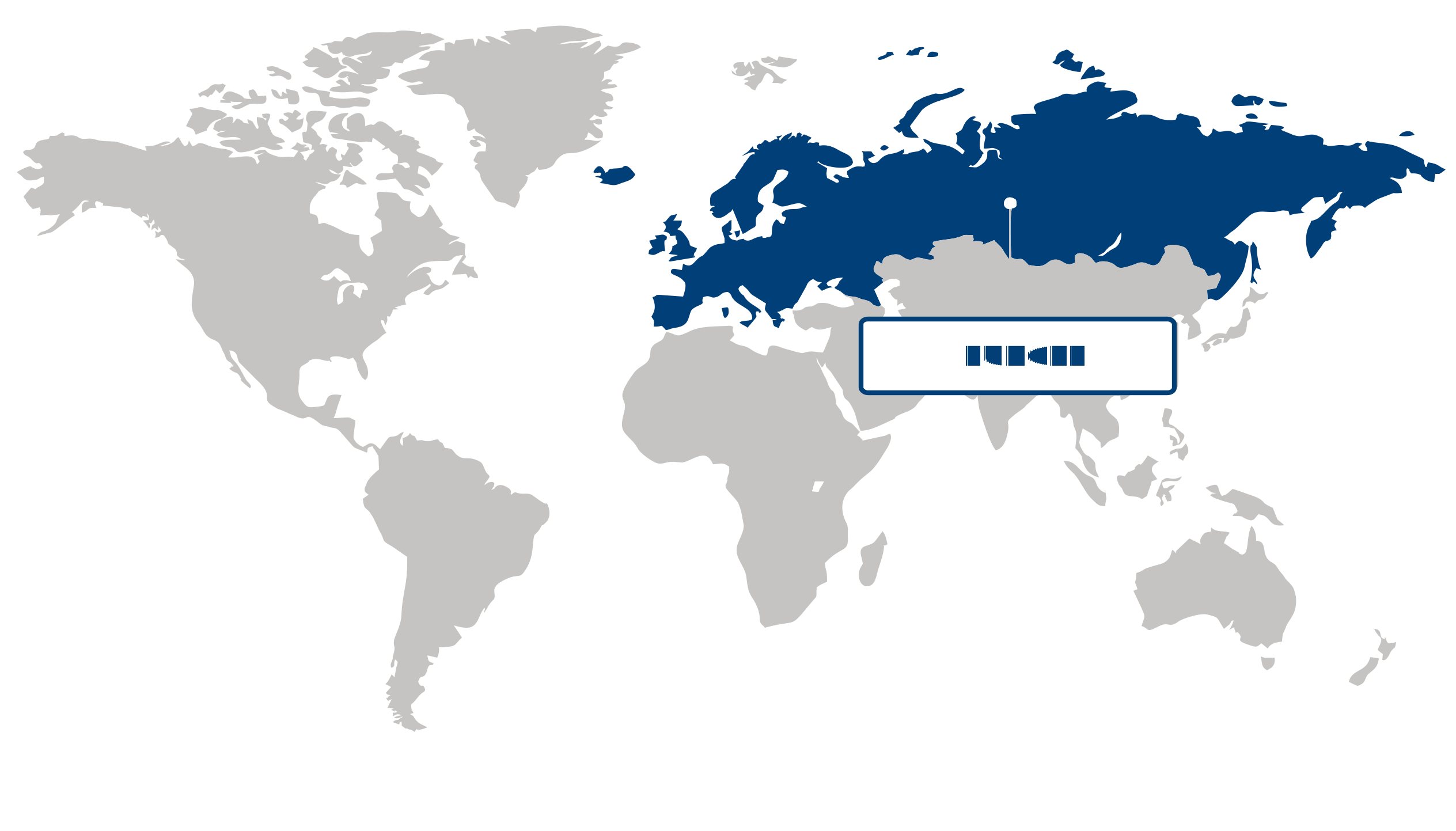
Europe (Largest Region)
Europe accounted for the largest share of the tankless water heater market at 35.51% in 2026, supported by strong energy-efficiency priorities, established building standards, and growing demand for technologies that reduce unnecessary energy consumption. Tankless systems heat water on demand, making them attractive for residential and commercial applications where efficient energy use and space optimization are important. The region's emphasis on decarbonizing buildings and improving household energy performance is encouraging consumers and property developers to consider high-efficiency water-heating solutions. Renovation of existing housing stock, increasing adoption of modern heating technologies, and consumer interest in reducing utility costs further strengthen demand, while compact equipment designs support installation in space-constrained properties.
North America (Fastest-Growing Region)
North America is the fastest-growing regional market as households and commercial facilities increasingly seek energy-efficient alternatives to conventional storage-based water heaters. Growing awareness of operating costs, demand for continuous hot-water availability, and interest in compact equipment are encouraging adoption across residential construction and replacement applications. The region's active housing market and ongoing renovation activity provide additional opportunities for tankless systems, particularly where space efficiency and long-term energy performance are priorities. Advances in heating controls, improved system efficiency, and greater availability of professional installation services are also supporting market development. Increasing consumer awareness of modern water-heating technologies is helping tankless solutions gain broader acceptance beyond early adopters.
| Parameter | North America | Asia Pacific | Europe | Latin America | MEA |
|---|---|---|---|---|---|
| Innovation Hub i Scale Nascent Developing Advanced | |||||
| Cost-Sensitive Region i Scale Low Medium High | |||||
| Regulatory Environment i Scale Restrictive Neutral Supportive | |||||
| Demand Drivers i Scale Weak Moderate Strong | |||||
| Development Stage i Scale Emerging Developing Developed | |||||
| Adoption Rate i Scale Low Medium High | |||||
| New Entrants / Startups i Scale Sparse Moderate Dense | |||||
| Macro Indicators i Scale Weak Stable Strong |
Key Country Insights
Germany 🇩🇪
Efficient Building SystemsGermany incorporates tankless water heaters into residential and commercial buildings seeking improved energy performance. Product demand emphasizes high-efficiency heating technologies, compact designs, and compatibility with modern building energy standards.
France 🇫🇷
Low-Emission Heating ChoiceFrance is encouraging adoption of tankless water heaters as part of broader building efficiency improvements and heating modernization. Product selection increasingly reflects energy performance, installation flexibility, and compatibility with sustainable building practices.
Italy 🇮🇹
Renovation-Driven DemandItaly is seeing steady demand for tankless water heaters through residential renovation projects and compact housing upgrades. Consumers prioritize dependable systems that reduce energy consumption while fitting efficiently into existing building layouts.
Japan 🇯🇵
Compact Living SolutionsJapan maintains strong demand for tankless water heaters due to limited living space and preference for efficient hot water systems. Manufacturers focus on compact, reliable units with advanced controls that support everyday residential use.
South Korea 🇰🇷
Smart Home HeatingSouth Korea is integrating tankless water heaters into modern residential developments and smart home ecosystems. Consumers increasingly prefer connected, energy-efficient systems that deliver reliable hot water while optimizing household energy consumption.
United States 🇺🇸
Residential Efficiency FocusThe U.S. tankless water heater market is supported by growing interest in energy-efficient residential upgrades and space-saving appliances. Manufacturers are introducing smart features and improved installation flexibility to meet evolving homeowner and commercial requirements.
Segment Leadership and Growth Trends
Tankless Water Heater Market Share (%), by Product, 2026
Go beyond the chart, access full insights & data tables
Request Free Sample ReportProduct Segment Analysis: Electric Tankless Water Heater (Largest Segment) vs Gas Tankless Water Heater (Fastest-Growing Segment)
The electric tankless water heater segment led the tankless water heater market in 2026 with a 67.12% share, driven by its compact design, ease of installation, and suitability for applications where space efficiency and on-demand hot water are priorities. Electric systems can be deployed without conventional fuel-storage infrastructure and are well suited to residential settings, apartments, and smaller properties. Increasing consumer interest in energy-efficient appliances, combined with the convenience of continuous hot-water availability, is reinforcing demand for electric tankless systems.
Gas tankless water heaters are gaining momentum at a faster rate as consumers and commercial users seek high-capacity systems capable of delivering continuous hot water for applications with substantial demand. Their ability to provide rapid heating and support multiple hot-water outlets makes them attractive where higher flow requirements are important. Growing awareness of tankless heating technologies and demand for efficient alternatives to conventional storage heaters are supporting wider adoption of gas-powered systems.
Application Segment Analysis: Residential (Largest & Fastest-Growing Segment)
Residential applications dominated the tankless water heater market in 2026 with a 69.89% share and also represent the fastest-growing application segment. Tankless systems are increasingly attractive to households because they provide hot water on demand while avoiding the space requirements associated with storage tanks. Their compact footprint, potential energy savings, and ability to provide a continuous hot-water supply align with growing household interest in efficient and convenient water-heating solutions. Rising residential construction, renovation activity, and consumer preference for modern energy-efficient appliances are further supporting segment expansion.
| Segment | Sub-Segment | Largest Segment | Fastest Growing |
|---|---|---|---|
| Product | Electric Tankless Water Heater, Gas Tankless Water Heater | Electric Tankless Water Heater | Gas Tankless Water Heater |
| Application | Residential, Commercial | Residential | Residential |
Competitive Landscape and Market Positioning
Key companies in the tankless water heater market:
1. A. O. Smith Corporation (United States)
2. Rinnai Corporation (Japan)
3. Rheem Manufacturing Company (United States)
4. Noritz Corporation (Japan)
5. Navien Inc. (South Korea)
6. Bradford White Corporation (United States)
7. Robert Bosch GmbH (Germany)
8. Stiebel Eltron GmbH & Co. KG (Germany)
9. Takagi Industrial Co. Ltd. (Japan)
10. EcoSmart Green Energy Products Inc. (United States)
The tankless water heater market is driven by increasing demand for energy-efficient and space-saving heating systems. Consumer preference for on-demand hot water solutions is supporting steady adoption. Innovation is improving heating efficiency and system compactness.
| Company | Market Share | Company Revenue | Revenue CAGR (%) | Product Portfolio | Geographic Presence | Innovation / R&D Focus | Strategic Developments |
|---|---|---|---|---|---|---|---|
| A. O. Smith Corporation (United States) | |||||||
| Rinnai Corporation (Japan) | |||||||
| Rheem Manufacturing Company (United States) | |||||||
| Noritz Corporation (Japan) | |||||||
| Navien Inc. (South Korea) | |||||||
| Bradford White Corporation (United States) | |||||||
| Robert Bosch GmbH (Germany) | |||||||
| Stiebel Eltron GmbH & Co. KG (Germany) | |||||||
| Takagi Industrial Co. Ltd. (Japan) | |||||||
| EcoSmart Green Energy Products Inc. (United States). |
Industry Development/News
| Company Name | Date | Key Development |
|---|---|---|
| Rinnai | Apr-25 | Rinnai presented its next-generation smart water heating solutions at IBS 2026, featuring enhanced connectivity across its natural gas, propane, and electric portfolios. The focus on digitally enabled systems reinforces the company's competitive positioning in the high-efficiency smart home market, prioritizing real-time monitoring and energy management. |
| Lochinvar | Mar-25 | Lochinvar introduced the XCalibur high-efficiency condensing tankless water heater line, featuring proprietary X3 scale prevention technology. The launch addresses critical market demand for increased durability and reduced maintenance requirements in both residential and commercial sectors, enhancing the overall performance lifecycle of high-efficiency water heating systems. |
| Navien | Mar-25 | Navien debuted an expanded lineup of integrated HVAC and water treatment solutions at the 2025 AHR Expo. This strategic push into multi-system home comfort indicates a shift toward offering comprehensive, energy-efficient residential and commercial water management systems rather than focusing solely on traditional water heating hardware. |
| A. O. Smith | Mar-25 | A. O. Smith acquired Pureit, a prominent water purification business in South Asia. This diversification move expands the company's operational scope beyond traditional water heating into broader residential water treatment systems, supporting a long-term strategy for integrated water management across global markets. |
| Thermomate | Mar-25 | Thermomate launched a compact electric tankless water heater aimed at residential consumers. By prioritizing small-footprint, energy-efficient on-demand heating, the product reflects the company’s focus on the growing market for modern home comfort appliances that offer streamlined installation and reduced operational energy consumption. |
| A. O. Smith | Sep-24 | A. O. Smith launched a new point-of-use (POU) electric tankless water heater engineered for rapid installation in light commercial and residential environments. The unit features integrated leak and scale detection technologies, underscoring the manufacturer's emphasis on smart, durable, and low-maintenance solutions for modern water heating applications. |
| Bosch Thermotechnology | Jan-23 | Bosch Thermotechnology introduced the Tronic 4000 C and 6100 C electric tankless water heater series, designed for point-of-use and whole-house applications. These compact, high-efficiency systems reflect the industry's sustained transition toward scalable and space-saving on-demand heating solutions for diverse residential and light commercial building requirements. |
Customize Your Report
Explore examples of how this report can be tailored to different research needs, including custom segments, additional topics or chapters, and related reports. Click a section of the wheel or its numbered marker to explore the available options.
Tankless Water Heater Market — Custom Segments
| Segment | Sub-Segment |
|---|---|
| Installation Configuration | Indoor Installation, Outdoor Installation, Indoor/Outdoor Convertible Installation |
| Replacement vs. New Installation | New Construction, Replacement & Retrofit |
| Distribution Channel | Direct Sales, Plumbing & HVAC Distributors, Home Improvement & Specialty Retailers, Online Retail |
Tankless Water Heater Market — Custom TOC
| Custom Chapter | Custom Details |
|---|---|
| Residential Electrification and Energy Efficiency Adoption |
|
| Smart Water Heating Market Evolution |
|
| Installation Ecosystem Assessment |
|
Need a different cut of the data?
Request Custom ResearchHow much is the tankless water heater market worth?
How will the tankless water heater industry grow in terms of size and CAGR by 2036?
How is the shift toward energy-efficient housing upgrades influencing purchasing decisions in the tankless water heater market?
Why is residential adoption emerging as both the largest and fastest-growing application in the tankless water heater market?
Why do Electric Tankless Water Heaters lead the tankless water heater market?
Why are Gas Tankless Water Heaters the fastest-growing product segment?
Why is Europe the leading region in the tankless water heater market?
What is driving growth in the North American tankless water heater market?
What are the key competitors in the tankless water heater landscape?
Our Clients
"The report provided us with a clear direction, and the level of detail was beyond what we expected. I would definitely recommend their services to others."
Haier Appliances
"The collaboration with Fundamental Business Insights has added significant value to our decision-making process, and we look forward to continuing this partnership for our future market research requirements."
Luxottica Group S.p.A.
"The team at FBI delivered an exceptional research report. The insights on industry innovations were particularly impressive and added a lot of value to the overall report."
Nike
Our Research Team & Methodology
Every Fundamental Business Insights report is built by a dedicated vertical research team, validated through a structured primary-and-secondary methodology, and reviewed for accuracy before it reaches you.
Research Team Overview
Prepared by the Consumer Goods & Services Research Team
Delivery
Published
Demand
Available
Support
Trust & Compliance
Research Domains
10 coverage areasResearch Intelligence
| Source | Reference |
|---|---|
| International Organization for Standardization (ISO) | www.iso.org |
| ASTM International | www.astm.org |
| U.S. Consumer Product Safety Commission (CPSC) | www.cpsc.gov |
| European Commission – Consumer Safety | ec.europa.eu/safety-gate |
| Consumer Technology Association (CTA) | www.cta.tech |
| National Retail Federation (NRF) | nrf.com |
| World Retail Congress | www.worldretailcongress.com |
| World Travel & Tourism Council (WTTC) | wttc.org |
| UN Tourism | www.unwto.org |
| Personal Care Products Council (PCPC) | www.personalcarecouncil.org |
| Cosmetics Europe | cosmeticseurope.eu |
| International Housewares Association (IHA) | www.housewares.org |
| American Apparel & Footwear Association (AAFA) | www.aafaglobal.org |
| World Federation of the Sporting Goods Industry (WFSGI) | wfsgi.org |
| Juvenile Products Manufacturers Association (JPMA) | www.jpma.org |
| Pet Industry Joint Advisory Council (PIJAC) | pijac.org |
| International Council of Toy Industries (ICTI) | www.toy-icti.org |
| International Association of Amusement Parks and Attractions (IAAPA) | iaapa.org |
| Organisation for Economic Co-operation and Development (OECD) | www.oecd.org |
| World Bank Data | data.worldbank.org |
Research Workflow & Quality Assurance
Data Collection
Verified information gathered through primary and secondary research.
Data Triangulation
Cross-validation using multiple independent data sources.
Forecast Modelling
Market estimates developed using historical trends and analytical models.
Analyst Validation
Findings reviewed by domain experts for accuracy and consistency.
Editorial & Quality Review
Final editorial, quality, and compliance checks before publication.
Final Publication
Released after successful completion of the internal review process.
Report Coverage
📊 Market Assessment
- Market Size & Forecast
- Market Segmentation
- Regional Analysis
- Growth Drivers & Challenges
- Market Dynamics
🏢 Competitive Intelligence
- Competitive Landscape
- Company Profiles
- Competitive Benchmarking
- Mergers & Acquisitions
- Market Share Analysis or Key Company Strategies
🔍 Strategic Analysis
- Value Chain Analysis
- Porter's Five Forces
- PESTLE Analysis
- Pricing Trends
- Supply-Demand Analysis
🚀 Future Outlook
- Technology Landscape
- Regulatory Landscape
- Investment & Funding Landscape
- Emerging Opportunities
- Future Market Outlook
Have a question about this report or need a custom scope?
Request Customization