Sustainability & Energy Management Software Market Size & Forecasts 2026-2035, By Segments (Software, Module, End Use), Growth Opportunities, Innovation Landscape, Regulatory Shifts, Strategic Regional Insights (U.S., Japan, China, South Korea, UK, Germany, France), and Competitive Dynamics (Enablon, Schneider Electric, Siemens, IBM, SAP)
Market Size and Growth Outlook
Sustainability & Energy Management Software Market size is projected to grow steadily from USD 2.23 billion in 2025 to USD 6.68 billion by 2035, demonstrating a CAGR exceeding 11.6% through the forecast period (2026-2035). The 2026 revenue is estimated at USD 2.46 billion.
Get more details on this report
Request Free Sample ReportSustainability & Energy Management Software Market Intelligence Snapshot
Regional Market Dynamics
Segment Momentum
Market Expansion Drivers
Leading Market Participants
Global Market Forecast Snapshot
Market Outlook
Regional and Segment Outlook
Market Growth Drivers and Industry Trends
The incorporation of AI-driven energy optimization tools is revolutionizing the sustainability & energy management software market by enabling highly efficient, data-driven decision-making. Organizations like Siemens and Schneider Electric are deploying AI algorithms to analyze consumption patterns and predict energy demand, improving operational efficiency while reducing waste. This digital transformation not only meets rising corporate sustainability goals but also supports compliance with evolving environmental standards. For established providers, embedding AI capabilities offers differentiation and upsell opportunities within broader digital solutions. New entrants can leverage AI’s modularity to rapidly develop niche applications targeted at specific sectors such as manufacturing or commercial real estate. As AI technologies continue advancing and become more accessible, energy management platforms will increasingly shift from reactive monitoring to proactive optimization, driving deeper value creation in energy sustainability.
IoT-Enabled Sustainability and Energy Management Platforms
IoT integration is a pivotal growth driver within the sustainability & energy management software market, aggregating real-time data from connected devices to enhance visibility across energy systems. Companies like Honeywell and Johnson Controls have capitalized on IoT sensors embedded in HVAC, lighting, and industrial equipment, allowing for granular tracking of energy consumption and automated control adjustments. This connectivity aligns with heightened demand for transparency in energy sourcing and usage, driven by stakeholder pressures for sustainability and cost reduction. Market incumbents can expand service portfolios by offering end-to-end IoT solutions, while start-ups capitalize on developing interoperable platforms addressing sector-specific needs. The proliferation of compatible IoT devices hotels in the energy ecosystem points to sustained growth and more sophisticated resource management capabilities emerging over the next years.
Government Incentives for Energy Efficiency and ESG Compliance
Government incentives promoting energy efficiency and ESG compliance constitute a critical catalyst accelerating adoption within the sustainability & energy management software market. Initiatives like the U.S. Department of Energy’s Better Buildings Challenge and the European Union’s Green Deal provide funding, tax credits, and regulatory frameworks that lower barriers to digital energy solutions. These policies stimulate investment in software platforms that aid organizations in tracking sustainability metrics and meeting mandatory reporting standards. Incumbent software providers benefit from integrating compliance features into their offerings, creating stickier customer relationships. At the same time, new companies can target incentive programs as entry points to penetrate underserved markets. Continued policy emphasis on net-zero targets and climate resilience ensures this driver will remain a key structural influence shaping the market’s maturation and broadening adoption.
Industry Restraints:
High Initial Implementation Costs and Integration Complexity
The substantial upfront investment required for deploying sustainability and energy management software poses a critical barrier, limiting adoption among cost-sensitive enterprises. Many organizations face operational disruptions when integrating these solutions with legacy IT systems, causing hesitation. For example, the U.S. Department of Energy highlights that complex system interoperability often leads to extended deployment timelines and escalating expenses. This challenge restricts not only small and mid-sized companies with constrained capital but also incumbents wary of ROI uncertainties. Market leaders must therefore develop modular and scalable platforms with clearer value demonstrations to overcome these barriers. As digital transformation accelerates, easing integration complexity and providing flexible pricing models will be pivotal for broader market penetration in the near term.
Fragmented Regulatory Landscape and Compliance Challenges
Divergent environmental regulations across regions impose compliance challenges that slow the harmonized adoption of sustainability software globally. The European Environment Agency reports that varying emissions accounting standards and reporting mandates compel software providers to customize offerings extensively, increasing development costs and delaying time-to-market. These compliance burdens disproportionately affect newcomers lacking resources for multifaceted certification processes while also straining incumbents’ ability to maintain agility. Companies must prioritize adaptable solutions capable of swift regulatory updates to remain competitive. Going forward, unless regulatory frameworks converge or standardize, this fragmentation will persist as a formidable restraint, shaping technology roadmaps and market entry strategies over the medium term.
| Growth Driver | Impact on CAGR | Regulatory Influence | Geographic Relevance | Adoption Rate | Impact Timeline |
|---|---|---|---|---|---|
| Integration of AI-driven energy optimization tools | 4.00% | Short term (≤ 2 yrs) | North America, Europe; Spillover: Asia Pacific | Medium | Fast |
| IoT-enabled sustainability and energy management platforms | 3.80% | Medium term (2–5 yrs) | Europe, North America; Spillover: Asia Pacific | Medium | Moderate |
| Government incentives for energy efficiency and ESG compliance | 3.80% | Long term (5+ yrs) | Europe, Asia Pacific; Spillover: North America | High | Slow |
Unlock insights tailored to your business with our bespoke market research solutions.
Click to get your customized report now.
Regional Demand Dynamics
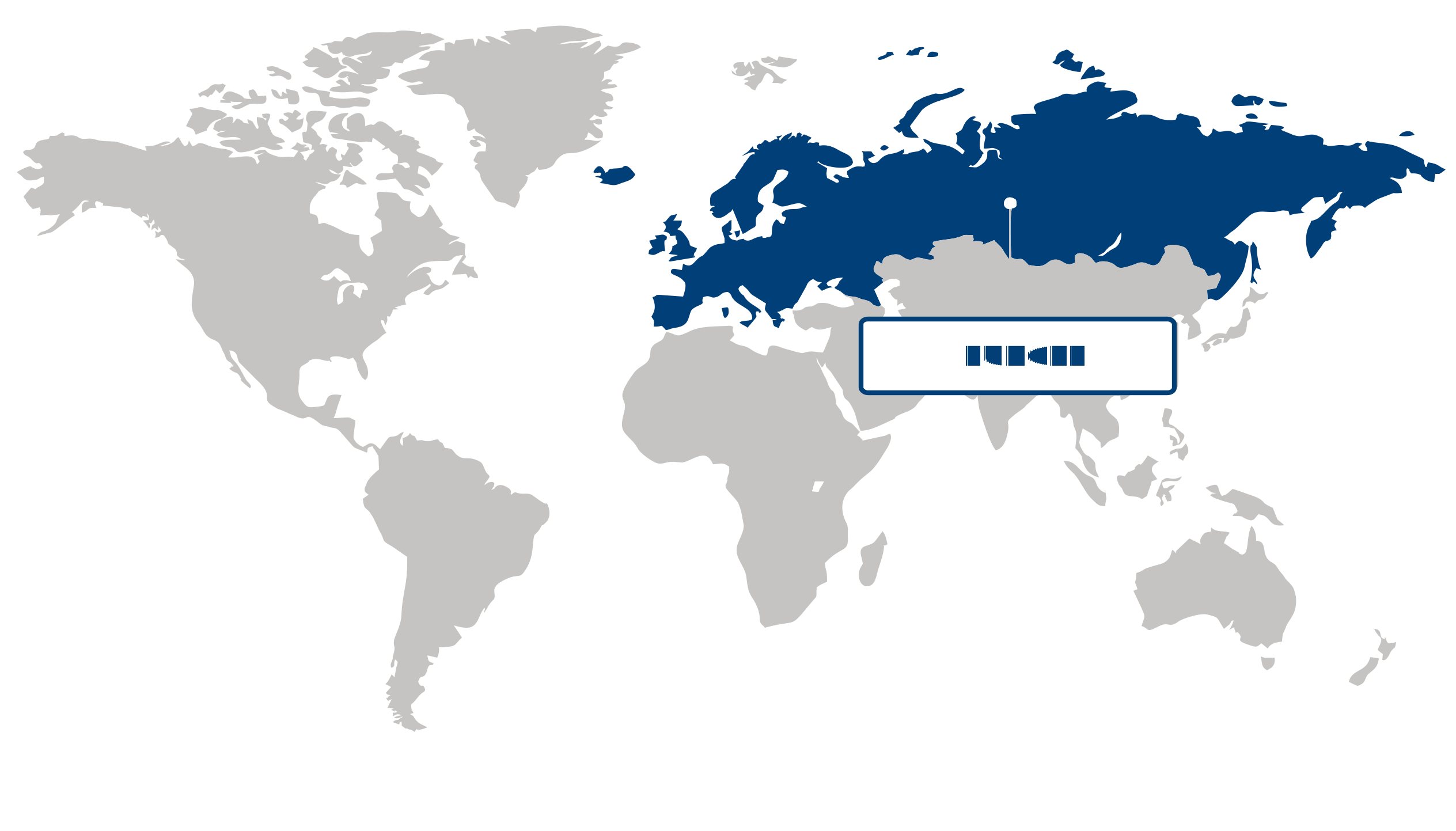
Europe dominated the sustainability & energy management software market by capturing over 42% of the global share in 2025, positioning it as the largest regional player. This leadership is closely tied to the region’s stringent EU carbon regulations and widespread corporate ESG mandates, which compel companies to adopt advanced software solutions for real-time emissions tracking and energy optimization. For instance, the European Environment Agency highlights the EU’s ambitious Green Deal targets, fostering demand for platforms that ensure compliance and enhance sustainability reporting. Additionally, digital transformation initiatives and increasing corporate social responsibility awareness intensify investments in energy management tools. This robust regulatory landscape, combined with Europe’s economic resilience and operational maturity in sustainability, creates fertile ground for continuous innovation and adoption in the sustainability & energy management software market, offering significant growth prospects ahead.
Germany anchors Europe’s sustainability & energy management software market as a powerhouse driven by aggressive national climate policies and industry commitments to carbon neutrality. The German Federal Ministry for Economic Affairs and Climate Action champions digital solutions supporting energy efficiency, influencing energy-intensive sectors to integrate state-of-the-art software for resource management. Siemens’ recent launch of cloud-based energy management platforms exemplifies corporate strategies aligning with regulatory frameworks to optimize consumption and reduce emissions. These dynamics reflect Germany’s pivotal role as an innovation and adoption hub, reinforcing Europe’s dominance while enabling scalable, technology-driven sustainability initiatives.
France plays a critical role in the European sustainability & energy management software market through its proactive governmental support and growing corporate ESG focus. The French Environment and Energy Management Agency (ADEME) actively promotes energy efficiency programs that drive software adoption among public and private sectors. Major French enterprises like EDF invest heavily in energy analytics platforms to meet stricter carbon footprint benchmarks and sustainability goals. This environment of collaboration between regulatory efforts and corporate sustainability strategies underpins France’s contribution to Europe’s leading market position, supporting deeper penetration and customized solutions that elevate the entire region’s technological and operational standards.
Asia Pacific Market Analysis:
Asia Pacific emerged as the fastest-growing region in the sustainability & energy management software market, registering a robust CAGR of 15.9%. This rapid expansion is driven predominantly by the region's intensive focus on industrial energy efficiency programs and a strong push towards green manufacturing. Governments and manufacturers across Asia Pacific are increasingly prioritizing sustainable production processes to meet stringent environmental regulations and corporate sustainability goals. For instance, the Ministry of Economy, Trade and Industry (METI) in Japan has introduced comprehensive energy conservation initiatives targeting heavy industries. Simultaneously, multinational corporations operating in the region are leveraging advanced energy management software to optimize resource use and cut emissions, reflecting a broader shift towards digital transformation and operational excellence. These dynamics underscore significant opportunities for vendors to tap into evolving regulatory landscapes and rising demand for integrated, data-driven sustainability solutions across Asia Pacific’s complex manufacturing ecosystems.
Japan plays a pivotal role within Asia Pacific’s sustainability & energy management software market, anchored by its rigorous industrial energy efficiency standards and technological innovation culture. Japanese enterprises actively integrate software solutions to comply with METI’s Top Runner program, which mandates enhanced energy performance benchmarks. Corporate giants such as Mitsubishi Electric and Hitachi have also publicly committed to smart manufacturing and energy savings, leveraging software to monitor and manage consumption in real time. This proactive stance fuels a market environment conducive to advanced, customizable platforms that address sector-specific needs. Japan’s mature infrastructure and skilled workforce bolster rapid adoption rates, reinforcing its position as a regional leader in sustainable industrial operations.
China’s expansive manufacturing base uniquely contributes to Asia Pacific’s rapid market growth, driven by the government’s Green Manufacturing Initiative, aiming to cut carbon intensity by promoting energy-efficient technologies. China’s National Development and Reform Commission (NDRC) emphasizes software-driven energy solutions within factories to reduce waste and improve sustainability reporting. Leading Chinese manufacturers, such as BYD and Huawei, are embedding energy management software into smart factory designs, which supports extensive data analytics and continuous improvement. This widespread digital transformation, supported by strategic policy incentives and significant investment in clean technology, further amplifies the regional momentum. Collectively, China’s scale and policy emphasis complement Japan’s innovation leadership, positioning Asia Pacific as a hotspot for robust expansion in the sustainability & energy management software market.
North America Market Trends:
North America held a commanding share in the sustainability & energy management software market, driven by the region’s advanced digital infrastructure and heightened regulatory focus on carbon footprint reduction. The region has witnessed growing demand for integrated platforms that enable real-time energy monitoring and enhanced compliance with stringent environmental standards, as underscored by the Environmental Protection Agency’s ongoing initiatives supporting clean energy adoption. Additionally, corporate sustainability commitments have bolstered investments in smart energy solutions, reflecting evolving consumer and stakeholder expectations around transparency and efficiency. Technological innovations from leading firms like Schneider Electric and Siemens have further elevated North America’s competitive intensity and operational excellence in this space. Given these dynamics and ongoing policy support, North America is poised to continue offering significant opportunities for scalable and technologically advanced sustainability and energy management solutions.
The U.S. plays a pivotal role in the sustainability & energy management software market, catalyzed by its substantial regulatory momentum and corporate sustainability mandates. Federal incentives such as those from the Department of Energy’s Better Buildings Initiative have accelerated adoption of AI-driven energy analytics and automated control systems across industrial and commercial sectors. Moreover, tech giants including IBM and Honeywell have announced enhanced software platforms aimed at optimizing energy efficiency and carbon accounting, reflecting robust innovation ecosystems. Consumer demand for transparent ESG reporting also fuels rapid market penetration of these solutions. The strategic implication is that the U.S.’s regulatory and technological landscape not only drives domestic market growth but also sets standards influencing broader North American market trajectories.
| Parameter | North America | Asia Pacific | Europe | Latin America | MEA |
|---|---|---|---|---|---|
| Innovation Hub i Scale Nascent Developing Advanced | |||||
| Cost-Sensitive Region i Scale Low Medium High | |||||
| Regulatory Environment i Scale Restrictive Neutral Supportive | |||||
| Demand Drivers i Scale Weak Moderate Strong | |||||
| Development Stage i Scale Emerging Developing Developed | |||||
| Adoption Rate i Scale Low Medium High | |||||
| New Entrants / Startups i Scale Sparse Moderate Dense | |||||
| Macro Indicators i Scale Weak Stable Strong |
Segment Leadership and Growth Trends
Sustainability & Energy Management Software Market Share (%), by Software, 2026
Go beyond the chart, access full insights & data tables
Request Free Sample ReportThe sustainability & energy management software market is led by the cloud based segment, which represents the largest share in 2025. This dominance stems from the growing preference for cloud platforms that enable scalable, real-time sustainability reporting and data accessibility across distributed operations. Enterprises prioritize cloud solutions to meet evolving regulatory requirements and facilitate transparent ESG disclosures, aligning with increasing demands from stakeholders. For instance, Microsoft’s cloud sustainability initiatives reflect broader industry trends toward integrating advanced cloud analytics in energy management. This segment offers strategic advantages by accelerating digital transformation and fostering innovation for both incumbents and new entrants. Given continued improvements in cloud security and interoperability, the cloud based software segment is poised to maintain its leadership, supporting dynamic sustainability strategies and compliance worldwide.
Analysis by Module
The carbon reporting & management segment held the largest share in the sustainability & energy management software market as of 2025. Its leadership is driven by escalating regulatory pressure and corporate commitments to measure and reduce greenhouse gas emissions, making robust carbon tracking indispensable. Customer demand increasingly favors comprehensive carbon accounting integrated into broader sustainability frameworks, as reflected in guidance by the Global Reporting Initiative (GRI) and CDP’s emphasis on emission transparency. Competitive dynamics encourage firms to embed carbon reporting capabilities to differentiate offerings and meet investor expectations. This segment presents significant growth opportunities, enabling firms to capture value from expanding climate-related disclosures. With intensifying climate policies and enhanced focus on decarbonization strategies, carbon reporting & management software is expected to remain central in sustainability agendas.
Analysis by End Use
In 2025, the utilities & energy segment represented the largest share of the sustainability & energy management software market. The segment’s prominence arises from utilities’ critical need for large-scale energy optimization and stringent emission tracking to comply with tightening regulatory frameworks, such as those advocated by the International Energy Agency (IEA). Growing integration of renewable energy sources and digital grid modernization intensifies demand for advanced software solutions that enhance operational efficiency and sustainability performance. The utilities sector’s unique scale and complexity create barriers to entry, benefiting established software providers while creating niche opportunities for innovative startups. As global energy transitions accelerate, this segment will continue to be a focal point due to ongoing policy mandates and the mounting corporate emphasis on sustainable energy management.
| Segment | Sub-Segment | Largest Segment | Fastest Growing |
|---|---|---|---|
| Software | Cloud Based, On Premise | ||
| Module | Utility Data Management, Carbon Reporting & Management, Sustainability Reporting & Management, Energy Optimization, Facility & Asset Management, Compliance Management | ||
| End Use | Automotive, Building Automation, Oil & Gas, Manufacturing, Pharmaceutical, Utilities & Energy, Others |
Competitive Landscape and Market Positioning
The competitive landscape is dynamic, shaped by strategic partnerships and focused innovation within the top tier. Collaborative efforts enhance interoperability and extend integration capabilities across energy grids and enterprise ecosystems. Notable developments include Siemens and SAP enhancing digital twins and real-time monitoring, while IBM and Oracle push AI and blockchain adoption for transparent energy tracking. Acquisitions and alliances strengthen offerings in renewable integration and carbon accounting, as seen with Enablon and DNV GL aligning with sustainability advisory services. These moves sharpen competitive edges by addressing regulatory complexity and client demand for end-to-end energy management, fostering continuous evolution in product sophistication and market adaptability.
Strategic / Actionable Recommendations for Regional Players
North American companies would benefit from expanding collaborations with technology startups specializing in AI and IoT to accelerate next-generation energy analytics. Engaging with utility providers to co-develop scalable grid management solutions enables responsiveness to regional renewable integration challenges. Emphasizing flexible SaaS models can capture mid-market enterprises' growing sustainability needs.
In the Asia Pacific, building partnerships with local governments and industry bodies can drive adoption amidst diverse regulatory environments. Leveraging mobile and cloud technologies will address infrastructure variability, while focusing on energy management within manufacturing and smart city projects capitalizes on rapidly growing urbanization and industrial modernization.
European firms should continue integrating carbon accounting features and ensuring compliance support within software suites, aligning with stringent EU climate policies. Intensifying R&D investments into AI-based optimization and lifecycle emissions tracking can differentiate offerings. Collaborating with utilities and large industrial customers fosters tailored solutions and deepens market penetration.
| Company | Market Share | Company Revenue | Revenue CAGR (%) | Product Portfolio | Geographic Presence | Innovation / R&D Focus | Strategic Developments |
|---|---|---|---|---|---|---|---|
| No companies available. | |||||||
Industry Development/News
| Company Name | Date | Key Development |
|---|
Customize Your Report
Explore examples of how this report can be tailored to different research needs, including custom segments, additional topics or chapters, and related reports. Click a section of the wheel or its numbered marker to explore the available options.
Sustainability & Energy Management Software Market — Custom Segments
| Segment | Sub-Segment |
|---|---|
| No segment data available. | |
Sustainability & Energy Management Software Market — Custom TOC
| Custom Chapter | Custom Details | ||
|---|---|---|---|
| No custom TOC data available. | |||
Need a different cut of the data?
Request Custom ResearchHow is the sustainability & energy management software industry expected to grow over the next 10 years?
Which region captures the largest portion of the sustainability & energy management software market value?
In which region is the sustainability & energy management software sector expanding most rapidly?
How much is the cloud based segment expected to grow in the sustainability & energy management software industry beyond 2025?
What factors give carbon reporting & management segment a competitive edge in the sustainability & energy management software sector?
Which is the largest sub-segment within the end use segment for sustainability & energy management software industry?
What are the key competitors in the sustainability & energy management software landscape?
Our Clients
"The team demonstrated a great understanding of our business needs, and the reports were tailored to address our specific concerns and objectives."
Infosys
"The report was up-to-date with the latest industry trends and technological advancements. The detailed competitive landscape analysis was quite helpful."
Zebra Technologies
"The data presented in the report was accurate and well-researched. I also found the market dynamics section particularly useful."
Arlo Technologies
Our Research Team & Methodology
Every Fundamental Business Insights report is built by a dedicated vertical research team, validated through a structured primary-and-secondary methodology, and reviewed for accuracy before it reaches you.
Research Team Overview
Prepared by the Smart Technologies Research Team
Delivery
Published
Demand
Available
Support
Trust & Compliance
Research Domains
10 coverage areasResearch Intelligence
| Source | Reference |
|---|---|
| National Institute of Standards and Technology (NIST) | www.nist.gov |
| International Organization for Standardization (ISO) | www.iso.org |
| Institute of Electrical and Electronics Engineers (IEEE) | www.ieee.org |
| Internet Engineering Task Force (IETF) | www.ietf.org |
| World Wide Web Consortium (W3C) | www.w3.org |
| Cloud Security Alliance (CSA) | cloudsecurityalliance.org |
| Open Source Initiative (OSI) | opensource.org |
| Linux Foundation | www.linuxfoundation.org |
| FinOps Foundation | www.finops.org |
| PCI Security Standards Council | www.pcisecuritystandards.org |
| SWIFT | www.swift.com |
| Financial Stability Board (FSB) | www.fsb.org |
| GSMA | www.gsma.com |
| International Telecommunication Union (ITU) | www.itu.int |
| OWASP Foundation | owasp.org |
| MITRE | www.mitre.org |
| World Economic Forum (WEF) | www.weforum.org |
| OECD Digital Economy | www.oecd.org/digital |
| World Bank Data | data.worldbank.org |
| U.S. Census Bureau | www.census.gov |
Research Workflow & Quality Assurance
Data Collection
Verified information gathered through primary and secondary research.
Data Triangulation
Cross-validation using multiple independent data sources.
Forecast Modelling
Market estimates developed using historical trends and analytical models.
Analyst Validation
Findings reviewed by domain experts for accuracy and consistency.
Editorial & Quality Review
Final editorial, quality, and compliance checks before publication.
Final Publication
Released after successful completion of the internal review process.
Report Coverage
📊 Market Assessment
- Market Size & Forecast
- Market Segmentation
- Regional Analysis
- Growth Drivers & Challenges
- Market Dynamics
🏢 Competitive Intelligence
- Competitive Landscape
- Company Profiles
- Competitive Benchmarking
- Mergers & Acquisitions
- Market Share Analysis or Key Company Strategies
🔍 Strategic Analysis
- Value Chain Analysis
- Porter's Five Forces
- PESTLE Analysis
- Pricing Trends
- Supply-Demand Analysis
🚀 Future Outlook
- Technology Landscape
- Regulatory Landscape
- Investment & Funding Landscape
- Emerging Opportunities
- Future Market Outlook
Have a question about this report or need a custom scope?
Request Customization