Surgical Tubing Market Size & Forecasts 2026-2035, By Segments (End-User, Structure, Application, Material), Growth Opportunities, Innovation Landscape, Regulatory Shifts, Strategic Regional Insights (U.S., Japan, China, South Korea, UK, Germany, France), and Competitive Dynamics (Medtronic, B. Braun, Stryker, Terumo Corporation, Nipro)
Market Size and Growth Outlook
Surgical Tubing Market size is projected to expand significantly, moving from USD 2.54 billion in 2025 to USD 5.69 billion by 2035, with a CAGR of 8.4% during the 2026-2035 forecast period. The expected revenue for 2026 is USD 2.72 billion.
Get more details on this report
Request Free Sample ReportSurgical Tubing Market Intelligence Snapshot
Regional Market Dynamics
Segment Momentum
Market Expansion Drivers
Leading Market Participants
Global Market Forecast Snapshot
Market Outlook
Regional and Segment Outlook
Market Growth Drivers and Industry Trends
The rising volume of surgical procedures worldwide is a critical growth driver for the surgical tubing market, fueled by aging populations and expanded access to advanced medical treatments. As countries report higher surgery rates—for example, the World Health Organization’s data shows a steady increase in elective and emergency surgeries—demand for reliable, sterile surgical tubing intensifies. This trend prompts manufacturers to optimize supply chains and scale production efficiently, affording established firms the chance to deepen market penetration while new entrants can target niche surgical applications. The surgical tubing market will continue evolving alongside procedural innovations and demographic shifts, necessitating enhanced product availability aligned with global surgical volume growth.
Development of Biocompatible and High-Performance Tubing
Advancements in biocompatible materials and engineering innovations are transforming the surgical tubing market by improving safety, durability, and patient outcomes. Leading firms such as Terumo Corporation and Becton Dickinson are increasingly releasing tubing that resists contamination and withstands sterilization processes better, responding to rigorous regulatory standards set by bodies like the U.S. Food and Drug Administration. This focus on material science encourages product differentiation, inviting established players to leverage R&D investments and enabling new entrants to specialize in high-performance tubing segments. Strategic emphasis on biocompatibility will continue shaping product portfolios to meet stricter clinical requirements and evolving surgical techniques.
Adoption in Emerging Healthcare Infrastructure Projects
Growing investments in healthcare infrastructure across emerging markets stimulate demand for surgical tubing by expanding hospital capacity and upgrading surgical suites. Governments and development agencies such as the World Bank support healthcare projects in regions including Southeast Asia and Africa, translating into increased procurement of medical consumables like surgical tubing. This expansion creates growth opportunities for established companies to strengthen distribution networks and for startups to enter markets with localized manufacturing or innovative supply models. As healthcare infrastructure development accelerates, the surgical tubing market will benefit from broader institutional demand, driving geographic diversification and sustained product adoption aligned with evolving care standards.
Industry Restraints:
Stringent Regulatory Approval Processes
Complex and time-consuming regulatory approval requirements pose a major constraint on the surgical tubing market by delaying product launches and increasing development costs. Regulatory bodies like the U.S. Food and Drug Administration (FDA) require rigorous biocompatibility and safety testing to ensure patient safety, creating barriers particularly for innovative materials and startups lacking extensive clinical data. For instance, Medline Industries highlighted in their 2023 compliance briefing that prolonged FDA review cycles can extend time-to-market by over a year. This regulatory environment restricts agility for both incumbents and new players, compelling investments in extensive clinical validation and quality systems. Consequently, companies must prioritize robust regulatory strategies early, balancing innovation with compliance. Looking ahead, continued tightening of global standards and harmonization efforts by agencies such as the European Medicines Agency (EMA) will maintain regulatory scrutiny as a critical gating factor in surgical tubing commercialization.
Raw Material Price Volatility and Supply Chain Disruptions
The surgical tubing market faces persistent challenges from raw material price fluctuations and supply chain instabilities, which strain manufacturing margins and operational continuity. Materials such as silicone and thermoplastic elastomers, essential for tubing production, have experienced significant cost swings due to geopolitical tensions and raw material shortages, as reported by the American Chemistry Council in late 2023. Additionally, logistics bottlenecks and increased freight costs hinder timely procurement and delivery, evidenced by disruptions noted by Cardinal Health in their recent supply chain disclosures. This unpredictability increases costs for manufacturers and affects pricing strategies, limiting the ability to scale rapidly or enter new markets competitively. Strategic sourcing and supply diversification are becoming operational imperatives. These pressures are expected to persist, compelling market players to enhance resiliency through vertical integration or regional supply chain localization to mitigate ongoing risks.
| Growth Driver | Impact on CAGR | Regulatory Influence | Geographic Relevance | Adoption Rate | Impact Timeline |
|---|---|---|---|---|---|
| Increasing surgical procedures globally | 2.50% | Short term (≤ 2 yrs) | North America, Europe | Medium | Fast |
| Development of biocompatible and high-performance tubing | 2.00% | Medium term (2–5 yrs) | Asia Pacific, North America | Low | Moderate |
| Adoption in emerging healthcare infrastructure projects | 1.50% | Long term (5+ yrs) | Latin America, MEA | Medium | Moderate |
Unlock insights tailored to your business with our bespoke market research solutions.
Click to get your customized report now.
Regional Demand Dynamics
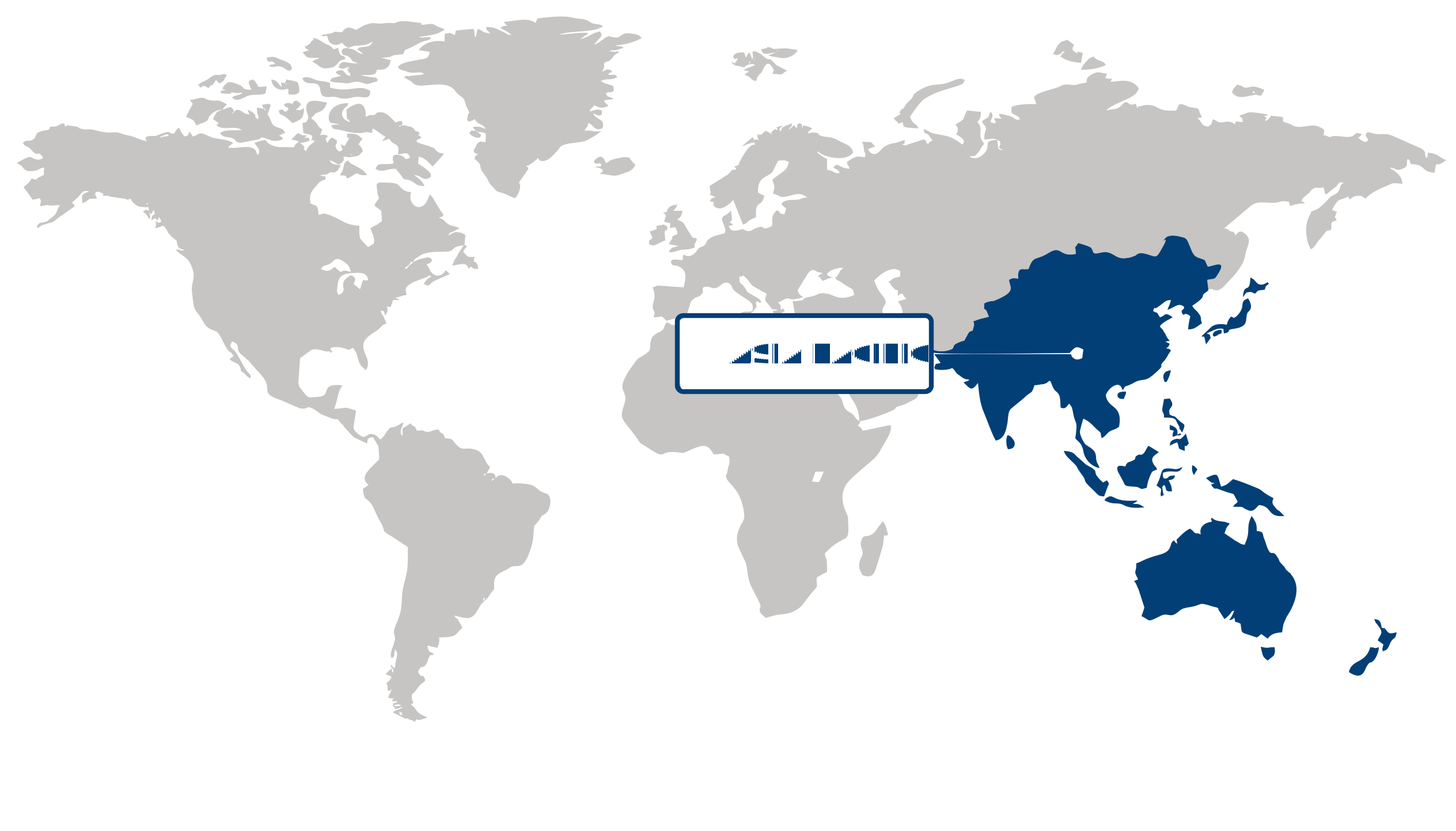
Asia Pacific captured over 46.2% of the global surgical tubing market in 2025, positioning it as the largest and fastest-growing region with a 9.3% CAGR. This dominant growth is largely driven by extensive medical device manufacturing hubs and surging hospital demand for disposable medical products, reflecting a shift toward single-use solutions that enhance infection control and patient safety. Industry leaders such as Terumo Corporation highlight increased R&D investments and automation advances within the region, fostering innovation and efficiency. Additionally, rising healthcare expenditure and government policies supporting healthcare infrastructure expansion in markets like India and China underpin this trajectory. With its resilient economic landscape and growing attention to quality medical supplies, Asia Pacific presents significant opportunities for stakeholders aiming to capitalize on evolving surgical tubing demands.
Japan is positioned as a pivotal hub in Asia Pacific’s surgical tubing market, benefiting from a mature healthcare system and stringent regulatory standards that drive demand for high-quality, precision-engineered tubing. Companies like Nipro Corporation actively innovate in biocompatible materials, responding to stringent patient safety standards from the Pharmaceuticals and Medical Devices Agency (PMDA). This focus on quality and compliance cements Japan’s role in supplying advanced surgical tubing, underscoring its strategic importance for regional supply chains. The country's leadership enhances Asia Pacific's overall market strength by promoting high-value product development amid growing regional demand.
China represents a critical growth engine within the Asia Pacific surgical tubing market, fueled by expansive hospital networks and robust domestic manufacturing capacity. The National Medical Products Administration (NMPA) has accelerated approvals of medical devices, encouraging local product development and uptake. Rising chronic disease prevalence and urbanization propel demand for disposable surgical consumables, motivating companies like Mindray Medical to expand manufacturing scale and distribution. China’s ability to combine large-scale production with cost efficiencies strengthens Asia Pacific’s competitive positioning, offering investors and strategists a dynamic landscape aligned with regional growth imperatives.
North America Market Analysis:
North America held a commanding share in the surgical tubing market, driven by advanced healthcare infrastructure, high patient awareness, and strong demand for minimally invasive procedures. The region’s prominence is reinforced by robust investments in medical technology and stringent regulatory standards maintained by the U.S. Food and Drug Administration (FDA), enhancing product quality and safety. Increased healthcare expenditure across public and private sectors further supports steady demand. Additionally, growing emphasis on sustainability in medical manufacturing and digital supply chain optimization by industry leaders like Medtronic and Becton Dickinson have boosted operational efficiency. North America’s demographic trends, including an aging population and rising chronic disease prevalence, create a persistent need for sophisticated surgical tubing solutions. The region’s blend of innovative capabilities and economic resilience establishes it as a central hub for future market developments and investment opportunities.
The U.S. plays a pivotal role in the North American surgical tubing market, driven by a sophisticated healthcare ecosystem and high adoption rates of cutting-edge medical devices. Regulatory frameworks enforced by the FDA ensure that manufacturers uphold stringent safety and performance criteria, which supports market trust and growth. U.S. hospitals’ preference for premium, biocompatible tubing materials aligns with rising patient safety expectations. Prominent companies such as Baxter International have publicly highlighted expansions in manufacturing and R&D operations within the U.S., reinforcing the country’s leadership in medical device innovation. Furthermore, the U.S. government’s increased spending on health IT and medical infrastructure enhances supply chain resilience and accessibility. This environment positions the U.S. as a critical driver of North America’s sustained stronghold in the surgical tubing market.
Europe Market Trends:
Europe maintained notable presence in the surgical tubing market, driven by its advanced healthcare infrastructure and stringent regulatory environment that ensure product quality and patient safety. The region benefits from increasing preference for minimally invasive procedures and rising healthcare expenditure, which stimulate demand for high-performance surgical tubing. Additionally, Europe's commitment to sustainability and circular economy principles is prompting manufacturers to innovate with eco-friendly materials and manufacturing processes. For instance, B. Braun Melsungen AG’s recent initiative to develop recyclable tubing aligns with these priorities, as reported by the company’s corporate release. Moreover, the region’s robust supply chain and skilled workforce contribute to operational efficiency. Given these factors, Europe presents steady opportunities for market players focusing on quality, compliance, and sustainable innovation, ensuring resilience despite evolving healthcare demands.
Germany holds a pivotal role in Europe’s surgical tubing market, propelled by its strong medical device manufacturing base and supportive policies that enhance innovation. The country’s emphasis on digital health integration, including smart tubing components, is exemplified by Siemens Healthineers’ collaboration with local startups to develop connected surgical tools, as detailed in their press announcement. German hospitals’ preference for technologically advanced, reliable tubing solutions reflects broader market sophistication. This environment encourages manufacturers to prioritize R&D and product differentiation. Strategically, Germany’s leadership in regulatory standards and technology adoption significantly influences regional trends, making it a critical hub for market growth and competitive positioning within Europe.
France represents a key contributor to Europe’s moderate growth in the surgical tubing market, driven by increasing government funding for healthcare modernization and patient-centric care models. The French National Agency for Medicines and Health Products Safety (ANSM) enforces rigorous compliance that enhances product trust and adoption. France also sees rising demand for biocompatible and specialty tubing that supports diverse surgical applications, as showcased by LDM Group’s recent expansion of its surgical tubing portfolio, according to their corporate update. This aligns with the country’s cultural inclination toward innovation balanced with safety and environmental awareness. Consequently, France’s dynamic regulatory framework and evolving clinical needs shape distinctive market opportunities that complement broader European growth prospects.
| Parameter | North America | Asia Pacific | Europe | Latin America | MEA |
|---|---|---|---|---|---|
| Innovation Hub i Scale Nascent Developing Advanced | |||||
| Cost-Sensitive Region i Scale Low Medium High | |||||
| Regulatory Environment i Scale Restrictive Neutral Supportive | |||||
| Demand Drivers i Scale Weak Moderate Strong | |||||
| Development Stage i Scale Emerging Developing Developed | |||||
| Adoption Rate i Scale Low Medium High | |||||
| New Entrants / Startups i Scale Sparse Moderate Dense | |||||
| Macro Indicators i Scale Weak Stable Strong |
Segment Leadership and Growth Trends
Surgical Tubing Market Share (%), by End-User, 2026
Go beyond the chart, access full insights & data tables
Request Free Sample ReportThe surgical tubing market in 2025 is led by the hospitals and clinics segment, which represents the largest share driven by high surgical procedure volumes and the critical need for sterile tubing in varied clinical applications. This segment benefits from hospitals' expansive procedural breadth and stringent regulations enforced by bodies like the U.S. Food and Drug Administration, ensuring demand for compliant, high-quality tubing. The segment also reflects evolving patient demographics with rising chronic and acute condition treatments, prompting sustained procurement cycles. Major healthcare systems such as Mayo Clinic have publicly emphasized sterile supplies to mitigate infection risks, reinforcing this segment’s prominence. Strategically, hospitals and clinics offer established firms reliable bulk procurement opportunities and provide emerging players scope to innovate around sterility and customization. Given ongoing expansions in global healthcare infrastructure and procedure complexity, this segment will maintain relevance, fueling demand for advanced and adaptable surgical tubing solutions.
Analysis by Structure
Single-lumen tubing held the largest share of the surgical tubing market in 2025, anchored by its broad utility across standard surgical and fluid transfer applications. Its simplicity and cost-effectiveness align tightly with evolving hospital procurement policies focused on balancing performance with value. The segment’s leadership is bolstered by supply chain efficiencies developed by manufacturers such as Saint-Gobain Life Sciences, optimizing production and minimizing lead times. Furthermore, healthcare providers' preference for streamlined, reliable components enhances adoption rates. Increasing digital integration in surgical settings demands consistent, standardized tubing performance, further driving single-lumen adoption. This segment presents clear growth avenues for incumbent producers seeking scale economies and for startups targeting niche customizations or biodegradable materials. With ongoing medical technology advances emphasizing minimally invasive procedures and efficient resource utilization, single-lumen surgical tubing is set to remain a market cornerstone.
Analysis by Application
The “others” segment dominated the surgical tubing market in 2025 by capturing the largest share, fueled by the expanding use of tubing in a wide range of applications beyond traditional orthopedic, neurosurgery, or trauma surgeries. This broad category benefits from increasing global surgery volumes and investments in healthcare infrastructure, which necessitate versatile tubing capable of supporting diverse clinical workflows. Industry leaders like Becton Dickinson underscore the need for adaptable materials to accommodate evolving minimally invasive and robotic-assisted surgeries, reshaping tubing specifications. The segment’s flexibility meets rising demand from emerging healthcare markets and specialty procedures, where customization and rapid product innovation are vital. For players, this segment offers significant strategic advantage through diversification and rapid response to clinical trends. Continued growth in multidisciplinary surgical interventions and infrastructure development worldwide ensures the segment’s sustained market significance in the medium term.
| Segment | Sub-Segment | Largest Segment | Fastest Growing |
|---|---|---|---|
| End-User | Hospitals and Clinics, Ambulatory Surgical Centers, Others | ||
| Structure | Single-Lumen, Multi-Lumen, Braided Tubing, Others | ||
| Application | Orthopedic Surgery, Neurosurgery, Trauma Surgery, Others | ||
| Material | Polyvinyl Chloride, Thermoplastic Elastomer, Thermoplastic Polyurethane, Silicone, Others |
Competitive Landscape and Market Positioning
The competitive environment in the surgical tubing market is marked by active investments in advanced materials and biocompatible solutions among these leading companies. Medtronic, Baxter International, and Cook Medical frequently introduce enhanced tubing designed to optimize clinical outcomes, while companies such as Nipro and Teleflex emphasize customizability and patient safety. Strategic consolidations and cooperative ventures among these firms facilitate technology sharing and broaden product visibility, promoting market resilience. Constant enhancements in product design, regulatory adherence, and cost efficiency reflect a relentless drive to capture varied healthcare segments, from minimally invasive surgeries to critical care applications, underscoring an innovation-centric competitive ethos.
Strategic / Actionable Recommendations for Regional Players
In North America, players should consider deepening alliances with established global manufacturers to integrate cutting-edge materials and smart tubing technologies, addressing increasing demand for precision and safety in surgical interventions. Collaborative R&D efforts focused on minimally invasive and outpatient care solutions would further consolidate their market stance.
For Asia Pacific, leveraging local manufacturing capabilities alongside partnerships with international technology leaders can enhance product quality and cost efficiencies. Focusing on rising healthcare infrastructure investments and increasing procedural volumes may yield opportunities in emerging high-growth segments like catheter-based interventions.
European players might benefit from emphasizing sustainable and regulatory-compliant tubing innovations, aligning with stringent environmental and safety protocols. Engaging in cross-border cooperative projects could strengthen their pipeline and distribution channels, particularly targeting specialized surgical and critical care markets where precision and reliability remain paramount.
| Company | Market Share | Company Revenue | Revenue CAGR (%) | Product Portfolio | Geographic Presence | Innovation / R&D Focus | Strategic Developments |
|---|---|---|---|---|---|---|---|
| No companies available. | |||||||
Industry Development/News
| Company Name | Date | Key Development |
|---|
Customize Your Report
Explore examples of how this report can be tailored to different research needs, including custom segments, additional topics or chapters, and related reports. Click a section of the wheel or its numbered marker to explore the available options.
Surgical Tubing Market — Custom Segments
| Segment | Sub-Segment |
|---|---|
| No segment data available. | |
Surgical Tubing Market — Custom TOC
| Custom Chapter | Custom Details | ||
|---|---|---|---|
| No custom TOC data available. | |||
Need a different cut of the data?
Request Custom ResearchHow much is the surgical tubing industry expected to grow by 2035?
Which region captures the largest portion of the surgical tubing market value?
Where has the surgical tubing sector recorded the sharpest year-over-year increase?
Which is the largest sub-segment within the end-user segment for surgical tubing industry?
Why does single-lumen sub-segment dominate the structure segment of surgical tubing sector?
How does others segment fare in the surgical tubing industry?
What share does silicone segment hold in the surgical tubing sector as of 2025?
What are the prominent companies operating in the surgical tubing landscape?
Our Clients
"The team took the time to understand our specific business needs and delivered a report that was well aligned with our objectives. Their expertise and understanding of the industry were clearly reflected in the quality and relevance of the insights provided."
Siemens Healthcare
"Our experience in acquiring the research report has been excellent. The depth of analysis, and actionable insights provided have been extremely valuable in supporting our ongoing R&D efforts."
GC Biopharma
"The report offered a comprehensive view of the market trends. The in-depth segmentation and analysis of emerging opportunities gave us a better understanding of the market."
Medtronic
Our Research Team & Methodology
Every Fundamental Business Insights report is built by a dedicated vertical research team, validated through a structured primary-and-secondary methodology, and reviewed for accuracy before it reaches you.
Research Team Overview
Prepared by the Healthcare & Medical Devices Research Team
Delivery
Published
Demand
Available
Support
Trust & Compliance
Research Intelligence
Research Workflow & Quality Assurance
Data Collection
Verified information gathered through primary and secondary research.
Data Triangulation
Cross-validation using multiple independent data sources.
Forecast Modelling
Market estimates developed using historical trends and analytical models.
Analyst Validation
Findings reviewed by domain experts for accuracy and consistency.
Editorial & Quality Review
Final editorial, quality, and compliance checks before publication.
Final Publication
Released after successful completion of the internal review process.
Report Coverage
📊 Market Assessment
- Market Size & Forecast
- Market Segmentation
- Regional Analysis
- Growth Drivers & Challenges
- Market Dynamics
🏢 Competitive Intelligence
- Competitive Landscape
- Company Profiles
- Competitive Benchmarking
- Mergers & Acquisitions
- Market Share Analysis or Key Company Strategies
🔍 Strategic Analysis
- Value Chain Analysis
- Porter's Five Forces
- PESTLE Analysis
- Pricing Trends
- Supply-Demand Analysis
🚀 Future Outlook
- Technology Landscape
- Regulatory Landscape
- Investment & Funding Landscape
- Emerging Opportunities
- Future Market Outlook
Have a question about this report or need a custom scope?
Request Customization