Surface Mount Technology Market Size & Forecasts 2026-2035, By Segments (Service, Equipment, Application), Growth Opportunities, Innovation Landscape, Regulatory Shifts, Strategic Regional Insights (U.S., Japan, China, South Korea, UK, Germany, France), and Competitive Dynamics (ASM Pacific, Juki, Samsung Electronics, Fuji Machine, Panasonic)
Market Size and Growth Outlook
Surface Mount Technology Market size is projected to grow steadily from USD 6.91 billion in 2025 to USD 14.24 billion by 2035, demonstrating a CAGR exceeding 7.5% through the forecast period (2026-2035). The 2026 revenue is estimated at USD 7.37 billion.
Get more details on this report
Request Free Sample ReportSurface Mount Technology Market Intelligence Snapshot
Regional Market Dynamics
Segment Momentum
Market Expansion Drivers
Leading Market Participants
Global Market Forecast Snapshot
Market Outlook
Regional and Segment Outlook
Market Growth Drivers and Industry Trends
The pervasive shift to surface mount technology (SMT) in electronics manufacturing is driven by the demand for higher efficiency, reliability, and compact device design. Companies like Intel and Samsung have publicly underscored their transition to SMT for assembling complex circuits, reflecting industry-wide endorsement. This shift streamlines production lines and reduces manual errors, enabling consistent quality and faster turnaround times. For market incumbents and new entrants, integrating advanced SMT methods offers a competitive edge by accelerating product development cycles and scaling manufacturing. As global electronics producers continue replacing through-hole components, the surface mount technology market stands to solidify its position as the backbone of modern manufacturing workflows, aligning industry capabilities with evolving consumer electronics demands.
Growth in Miniaturization and IoT Device Production
The surge in miniaturized electronics, especially in IoT applications, propels the surface mount technology market by necessitating smaller, highly precise component placement. The International Data Corporation (IDC) highlights escalating IoT shipments as a catalyst for compact, energy-efficient hardware, directly benefiting SMT adoption. This trend elevates demand for advanced SMT methods capable of accommodating fine-pitch components and dense layouts, fostering innovation in packaging and assembly. Industry leaders such as Texas Instruments are capitalizing on this by developing SMT-compatible modules tailored for IoT platforms, presenting a strategic avenue for differentiation. The continuous proliferation of IoT devices implies sustained SMT market expansion linked to cutting-edge, space-constrained electronics production.
Innovations in SMT Equipment and Automation
Rapid advances in SMT equipment, fueled by automation and AI integration, are transforming the surface mount technology market by enhancing precision and throughput. Key manufacturers like Siemens and Panasonic have introduced intelligent pick-and-place machines featuring real-time defect detection, significantly reducing costs and downtime. This evolution aligns with broader manufacturing digitization trends, enabling smarter, scalable production lines adaptable to variable batch sizes. Such technological breakthroughs offer opportunities for companies to optimize operational efficiency and reduce labor dependency, essential in tightening workforce markets. As automation technologies mature and integrate more deeply into SMT processes, the market will increasingly support resilient, agile manufacturing ecosystems responsive to evolving electronics industry requirements.
Industry Restraints:
Complex Regulatory Standards and Compliance Costs
Stringent regulatory requirements around electromagnetic compatibility and hazardous substance usage notably hinder the surface mount technology (SMT) market’s expansion. Compliance with directives such as the European Union’s RoHS (Restriction of Hazardous Substances) and REACH regulations necessitates significant investment in green materials and process redesign, increasing operational complexity and costs for manufacturers. As highlighted by IPC, the global association connecting electronics industries, these evolving standards delay product development cycles and elevate expenses for both incumbents and newcomers aiming to meet diverse international standards. Strategically, companies must allocate substantial resources for certification and ongoing compliance monitoring, which raises entry barriers and slows innovation deployment. Moving forward, sustained regulatory tightening will pressure SMT providers to intensify investment in eco-friendly materials and adaptive manufacturing systems to remain competitive in global markets.
Supply Chain Volatility and Component Shortages
Disruptions in global supply chains, compounded by semiconductor shortages and geopolitical tensions, present a critical restraint on the SMT market’s operational continuity and capacity expansion. As reported by the Electronics Components Industry Association (ECIA), lead times for key SMT components have increased markedly, constraining manufacturers’ ability to meet escalating demand in consumer electronics and automotive sectors. This scarcity drives up procurement costs and forces production delays, disproportionately affecting small and medium-sized enterprises with less leverage over suppliers. Established firms face pressure to diversify sourcing and invest in inventory buffering, while entrants grapple with limited access to essential parts. In the near term, suppliers’ efforts to localize production and implement advanced supply chain analytics are crucial to mitigating risks, yet volatility will likely remain a defining market challenge.
| Growth Driver | Impact on CAGR | Regulatory Influence | Geographic Relevance | Adoption Rate | Impact Timeline |
|---|---|---|---|---|---|
| Increasing adoption of surface mount technology in electronics manufacturing | 3.00% | Short term (≤ 2 yrs) | Asia Pacific (Primary), North America (Spillover) | Medium | Fast |
| Growth in miniaturization and IoT device production | 2.50% | Medium term (2–5 yrs) | Europe, Asia Pacific | Low | Moderate |
| Innovations in SMT equipment and automation | 2.00% | Long term (5+ yrs) | North America, Europe | Low | Moderate |
Unlock insights tailored to your business with our bespoke market research solutions.
Click to get your customized report now.
Regional Demand Dynamics
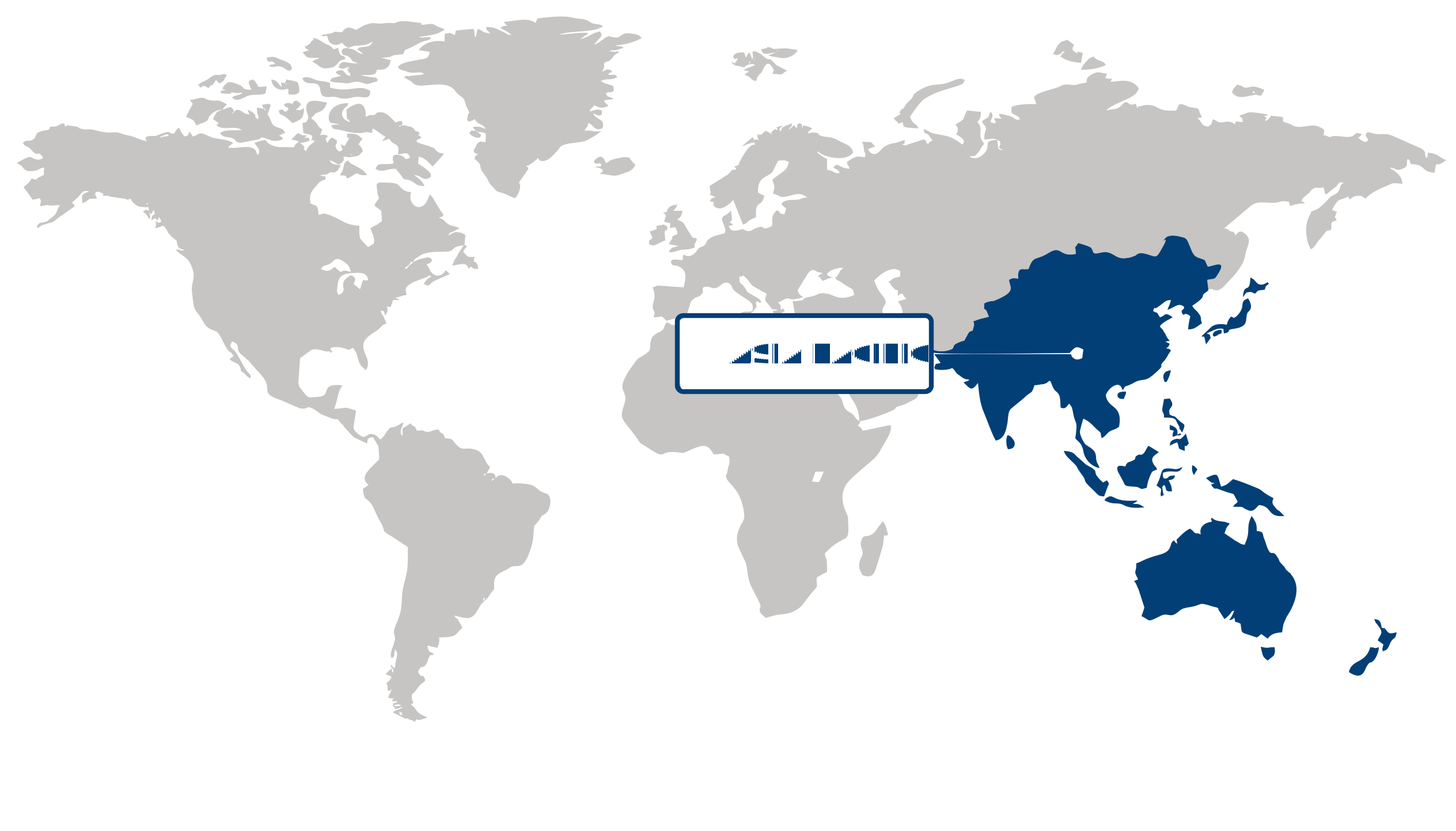
Asia Pacific captured over 48.6% of the global surface mount technology market in 2025, establishing itself as the largest and fastest-growing region with an 8.4% CAGR. This leadership is driven by rapid electronics manufacturing expansion, surging demand for high-density printed circuit boards (PCBs), and vast consumer electronics production. The region benefits from sustained investment in electronics hubs, especially supported by government initiatives such as China’s Made in China 2025 plan and South Korea’s smart manufacturing policies, fostering innovation in assembly processes. Industry leaders like Panasonic and Samsung have ramped up local production capabilities, enhancing supply chain efficiency. Additionally, the shift towards compact, energy-efficient devices aligns well with APAC’s manufacturing strengths. With strong digital infrastructure growth and consumer appetite for cutting-edge electronics, APAC presents significant opportunities for scaling surface mount technology solutions.
Japan is positioned as a pivotal hub in Asia Pacific’s surface mount technology market, leveraging its advanced manufacturing ecosystems and precision engineering culture. The country's electronics sector commands intense focus on quality and miniaturization, supported by firms like Sony and Renesas Electronics, which continuously push the envelope on high-density PCB applications. Regulatory frameworks in Japan encourage innovation and sustainability in electronics manufacturing, underpinning steady growth and technology upgrades. This meticulous approach complements APAC’s broader regional momentum, reinforcing Japan as a center for sophisticated assembly solutions. Consequently, Japan’s specialization enhances the regional market’s competitiveness, driving demand for advanced surface mount technology.
China anchors Asia Pacific’s surface mount technology market through unparalleled scale and volume in electronics manufacturing. China's dominance in consumer electronics output, as highlighted by the China Electronics Standardization Institute, fuels massive deployment of surface mount technology in both domestic and export-oriented supply chains. The country’s strategic investments in smart factories and Industry 4.0 integration, supported by the Ministry of Industry and Information Technology, amplify operational efficiencies and innovation absorption. Competitive pricing and a vast skilled workforce further accelerate growth. China's continued expansion directly propels the Asia Pacific region’s overall leadership, creating a robust ecosystem for surface mount technology advancements and presenting extensive opportunities for investors and technology providers.
North America Market Analysis:
North America held a commanding share in the surface mount technology market, driven by its established electronics manufacturing ecosystem and robust demand from automotive, aerospace, and consumer electronics sectors. The region benefits from advanced manufacturing infrastructure and strong investment in automation and precision engineering, as evidenced by the efforts of the IPC – Association Connecting Electronics Industries to promote high-quality assembly standards. Additionally, policy support for innovation and sustainability has accelerated the adoption of environmentally friendly surface mount processes. The presence of key technology providers and a skilled workforce further underpin North America’s leadership. These factors position the region to capitalize on growing demand for miniaturized, high-performance electronic components in emerging applications such as electric vehicles and IoT devices.
The U.S. dominates the North American surface mount technology market due to its mature semiconductor industry and significant R&D spending. Companies like Texas Instruments and Analog Devices have been expanding their surface mount capabilities, supporting high-volume and high-mix production needs. The U.S. market also benefits from government initiatives promoting advanced manufacturing innovation, such as those led by the National Institute of Standards and Technology (NIST), which fosters adoption of Industry 4.0 technologies. This regulatory and innovation-friendly environment sustains strong domestic demand and export capabilities, reinforcing North America’s strategic position in the surface mount technology market.
Europe Market Trends:
Europe held a substantial share in the surface mount technology market, driven by its advanced manufacturing infrastructure and strong industrial base. The region’s emphasis on precision electronics for automotive, aerospace, and medical devices sustains robust demand for surface mount technology solutions. European firms increasingly prioritize energy-efficient and miniaturized components, encouraged by stringent environmental regulations from the European Union and initiatives like Horizon Europe, which bolster innovation funding. Supply chain resilience is another crucial factor, as companies in Europe are investing in localized sourcing and digital automation to mitigate global disruptions. According to the European Semiconductor Industry Association, investments in smart factory technologies are expected to accelerate operational efficiencies here. These trends, combined with a skilled workforce adapting to Industry 4.0 transformations, position Europe as a fertile ground for sustained growth and technological advancement in surface mount technology.
Germany plays a pivotal role in Europe’s surface mount technology market, driven by its leadership in automotive electronics and industrial automation sectors. With government backing from organizations such as VDMA (Mechanical Engineering Industry Association), Germany promotes widespread adoption of high-precision assembly techniques integral to surface mount technology, aligning with its Industrie 4.0 agenda. Companies like Siemens and Bosch are investing heavily in smart manufacturing, integrating IoT-enabled quality control to enhance production yields. Additionally, German manufacturers benefit from a robust supply chain network spanning the region, enabling responsiveness to shifting consumer preferences for customized electronics. This strategic emphasis on technological integration and operational excellence underpins Germany’s contribution to Europe’s competitive edge and signals ongoing opportunities for innovation-led market expansion.
France holds a notable presence in the European surface mount technology market, bolstered by its strong electronics industrial ecosystem and government-driven innovation policies. The French government’s emphasis on digital transformation and sustainable manufacturing, reflected in initiatives by Bpifrance and the French Alternative Energies and Atomic Energy Commission (CEA), fuels advancements in miniaturization and precision needed for surface mount processes. Key sectors such as aerospace, defense, and telecommunications drive demand for sophisticated assembly solutions, with companies like Thales and Airbus implementing advanced surface mount techniques to enhance product performance. This dynamic creates a supportive environment for startups and SMEs specializing in SMT innovations, reinforcing France’s role as a complementary hub within the European market. Consequently, France’s evolving technology landscape enhances regional growth prospects in surface mount technology.
| Parameter | North America | Asia Pacific | Europe | Latin America | MEA |
|---|---|---|---|---|---|
| Innovation Hub i Scale Nascent Developing Advanced | |||||
| Cost-Sensitive Region i Scale Low Medium High | |||||
| Regulatory Environment i Scale Restrictive Neutral Supportive | |||||
| Demand Drivers i Scale Weak Moderate Strong | |||||
| Development Stage i Scale Emerging Developing Developed | |||||
| Adoption Rate i Scale Low Medium High | |||||
| New Entrants / Startups i Scale Sparse Moderate Dense | |||||
| Macro Indicators i Scale Weak Stable Strong |
Segment Leadership and Growth Trends
Surface Mount Technology Market Share (%), by Service, 2026
Go beyond the chart, access full insights & data tables
Request Free Sample ReportThe designing segment held the largest share in the surface mount technology market in 2025, driven primarily by rising demand for PCB design and design-for-manufacturability (DFM) services aimed at miniaturized, cost-effective electronics. This leadership reflects growing customer preference for innovative, compact devices with optimized performance, which necessitates advanced early-stage design expertise. Industry leaders such as Cadence Design Systems emphasize integrated design platforms to streamline prototyping, underlining the critical role of designing services. Supply chain enhancements and digital transformation initiatives further elevate this segment's strategic value, enabling faster time-to-market. For both established and emerging players, opportunities lie in expanding capabilities around design simulation and rapid prototyping to meet evolving technological trends. Given ongoing miniaturization and increasing complexity of electronics, the designing segment is poised to remain a foundational pillar in surface mount technology market development.
Analysis by Equipment
Placement equipment represented the largest share in the surface mount technology market in 2025 due to high demand for automated, high-speed PCB assembly lines supporting miniaturized and high-density electronics. This segment’s leadership is reinforced by increased reliance on robotic and AI-enabled placement systems, which improve accuracy and throughput while reducing labor costs. Companies like ASM Pacific Technology have showcased innovations in precision placement, responding to heightened customer expectations for quality and efficiency. The integration of real-time analytics and flexible manufacturing aligns with broader manufacturing digitization trends. Opportunities abound in developing scalable placement solutions catering to diverse production scales and industry verticals. As electronic devices continue to shrink and integrate more functions, placement equipment will sustain its dominance by adapting to evolving industry standards and automation advancements.
Analysis by Application
Consumer electronics represented the largest share of the surface mount technology market in 2025, propelled by surging global demand for smartphones, wearables, and other compact devices that require SMT-based PCB manufacturing. This application leads by capitalizing on consumer trends favoring portability, connectivity, and multi-functionality, driving demand for densely packed, highly reliable assemblies. Market influencers such as Apple and Samsung have consistently invested in surface mount technology advancements to enhance device performance and battery life. The shift towards sustainable product designs and regulatory scrutiny on electronic waste also shape this segment’s innovation landscape. For incumbents and newcomers alike, focusing on rapid prototyping and scalable manufacturing processes presents significant strategic value. Given continuous innovation cycles and sustained consumer interest, the consumer electronics segment is set to remain a core market driver in the near term.
| Segment | Sub-Segment | Largest Segment | Fastest Growing |
|---|---|---|---|
| Service | Designing, Test & Prototyping, Supply Chain Services, Manufacturing, Aftermarket Services | ||
| Equipment | Inspection Equipment, Placement Equipment, Soldering Equipment, Screen Printing Equipment, Cleaning Equipment, Repair & Rework Equipment | ||
| Application | Consumer Electronics, IT & telecommunication, Automotive, Industrial, Aerospace & Defense, Healthcare, Others |
Competitive Landscape and Market Positioning
The competitive landscape reveals a dynamic interplay as these companies advance through enhanced collaboration and expanded technology portfolios. Investments in next-generation machinery and adaptive automation underscore efforts to meet evolving semiconductor and electronics manufacturing demands. Strategic partnerships facilitate integration of emerging technologies such as IoT and AI-enhanced process control. Moreover, product launches focus on improving throughput and precision while addressing miniaturization trends. This ecosystem fosters differentiation by providing tailored, efficient solutions that position each player competitively amid rapid technological shifts.
Strategic / Actionable Recommendations for Regional Players
North American firms should pursue alliances with technology innovators and key end-users to accelerate development of smart, high-throughput equipment that addresses semiconductor fabrication intricacies. Emphasizing flexible, modular solutions could capture demand from specialized manufacturing segments.
Asia Pacific entities can amplify their leadership by integrating AI-driven diagnostics and scalability features in their equipment, supporting burgeoning electronics industries. Collaborative research with universities and tech hubs will drive sustained advancements.
European players are advised to focus on eco-friendly, energy-efficient technologies aligned with stringent environmental regulations. Targeting niche applications that require customized, precision machinery will reinforce competitive advantage while fostering innovation through cross-border collaborations.
| Company | Market Share | Company Revenue | Revenue CAGR (%) | Product Portfolio | Geographic Presence | Innovation / R&D Focus | Strategic Developments |
|---|---|---|---|---|---|---|---|
| No companies available. | |||||||
Industry Development/News
| Company Name | Date | Key Development |
|---|
Customize Your Report
Explore examples of how this report can be tailored to different research needs, including custom segments, additional topics or chapters, and related reports. Click a section of the wheel or its numbered marker to explore the available options.
Surface Mount Technology Market — Custom Segments
| Segment | Sub-Segment |
|---|---|
| No segment data available. | |
Surface Mount Technology Market — Custom TOC
| Custom Chapter | Custom Details | ||
|---|---|---|---|
| No custom TOC data available. | |||
Need a different cut of the data?
Request Custom ResearchHow is the surface mount technology industry expected to grow over the next 10 years?
Which geographical region leads the surface mount technology market market?
Where has the surface mount technology sector recorded the sharpest year-over-year increase?
When did designing sub-segment emerge as the largest sub-segment in the service segment of surface mount technology sector?
Why is the placement equipment segment leading in the surface mount technology industry?
Why does consumer electronics sub-segment dominate the application segment of surface mount technology sector?
What are the key competitors in the surface mount technology landscape?
Our Clients
"Working with FBI has been a good experience. The market report provided a holistic view, covering everything from emerging trends to potential risks."
Semtech Corporation
"The experience was highly positive. The team showcased remarkable flexibility in adapting to our specific needs and delivered report that perfectly aligned with all our requirements."
TSMC
"What really stood out to me was how clearly and promptly the Fundamental Business Insights team communicated throughout. It made the collaboration feel effortless."
NXP Semiconductors
Our Research Team & Methodology
Every Fundamental Business Insights report is built by a dedicated vertical research team, validated through a structured primary-and-secondary methodology, and reviewed for accuracy before it reaches you.
Research Team Overview
Prepared by the Electronics & Semiconductors Research Team
Delivery
Published
Demand
Available
Support
Trust & Compliance
Research Domains
10 coverage areasResearch Intelligence
| Source | Reference |
|---|---|
| Semiconductor Industry Association (SIA) | www.semiconductors.org |
| SEMI | www.semi.org |
| JEDEC Solid State Technology Association | www.jedec.org |
| IEEE | www.ieee.org |
| IPC – Association Connecting Electronics Industries | www.ipc.org |
| International Electrotechnical Commission (IEC) | www.iec.ch |
| International Organization for Standardization (ISO) | www.iso.org |
| U.S. Bureau of Industry and Security (BIS) | www.bis.gov |
| U.S. Patent and Trademark Office (USPTO) | www.uspto.gov |
| European Patent Office (EPO) | www.epo.org |
| Taiwan Semiconductor Industry Association (TSIA) | www.tsia.org.tw |
| World Semiconductor Trade Statistics (WSTS) | www.wsts.org |
| International Energy Agency (IEA) | www.iea.org |
| GSMA | www.gsma.com |
| 3GPP | www.3gpp.org |
| ITU (International Telecommunication Union) | www.itu.int |
| Omdia (public insights) | omdia.tech.informa.com |
| Display Supply Chain Consultants (DSCC) | www.displaysupplychain.com |
| U.S. Department of Energy (DOE) | www.energy.gov |
| NIST (National Institute of Standards and Technology) | www.nist.gov |
Research Workflow & Quality Assurance
Data Collection
Verified information gathered through primary and secondary research.
Data Triangulation
Cross-validation using multiple independent data sources.
Forecast Modelling
Market estimates developed using historical trends and analytical models.
Analyst Validation
Findings reviewed by domain experts for accuracy and consistency.
Editorial & Quality Review
Final editorial, quality, and compliance checks before publication.
Final Publication
Released after successful completion of the internal review process.
Report Coverage
📊 Market Assessment
- Market Size & Forecast
- Market Segmentation
- Regional Analysis
- Growth Drivers & Challenges
- Market Dynamics
🏢 Competitive Intelligence
- Competitive Landscape
- Company Profiles
- Competitive Benchmarking
- Mergers & Acquisitions
- Market Share Analysis or Key Company Strategies
🔍 Strategic Analysis
- Value Chain Analysis
- Porter's Five Forces
- PESTLE Analysis
- Pricing Trends
- Supply-Demand Analysis
🚀 Future Outlook
- Technology Landscape
- Regulatory Landscape
- Investment & Funding Landscape
- Emerging Opportunities
- Future Market Outlook
Have a question about this report or need a custom scope?
Request Customization