Stomach Cancer Treatment Market Size & Growth Forecast 2027–2036, By Segments (Disease Indication, Route of Administration, Treatment Type, Drug Class), Regional Demand Trends (North America, Asia Pacific, Europe), Key Country Insights (U.S., Japan, South Korea, Germany, France, Italy), and Competitive Landscape
Market Size and Growth Outlook
Stomach Cancer Treatment Market size was valued at USD 7.3 billion in 2026 and is anticipated to grow at a 11.88% CAGR from 2027 to 2036, exceeding USD 22.43 billion by 2036. The industry revenue for 2027 is estimated at USD 8.03 billion.
Get more details on this report
Request Free Sample ReportStomach Cancer Treatment Market Intelligence Snapshot
Regional Market Dynamics
- Asia Pacific leads with 58.38% share due to high treatment demand, large patient volumes, strong diagnosis activity, and sustained use of chemotherapy, targeted therapies, and hospital oncology services.
- North America is growing at 13.89% CAGR, driven by faster uptake of advanced therapies, precision oncology adoption, and strong established cancer care infrastructure enabling quicker treatment transitions.
Segment Momentum
- Injectable accounted for an 84.55% share in 2026 because hospital- and clinic-based oncology care relies on supervised administration, controlled dosing, and intensive treatment protocols.
- Gastrointestinal Stromal Tumors are growing fastest as treatment decisions increasingly focus on specific tumor biology, encouraging more specialized therapeutic strategies for distinct patient groups.
Market Expansion Drivers
- Rising global gastric cancer incidence driving demand for advanced oncology treatments.
- Rapid adoption of immunotherapies and targeted therapies transforming treatment paradigms.
- Expanding clinical trials and R&D investments accelerating novel combination therapy approvals.
Leading Market Participants
- Leading players in the stomach cancer treatment market include F. Hoffmann-La Roche Ltd. (Switzerland), Bristol-Myers Squibb Company (United States), Merck & Co., Inc. (United States), Eli Lilly and Company (United States), Celltrion, Inc. (South Korea), Samsung Bioepis Co., Ltd. (South Korea), Teva Pharmaceutical Industries Ltd. (Israel), AstraZeneca PLC (United Kingdom).
Global Market Forecast Snapshot
Market Outlook
- 2026 Market Size: USD 7.3 billion
- 2027 Estimated Market Size: USD 8.03 billion.
- Projected Market Size: USD 22.43 billion by 2036
- Growth Forecast: 11.88% CAGR (2027-2036)
Regional and Segment Outlook
- Leading Regional Market: Asia Pacific
- High-Growth Regional Hub: North America
- Core Revenue Segment: Gastric Cancer/Gastroesophageal Junction Cancer (Disease Indication) | Injectable (Route of Administration) | Targeted Therapy (Treatment Type) | PD-1/PD-L1 Inhibitors (Drug Class)
- Emerging Opportunity Segment: Gastrointestinal Stromal Tumors (Disease Indication) | Oral (Route of Administration) | Immunotherapy (Treatment Type) | PD-1/PD-L1 Inhibitors (Drug Class)
Market Growth Drivers and Industry Trends
Rising global gastric cancer incidence driving demand for advanced oncology treatments
The growing incidence of gastric cancer across multiple regions is increasing the need for diagnosis, disease management, and improved therapeutic interventions, thereby supporting the stomach cancer treatment market. A larger patient population creates sustained demand for chemotherapy, targeted medicines, immunotherapies, and other treatment modalities across different stages of disease. Increasing awareness of cancer symptoms and improvements in screening and diagnostic practices can also contribute to earlier identification of cases, while the complexity of advanced gastric cancer continues to encourage the use of more sophisticated treatment strategies.
Rapid adoption of immunotherapies and targeted therapies transforming treatment paradigms
The increasing use of biologically targeted treatment approaches is reshaping the stomach cancer treatment market as clinicians seek therapies that can address specific tumor characteristics and immune responses. Immunotherapies can stimulate the patient's immune system to recognize and attack cancer cells, while targeted therapies are designed to interfere with molecular pathways involved in tumor growth and survival. Greater availability of biomarker-based treatment selection is supporting more personalized care, enabling physicians to consider tumor biology when determining appropriate therapies and treatment combinations for eligible patients.
Expanding clinical trials and R&D investments accelerating novel combination therapy approvals
Growing investment in clinical research is creating additional opportunities for innovation within the stomach cancer treatment market, particularly through studies evaluating combinations of established and emerging therapies. Researchers are investigating approaches that integrate immunotherapies, targeted agents, chemotherapy, and other treatment modalities to improve therapeutic response across different patient groups. Expanding clinical trial activity is also generating evidence on treatment sequencing and combination strategies, while increased research attention to unmet needs in gastric cancer is supporting the development and regulatory evaluation of new therapeutic options.
| Growth Driver | Impact on CAGR | Regulatory Influence | Geographic Relevance | Adoption Rate | Impact Timeline |
|---|---|---|---|---|---|
| Rising global gastric cancer incidence driving demand for advanced oncology treatments | 2.50% | High | Asia Pacific, North America | High | Near Term |
| Rapid adoption of immunotherapies and targeted therapies transforming treatment paradigms | 2.00% | High | North America, Europe, Asia Pacific | High | Mid Term |
| Expanding clinical trials and R&D investments accelerating novel combination therapy approvals | 1.50% | High | North America, Europe | Medium | Mid Term |
Explore Growth Opportunities
Request Free Sample ReportRegional Demand Dynamics
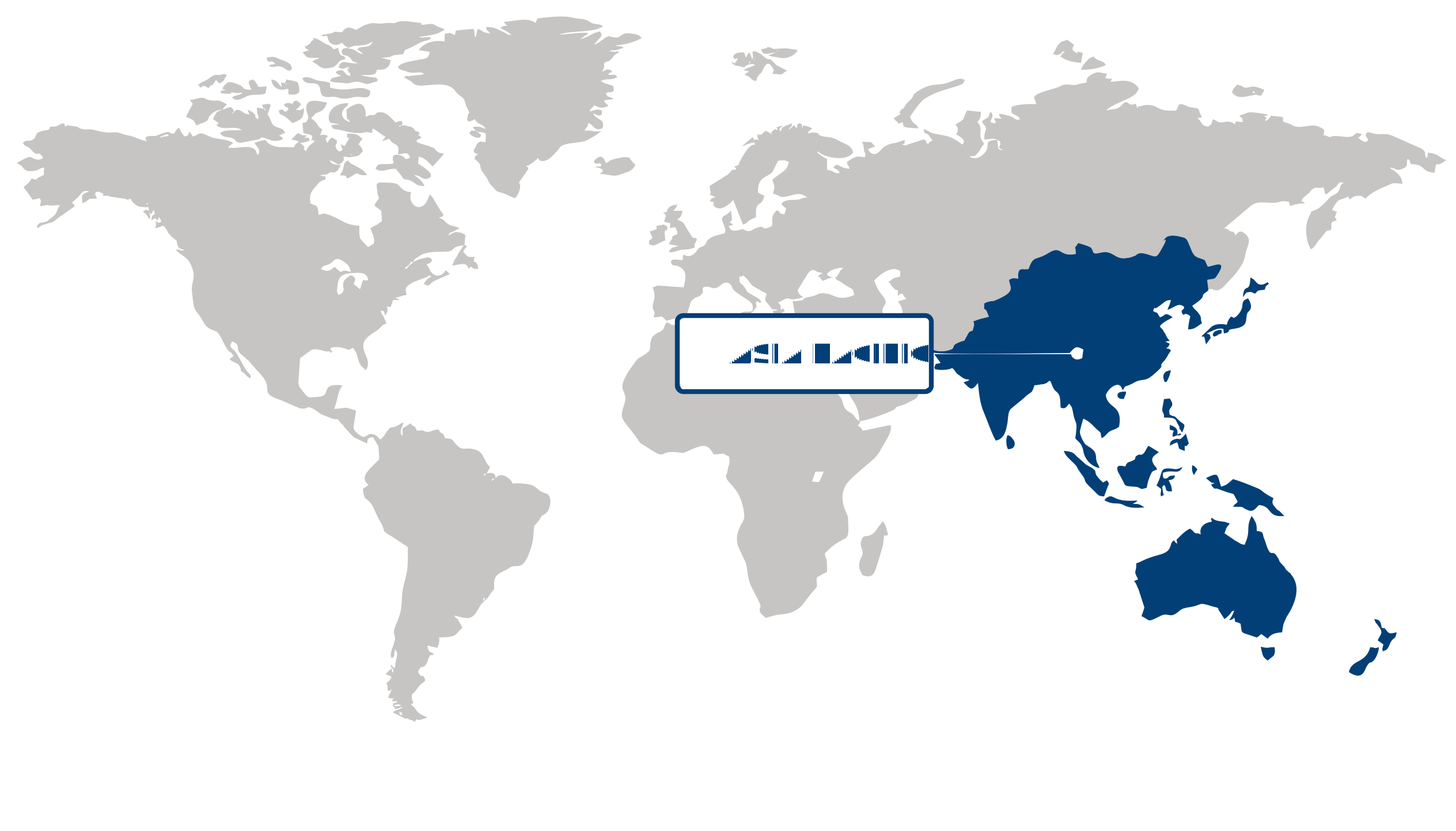
Asia Pacific (Largest Region)
In the stomach cancer treatment market, Asia Pacific held the largest share of 58.38% in 2026, reflecting the region’s substantial disease burden and expanding capacity for cancer diagnosis and treatment. High demand for oncology services is supported by greater screening and diagnostic awareness, improvements in hospital infrastructure, and broader access to chemotherapy, targeted therapies, immunotherapy, and surgical interventions. Increasing healthcare investment and the development of specialized cancer centers are also strengthening treatment availability, while government efforts to improve cancer care and early detection are supporting sustained regional demand.
North America (Fastest-Growing Region)
North America represents the fastest-growing region, supported by rapid adoption of advanced oncology treatments and continued innovation across cancer care. Strong clinical infrastructure, sophisticated diagnostic capabilities, and greater availability of precision-based treatment approaches enable healthcare providers to tailor therapies according to disease characteristics. Increasing emphasis on personalized medicine, expanding use of novel systemic therapies, and sustained investment in oncology research are expected to reinforce the region’s growth trajectory.
| Parameter | North America | Asia Pacific | Europe | Latin America | MEA |
|---|---|---|---|---|---|
| Innovation Hub i Scale Nascent Developing Advanced | |||||
| Cost-Sensitive Region i Scale Low Medium High | |||||
| Regulatory Environment i Scale Restrictive Neutral Supportive | |||||
| Demand Drivers i Scale Weak Moderate Strong | |||||
| Development Stage i Scale Emerging Developing Developed | |||||
| Adoption Rate i Scale Low Medium High | |||||
| New Entrants / Startups i Scale Sparse Moderate Dense | |||||
| Macro Indicators i Scale Weak Stable Strong |
Key Country Insights
Germany 🇩🇪
Protocol Driven Oncology CareGermany prioritizes standardized gastric cancer treatment protocols supported by strong hospital oncology networks and multidisciplinary tumor boards. Treatment decisions emphasize evidence-backed therapies and structured clinical pathways for improved patient management and consistency of care.
France 🇫🇷
Coordinated Oncology PathwaysFrance emphasizes coordinated gastric cancer treatment through public hospital systems and multidisciplinary oncology teams. Therapeutic decisions prioritize guideline adherence and balanced use of chemotherapy and emerging targeted agents in structured care settings.
Italy 🇮🇹
Regional Oncology SpecializationItaly’s stomach cancer treatment approach relies on regional oncology centers with increasing access to advanced therapies and minimally invasive surgical options. Clinicians focus on improving continuity of care and optimizing treatment sequencing across disease progression stages.
Japan 🇯🇵
Early Detection Treatment FocusJapan places strong emphasis on early-stage stomach cancer treatment supported by screening programs and minimally invasive surgical approaches. Clinicians prioritize precise staging and tailored therapeutic combinations to improve outcomes in a population with high diagnostic vigilance.
South Korea 🇰🇷
High-Volume Cancer CentersSouth Korea concentrates stomach cancer care within high-volume oncology centers that support advanced surgical techniques and rapid adoption of targeted and immunotherapy options. Treatment pathways are highly specialized and aligned with evolving clinical innovation.
United States 🇺🇸
Multimodal Oncology IntegrationThe U.S. stomach cancer treatment landscape emphasizes integration of surgery, chemotherapy, and immunotherapy within personalized care pathways. Oncologists in the U.S. increasingly adopt biomarker-guided therapies to improve treatment selection and optimize patient response across advanced disease stages.
Segment Leadership and Growth Trends
Stomach Cancer Treatment Market Share (%), by Disease Indication, 2026
Go beyond the chart, access full insights & data tables
Request Free Sample ReportDisease Indication Segment Analysis: Gastric Cancer/Gastroesophageal Junction Cancer (Largest Segment) vs Gastrointestinal Stromal Tumors (Fastest-Growing Segment)
The stomach cancer treatment market was led by the gastric Cancer/Gastroesophageal junction cancer segment, which held an 80.47% share in 2026. Its dominant position reflects the substantial treatment focus placed on cancers originating in the stomach and those occurring at the gastroesophageal junction. Continued demand for disease management across different stages, combined with ongoing attention to improving treatment outcomes and expanding therapeutic options, supports sustained utilization of treatment approaches within this indication.
Gastrointestinal stromal tumors represent the fastest-growing segment as treatment strategies increasingly emphasize disease-specific approaches for these distinct tumor types. Greater clinical recognition of the molecular characteristics of gastrointestinal stromal tumors is supporting more targeted approaches to disease management. The shift toward personalized treatment selection and improved understanding of tumor biology is contributing to stronger momentum in this segment.
Route of Administration Segment Analysis: Injectable (Largest Segment) vs Oral (Fastest-Growing Segment)
Injectable administration accounted for the largest share of the stomach cancer treatment market at 84.55% in 2026, reflecting the continued importance of administered therapies within stomach cancer treatment pathways. Injectable treatments remain widely integrated into clinical care where systemic therapy requires supervised administration and structured treatment delivery. Their established role in oncology treatment protocols and the need for controlled clinical administration continue to support the segment's leading position.
The oral segment is growing at the fastest pace as treatment delivery increasingly incorporates more convenient administration options for appropriate patients. Oral therapies can support greater flexibility in treatment routines and reduce reliance on facility-based administration for therapies that are suitable for at-home use. Growing interest in patient convenience, treatment accessibility, and less resource-intensive care models is encouraging broader consideration of oral treatment approaches.
| Segment | Sub-Segment | Largest Segment | Fastest Growing |
|---|---|---|---|
| Disease Indication | Gastric Cancer/Gastroesophageal Junction Cancer, Gastrointestinal Stromal Tumors | Gastric Cancer/Gastroesophageal Junction Cancer | Gastrointestinal Stromal Tumors |
| Route of Administration | Oral, Injectable | Injectable | Oral |
| Treatment Type | Standard Chemotherapy, Targeted Therapy, Immunotherapy | Targeted Therapy | Immunotherapy |
| Drug Class | PD-1/PD-L1 Inhibitors, HER2 Antagonists, VEGFR Antgonists, Others | PD-1/PD-L1 Inhibitors | PD-1/PD-L1 Inhibitors |
Unlock insights tailored to your business with our bespoke market research solutions.
Click to get your customized report now.
Competitive Landscape and Market Positioning
Key companies in the stomach cancer treatment market:
1. F. Hoffmann-La Roche Ltd. (Switzerland)
2. Bristol-Myers Squibb Company (United States)
3. Merck & Co. Inc. (United States)
4. Eli Lilly and Company (United States)
5. Celltrion Inc. (South Korea)
6. Samsung Bioepis Co. Ltd. (South Korea)
7. Teva Pharmaceutical Industries Ltd. (Israel)
8. AstraZeneca PLC (United Kingdom)
Advancements in immunotherapy, targeted treatments, and biomarker-driven diagnostics are transforming the stomach cancer treatment market. Industry participants are focusing on innovative therapeutic combinations and precision medicine approaches to improve survival outcomes and treatment personalization. Expanding clinical research initiatives and increasing adoption of advanced oncology technologies are also reshaping competitive dynamics within the market.
| Company | Market Share | Company Revenue | Revenue CAGR (%) | Product Portfolio | Geographic Presence | Innovation / R&D Focus | Strategic Developments |
|---|---|---|---|---|---|---|---|
| F. Hoffmann-La Roche Ltd. (Switzerland) | |||||||
| Bristol-Myers Squibb Company (United States) | |||||||
| Merck & Co. Inc. (United States) | |||||||
| Eli Lilly and Company (United States) | |||||||
| Celltrion Inc. (South Korea) | |||||||
| Samsung Bioepis Co. Ltd. (South Korea) | |||||||
| Teva Pharmaceutical Industries Ltd. (Israel) | |||||||
| AstraZeneca PLC (United Kingdom). |
Industry Development/News
| Company Name | Date | Key Development |
|---|---|---|
| NICE | May-26 | The National Institute for Health and Care Excellence approved the first immunotherapy treatment for stomach cancer via the NHS in England. By expanding access for over 1,500 patients annually, this decision shifts the oncology care pathway in the region, potentially increasing the adoption and market integration of immunotherapy agents for aggressive gastric cancer cases. |
| Alibaba | Jun-25 | Alibaba introduced an artificial intelligence model specialized in the early detection of stomach cancer through 3D CT scan analysis. By automating the identification of early and advanced-stage disease, this diagnostic tool addresses a critical gap in clinical intervention, potentially increasing the volume of patients diagnosed at earlier, more treatable stages. |
| Roche | Oct-24 | Roche received FDA approval for the VENTANA CLDN18 (43-14A) RxDx Assay, serving as the first companion diagnostic to identify patients eligible for Astellas’ VYLOY therapy. This development is critical for the commercialization of precision oncology, as it enables targeted patient selection for advanced gastric and gastroesophageal junction cancer treatments. |
| Celltrion | Oct-24 | Celltrion announced the establishment of a CDMO subsidiary to bolster its biopharmaceutical manufacturing capabilities. This strategic move is intended to support the company’s pipeline in biosimilars and oncology-focused biologics, enhancing long-term operational competitiveness and supply chain capacity within the broader therapeutic market for cancer treatments. |
| Astellas Korea | Sep-24 | Astellas Korea secured regulatory approval for Vyloy (zolbetuximab), the first global therapy targeting Claudin 18.2 protein in patients with advanced gastric and gastroesophageal junction adenocarcinoma. This approval represents a significant shift toward precision oncology in gastric cancer, establishing a new therapeutic class for patients expressing this specific biomarker. |
| Merck | May-24 | Merck announced that the Phase 3 KEYNOTE-811 trial achieved its dual primary endpoint of overall survival for the combination of KEYTRUDA with trastuzumab and chemotherapy in HER2-positive gastric or gastroesophageal junction adenocarcinoma. This clinical success strengthens the competitive position of KEYTRUDA within the standard-of-care regimen for advanced gastric malignancies. |
Customize Your Report
Explore examples of how this report can be tailored to different research needs, including custom segments, additional topics or chapters, and related reports. Click a section of the wheel or its numbered marker to explore the available options.
Stomach Cancer Treatment Market — Custom Segments
| Segment | Sub-Segment |
|---|---|
| Line of Therapy | First-Line Therapy, Second-Line Therapy, Third-Line & Later Therapy |
| Biomarker Status | HER2-Positive, PD-L1-Positive, MSI-High/dMMR, Biomarker-Negative |
| Patient Age Group | Pediatric Patients, Adult Patients, Geriatric Patients |
Stomach Cancer Treatment Market — Custom TOC
| Custom Chapter | Custom Details |
|---|---|
| Precision Oncology Adoption Outlook |
|
| Treatment Sequencing and Standard-of-Care Evolution |
|
| Clinical Trial Recruitment Hotspot Analysis |
|
Need a different cut of the data?
Request Custom ResearchWhat is the current revenue of the stomach cancer treatment market?
What is the forecasted size of the stomach cancer treatment industry?
How is rising gastric cancer incidence influencing treatment demand and oncology care delivery in the stomach cancer treatment market?
How are immunotherapies, targeted therapies, and combination strategies reshaping treatment procurement and clinical decision-making?
Why does Injectable remain the leading route of administration in the stomach cancer treatment market?
Why is Gastrointestinal Stromal Tumors the fastest-growing disease indication?
Why is Asia Pacific the leading region in stomach cancer treatment market?
What is driving growth in North America stomach cancer treatment market?
Which companies are driving growth in the stomach cancer treatment landscape?
Our Clients
"The team took the time to understand our specific business needs and delivered a report that was well aligned with our objectives. Their expertise and understanding of the industry were clearly reflected in the quality and relevance of the insights provided."
Siemens Healthcare
"Our experience in acquiring the research report has been excellent. The depth of analysis, and actionable insights provided have been extremely valuable in supporting our ongoing R&D efforts."
GC Biopharma
"The report offered a comprehensive view of the market trends. The in-depth segmentation and analysis of emerging opportunities gave us a better understanding of the market."
Medtronic
Our Research Team & Methodology
Every Fundamental Business Insights report is built by a dedicated vertical research team, validated through a structured primary-and-secondary methodology, and reviewed for accuracy before it reaches you.
Research Team Overview
Prepared by the Healthcare & Medical Devices Research Team
Delivery
Published
Demand
Available
Support
Trust & Compliance
Research Intelligence
Research Workflow & Quality Assurance
Data Collection
Verified information gathered through primary and secondary research.
Data Triangulation
Cross-validation using multiple independent data sources.
Forecast Modelling
Market estimates developed using historical trends and analytical models.
Analyst Validation
Findings reviewed by domain experts for accuracy and consistency.
Editorial & Quality Review
Final editorial, quality, and compliance checks before publication.
Final Publication
Released after successful completion of the internal review process.
Report Coverage
📊 Market Assessment
- Market Size & Forecast
- Market Segmentation
- Regional Analysis
- Growth Drivers & Challenges
- Market Dynamics
🏢 Competitive Intelligence
- Competitive Landscape
- Company Profiles
- Competitive Benchmarking
- Mergers & Acquisitions
- Market Share Analysis or Key Company Strategies
🔍 Strategic Analysis
- Value Chain Analysis
- Porter's Five Forces
- PESTLE Analysis
- Pricing Trends
- Supply-Demand Analysis
🚀 Future Outlook
- Technology Landscape
- Regulatory Landscape
- Investment & Funding Landscape
- Emerging Opportunities
- Future Market Outlook
Have a question about this report or need a custom scope?
Request Customization