Stainless Steel Magnetic Pump Market Size & Forecasts 2026-2035, By Segments (Product Type, Pump Capacity, Drive Type, Application, End-User Industry), Growth Opportunities, Innovation Landscape, Regulatory Shifts, Strategic Regional Insights (U.S., Japan, China, South Korea, UK, Germany, France), and Competitive Dynamics (Flowserve, Grundfos, KSB, Ebara, Weir Group)
Market Size and Growth Outlook
Stainless Steel Magnetic Pump Market size is projected to expand significantly, moving from USD 317.63 million in 2025 to USD 613.25 million by 2035, with a CAGR of 6.8% during the 2026-2035 forecast period. The expected revenue for 2026 is USD 336.5 million.
Get more details on this report
Request Free Sample ReportStainless Steel Magnetic Pump Market Intelligence Snapshot
Regional Market Dynamics
Segment Momentum
Market Expansion Drivers
Leading Market Participants
Global Market Forecast Snapshot
Market Outlook
Regional and Segment Outlook
Market Growth Drivers and Industry Trends
The increasing integration of industrial process automation is a pivotal growth driver in the stainless steel magnetic pump market. Automation advances, as reported by the International Society of Automation (ISA), are pushing industries to deploy more reliable and maintenance-free equipment, like magnetic pumps, to enhance operational efficiency and reduce downtime. The contact-free design of stainless steel magnetic pumps aligns with automated environments by enabling leak-free, contamination-free fluid handling critical for sectors such as pharmaceuticals and semiconductors. Established manufacturers are leveraging this trend to innovate with smart sensor integration, while new entrants can capitalize on developing modular, automation-compatible pump solutions. As automation systems become more sophisticated globally, demand for stainless steel magnetic pumps tailored to precise, computerized control is set to persist, cementing their role in next-generation industrial infrastructure.
Advanced Magnetic Pump Materials & Design
Innovations in magnetic pump materials and design are reshaping the stainless steel magnetic pump market by enhancing durability and adapting to demanding chemical and thermal environments. Key industry players like Grundfos emphasize the use of corrosion-resistant stainless steel alloys combined with improved magnet technology, minimizing wear and extending service life in corrosive or high-temperature applications. This evolution responds directly to customer needs for cost-effective, long-lasting equipment amid tightening maintenance budgets and stricter environmental regulations from bodies such as the U.S. Environmental Protection Agency (EPA). Established companies can differentiate through R&D investments, while emerging competitors gain entry by focusing on niche materials or bespoke designs. Continued advances in materials and engineering will sustain competitive dynamics and broaden application footprints for stainless steel magnetic pumps.
Expansion in Emerging Process Industries
The growth of emerging process industries, especially in regions like Southeast Asia and Latin America, is driving a broader adoption of stainless steel magnetic pumps. Industries such as biofuels, specialty chemicals, and water treatment—highlighted by data from the United Nations Conference on Trade and Development (UNCTAD)—are rapidly industrializing and favoring contamination-free, efficient pumping solutions. The stainless steel magnetic pump market benefits from this trend by addressing the stringent purity and pressure requirements in these sectors. For incumbents, expanding production capacity or forming local partnerships offers strategic advantages, while new entrants can focus on agile manufacturing and regional customization. This expansion aligns with broader economic development and infrastructure investment, underscoring a durable growth horizon rooted in diversifying industrial landscapes.
Industry Restraints:
High Capital and Maintenance Costs
The stainless steel magnetic pump market is constrained by the significant upfront investment and ongoing maintenance expenses associated with these pumps. Stainless steel construction and advanced magnetic drive technology result in higher manufacturing costs compared to conventional pump types, limiting adoption among cost-sensitive end users. According to a 2023 report by the Pump Manufacturers Association of America, enterprises in emerging markets often face budgetary restrictions that deter switching from traditional pumps to magnetic drive variants. This barrier affects both established players and entrants, as the need to justify return on investment prolongs sales cycles and complicates market penetration strategies. Companies must balance pricing strategies with performance benefits to overcome resistance. Moving forward, unless cost reductions or financing solutions emerge, capital intensity will continue to slow market expansion, particularly in industries with tight operational budgets and price-sensitive procurement processes.
Regulatory Compliance and Material Standards
Stringent environmental regulations and material quality standards notably restrict the stainless steel magnetic pump market’s agility. Compliance with regional certifications, such as the European Union’s REACH regulation and U.S. FDA sanitary standards, imposes rigorous testing and documentation requirements that lengthen product approval timelines. For example, Grundfos, a global pump manufacturer, has publicly highlighted delayed market entries due to complex certification procedures for stainless steel pumps in highly regulated chemical and pharmaceutical sectors. This dynamic increases cost and limits flexibility for both incumbents and new market entrants working across multiple geographies. Current regulatory frameworks are expected to tighten with sustainability initiatives prioritizing corrosion resistance and contamination control, thereby maintaining compliance as a critical strategic challenge that necessitates continuous investment in quality assurance and supply chain transparency.
| Growth Driver | Impact on CAGR | Regulatory Influence | Geographic Relevance | Adoption Rate | Impact Timeline |
|---|---|---|---|---|---|
| Industrial Process Automation Adoption | 2.50% | Short term (≤ 2 yrs) | North America, Europe | Medium | Fast |
| Advanced Magnetic Pump Materials & Design | 2.00% | Medium term (2–5 yrs) | North America, Europe; Spillover: Asia Pacific | Medium | Moderate |
| Expansion in Emerging Process Industries | 2.30% | Long term (5+ yrs) | Asia Pacific, Latin America | Low | Moderate |
Unlock insights tailored to your business with our bespoke market research solutions.
Click to get your customized report now.
Regional Demand Dynamics
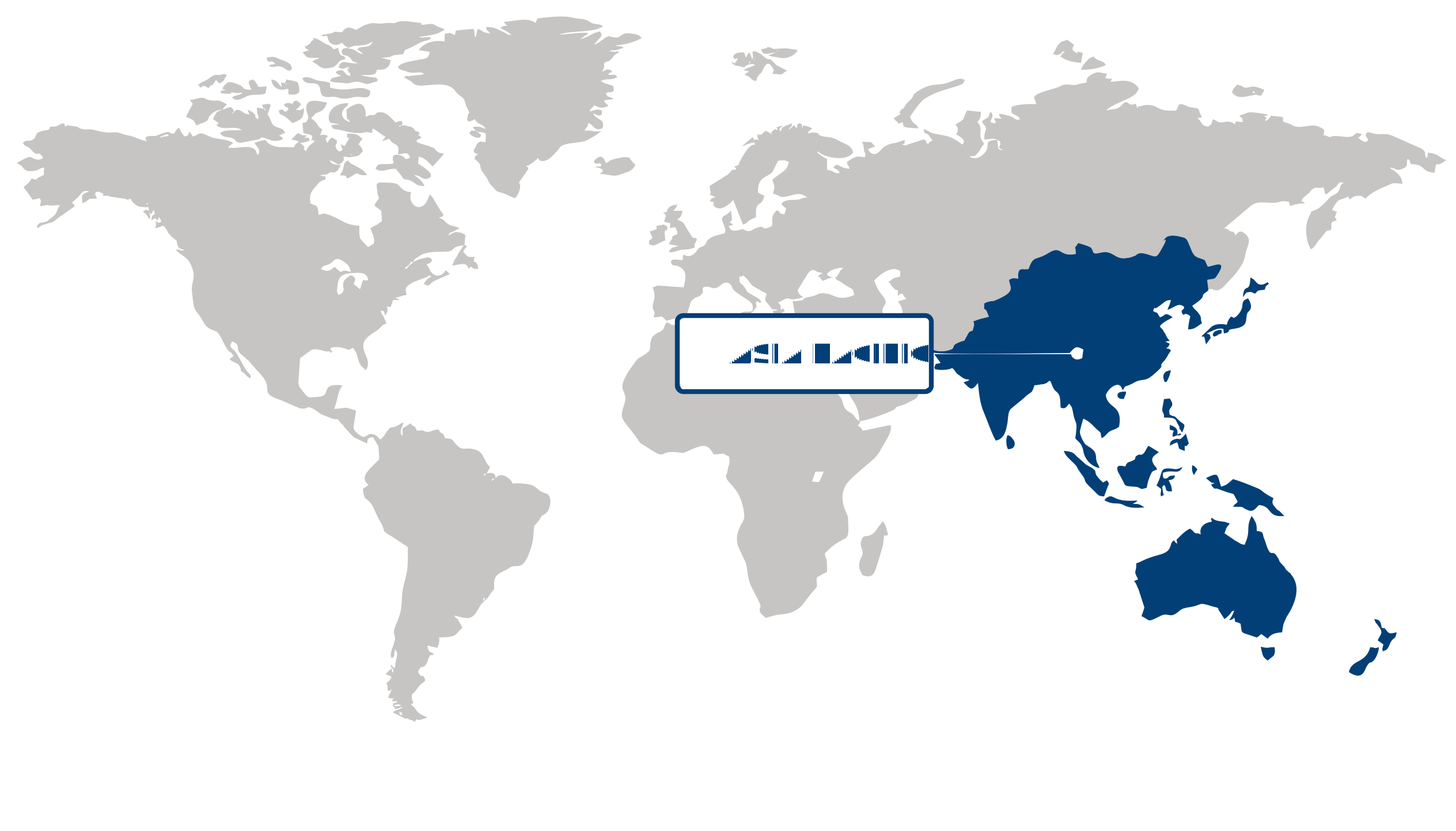
Asia Pacific captured over 40% of the global stainless steel magnetic pump market in 2025, making it the largest and fastest-growing region with a CAGR of 8.3%. This dominance stems from robust expansion in the chemical processing and pharmaceutical industries, which require corrosion-resistant, contamination-free pumping solutions. For instance, Mitsubishi Chemical Corporation’s recent facility upgrades in Japan underscore the region’s commitment to operational efficiency and strict quality controls, driving demand for advanced stainless steel magnetic pumps. Additionally, regulatory tightening around environmental safety in countries like China, as promoted by the Ministry of Ecology and Environment, further accelerates adoption of durable, leak-proof pump technologies. Enhanced manufacturing capabilities, coupled with digital integration in supply chains, reinforce Asia Pacific’s strong position. Looking ahead, the region’s sizable investments in industrial infrastructure and innovation provide significant growth opportunities for stainless steel magnetic pump manufacturers.
Japan is positioned as a pivotal hub in Asia Pacific’s stainless steel magnetic pump market, driven by its mature chemical and pharmaceutical sectors. Leading brands such as Fuji Electric have recently announced new product lines emphasizing energy efficiency and chemical resistance, reflecting growing demand for reliable, high-performance pumps in cleanroom and hazardous material environments. Japan’s stringent industrial standards and focus on minimizing emissions encourage adoption of magnetic pump technologies that reduce maintenance and environmental risks. This creates a strategic advantage, as Japan’s advanced R&D ecosystem supports continuous innovation, enhancing product competitiveness regionally and globally.
China significantly fuels Asia Pacific’s stainless steel magnetic pump market growth through rapid industrialization and expanding pharmaceutical manufacturing. Regulatory reforms led by the National Medical Products Administration promote higher quality standards, prompting companies like Beijing Jingyi Pump Manufacturing to scale up production of magnetic pumps tailored for corrosive and sanitary applications. China’s large-scale chemical plants and burgeoning biotechnology sector require robust, leak-free pumps to meet both operational efficiency and sustainability goals. This commercial momentum, combined with government incentives for domestic manufacturing and export, positions China as a critical driver of the region’s expanding market footprint in stainless steel magnetic pumps.
Europe Market Analysis:
Europe emerged as the fastest-growing region in the stainless steel magnetic pump market, registering a robust CAGR of 7.1%. This rapid expansion is primarily driven by the region's increasing emphasis on sustainable industrial processes and stringent environmental regulations encouraging the adoption of leak-free, energy-efficient pump technologies. Europe’s diverse industrial base, including chemical manufacturing, pharmaceuticals, and water treatment sectors, has accelerated demand for corrosion-resistant, maintenance-free magnetic pumps, as evidenced by the European Chemicals Agency’s updated standards promoting greener equipment. Furthermore, advanced digital manufacturing and supply chain integration spearheaded by industry leaders like Siemens and Grundfos enhance operational efficiencies and product innovation. Given the region’s robust regulatory framework and commitment to decarbonization, Europe offers substantial opportunities for market participants focusing on high-performance stainless steel magnetic pump solutions aligned with future sustainability and digital transformation trends.
Germany plays a pivotal role as Europe’s industrial powerhouse, significantly influencing the stainless steel magnetic pump market through its strong manufacturing and engineering sectors. German manufacturers’ preference for cutting-edge, reliable pump systems that comply with the Federal Environment Agency’s strict emission standards fuels demand. Companies such as KSB SE & Co. have introduced innovative magnetic drive pumps catering to the chemical and pharmaceutical industries, reflecting Germany’s focus on quality and operational excellence. Supply chain reliability supported by Germany’s logistics infrastructure further reinforces market growth. Strategically, Germany’s industrial rigor and regulatory demands position it as a key driver of innovation and adoption in Europe’s stainless steel magnetic pump market.
France contributes distinctively to the regional growth through its dynamic water treatment and nuclear energy sectors, which prioritize safety and contamination prevention—key factors favoring stainless steel magnetic pumps. The French Environment and Energy Management Agency (ADEME) has promoted sustainable water infrastructure investments, leading to increased procurement of corrosion-resistant and hermetically sealed pumps. French companies, including Schneider Electric, emphasize digital monitoring features, enhancing real-time pump performance management. This focus on sustainability and operational transparency underscores France’s strategic role in deepening Europe’s market penetration by aligning product innovation with stringent environmental and safety policies. Together, Germany and France reinforce Europe’s leadership trajectory, driving advanced technology adoption in the stainless steel magnetic pump market.
North America Market Trends:
North America maintained a notable presence in the stainless steel magnetic pump market, reflecting moderate growth driven by the region’s emphasis on industrial modernization and stringent environmental standards. The U.S. Environmental Protection Agency’s initiatives to reduce chemical leakage and improve fluid handling safety have heightened demand for corrosion-resistant and leak-free pump solutions, bolstering stainless steel magnetic pump adoption. Additionally, advancements in manufacturing automation and increasing investments in pharmaceuticals and chemical processing facilities, as reported by the North American Pump Manufacturers Association, have further stimulated market expansion. The region’s robust infrastructure and emphasis on sustainability, alongside supply chain refinements from local production hubs, create a favorable ecosystem for market players. Given these dynamics, North America is poised to offer sustained growth opportunities, particularly as industries respond to evolving regulatory frameworks and prioritize operational efficiency.
The U.S. holds a central role in North America’s stainless steel magnetic pump market, propelled by its proactive regulatory environment and innovation in industrial applications. The U.S. Department of Energy’s funding for energy-efficient industrial equipment encourages adoption of pumps that reduce operational costs and environmental impact. Furthermore, corporate announcements from companies like Flowserve Corporation highlight ongoing R&D in magnetic drive technology tailored for chemical and pharmaceutical sectors, underlining sustained demand. The expanding emphasis on digital monitoring and predictive maintenance, as seen in investments reported by the American Chemistry Council, supports integration of advanced stainless steel magnetic pumps into critical operations. This strategic focus on innovation and regulatory compliance positions the U.S. as a pivotal market, reinforcing North America’s overall growth trajectory in the sector.
| Parameter | North America | Asia Pacific | Europe | Latin America | MEA |
|---|---|---|---|---|---|
| Innovation Hub i Scale Nascent Developing Advanced | |||||
| Cost-Sensitive Region i Scale Low Medium High | |||||
| Regulatory Environment i Scale Restrictive Neutral Supportive | |||||
| Demand Drivers i Scale Weak Moderate Strong | |||||
| Development Stage i Scale Emerging Developing Developed | |||||
| Adoption Rate i Scale Low Medium High | |||||
| New Entrants / Startups i Scale Sparse Moderate Dense | |||||
| Macro Indicators i Scale Weak Stable Strong |
Segment Leadership and Growth Trends
Stainless Steel Magnetic Pump Market Share (%), by Product Type, 2026
Go beyond the chart, access full insights & data tables
Request Free Sample ReportCentrifugal magnetic pumps held the largest share in the stainless steel magnetic pump market in 2025, driven primarily by their widespread application in handling low-viscosity fluids across diverse industrial sectors. Their simple design and efficiency meet industrial demands for reliable, contamination-free fluid transfer, aligning well with increasing sustainability and safety standards. Companies like Hitachi and Grundfos have publicly emphasized centrifugal pump innovations that reduce maintenance costs and energy consumption, responding to regulatory frameworks such as those outlined by the U.S. Environmental Protection Agency (EPA). This segment’s technical advantages create strategic opportunities for both established manufacturers and emerging firms aiming to cater to precision-driven markets like pharmaceuticals and chemicals. Given ongoing industrial automation and the continuous shift toward cleaner operational processes, centrifugal magnetic pumps are poised to sustain their dominance in the near to medium term.
Analysis by Pump Capacity
Small capacity pumps (up to 50 GPM) represented the largest share of the stainless steel magnetic pump market in 2025, reflecting strong demand for versatile and compact pumping solutions in smaller industrial and process applications. Their suitability for precise fluid control in sectors such as food & beverage, pharmaceuticals, and water treatment elevates their appeal as customers increasingly prioritize operational flexibility and eco-friendly equipment. Leading companies like Flowserve have highlighted their focus on small capacity units designed to meet stringent safety regulations from agencies such as the European Chemicals Agency (ECHA). These pumps offer scalable growth potential for both incumbents and startups targeting niche applications and decentralized manufacturing setups. As industries continue shifting toward miniaturization and localized production, small capacity pumps will remain integral to market developments.
Analysis by Drive Type
Electric drive pumps accounted for the largest share in the stainless steel magnetic pump market in 2025, bolstered by a strong preference for energy-efficient, cost-effective electric drive systems in pumping equipment. Their compatibility with advanced control systems and lower emissions aligns with global energy-saving initiatives promoted by organizations such as the International Energy Agency (IEA). Manufacturers like Grundfos and KSB have publicly invested in electric drive technologies to enhance digital integration and predictive maintenance capabilities, responding to evolving customer demand for operational reliability and reduced lifecycle costs. The electric drive segment offers a strategic edge by enabling firms to leverage digital transformation trends and stricter environmental regulations. Given the accelerating adoption of renewable energy and automation, electric drive pumps are expected to maintain their critical role in the market landscape.
| Segment | Sub-Segment | Largest Segment | Fastest Growing |
|---|---|---|---|
| Product Type | Centrifugal Magnetic Pumps, Positive Displacement Magnetic Pumps | ||
| Pump Capacity | Small Capacity Pumps (Up to 50 GPM), Medium Capacity Pumps (51 to 200 GPM), Large Capacity Pumps (Above 200 GPM) | ||
| Drive Type | Electric Drive, Pneumatic Drive, Hydraulic Drive | ||
| Application | Chemical Processing, Water Treatment, Food and Beverage, Pharmaceuticals, Industrial Applications | ||
| End-User Industry | Agriculture, Oil and Gas, Pulp and Paper, Metals and Mining, Power Generation |
Competitive Landscape and Market Positioning
The competitive environment is marked by continuous technological refinement and strategic integrations. Leading companies frequently introduce advanced magnetic coupling designs enhancing efficiency and reducing leakage risks. Collaborations with technology firms and investments in precision manufacturing have accelerated product enhancements. Some have expanded their portfolios by assimilating niche specialists, fostering comprehensive offerings that appeal to stringent regulatory and operational requirements. These initiatives bolster resilience against market fluctuations, while enabling adaptation to evolving customer preferences, thereby reinforcing their foothold in innovation-driven market segments.
Strategic / Actionable Recommendations for Regional Players
In North America, enterprises should explore joint ventures with technology developers to integrate smart monitoring systems in magnetic pumps, addressing the growing demand for predictive maintenance in industrial sectors. Emphasizing customization capability while targeting high-value end users will secure competitive advantage.
Asia Pacific participants can capitalize on the expanding industrial base by forming partnerships that enhance access to advanced materials and coatings. Prioritizing innovation in energy-efficient magnetic pump designs tailored for emerging sub-sectors, such as chemical processing, will improve regional penetration.
European firms would benefit from focusing on collaborative research networks to develop environmentally sustainable pump technologies aligned with stringent environmental regulations. Leveraging heritage in precision manufacturing combined with digital enhancements can differentiate offerings in mature, quality-conscious markets.
| Company | Market Share | Company Revenue | Revenue CAGR (%) | Product Portfolio | Geographic Presence | Innovation / R&D Focus | Strategic Developments |
|---|---|---|---|---|---|---|---|
| No companies available. | |||||||
Industry Development/News
| Company Name | Date | Key Development |
|---|
Customize Your Report
Explore examples of how this report can be tailored to different research needs, including custom segments, additional topics or chapters, and related reports. Click a section of the wheel or its numbered marker to explore the available options.
Stainless Steel Magnetic Pump Market — Custom Segments
| Segment | Sub-Segment |
|---|---|
| No segment data available. | |
Stainless Steel Magnetic Pump Market — Custom TOC
| Custom Chapter | Custom Details | ||
|---|---|---|---|
| No custom TOC data available. | |||
Need a different cut of the data?
Request Custom ResearchHow much is the stainless steel magnetic pump industry expected to grow by 2035?
Which geographical region leads the stainless steel magnetic pump market market?
What region has posted the highest CAGR in the stainless steel magnetic pump sector?
Why does centrifugal magnetic pumps sub-segment dominate the product type segment of stainless steel magnetic pump sector?
How does small capacity pumps (up to 50 GPM) segment fare in the stainless steel magnetic pump industry?
What share does electric drive segment hold in the stainless steel magnetic pump sector as of 2025?
Where is the chemical processing segment seeing the strongest adoption within the stainless steel magnetic pump industry?
When did oil and gas sub-segment emerge as the largest sub-segment in the end-user industry segment of stainless steel magnetic pump sector?
Which companies dominate the stainless steel magnetic pump landscape?
Our Clients
"The team at Fundamental Business Insights & Consulting demonstrated a commitment to excellence, not only in the quality of the report but also in their client-centric approach."
FANUC
"The level of detail in the market segmentation provided were particularly noteworthy. The detailed country-level insights were also very helpful."
B&R Industrial Automation GmbH
"The consultant took the time to understand our specific business objectives, ensuring that the reports were tailored to address our unique challenges and opportunities."
KUKA SE & Co. KGaA
Our Research Team & Methodology
Every Fundamental Business Insights report is built by a dedicated vertical research team, validated through a structured primary-and-secondary methodology, and reviewed for accuracy before it reaches you.
Research Team Overview
Prepared by the Industrial Automation & Equipment Research Team
Delivery
Published
Demand
Available
Support
Trust & Compliance
Research Domains
10 coverage areasResearch Intelligence
| Source | Reference |
|---|---|
| International Society of Automation (ISA) | www.isa.org |
| International Organization for Standardization (ISO) | www.iso.org |
| National Institute of Standards and Technology (NIST) | www.nist.gov |
| IEEE | www.ieee.org |
| VDMA (German Mechanical Engineering Industry Association) | www.vdma.org |
| Association for Advancing Automation (A3) | www.automate.org |
| International Federation of Robotics (IFR) | ifr.org |
| ASME (American Society of Mechanical Engineers) | www.asme.org |
| ASHRAE | www.ashrae.org |
| American Society of Heating, Refrigerating and Air-Conditioning Engineers (ASHRAE) | www.ashrae.org |
| Material Handling Industry (MHI) | www.mhi.org |
| OSHA (Occupational Safety and Health Administration) | www.osha.gov |
| National Fire Protection Association (NFPA) | www.nfpa.org |
| ASTM International | www.astm.org |
| International Electrotechnical Commission (IEC) | www.iec.ch |
| Open Process Automation Forum (The Open Group) | www.opengroup.org/open-process-automation-forum |
| AGMA (American Gear Manufacturers Association) | www.agma.org |
| Association of Equipment Manufacturers (AEM) | www.aem.org |
| Food and Agriculture Organization (FAO) | www.fao.org |
| International Labour Organization (ILO) | www.ilo.org |
Research Workflow & Quality Assurance
Data Collection
Verified information gathered through primary and secondary research.
Data Triangulation
Cross-validation using multiple independent data sources.
Forecast Modelling
Market estimates developed using historical trends and analytical models.
Analyst Validation
Findings reviewed by domain experts for accuracy and consistency.
Editorial & Quality Review
Final editorial, quality, and compliance checks before publication.
Final Publication
Released after successful completion of the internal review process.
Report Coverage
📊 Market Assessment
- Market Size & Forecast
- Market Segmentation
- Regional Analysis
- Growth Drivers & Challenges
- Market Dynamics
🏢 Competitive Intelligence
- Competitive Landscape
- Company Profiles
- Competitive Benchmarking
- Mergers & Acquisitions
- Market Share Analysis or Key Company Strategies
🔍 Strategic Analysis
- Value Chain Analysis
- Porter's Five Forces
- PESTLE Analysis
- Pricing Trends
- Supply-Demand Analysis
🚀 Future Outlook
- Technology Landscape
- Regulatory Landscape
- Investment & Funding Landscape
- Emerging Opportunities
- Future Market Outlook
Have a question about this report or need a custom scope?
Request Customization