Sports Events Market Size & Forecasts 2026-2035, By Segments (Revenue Source, Age Group), Growth Opportunities, Innovation Landscape, Regulatory Shifts, Strategic Regional Insights (U.S., Japan, China, South Korea, UK, Germany, France), and Competitive Dynamics (IMG, Octagon, CSM Sport & Entertainment, Infront Sports & Media, Wasserman)
Market Size and Growth Outlook
Sports Events Market size is expected to advance from USD 303.56 billion in 2025 to USD 649.32 billion by 2035, registering a CAGR of more than 7.9% across 2026-2035. By 2026, the industry is anticipated to generate USD 324.61 billion in revenue.
Get more details on this report
Request Free Sample ReportSports Events Market Intelligence Snapshot
Regional Market Dynamics
Segment Momentum
Market Expansion Drivers
Leading Market Participants
Global Market Forecast Snapshot
Market Outlook
Regional and Segment Outlook
Market Growth Drivers and Industry Trends
The growing appeal of live sports and enhanced fan engagement is a pivotal driver shaping the sports events market. Advances in immersive technologies such as augmented reality (AR) and virtual reality (VR), highlighted by the recent initiatives from companies like Meta, are revolutionizing the fan experience, making events more interactive and accessible. Consumer preferences increasingly favor real-time, emotionally engaging content, encouraging event organizers to innovate on in-venue activations and digital fan platforms. This trend presents strategic opportunities for established players to deepen fan loyalty and monetize new engagement channels, while new entrants can leverage niche or emerging sports to cultivate dedicated audiences. As digital transformation accelerates, the sports events market is set to become more consumer-centric and experience-driven, fostering sustainable growth aligned with evolving fan expectations.
Increasing Sponsorship and Media Rights Investments
Robust increases in sponsorship and media rights investments are profoundly influencing the sports events market’s landscape. Major corporations such as Nike and Red Bull, and broadcasters like ESPN, are expanding financial commitments to secure exclusive rights and sponsorship deals, reflecting the high commercial value of sports content given its mass reach and engagement. Regulatory shifts around broadcasting rights and advertising standards, such as those outlined by the Federal Communications Commission (FCC), also shape deal structures. These investments enable event organizers to enhance production quality, expand global audience outreach, and innovate in advertising models. For incumbents, this driver offers avenues to amplify brand visibility and revenue streams, while new entrants can capitalize by targeting underrepresented sports or regions with tailored sponsorship portfolios. Continued demand for premium sports content is likely to sustain this upward investment trajectory.
Growth in Regional and Emerging Sports Events Markets
The expansion of regional and emerging sports events markets is markedly altering the competitive dynamics within the sports events market. Nations across Asia, Africa, and Latin America are investing heavily in sport infrastructure and international events, supported by policy initiatives from local governments, such as India’s Ministry of Youth Affairs and Sports. This diversification taps into younger, increasingly affluent populations who value culturally relevant sports offerings, creating new consumer bases. Established global players can leverage partnerships and localized content to penetrate these markets, while startups have a first-mover advantage in emerging disciplines or untapped locales. Enhanced connectivity and supply chain improvements facilitate event delivery and merchandise distribution, reinforcing market accessibility. This trend points to a more geographically and culturally pluralistic sports ecosystem, broadening growth prospects for the entire industry.
Industry Restraints:
Regulatory and Safety Compliance Challenges
Stringent regulatory frameworks governing crowd management, health protocols, and security impose significant operational constraints on sports events organizers. Agencies like the U.S. Occupational Safety and Health Administration (OSHA) and the European Union Agency for Fundamental Rights outline comprehensive safety standards that require costly investments in infrastructure and training. For instance, post-pandemic health mandates and enhanced security screenings have increased event preparation complexity and budgets, as demonstrated by recent compliance updates from FIFA ahead of World Cup events. These pressures curtail flexibility, particularly affecting smaller promoters with limited resources. Established firms must continuously adapt frameworks while new entrants face high barriers to market entry, delaying innovation and scalability. As global public safety expectations rise, compliance will remain a critical operational bottleneck, compelling market players to embed risk mitigation and regulatory agility into strategic planning.
Economic Volatility and Consumer Spending Sensitivity
Economic downturns and inflationary pressures directly constrain discretionary spending on sports entertainment, diminishing ticket sales, merchandise revenue, and sponsorship funding. According to a report by the World Bank, recent inflation spikes and economic uncertainties in key markets like the U.S. and Europe have dampened consumer willingness to invest in premium event experiences. This tightening of entertainment budgets has forced organizers such as Live Nation Entertainment to recalibrate pricing models and diversify revenue streams. Both entrenched companies and emerging event producers confront revenue unpredictability, complicating long-term investment decisions and sponsorship negotiations. As macroeconomic volatility persists in the near term, market participants will likely prioritize cost efficiency and flexible business models to mitigate fluctuating demand and protect profit margins.
| Growth Driver | Impact on CAGR | Regulatory Influence | Geographic Relevance | Adoption Rate | Impact Timeline |
|---|---|---|---|---|---|
| Rising popularity of live sports and fan engagement | 2.50% | Short term (≤ 2 yrs) | North America, Europe | Low | Fast |
| Increasing sponsorship and media rights investments | 2.30% | Medium term (2–5 yrs) | North America, Asia Pacific | Medium | Moderate |
| Growth in regional and emerging sports events markets | 2.10% | Long term (5+ yrs) | Asia Pacific, Latin America | Low | Moderate |
Unlock insights tailored to your business with our bespoke market research solutions.
Click to get your customized report now.
Regional Demand Dynamics
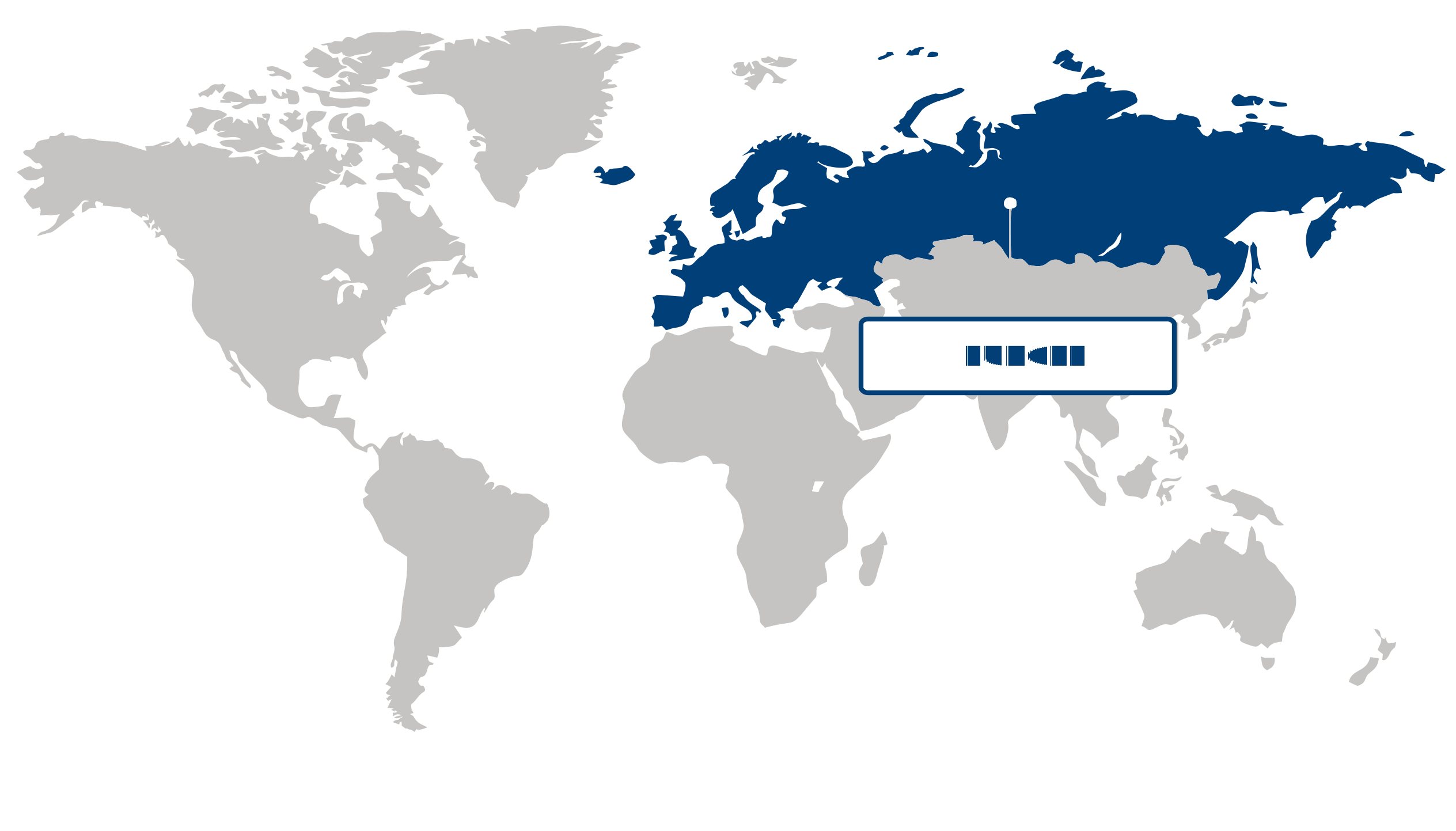
Europe dominated the sports events market in 2025, capturing more than 36% of the global share. This leadership is driven by strong fan engagement, extensive sponsorship expansion, and a rich portfolio of established international sporting events. European markets benefit from robust consumer spending patterns and a culture deeply rooted in sports such as football, tennis, and cycling. Regulatory frameworks facilitated by entities like UEFA encourage inclusive, well-organized events that attract global audiences. Additionally, digital innovations from companies like Infront Sports & Media have enhanced fan experiences and operational efficiency. These elements collectively position Europe as a resilient and attractive market, promising sustained growth through continuous investment and evolving consumer preferences.
Germany anchors the European sports events market with a powerful blend of fan enthusiasm and corporate sponsorship. Events such as the Bundesliga and the Berlin Marathon draw substantial viewership and participation, supported by government initiatives from the Federal Ministry of the Interior promoting sports inclusivity and infrastructure. Enhanced digital broadcasting by Deutsche Telekom and innovations in ticketing and fan engagement further uplift the market. Germany’s strategic focus on sustainability in sports facilities also aligns with broader trends, reinforcing its leadership role. These factors illustrate Germany’s pivotal responsibility in bolstering Europe’s dominance in the sports events market.
France plays a crucial role in Europe's sports events market, hosting marquee events like the Tour de France and Roland Garros, which generate significant international appeal and economic influx. The French government's funding through the Ministry of Sports and partnerships with global sponsors like LVMH have elevated the scale and quality of such events. Cultural passion and urban development strategies in cities like Paris, especially in light of the 2024 Olympics, create unique opportunities to expand participation and fan engagement. France’s ability to blend heritage with innovation reinforces the European market’s competitive edge, suggesting further potential for growth and diversified sports events offerings.
Asia Pacific Market Analysis:
Asia Pacific emerged as the fastest-growing region in the sports events market, registering a robust CAGR of 9.6%. This impressive expansion is fueled by significant investments in sports infrastructure combined with increasing disposable incomes across the region. Governments and private entities are actively funding world-class stadiums and multifunctional sports complexes, as evidenced by initiatives from the Japan Sports Council and the China General Administration of Sport. This infrastructure surge is complemented by expanding middle-class populations inclined towards spending on entertainment and leisure activities. Additionally, consumer preferences have shifted towards experiential engagement in live sports, amplified by digital enhancements such as augmented reality viewing experiences. The region’s economic resilience and concerted policy support for sports tourism position it as a strategic hub offering vast opportunities for stakeholders in the sports events market.
Japan stands out as a pivotal market within Asia Pacific due to its advanced sports infrastructure and strong consumer spending power. The nation's commitment to hosting global events, demonstrated by preparations for tournaments like the Rugby World Cup and initiatives from the Japan Sport Council, reflects an upward trajectory in demand for high-quality sports experiences. Japanese consumers exhibit a preference for premium, tech-enhanced viewing, driving innovations in event delivery. This aligns with Japan's regulatory focus on promoting sports as a pillar of social engagement and economic growth, which the Ministry of Education, Culture, Sports, Science and Technology actively supports. Japan’s capacity to attract international sports events reinforces Asia Pacific's leadership by drawing global audiences and investments into the regional sports events market.
China, as a dominant force in the Asia Pacific sports events market, benefits considerably from escalating infrastructure investments and growing disposable income levels. The China General Administration of Sport has overseen the development of multiple large-scale venues supporting both domestic leagues and international competitions, fueling heightened consumer interest. Additionally, China's urbanization and rising middle class contribute to expanding attendance and viewership, while digitalization efforts—such as live streaming and mobile ticketing innovations—enhance consumer engagement. The government’s strategic emphasis on positioning China as a global sports hub, evident in policies promoting sports tourism and event hosting, underlines its critical role. This dynamic strengthens Asia Pacific’s market position by expanding the scope and scale of sports events across multiple segments and demographics.
North America Market Trends:
North America held a commanding share in the sports events market, driven by a blend of advanced technological adoption, diverse consumer spending habits, and a robust infrastructure supporting large-scale events. The region's ability to integrate immersive digital experiences and data analytics into fan engagement has enhanced event monetization, as highlighted by Major League Baseball’s recent partnerships with technology firms like Hawk-Eye Innovations. Additionally, sustainability initiatives promoted by the Green Sports Alliance reflect growing environmental priorities, influencing venue operations and event planning. The regulatory landscape, characterized by stable policies on event safety and broadcasting rights, further strengthens market resilience. North America’s cultural diversity and high disposable income underpin steady demand for varied sports, reinforcing its pivotal role. Going forward, the region's innovative integration of technology and sustainability offers substantial opportunities to capture expanding audiences and optimize operational efficiency in the sports events market.
The U.S. remains the cornerstone of the North American sports events market, where consumer enthusiasm and corporate sponsorship form a potent growth engine. Rising demand for hybrid and in-person events underscores shifting consumption patterns, with organizations like the National Football League capitalizing on advanced streaming platforms to broaden international reach. Regulatory bodies such as the U.S. Department of Justice have recently updated guidelines on sports betting, stimulating ancillary revenue streams while ensuring compliance. The competitive intensity among event organizers drives continual innovation in fan experiences, while collaborations with technology innovators spur digital transformation. This dynamic ecosystem highlights the U.S. as a strategic fulcrum for regional expansion, reinforcing its leadership in driving future growth opportunities across North America’s sports events market.
| Parameter | North America | Asia Pacific | Europe | Latin America | MEA |
|---|---|---|---|---|---|
| Innovation Hub i Scale Nascent Developing Advanced | |||||
| Cost-Sensitive Region i Scale Low Medium High | |||||
| Regulatory Environment i Scale Restrictive Neutral Supportive | |||||
| Demand Drivers i Scale Weak Moderate Strong | |||||
| Development Stage i Scale Emerging Developing Developed | |||||
| Adoption Rate i Scale Low Medium High | |||||
| New Entrants / Startups i Scale Sparse Moderate Dense | |||||
| Macro Indicators i Scale Weak Stable Strong |
Segment Leadership and Growth Trends
Sports Events Market Share (%), by Revenue Source, 2026
Go beyond the chart, access full insights & data tables
Request Free Sample ReportThe sponsorship and others segment held largest share in the sports events market in 2025, driven primarily by the expansion of brand partnerships and advertising revenue streams. This segment benefits from evolving consumer engagement strategies, as companies increasingly invest in immersive and digital sponsorship formats, aligning with shifting preferences toward experiential marketing. Industry leaders such as IMG and AEG Worldwide have demonstrated how integrated sponsorship models fuel sustained revenue inflows. The globalization of major sporting events also attracts multinational sponsors, amplifying cross-border advertising opportunities. For established firms and new entrants, this segment offers strategic advantages through diversified income sources beyond ticket sales, fostering resilience amid fluctuating attendance. Ongoing advancements in data analytics and digital media integrations indicate that sponsorship and allied revenue streams will maintain pivotal relevance, adapting swiftly to digital transformation trends within the sports ecosystem.
Analysis by Age Group
The 21 to 40 years segment dominated the sports events market in 2025, buoyed by higher engagement and substantial spending on live events by this core adult demographic. This age group’s affinity for live experiences and digital interactivity drives demand patterns favoring premium ticketing, merchandise, and participation in hybrid event formats. Authorities like Nielsen Sports emphasize that this demographic’s consumer behavior influences sponsorships and content delivery models. Urbanization and cultural trends promoting active lifestyles further consolidate this group’s dominance. Market players gain strategic opportunities by tailoring offerings to the preferences and digital consumption habits of these consumers, while also leveraging app-based ticketing and personalized marketing. With sustained focus on immersive experiences and connectivity, the 21 to 40 years segment is expected to maintain prominence, responding dynamically to evolving technological enhancements and demographic shifts.
| Segment | Sub-Segment | Largest Segment | Fastest Growing |
|---|---|---|---|
| Revenue Source | Ticket Sale, Sponsorship, Others | ||
| Age Group | Below 20 years, 21 to 40 years, 41 years and above |
Competitive Landscape and Market Positioning
The competitive landscape is characterized by pronounced collaboration and expansion efforts among these top players, reinforcing their market dominance. Strategic integrations of digital platforms and media distribution capabilities are reshaping operational effectiveness. For instance, alliances formed by Infront and Genius Sports enrich content delivery and fan interaction, while acquisitions by Wasserman and Lagardère extend service portfolios and client reach. Red Bull Media House’s investments in experiential marketing complement traditional event management, setting new standards for audience engagement. Through dynamic enhancements in technology adaptation and partner ecosystems, these entities continuously elevate their competitive positioning and market responsiveness.
Strategic / Actionable Recommendations for Regional Players
North American entities should consider fostering synergistic ties with technology innovators to harness advanced analytics and immersive viewer experiences, capitalizing on the region's mature sports market and appetite for high-value content.
Emerging players in the Asia Pacific region could benefit from aligning with global event organizers to penetrate high-growth sports sub-segments, leveraging expanding digital infrastructure and rising consumer interest to accelerate regional footprint and brand recognition.
In Europe, stakeholders might pursue diversified content partnerships and enhance digital transformation initiatives, combining traditional sport event expertise with emerging technologies to maintain relevance amid intensifying competition and shifting audience preferences.
| Company | Market Share | Company Revenue | Revenue CAGR (%) | Product Portfolio | Geographic Presence | Innovation / R&D Focus | Strategic Developments |
|---|---|---|---|---|---|---|---|
| No companies available. | |||||||
Industry Development/News
| Company Name | Date | Key Development |
|---|
Customize Your Report
Explore examples of how this report can be tailored to different research needs, including custom segments, additional topics or chapters, and related reports. Click a section of the wheel or its numbered marker to explore the available options.
Sports Events Market — Custom Segments
| Segment | Sub-Segment |
|---|---|
| No segment data available. | |
Sports Events Market — Custom TOC
| Custom Chapter | Custom Details | ||
|---|---|---|---|
| No custom TOC data available. | |||
Need a different cut of the data?
Request Custom ResearchWhat is the projected value of the sports events industry by 2035?
Which territory dominates the sports events market share rankings?
Which geographical area is witnessing the highest growth rate in the sports events sector?
Why does sponsorship and others sub-segment dominate the revenue source segment of sports events sector?
How much is the 21 to 40 years segment expected to grow in the sports events industry beyond 2025?
Who are the leading players in the sports events landscape?
Our Clients
"The report provided us with a clear direction, and the level of detail was beyond what we expected. I would definitely recommend their services to others."
Haier Appliances
"The collaboration with Fundamental Business Insights has added significant value to our decision-making process, and we look forward to continuing this partnership for our future market research requirements."
Luxottica Group S.p.A.
"The team at FBI delivered an exceptional research report. The insights on industry innovations were particularly impressive and added a lot of value to the overall report."
Nike
Our Research Team & Methodology
Every Fundamental Business Insights report is built by a dedicated vertical research team, validated through a structured primary-and-secondary methodology, and reviewed for accuracy before it reaches you.
Research Team Overview
Prepared by the Consumer Goods & Services Research Team
Delivery
Published
Demand
Available
Support
Trust & Compliance
Research Intelligence
Research Workflow & Quality Assurance
Data Collection
Verified information gathered through primary and secondary research.
Data Triangulation
Cross-validation using multiple independent data sources.
Forecast Modelling
Market estimates developed using historical trends and analytical models.
Analyst Validation
Findings reviewed by domain experts for accuracy and consistency.
Editorial & Quality Review
Final editorial, quality, and compliance checks before publication.
Final Publication
Released after successful completion of the internal review process.
Report Coverage
📊 Market Assessment
- Market Size & Forecast
- Market Segmentation
- Regional Analysis
- Growth Drivers & Challenges
- Market Dynamics
🏢 Competitive Intelligence
- Competitive Landscape
- Company Profiles
- Competitive Benchmarking
- Mergers & Acquisitions
- Market Share Analysis or Key Company Strategies
🔍 Strategic Analysis
- Value Chain Analysis
- Porter's Five Forces
- PESTLE Analysis
- Pricing Trends
- Supply-Demand Analysis
🚀 Future Outlook
- Technology Landscape
- Regulatory Landscape
- Investment & Funding Landscape
- Emerging Opportunities
- Future Market Outlook
Have a question about this report or need a custom scope?
Request Customization