Solid State Transformer Market Size & Forecasts 2026-2035, By Segments (Product, Component, Application), Growth Opportunities, Innovation Landscape, Regulatory Shifts, Strategic Regional Insights (U.S., Japan, China, South Korea, UK, Germany, France), and Competitive Dynamics (ABB, Siemens, Schneider Electric, GE Grid Solutions, Mitsubishi Electric)
Market Size and Growth Outlook
Solid State Transformer Market size is forecast to climb from USD 149.05 billion in 2025 to USD 411.92 billion by 2035, expanding at a CAGR of over 10.7% during 2026-2035. Industry revenue in 2026 is projected at USD 163.27 billion.
Get more details on this report
Request Free Sample ReportSolid State Transformer Market Intelligence Snapshot
Regional Market Dynamics
Segment Momentum
Market Expansion Drivers
Leading Market Participants
Global Market Forecast Snapshot
Market Outlook
Regional and Segment Outlook
Market Growth Drivers and Industry Trends
The increasing necessity for resilient and adaptable power distribution infrastructure is a primary growth driver in the solid state transformer market. Enhanced vulnerability to extreme weather and cyber threats has underscored the limitations of conventional transformers, encouraging utilities and industrial consumers to seek agile alternatives. The U.S. Department of Energy’s initiatives promoting grid modernization exemplify this shift, emphasizing rapid fault isolation and restoration capabilities that solid state transformers inherently provide. This trend broadens the addressable market for both legacy players expanding their technology portfolios and disruptive firms innovating highly customizable solutions. As national grids prioritize reliability amid evolving risk landscapes, the solid state transformer market is poised to benefit from continued investment in smart, flexible power delivery assets aligned with resilience mandates.
Advancements in Solid-State Transformer Technology
Technical progress in power semiconductor devices, thermal management, and compact converter architectures is driving rapid evolution of the solid state transformer market. Companies like ABB and General Electric are deploying next-generation prototypes that achieve higher efficiency, lower losses, and reduced size, solving earlier adoption barriers such as cost and integration complexity. These innovations enable SSTs to support a diverse range of voltage levels and power ratings, opening applications from data centers to electric vehicle fast-charging infrastructure. The competitive dynamics in this space favor firms able to leverage intellectual property and agile R&D to deliver scalable, commercially viable SST solutions. Continued refinement of semiconductor materials and control algorithms will sustain this technology-driven catalyst, fostering differentiation opportunities in a maturing ecosystem.
Integration of SSTs in Smart Grids and Microgrids
The growing deployment of smart grids and microgrids fuels demand for solid state transformers as critical enablers of decentralized and bi-directional power flows. Regulatory frameworks promoting renewable integration, such as the EU’s Clean Energy Package, underscore the importance of flexible transformers capable of real-time voltage regulation and power quality control. Utilities and microgrid developers like Schneider Electric actively incorporate SSTs to optimize network efficiency and support distributed energy resources such as solar and energy storage. This integration creates strategic openings for SST vendors to collaborate with grid operators and technology integrators, accelerating market penetration. The continued evolution of digital grid management platforms will anchor SSTs as foundational components of resilient, sustainable power ecosystems globally.
Industry Restraints:
High Initial Capital Costs
The steep upfront investment required for solid state transformers (SSTs) remains a critical barrier restricting their broader adoption. SST technology demands advanced semiconductor components and complex power electronics systems, driving initial costs significantly above traditional transformers. According to the Electric Power Research Institute (EPRI), these capital expenses limit deployment primarily to high-value applications where cost justification is clearer, such as grid modernization projects or microgrids. This financial hurdle dampens enthusiasm among utilities and infrastructure investors wary of uncertain returns. Established transformer manufacturers face pressure to balance R&D investments against slower adoption rates, while startups encounter difficulties securing funding and scaling production. Moving forward, cost reductions through innovation and economies of scale are essential; otherwise, these prohibitive initial expenses will continue to delineate SST deployment to niche markets, delaying widespread market penetration over the medium term.
Complex Regulatory and Standardization Environment
Regulatory uncertainty and fragmented standards impede the solid state transformer market’s growth by complicating development and deployment processes. SST integration introduces novel grid management dynamics that fall outside many existing electrical codes and interconnection requirements, as noted by the Institute of Electrical and Electronics Engineers (IEEE). These unclear compliance pathways create operational inefficiencies, slowing project approvals and increasing costs for stakeholders. Utilities and technology providers face challenges navigating varying regional standards and certification protocols, impacting cross-border commercialization. The absence of unified regulatory frameworks undermines investor confidence and prolongs time-to-market. Unless industry bodies and regulatory authorities accelerate harmonization efforts, these governance challenges will continue restricting SST market expansion, favoring incumbents with regulatory expertise and limiting agile new entrants in the near to medium timeframe.
| Growth Driver | Impact on CAGR | Regulatory Influence | Geographic Relevance | Adoption Rate | Impact Timeline |
|---|---|---|---|---|---|
| Demand for resilient and flexible power distribution systems | 3.50% | Short term (≤ 2 yrs) | North America, Europe; Spillover: Asia Pacific | Medium | Fast |
| Advancements in solid-state transformer technology | 3.60% | Medium term (2–5 yrs) | Europe, North America; Spillover: Asia Pacific | Medium | Moderate |
| Integration of SSTs in smart grids and microgrids | 3.60% | Long term (5+ yrs) | North America, Europe; Spillover: Asia Pacific | Low | Moderate |
Explore Growth Opportunities
Request Free Sample ReportRegional Demand Dynamics
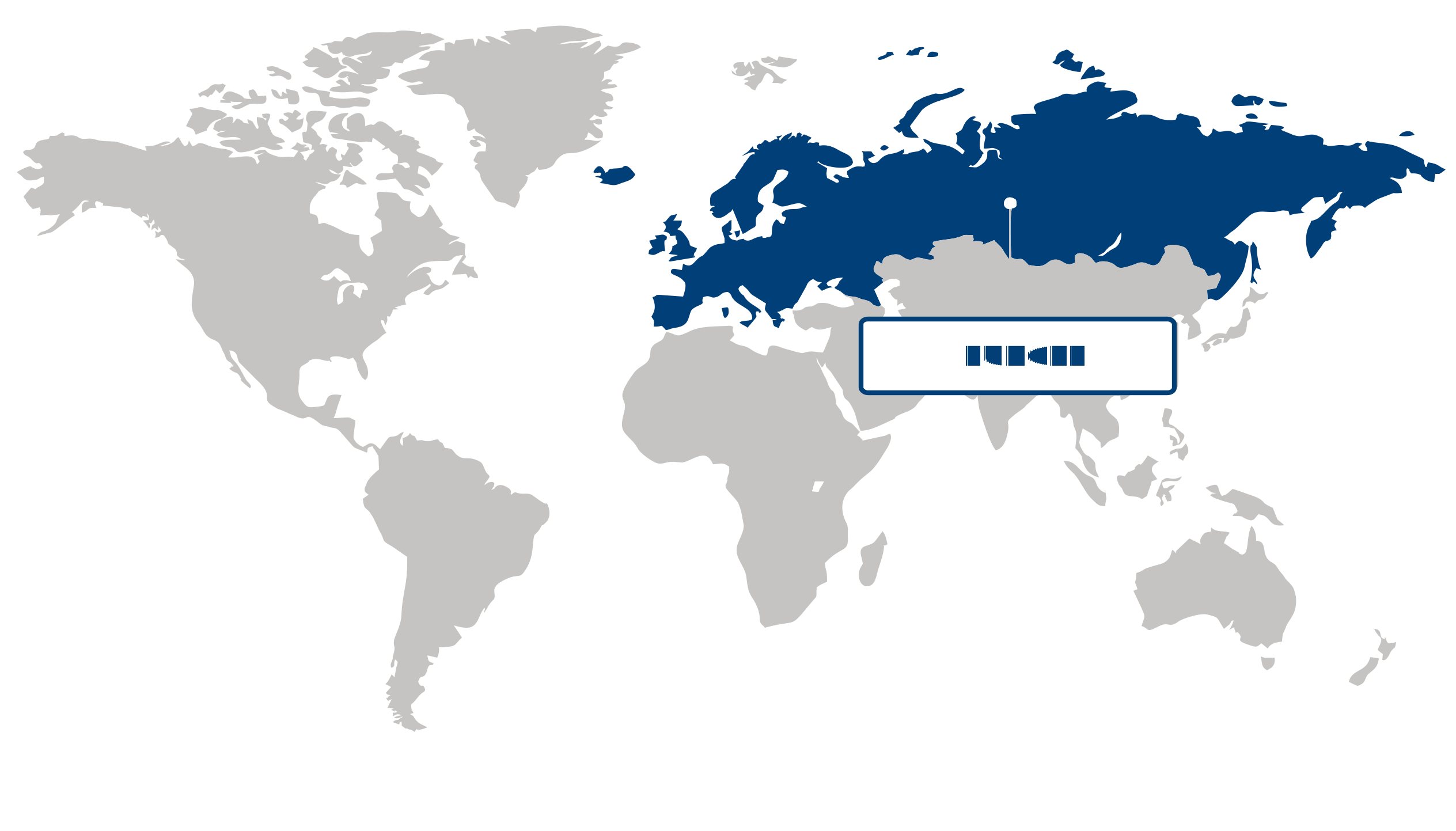
Europe captured more than 36% of the global solid state transformer market in 2025, asserting its position as the largest regional player. This leadership is largely driven by the extensive integration of renewable energy and the push for advanced grid modernization across the continent. Key initiatives from the European Union, such as the Green Deal and Horizon Europe program, prioritize energy transition and infrastructure resilience, encouraging utilities and governments to adopt cutting-edge technologies like solid state transformers. These dynamics foster increased investments from industry leaders like Siemens and ABB, who are actively piloting projects in smart grids. The region’s sophisticated regulatory environment and strong sustainability agenda further amplify demand, enhancing operational efficiencies and energy management. Looking forward, Europe’s sustained commitment to decarbonization and digital transformation signals a robust trajectory of growth and innovation in the solid state transformer market.
Germany anchors the European solid state transformer market, benefiting from its role as a renewable energy powerhouse. The country’s Energiewende policy mandates a swift transition towards decentralized energy and smart grid adoption, directly stimulating demand for advanced power electronics solutions. Siemens’ strategic initiatives in Germany illustrate how corporate investments align with national priorities, particularly in pilot deployments of solid state transformer technology within urban and industrial utilities. This environment has also attracted startups and technology developers, bolstering the country’s competitive edge. Consequently, Germany’s focus on integrating renewables with an efficient and resilient grid architecture reinforces Europe’s broader market momentum.
France plays a pivotal role in Europe’s solid state transformer market, shaped by its extensive nuclear infrastructure and growing renewable capacity. The French Environment and Energy Management Agency (ADEME) actively supports grid modernization projects, fostering collaboration between public and private sectors to improve power distribution efficiency. Companies such as Schneider Electric leverage this supportive ecosystem to enhance solid state transformer adoption, particularly in smart city initiatives and industrial zones. France’s balanced energy portfolio and regulatory encouragement for technological innovation contribute to consistent investment flows. This distinct market dynamic underscores France’s strategic importance in reinforcing Europe’s leadership in the evolving solid state transformer landscape.
Asia Pacific Market Analysis:
Asia Pacific emerged as the fastest-growing region in the solid state transformer market, registering a robust CAGR of 14.2%. This rapid expansion is primarily driven by the region’s accelerated rollout of smart-grid infrastructure coupled with widespread adoption of renewable energy sources. Governments across Asia Pacific are aggressively pursuing energy modernization to enhance grid reliability and efficiency, responding to rising urbanization and environmental concerns. For instance, the Asia-Pacific Economic Cooperation (APEC) has highlighted regional initiatives emphasizing digital utilities and grid decentralization, facilitating higher integration of solar and wind power. This transformation is further supported by progressive regulations promoting sustainability and energy security, alongside increasing investments in advanced electrical components. The combination of technology-driven upgrades and policy backing positions Asia Pacific as a dynamic hub for solid state transformer deployment, promising sustained market opportunities driven by evolving energy ecosystems.
Japan plays a pivotal role within Asia Pacific’s solid state transformer market, leveraging its advanced technological capabilities and progressive energy policies. The country’s commitment to smart grid development, especially following the 2011 Fukushima disaster, has accelerated adoption of resilient and digitalized grid components, including solid state transformers. Initiatives by the New Energy and Industrial Technology Development Organization (NEDO) have promoted innovative transformer technologies to support distributed generation and microgrid applications. Japanese utilities’ focus on enhancing energy efficiency and integrating renewable energy sources aligns with consumer demand for sustainability and stable power supply. Japan’s strong manufacturing base and early-stage technological innovation continue to create competitive advantages, reinforcing the region’s leadership in next-generation transformer solutions.
China’s contribution to Asia Pacific’s solid state transformer market is equally influential, driven by ambitious national policies targeting grid modernization and carbon neutrality goals by 2060. The State Grid Corporation of China, the world's largest utility, is actively deploying smart-electricity networks incorporating solid state transformers to improve load management and accommodate renewable integration. Increased government funding through the National Energy Administration supports research and pilot projects that boost the local supply chain and optimize digital grid operations. Consumer preferences for reliable rural electrification and urban energy management underpin demand growth. China's scale, combined with its policy-driven infrastructure investments and growing domestic innovation capabilities, underscores the country’s strategic importance and enhances Asia Pacific’s dominant position in the solid state transformer market.
North America Market Trends:
North America held a commanding share in the solid state transformer market, driven by its advanced electrical infrastructure and increasing integration of smart grid technologies. The region’s emphasis on modernizing the power grid to enhance energy efficiency and reliability, coupled with strong regulatory support from entities like the U.S. Department of Energy, has accelerated deployment. Growing industrial automation and the shift towards renewable energy sources have created rising demand for compact, efficient power distribution solutions, as noted by the Electric Power Research Institute (EPRI). Additionally, North America benefits from a highly skilled workforce and well-established supply chains, facilitating rapid innovation and commercialization. These regional strengths position North America to capitalize on the convergence of digital transformation and sustainability imperatives, unlocking significant growth potential in the solid state transformer market.
The U.S. remains the pivotal market within North America for solid state transformers, benefiting from robust government incentives aimed at grid modernization and clean energy adoption. The U.S. Department of Energy’s Grid Modernization Initiative has spurred investments in advanced transformer technologies to support increased renewable integration and enhance grid resilience. Key players like General Electric and Siemens have actively advanced pilot projects and product launches, highlighting the country’s role as an innovation hub. This dynamic boosts the U.S.’s ability to lead regional market expansion and set industry standards, reinforcing North America’s overall strategic advantage in the evolving solid state transformer landscape.
| Parameter | North America | Asia Pacific | Europe | Latin America | MEA |
|---|---|---|---|---|---|
| Innovation Hub i Scale Nascent Developing Advanced | |||||
| Cost-Sensitive Region i Scale Low Medium High | |||||
| Regulatory Environment i Scale Restrictive Neutral Supportive | |||||
| Demand Drivers i Scale Weak Moderate Strong | |||||
| Development Stage i Scale Emerging Developing Developed | |||||
| Adoption Rate i Scale Low Medium High | |||||
| New Entrants / Startups i Scale Sparse Moderate Dense | |||||
| Macro Indicators i Scale Weak Stable Strong |
Segment Leadership and Growth Trends
Solid State Transformer Market Share (%), by Product, 2026
Go beyond the chart, access full insights & data tables
Request Free Sample ReportThe distribution solid state transformer segment held the largest share in the solid state transformer market in 2025, driven primarily by the rapid smart grid rollout and distributed energy resource integration at distribution levels. This segment benefits from demand for highly flexible, intelligent grid components that enhance load balancing and facilitate renewable integration, aligning with utilities' sustainability priorities and regulatory incentives from agencies such as the U.S. Department of Energy’s Office of Electricity. Increased adoption by grid operators aims to optimize network resilience amid evolving energy demands. For both established manufacturers and new entrants, distribution SSTs offer strategic entry into smart grid modernization projects. Given ongoing digital transformation initiatives and regulatory push toward decentralized energy systems, this segment is poised to maintain its leadership with continuous enhancements in grid operational efficiency and scalability.
Analysis by Component
Converters represented the largest share within the solid state transformer market in 2025, underscoring their critical function in enabling bidirectional power flow and precise voltage conversion in SST systems. The essential nature of converters aligns with increased emphasis on flexible power electronics to meet dynamic demand profiles, referenced by technology developments highlighted in Siemens’ recent power electronics advancements. This segment’s prominence is also favored by evolving semiconductor technologies facilitating higher efficiency and reliability, catering to customer preferences for compact, low-loss solutions. For incumbents and startups alike, converters offer a focal point for innovation and supply chain optimization. Sustained investment in semiconductor fabrication and control algorithm improvements ensures that converters will remain foundational in SST ecosystems through the near to medium term.
Analysis by Application
The power (distribution) grid segment dominated the solid state transformer market in 2025 due to significant investments aimed at modernizing distribution grids with advanced, efficient power electronic systems. This focus enhances grid stability, load management, and renewable integration, supported by regulatory frameworks such as the European Network of Transmission System Operators for Electricity (ENTSO-E) promoting smart grid upgrades. Demand is fueled by utilities’ pursuit of operational resilience and automation, catering to shifting energy consumption patterns and climate targets. For both established firms and emerging players, this segment provides opportunities in large-scale infrastructure contracts and technology partnerships. Continued government-backed modernization programs and evolving grid architectures will sustain the relevance and growth of SST solutions in power distribution networks for years to come.
| Segment | Sub-Segment | Largest Segment | Fastest Growing |
|---|---|---|---|
| Product | Distribution Solid State Transformer, Traction Solid State Transformer, Power Solid State Transformer | ||
| Component | Converters, Switches, High-Frequency Transformers, Others | ||
| Application | Electric Vehicle (EV) Charging Stations, Traction Locomotives, Alternative Power Generation, Power (Distribution) Grid, Others |
Unlock insights tailored to your business with our bespoke market research solutions.
Click to get your customized report now.
Competitive Landscape and Market Positioning
The competitive landscape is marked by concerted efforts to enhance technological capabilities and market reach. These key players have intensified collaborative ventures and integrated cutting-edge research to refine power electronics and enhance transformer efficiency. Initiatives such as launching next-generation solid state units and embedding intelligence for grid resilience reveal a keen focus on future-proofing. This dynamic fosters heightened competition, driving rapid advancement and customization tailored to varying network complexities and renewable integration challenges.
Strategic / Actionable Recommendations for Regional Players
North American entities can benefit from deepening cross-industry engagements that combine traditional grid expertise with emerging digital technologies. This approach enhances responsiveness to evolving utility requirements and accelerates adoption in smart microgrid deployments.
In Asia Pacific, capitalizing on regional infrastructure expansion by aligning with local utilities and technology incubators will strengthen market foothold. Emphasizing scalable modular solutions tailored to emerging economies’ diverse needs could unlock significant growth avenues.
European participants should focus on integrated energy ecosystems by partnering with renewable technology firms and regulatory bodies. Prioritizing innovations that support grid decentralization and sustainability would differentiate offerings amidst stringent environmental directives.
| Company | Market Share | Company Revenue | Revenue CAGR (%) | Product Portfolio | Geographic Presence | Innovation / R&D Focus | Strategic Developments |
|---|---|---|---|---|---|---|---|
| No companies available. | |||||||
Industry Development/News
| Company Name | Date | Key Development |
|---|
Customize Your Report
Explore examples of how this report can be tailored to different research needs, including custom segments, additional topics or chapters, and related reports. Click a section of the wheel or its numbered marker to explore the available options.
Solid State Transformer Market — Custom Segments
| Segment | Sub-Segment |
|---|---|
| No segment data available. | |
Solid State Transformer Market — Custom TOC
| Custom Chapter | Custom Details | ||
|---|---|---|---|
| No custom TOC data available. | |||
Need a different cut of the data?
Request Custom ResearchWhat is the forecasted size of the solid state transformer industry?
Which territory demonstrates the strongest presence in the solid state transformer market?
Who is driving the fastest regional growth in the solid state transformer sector?
How much is the distribution solid state transformer segment expected to grow in the solid state transformer industry beyond 2025?
What factors give converters segment a competitive edge in the solid state transformer sector?
Which is the largest sub-segment within the application segment for solid state transformer industry?
What are the prominent companies operating in the solid state transformer landscape?
Our Clients
"The information presented in the report was genuinely insightful. The data was clear and easy to understand, which made it much easier to interpret the findings."
Amara Raja Group
"The responsiveness and professionalism exhibited by the team were exemplary. They were readily available to address queries, provide clarifications, and offer additional insights."
ONGC
"The reports offered a comprehensive analysis of various segments within the market. The detailed insights into market trends, and regulatory landscapes were excellent."
TotalEnergies
Our Research Team & Methodology
Every Fundamental Business Insights report is built by a dedicated vertical research team, validated through a structured primary-and-secondary methodology, and reviewed for accuracy before it reaches you.
Research Team Overview
Prepared by the Energy & Power Research Team
Delivery
Published
Demand
Available
Support
Trust & Compliance
Research Intelligence
Research Workflow & Quality Assurance
Data Collection
Verified information gathered through primary and secondary research.
Data Triangulation
Cross-validation using multiple independent data sources.
Forecast Modelling
Market estimates developed using historical trends and analytical models.
Analyst Validation
Findings reviewed by domain experts for accuracy and consistency.
Editorial & Quality Review
Final editorial, quality, and compliance checks before publication.
Final Publication
Released after successful completion of the internal review process.
Report Coverage
📊 Market Assessment
- Market Size & Forecast
- Market Segmentation
- Regional Analysis
- Growth Drivers & Challenges
- Market Dynamics
🏢 Competitive Intelligence
- Competitive Landscape
- Company Profiles
- Competitive Benchmarking
- Mergers & Acquisitions
- Market Share Analysis or Key Company Strategies
🔍 Strategic Analysis
- Value Chain Analysis
- Porter's Five Forces
- PESTLE Analysis
- Pricing Trends
- Supply-Demand Analysis
🚀 Future Outlook
- Technology Landscape
- Regulatory Landscape
- Investment & Funding Landscape
- Emerging Opportunities
- Future Market Outlook
Have a question about this report or need a custom scope?
Request Customization