Soil Conditioners Market Size & Growth Forecast 2027–2036, By Segments (Application, Soil Type, Form, Type), Regional Demand Trends (North America, Asia Pacific, Europe), Key Country Insights (U.S., Japan, South Korea, Germany, France, Italy), and Competitive Landscape
Market Size and Growth Outlook
Soil Conditioners Market size was worth USD 3.2 Billion in 2026 and is poised to grow at 8.69% CAGR between 2027 and 2036, reaching USD 7.36 Billion by 2036. The industry revenue for 2027 is assessed at USD 3.44 Billion.
Get more details on this report
Request Free Sample ReportSoil Conditioners Market Intelligence Snapshot
Regional Market Dynamics
- Asia Pacific leads due to expanding agriculture, soil degradation concerns, agricultural modernization, and growing adoption of sustainable farming practices.
- Government initiatives, commercial farming expansion, food demand, and the need to improve soil productivity, water retention, nutrient availability, and fertilizer efficiency are supporting adoption.
Segment Momentum
- Agriculture dominated the market with a 61.73% share in 2026, driven by demand for improved soil structure, nutrient availability, water retention, and sustainable crop production practices.
- Hydrogels are the fastest-growing form segment due to their ability to retain and gradually release water, supporting water-use efficiency and climate-resilient farming practices.
Market Expansion Drivers
- Increasing adoption of sustainable farming practices enhancing soil productivity management
- Rising food production requirements supporting greater agricultural input utilization
- Expansion of regenerative agriculture programs boosting demand for soil enhancement products
Leading Market Participants
- Prominent companies in the soil conditioners market include BASF SE (Germany), Solvay S.A. (Belgium), Evonik Industries AG (Germany), Syngenta AG (Switzerland), Dow Inc. (United States), Croda International Plc (United Kingdom), Novozymes A/S (Denmark), Clariant International AG (Switzerland), TIMAC AGRO International (France), Eastman Chemical Company (United States)
Global Market Forecast Snapshot
Market Outlook
- 2026 Market Size: USD 3.2 Billion
- 2027 Estimated Market Size: USD 3.44 Billion
- Projected Market Size: USD 7.36 Billion by 2036
- Growth Forecast: 8.69% CAGR (2027-2036)
Regional and Segment Outlook
- Leading Regional Market: Asia Pacific
- High-Growth Regional Hub: Asia Pacific
- Core Revenue Segment: Agriculture (Application) | Loam (Soil Type) | Water Soluble (Form) | Organic (Type)
- Emerging Opportunity Segment: Agriculture (Application) | Sand (Soil Type) | Hydrogels (Form) | Organic (Type)
Market Growth Drivers and Industry Trends
Increasing adoption of sustainable farming practices enhancing soil productivity management
Modern agricultural producers face the ongoing challenge of restoring degraded farm plots and maximizing long-term crop yields without depleting local nutrient reserves. Growers increasingly implement eco-friendly soil management protocols that rely on specialized amendments to optimize water retention and aggregate stability. The soil conditioners market growth is driven by this agricultural shift, as farming enterprises invest in organic and synthetic compounds that improve root zone aeration and microbial activity. Agronomists recommend these restorative treatments to reverse compaction and protect arable land from wind and water erosion over successive planting seasons.
Rising food production requirements supporting greater agricultural input utilization
Population growth and shifting dietary preferences place immense pressure on the global farming sector to expand harvest volumes across limited arable acreage. To meet these elevated output targets, agricultural enterprises apply targeted chemical and organic enhancers designed to unlock nutrient availability and correct sub-optimal soil ph levels. The soil conditioners market experiences sustained demand as commercial farms seek reliable ways to boost crop resilience against environmental stressors. Enhanced nutrient uptake ultimately translates into higher marketable yields per acre, securing food supply chains in key agricultural regions.
Expansion of regenerative agriculture programs boosting demand for soil enhancement products
Agricultural policy frameworks and corporate sustainability initiatives heavily encourage farming models focused on carbon sequestration and biological soil restoration. Regenerative farming initiatives will propel the soil conditioners market growth as growers adopt specialized amendments designed to revitalize exhausted land and foster healthy root ecosystems. Farm managers utilize these biological and mineral inputs to rebuild soil organic matter, creating a resilient foundation for long-term crop production and environmental stewardship.
| Growth Driver | Impact on CAGR | Regulatory Influence | Geographic Relevance | Adoption Rate | Impact Timeline |
|---|---|---|---|---|---|
| Increasing adoption of sustainable farming practices enhancing soil productivity management | 2% | Moderate | Europe, Asia Pacific | High | Near Term |
| Rising food production requirements supporting greater agricultural input utilization | 1.8% | Low | Asia Pacific, Latin America | High | Mid Term |
| Expansion of regenerative agriculture programs boosting demand for soil enhancement products | 1.4% | Moderate | North America, Europe | Emerging | Mid Term |
Unlock insights tailored to your business with our bespoke market research solutions.
Click to get your customized report now.
Regional Demand Dynamics
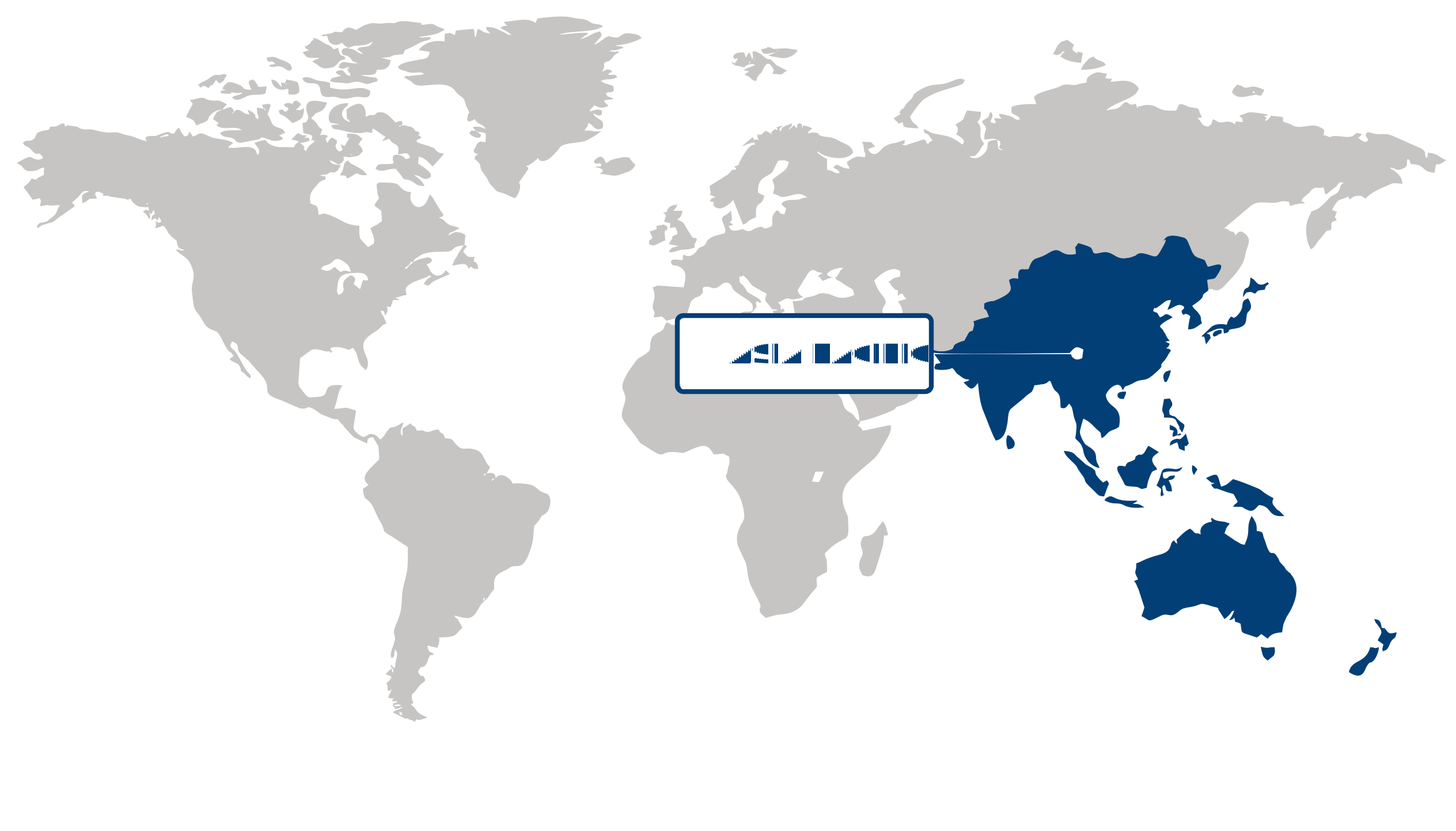
Asia Pacific (Largest & Fastest-Growing Region)
Asia Pacific led the soil conditioners market in 2026 and is also anticipated to remain the fastest-growing regional market, supported by expanding agricultural activity, increasing pressure to improve soil productivity, and growing awareness of sustainable farming practices. Soil degradation, nutrient depletion, and declining soil quality are encouraging farmers to adopt conditioners that improve soil structure, water retention, aeration, and nutrient availability. Rapid agricultural modernization across emerging economies is further creating opportunities for products designed to enhance crop productivity while supporting more efficient use of fertilizers and irrigation resources. In addition, government initiatives promoting soil health, sustainable agriculture, and improved farm productivity are strengthening adoption, while increasing demand for food from growing populations is encouraging agricultural producers to improve the efficiency and resilience of cultivated land. The expansion of commercial farming and greater use of modern agricultural inputs are expected to further support regional market development.
| Parameter | North America | Asia Pacific | Europe | Latin America | MEA |
|---|---|---|---|---|---|
| Innovation Hub i Scale Nascent Developing Advanced | |||||
| Cost-Sensitive Region i Scale Low Medium High | |||||
| Regulatory Environment i Scale Restrictive Neutral Supportive | |||||
| Demand Drivers i Scale Weak Moderate Strong | |||||
| Development Stage i Scale Emerging Developing Developed | |||||
| Adoption Rate i Scale Low Medium High | |||||
| New Entrants / Startups i Scale Sparse Moderate Dense | |||||
| Macro Indicators i Scale Weak Stable Strong |
Key Country Insights
United States 🇺🇸
Regenerative Farming SupportThe U.S. soil conditioners market benefits from increasing interest in regenerative farming and soil health improvement. Growers across the U.S. are adopting products that enhance soil structure, improve water retention, and support long-term crop productivity.
Germany 🇩🇪
Precision Soil ManagementGermany is integrating soil conditioners into precision agriculture practices focused on sustainable land management. German producers are selecting solutions that optimize nutrient availability while maintaining soil quality across intensive farming systems.
Japan 🇯🇵
High-Value Crop CareJapan prioritizes soil conditioners for intensive cultivation of specialty crops and limited arable land. Farmers in Japan increasingly use advanced formulations that improve soil fertility and moisture balance while supporting consistent agricultural output.
South Korea 🇰🇷
Sustainable Cultivation PracticesSouth Korea is strengthening demand for soil conditioners that improve cultivation efficiency and environmental performance. Agricultural producers in South Korea are incorporating soil improvement products to maintain productive farmland under intensive cultivation conditions.
France 🇫🇷
Vineyard Soil EnhancementFrance applies soil conditioners extensively across vineyards and diversified crop production to preserve soil quality. Farmers in France are adopting organic and mineral-based formulations that enhance soil performance while supporting sustainable agricultural practices.
Italy 🇮🇹
Specialty Agriculture FocusItaly uses soil conditioners to improve productivity across horticulture, vineyards, and orchard cultivation. Italian growers are prioritizing products that enhance soil moisture management and fertility while protecting long-term agricultural performance.
Segment Leadership and Growth Trends
Soil Conditioners Market Share (%), by Application, 2026
Go beyond the chart, access full insights & data tables
Request Free Sample ReportApplication Segment Analysis: Agriculture (Largest & Fastest-Growing Segment)
The agriculture application segment dominated the soil conditioners market with a share of 61.73% in 2026 and also emerged as the fastest-growing segment. Its strong position is driven by the critical role soil conditioners play in improving soil structure, enhancing nutrient availability, and supporting sustainable crop production. Rising attention toward agricultural productivity and soil health management has encouraged widespread adoption of these products across diverse farming systems. The segment continues to benefit from increasing awareness of long-term soil fertility preservation and the need to address challenges associated with intensive cultivation practices. As growers seek solutions that improve water retention, nutrient efficiency, and overall crop performance, the use of soil conditioners in agricultural applications is expected to expand further, reinforcing the segment’s leadership within the market.
Soil Type Segment Analysis: Loam (Largest Segment) vs Sand (Fastest-Growing Segment)
The loam soil segment accounted for the largest share of 38.02% in 2026. Loam soils are widely recognized for their balanced composition and favorable characteristics for crop cultivation, making them a key area for soil conditioning applications. The use of soil conditioners in loam soils helps maintain optimal soil structure, improve nutrient management, and support consistent agricultural output, contributing to the segment’s leading market position.
The sand soil segment is the fastest-growing category due to increasing efforts to overcome limitations associated with poor water retention and lower nutrient-holding capacity. Soil conditioners are increasingly applied in sandy soils to enhance moisture conservation and improve soil productivity. Growing cultivation activities in regions with sandy soil profiles and the emphasis on efficient resource utilization are supporting the expansion of this segment.
Form Segment Analysis: Water Soluble (Largest Segment) vs Hydrogels (Fastest-Growing Segment)
The water-soluble form segment held the largest share in 2026. Its leadership is attributed to ease of application, rapid integration into soil systems, and the ability to distribute beneficial compounds efficiently throughout the root zone. Water-soluble soil conditioners are widely utilized across agricultural operations because they can be incorporated into existing irrigation and soil management practices with minimal complexity.
The hydrogels segment is witnessing the fastest growth owing to its superior capacity to retain and gradually release water within the soil. This characteristic is becoming increasingly valuable in regions facing water scarcity and irregular rainfall patterns. As agricultural stakeholders prioritize water-use efficiency and climate-resilient farming practices, demand for hydrogel-based soil conditioning solutions continues to strengthen.
| Segment | Sub-Segment | Largest Segment | Fastest Growing |
|---|---|---|---|
| Application | Agriculture, Constructions & Mining, Others | Agriculture | Agriculture |
| Soil Type | Loam, Sand, Peat, Silt, Clay, Others | Loam | Sand |
| Form | Water Soluble, Hydrogels | Water Soluble | Hydrogels |
| Type | Inorganic, Organic | Organic | Organic |
Competitive Landscape and Market Positioning
Top players in the soil conditioners market:
- BASF SE (Germany)
- Solvay S.A. (Belgium)
- Evonik Industries AG (Germany)
- Syngenta AG (Switzerland)
- Dow, Inc. (United States)
- Croda International Plc (United Kingdom)
- Novozymes A/S (Denmark)
- Clariant International AG (Switzerland)
- TIMAC AGRO International (France)
- Eastman Chemical Company (United States)
The soil conditioners market is shaped by a mix of established agricultural input providers and specialized solution developers competing to address changing soil health requirements. Larger participants benefit from broader distribution networks and formulation capabilities, while niche suppliers differentiate through application-specific products designed for organic farming, water retention, and nutrient management needs. Competitive intensity is increasingly moving toward product effectiveness, sustainability attributes, and the ability to provide integrated soil improvement solutions as growers seek more resilient cultivation practices.
| Company | Market Share | Company Revenue | Revenue CAGR (%) | Product Portfolio | Geographic Presence | Innovation / R&D Focus | Strategic Developments |
|---|---|---|---|---|---|---|---|
| BASF SE (Germany) | |||||||
| Solvay S.A. (Belgium) | |||||||
| Evonik Industries AG (Germany) | |||||||
| Syngenta AG (Switzerland) | |||||||
| Dow Inc. (United States) | |||||||
| Croda International Plc (United Kingdom) | |||||||
| Novozymes A/S (Denmark) | |||||||
| Clariant International AG (Switzerland) | |||||||
| TIMAC AGRO International (France) | |||||||
| Eastman Chemical Company (United States) |
Industry Development/News
| Company Name | Date | Key Development |
|---|---|---|
| Sustainable Agro Solutions | Jan-26 | Sustainable Agro Solutions acquired Ceres Biotics, expanding its portfolio in biological solutions and soil health. The strategic acquisition enhances the company's capabilities in microorganism-based agricultural products, significantly strengthening its commercial offerings for sustainable crop nutrition and soil conditioning applications. |
| Mukka Proteins Limited | Aug-25 | Mukka Proteins Limited was empanelled by Bengaluru Solid Waste Management Limited to establish a 200–300 TPD black soldier fly-based organic waste processing facility, with long-term plans to expand to 1,000 TPD. The project drives the commercial production of value-added agricultural inputs and organic soil solutions. |
| AMVAC GreenSolutions | Jul-24 | AMVAC GreenSolutions entered into a strategic partnership with Biome Makers to evaluate the impact of biological products on soil health. Leveraging BeCrop technology to analyze cotton crops, the collaboration focuses on optimizing the soil microbiome and validating the performance of AMVAC's B Sure and iNvigorate agricultural inputs. |
| Innovafeed | Apr-24 | Innovafeed expanded into the United States by inaugurating its North American Insect Innovation Center in Decatur, Illinois. Utilizing agricultural by-products from ADM, the facility scales the production of insect-based ingredients, including its Hilucia Frass natural fertilizer, providing sustainable alternatives for the soil conditioners market. |
| Huma | Feb-24 | Huma expanded its presence in specialty agricultural and horticultural markets through the acquisition of Gro-Power. The transaction broadens Huma's product portfolio, integrating advanced soil conditioning and plant nutrition solutions to enhance its competitive positioning in the turf and ornamental segments. |
| Sustainable Agro Solutions | — | Sustainable Agro Solutions secured seven-figure financial backing to drive the expansion of its agricultural recycling business into new regional markets. The investment scales the company's operations and enhances its commercial footprint within the sustainable agricultural inputs and soil health solutions sector. |
Customize Your Report
Explore examples of how this report can be tailored to different research needs, including custom segments, additional topics or chapters, and related reports. Click a section of the wheel or its numbered marker to explore the available options.
Soil Conditioners Market — Custom Segments
| Segment | Sub-Segment |
|---|---|
| Crop Type | Cereals & Grains, Oilseeds & Pulses, Fruits & Vegetables, Commercial & Plantation Crops, Turf & Ornamentals |
| Farm Size | Small Farms, Medium Farms, Large Farms, Commercial Agricultural Operations |
| Distribution Channel | Direct Sales, Agricultural Cooperatives & Associations, Specialty Distributors, Online & Retail Channels |
Soil Conditioners Market — Custom TOC
| Custom Chapter | Custom Details |
|---|---|
| Regenerative Agriculture Adoption Outlook |
|
| Crop-Wise Demand Opportunity Assessment |
|
| Precision Agriculture Integration Opportunities |
|
Need a different cut of the data?
Request Custom ResearchHow much is the soil conditioners market worth?
How is the soil conditioners industry projected to perform over the next decade?
How are sustainable farming practices driving demand for soil conditioners?
Why are regenerative agriculture initiatives creating opportunities for the soil conditioners market?
Why is agriculture the leading application segment in the soil conditioners market?
How are hydrogel-based soil conditioners gaining adoption compared with other forms?
Why does Asia Pacific lead the soil conditioners market?
What is driving rapid soil conditioners growth in Asia Pacific?
What are the key competitors in the soil conditioners landscape?
Our Clients
"The report helped us understand emerging consumer trends in our product category. It clarified where to focus innovation for the next product launch."
LyondellBasell
"The regional forecast section was incredibly useful. We were able to identify two new potential partners in Europe thanks to the vendor mapping you included."
SABIC
"We appreciated how actionable the recommendations were. It guided us to improve supply chain resilience."
Olin Corporation
Our Research Team & Methodology
Every Fundamental Business Insights report is built by a dedicated vertical research team, validated through a structured primary-and-secondary methodology, and reviewed for accuracy before it reaches you.
Research Team Overview
Prepared by the Chemicals & Materials Research Team
Delivery
Published
Demand
Available
Support
Trust & Compliance
Research Domains
10 coverage areasResearch Intelligence
| Source | Reference |
|---|---|
| American Chemistry Council (ACC) | www.americanchemistry.com |
| European Chemical Industry Council (Cefic) | cefic.org |
| International Council of Chemical Associations (ICCA) | icca-chem.org |
| European Chemicals Agency (ECHA) | echa.europa.eu |
| U.S. Environmental Protection Agency (EPA) | www.epa.gov |
| ASTM International | www.astm.org |
| International Organization for Standardization (ISO) | www.iso.org |
| National Institute of Standards and Technology (NIST) | www.nist.gov |
| Plastics Industry Association (PLASTICS) | www.plasticsindustry.org |
| European Biplastics | www.european-bioplastics.org |
| The Adhesive and Sealant Council (ASC) | www.ascouncil.org |
| National Association of Corrosion Engineers (AMPP) | www.ampp.org |
| Society of Plastics Engineers (SPE) | www.4spe.org |
| International Fertilizer Association (IFA) | www.fertilizer.org |
| CropLife International | croplife.org |
| Packaging Europe | packagingeurope.com |
| Flexible Packaging Association (FPA) | www.flexpack.org |
| Battery Council International (BCI) | batterycouncil.org |
| International Copper Association (ICA) | internationalcopper.org |
| World Steel Association | worldsteel.org |
Research Workflow & Quality Assurance
Data Collection
Verified information gathered through primary and secondary research.
Data Triangulation
Cross-validation using multiple independent data sources.
Forecast Modelling
Market estimates developed using historical trends and analytical models.
Analyst Validation
Findings reviewed by domain experts for accuracy and consistency.
Editorial & Quality Review
Final editorial, quality, and compliance checks before publication.
Final Publication
Released after successful completion of the internal review process.
Report Coverage
📊 Market Assessment
- Market Size & Forecast
- Market Segmentation
- Regional Analysis
- Growth Drivers & Challenges
- Market Dynamics
🏢 Competitive Intelligence
- Competitive Landscape
- Company Profiles
- Competitive Benchmarking
- Mergers & Acquisitions
- Market Share Analysis or Key Company Strategies
🔍 Strategic Analysis
- Value Chain Analysis
- Porter's Five Forces
- PESTLE Analysis
- Pricing Trends
- Supply-Demand Analysis
🚀 Future Outlook
- Technology Landscape
- Regulatory Landscape
- Investment & Funding Landscape
- Emerging Opportunities
- Future Market Outlook
Have a question about this report or need a custom scope?
Request Customization