Soccer Goalkeeper Glove Market Size & Forecasts 2026-2035, By Segments (Finger Protection, Palm Type, Purpose, Material, Cut), Growth Opportunities, Innovation Landscape, Regulatory Shifts, Strategic Regional Insights (U.S., Japan, China, South Korea, UK, Germany, France), and Competitive Dynamics (Adidas, Nike, Puma, Uhlsport, Reusch)
Market Size and Growth Outlook
Soccer Goalkeeper Glove Market size is likely to expand from USD 1.35 billion in 2025 to USD 1.98 billion by 2035, posting a CAGR above 3.9% across 2026-2035. The industry’s revenue potential for 2026 is USD 1.39 billion.
Get more details on this report
Request Free Sample ReportSoccer Goalkeeper Glove Market Intelligence Snapshot
Regional Market Dynamics
Segment Momentum
Market Expansion Drivers
Leading Market Participants
Global Market Forecast Snapshot
Market Outlook
Regional and Segment Outlook
Market Growth Drivers and Industry Trends
The growing involvement of youth in soccer significantly propels the soccer goalkeeper glove market, as younger players demand high-quality, durable equipment tailored to their developing skills. Organizations like FIFA have actively promoted grassroots soccer programs globally, highlighting the sport’s accessibility and inclusivity. This surge in youth participation shifts consumer behavior towards frequent replacement and upgrading of gloves, emphasizing comfort and protection for emerging athletes. Established manufacturers such as Adidas and Puma can leverage this trend by developing entry-level gloves that combine affordability with performance features. Meanwhile, new entrants focusing on specialized youth gear have the opportunity to capture niche markets. As youth soccer programs continue expanding, driven by community initiatives and school partnerships, demand for goalkeeper gloves designed specifically for younger players is expected to sustain market momentum.
Expansion of Professional and Amateur Soccer Academies
The rise in professional and amateur soccer academies worldwide is reshaping the soccer goalkeeper glove market by creating a structured environment for player development and equipment standardization. Entities like La Liga’s youth academies and the U.S. Soccer Development Academy emphasize skill enhancement and protective gear, encouraging consistent use of high-performance gloves. This institutional growth fosters partnerships between academies and glove manufacturers, evident in Nike’s collaboration with elite European academies to supply gloves optimized for technical training. The market benefits from increased glove sales as academies mandate specific gear standards, providing established brands a reliable channel for bulk distribution. Additionally, small innovators can partner with academies to introduce cutting-edge glove technologies tailored to competitive training, reinforcing the market’s evolution towards specialized athletic equipment in structured learning settings.
Innovation in Goalkeeper Glove Materials and Design
Advancements in materials and glove design are a critical growth driver within the soccer goalkeeper glove market, enhancing performance characteristics like grip, flexibility, and durability. Companies such as Reusch and Uhlsport have introduced innovations using latex compounds and 3D ergonomic fits, responding to evolving goalkeeper needs under competitive conditions. These innovations align with growing consumer demands for personalized, high-tech sports equipment, influenced by digital transformation and material science breakthroughs. Regulatory bodies overseeing equipment standards also facilitate innovation by certifying advanced glove models, encouraging technological differentiation. For established players, continuous R&D investment is essential to maintain competitive advantage, while startups with novel material innovations can disrupt traditional designs. This climate of innovation fosters a competitive market landscape, where sustained development will meet evolving athlete preferences and reinforcing product value.
Industry Restraints:
Raw Material Cost Volatility and Supply Chain Disruptions
Fluctuating prices and inconsistent availability of essential raw materials such as latex and synthetic fabrics significantly constrain the soccer goalkeeper glove market. For instance, the International Rubber Study Group highlights persistent latex price volatility influenced by weather-related production issues in major sourcing countries like Thailand and Indonesia. This unpredictability raises production costs, compelling manufacturers like Adidas and Nike to either absorb expenses, reducing margins, or pass costs onto consumers, affecting demand elasticity. Additionally, global logistics disruptions prolong lead times, as evidenced by supply bottlenecks reported by Puma in recent quarterly disclosures. For both legacy brands and emerging players, these challenges complicate inventory management and undermine competitive agility. As environmental concerns spur sourcing diversification, volatility is expected to persist, requiring market actors to intensify supply chain resilience and consider alternative materials to maintain profitability and product availability.
Stringent Quality and Safety Standards
Regulatory frameworks mandating rigorous performance and safety standards further restrict innovation and market expansion. Regulatory bodies such as FIFA and the European Committee for Standardization (CEN) enforce compliance with specifications concerning grip, durability, and protective features, limiting the adoption of novel materials and designs that lack certification. Notably, attempts by smaller brands to introduce eco-friendly, biodegradable gloves face protracted testing phases under FIFA’s equipment approval process, delaying market entry. These barriers elevate compliance costs and time-to-market, disproportionately impacting new entrants lacking established regulatory expertise. Established incumbents often leverage their certification capabilities as competitive moats. Looking ahead, as sports governing bodies tighten regulations to enhance player safety and environmental compliance, these standards will remain pivotal in framing product development strategies and market accessibility.
| Growth Driver | Impact on CAGR | Regulatory Influence | Geographic Relevance | Adoption Rate | Impact Timeline |
|---|---|---|---|---|---|
| Increasing youth participation in soccer | 1.20% | Short term (≤ 2 yrs) | Europe, North America | Low | Fast |
| Expansion of professional and amateur soccer academies | 1.00% | Medium term (2–5 yrs) | Asia Pacific, North America | Low | Moderate |
| Innovation in goalkeeper glove materials and design | 0.80% | Long term (5+ yrs) | Europe, North America | Medium | Moderate |
Unlock insights tailored to your business with our bespoke market research solutions.
Click to get your customized report now.
Regional Demand Dynamics
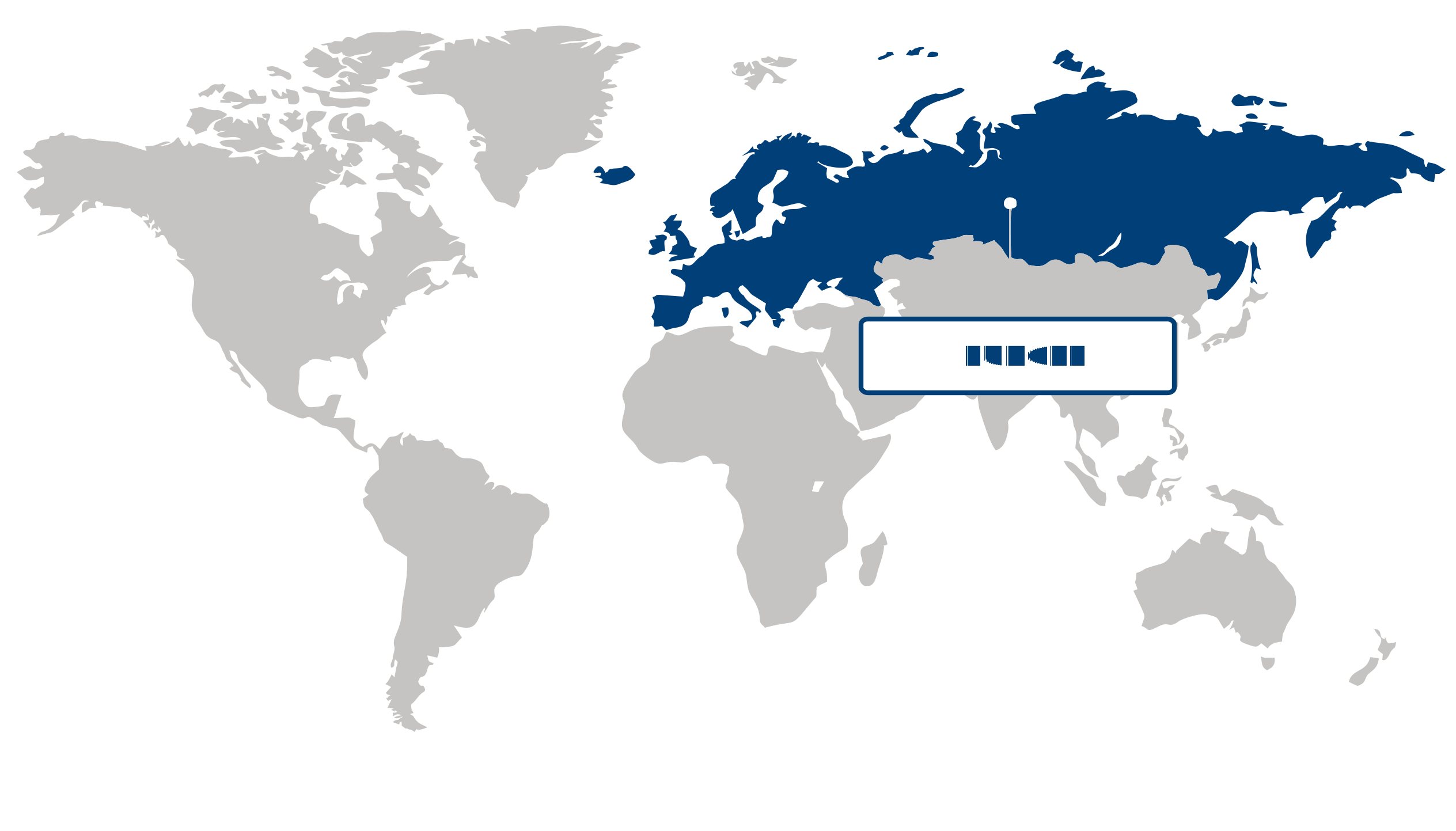
Europe captured more than 39.20% of the global soccer goalkeeper glove market in 2025, emerging as the largest regional player driven by the deep-rooted popularity of professional soccer leagues and high youth participation. The continent's sophisticated consumer base favors performance-enhancing and technologically advanced gloves, as seen in Adidas’s innovation initiatives headquartered in Germany. Furthermore, supportive policies promoting grassroots sports development in countries across the EU sustain consistent demand. The region’s robust supply chains and widespread retail networks bolster availability and quick market response, while increasing awareness around sustainability nudges manufacturers to adopt eco-friendly materials. According to the Union of European Football Associations (UEFA), ongoing investments in youth soccer expand the future customer base, reinforcing Europe’s market dominance and positioning it as a key hub for technological and product advancements in goalkeeper gloves.
Germany anchors the European soccer goalkeeper glove market with its intense professional soccer culture and top-tier clubs like Bayern Munich fueling consumer enthusiasm. German regulations emphasize product safety and quality, prompting brands such as Puma to enhance durability and grip features, showcased in their latest releases announced via the DFL (Deutsche Fußball Liga). Additionally, youth academy programs supported by the German Football Association (DFB) sustain high participation rates, maintaining steady demand for specialized gloves. This combination of regulatory rigor and developmental support consolidates Germany’s vital role in strengthening Europe’s soccer goalkeeper glove market.
In France, the soccer goalkeeper glove market benefits from a vibrant soccer ecosystem fueled by widespread participation and competitive leagues like Ligue 1. Leading brands leverage partnerships with clubs such as Paris Saint-Germain to boost visibility, as detailed by the French Football Federation (FFF). French consumers exhibit a preference for stylish yet high-performance gloves, guiding brands to tailor product lines accordingly. Government-backed initiatives to integrate soccer into school curricula further expand youth engagement, driving continuous uptake of goalkeeper gloves. France’s strategic focus on blending cultural affinity with innovation adds complementary momentum to Europe’s broader market growth.
Asia Pacific Market Analysis:
Asia Pacific emerged as the fastest-growing region in the soccer goalkeeper glove market, registering a robust CAGR of 5.46%. This rapid growth is propelled by the rising popularity of football across youth and amateur levels, coupled with escalating investments in sports infrastructure. Government-backed initiatives, such as those reported by the Asian Football Confederation’s development programs, have significantly enhanced accessibility to quality training facilities and stadiums. Shifts in consumer preferences favoring premium and performance-driven goalkeeper gloves have further intensified demand. Moreover, the region’s digital transformation in retail, including e-commerce platforms supported by companies like Alibaba and Rakuten, has expanded reach to diverse consumer segments. The continuous improvement in supply chain logistics within countries like China and Japan ensures timely availability of innovative products. These factors collectively make Asia Pacific a highly attractive market, offering fertile ground for new entrants and established brands seeking sustained growth opportunities in the soccer goalkeeper glove sector.
Japan plays a pivotal role in the Asia Pacific soccer goalkeeper glove market, driven by its mature consumer base and steady institutional support for football. The Japan Football Association’s ongoing grassroots programs have cultivated a strong interest in the sport, leading to increased demand for specialized goalkeeper equipment tailored to performance and durability. Japanese consumers demonstrate a preference for high-quality, technologically advanced gloves, prompting local and international brands to innovate accordingly. Retail expansions through companies such as Mizuno and global partnerships with brands like Nike further deepen market penetration. Policy efforts aimed at promoting youth sports and sport-related wellness initiatives reinforce spending on football gear. Japan’s blend of sophisticated consumer behavior and regulatory encouragement positions it as a critical contributor to Asia Pacific’s dynamic market growth.
China’s rapidly expanding soccer goalkeeper glove market reflects the country’s vigorous investments in sports infrastructure and widespread adoption of football, particularly among younger demographics. Government-backed projects detailed by the General Administration of Sport of China include the construction of new football academies and stadiums, which fuel demand for goalkeeper gloves and related gear. Chinese consumers increasingly favor affordable yet innovative products, prompting manufacturers to emphasize cost-effective design and enhanced functionality. Major domestic players like Li-Ning and international collaborations with Adidas highlight an intensifying competitive environment focusing on product differentiation. E-commerce giants such as JD.com accelerate distribution and consumer access across urban and rural areas. China’s vast population base and strategic infrastructure growth underpin its vital contribution to the regional market, reinforcing Asia Pacific’s status as the fastest-growing arena for soccer goalkeeper gloves.
North America Market Trends:
North America maintained notable presence in the soccer goalkeeper glove market, driven by the region’s evolving sports culture and rising participation in soccer at amateur and professional levels. The U.S. Soccer Federation’s recent emphasis on grassroots development and enhanced coaching programs has intensified demand for performance-enhancing equipment, including goalkeeper gloves, which are increasingly favored for their technological innovations in grip and durability. Moreover, consumer willingness to invest in premium sports gear aligns with the region’s broader trends in digital retail expansion and brand-driven marketing campaigns, as showcased by Adidas and Nike’s targeted releases. The region’s advanced supply chain capabilities and growing emphasis on sustainable manufacturing practices, highlighted in recent corporate responsibility reports by Under Armour, further bolster market resilience. With increasing youth engagement and rising investments in soccer infrastructure, North America is poised to offer significant growth opportunities, particularly through innovation-led product differentiation.
The U.S. serves as a cornerstone of the soccer goalkeeper glove market within North America, propelled by widespread participation in youth and collegiate soccer programs. The U.S. Soccer Federation’s collaboration with major brands like Nike to incorporate biomechanically optimized gloves into training regimens underscores a demand for high-performance gear, fostering consumer preference for advanced glove technologies. Additionally, evolving consumer attitudes toward sustainability reflect in brands’ adoption of recycled materials, exemplified by Puma’s recent glove launch featuring eco-friendly components. The competitive retail landscape, combining direct-to-consumer and omnichannel distribution strategies, sustains accessibility and brand penetration. Strategically, the U.S.’s robust market infrastructure and innovation-driven demand solidify its role as a key driver for North American market expansion in the soccer goalkeeper glove segment.
| Parameter | North America | Asia Pacific | Europe | Latin America | MEA |
|---|---|---|---|---|---|
| Innovation Hub i Scale Nascent Developing Advanced | |||||
| Cost-Sensitive Region i Scale Low Medium High | |||||
| Regulatory Environment i Scale Restrictive Neutral Supportive | |||||
| Demand Drivers i Scale Weak Moderate Strong | |||||
| Development Stage i Scale Emerging Developing Developed | |||||
| Adoption Rate i Scale Low Medium High | |||||
| New Entrants / Startups i Scale Sparse Moderate Dense | |||||
| Macro Indicators i Scale Weak Stable Strong |
Segment Leadership and Growth Trends
Soccer Goalkeeper Glove Market Share (%), by Finger Protection, 2026
Go beyond the chart, access full insights & data tables
Request Free Sample ReportFingersave held the largest share in the soccer goalkeeper glove market in 2025, driven mainly by its enhanced protection and injury prevention features valued by both professional and amateur goalkeepers. This segment's leadership reflects a growing awareness among users regarding the importance of safeguarding finger joints, supported by injury data promoted by organizations like FIFA and sports medicine associations. The rising preference for ergonomically designed gloves has intensified competition among manufacturers to innovate around durable, flexible finger support, addressing evolving safety standards and user comfort. For established firms and new entrants alike, this segment offers opportunities to develop advanced materials and integrate smart technologies for injury detection. Given ongoing focus on athlete safety and regulatory encouragement from sports health entities, the Fingersave segment is poised to remain critical to market dynamics in the near and medium terms.
Analysis by Palm Type
Contact Palm represented the largest share in the soccer goalkeeper glove market in 2025, supported by its superior grip and control capabilities essential during dynamic goalkeeping activities. The segment’s dominance aligns with growing demand for performance-enhancing equipment, spurred by endorsements from professional leagues and product innovations that improve tactile feedback and moisture management. Influenced by consumer preference trends favoring technologically advanced palms, and reinforced by supply chain investments in high-quality latex sourcing, this segment showcases strong competitive positioning. Global brands such as Adidas and Uhlsport have emphasized Contact Palm designs in recent launches, highlighting its importance in elite soccer circles. The Contact Palm segment’s relevance is set to endure as players and coaches continue prioritizing glove performance for optimal match outcomes.
Analysis by Purpose
Match purpose gloves captured the largest share of the soccer goalkeeper glove market in 2025, fueled by high demand for performance-oriented gloves tailored to competitive environments. This segment benefits from the intensified focus on match readiness and elite performance, as outlined in communications from organizations like the International Federation of Association Football (FIFA) and national soccer federations advocating specialized gear use. Market leadership is reinforced by customer expectations for durability, responsiveness, and compliance with competition regulations. The Match segment opens strategic pathways for companies to differentiate through premium product lines and collaborate with professional clubs for co-branding. With the global proliferation of competitive soccer and rising fan engagement, this segment remains vital to stakeholders leveraging innovation and consumer trust to sustain growth.
| Segment | Sub-Segment | Largest Segment | Fastest Growing |
|---|---|---|---|
| Finger Protection | Fingersave, No Fingersave | ||
| Palm Type | Contact Palm, Flat Palm | ||
| Purpose | Training, Match | ||
| Material | Latex, Polyvinyl chloride (PVC), Polyurethane, Neoprene | ||
| Cut | Flat Cut, Roll Finger Cut, Negative Cut, Hybrid Cut |
Competitive Landscape and Market Positioning
The competitive landscape reflects dynamic maneuvers by these firms, involving expansions of technical R&D and diversified product introductions tailored to evolving goalkeeper needs. Collaborations with professional players and sports institutions have bolstered brand credibility and innovation cycles. Adidas and Nike have intensified investment in cutting-edge glove technology, while Uhlsport and Reusch pursue niche segmentation with customization. Emerging players like Kalia leverage agility by adopting advanced materials and strategic alliances to access broader markets. Continuous product refinement and thematic marketing campaigns ensure these companies maintain competitive differentiation and respond effectively to consumer preferences.
Strategic / Actionable Recommendations for Regional Players
In North America, fostering collaborations with training academies and expanding digital platforms can deepen market penetration. Emphasizing innovation in glove ergonomics aligned with evolving goalkeeper techniques could attract professional and amateur segments alike. Addressing sustainability factors may further distinguish local offerings.
For Asia Pacific, integrating smart textile technologies and augmenting partnerships with regional sports federations would enhance product appeal. Capitalizing on growing soccer popularity by targeting youth development programs can amplify brand recognition and loyalty.
In Europe, leveraging heritage brands’ craftsmanship while embracing customization and personalized fit solutions can capture discerning goalkeepers. Strengthening cross-border alliances and responsive supply chains will support agility amidst competitive pressures and shifting player demands.
| Company | Market Share | Company Revenue | Revenue CAGR (%) | Product Portfolio | Geographic Presence | Innovation / R&D Focus | Strategic Developments |
|---|---|---|---|---|---|---|---|
| No companies available. | |||||||
Industry Development/News
| Company Name | Date | Key Development |
|---|
Customize Your Report
Explore examples of how this report can be tailored to different research needs, including custom segments, additional topics or chapters, and related reports. Click a section of the wheel or its numbered marker to explore the available options.
Soccer Goalkeeper Glove Market — Custom Segments
| Segment | Sub-Segment |
|---|---|
| No segment data available. | |
Soccer Goalkeeper Glove Market — Custom TOC
| Custom Chapter | Custom Details | ||
|---|---|---|---|
| No custom TOC data available. | |||
Need a different cut of the data?
Request Custom ResearchHow will the soccer goalkeeper glove industry grow in terms of size and CAGR by 2035?
Which region emerges as the top contributor to the soccer goalkeeper glove market revenue?
Which region has emerged as the fastest-growing for the soccer goalkeeper glove sector?
When did fingersave sub-segment emerge as the largest sub-segment in the finger protection segment of soccer goalkeeper glove sector?
Why is the contact palm segment leading in the soccer goalkeeper glove industry?
Why does match sub-segment dominate the purpose segment of soccer goalkeeper glove sector?
How much is the latex segment expected to grow in the soccer goalkeeper glove industry beyond 2025?
What factors give roll finger cut segment a competitive edge in the soccer goalkeeper glove sector?
Who holds a significant market share in the soccer goalkeeper glove landscape?
Our Clients
"The report provided us with a clear direction, and the level of detail was beyond what we expected. I would definitely recommend their services to others."
Haier Appliances
"The collaboration with Fundamental Business Insights has added significant value to our decision-making process, and we look forward to continuing this partnership for our future market research requirements."
Luxottica Group S.p.A.
"The team at FBI delivered an exceptional research report. The insights on industry innovations were particularly impressive and added a lot of value to the overall report."
Nike
Our Research Team & Methodology
Every Fundamental Business Insights report is built by a dedicated vertical research team, validated through a structured primary-and-secondary methodology, and reviewed for accuracy before it reaches you.
Research Team Overview
Prepared by the Consumer Goods & Services Research Team
Delivery
Published
Demand
Available
Support
Trust & Compliance
Research Domains
10 coverage areasResearch Intelligence
| Source | Reference |
|---|---|
| International Organization for Standardization (ISO) | www.iso.org |
| ASTM International | www.astm.org |
| U.S. Consumer Product Safety Commission (CPSC) | www.cpsc.gov |
| European Commission – Consumer Safety | ec.europa.eu/safety-gate |
| Consumer Technology Association (CTA) | www.cta.tech |
| National Retail Federation (NRF) | nrf.com |
| World Retail Congress | www.worldretailcongress.com |
| World Travel & Tourism Council (WTTC) | wttc.org |
| UN Tourism | www.unwto.org |
| Personal Care Products Council (PCPC) | www.personalcarecouncil.org |
| Cosmetics Europe | cosmeticseurope.eu |
| International Housewares Association (IHA) | www.housewares.org |
| American Apparel & Footwear Association (AAFA) | www.aafaglobal.org |
| World Federation of the Sporting Goods Industry (WFSGI) | wfsgi.org |
| Juvenile Products Manufacturers Association (JPMA) | www.jpma.org |
| Pet Industry Joint Advisory Council (PIJAC) | pijac.org |
| International Council of Toy Industries (ICTI) | www.toy-icti.org |
| International Association of Amusement Parks and Attractions (IAAPA) | iaapa.org |
| Organisation for Economic Co-operation and Development (OECD) | www.oecd.org |
| World Bank Data | data.worldbank.org |
Research Workflow & Quality Assurance
Data Collection
Verified information gathered through primary and secondary research.
Data Triangulation
Cross-validation using multiple independent data sources.
Forecast Modelling
Market estimates developed using historical trends and analytical models.
Analyst Validation
Findings reviewed by domain experts for accuracy and consistency.
Editorial & Quality Review
Final editorial, quality, and compliance checks before publication.
Final Publication
Released after successful completion of the internal review process.
Report Coverage
📊 Market Assessment
- Market Size & Forecast
- Market Segmentation
- Regional Analysis
- Growth Drivers & Challenges
- Market Dynamics
🏢 Competitive Intelligence
- Competitive Landscape
- Company Profiles
- Competitive Benchmarking
- Mergers & Acquisitions
- Market Share Analysis or Key Company Strategies
🔍 Strategic Analysis
- Value Chain Analysis
- Porter's Five Forces
- PESTLE Analysis
- Pricing Trends
- Supply-Demand Analysis
🚀 Future Outlook
- Technology Landscape
- Regulatory Landscape
- Investment & Funding Landscape
- Emerging Opportunities
- Future Market Outlook
Have a question about this report or need a custom scope?
Request Customization