Smart Meters Market Size & Forecasts 2026-2035, By Segments (Technology, Type, Application), Growth Opportunities, Innovation Landscape, Regulatory Shifts, Strategic Regional Insights (U.S., Japan, China, South Korea, UK, Germany, France), and Competitive Dynamics (Landis+Gyr, Itron, Sensus (Xylem), Kamstrup, Elster (Honeywell))
Market Size and Growth Outlook
Smart Meters Market size is set to grow from USD 34.46 billion in 2025 to USD 83.85 billion by 2035, reflecting a CAGR greater than 9.3% through 2026-2035. Industry revenues in 2026 are estimated at USD 37.26 billion.
Get more details on this report
Request Free Sample ReportSmart Meters Market Intelligence Snapshot
Regional Market Dynamics
Segment Momentum
Market Expansion Drivers
Leading Market Participants
Global Market Forecast Snapshot
Market Outlook
Regional and Segment Outlook
Market Growth Drivers and Industry Trends
Government mandates and regulatory initiatives play a pivotal role in accelerating the smart meters market. Agencies such as the U.S. Department of Energy and the European Commission have introduced policies mandating the installation of smart meters to enhance grid transparency and energy efficiency. For instance, the UK's Smart Metering Implementation Programme aims to equip over 53 million premises with smart meters, driving widespread adoption. These policies encourage utilities to upgrade legacy infrastructure, creating procurement opportunities for technology providers and service vendors. Established firms benefit from large-scale contracts, while new entrants can specialize in compliance solutions or niche technology enhancements. Continued regulatory focus on smart grid improvements ensures the smart meters market remains tied to broader energy policy goals, prompting ongoing innovation aligned with evolving policy frameworks.
Integration with IoT and Energy Management Platforms
The smart meters market is increasingly shaped by integration with IoT devices and advanced energy management systems, enabling real-time data analytics and consumer engagement. Companies like Landis+Gyr and Siemens are embedding IoT connectivity into meters, facilitating seamless communication with smart home ecosystems and utility platforms. This interconnected landscape meets rising consumer demand for detailed consumption insights and automated energy optimization, while also supporting utilities’ digital transformation objectives. For market participants, this creates avenues for value-added services, including predictive maintenance and demand response management. The momentum toward smarter, interconnected energy networks positions the smart meters market to capitalize on innovations in cloud computing, AI, and big data analytics, underpinning sustained growth driven by technology convergence.
Expansion in Emerging Markets and Grid Modernization
Emerging markets are rapidly advancing grid modernization efforts, offering significant growth potential for the smart meters market. Nations like India and Brazil, supported by agencies such as the International Renewable Energy Agency (IRENA) and national energy ministries, are implementing large-scale smart metering projects to improve energy distribution and combat losses. These initiatives respond to rising electricity demand and urbanization, fostering infrastructural upgrades. For incumbents, this expansion provides new revenue streams and scale economies, while startups can target unique market challenges like rural connectivity and affordability. As grid modernization continues globally, the smart meters market will be integral to enhancing grid resilience and enabling sustainable energy access, securing long-term opportunities aligned with infrastructure modernization drives.
Industry Restraints:
Data Privacy and Cybersecurity Concerns
Growing apprehensions around data privacy and cybersecurity significantly hinder smart meter adoption, as consumers and regulators demand stringent protections against unauthorized data access and cyberattacks. Reports from the European Network of Transmission System Operators for Electricity (ENTSO-E) emphasize vulnerabilities in smart grid architectures that could compromise critical infrastructure. Such concerns lead utilities to face intense scrutiny and costly compliance demands under frameworks like the EU’s General Data Protection Regulation (GDPR) and the U.S. Federal Energy Regulatory Commission’s cybersecurity standards. For market participants, this translates into increased R&D investment to develop resilient, secure devices while navigating complex regulatory landscapes, raising entry barriers for startups and imposing operational delays for incumbents. Looking ahead, evolving threat vectors and tighter regulatory oversight will continue to force manufacturers and service providers to integrate advanced encryption, real-time monitoring, and privacy-by-design principles, shaping product roadmaps and go-to-market strategies.
High Upfront Deployment Costs and Legacy Infrastructure Integration
The substantial capital expenditure required for large-scale smart meter rollouts remains a critical bottleneck, with utilities facing budgetary constraints and complex integration issues with aged legacy systems. The U.S. Department of Energy has documented that initial investment costs—including hardware, installation, and IT infrastructure upgrades—often strain public utility budgets, particularly in deregulated or resource-constrained markets. Moreover, legacy infrastructure compatibility issues create operational inefficiencies and extended timelines. This financial strain disproportionately affects smaller utilities and discourages new entrants unable to absorb high sunk costs or secure favorable financing. Established players must carefully sequence pilot programs and phased deployments to optimize returns. Going forward, cost reduction through technological advances and modular deployment models appears crucial, yet the pace of infrastructure modernization will remain uneven, continuing to impede rapid market expansion across regions with legacy-heavy grids.
| Growth Driver | Impact on CAGR | Regulatory Influence | Geographic Relevance | Adoption Rate | Impact Timeline |
|---|---|---|---|---|---|
| Mandates and initiatives for smart meter deployment | 3.20% | Short term (≤ 2 yrs) | Europe, North America; Spillover: Asia Pacific | High | Fast |
| Integration with IoT and energy management platforms | 3.10% | Medium term (2–5 yrs) | North America, Europe; Spillover: Asia Pacific | Medium | Moderate |
| Expansion in emerging markets and grid modernization | 3.00% | Long term (5+ yrs) | Asia Pacific, Europe; Spillover: North America | Medium | Moderate |
Unlock insights tailored to your business with our bespoke market research solutions.
Click to get your customized report now.
Regional Demand Dynamics
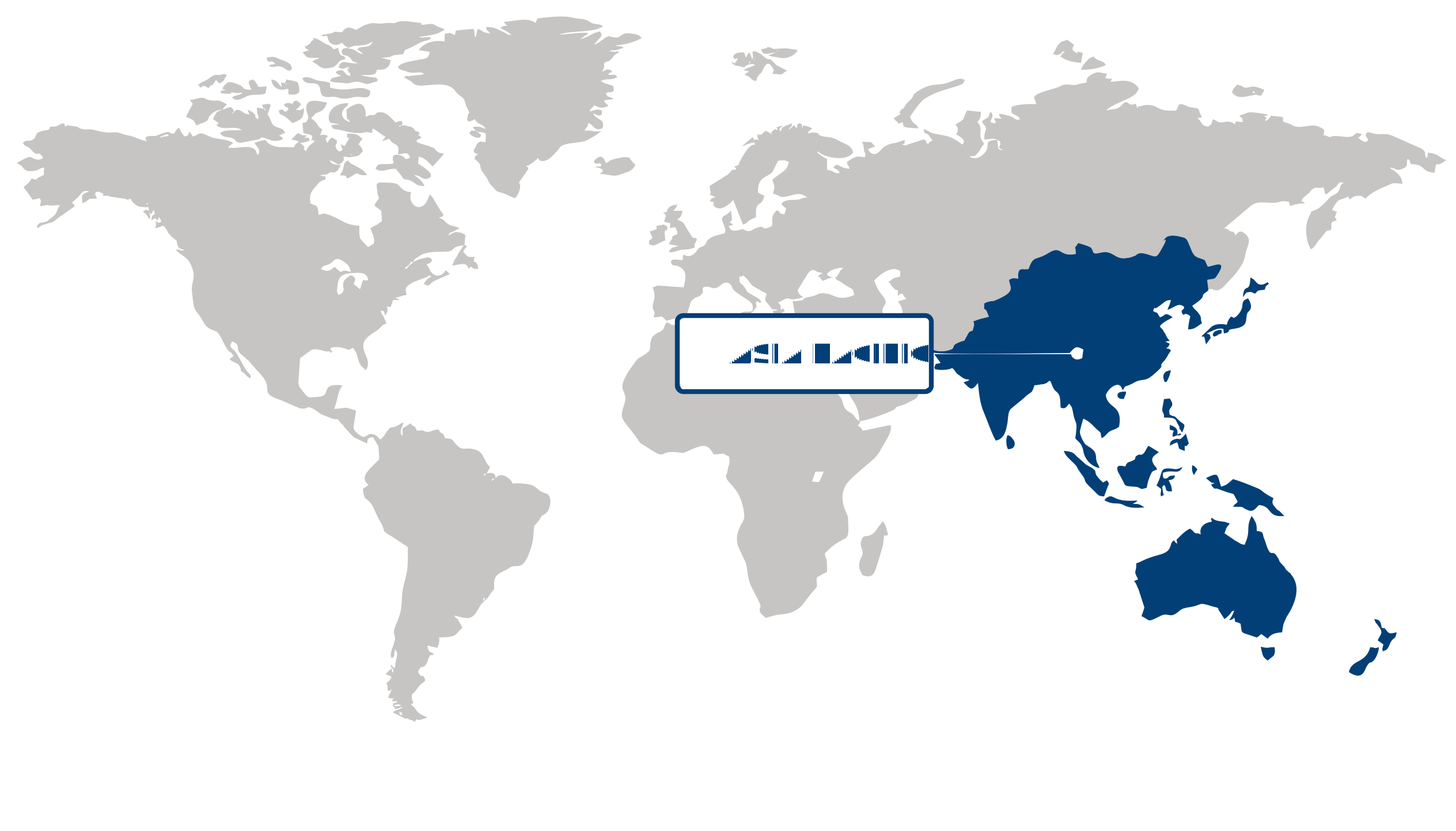
Asia Pacific dominated the smart meters market in 2025, capturing over 56.8% of the global share. This region leads due to massive urbanization and the expansion of smart city initiatives, which heighten demand for energy-efficient infrastructure. Countries like Singapore and South Korea have aggressively integrated smart meters within their smart grids, highlighting governmental commitments toward sustainable urban development, as reported by the Asia-Pacific Economic Cooperation (APEC). Additionally, investments in digital transformation and enhanced regulatory frameworks, such as India’s UJALA initiative, foster widespread adoption. These factors, combined with rising consumer awareness and improved supply chain ecosystems, position Asia Pacific as the largest and fastest-growing market, offering substantial opportunities for stakeholders focusing on scalable, tech-driven utility solutions.
Japan is positioned as a pivotal hub in Asia Pacific’s smart meters market, driven by its early adoption of renewable energy and stringent energy regulations set forth by the Ministry of Economy, Trade and Industry (METI). Japan’s extensive grid modernization programs and partnerships with firms like Toshiba have accelerated smart meter deployments, optimizing energy management in densely populated urban centers. Meanwhile, China, propelled by rapid urban expansion and government-backed smart city pilots led by the National Development and Reform Commission (NDRC), exemplifies how scalable policy frameworks and massive infrastructure spending underpin market growth. Together, Japan and China reinforce Asia Pacific’s leadership, reflecting how tailored regulatory and technological strategies can unlock vast regional potential in the smart meters market.
North America Market Analysis:
North America emerged as the fastest-growing region in the smart meters market, posting a robust CAGR of 11.16%. This rapid expansion is primarily driven by the large-scale replacement of aging legacy metering systems, as utilities seek to modernize infrastructure to enhance grid reliability and improve energy management. Rising consumer preference for real-time energy data and increasing corporate commitments to sustainability further fuel demand, while regulatory frameworks such as the U.S. Energy Information Administration’s modernization initiatives encourage wide-scale adoption. In addition, North America's advanced technological and operational capabilities enable swift integration of smart metering solutions, supported by a competitive landscape pushing innovation. Together, these factors position the region as a critical hub for advanced metering infrastructure, promising sustained opportunities as utilities upgrade and digitize their networks to meet evolving market and regulatory demands.
The U.S. plays a pivotal role in North America’s smart meters market, spearheading the transition with its large-scale replacement of outdated metering systems. Utility companies such as Consolidated Edison and Pacific Gas and Electric have actively rolled out smart meter programs to meet stricter grid resilience and energy efficiency goals mandated by state regulators like the California Public Utilities Commission. Consumer awareness and demand for smart energy management solutions align with these infrastructure upgrades, driving purchasing behavior towards intelligent metering devices. Additionally, the U.S. Department of Energy’s Smart Grid Investment Grant program exemplifies federal support for digital transformation efforts within the sector. Such comprehensive engagement underscores the U.S. as a strategic growth engine for the region, reinforcing North America’s leadership in the evolving smart meters market.
Europe Market Trends:
Europe maintained a significant share in the smart meters market, driven by its robust regulatory environment and progressive energy policies. The region’s commitment to decarbonization and energy efficiency has accelerated the adoption of smart metering infrastructure, supported by initiatives from the European Commission and national governments. Increasing consumer awareness around energy consumption and sustainability, coupled with investments in grid modernization, have further intensified demand. Technological advancements in data analytics and IoT integration enhance operational efficiencies, while supply chain resilience ensures steady deployments despite global disruptions. For instance, the European Network of Transmission System Operators for Electricity (ENTSO-E) has emphasized upgrading metering systems as part of grid digitalization efforts. Europe’s mature energy market, combined with its focus on smart city projects, positions it well to capitalize on ongoing technological evolutions, offering sustained growth opportunities for stakeholders in the smart meters market.
Germany plays a pivotal role in Europe’s smart meters market, propelled by its Energiewende policy that prioritizes renewable integration and energy consumption transparency. The German Federal Network Agency (Bundesnetzagentur) has mandated advanced metering rollout, reflecting strong regulatory backing that drives supplier innovation and competitive device deployment. Leading utilities such as E.ON and EnBW have launched pilot projects incorporating smart meters with home energy management systems, highlighting growing consumer engagement. Germany’s advanced manufacturing base and emphasis on high-quality standards ensure reliable, scalable smart metering solutions, bolstering supply chain strength. This regulatory and technological synergy enhances Germany’s influence on Europe’s market dynamics, underscoring its strategic importance for companies targeting large-scale smart meter implementations in highly regulated environments.
France serves as a critical growth engine within Europe’s smart meters market, supported by the national rollout of Linky smart meters led by Enedis, which targets over 35 million households. The French government’s energy transition law has created robust incentives, enabling accelerated consumer adoption and data-driven energy usage optimization. Partnerships between public agencies and private players have fostered innovation in meter-to-cash processes and cybersecurity frameworks, addressing evolving market demands. Additionally, France’s focus on digital transformation within utility sectors underpins increasing smart meter integration with smart grid technologies. This expansive deployment not only strengthens France’s domestic market but also influences regional ecosystem development, presenting key opportunities for investors and technology providers eyeing scalable smart meter solutions aligned with public-sector modernization priorities.
| Parameter | North America | Asia Pacific | Europe | Latin America | MEA |
|---|---|---|---|---|---|
| Innovation Hub i Scale Nascent Developing Advanced | |||||
| Cost-Sensitive Region i Scale Low Medium High | |||||
| Regulatory Environment i Scale Restrictive Neutral Supportive | |||||
| Demand Drivers i Scale Weak Moderate Strong | |||||
| Development Stage i Scale Emerging Developing Developed | |||||
| Adoption Rate i Scale Low Medium High | |||||
| New Entrants / Startups i Scale Sparse Moderate Dense | |||||
| Macro Indicators i Scale Weak Stable Strong |
Segment Leadership and Growth Trends
Smart Meters Market Share (%), by Technology, 2026
Go beyond the chart, access full insights & data tables
Request Free Sample ReportAutomatic Meter Reading (AMR) dominated the smart meters market in 2025, driven primarily by the widespread deployment of cost-effective remote reading infrastructure that significantly reduces manual meter reading and operational expenses. This technology aligns with utility companies' increasing focus on digital transformation and workforce optimization, enabling seamless integration into existing grid systems. The adoption of AMR solutions by leading providers, such as Itron and Landis+Gyr, reflects regulatory support and operational efficiencies highlighted in their corporate releases. AMR’s streamlined installation and maintenance processes offer strategic advantages for both established firms expanding market reach and new entrants seeking accessible technology footholds. Given ongoing utility modernization and cost containment priorities globally, the AMR segment is poised to maintain its prominence in facilitating scalable, efficient smart metering systems in the near to medium term.
Analysis by Type
Electric meters represented the largest share of the smart meters market in 2025, underpinned by robust global electrification trends and comprehensive utility modernization initiatives prioritizing advanced electrical metering capabilities. This segment benefits from amplified demand patterns as residential and commercial sectors increase electricity consumption while transitioning toward renewable sources. Regulatory frameworks, including those from the International Energy Agency (IEA) and regional grid operators, emphasize smart electrical meter deployments to enhance grid reliability and support decarbonization. The competitive landscape is intensifying as key manufacturers, such as Schneider Electric and Siemens, leverage digital solutions to meet evolving utility needs. Electric meters hold a strategic advantage by addressing critical sustainability goals and enabling dynamic energy management, positioning this segment to remain a cornerstone in smart meters market growth.
Analysis by Application
Residential applications held the largest share of the smart meters market in 2025, fueled by rising consumer demand for real-time energy consumption data and more efficient, transparent billing systems in homes. This segment leads due to increasing smart home penetration and heightened awareness of energy conservation among diverse demographic groups. Policy endorsements from agencies like the U.S. Department of Energy have accelerated residential smart meter adoption to improve customer engagement and reduce peak load pressures. The proliferation of user-friendly interfaces and mobile integration, showcased by companies such as Landis+Gyr and Honeywell, further drive consumer acceptance. Residential smart metering creates strategic opportunities by enabling personalized energy insights and demand response programs. As sustainability priorities and digital literacy continue to grow globally, this segment is expected to sustain its relevance through enhanced consumer empowerment and utility interaction.
| Segment | Sub-Segment | Largest Segment | Fastest Growing |
|---|---|---|---|
| Technology | Automatic Meter Reading (AMR), Advanced Metering Infrastructure (AMI) | ||
| Type | Electric Meters, Water Meters, Gas Meters | ||
| Application | Residential, Commercial, Industrial |
Competitive Landscape and Market Positioning
The competitive environment is characterized by intensified efforts to integrate next-generation communication technologies and enhance data analytics capabilities. Collaborations and targeted acquisitions enable these firms to augment their portfolios, while ongoing investments in R&D support innovations like IoT-enabled metering and edge-computing functionalities. For instance, companies with a strong legacy in traditional metering are increasingly embracing digital transformation, enabling tailored customer solutions and improved grid resilience. This evolving ecosystem fosters differentiation through adaptability and reinforces leadership by accelerating time-to-market with advanced smart meter variants and complementary services.
Strategic / Actionable Recommendations for Regional Players
North American entities can capitalize on accelerating decentralized energy adoption by forming alliances with utilities and technology vendors to develop interoperable platforms, enhancing value through predictive maintenance and customer engagement tools.
Within Asia Pacific, focusing on modular, scalable smart metering solutions tailored to diverse infrastructure maturity can unlock significant growth. Engaging local stakeholders and leveraging emerging communication standards will be critical to embedding these technologies into expanding smart grids.
European participants should prioritize integrating smart meters within broader energy management ecosystems that emphasize sustainability and compliance. Strategic collaborations focused on cybersecurity measures and flexible grid integration can create differentiated offerings that respond to stringent regulatory and consumer expectations.
| Company | Market Share | Company Revenue | Revenue CAGR (%) | Product Portfolio | Geographic Presence | Innovation / R&D Focus | Strategic Developments |
|---|---|---|---|---|---|---|---|
| No companies available. | |||||||
Industry Development/News
| Company Name | Date | Key Development |
|---|
Customize Your Report
Explore examples of how this report can be tailored to different research needs, including custom segments, additional topics or chapters, and related reports. Click a section of the wheel or its numbered marker to explore the available options.
Smart Meters Market — Custom Segments
| Segment | Sub-Segment |
|---|---|
| No segment data available. | |
Smart Meters Market — Custom TOC
| Custom Chapter | Custom Details | ||
|---|---|---|---|
| No custom TOC data available. | |||
Need a different cut of the data?
Request Custom ResearchHow is the smart meters industry projected to perform over the next decade?
Which global region commands the highest percentage of the smart meters market?
In which region is the smart meters sector expanding most rapidly?
How much is the automatic meter reading (AMR) segment expected to grow in the smart meters industry beyond 2025?
What factors give electric meters segment a competitive edge in the smart meters sector?
Which is the largest sub-segment within the application segment for smart meters industry?
What are the key competitors in the smart meters landscape?
Our Clients
"The team demonstrated a great understanding of our business needs, and the reports were tailored to address our specific concerns and objectives."
Infosys
"The report was up-to-date with the latest industry trends and technological advancements. The detailed competitive landscape analysis was quite helpful."
Zebra Technologies
"The data presented in the report was accurate and well-researched. I also found the market dynamics section particularly useful."
Arlo Technologies
Our Research Team & Methodology
Every Fundamental Business Insights report is built by a dedicated vertical research team, validated through a structured primary-and-secondary methodology, and reviewed for accuracy before it reaches you.
Research Team Overview
Prepared by the Smart Technologies Research Team
Delivery
Published
Demand
Available
Support
Trust & Compliance
Research Domains
10 coverage areasResearch Intelligence
| Source | Reference |
|---|---|
| National Institute of Standards and Technology (NIST) | www.nist.gov |
| International Organization for Standardization (ISO) | www.iso.org |
| Institute of Electrical and Electronics Engineers (IEEE) | www.ieee.org |
| Internet Engineering Task Force (IETF) | www.ietf.org |
| World Wide Web Consortium (W3C) | www.w3.org |
| Cloud Security Alliance (CSA) | cloudsecurityalliance.org |
| Open Source Initiative (OSI) | opensource.org |
| Linux Foundation | www.linuxfoundation.org |
| FinOps Foundation | www.finops.org |
| PCI Security Standards Council | www.pcisecuritystandards.org |
| SWIFT | www.swift.com |
| Financial Stability Board (FSB) | www.fsb.org |
| GSMA | www.gsma.com |
| International Telecommunication Union (ITU) | www.itu.int |
| OWASP Foundation | owasp.org |
| MITRE | www.mitre.org |
| World Economic Forum (WEF) | www.weforum.org |
| OECD Digital Economy | www.oecd.org/digital |
| World Bank Data | data.worldbank.org |
| U.S. Census Bureau | www.census.gov |
Research Workflow & Quality Assurance
Data Collection
Verified information gathered through primary and secondary research.
Data Triangulation
Cross-validation using multiple independent data sources.
Forecast Modelling
Market estimates developed using historical trends and analytical models.
Analyst Validation
Findings reviewed by domain experts for accuracy and consistency.
Editorial & Quality Review
Final editorial, quality, and compliance checks before publication.
Final Publication
Released after successful completion of the internal review process.
Report Coverage
📊 Market Assessment
- Market Size & Forecast
- Market Segmentation
- Regional Analysis
- Growth Drivers & Challenges
- Market Dynamics
🏢 Competitive Intelligence
- Competitive Landscape
- Company Profiles
- Competitive Benchmarking
- Mergers & Acquisitions
- Market Share Analysis or Key Company Strategies
🔍 Strategic Analysis
- Value Chain Analysis
- Porter's Five Forces
- PESTLE Analysis
- Pricing Trends
- Supply-Demand Analysis
🚀 Future Outlook
- Technology Landscape
- Regulatory Landscape
- Investment & Funding Landscape
- Emerging Opportunities
- Future Market Outlook
Have a question about this report or need a custom scope?
Request Customization