Smart Harvest Market Size & Forecasts 2026-2035, By Segments (Technology, Crop Type, Component), Growth Opportunities, Innovation Landscape, Regulatory Shifts, Strategic Regional Insights (U.S., Japan, China, South Korea, UK, Germany, France), and Competitive Dynamics (John Deere, AGCO Corporation, Trimble Inc., CNH Industrial, Raven Industries)
Market Size and Growth Outlook
Smart Harvest Market size is projected to grow steadily from USD 17.66 billion in 2025 to USD 56.34 billion by 2035, demonstrating a CAGR exceeding 12.3% through the forecast period (2026-2035). The 2026 revenue is estimated at USD 19.6 billion.
Get more details on this report
Request Free Sample ReportSmart Harvest Market Intelligence Snapshot
Regional Market Dynamics
Segment Momentum
Market Expansion Drivers
Leading Market Participants
Global Market Forecast Snapshot
Market Outlook
Regional and Segment Outlook
Market Growth Drivers and Industry Trends
The increasing incorporation of robotics and automated harvesting systems is a pivotal growth driver in the smart harvest market, responding directly to the agricultural sector’s demand for enhanced efficiency and precision. Companies like John Deere have announced substantial investments in autonomous machinery, reflecting a shift towards reducing manual labor dependency and optimizing crop yield through mechanization. This trend aligns with broader industrial automation movements and reflects growing acceptance among farmers who seek to minimize operational costs and improve consistency. For established players, robotics integration offers a pathway to differentiate product portfolios, while new entrants can capitalize on niche automation innovations tailored to specific crop types. Continued developments in robotics promise more scalable and adaptable solutions, reinforcing the smart harvest market's trajectory towards tech-driven productivity.
Labor Shortages Accelerating Smart Agriculture Uptake
Persistent labor shortages worldwide, highlighted by reports from the U.S. Department of Agriculture, are accelerating demand for smart harvest solutions that alleviate workforce constraints. This demographic and economic pressure compels growers to adopt technologies that reduce reliance on seasonal and manual labor, addressing both availability and affordability issues. The smart harvest market benefits as solutions like sensor-guided equipment and autonomous harvesters become essential for maintaining production levels. For incumbent businesses, this scenario offers an opportunity to embed labor-saving features into existing product lines, while startups can innovate with scalable labor-alternative technologies. As labor challenges persist, smart harvest systems are positioned as indispensable tools, fostering deeper technology integration within traditional agricultural practices.
Integration of AI, Sensors, and Predictive Analytics
The integration of AI, sensors, and predictive analytics is crucial in transforming data into actionable insights, driving the smart harvest market forward through smarter decision-making and resource optimization. Industry leaders like Trimble and Bosch Crop Science demonstrate how real-time data collection coupled with AI algorithms enables precision harvesting, reduced waste, and improved crop quality. This deep technological fusion addresses growing consumer and regulatory demands for sustainable and traceable food production systems. Established companies can leverage these capabilities to enhance product performance and customer value, while agile entrants may focus on AI-driven platforms that seamlessly integrate across diverse farm operations. The ongoing refinement of these technologies signals continual enhancement in smart harvest efficiency and sustainability outcomes.
Industry Restraints:
Data Privacy and Security Concerns
The proliferation of IoT devices and AI-driven analytics in smart harvest systems significantly heightens data privacy and cyber risk, constraining market adoption. Unauthorized access to sensitive farm data or operational controls can lead to financial losses and reputational damage, deterring stakeholders. Notably, the U.S. Department of Agriculture’s report on agricultural cybersecurity underscores vulnerabilities in connected equipment, emphasizing the need for robust data protection measures. This restraint challenges vendors to invest heavily in advanced encryption and secure cloud infrastructure, raising entry barriers for startups lacking cybersecurity expertise. Established players face continuous pressure to demonstrate compliance with regional data privacy regulations such as GDPR or CCPA. As cyber threats evolve, this constraint remains a critical hurdle, prompting ongoing innovation in security protocols and potentially slowing widespread integration of smart harvest technologies in cautious markets.
High Capital Expenditure and Technology Integration Complexity
The upfront costs of deploying smart harvest solutions, including advanced machinery, sensors, and software platforms, pose a significant barrier, particularly for small and mid-sized farms. This economic constraint is compounded by operational disruptions during technology integration, often requiring specialized skills absent in traditional agricultural workforces. For instance, Deere & Company’s pilot programs reveal that integrating precision harvesters demands substantial training and interoperability adjustments with existing farm management systems. Such challenges limit scalability and retard market penetration outside well-funded agribusinesses. Consequently, investors and solution providers must design cost-effective, modular offerings and comprehensive support services to gain traction. Over the near to medium term, decreasing hardware costs and improved user-friendly interfaces are expected to alleviate but not eliminate this restraint, maintaining a cautious pace of adoption among smaller industry players.
| Growth Driver | Impact on CAGR | Regulatory Influence | Geographic Relevance | Adoption Rate | Impact Timeline |
|---|---|---|---|---|---|
| Adoption of robotics and automated harvesting systems | 3.00% | Short term (≤ 2 yrs) | North America, Europe | Medium | Fast |
| Labor shortages accelerating smart agriculture uptake | 2.50% | Medium term (2–5 yrs) | APAC, North America | Low | Moderate |
| Integration of AI, sensors, and predictive analytics | 1.50% | Long term (5+ yrs) | Europe, APAC | Medium | Moderate |
Unlock insights tailored to your business with our bespoke market research solutions.
Click to get your customized report now.
Regional Demand Dynamics
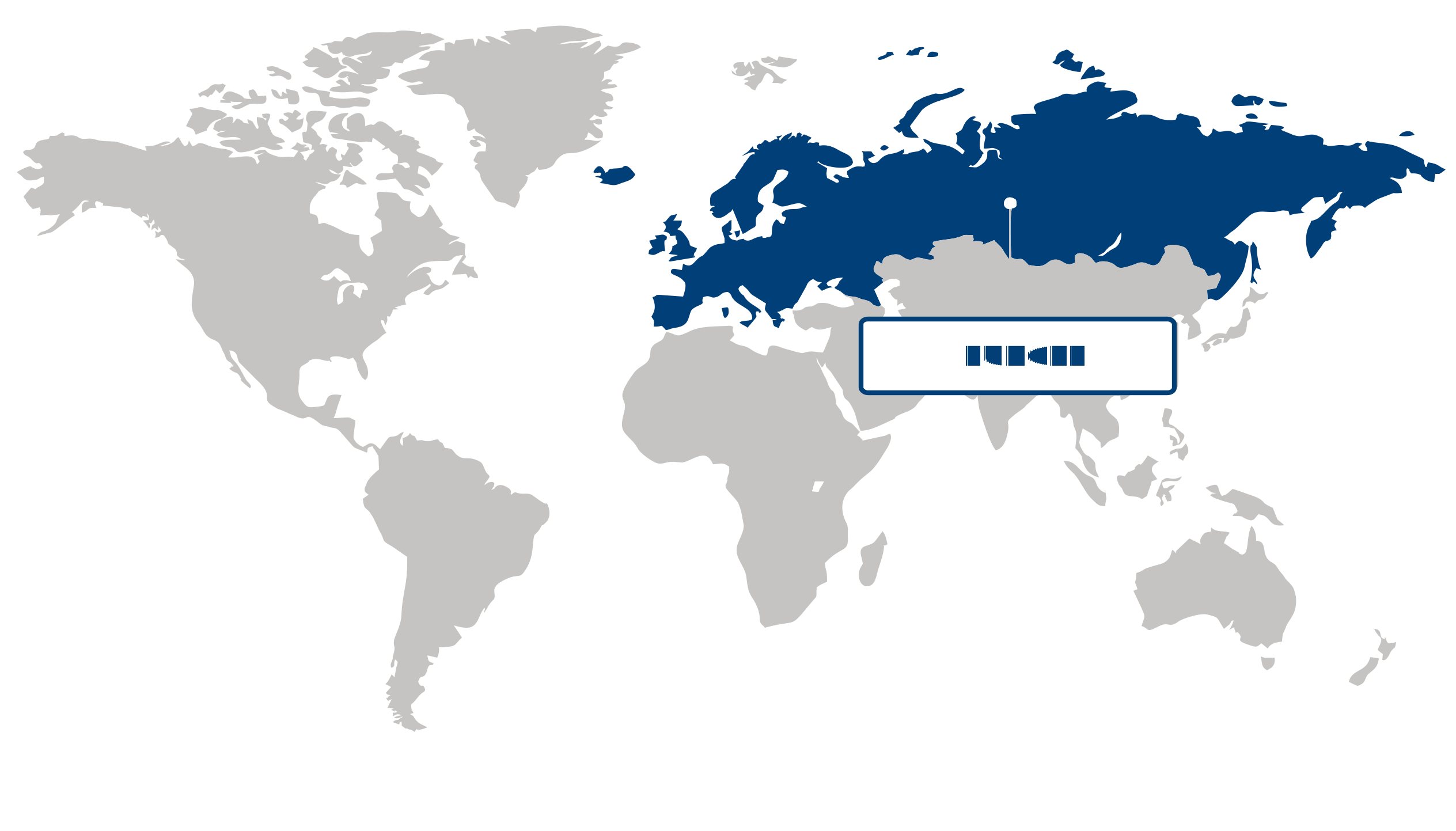
Europe captured over 38% of the global smart harvest market in 2025, solidifying its position as the largest regional leader. This dominance is driven primarily by the early adoption of advanced agricultural robotics combined with robust government policies promoting agricultural innovation. Countries across Europe, supported by entities like the European Innovation Partnership (EIP-AGRI), prioritize digital transformation in farming, enhancing efficiency and sustainability. Increasing investments by firms such as Bosch and CNH Industrial in robotics solutions further propel demand. The region's emphasis on reducing labor shortages amid aging farmer demographics, coupled with stringent environmental regulations, fosters growth in automated, precise harvesting technologies. Consequently, Europe's competitive intensity and logistical capabilities create a resilient smart harvest ecosystem, offering significant opportunities for investors and innovators aiming to leverage agricultural modernization.
Germany anchors the European smart harvest market as a technological leader, fueled by a strong industrial robotics heritage and government subsidies under the German Federal Ministry of Food and Agriculture (BMEL). Major companies like Fendt and John Deere Europe deploy cutting-edge autonomous harvesters, aligning with the country's precision farming culture. This synergy between public incentives and private innovation accelerates adoption, ensuring Germany remains a primary growth engine within Europe. France, meanwhile, plays a pivotal role by integrating smart harvest solutions with sustainable practices supported by the French Ministry of Agriculture and Food. Initiatives such as the AGROBOIS program encourage the deployment of robotic systems suited to diverse crop types, addressing regional labor shortages and environmental goals. Together, Germany and France bolster Europe’s leadership, reinforcing the region’s appeal for smart harvest market expansion.
Asia Pacific Market Analysis:
Asia Pacific emerged as the fastest-growing region in the smart harvest market, registering rapid growth with a robust CAGR of 14.6%. This impressive expansion is primarily fueled by the increasing integration of IoT technologies and precision farming within the agricultural sector, enhancing operational efficiency and crop yield. The region’s dynamic shift towards technologically advanced farming practices reflects a broader trend of digital transformation and sustainability, meeting rising food demand driven by population growth and urbanization. Countries across Asia Pacific are investing heavily in smart agriculture solutions backed by supportive government policies promoting innovation and environmental stewardship, as evidenced by initiatives from the Japan Ministry of Agriculture, Forestry and Fisheries and China's National Modern Agriculture Demonstration Zone program. This evolving ecosystem positions Asia Pacific not only as a major market but also as a hub for developing next-generation smart harvest technologies, presenting substantial opportunities for investors and tech providers aiming to capitalize on the region’s modernizing agricultural landscape.
Japan plays a pivotal role in the Asia Pacific smart harvest market, leveraging its advanced technological infrastructure and strong emphasis on precision farming. The country's adoption of IoT-enabled sensors and automation reflects distinct consumer and corporate preferences for efficiency and quality in agricultural output, with companies like Panasonic and Yanmar spearheading innovations in smart machinery. Regulatory support through Japan’s Smart Agriculture Promotion Office further fosters integration of these smart harvest solutions, creating a favorable business environment. This synergy between technological leadership and market readiness underscores Japan’s strategic importance as a benchmark and incubator for broader regional smart harvest adoption.
China stands as a major driver in Asia Pacific’s smart harvest market, propelled by its large-scale farming operations embracing IoT and precision agriculture to increase productivity and sustainability. The government’s strong policy focus on modernizing agriculture through initiatives such as the “Internet Plus Agriculture” program has accelerated smart harvest technology deployment across rural areas. Leading Chinese agtech firms like DJI and Alibaba Cloud provide tailored digital platforms, enabling farmers to optimize crop monitoring and harvesting processes. This combination of policy momentum, technological innovation, and vast agricultural demand positions China as a cornerstone of the region’s growth story, reinforcing Asia Pacific’s leadership and vast potential in the smart harvest market.
North America Market Trends:
North America held a commanding share in the smart harvest market, bolstered by the region’s strong agricultural infrastructure and growing emphasis on precision farming technologies. The U.S. leads the way with advanced digital integration and widespread adoption of IoT-enabled harvesting equipment, driven by increasing demand for sustainability and operational efficiency. According to the U.S. Department of Agriculture (USDA), rising investments in agtech and federal incentives for sustainable farming practices have accelerated adoption. Additionally, North America’s well-established supply chains and skilled workforce support rapid deployment of innovations, while consumer preferences shift toward sustainably sourced agricultural products. With increasing emphasis on reducing waste and enhancing yield quality, North America remains strategically positioned to capitalize on evolving smart harvest technologies, creating abundant growth opportunities in automation and data-driven farming.
The U.S. plays a pivotal role in the smart harvest market as a testing ground for cutting-edge technologies and large-scale deployments. The country benefits from a robust ecosystem of agtech startups and established firms such as Deere & Company, whose recent launch of fully autonomous combines underscores the leadership in innovation. Regulatory frameworks from agencies like the USDA and Environmental Protection Agency (EPA) increasingly encourage precision agriculture, indirectly boosting demand for smart harvest solutions. U.S. farmers’ openness to digital tools and large-scale commercial farming create a conducive environment for rapid adoption. This leadership amplifies the broader North American market’s growth prospects, reinforcing the U.S. as an essential hub for technological advancement and market expansion in smart harvesting.
| Parameter | North America | Asia Pacific | Europe | Latin America | MEA |
|---|---|---|---|---|---|
| Innovation Hub i Scale Nascent Developing Advanced | |||||
| Cost-Sensitive Region i Scale Low Medium High | |||||
| Regulatory Environment i Scale Restrictive Neutral Supportive | |||||
| Demand Drivers i Scale Weak Moderate Strong | |||||
| Development Stage i Scale Emerging Developing Developed | |||||
| Adoption Rate i Scale Low Medium High | |||||
| New Entrants / Startups i Scale Sparse Moderate Dense | |||||
| Macro Indicators i Scale Weak Stable Strong |
Segment Leadership and Growth Trends
Smart Harvest Market Share (%), by Technology, 2026
Go beyond the chart, access full insights & data tables
Request Free Sample ReportThe hardware segment held the largest share in the smart harvest market in 2025, driven primarily by the widespread adoption of robotic systems providing immediate labor substitution and precision harvesting. Hardware's leadership is reinforced by farmers’ increasing demand for reliable, automated solutions that reduce labor dependency amid workforce shortages and rising wage costs. Supply chain improvements and advances in sensor-integrated machinery, as noted in John Deere’s recent product launches, have enhanced hardware capabilities and market appeal. This segment offers strategic opportunities for both established manufacturers and innovative startups focused on scalable, durable devices tailored to diverse farming conditions. Given regulatory encouragement for mechanization and ongoing focus on operational efficiency, hardware is poised to maintain its dominant role within the smart harvest market over the next several years.
Analysis by Crop Type
The fruits segment represented the largest share in the smart harvest market in 2025, buoyed by strong demand for selective picking automation that improves both yield and fruit quality. Precision requirements inherent to fruit harvesting, such as gentle handling and ripeness detection, have driven this segment’s growth as technological innovations meet these specific needs. Consumer preferences for sustainably sourced and visually consistent produce further underline the segment’s importance. Companies like Agrobot have demonstrated success with fruit-specific robotic harvesters, validating market confidence. This segment provides fertile ground for agility and differentiation among vendors addressing specialty crop challenges. With global trends favoring fresh, high-quality fruit and evolving harvesting techniques, fruits will remain a critical focus within smart harvest strategies moving forward.
Analysis by Component
The harvesting robots segment dominated the smart harvest market in 2025, propelled by significant deployment of advanced robotic harvesters that markedly improve field operation efficiency. This segment leads due to technological breakthroughs enabling autonomous navigation, adaptive picking mechanisms, and integration with farm management systems. The growing emphasis on digital agriculture and sustainability, reinforced by endorsements from entities like the Food and Agriculture Organization (FAO), accelerates adoption. Competitive dynamics favor companies investing in AI-driven robotics, attracting both established agricultural equipment makers and tech innovators. Harvesting robots deliver strategic differentiation through labor cost savings and precision benefits, appealing to diverse agricultural contexts. Observed trends in robotic innovation and evolving operational models ensure this segment’s relevance as a linchpin in the smart harvest market landscape.
| Segment | Sub-Segment | Largest Segment | Fastest Growing |
|---|---|---|---|
| Technology | Software, Hardware | ||
| Crop Type | Fruits, Vegetables | ||
| Component | RFID, Sensors, GPS, Harvesting Robots |
Competitive Landscape and Market Positioning
The competitive landscape is marked by dynamic initiatives focusing on technological enhancement and ecosystem integration. Several key players have accelerated open collaborations and strategic alliances to expand IoT-based offerings and AI-powered analytics. Investment in R&D has spurred product launches featuring autonomous harvesters, real-time monitoring, and enhanced connectivity. Cross-border partnerships leverage regional expertise, combining robust machinery with smart software platforms. These movements intensify competitive pressure while fostering a technological arms race that accelerates innovation adoption. Consequently, firms are repositioning to address evolving farmer demands for precision, operational efficiency, and environmental compliance, amplifying their market reach.
Strategic / Actionable Recommendations for Regional Players
North American entities should advance integration between machinery manufacturing and digital agriculture services, focusing on collaborative frameworks that drive real-time data utility. Strengthening ties with tech startups specializing in AI and edge computing can enhance adaptive harvesting solutions tailored to diverse crop types and climates.
In the Asia Pacific, players may prioritize partnerships that merge drone technology with IoT-enabled sensory systems to elevate cost-effective precision harvesting. Emphasizing modular designs could capture demand in small-to-medium farm sectors, fostering adoption of smart tools suitable for fragmented landholdings.
European participants stand to benefit from intensifying developments in sustainable automation, integrating clean energy initiatives with smart harvest equipment. Collaborations emphasizing regulatory compliance and environmental monitoring can help maintain competitive advantage while addressing stringent regional agricultural policies.
| Company | Market Share | Company Revenue | Revenue CAGR (%) | Product Portfolio | Geographic Presence | Innovation / R&D Focus | Strategic Developments |
|---|---|---|---|---|---|---|---|
| No companies available. | |||||||
Industry Development/News
| Company Name | Date | Key Development |
|---|
Customize Your Report
Explore examples of how this report can be tailored to different research needs, including custom segments, additional topics or chapters, and related reports. Click a section of the wheel or its numbered marker to explore the available options.
Smart Harvest Market — Custom Segments
| Segment | Sub-Segment |
|---|---|
| No segment data available. | |
Smart Harvest Market — Custom TOC
| Custom Chapter | Custom Details | ||
|---|---|---|---|
| No custom TOC data available. | |||
Need a different cut of the data?
Request Custom ResearchHow is the smart harvest industry expected to grow over the next 10 years?
Which region captures the largest portion of the smart harvest market value?
Who is driving the fastest regional growth in the smart harvest sector?
When did hardware sub-segment emerge as the largest sub-segment in the technology segment of smart harvest sector?
Why is the fruits segment leading in the smart harvest industry?
Why does harvesting robots sub-segment dominate the component segment of smart harvest sector?
Who holds a significant market share in the smart harvest landscape?
Our Clients
"The team demonstrated a great understanding of our business needs, and the reports were tailored to address our specific concerns and objectives."
Infosys
"The report was up-to-date with the latest industry trends and technological advancements. The detailed competitive landscape analysis was quite helpful."
Zebra Technologies
"The data presented in the report was accurate and well-researched. I also found the market dynamics section particularly useful."
Arlo Technologies
Our Research Team & Methodology
Every Fundamental Business Insights report is built by a dedicated vertical research team, validated through a structured primary-and-secondary methodology, and reviewed for accuracy before it reaches you.
Research Team Overview
Prepared by the Smart Technologies Research Team
Delivery
Published
Demand
Available
Support
Trust & Compliance
Research Domains
10 coverage areasResearch Intelligence
| Source | Reference |
|---|---|
| National Institute of Standards and Technology (NIST) | www.nist.gov |
| International Organization for Standardization (ISO) | www.iso.org |
| Institute of Electrical and Electronics Engineers (IEEE) | www.ieee.org |
| Internet Engineering Task Force (IETF) | www.ietf.org |
| World Wide Web Consortium (W3C) | www.w3.org |
| Cloud Security Alliance (CSA) | cloudsecurityalliance.org |
| Open Source Initiative (OSI) | opensource.org |
| Linux Foundation | www.linuxfoundation.org |
| FinOps Foundation | www.finops.org |
| PCI Security Standards Council | www.pcisecuritystandards.org |
| SWIFT | www.swift.com |
| Financial Stability Board (FSB) | www.fsb.org |
| GSMA | www.gsma.com |
| International Telecommunication Union (ITU) | www.itu.int |
| OWASP Foundation | owasp.org |
| MITRE | www.mitre.org |
| World Economic Forum (WEF) | www.weforum.org |
| OECD Digital Economy | www.oecd.org/digital |
| World Bank Data | data.worldbank.org |
| U.S. Census Bureau | www.census.gov |
Research Workflow & Quality Assurance
Data Collection
Verified information gathered through primary and secondary research.
Data Triangulation
Cross-validation using multiple independent data sources.
Forecast Modelling
Market estimates developed using historical trends and analytical models.
Analyst Validation
Findings reviewed by domain experts for accuracy and consistency.
Editorial & Quality Review
Final editorial, quality, and compliance checks before publication.
Final Publication
Released after successful completion of the internal review process.
Report Coverage
📊 Market Assessment
- Market Size & Forecast
- Market Segmentation
- Regional Analysis
- Growth Drivers & Challenges
- Market Dynamics
🏢 Competitive Intelligence
- Competitive Landscape
- Company Profiles
- Competitive Benchmarking
- Mergers & Acquisitions
- Market Share Analysis or Key Company Strategies
🔍 Strategic Analysis
- Value Chain Analysis
- Porter's Five Forces
- PESTLE Analysis
- Pricing Trends
- Supply-Demand Analysis
🚀 Future Outlook
- Technology Landscape
- Regulatory Landscape
- Investment & Funding Landscape
- Emerging Opportunities
- Future Market Outlook
Have a question about this report or need a custom scope?
Request Customization