Smart City Tech Solutions Market Size & Forecasts 2026-2035, By Segments (Offering Type, Technology Type), Growth Opportunities, Innovation Landscape, Regulatory Shifts, Strategic Regional Insights (U.S., Japan, China, South Korea, UK, Germany, France), and Competitive Dynamics (Siemens, Cisco, IBM, Honeywell, Schneider Electric)
Market Size and Growth Outlook
Smart City Tech Solutions Market size is projected to expand significantly, moving from USD 219.67 billion in 2025 to USD 520.04 billion by 2035, with a CAGR of 9% during the 2026-2035 forecast period. The expected revenue for 2026 is USD 236.88 billion.
Get more details on this report
Request Free Sample ReportSmart City Tech Solutions Market Intelligence Snapshot
Regional Market Dynamics
Segment Momentum
Market Expansion Drivers
Leading Market Participants
Global Market Forecast Snapshot
Market Outlook
Regional and Segment Outlook
Market Growth Drivers and Industry Trends
The deployment of IoT technologies is fundamentally reshaping the smart city tech solutions market by enabling real-time connectivity and data exchange across urban systems. With cities like Barcelona adopting Cisco’s IoT infrastructure to streamline utilities and traffic management, the market benefits from enhanced operational efficiency and improved citizen experiences. This momentum reflects growing demand for integrated sensor networks and edge computing, facilitating new services in mobility, energy, and public safety. For incumbents, the proliferation of interoperable IoT platforms offers opportunities to extend portfolios with scalable, modular solutions, while startups can exploit niche applications and tailor services to underserved urban segments. As more cities prioritize seamless interconnectivity and responsiveness, investment in IoT-driven ecosystems will solidify their role as foundational in the smart city tech solutions market’s ongoing evolution.
Integration of AI for Urban Data Analytics and Management
AI-powered analytics are becoming indispensable in managing complex urban challenges, driving transformative innovation within the smart city tech solutions market. The City of Singapore’s use of AI for predictive traffic flow and resource allocation illustrates how data-driven insights optimize service delivery and reduce operational costs. This trend addresses increasing demand for proactive, adaptive governance amid growing urban populations, fostering behavioral shifts towards sustainable living. Established technology leaders can leverage AI to create customizable analytics platforms, whereas emerging players gain entry through specialized AI models targeting particular domains such as waste management or energy conservation. Given the accelerated adoption of AI tools by municipal governments and private sector partners, AI’s integration will remain a strategic fulcrum enabling smarter, more resilient urban environments.
Expansion of Government-Led Smart City Initiatives in Emerging Economies
The surge in government-sponsored smart city projects across emerging markets is a pivotal catalyst expanding the smart city tech solutions market globally. India’s Smart Cities Mission, managed by the Ministry of Housing and Urban Affairs, exemplifies large-scale public investments aimed at improving infrastructure and digital services. These initiatives create a fertile landscape for vendors to introduce affordable, scalable technologies tailored to rapidly urbanizing populations. Moreover, international collaborations and funding mechanisms facilitate knowledge transfer and deployment capabilities, lowering entry barriers and stimulating competitive dynamics. Both multinational corporations and local startups can capitalize on this expanding demand to develop context-specific solutions addressing critical challenges like water management and urban mobility. Continued policy prioritization ensures sustained momentum, positioning emerging economies as vital laboratories for smart city innovation.
Industry Restraints:
Data Privacy and Security Concerns
The smart city tech solutions market faces significant constraints from escalating data privacy and security concerns, which impede widespread adoption. Urban technologies depend heavily on collecting and analyzing vast amounts of data, raising risks of breaches and unauthorized surveillance. For example, the European Data Protection Board has highlighted challenges in balancing smart city innovation with GDPR compliance, affecting cities like Barcelona and Amsterdam. These concerns create reticence among municipalities and citizens, complicating procurement and deployment decisions. Market players must invest heavily in robust cybersecurity protocols while navigating complex regional data regulations, increasing operational costs and slowing deployment cycles. Given tightening global privacy regulations and rising cyber threats, this restraint will persist, compelling solution providers to prioritize security-first designs and foster transparent data governance frameworks to maintain trust and market momentum.
Fragmented Regulatory Environments
The smart city tech solutions market is stymied by fragmented and inconsistent regulatory frameworks across regions, limiting scalability and operational efficiency. Variations in standards related to spectrum allocation, IoT device certifications, and infrastructure interoperability complicate cross-border rollouts, as observed by the U.S. National Institute of Standards and Technology (NIST) and the International Telecommunication Union (ITU). This regulatory patchwork imposes elevated compliance costs and creates uncertainty, disproportionately impacting startups lacking the resources to navigate diverse legal landscapes. Established firms face slowed innovation cycles due to protracted approvals, eroding first-mover advantages. Moving forward, unless harmonization efforts intensify through international cooperation and standardized smart city protocols, regulatory fragmentation will remain a critical bottleneck, shaping market entry strategies and collaboration models.
| Growth Driver | Impact on CAGR | Regulatory Influence | Geographic Relevance | Adoption Rate | Impact Timeline |
|---|---|---|---|---|---|
| Implementation of IoT-based smart city infrastructure | 4.00% | Short term (≤ 2 yrs) | Europe, North America; Spillover: Asia Pacific | Medium | Moderate |
| Integration of AI for urban data analytics and management | 3.20% | Medium term (2–5 yrs) | North America, Europe; Spillover: Asia Pacific | Medium | Moderate |
| Expansion of government-led smart city initiatives in emerging economies | 1.80% | Long term (5+ yrs) | Asia Pacific, Latin America; Spillover: MEA | High | Slow |
Unlock insights tailored to your business with our bespoke market research solutions.
Click to get your customized report now.
Regional Demand Dynamics
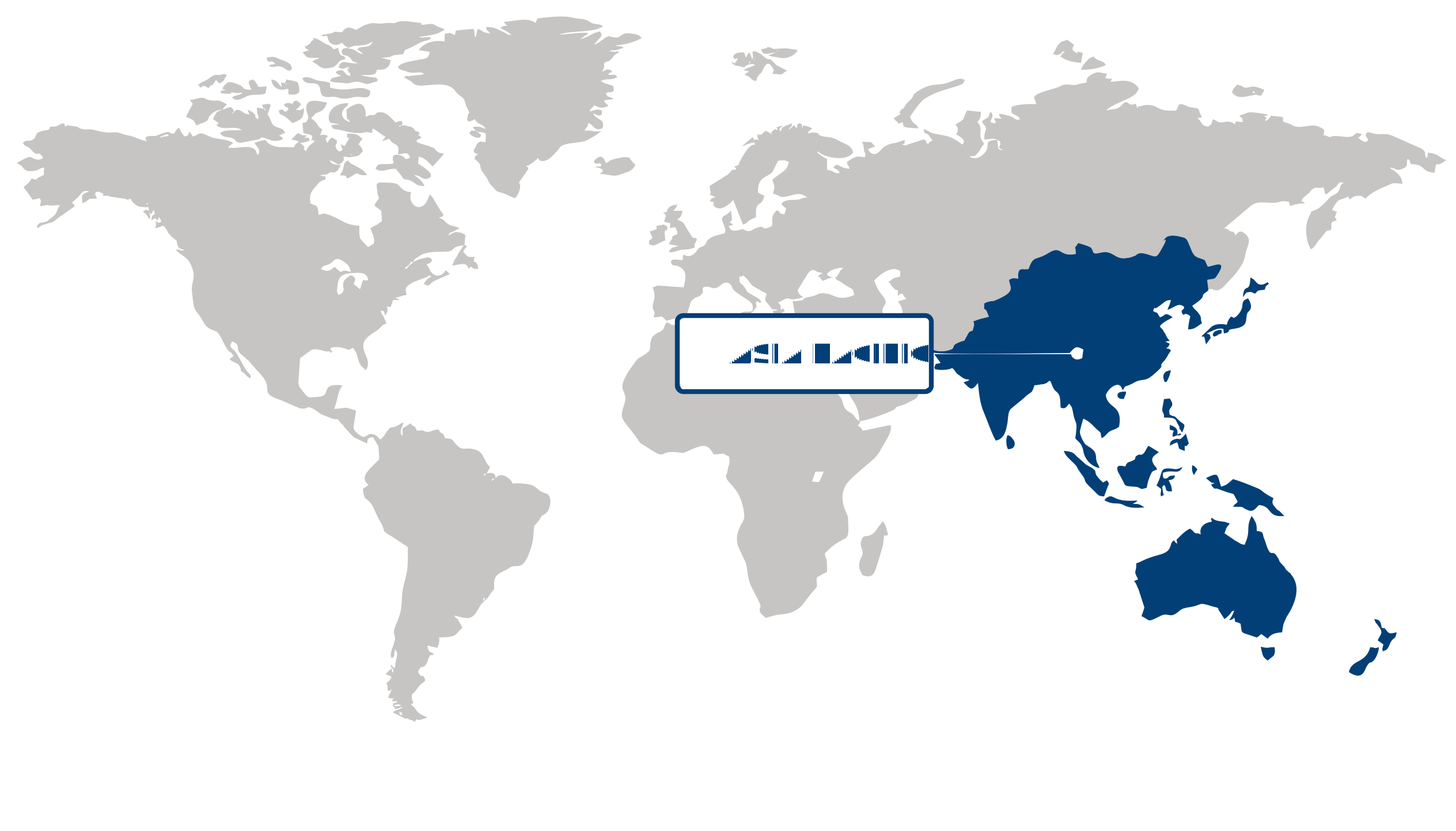
Asia Pacific captured over 46% of the global smart city tech solutions market in 2025, establishing itself as the largest and fastest-growing region with a 12.6% CAGR. This dominance is largely driven by expansive government-led smart city initiatives in China and India, aiming to enhance urban infrastructures through integrated digital technologies. The region benefits from accelerating urbanization, rising investments in IoT, AI, and sustainable energy, alongside a regulatory focus on smart mobility, environmental monitoring, and public safety. For instance, China’s National Smart City Pilot Program fosters advanced urban management systems, as documented by the Ministry of Housing and Urban-Rural Development of China. With widening adoption of next-generation connectivity and increasing consumer preferences for efficient urban services, Asia Pacific presents robust opportunities for technology providers and investors seeking growth in smart city solutions.
China anchors the Asia Pacific smart city tech solutions market, propelled by ambitious nationwide digitization and urban modernization efforts. The government's drive is exemplified by the “New Smart City Development Plan” issued by China's State Council, promoting AI, big data, and 5G integration in urban centers. These efforts respond to surging demand for smarter transportation, energy-efficient buildings, and enhanced public safety systems, reflecting evolving consumer and institutional priorities. Additionally, leading corporations such as Huawei and Alibaba Cloud actively partner with local governments to deploy scalable smart infrastructure, reinforcing China’s leadership role. This strategic focus not only accelerates technological innovation but also amplifies regional market expansion.
Japan serves as a pivotal hub in Asia Pacific’s smart city tech solutions market, leveraging advanced technology ecosystems and stringent regulatory standards to pilot innovative urban initiatives. Driven by a mature economy and demographic shifts, Japan emphasizes integrating robotics, AI, and sustainable infrastructure, as evidenced by projects in cities like Tokyo and Yokohama, supported by the Ministry of Internal Affairs and Communications. Collaborative efforts between government entities and industry leaders such as NEC and Hitachi underscore a methodical approach to enhancing urban livability and operational efficiency. Japan’s focus on refined innovation and tested smart city models complements the broader Asia Pacific growth narrative, underlining the region’s comprehensive capabilities and future potential.
Europe Market Analysis:
Europe emerged as the fastest-growing region in the smart city tech solutions market, registering rapid growth with a robust CAGR of 19.2%. This acceleration is primarily driven by the rising demand for sustainable urban infrastructure, fueled by stringent environmental policies and ambitious targets set by the European Commission under the European Green Deal. Increasing investments in energy-efficient technologies and IoT-enabled urban management systems are transforming European cities into more connected and resilient ecosystems. For instance, the European Innovation Partnership on Smart Cities and Communities (EIP-SCC) has endorsed several pilot projects enhancing digital and energy transition integration. Additionally, the growing emphasis on public-private partnerships and digital transformation initiatives is enabling faster deployment of smart sensors, AI-driven traffic management, and renewable energy grids. These factors position Europe as a pivotal market with expanding opportunities for innovative smart city technologies that meet both regulatory demands and evolving citizen expectations.
Germany plays a leading role in Europe’s smart city tech solutions market, leveraging its strong industrial base and government initiatives like the National Smart City Strategy. The country’s focus on seamless integration of AI, 5G, and IoT frameworks supports advanced urban mobility and energy management solutions tailored to its dense metropolitan areas. For example, SmartCity Hamburg project showcases extensive use of sensor networks and real-time data analytics to reduce carbon emissions and enhance public services. Germany's regulatory environment encourages collaboration between cities and tech startups, promoting scalable and interoperable urban solutions. This strategic approach fosters a dynamic market ecosystem, making Germany a crucial hub for technology validation and large-scale deployment, which strengthens Europe’s overall leadership in the smart city tech solutions industry.
France significantly contributes to Europe’s smart city technology advancement by prioritizing urban digitization through national programs such as the French Smart Cities initiative. The country’s smart city projects emphasize user-centric designs that improve citizen engagement and public safety, demonstrated in Lyon’s multimodal smart transport systems integrating GPS and mobile applications. France’s competitive technology landscape benefits from government grants supporting clean energy solutions and data-driven services, facilitating accelerated adoption across major cities. Furthermore, collaboration between municipal authorities and major technology firms like Orange and Schneider Electric enables innovative pilot deployments that resonate with sustainability and resilience goals. France’s progressive urban policies and investment climate complement regional momentum, reinforcing Europe’s trajectory as a global front-runner in smart city tech solutions.
North America Market Trends:
North America maintained notable presence in the smart city tech solutions market, driven by robust urbanization and increasing municipal investments in digital infrastructure. The region’s emphasis on integrating IoT, AI, and data analytics to enhance urban efficiency responds to growing demands for sustainable and resilient cities. Initiatives led by the U.S. Department of Transportation, promoting connected vehicle technologies and smart traffic management, exemplify advancements shaping urban mobility. Simultaneously, North American cities are prioritizing energy-efficient systems and public safety enhancements, reflecting shifting spending patterns toward long-term operational savings. The competitive landscape, characterized by collaborations among tech giants and startups, fosters innovation and accelerates deployment across multiple sectors. Given these dynamics, the region presents significant opportunities for expanding smart city ecosystems that leverage cutting-edge technologies to address evolving urban challenges.
The U.S. leads North America’s smart city tech solutions market, bolstered by federal and state-level policies encouraging digital transformation in urban management. Programs administered by the National Institute of Standards and Technology support municipalities in implementing interoperable platforms that improve resource allocation and citizen engagement. Additionally, private sector investment is considerable, as seen in Cisco’s and IBM’s partnerships with city governments for smart grid and surveillance systems. Consumer demand for enhanced urban experiences is catalyzed by demographic trends favoring tech-savvy populations in metropolitan areas. This momentum, coupled with a strong innovation ecosystem and established supply chains, positions the U.S. as a pivotal market for technology providers aiming to scale smart city solutions throughout North America.
| Parameter | North America | Asia Pacific | Europe | Latin America | MEA |
|---|---|---|---|---|---|
| Innovation Hub i Scale Nascent Developing Advanced | |||||
| Cost-Sensitive Region i Scale Low Medium High | |||||
| Regulatory Environment i Scale Restrictive Neutral Supportive | |||||
| Demand Drivers i Scale Weak Moderate Strong | |||||
| Development Stage i Scale Emerging Developing Developed | |||||
| Adoption Rate i Scale Low Medium High | |||||
| New Entrants / Startups i Scale Sparse Moderate Dense | |||||
| Macro Indicators i Scale Weak Stable Strong |
Segment Leadership and Growth Trends
Smart City Tech Solutions Market Share (%), by Offering Type, 2026
Go beyond the chart, access full insights & data tables
Request Free Sample ReportPlatforms held the largest share in the smart city tech solutions market in 2025, driven primarily by the increasing deployment of integrated digital platforms for urban services. These platforms enable seamless coordination across multiple city functions, reflecting growing demand for unified management solutions that enhance operational efficiency and citizen engagement. Governments and enterprises, such as Cisco and IBM, have promoted platform-based approaches to facilitate interoperability and data-driven decision-making. Additionally, regulatory frameworks advocating digital transformation in urban management underpin platform adoption. This segment offers strategic advantages by consolidating diverse services into scalable systems, appealing to both established providers expanding their ecosystems and startups innovating niche applications. The continued emphasis on interconnected, platform-centric urban solutions ensures its sustained prominence in the near to medium term as cities prioritize smart integration.
Analysis by Technology Type
Smart buildings represented the largest share in the smart city tech solutions market in 2025, fueled by strong demand for energy efficiency and intelligent infrastructure across urban centers. This segment benefits from increasing environmental regulations and sustainability targets championed by organizations like the U.S. Green Building Council, driving adoption of IoT-enabled energy management and automation systems. Customer preferences for greener, cost-efficient buildings elevate demand for smart HVAC, lighting, and security solutions. Supply chain enhancements and technological advances in sensors and AI further accelerate deployment. Key industry players such as Siemens and Honeywell have intensified investments in smart building portfolios, capitalizing on urbanization trends and workforce digitization. Smart buildings remain essential given ongoing regulatory milestones and growing efforts to reduce carbon footprints, positioning this segment as a critical component of future-ready cities.
| Segment | Sub-Segment | Largest Segment | Fastest Growing |
|---|---|---|---|
| Offering Type | Services, Platforms | ||
| Technology Type | Smart Governance & Citizen Services, Smart Buildings, Smart Mobility, Smart Infrastructure, Smart Healthcare, Others |
Competitive Landscape and Market Positioning
The competitive landscape reflects dynamic strategic investments where these top players continually enhance their portfolios through technology alliances, diversified solutions, and innovation ecosystems. Collaborative endeavors unify strengths across AI, 5G, and cloud platforms, bolstering operational synergies and expanded solution capabilities. Notably, integration of edge computing and cybersecurity measures furthers their competitive edge. The ongoing refinement of platforms that interlink infrastructure elements through real-time data reinforces market leadership while accommodating evolving regulatory frameworks. This orchestrated momentum nurtures robust innovation pipelines, enabling rapid adoption of smart city applications and specialized vertical services that meet diverse municipal demands.
Strategic / Actionable Recommendations for Regional Players
North American stakeholders can deepen engagement with leading IT and network providers to co-create adaptable, secure smart city frameworks that leverage AI and edge analytics. Expanding solution portfolios to focus on smart mobility and emergency response enhances regional relevance amid urbanization pressures.
In Asia Pacific, players should explore partnerships blending telecommunications expertise with urban sensing technologies to accelerate deployment of connected infrastructure. Emphasizing cost-efficient, scalable systems aligned with dense population centers’ needs can capture emerging growth corridors.
European participants might prioritize integrating renewable energy management and intelligent building solutions within municipal projects. Strengthening collaboration with industrial automation leaders and aligning with stringent sustainability standards can solidify competitive positioning in smart city ecosystems focused on environmental resilience.
| Company | Market Share | Company Revenue | Revenue CAGR (%) | Product Portfolio | Geographic Presence | Innovation / R&D Focus | Strategic Developments |
|---|---|---|---|---|---|---|---|
| No companies available. | |||||||
Industry Development/News
| Company Name | Date | Key Development |
|---|
Customize Your Report
Explore examples of how this report can be tailored to different research needs, including custom segments, additional topics or chapters, and related reports. Click a section of the wheel or its numbered marker to explore the available options.
Smart City Tech Solutions Market — Custom Segments
| Segment | Sub-Segment |
|---|---|
| No segment data available. | |
Smart City Tech Solutions Market — Custom TOC
| Custom Chapter | Custom Details | ||
|---|---|---|---|
| No custom TOC data available. | |||
Need a different cut of the data?
Request Custom ResearchHow much is the smart city tech solutions industry expected to grow by 2035?
Which geographical region leads the smart city tech solutions market market?
Which region has emerged as the fastest-growing for the smart city tech solutions sector?
Why does platforms sub-segment dominate the offering type segment of smart city tech solutions sector?
How much is the smart buildings segment expected to grow in the smart city tech solutions industry beyond 2025?
What are the prominent companies operating in the smart city tech solutions landscape?
Our Clients
"The team demonstrated a great understanding of our business needs, and the reports were tailored to address our specific concerns and objectives."
Infosys
"The report was up-to-date with the latest industry trends and technological advancements. The detailed competitive landscape analysis was quite helpful."
Zebra Technologies
"The data presented in the report was accurate and well-researched. I also found the market dynamics section particularly useful."
Arlo Technologies
Our Research Team & Methodology
Every Fundamental Business Insights report is built by a dedicated vertical research team, validated through a structured primary-and-secondary methodology, and reviewed for accuracy before it reaches you.
Research Team Overview
Prepared by the Smart Technologies Research Team
Delivery
Published
Demand
Available
Support
Trust & Compliance
Research Domains
10 coverage areasResearch Intelligence
| Source | Reference |
|---|---|
| National Institute of Standards and Technology (NIST) | www.nist.gov |
| International Organization for Standardization (ISO) | www.iso.org |
| Institute of Electrical and Electronics Engineers (IEEE) | www.ieee.org |
| Internet Engineering Task Force (IETF) | www.ietf.org |
| World Wide Web Consortium (W3C) | www.w3.org |
| Cloud Security Alliance (CSA) | cloudsecurityalliance.org |
| Open Source Initiative (OSI) | opensource.org |
| Linux Foundation | www.linuxfoundation.org |
| FinOps Foundation | www.finops.org |
| PCI Security Standards Council | www.pcisecuritystandards.org |
| SWIFT | www.swift.com |
| Financial Stability Board (FSB) | www.fsb.org |
| GSMA | www.gsma.com |
| International Telecommunication Union (ITU) | www.itu.int |
| OWASP Foundation | owasp.org |
| MITRE | www.mitre.org |
| World Economic Forum (WEF) | www.weforum.org |
| OECD Digital Economy | www.oecd.org/digital |
| World Bank Data | data.worldbank.org |
| U.S. Census Bureau | www.census.gov |
Research Workflow & Quality Assurance
Data Collection
Verified information gathered through primary and secondary research.
Data Triangulation
Cross-validation using multiple independent data sources.
Forecast Modelling
Market estimates developed using historical trends and analytical models.
Analyst Validation
Findings reviewed by domain experts for accuracy and consistency.
Editorial & Quality Review
Final editorial, quality, and compliance checks before publication.
Final Publication
Released after successful completion of the internal review process.
Report Coverage
📊 Market Assessment
- Market Size & Forecast
- Market Segmentation
- Regional Analysis
- Growth Drivers & Challenges
- Market Dynamics
🏢 Competitive Intelligence
- Competitive Landscape
- Company Profiles
- Competitive Benchmarking
- Mergers & Acquisitions
- Market Share Analysis or Key Company Strategies
🔍 Strategic Analysis
- Value Chain Analysis
- Porter's Five Forces
- PESTLE Analysis
- Pricing Trends
- Supply-Demand Analysis
🚀 Future Outlook
- Technology Landscape
- Regulatory Landscape
- Investment & Funding Landscape
- Emerging Opportunities
- Future Market Outlook
Have a question about this report or need a custom scope?
Request Customization