Shopping Application Market Size & Growth Forecast 2027–2036, By Segments (Marketplace), Regional Demand Trends (North America, Asia Pacific, Europe), Key Country Insights (U.S., Japan, South Korea, Germany, France, Italy), and Competitive Landscape
Market Size and Growth Outlook
Shopping Application Market size stood at USD 1.46 billion in 2026 and is predicted to grow at a 13.3% CAGR from 2027 to 2036, surpassing USD 5.09 billion by 2036. The industry revenue for 2027 is assessed at USD 1.62 billion.
Get more details on this report
Request Free Sample ReportShopping Application Market Intelligence Snapshot
Regional Market Dynamics
- Asia Pacific accounted for 47.70% of the market in 2026, supported by a large mobile-first consumer base, frequent app-based purchases, and well-developed payment and delivery ecosystems.
- North America is projected to grow at a 15.46% CAGR, driven by demand for personalized shopping experiences and retailer investments in seamless checkout, targeted promotions, and stronger customer retention features.
Segment Momentum
- Google Play Store captured a 57.75% share in 2026, benefiting from the extensive Android user base that enables retailers and shopping apps to reach a broad and diverse customer audience.
- The Apple iOS Store is expanding fastest because retailers increasingly target users with stronger in-app purchasing behavior, supporting higher conversion quality and revenue-focused mobile commerce strategies.
Market Expansion Drivers
- Rapid adoption of AI-based personalized shopping applications across global markets.
- Expanding digital commerce penetration and in-app purchasing ecosystem growth.
- Rising social commerce integration and AI-driven targeted marketing engagement tools.
Leading Market Participants
- Top players in the shopping application market include eBay Inc. (U.S.), Etsy, Inc. (U.S.), Lazada Group S.A. (Singapore), AJIO (India), Tata CLiQ (India), ZALORA Group (Singapore), LimeRoad.com (India), Gearbest (China).
Global Market Forecast Snapshot
Market Outlook
- 2026 Market Size: USD 1.46 billion
- 2027 Estimated Market Size: USD 1.62 billion.
- Projected Market Size: USD 5.09 billion by 2036
- Growth Forecast: 13.3% CAGR (2027-2036)
Regional and Segment Outlook
- Leading Regional Market: Asia Pacific
- High-Growth Regional Hub: North America
- Core Revenue Segment: Google Play Store (Marketplace)
- Emerging Opportunity Segment: Apple iOS Store (Marketplace)
Market Growth Drivers and Industry Trends
Rapid adoption of AI-based personalized shopping applications across global markets
Artificial intelligence is transforming digital retail experiences by enabling applications to provide more individualized product discovery, recommendations, and customer interactions, thereby supporting the shopping application market. AI-based systems can analyze browsing behavior, purchase patterns, preferences, and interaction histories to present products that are more closely aligned with individual consumer interests. Personalized search, recommendation engines, conversational assistance, and automated product discovery can reduce the effort required to find relevant merchandise while improving the overall application experience. As retailers increasingly incorporate intelligent capabilities into mobile shopping platforms, consumers are becoming more accustomed to receiving tailored experiences throughout product research and purchasing journeys.
Expanding digital commerce penetration and in-app purchasing ecosystem growth
The continued expansion of digital commerce is increasing reliance on shopping applications as consumers adopt mobile platforms for product discovery, comparison, ordering, and payment. The shopping application market benefits from the growing integration of product catalogs, secure payment capabilities, order tracking, customer support, and fulfillment services within a single digital environment. In-app purchasing also reduces friction between product discovery and transaction completion, allowing users to move from browsing to checkout without leaving the application. As merchants expand their digital sales channels and consumers become more comfortable completing purchases through smartphones, shopping applications are becoming an increasingly important interface between retailers and customers.
Rising social commerce integration and AI-driven targeted marketing engagement tools
The integration of social commerce features is creating new pathways for product discovery and purchase while increasing engagement within shopping applications. Social content, creator-driven recommendations, interactive product demonstrations, and direct purchasing features allow consumers to encounter products within digital environments that are already part of their daily online activity. At the same time, AI-driven targeting tools can help retailers identify consumer interests and deliver more relevant promotional content based on behavioral signals and engagement patterns. These capabilities enable shopping applications to connect marketing, discovery, and purchasing more closely, while personalized campaigns and contextually relevant product recommendations can encourage users to interact more frequently with retail platforms.
| Growth Driver | Impact on CAGR | Regulatory Influence | Geographic Relevance | Adoption Rate | Impact Timeline |
|---|---|---|---|---|---|
| Rapid adoption of AI-based personalized shopping applications across global markets | 2.00% | Moderate | North America, Asia Pacific | High | Near Term |
| Expanding digital commerce penetration and in-app purchasing ecosystem growth | 2.20% | Low | Asia Pacific, Europe | High | Near Term |
| Rising social commerce integration and AI-driven targeted marketing engagement tools | 1.60% | Moderate | North America, Latin America, Asia Pacific | Medium | Near Term |
Unlock insights tailored to your business with our bespoke market research solutions.
Click to get your customized report now.
Regional Demand Dynamics
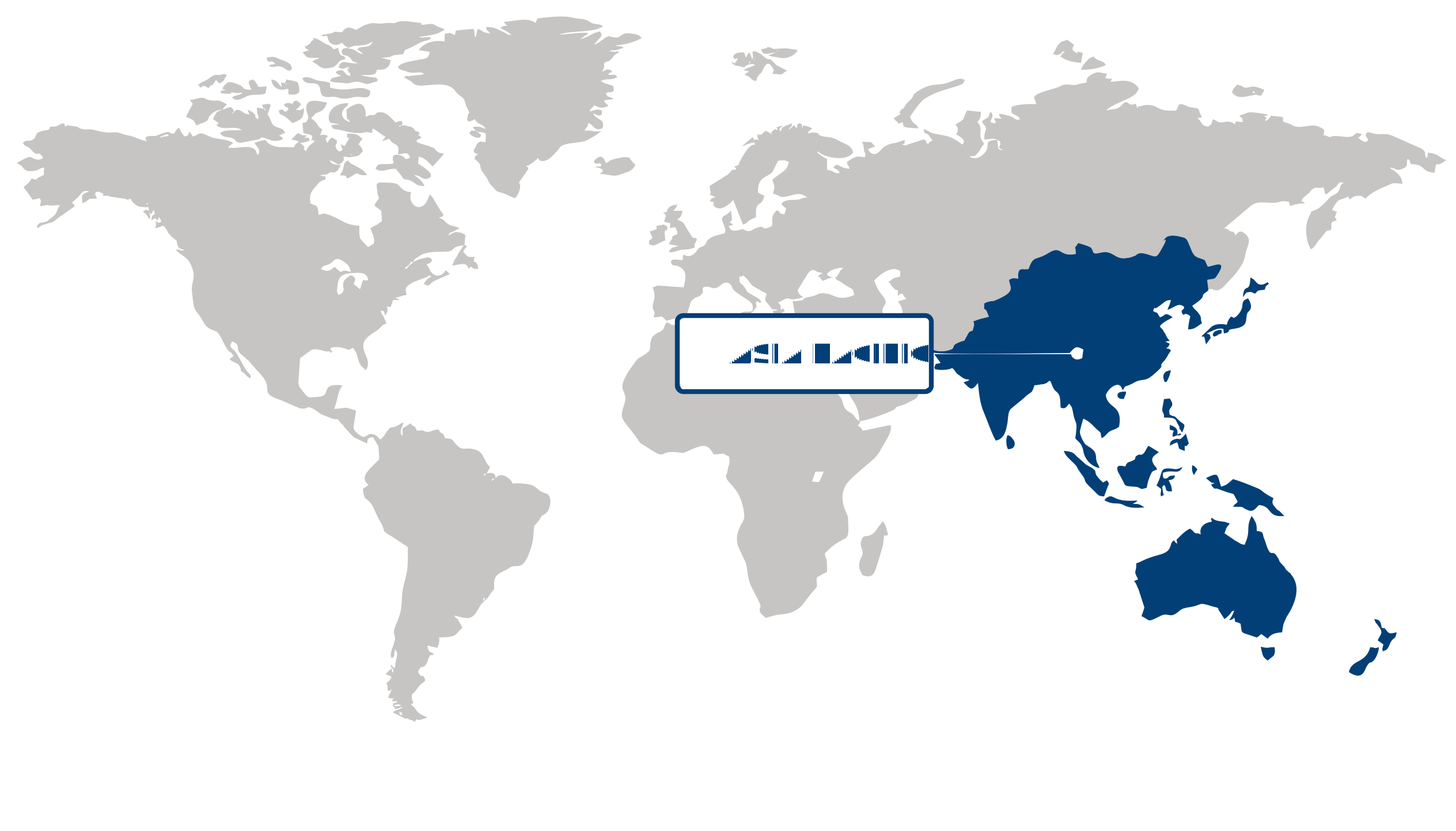
Asia Pacific (Largest Region)
The shopping application market was led by Asia Pacific, which accounted for a 47.70% share in 2026, underpinned by widespread smartphone usage, expanding digital payment ecosystems, and the increasing integration of mobile commerce into everyday consumer behavior. Rapid growth in online retail infrastructure and the popularity of app-based purchasing are enabling consumers to browse, compare, order, and track products through increasingly seamless mobile experiences. Social commerce, personalized recommendations, digital promotions, and localized shopping interfaces are also strengthening engagement, particularly as consumers across emerging economies gain greater access to internet-enabled devices and digital services.
North America (Fastest-Growing Region)
North America represents the fastest-growing region as retailers and consumers increasingly favor mobile-first shopping experiences that combine convenience with personalized discovery. Advances in digital payments, targeted recommendations, loyalty integration, and seamless fulfillment are encouraging greater use of shopping applications throughout the purchase journey. Retailers are also emphasizing omnichannel capabilities, allowing consumers to move more easily between mobile applications, physical stores, and online platforms. Growing expectations for faster, more convenient, and highly tailored shopping experiences are therefore supporting continued adoption of shopping applications across the region.
| Parameter | North America | Asia Pacific | Europe | Latin America | MEA |
|---|---|---|---|---|---|
| Innovation Hub i Scale Nascent Developing Advanced | |||||
| Cost-Sensitive Region i Scale Low Medium High | |||||
| Regulatory Environment i Scale Restrictive Neutral Supportive | |||||
| Demand Drivers i Scale Weak Moderate Strong | |||||
| Development Stage i Scale Emerging Developing Developed | |||||
| Adoption Rate i Scale Low Medium High | |||||
| New Entrants / Startups i Scale Sparse Moderate Dense | |||||
| Macro Indicators i Scale Weak Stable Strong |
Key Country Insights
Germany 🇩🇪
Trusted Digital RetailGermany places strong emphasis on secure shopping applications that support transparent transactions and reliable data protection. Retailers continue improving user experience while integrating flexible payment methods and omnichannel shopping features.
France 🇫🇷
Customer Engagement StrategyFrance is strengthening shopping applications through enhanced loyalty features, personalized promotions, and convenient delivery options. Businesses are investing in digital experiences that complement established retail channels while supporting evolving consumer expectations.
Italy 🇮🇹
Mobile Retail AdoptionItaly continues expanding mobile shopping through applications that simplify purchasing, payment, and order tracking. Retailers are improving localized digital experiences and strengthening partnerships with logistics providers to enhance customer satisfaction.
Japan 🇯🇵
Mobile Experience RefinementJapan focuses on highly optimized shopping applications featuring intuitive interfaces, cashless payment integration, and personalized recommendations. Businesses continue refining mobile commerce platforms to improve customer retention and purchasing convenience.
South Korea 🇰🇷
Super App IntegrationSouth Korea's shopping application market benefits from widespread mobile-first consumer behavior and integration with multifunction digital platforms. Retailers are expanding live commerce, digital wallets, and AI-powered recommendations to strengthen user engagement.
United States 🇺🇸
Omnichannel Commerce DriverThe U.S. shopping application market prioritizes seamless integration between online platforms, retail stores, and digital payment ecosystems. Companies are enhancing AI-based personalization, loyalty programs, and rapid fulfillment capabilities to improve customer engagement.
Segment Leadership and Growth Trends
Shopping Application Market Share (%), by Marketplace, 2026
Go beyond the chart, access full insights & data tables
Request Free Sample ReportMarketplace Segment Analysis: Google Play Store (Largest Segment) vs Apple iOS Store (Fastest-Growing Segment)
The google play store segment accounted for the largest share of the shopping application market at 57.75% in 2026, supported by its broad accessibility and extensive reach across mobile users. Its established application ecosystem provides retailers and shopping platforms with a convenient channel for application distribution, enabling consumers to browse products, compare offerings, complete purchases, and engage with digital promotions. The widespread adoption of android devices and the platform's integration with mobile services further strengthen its role in supporting shopping application usage.
The apple iOS store segment is expected to register the fastest growth, driven by increasing consumer reliance on mobile shopping and demand for seamless digital purchasing experiences. Shopping applications on the platform benefit from a highly integrated ecosystem that supports secure transactions, personalized interfaces, and consistent application performance. As retailers increasingly prioritize mobile-first engagement, enhanced app functionality and growing consumer preference for convenient digital commerce are expected to support adoption through the apple iOS store.
| Segment | Sub-Segment | Largest Segment | Fastest Growing |
|---|---|---|---|
| Marketplace | Google Play Store, Apple iOS Store, Others | Google Play Store | Apple iOS Store |
Competitive Landscape and Market Positioning
Major players in the shopping application market:
1. eBay Inc. (U.S.)
2. Etsy Inc. (U.S.)
3. Lazada Group S.A. (Singapore)
4. AJIO (India)
5. Tata CLiQ (India)
6. ZALORA Group (Singapore)
7. LimeRoad.com (India)
8. Gearbest (China)
The shopping application market is evolving rapidly with increasing integration of intelligent recommendation systems and seamless digital payment features. Continuous enhancements in user experience are driving engagement and retention. Ecosystem connectivity across logistics and payment systems is strengthening, while personalization remains a key innovation focus.
| Company | Market Share | Company Revenue | Revenue CAGR (%) | Product Portfolio | Geographic Presence | Innovation / R&D Focus | Strategic Developments |
|---|---|---|---|---|---|---|---|
| eBay Inc. (U.S.) | |||||||
| Etsy Inc. (U.S.) | |||||||
| Lazada Group S.A. (Singapore) | |||||||
| AJIO (India) | |||||||
| Tata CLiQ (India) | |||||||
| ZALORA Group (Singapore) | |||||||
| LimeRoad.com (India) | |||||||
| Gearbest (China). |
Industry Development/News
| Company Name | Date | Key Development |
|---|---|---|
| MyChoice Financial, Inc. | May-26 | MyChoice Financial launched an AI-integrated insurance shopping application within ChatGPT, facilitating conversational product comparison and acquisition. This development underscores a strategic move toward AI-native embedded commerce, with future plans to expand into home insurance, highlighting the shift toward integrating transactional interfaces directly into conversational AI environments. |
| Dutchie | Aug-25 | Dutchie launched an omni-channel commerce infrastructure and third-party partner program for cannabis retailers. This expansion enables merchants to unify digital and in-store shopping experiences, leveraging external integrations to improve operational and transactional efficiency across its network and cementing the company’s position as a scalable payments and commerce platform. |
| Arctic Star Company | Jul-25 | Arctic Star Company entered the regional mobile commerce market in Oman with the launch of the Hi Shopping app. This rollout establishes a dedicated digital retail presence, reflecting a strategic geographic expansion aimed at capturing local consumer demand through a localized, app-based mobile commerce platform. |
| Alibaba | May-25 | Alibaba’s Taobao Instant Commerce portal achieved significant scale, exceeding 40 million daily orders by integrating Ele.me merchants to provide 60-minute fulfillment. This performance underscores the strategic importance of instant retail models within the company's broader ecosystem, demonstrating successful integration between on-demand delivery services and e-commerce infrastructure. |
| Perplexity | Nov-24 | Perplexity integrated a shopping assistant into its AI search engine, enabling direct product discovery and purchasing via conversational queries. By combining search-driven discovery with transactional capabilities within an AI interface, the company is positioning itself to capture value in the evolving landscape of AI-driven commerce and user-centric shopping experiences. |
| Samsung | Aug-24 | Samsung launched the Samsung Shop application in the Philippines, extending its direct-to-consumer digital retail footprint across Southeast Asia. This initiative is a critical component of its regional expansion strategy, aimed at enhancing mobile-first shopping accessibility and strengthening the integration of its proprietary product ecosystem through localized e-commerce platforms. |
Customize Your Report
Explore examples of how this report can be tailored to different research needs, including custom segments, additional topics or chapters, and related reports. Click a section of the wheel or its numbered marker to explore the available options.
Shopping Application Market — Custom Segments
| Segment | Sub-Segment |
|---|---|
| Shopping Category | Fashion & Apparel, Consumer Electronics, Home & Furniture, Beauty & Personal Care, Grocery & Food, Other Consumer Goods |
| Monetization Model | Transaction Commission, Advertising-Supported, Subscription-Based, Freemium, Affiliate & Referral |
| Purchase Frequency | Occasional Purchase, Monthly Purchase, Weekly Purchase, Daily or Near-Daily Purchase |
Shopping Application Market — Custom TOC
| Custom Chapter | Custom Details |
|---|---|
| Consumer Shopping Journey Analysis |
|
| Social Commerce Integration Opportunities |
|
| Customer Loyalty and Retention Analysis |
|
Need a different cut of the data?
Request Custom ResearchWhat is the market size of shopping application?
How is the shopping application industry expected to grow over the next 10 years?
How is AI-driven personalization influencing competitive positioning in the shopping application market?
Why is the expansion of in-app commerce becoming a strategic growth driver for the shopping application market?
Why does the Google Play Store lead the shopping application market?
Why is the Apple iOS Store the fastest-growing marketplace in the shopping application market?
Why is Asia Pacific the largest shopping application market?
What is accelerating shopping application market growth in North America?
Which organizations are considered leaders in the shopping application landscape?
Our Clients
"The team demonstrated a great understanding of our business needs, and the reports were tailored to address our specific concerns and objectives."
Infosys
"The report was up-to-date with the latest industry trends and technological advancements. The detailed competitive landscape analysis was quite helpful."
Zebra Technologies
"The data presented in the report was accurate and well-researched. I also found the market dynamics section particularly useful."
Arlo Technologies
Our Research Team & Methodology
Every Fundamental Business Insights report is built by a dedicated vertical research team, validated through a structured primary-and-secondary methodology, and reviewed for accuracy before it reaches you.
Research Team Overview
Prepared by the Smart Technologies Research Team
Delivery
Published
Demand
Available
Support
Trust & Compliance
Research Domains
10 coverage areasResearch Intelligence
| Source | Reference |
|---|---|
| National Institute of Standards and Technology (NIST) | www.nist.gov |
| International Organization for Standardization (ISO) | www.iso.org |
| Institute of Electrical and Electronics Engineers (IEEE) | www.ieee.org |
| Internet Engineering Task Force (IETF) | www.ietf.org |
| World Wide Web Consortium (W3C) | www.w3.org |
| Cloud Security Alliance (CSA) | cloudsecurityalliance.org |
| Open Source Initiative (OSI) | opensource.org |
| Linux Foundation | www.linuxfoundation.org |
| FinOps Foundation | www.finops.org |
| PCI Security Standards Council | www.pcisecuritystandards.org |
| SWIFT | www.swift.com |
| Financial Stability Board (FSB) | www.fsb.org |
| GSMA | www.gsma.com |
| International Telecommunication Union (ITU) | www.itu.int |
| OWASP Foundation | owasp.org |
| MITRE | www.mitre.org |
| World Economic Forum (WEF) | www.weforum.org |
| OECD Digital Economy | www.oecd.org/digital |
| World Bank Data | data.worldbank.org |
| U.S. Census Bureau | www.census.gov |
Research Workflow & Quality Assurance
Data Collection
Verified information gathered through primary and secondary research.
Data Triangulation
Cross-validation using multiple independent data sources.
Forecast Modelling
Market estimates developed using historical trends and analytical models.
Analyst Validation
Findings reviewed by domain experts for accuracy and consistency.
Editorial & Quality Review
Final editorial, quality, and compliance checks before publication.
Final Publication
Released after successful completion of the internal review process.
Report Coverage
📊 Market Assessment
- Market Size & Forecast
- Market Segmentation
- Regional Analysis
- Growth Drivers & Challenges
- Market Dynamics
🏢 Competitive Intelligence
- Competitive Landscape
- Company Profiles
- Competitive Benchmarking
- Mergers & Acquisitions
- Market Share Analysis or Key Company Strategies
🔍 Strategic Analysis
- Value Chain Analysis
- Porter's Five Forces
- PESTLE Analysis
- Pricing Trends
- Supply-Demand Analysis
🚀 Future Outlook
- Technology Landscape
- Regulatory Landscape
- Investment & Funding Landscape
- Emerging Opportunities
- Future Market Outlook
Have a question about this report or need a custom scope?
Request Customization