Self-tanning Products Market Size & Growth Forecast 2027–2036, By Segments (Application, Product, Distribution Channel), Regional Demand Trends (North America, Asia Pacific, Europe), Key Country Insights (U.S., Japan, South Korea, Germany, France, Italy), and Competitive Landscape
Market Size and Growth Outlook
Self-tanning Products Market size was valued at USD 1.06 billion in 2026 and is anticipated to grow at a 4.28% CAGR from 2027 to 2036, crossing USD 1.61 billion by 2036. The industry revenue for 2027 is calculated at USD 1.1 billion.
Get more details on this report
Request Free Sample ReportSelf-tanning Products Market Intelligence Snapshot
Regional Market Dynamics
- Europe held a 37.10% market share in 2026 due to strong consumer familiarity, broad retail availability, mature brand presence, and consistent demand for UV-free appearance enhancement products.
- Asia Pacific is expected to expand at a 5.24% CAGR, driven by rising beauty product adoption, expanding e-commerce access, and growing exposure to international skincare and cosmetic trends.
Segment Momentum
- Women held a 61.4% market share in 2026 because self-tanning products are firmly integrated into established beauty and skincare routines, supporting consistent repeat purchases.
- Gels are the fastest-growing product segment as consumers increasingly prefer lightweight, fast-absorbing formulations that fit convenient daily skincare routines.
Market Expansion Drivers
- Rising skin cancer awareness and UV exposure concerns accelerating sunless tanning adoption.
- Growing preference for safer cosmetic alternatives replacing UV-based tanning methods.
- Influencer-led beauty trends boosting demand for bronzing and skincare hybrid products.
Leading Market Participants
- Prominent players in the self-tanning products market include The Estée Lauder Companies Inc. (United States), L'Oréal S.A. (France), Beiersdorf AG (Germany), Shiseido Company, Limited (Japan), Kao Corporation (United States), Unilever PLC (United Kingdom), Clarins Group (France), St. Tropez Inc. (United States), Avon Products, Inc. (United Kingdom), Johnson & Johnson (United States).
Global Market Forecast Snapshot
Market Outlook
- 2026 Market Size: USD 1.06 billion
- 2027 Estimated Market Size: USD 1.1 billion.
- Projected Market Size: USD 1.61 billion by 2036
- Growth Forecast: 4.28% CAGR (2027-2036)
Regional and Segment Outlook
- Leading Regional Market: Europe
- High-Growth Regional Hub: Asia Pacific
- Core Revenue Segment: Women (Application) | Lotions (Product) | Supermarkets & Hypermarkets (Distribution Channel)
- Emerging Opportunity Segment: Men (Application) | Gels (Product) | Online (Distribution Channel)
Market Growth Drivers and Industry Trends
Rising skin cancer awareness and UV exposure concerns accelerating sunless tanning adoption
Growing awareness of the risks associated with prolonged ultraviolet exposure will drive the self-tanning products market growth as consumers increasingly seek ways to achieve a tanned appearance without relying on direct sunlight or tanning beds. Greater understanding of premature skin aging, sun damage, and skin cancer risks is encouraging consumers to reconsider conventional tanning practices and adopt topical alternatives that provide bronzed results without intentional UV exposure. This shift is particularly relevant among beauty-conscious consumers who want to maintain a tanned appearance while incorporating more skin-protective habits into their routines. Self-tanning lotions, mousses, sprays, drops, and related formulations provide convenient options for achieving customized tanning results at home, supporting broader adoption as sunless tanning becomes increasingly aligned with preventive skincare awareness.
Growing preference for safer cosmetic alternatives replacing UV-based tanning methods
Consumers are increasingly prioritizing cosmetic solutions perceived as safer and more compatible with everyday skincare routines, which will propel the self-tanning products market growth. The transition away from UV-based tanning methods is supported by demand for products that can deliver visible tanning effects without requiring repeated exposure to sunlight or artificial UV radiation. Product formulations that combine tanning functionality with moisturizing, nourishing, and skin-conditioning properties are further strengthening this appeal by allowing consumers to integrate tanning into established beauty routines. As shoppers become more attentive to ingredient profiles, application convenience, skin feel, and overall cosmetic performance, brands are able to position self-tanning products as multifunctional beauty solutions rather than simple substitutes for conventional tanning methods.
Influencer-led beauty trends boosting demand for bronzing and skincare hybrid products
Social media-driven beauty culture is expanding consumer awareness of tanning techniques and product formats, helping boost demand across the self-tanning products market. Influencers and beauty creators frequently demonstrate application methods, shade selection, tanning routines, and product combinations, making sunless tanning more approachable for consumers who may previously have considered it difficult to achieve naturally looking results. At the same time, the popularity of complexion-enhancing products is encouraging the development of bronzing formulations that incorporate skincare-oriented ingredients, such as moisturizing and conditioning components. These hybrid offerings appeal to consumers seeking both cosmetic color and routine skincare benefits, while visual content demonstrating application and results can encourage experimentation with mousses, drops, sprays, and other personalized tanning formats.
| Growth Driver | Impact on CAGR | Regulatory Influence | Geographic Relevance | Adoption Rate | Impact Timeline |
|---|---|---|---|---|---|
| Rising skin cancer awareness and UV exposure concerns accelerating sunless tanning adoption | 1.80% | Moderate | North America, Europe | High | Near Term |
| Growing preference for safer cosmetic alternatives replacing UV-based tanning methods | 1.40% | Moderate | Europe, Asia Pacific | High | Mid Term |
| Influencer-led beauty trends boosting demand for bronzing and skincare hybrid products | 1.10% | Moderate | North America, Europe | Medium | Near Term |
Unlock insights tailored to your business with our bespoke market research solutions.
Click to get your customized report now.
Regional Demand Dynamics
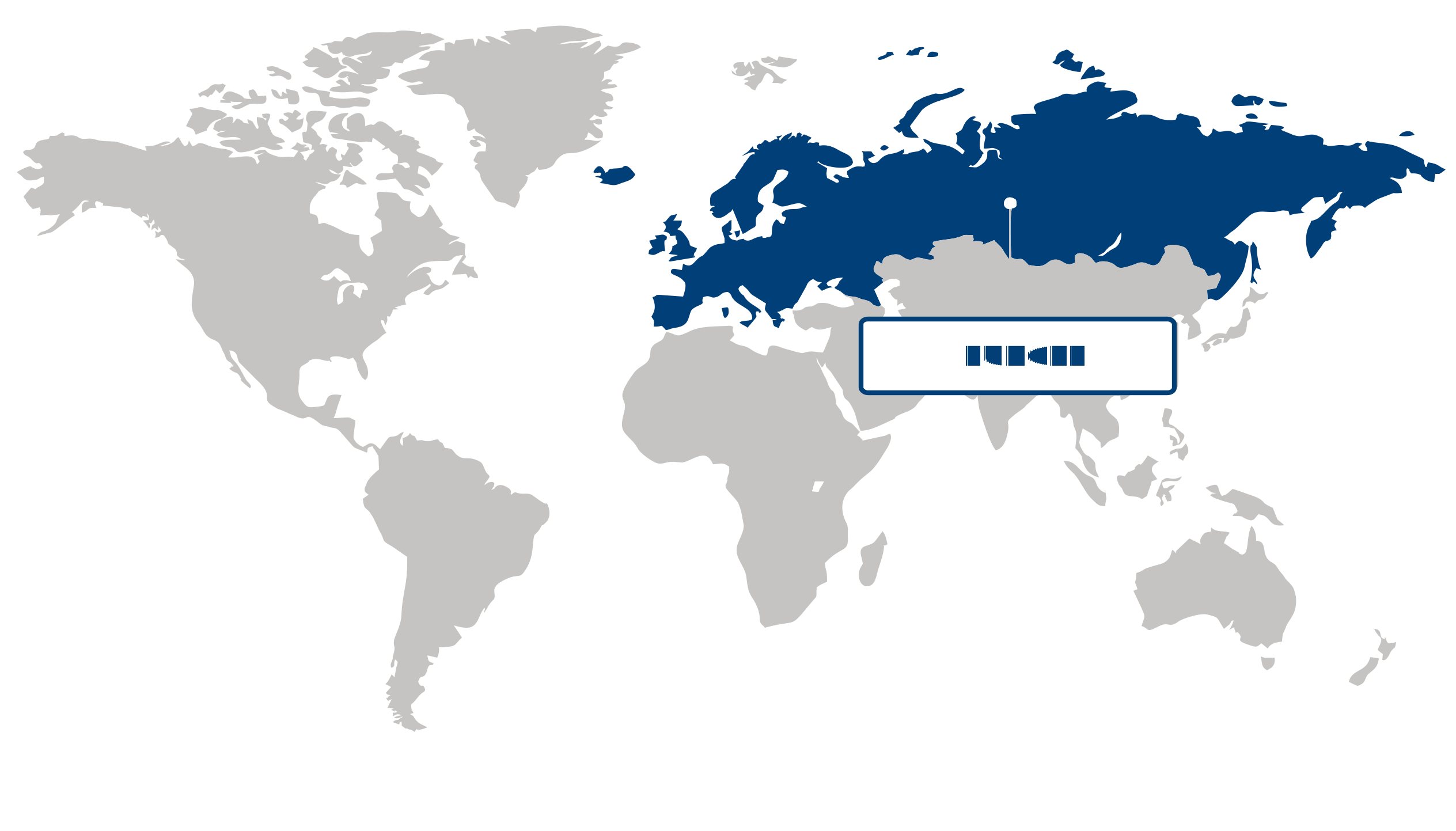
Europe (Largest Region)
Europe held the largest share of the self-tanning products market, accounting for 37.10% in 2026, supported by strong consumer interest in beauty and personal care, established skincare routines, and growing awareness of the risks associated with excessive ultraviolet exposure. Consumers increasingly view self-tanning products as a convenient way to achieve a bronzed appearance without relying extensively on natural sun exposure or tanning beds. The region’s mature cosmetics industry, broad availability of premium skincare products, and demand for clean-label and skin-friendly formulations are supporting category development. Seasonal travel, beauty trends, and growing interest in multifunctional products that combine tanning benefits with moisturizing and skincare properties are also contributing to sustained demand.
Asia Pacific (Fastest-Growing Region)
Asia Pacific is the fastest-growing region, driven by expanding beauty and personal care consumption, rising disposable incomes, and increasing exposure to global skincare and cosmetic trends. Consumers are becoming more receptive to self-tanning solutions as beauty preferences diversify and product awareness spreads through digital commerce and social media. Growing interest in at-home beauty routines is creating additional opportunities for convenient tanning lotions, mousses, sprays, and related formulations. Manufacturers are also adapting products to regional skin tones and preferences, while increasing demand for gentle, moisturizing, and easy-to-use formulations is supporting broader adoption across emerging beauty markets.
| Parameter | North America | Asia Pacific | Europe | Latin America | MEA |
|---|---|---|---|---|---|
| Innovation Hub i Scale Nascent Developing Advanced | |||||
| Cost-Sensitive Region i Scale Low Medium High | |||||
| Regulatory Environment i Scale Restrictive Neutral Supportive | |||||
| Demand Drivers i Scale Weak Moderate Strong | |||||
| Development Stage i Scale Emerging Developing Developed | |||||
| Adoption Rate i Scale Low Medium High | |||||
| New Entrants / Startups i Scale Sparse Moderate Dense | |||||
| Macro Indicators i Scale Weak Stable Strong |
Key Country Insights
Germany 🇩🇪
Skin-Friendly FormulationsGermany emphasizes self-tanning products with dermatologically tested formulations and transparent ingredient profiles. Manufacturers increasingly focus on gentle, fragrance-conscious products that deliver even application while addressing consumer demand for skin-compatible cosmetics.
France 🇫🇷
Premium Beauty PositioningFrance prioritizes self-tanning products that combine cosmetic elegance with skincare benefits. French beauty companies continue refining premium formulations featuring natural ingredients, smooth application, and long-lasting finishes that align with sophisticated beauty preferences.
Italy 🇮🇹
Salon-Inspired ProductsItaly's self-tanning products market is supported by demand for professional-quality formulations suitable for both salon and home use. Italian brands emphasize natural-looking finishes, nourishing ingredients, and premium application formats that enhance overall user satisfaction.
Japan 🇯🇵
Lightweight Cosmetic SolutionsJapan's self-tanning products market favors lightweight textures and subtle tanning effects that complement broader skincare routines. Japanese brands continue developing easy-to-apply formulations with moisturizing properties and minimal residue for everyday cosmetic use.
South Korea 🇰🇷
Skincare-Driven TanningSouth Korea integrates self-tanning products with multifunctional skincare concepts emphasizing hydration and skin comfort. Local manufacturers increasingly develop lightweight formulations that combine cosmetic performance with ingredients commonly used in premium skincare products.
United States 🇺🇸
Sunless Beauty InnovationThe U.S. self-tanning products market continues expanding through demand for convenient sunless tanning solutions with natural-looking results. Brands increasingly introduce skincare-infused formulations, customizable application formats, and clean-label ingredients to improve consumer experience.
Segment Leadership and Growth Trends
Self-tanning Products Market Share (%), by Application, 2026
Go beyond the chart, access full insights & data tables
Request Free Sample ReportApplication Segment Analysis: Women (Largest Segment) vs Men (Fastest-Growing Segment)
Women segment represented the largest application category in the self-tanning products market, accounting for 61.4% share in 2026. Strong demand is supported by established consumer awareness of self-tanning products and their role in achieving an even, bronzed appearance without relying solely on natural sun exposure. Growing interest in convenient at-home beauty routines, appearance enhancement, and personal grooming is reinforcing the segment's established position.
Men segment is anticipated to experience the fastest growth within the application category as male consumers increasingly incorporate grooming and appearance-focused products into their personal care routines. Greater acceptance of self-tanning as part of everyday grooming, together with demand for convenient solutions that provide a more consistent appearance, is expanding the potential consumer base. This broadening participation is creating additional momentum for self-tanning products targeting male users.
Product Segment Analysis: Lotions (Largest Segment) vs Gels (Fastest-Growing Segment)
Lotions led the product category of the self-tanning products market, holding a 57.23% share in 2026. Their widespread use is supported by familiar application methods, ease of spreading across larger areas of the skin, and suitability for consumers seeking an accessible self-tanning format. The established nature of lotion-based personal care products also supports consumer acceptance, while their versatility across different grooming routines contributes to sustained demand.
Gels are projected to be the fastest-growing product type, driven by consumer interest in lightweight formulations and convenient application experiences. Gel formats can offer a less heavy feel on the skin and appeal to consumers seeking quick, easy-to-use products within their personal care routines. Increasing product-format innovation and demand for differentiated textures are supporting greater interest in gel-based self-tanning solutions.
| Segment | Sub-Segment | Largest Segment | Fastest Growing |
|---|---|---|---|
| Application | Men, Women | Women | Men |
| Product | Lotions, Gels, Others | Lotions | Gels |
| Distribution Channel | Supermarkets & Hypermarkets, Convenience Stores, Online | Supermarkets & Hypermarkets | Online |
Competitive Landscape and Market Positioning
Leading companies in the self-tanning products market:
1. The Estée Lauder Companies Inc. (United States)
2. L'Oréal S.A. (France)
3. Beiersdorf AG (Germany)
4. Shiseido Company Limited (Japan)
5. Kao Corporation (United States)
6. Unilever PLC (United Kingdom)
7. Clarins Group (France)
8. St. Tropez Inc. (United States)
9. Avon Products Inc. (United Kingdom)
10. Johnson & Johnson (United States)
The self-tanning products market is experiencing growth driven by increasing consumer preference for cosmetic convenience and aesthetic enhancement solutions. Product innovation is focused on improving formulation safety, finish quality, and ease of application. Shifts toward more natural-looking results are influencing development strategies. In the self-tanning products market, innovation is closely aligned with evolving beauty standards and user expectations.
| Company | Market Share | Company Revenue | Revenue CAGR (%) | Product Portfolio | Geographic Presence | Innovation / R&D Focus | Strategic Developments |
|---|---|---|---|---|---|---|---|
| The Estée Lauder Companies Inc. (United States) | |||||||
| L'Oréal S.A. (France) | |||||||
| Beiersdorf AG (Germany) | |||||||
| Shiseido Company Limited (Japan) | |||||||
| Kao Corporation (United States) | |||||||
| Unilever PLC (United Kingdom) | |||||||
| Clarins Group (France) | |||||||
| St. Tropez Inc. (United States) | |||||||
| Avon Products Inc. (United Kingdom) | |||||||
| Johnson & Johnson (United States). |
Industry Development/News
| Company Name | Date | Key Development |
|---|---|---|
| Peta Jane Beauty | Sep-25 | Peta Jane Beauty entered the self-tanning market as a founder-led brand focusing on at-home, streak-free application. The company aims to differentiate itself through professional-grade formulations that address common consumer challenges regarding consistency and application ease, marking a strategic entry into the competitive consumer tanning sector. |
| Bellamianta / Iconic Bronze | Aug-25 | Bellamianta and Iconic Bronze reported significant commercial momentum, with combined sales projections reaching £11 million. This performance underscores robust demand for specialized tanning solutions and reflects the companies’ strengthened market positioning and competitive footprint across the UK and Ireland, signaling a scalable growth trajectory within the professional beauty segment. |
| Caudalie | Apr-25 | Skincare-focused brand Caudalie entered the self-tanning segment with the introduction of face tanning drops. By leveraging its established skincare expertise to offer gentle, non-irritating formulations, the company is strategically positioning itself to capture demand for integrated sunless tanning solutions, representing a pivot towards specialized, health-oriented product development within the broader tanning market. |
| Bro Glo | Jan-25 | Men’s grooming brand Bro Glo initiated an accelerated scaling phase following high-visibility exposure. The company undertook significant operational adjustments, including inventory expansion and the implementation of promotional bundle strategies, to accommodate a surge in consumer demand and improve market penetration within the niche male-focused segment of the self-tanning industry. |
| Bondi Sands | May-24 | Bondi Sands expanded its portfolio with the launch of Technocolor Self Tanning Face Serums, integrating blemish-control and skincare-focused ingredients. This move reinforces the company's competitive position in the hybrid skincare-tanning category, addressing growing consumer preference for multifunctional products that combine cosmetic bronzing capabilities with active skin health benefits. |
| Dolce Glow | May-24 | Premium self-tanning brand Dolce Glow was established to capture market share within the at-home professional-quality segment. The company focuses on leveraging high-performance, user-friendly formulations and brand-led skincare positioning to compete against traditional offerings, aiming to bridge the gap between salon-level results and consumer-accessible tanning products. |
Customize Your Report
Explore examples of how this report can be tailored to different research needs, including custom segments, additional topics or chapters, and related reports. Click a section of the wheel or its numbered marker to explore the available options.
Self-tanning Products Market — Custom Segments
| Segment | Sub-Segment |
|---|---|
| Price Tier | Mass-Market, Mid-Range, Premium, Luxury |
| Tan Duration | Instant/Short-Term, 1–3 Days, 4–7 Days, More Than 7 Days |
| Sun Protection Level | No SPF, Low SPF, Medium SPF, High SPF |
Self-tanning Products Market — Custom TOC
| Custom Chapter | Custom Details |
|---|---|
| Brand Positioning and White Space Analysis |
|
| Omnichannel Retail & E-commerce Strategy Benchmarking |
|
| Premiumization and Pricing Opportunity Assessment |
|
Need a different cut of the data?
Request Custom ResearchHow much is the self-tanning products market worth?
How is the self-tanning products industry projected to perform over the next decade?
How are health-conscious beauty trends influencing purchasing behavior in the Self-tanning Products Market?
Why are skincare-focused product innovations gaining momentum in the Self-tanning Products Market?
Why do women account for the largest share of the self-tanning products market?
Which product segment is growing the fastest in the self-tanning products market?
What makes Europe the leading regional market for self-tanning products?
Why is Asia Pacific becoming the fastest-growing self-tanning products market?
What are the key competitors in the self-tanning products landscape?
Our Clients
"The report provided us with a clear direction, and the level of detail was beyond what we expected. I would definitely recommend their services to others."
Haier Appliances
"The collaboration with Fundamental Business Insights has added significant value to our decision-making process, and we look forward to continuing this partnership for our future market research requirements."
Luxottica Group S.p.A.
"The team at FBI delivered an exceptional research report. The insights on industry innovations were particularly impressive and added a lot of value to the overall report."
Nike
Our Research Team & Methodology
Every Fundamental Business Insights report is built by a dedicated vertical research team, validated through a structured primary-and-secondary methodology, and reviewed for accuracy before it reaches you.
Research Team Overview
Prepared by the Consumer Goods & Services Research Team
Delivery
Published
Demand
Available
Support
Trust & Compliance
Research Domains
10 coverage areasResearch Intelligence
| Source | Reference |
|---|---|
| International Organization for Standardization (ISO) | www.iso.org |
| ASTM International | www.astm.org |
| U.S. Consumer Product Safety Commission (CPSC) | www.cpsc.gov |
| European Commission – Consumer Safety | ec.europa.eu/safety-gate |
| Consumer Technology Association (CTA) | www.cta.tech |
| National Retail Federation (NRF) | nrf.com |
| World Retail Congress | www.worldretailcongress.com |
| World Travel & Tourism Council (WTTC) | wttc.org |
| UN Tourism | www.unwto.org |
| Personal Care Products Council (PCPC) | www.personalcarecouncil.org |
| Cosmetics Europe | cosmeticseurope.eu |
| International Housewares Association (IHA) | www.housewares.org |
| American Apparel & Footwear Association (AAFA) | www.aafaglobal.org |
| World Federation of the Sporting Goods Industry (WFSGI) | wfsgi.org |
| Juvenile Products Manufacturers Association (JPMA) | www.jpma.org |
| Pet Industry Joint Advisory Council (PIJAC) | pijac.org |
| International Council of Toy Industries (ICTI) | www.toy-icti.org |
| International Association of Amusement Parks and Attractions (IAAPA) | iaapa.org |
| Organisation for Economic Co-operation and Development (OECD) | www.oecd.org |
| World Bank Data | data.worldbank.org |
Research Workflow & Quality Assurance
Data Collection
Verified information gathered through primary and secondary research.
Data Triangulation
Cross-validation using multiple independent data sources.
Forecast Modelling
Market estimates developed using historical trends and analytical models.
Analyst Validation
Findings reviewed by domain experts for accuracy and consistency.
Editorial & Quality Review
Final editorial, quality, and compliance checks before publication.
Final Publication
Released after successful completion of the internal review process.
Report Coverage
📊 Market Assessment
- Market Size & Forecast
- Market Segmentation
- Regional Analysis
- Growth Drivers & Challenges
- Market Dynamics
🏢 Competitive Intelligence
- Competitive Landscape
- Company Profiles
- Competitive Benchmarking
- Mergers & Acquisitions
- Market Share Analysis or Key Company Strategies
🔍 Strategic Analysis
- Value Chain Analysis
- Porter's Five Forces
- PESTLE Analysis
- Pricing Trends
- Supply-Demand Analysis
🚀 Future Outlook
- Technology Landscape
- Regulatory Landscape
- Investment & Funding Landscape
- Emerging Opportunities
- Future Market Outlook
Have a question about this report or need a custom scope?
Request Customization