Secondary Refrigerants Market Size & Forecasts 2026-2035, By Segments (Type, Application), Growth Opportunities, Innovation Landscape, Regulatory Shifts, Strategic Regional Insights (U.S., Japan, China, South Korea, UK, Germany, France), and Competitive Dynamics (Daikin, Johnson Controls, The Chemours Company, Honeywell International, Arkema)
Market Size and Growth Outlook
Secondary Refrigerants Market size is forecasted to reach USD 1.86 billion by 2035, rising from USD 871.36 million in 2025, at a CAGR of more than 7.9% between 2026 and 2035. In 2026, revenue is projected at USD 931.76 million.
Get more details on this report
Request Free Sample ReportSecondary Refrigerants Market Intelligence Snapshot
Regional Market Dynamics
Segment Momentum
Market Expansion Drivers
Leading Market Participants
Global Market Forecast Snapshot
Market Outlook
Regional and Segment Outlook
Market Growth Drivers and Industry Trends
The growing adoption of secondary refrigerants across industries is a pivotal driver for the secondary refrigerants market. This trend stems from the increasing demand for safer, environmentally friendly cooling solutions that minimize direct refrigerant leakage and energy consumption. For example, Walmart’s sustainability initiatives emphasize the use of secondary refrigerants to reduce environmental impact and operational costs. Such shifts in industrial practices facilitate broader market penetration for secondary refrigerants and create opportunities for manufacturers to develop tailored, application-specific products. Both incumbents and startups can capitalize on this by innovating in solution design and expanding into sectors like food retail and pharmaceuticals. With industrial players prioritizing operational resilience and emissions reduction, the secondary refrigerants market is positioned to benefit from sustained uptake and growing integration in complex cooling systems.
Regulatory Support for Low-GWP Refrigerants
Regulatory frameworks favoring low-global warming potential (GWP) refrigerants significantly underpin the secondary refrigerants market’s evolution. Government mandates, such as those enforced by the U.S. Environmental Protection Agency (EPA) under the Significant New Alternatives Policy (SNAP), promote the phase-out of high-GWP refrigerants in favor of safer alternatives, indirectly boosting secondary refrigerant adoption. These regulations compel equipment manufacturers and end-users to adopt compliant fluids, increasing demand for secondary refrigerants that serve as intermediary cooling media with lower environmental footprints. This environment offers strategic levers for companies ready to align portfolios with regulatory trends, enabling market entrants to differentiate through compliance expertise and eco-efficient solutions. As regulatory stringency intensifies globally, the secondary refrigerants market will increasingly serve as a critical compliance enabler for refrigeration and HVAC industries.
Technological Advancements in Secondary Refrigerants
Innovation in heat transfer fluids and formulations is accelerating the secondary refrigerants market’s growth trajectory. Advances in fluid chemistry and thermal performance are driven by the need for improved energy efficiency, safety, and compatibility with emerging refrigeration cycles. Daikin Industries’ recent launch of new secondary refrigerants with enhanced freeze resistance and biodegradability exemplifies this radar of innovation. Such technological progress unlocks new applications and system designs, stimulating demand among equipment manufacturers seeking to optimize performance and reduce lifecycle costs. For new entrants, investment in R&D can yield differentiated product offerings and collaboration opportunities with system integrators. Moving forward, continued technological breakthroughs will be essential in expanding secondary refrigerants’ role in next-generation cooling systems, bolstering market resilience in a competitive landscape.
Industry Restraints:
Stringent Regulatory Frameworks and Compliance Challenges
The secondary refrigerants market faces significant constraints due to complex and evolving regulatory environments aimed at minimizing environmental impacts. Agencies like the United States Environmental Protection Agency (EPA) enforce strict standards on refrigerant leakage and emissions under the Clean Air Act, while the European Chemicals Agency (ECHA) regulates chemical safety tightly under REACH. These policies mandate rigorous compliance protocols, increasing operational costs and slowing product innovation as manufacturers navigate certification and approval timelines. Established firms must allocate substantial resources for compliance and risk management, whereas new entrants often face barriers from delayed market entry and steep certification expenses. Going forward, tightening global environmental regulations will persist as a key restraint, pressuring market players to invest heavily in sustainable refrigerant formulations and advanced compliance solutions, impacting speed to market and operational scalability.
Raw Material Supply Constraints and Price Volatility
The availability and cost of core raw materials for secondary refrigerants, such as glycol and propylene-based compounds, present ongoing challenges amplified by geopolitical tensions and global supply chain disruptions. Key suppliers, including chemical manufacturers in Asia and North America, have reported volatility due to fluctuating energy prices and logistical bottlenecks as detailed in recent statements from Dow Chemical and LyondellBasell. These supply uncertainties elevate production costs and limit manufacturers’ ability to scale efficiently. This environment disproportionately impacts startups and smaller manufacturers lacking flexible procurement strategies or long-term supplier contracts. Moving forward, persistent raw material supply risks and associated price swings will constrain market expansion, compelling participants to secure diversified supply chains and develop alternative feedstock technologies to maintain competitiveness.
| Growth Driver | Impact on CAGR | Regulatory Influence | Geographic Relevance | Adoption Rate | Impact Timeline |
|---|---|---|---|---|---|
| Adoption of Secondary Refrigerants in Industries | 2.50% | Short term (≤ 2 yrs) | Europe, North America; Spillover: Asia Pacific | Medium | Moderate |
| Regulatory Support for Low-GWP Refrigerants | 2.80% | Medium term (2–5 yrs) | Europe, North America; Spillover: Asia Pacific | High | Moderate |
| Technological Advancements in Secondary Refrigerants | 2.60% | Long term (5+ yrs) | Asia Pacific, Europe; Spillover: North America | Medium | Moderate |
Explore Growth Opportunities
Request Free Sample ReportRegional Demand Dynamics
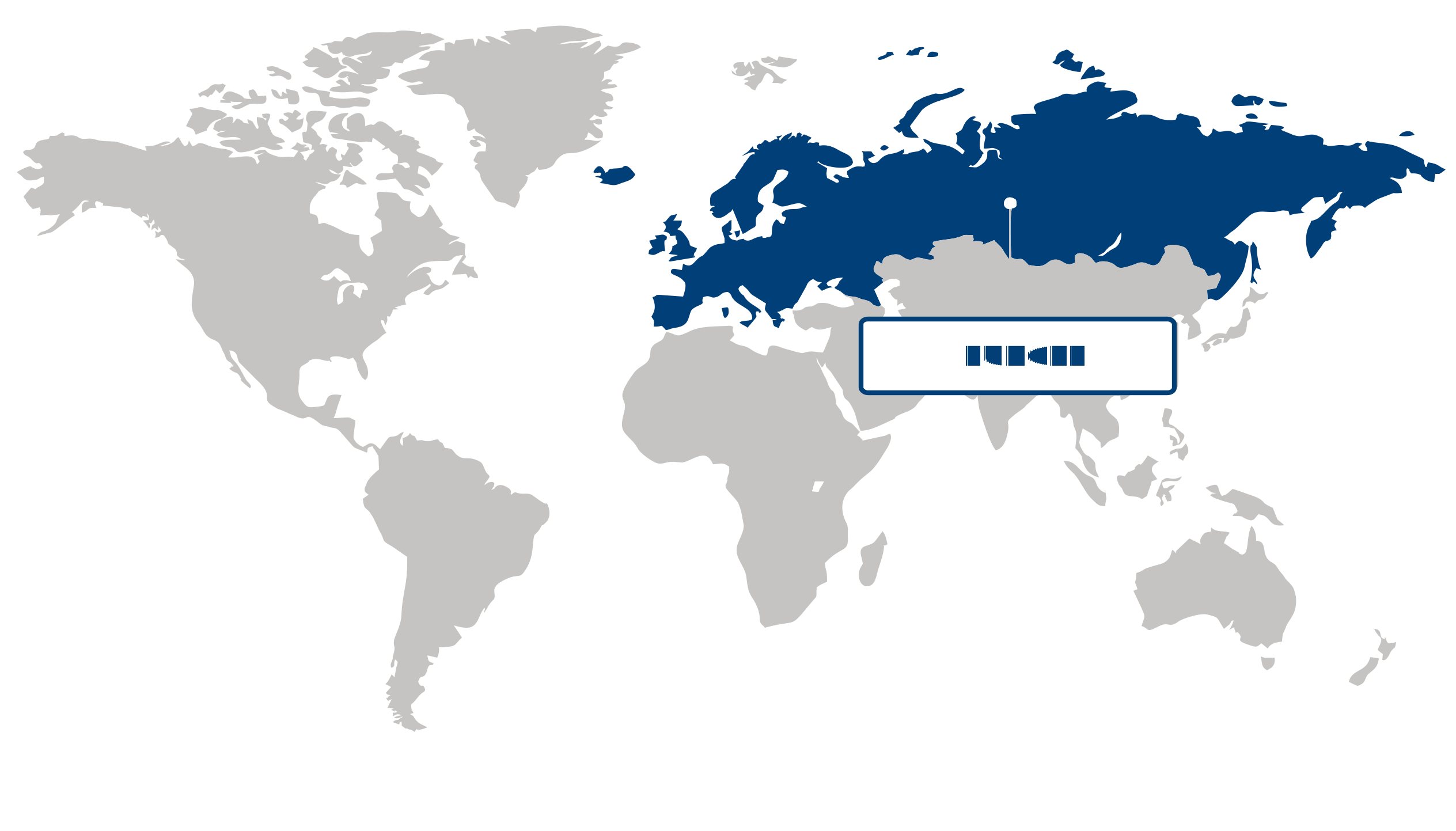
Europe dominated the secondary refrigerants market in 2025, representing more than 43% of the global share. The region's leadership is primarily fueled by stringent environmental regulations and the accelerated phase-out of high-GWP refrigerants, which drive demand for safer and more sustainable alternatives. The European Union’s F-gas Regulation, enforced by the European Commission, mandates significant reductions in fluorinated greenhouse gases, encouraging widespread adoption of secondary refrigerants. This regulatory push aligns with increasing investment in energy-efficient cooling systems and digital innovations across supply chains, as evidenced by corporate initiatives from companies like Danfoss and Alfa Laval. Additionally, shifting consumer preferences towards greener technologies and robust economic infrastructure facilitate seamless market expansion. Looking ahead, Europe's comprehensive policy frameworks and commitment to climate goals signal substantial opportunities for growth and innovation in the secondary refrigerants market.
Germany anchors the European secondary refrigerants market, leveraging its advanced industrial base and strong regulatory compliance. The country's focus on reducing emissions through its Climate Action Program 2030 steers substantial adoption of low-GWP refrigerants. German manufacturers such as Bosch Thermotechnology are actively integrating secondary refrigerants in HVAC systems to meet stricter environmental standards. This proactive stance fosters technological advancement and reinforces Germany’s role as a pivotal player in renewable energy transitions, enhancing regional competitiveness. Consequently, Germany’s leadership bolsters Europe’s continued dominance and innovation in the secondary refrigerants market.
France plays a strategic role in Europe's secondary refrigerants market by accelerating the transition under the Grenelle Environment Round Table framework. French policies incentivize reducing carbon footprints across industrial applications, prompting widespread uptake of secondary refrigerants with lower environmental impacts. Companies like Engie actively engage in deploying secondary refrigerants for district cooling projects, aligning with national sustainability goals. France's focus on energy efficiency and eco-conscious consumer behavior strengthens its position, complementing broader European market dynamics. Thus, France’s regulatory and market-driven initiatives amplify Europe’s growth prospects in the secondary refrigerants market.
Asia Pacific Market Analysis:
Asia Pacific emerged as the fastest-growing region in the secondary refrigerants market, registering a robust CAGR of 8.7%. The rapid expansion is primarily driven by the booming cold chain logistics and food processing sectors across the region. Increasing demand for efficient temperature control solutions to minimize spoilage and maintain product quality in perishable goods is pushing adoption of secondary refrigerants. Additionally, regulatory support for sustainable refrigeration technologies and investments in infrastructure upgrades in countries like China and Japan create a fertile environment for innovation and growth. For instance, the Asia Pacific Refrigeration Council has recently intensified advocacy for eco-friendly refrigerant alternatives, reflecting elevated regional priorities on environmental sustainability. With rising population density and urbanization accelerating food consumption and distribution needs, the region presents significant opportunities for businesses seeking to capitalize on cost-effective, energy-efficient secondary refrigerant technologies.
China anchors Asia Pacific’s secondary refrigerants market as a critical hub, propelled by its massive cold chain logistics overhaul and expanding food processing industry. The government’s “Cold Chain Logistics Development Plan” emphasizes upgrading refrigeration infrastructure, boosting demand for secondary refrigerants that reduce environmental impact and operational expenses. Corporations like CR Refrigeration leverage advanced secondary refrigerant solutions to service vast e-commerce-driven cold supply chains. Moreover, China’s growing consumer preference for fresh and frozen foods underscores the necessity for reliable, sophisticated cooling systems. This convergence of policy support and shifting consumption patterns highlights China’s strategic role in strengthening Asia Pacific’s position in the secondary refrigerants market.
Japan plays a vital role in reinforcing Asia Pacific’s market leadership through its emphasis on cutting-edge refrigeration technologies and strong regulatory frameworks. The country’s Food and Agricultural Materials Inspection Center promotes stringent standards for cold chain management, encouraging adoption of secondary refrigerants that enhance energy efficiency and safety. Japanese manufacturers such as Daikin and Mitsubishi Electric invest heavily in R&D to develop low-global warming potential refrigerants aligned with national carbon neutrality goals. High consumer awareness and preference for premium, fresh food products further fuel demand for reliable refrigeration solutions. Japan’s focus on technological innovation and environmental stewardship complements broader regional trends, making it a pivotal market in the Asia Pacific secondary refrigerants landscape.
North America Market Trends:
North America maintained a notable presence in the secondary refrigerants market, driven by increasing adoption of energy-efficient cooling systems and stringent environmental policies. The region’s focus on sustainability and regulatory frameworks, such as the U.S. Environmental Protection Agency’s efforts to phase down high-global warming potential substances, has accelerated the demand for advanced secondary refrigerants. Additionally, the robust industrial and commercial sectors, coupled with investments in smart refrigeration technologies, have heightened operational efficiency and reduced environmental impact, as highlighted by Honeywell’s recent launch of eco-friendly refrigerant solutions. These factors, supported by a skilled workforce and resilient supply chain infrastructure, position North America as a critical hub for innovation and growth in this sector. The evolving regulatory landscape and commitment to decarbonization offer significant opportunities for market expansion in coming years.
The U.S. serves as a pivotal market in North America’s secondary refrigerants market, where federal regulations and state-level incentives encourage rapid adoption of low-emission refrigerants. The U.S. Department of Energy’s initiatives promoting energy-saving refrigeration systems underline the country’s leadership in sustainable practices. Corporations such as Chemours have strategically expanded their product lines to include safer, secondary refrigerant solutions that meet regulatory compliance and consumer demands for greener alternatives. The country’s advanced R&D capabilities and high consumer awareness ensure continuous innovation and market penetration. Consequently, the U.S. remains a vital anchor in driving regional growth, underscoring the strategic importance of aligning product development with evolving environmental standards and energy efficiency goals in North America.
| Parameter | North America | Asia Pacific | Europe | Latin America | MEA |
|---|---|---|---|---|---|
| Innovation Hub i Scale Nascent Developing Advanced | |||||
| Cost-Sensitive Region i Scale Low Medium High | |||||
| Regulatory Environment i Scale Restrictive Neutral Supportive | |||||
| Demand Drivers i Scale Weak Moderate Strong | |||||
| Development Stage i Scale Emerging Developing Developed | |||||
| Adoption Rate i Scale Low Medium High | |||||
| New Entrants / Startups i Scale Sparse Moderate Dense | |||||
| Macro Indicators i Scale Weak Stable Strong |
Segment Leadership and Growth Trends
Secondary Refrigerants Market Share (%), by Type, 2026
Go beyond the chart, access full insights & data tables
Request Free Sample ReportGlycols held largest share in the secondary refrigerants market in 2025, driven primarily by their superior heat transfer performance and broad compatibility across refrigeration systems. Their leadership is reinforced by evolving industry standards that prioritize efficient and reliable thermal management, as emphasized in research from the American Society of Heating, Refrigerating and Air-Conditioning Engineers (ASHRAE). The widespread adoption of glycol-based secondary refrigerants reflects customer preference for solutions that balance performance with environmental and safety considerations, which also aligns with tightening refrigerant regulations globally. This segment offers strategic advantages for established chemical manufacturers and innovative startups focusing on sustainable formulations. Given ongoing improvements in glycol formulations and expanding applications across diverse cooling environments, this segment is poised to maintain its prominence in the near to medium term.
Analysis by Application
Commercial refrigeration represented the largest share of the secondary refrigerants market in 2025, fueled by robust demand for energy-efficient, large-scale refrigeration systems in retail and hospitality sectors. The prominence of this segment is supported by increasing regulatory pressure on energy consumption, as highlighted by the U.S. Environmental Protection Agency’s (EPA) ENERGY STAR program, which promotes optimized refrigerant use. Consumer expectations for sustainability and food safety further drive adoption of advanced secondary refrigerants tailored for commercial settings. This segment’s scale and complexity create opportunities for both incumbent refrigeration OEMs and emerging technology providers innovating in digital control and system integration. With continued growth in global retail infrastructure and heightened focus on reducing carbon footprints, commercial refrigeration remains a key area for competitive differentiation and market expansion.
| Segment | Sub-Segment | Largest Segment | Fastest Growing |
|---|---|---|---|
| Type | Salt Brines, Glycols, Carbon Dioxide | ||
| Application | Industrial Refrigeration, Commercial Refrigeration, Air Conditioning, Heat Pumps |
Unlock insights tailored to your business with our bespoke market research solutions.
Click to get your customized report now.
Competitive Landscape and Market Positioning
The competitive environment is shaped by continuous initiatives among these leading companies, who actively enhance their market presence through targeted expansions and the introduction of advanced secondary refrigerants. Collaborative engagements and strategic alignments within and across sectors support diversified offerings and facilitate entry into emerging applications. Investments in research enable refinement of formulations to meet stricter efficiency and safety standards, fostering differentiation. Consequently, competitiveness is marked by innovation pipelines and an ability to anticipate or respond swiftly to shifts in technology preferences and sustainability imperatives.
Strategic / Actionable Recommendations for Regional Players
In North America, market participants should consider forming symbiotic collaborations with technology innovators and sustainability-focused firms to accelerate development of low-global warming potential (GWP) refrigerants, leveraging the region’s strong regulatory frameworks and demand for environmental compliance.
Asia Pacific players can capitalize on rising industrial and commercial refrigeration demand by integrating cutting-edge thermal transfer technologies and expanding localized manufacturing capabilities to deliver cost-effective, customizable secondary refrigerant solutions aligned with varied climatic conditions.
European stakeholders are advised to deepen partnerships with chemical specialists and R&D entities to pioneer eco-friendly refrigerant blends, while targeting segments driven by energy efficiency mandates and retrofit activities, thereby reinforcing their foothold within stringent regulatory landscapes.
| Company | Market Share | Company Revenue | Revenue CAGR (%) | Product Portfolio | Geographic Presence | Innovation / R&D Focus | Strategic Developments |
|---|---|---|---|---|---|---|---|
| No companies available. | |||||||
Customize Your Report
Explore examples of how this report can be tailored to different research needs, including custom segments, additional topics or chapters, and related reports. Click a section of the wheel or its numbered marker to explore the available options.
Secondary Refrigerants Market — Custom Segments
| Segment | Sub-Segment |
|---|---|
| No segment data available. | |
Secondary Refrigerants Market — Custom TOC
| Custom Chapter | Chapter Details | ||
|---|---|---|---|
| No custom TOC data available. | |||
Need a different cut of the data?
Request Custom ResearchHow is the secondary refrigerants industry size expected to evolve during the forecast period?
Which part of the world represents the largest segment of the secondary refrigerants market?
In which region is the secondary refrigerants sector expanding at the quickest pace?
Why does glycols sub-segment dominate the type segment of secondary refrigerants sector?
How does commercial refrigeration segment fare in the secondary refrigerants industry?
Which companies dominate the secondary refrigerants landscape?
Our Clients
"The report helped us understand emerging consumer trends in our product category. It clarified where to focus innovation for the next product launch."
LyondellBasell
"The regional forecast section was incredibly useful. We were able to identify two new potential partners in Europe thanks to the vendor mapping you included."
SABIC
"We appreciated how actionable the recommendations were. It guided us to improve supply chain resilience."
Olin Corporation
Our Research Team & Methodology
Every Fundamental Business Insights report is built by a dedicated vertical research team, validated through a structured primary-and-secondary methodology, and reviewed for accuracy before it reaches you.
Research Team Overview
Prepared by the Chemicals & Materials Research Team
Delivery
Published
Demand
Available
Support
Trust & Compliance
Research Intelligence
| Source | Reference |
|---|---|
| American Chemistry Council (ACC) | www.americanchemistry.com |
| European Chemical Industry Council (Cefic) | cefic.org |
| International Council of Chemical Associations (ICCA) | icca-chem.org |
| European Chemicals Agency (ECHA) | echa.europa.eu |
| U.S. Environmental Protection Agency (EPA) | www.epa.gov |
| ASTM International | www.astm.org |
| International Organization for Standardization (ISO) | www.iso.org |
| National Institute of Standards and Technology (NIST) | www.nist.gov |
| Plastics Industry Association (PLASTICS) | www.plasticsindustry.org |
| European Biplastics | www.european-bioplastics.org |
| The Adhesive and Sealant Council (ASC) | www.ascouncil.org |
| National Association of Corrosion Engineers (AMPP) | www.ampp.org |
| Society of Plastics Engineers (SPE) | www.4spe.org |
| International Fertilizer Association (IFA) | www.fertilizer.org |
| CropLife International | croplife.org |
| Packaging Europe | packagingeurope.com |
| Flexible Packaging Association (FPA) | www.flexpack.org |
| Battery Council International (BCI) | batterycouncil.org |
| International Copper Association (ICA) | internationalcopper.org |
| World Steel Association | worldsteel.org |
Research Workflow & Quality Assurance
Data Collection
Verified information gathered through primary and secondary research.
Data Triangulation
Cross-validation using multiple independent data sources.
Forecast Modelling
Market estimates developed using historical trends and analytical models.
Analyst Validation
Findings reviewed by domain experts for accuracy and consistency.
Editorial & Quality Review
Final editorial, quality, and compliance checks before publication.
Final Publication
Released after successful completion of the internal review process.
Report Coverage
📊 Market Assessment
- Market Size & Forecast
- Market Segmentation
- Regional Analysis
- Growth Drivers & Challenges
- Market Dynamics
🏢 Competitive Intelligence
- Competitive Landscape
- Company Profiles
- Competitive Benchmarking
- Mergers & Acquisitions
- Market Share Analysis or Key Company Strategies
🔍 Strategic Analysis
- Value Chain Analysis
- Porter's Five Forces
- PESTLE Analysis
- Pricing Trends
- Supply-Demand Analysis
🚀 Future Outlook
- Technology Landscape
- Regulatory Landscape
- Investment & Funding Landscape
- Emerging Opportunities
- Future Market Outlook
Have a question about this report or need a custom scope?
Request Customization