Seafood Packaging Market Size & Growth Forecast 2027–2036, By Segments (Application, Material, Type, Seafood, Product), Regional Demand Trends (North America, Asia Pacific, Europe), Key Country Insights (U.S., Japan, South Korea, Germany, France, Italy), and Competitive Landscape
Market Size and Growth Outlook
Seafood Packaging Market size was around USD 18.83 Billion in 2026 and is slated to grow at 6.15% CAGR from 2027 to 2036, crossing USD 34.2 Billion by 2036. The industry revenue for 2027 is assessed at USD 19.81 Billion.
Get more details on this report
Request Free Sample ReportSeafood Packaging Market Intelligence Snapshot
Regional Market Dynamics
- Asia Pacific leads through its extensive seafood processing and distribution industry, supported by rising consumption, frozen seafood trade, and expanding cold-chain infrastructure.
- Investments in food processing facilities and logistics networks, alongside stronger food safety and hygiene requirements, are increasing demand for advanced packaging formats.
Segment Momentum
- Fresh and frozen applications held 59.15% in 2026 because reliable packaging is essential for preserving freshness, preventing contamination, and extending shelf life during storage and transportation.
- Modified atmosphere packaging is growing fastest as processors and retailers seek longer shelf life, reduced food waste, improved product safety, and better seafood quality during distribution.
Market Expansion Drivers
- Rising demand for frozen and convenience seafood driving advanced packaging adoption
- Growing need for extended shelf life and freshness preservation accelerating packaging innovation
- Sustainability trends driving shift toward recyclable and eco-friendly seafood packaging materials
Leading Market Participants
- Major companies in the seafood packaging market include Amcor plc (Australia), Berry Global Group, Inc. (United States), Sealed Air Corporation (United States), Smurfit Kappa Group (Ireland), DS Smith Plc (United Kingdom), WestRock Company (United States), Sonoco Products Company (United States), ProAmpac LLC (United States), Orora Limited (Australia), Stora Enso Oyj (Finland)
Global Market Forecast Snapshot
Market Outlook
- 2026 Market Size: USD 18.83 Billion
- 2027 Estimated Market Size: USD 19.81 Billion
- Projected Market Size: USD 34.2 Billion by 2036
- Growth Forecast: 6.15% CAGR (2027-2036)
Regional and Segment Outlook
- Leading Regional Market: Asia Pacific
- High-Growth Regional Hub: Asia Pacific
- Core Revenue Segment: Fresh and Frozen (Application) | Plastic (Material) | Modified Atmosphere Packaging (MAP) (Type) | Fish (Seafood) | Trays (Product)
- Emerging Opportunity Segment: Processed (Application) | Plastic (Material) | Modified Atmosphere Packaging (MAP) (Type) | Crustaceans (Seafood) | Bags and Pouches (Product)
Market Growth Drivers and Industry Trends
Rising demand for frozen and convenience seafood driving advanced packaging adoption
Consumer preference for frozen, ready-to-cook, and convenience seafood products is increasing the need for packaging solutions that preserve product quality throughout storage and distribution. The seafood packaging market will drive growth as manufacturers adopt advanced packaging formats capable of maintaining product integrity during freezing, transportation, and retail handling. Packaging designs that provide effective sealing, moisture resistance, and protection against contamination are becoming increasingly important for supporting modern retail channels and expanding consumer access to packaged seafood products.
Growing need for extended shelf life and freshness preservation accelerating packaging innovation
Maintaining freshness remains a critical requirement for seafood products because of their highly perishable nature and complex supply chains. Demand for technologies that extend product usability is accelerating innovation across the seafood packaging market, with manufacturers introducing improved barrier materials, modified atmosphere packaging, vacuum packaging, and other preservation-oriented solutions that help reduce spoilage while maintaining appearance, texture, and product quality during transportation and storage. These developments are also supporting broader distribution across domestic and international markets where longer transit times require stronger packaging performance.
Sustainability trends driving shift toward recyclable and eco-friendly seafood packaging materials
Environmental considerations are influencing purchasing decisions and encouraging packaging manufacturers to reduce dependence on conventional materials with lower recyclability. The seafood packaging market is experiencing stronger adoption of recyclable, renewable, and eco-friendly packaging materials as seafood producers align product packaging with sustainability objectives and evolving consumer expectations. Material innovation is also encouraging the development of packaging solutions that balance environmental performance with essential functional requirements such as durability, moisture resistance, hygiene protection, and compatibility with refrigerated and frozen distribution systems.
| Growth Driver | Impact on CAGR | Regulatory Influence | Geographic Relevance | Adoption Rate | Impact Timeline |
|---|---|---|---|---|---|
| Rising demand for frozen and convenience seafood driving advanced packaging adoption | 2.3% | Moderate | Asia Pacific, Europe, North America | High | Near Term |
| Growing need for extended shelf life and freshness preservation accelerating packaging innovation | 2% | Moderate | North America, Europe | High | Near Term |
| Sustainability trends driving shift toward recyclable and eco-friendly seafood packaging materials | 1.7% | High | Europe, Asia Pacific | High | Mid Term |
Unlock insights tailored to your business with our bespoke market research solutions.
Click to get your customized report now.
Regional Demand Dynamics
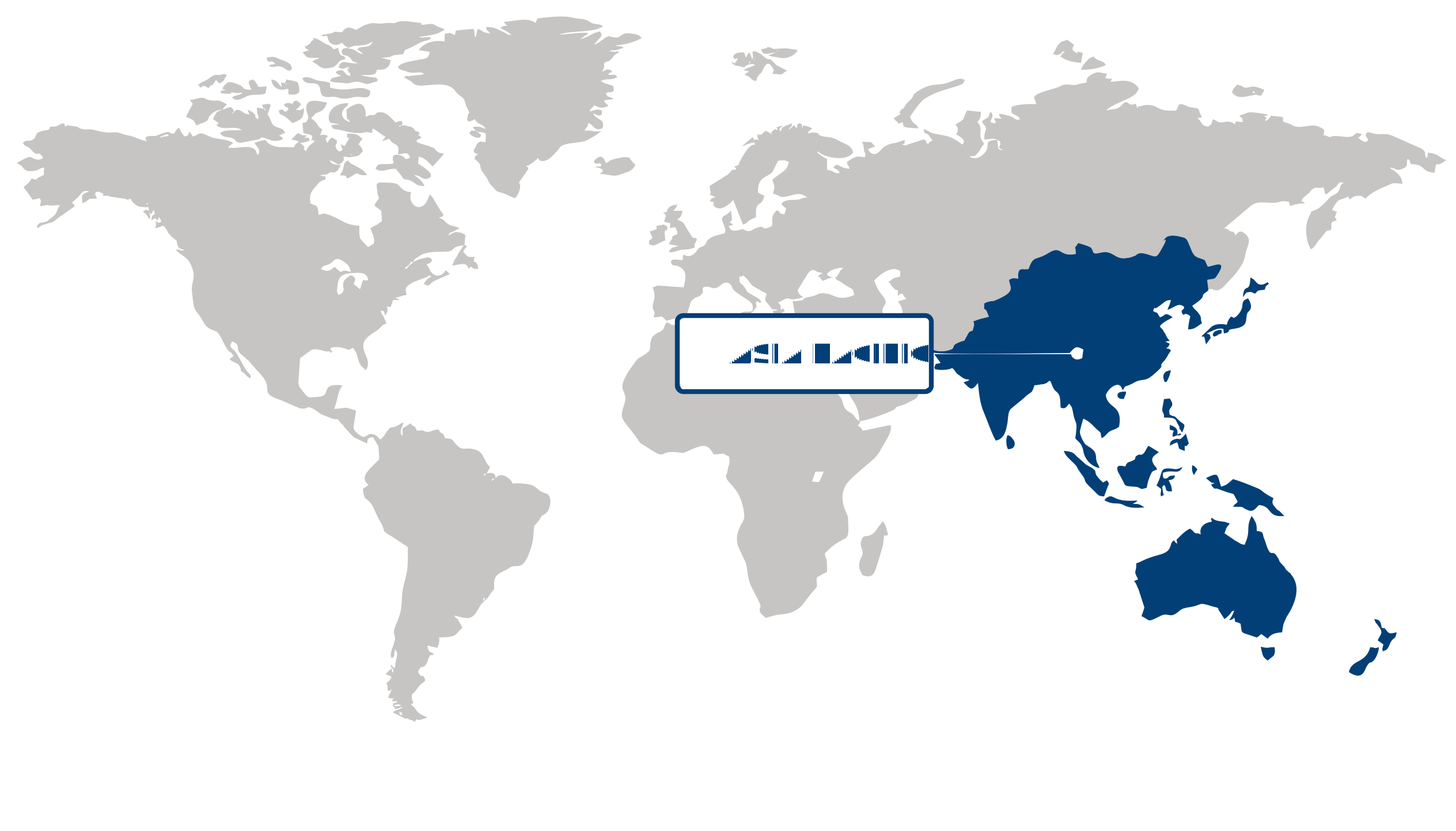
Asia Pacific (Largest & Fastest-Growing Region)
The Asia Pacific region dominated the seafood packaging market in 2026 and is also anticipated to remain the fastest-growing regional market, supported by the region's extensive seafood processing and distribution industry and rising demand for efficient packaging solutions. Expanding seafood consumption, increasing processed and frozen seafood trade, and the development of organized cold-chain infrastructure are strengthening the need for packaging that preserves product quality, extends shelf life, and supports safe transportation. In addition, growing investments in food processing facilities, improvements in logistics networks, and greater emphasis on food safety and hygiene are encouraging the adoption of advanced packaging formats. The region's large seafood production base and expanding domestic and international distribution channels are expected to further reinforce demand for seafood packaging solutions.
| Parameter | North America | Asia Pacific | Europe | Latin America | MEA |
|---|---|---|---|---|---|
| Innovation Hub i Scale Nascent Developing Advanced | |||||
| Cost-Sensitive Region i Scale Low Medium High | |||||
| Regulatory Environment i Scale Restrictive Neutral Supportive | |||||
| Demand Drivers i Scale Weak Moderate Strong | |||||
| Development Stage i Scale Emerging Developing Developed | |||||
| Adoption Rate i Scale Low Medium High | |||||
| New Entrants / Startups i Scale Sparse Moderate Dense | |||||
| Macro Indicators i Scale Weak Stable Strong |
Key Country Insights
United States 🇺🇸
Cold Chain ReliabilityThe U.S. seafood packaging market prioritizes packaging formats that preserve freshness throughout extended cold-chain distribution. Suppliers increasingly invest in leak-resistant, high-barrier, and recyclable packaging solutions that support retail and foodservice requirements.
Germany 🇩🇪
Sustainable Packaging StandardsGermany encourages seafood packaging solutions that combine product protection with reduced environmental impact. Manufacturers increasingly develop recyclable and resource-efficient packaging materials while maintaining strict food safety and freshness requirements.
Japan 🇯🇵
Freshness Preservation FocusJapan places exceptional emphasis on seafood packaging that maintains product freshness, appearance, and hygiene. Packaging suppliers increasingly enhance barrier performance and portion-friendly formats to meet retailer and consumer quality expectations.
South Korea 🇰🇷
Convenience Packaging FormatsSouth Korea increasingly adopts seafood packaging designed for convenience, freshness, and efficient retail presentation. Producers continue expanding ready-to-cook and portion-controlled packaging options that align with evolving consumer purchasing preferences.
France 🇫🇷
Premium Seafood PresentationFrance values seafood packaging that protects product quality while enhancing shelf presentation for retail and specialty markets. Packaging companies increasingly balance premium appearance with recyclable materials to satisfy both commercial and sustainability objectives.
Italy 🇮🇹
Export-Oriented ProtectionItaly requires seafood packaging that supports reliable transportation while preserving freshness across domestic and export supply chains. Italian processors increasingly adopt durable barrier packaging solutions that reduce product loss and maintain quality during distribution.
Segment Leadership and Growth Trends
Seafood Packaging Market Share (%), by Application, 2026
Go beyond the chart, access full insights & data tables
Request Free Sample Report###Application segment analysis: fresh and frozen (largest segment) vs processed (fastest-growing segment)
The fresh and frozen application segment led the seafood packaging market with a market share of 59.15% in 2026. Its dominance was supported by the growing demand for seafood products that require reliable packaging to preserve freshness, prevent contamination, and extend shelf life throughout transportation and storage. Rising consumer preference for high-quality chilled and frozen seafood, along with expanding cold-chain logistics, has strengthened the need for advanced packaging solutions within this segment.
The processed seafood application segment is expected to witness the fastest growth as demand increases for convenient, ready-to-cook, and value-added seafood products. Manufacturers are investing in packaging solutions that enhance product protection, improve shelf stability, and maintain product quality during distribution. Changing consumer lifestyles and the growing popularity of processed seafood are further supporting segment growth.
###Material segment analysis: plastic (largest & fastest-growing segment)
The plastic material segment accounted for the largest market share of 58.3% in 2026 in the seafood packaging market and also emerged as the fastest-growing segment. Plastic packaging is widely adopted because it provides excellent moisture resistance, durability, flexibility, and compatibility with refrigeration and freezing requirements. Its ability to support various packaging formats while maintaining product freshness has made it the preferred material across seafood applications. Continuous innovation in recyclable and high-performance plastic packaging solutions is further strengthening its adoption as sustainability and product protection remain key industry priorities.
###Type segment analysis: modified atmosphere packaging (MAP) (largest & fastest-growing segment)
The modified atmosphere packaging (MAP) segment dominated the seafood packaging market in 2026 while also representing the fastest-growing packaging type. MAP technology helps extend product freshness by controlling the internal gas composition, reducing spoilage, and preserving the quality of seafood during storage and transportation. Increasing demand for longer shelf life, reduced food waste, and enhanced product safety is driving wider adoption across seafood processors and retailers. Ongoing advancements in packaging technologies and growing consumer expectations for premium-quality seafood continue to reinforce the segment's leadership and growth.
| Segment | Sub-Segment | Largest Segment | Fastest Growing |
|---|---|---|---|
| Application | Fresh and Frozen, Processed | Fresh and Frozen | Processed |
| Material | Plastic, Paper, Metal, Others | Plastic | Plastic |
| Type | Vacuum Packaging, Modified Atmosphere Packaging (MAP), Others | Modified Atmosphere Packaging (MAP) | Modified Atmosphere Packaging (MAP) |
| Seafood | Fish, Molluscs, Crustaceans, Others | Fish | Crustaceans |
| Product | Trays, Bags and Pouches, Cans, Boxes, Shrink Films, Others | Trays | Bags and Pouches |
Competitive Landscape and Market Positioning
Prominent players in the seafood packaging market:
- Amcor plc (Australia)
- Berry Global Group, Inc. (United States)
- Sealed Air Corporation (United States)
- Smurfit Kappa Group (Ireland)
- DS Smith Plc (United Kingdom)
- WestRock Company (United States)
- Sonoco Products Company (United States)
- ProAmpac LLC (United States)
- Orora Limited (Australia)
- Stora Enso Oyj (Finland)
The seafood packaging market is experiencing a shift toward solutions that simultaneously enhance product freshness, operational efficiency, and environmental performance, altering the basis of competition across the value chain. Packaging manufacturers are investing in material innovation and barrier technologies that help preserve product quality throughout transportation while adapting to evolving sustainability expectations from both retailers and consumers. Increasing demand for packaging formats suited to cold-chain logistics and extended distribution networks is encouraging greater customization rather than reliance on standardized offerings. Suppliers able to combine regulatory compliance, packaging performance, and recyclable or resource-efficient material solutions are becoming more attractive partners for seafood processors seeking long-term packaging reliability.
| Company | Market Share | Company Revenue | Revenue CAGR (%) | Product Portfolio | Geographic Presence | Innovation / R&D Focus | Strategic Developments |
|---|---|---|---|---|---|---|---|
| Amcor plc (Australia) | |||||||
| Berry Global Group Inc. (United States) | |||||||
| Sealed Air Corporation (United States) | |||||||
| Smurfit Kappa Group (Ireland) | |||||||
| DS Smith Plc (United Kingdom) | |||||||
| WestRock Company (United States) | |||||||
| Sonoco Products Company (United States) | |||||||
| ProAmpac LLC (United States) | |||||||
| Orora Limited (Australia) | |||||||
| Stora Enso Oyj (Finland) |
Industry Development/News
| Company Name | Date | Key Development |
|---|---|---|
| Cosmo Plastech | Jun-26 | Cosmo Plastech introduced freezer-grade polypropylene sheets optimized for cold chain and frozen food packaging applications. The material addresses critical industry requirements for durability and food safety, providing a high-performance packaging solution that supports the preservation of frozen seafood products throughout complex supply chains and distribution networks. |
| Yangi | Feb-26 | Yangi commercialized a dry-formed fiber tray specifically engineered for fish, meat, and ready-meal applications. By offering improved surface quality, structural predictability, and design flexibility, this development facilitates the adoption of fiber-based, sustainable alternatives in the seafood packaging segment, providing a viable replacement for conventional plastic materials while meeting demanding food-contact performance requirements. |
| Toraphene | May-25 | Toraphene deployed graphene-enhanced compostable bags for seafood vendor S. & A. Hart, replacing traditional plastic carrier bags. Engineered to withstand heavy, wet seafood handling, the solution eliminates the need for double-bagging and provides a high-strength, sustainable packaging alternative, effectively reducing plastic waste within local seafood retail and vendor operations. |
| North Coast Seafoods | Feb-25 | North Coast Seafoods implemented a 100% recyclable and reusable packaging solution as part of a broader initiative to enhance sustainability within its processing and distribution operations. This development focuses on balancing long-term environmental objectives with the functional necessity of maintaining high product integrity and freshness for seafood offerings across the company’s supply chain. |
| Aptar Food Protection | Aug-24 | Aptar Food Protection expanded its SeaWell active packaging system into the e-commerce sector to address the quality and freshness challenges associated with direct-to-consumer seafood shipping. This expansion targets the growing e-commerce channel, providing specialized packaging solutions to maintain product integrity throughout the distribution network and supporting the scalability of online seafood retail. |
| IFCO | Jun-24 | IFCO introduced the Marina, a digitally enabled reusable fish crate designed to improve supply chain efficiency and cold chain management. The integration of real-time data collection capabilities enhances logistics transparency and sustainability within the seafood supply chain, representing a significant technological advancement in reusable transit packaging for temperature-sensitive food products. |
Customize Your Report
Explore examples of how this report can be tailored to different research needs, including custom segments, additional topics or chapters, and related reports. Click a section of the wheel or its numbered marker to explore the available options.
Seafood Packaging Market — Custom Segments
| Segment | Sub-Segment |
|---|---|
| Shelf-Life Requirement | Short Shelf Life, Medium Shelf Life, Extended Shelf Life |
| Sustainability Profile | Conventional Packaging, Recyclable Packaging, Biodegradable Packaging, Compostable Packaging |
| Customer Type | Seafood Processors, Seafood Distributors & Wholesalers, Retailers & Supermarkets, Foodservice Providers |
Seafood Packaging Market — Custom TOC
| Custom Chapter | Custom Details |
|---|---|
| Seafood Shelf-Life Extension Pathways |
|
| Cold-Chain Packaging Optimization |
|
| Export Packaging Readiness |
|
Need a different cut of the data?
Request Custom ResearchHow much is the seafood packaging market worth?
How will the seafood packaging industry grow in terms of size and CAGR by 2036?
Why is packaging innovation becoming increasingly important in the seafood packaging market?
How are sustainability priorities reshaping the seafood packaging market?
Why does fresh and frozen seafood packaging hold the largest market share?
Which seafood packaging type is growing fastest?
Why is Asia Pacific leading the seafood packaging market?
How is Asia Pacific driving future growth in seafood packaging?
What are the key competitors in the seafood packaging landscape?
Our Clients
"The report provided a thorough look at market trends, technological advancements, and the competitive landscape. The depth of insights was really valuable."
ITC Limited
"We would highly recommend Fundamental Business Insights & Consulting to anyone looking for reliable, detailed, and comprehensive market research in the Food industry."
Tyson Foods
"The clarity and presentation of the information were commendable. The report was delivered timely, which made the overall experience smooth and convenient."
Mondelēz International
Our Research Team & Methodology
Every Fundamental Business Insights report is built by a dedicated vertical research team, validated through a structured primary-and-secondary methodology, and reviewed for accuracy before it reaches you.
Research Team Overview
Prepared by the Food & Beverage Research Team
Delivery
Published
Demand
Available
Support
Trust & Compliance
Research Domains
10 coverage areasResearch Intelligence
| Source | Reference |
|---|---|
| Food and Agriculture Organization (FAO) | www.fao.org |
| World Health Organization (WHO) | www.who.int |
| U.S. Food & Drug Administration (FDA) | www.fda.gov |
| European Food Safety Authority (EFSA) | www.efsa.europa.eu |
| U.S. Department of Agriculture (USDA) | www.usda.gov |
| Codex Alimentarius Commission | www.fao.org/fao-who-codexalimentarius |
| International Organization for Standardization (ISO) | www.iso.org |
| AOAC INTERNATIONAL | www.aoac.org |
| Institute of Food Technologists (IFT) | www.ift.org |
| International Dairy Foods Association (IDFA) | www.idfa.org |
| International Sweeteners Association (ISA) | www.sweeteners.org |
| International Probiotics Association (IPA) | internationalprobiotics.org |
| Good Food Institute (GFI) | gfi.org |
| American Feed Industry Association (AFIA) | www.afia.org |
| International Feed Industry Federation (IFIF) | ifif.org |
| Specialty Food Association (SFA) | www.specialtyfood.com |
| Brewers Association | www.brewersassociation.org |
| International Bottled Water Association (IBWA) | bottledwater.org |
| International Alliance for Dietary/Food Supplement Associations (IADSA) | www.iadsa.org |
| OECD Agriculture & Food | www.oecd.org/agriculture |
Research Workflow & Quality Assurance
Data Collection
Verified information gathered through primary and secondary research.
Data Triangulation
Cross-validation using multiple independent data sources.
Forecast Modelling
Market estimates developed using historical trends and analytical models.
Analyst Validation
Findings reviewed by domain experts for accuracy and consistency.
Editorial & Quality Review
Final editorial, quality, and compliance checks before publication.
Final Publication
Released after successful completion of the internal review process.
Report Coverage
📊 Market Assessment
- Market Size & Forecast
- Market Segmentation
- Regional Analysis
- Growth Drivers & Challenges
- Market Dynamics
🏢 Competitive Intelligence
- Competitive Landscape
- Company Profiles
- Competitive Benchmarking
- Mergers & Acquisitions
- Market Share Analysis or Key Company Strategies
🔍 Strategic Analysis
- Value Chain Analysis
- Porter's Five Forces
- PESTLE Analysis
- Pricing Trends
- Supply-Demand Analysis
🚀 Future Outlook
- Technology Landscape
- Regulatory Landscape
- Investment & Funding Landscape
- Emerging Opportunities
- Future Market Outlook
Have a question about this report or need a custom scope?
Request Customization