Rolling Stock Cables Market Size & Forecasts 2026-2035, By Segments (Type, Application), Growth Opportunities, Innovation Landscape, Regulatory Shifts, Strategic Regional Insights (U.S., Japan, China, South Korea, UK, Germany, France), and Competitive Dynamics (Prysmian Group, Nexans, Belden, Leoni, General Cable)
Market Size and Growth Outlook
Rolling Stock Cables Market size is projected to grow steadily from USD 4.3 billion in 2025 to USD 6.3 billion by 2035, demonstrating a CAGR exceeding 3.9% through the forecast period (2026-2035). The 2026 revenue is estimated at USD 4.45 billion.
Get more details on this report
Request Free Sample ReportRolling Stock Cables Market Intelligence Snapshot
Regional Market Dynamics
Segment Momentum
Market Expansion Drivers
Leading Market Participants
Global Market Forecast Snapshot
Market Outlook
Regional and Segment Outlook
Market Growth Drivers and Industry Trends
Ongoing global railway electrification and modernization programs are pivotal growth drivers for the rolling stock cables market. Countries like India’s Ministry of Railways and the European Union have announced aggressive plans to transition from diesel to electric locomotives, driven by energy efficiency goals and regulatory mandates on emissions reduction. This shift necessitates advanced, high-reliability cables capable of supporting increased electrical loads and enhanced control systems. For incumbents and new entrants, this transition offers strategic opportunities to innovate cable designs with higher durability and better performance under electrified conditions. As governments continue to prioritize sustainable transport, market players can leverage these programs to establish long-term partnerships and expand their footprints in the evolving infrastructure landscape.
Expansion of Metro Rail and High-Speed Transport Networks
The proliferation of metro rail and high-speed rail projects across Asia, Europe, and North America is directly elevating demand within the rolling stock cables market. Regulatory bodies such as Transport for London and China Railway Corporation emphasize safety and efficiency standards requiring specialized wiring solutions embedded in rapid transit vehicles. The growing urban population and increasing preference for efficient public transit support sustained investments in these networks, creating a consistent pipeline for cable manufacturers. Established companies can capitalize by tailoring cables for high-speed signal integrity and vibration resistance, while new market entrants might focus on cost-effective offerings adapted to emerging metro systems. Continued expansion signals enduring demand for technologically sophisticated cabling aligned with evolving transit infrastructure.
Long-Term Upgrade Cycles for Rolling Stock Safety Wiring
Legacy systems in developed rail markets necessitate periodic upgrades aligned with stringent safety regulations, fueling a steady demand within the rolling stock cables market. Regulatory agencies such as the Federal Railroad Administration in the US regularly update standards surrounding fire-retardant materials and fault tolerance in safety wiring. This dynamic compels operators and maintenance services to replace or retrofit wiring systems, often opting for next-generation cables with superior performance and compliance. The upgrade cycles create recurring revenue opportunities, enabling established suppliers to deepen client relationships through service contracts while inviting innovative startups to introduce advanced materials and diagnostic-enabled cables. Long-term regulatory emphasis on safety ensures that upgrades remain a cornerstone of market activity.
Industry Restraints:
Stringent Safety and Certification Standards
The rolling stock cables market is significantly constrained by rigorous safety and certification requirements imposed by regulatory bodies like the International Union of Railways (UIC) and the European Union Agency for Railways (ERA). These standards demand extensive testing and compliance for fire resistance, electromagnetic compatibility, and durability, which lengthen product development cycles and escalate costs. For example, compliance with EN 45545 (Protection against fire in railway vehicles) requires specialized materials and manufacturing processes, limiting supplier flexibility. This regulatory environment presents a barrier to entry for new players lacking resources to navigate complex approval procedures and increases operational burdens for established firms striving to maintain compliance amid evolving norms. Consequently, market participants must invest heavily in R&D and certification efforts, which could slow innovations or delay product launches. This restraint is expected to persist as safety regulations tighten globally, compelling companies to prioritize compliance alongside technological advancement.
Raw Material Price Volatility and Supply Constraints
Fluctuating prices and supply shortages of copper, aluminum, and specialty polymers critical to rolling stock cables represent a major market hindrance. The World Copper Factbook 2023 highlights ongoing supply bottlenecks linked to geopolitical tensions and mining disruptions, elevating raw material costs. Additionally, polymer supply chain issues stemming from energy price spikes and capacity limits, as noted by the International Energy Agency (IEA), exacerbate input scarcity. These factors create cost unpredictability and production delays, pressuring manufacturers’ margins and complicating procurement strategies. Established cable producers with diversified supplier networks manage risks better, whereas smaller players struggle with cost absorption and contract fulfillment. The intertwined nature of global supply chains ensures this volatility will remain a strategic challenge, compelling companies to seek alternative materials, long-term contracts, or vertical integration to stabilize supply and pricing in the near to medium term.
| Growth Driver | Impact on CAGR | Regulatory Influence | Geographic Relevance | Adoption Rate | Impact Timeline |
|---|---|---|---|---|---|
| Railway electrification and modernization programs | 1.00% | Short term (≤ 2 yrs) | Europe, Asia Pacific (spillover: North America) | High | Moderate |
| Expansion of metro rail and high-speed transport networks | 0.90% | Medium term (2–5 yrs) | Asia Pacific, Middle East (spillover: Latin America) | Medium | Moderate |
| Long-term upgrade cycles for rolling stock safety wiring | 0.70% | Long term (5+ yrs) | North America (spillover: MEA) | Low | Slow |
Unlock insights tailored to your business with our bespoke market research solutions.
Click to get your customized report now.
Regional Demand Dynamics
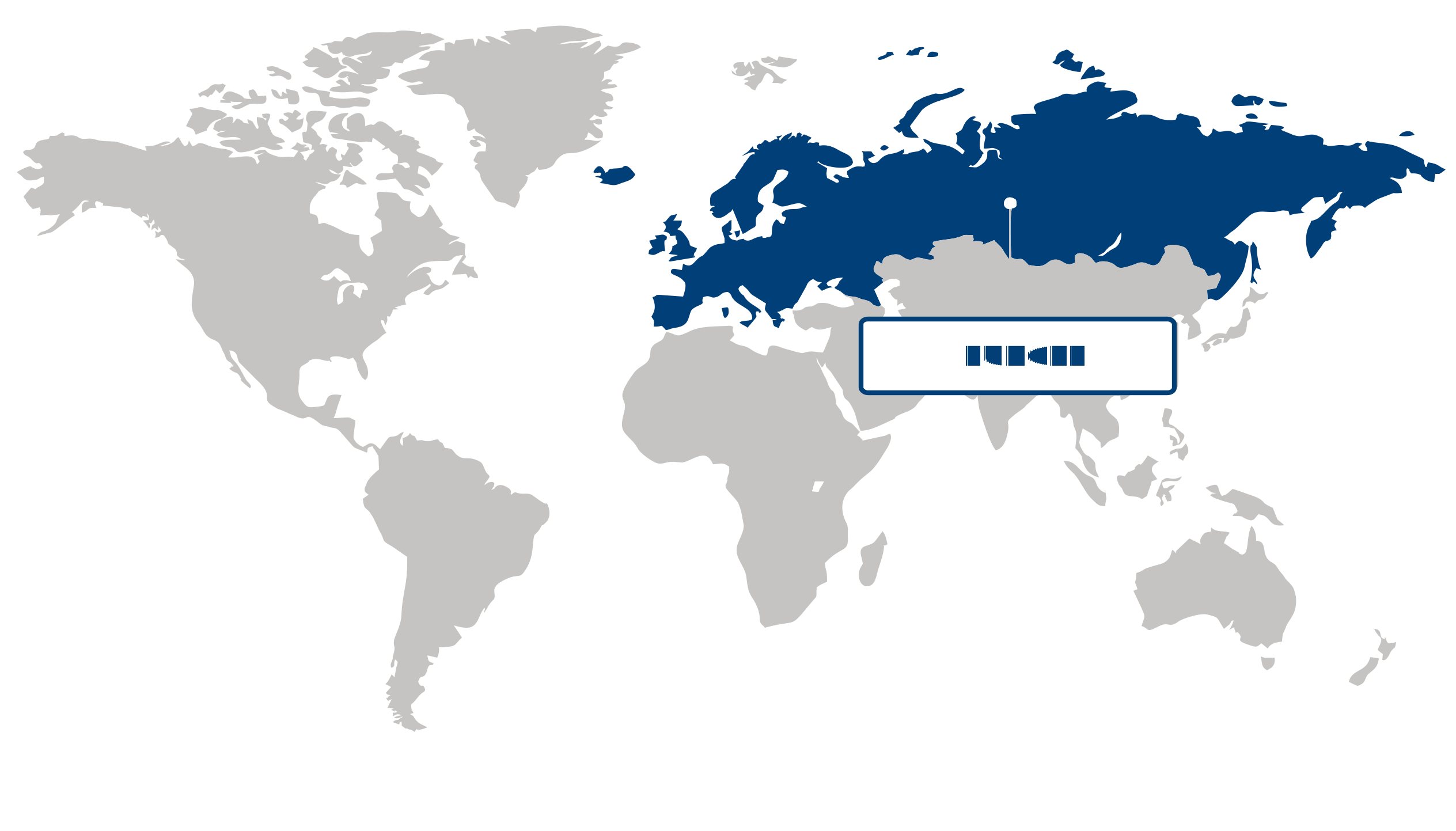
Europe dominated the rolling stock cables market in 2025, capturing over 42% of the global share. This position is primarily driven by extensive rail network upgrades and high-speed rail projects across the region, which stimulate demand for advanced cabling solutions ensuring efficiency and safety. Initiatives led by the European Union, such as the TEN-T (Trans-European Transport Network), underscore regulatory support and significant infrastructure investments. Technological advancements in cable durability and signal integrity, coupled with stringent safety standards set by the European Union Agency for Railways, reinforce Europe’s leadership. Furthermore, shifting consumer preferences toward sustainable and energy-efficient rail transport bolster market momentum. Collectively, these factors position Europe as a crucial hub for innovation, offering robust growth potential for rolling stock cable manufacturers responding to modernized and expanding rail systems.
Germany anchors the European rolling stock cables market, leveraging its vast and dense rail infrastructure that integrates both high-speed and freight corridors. Deutsche Bahn’s ongoing modernization programs emphasize cabling upgrades to enhance connectivity and reliability, driving domestic cable demand. Germany’s strong engineering legacy and supplier ecosystem also foster competitive advancements, with companies such as LEONI AG publicly announcing investments in specialized rolling stock cables. Concurrently, Germany’s commitment to decarbonizing transport through electrification aligns with expanding cable requirements. This national landscape significantly contributes to Europe’s market dominance by continuously embedding state-of-the-art cabling in rail transport solutions.
France plays a pivotal role in the Europe rolling stock cables market, propelled by its leadership in high-speed rail technology exemplified by the TGV network. The French government’s substantial funding for rail electrification and network expansions supports demand for advanced rolling stock cables that meet rigorous performance standards. Industry leaders such as Nexans actively collaborate in providing tailored cable solutions for French rail operators, aligning with national efforts to boost rail utilization and lower carbon footprints. France’s regulatory frameworks promoting interoperability within the European rail network further stimulate cable innovations. These country-specific dynamics strengthen Europe’s competitive edge, ensuring sustained opportunities in rolling stock cable manufacturing aligned with evolving rail modernization goals.
Asia Pacific Market Analysis:
Asia Pacific emerged as the fastest-growing region in the rolling stock cables market, registering a robust CAGR of 5.2%. This rapid expansion is driven primarily by massive metro and railway infrastructure investments across the region, underpinning demand for advanced cabling solutions designed to enhance operational efficiency and safety. The region's diverse economies are actively channeling significant capital into expanding and modernizing rail networks, reflecting increasing urbanization and the need for sustainable, efficient public transportation systems. Reports from the Asian Development Bank highlight numerous large-scale projects in countries like India and Indonesia, which are integrating high-performance rolling stock cables to meet stringent international safety standards. Additionally, initiatives to digitize railway operations and improve resilience to climate change further boost the adoption of innovative cable technologies. With continued government support and strategic industry collaborations, Asia Pacific offers compelling opportunities for stakeholders in the rolling stock cables market looking to capitalize on its sustained infrastructure momentum.
Japan plays a pivotal role in the Asia Pacific rolling stock cables market, leveraging its sophisticated rail network and advanced manufacturing capabilities. Strong consumer preferences for high-speed, reliable transit combined with stringent safety regulations compel ongoing innovation in cable technologies. The Japan Railways Group (JR Group) consistently upgrades its rolling stock to integrate cables that support smart sensors and real-time data transmission systems, enhancing predictive maintenance and operational safety. Furthermore, Japan's focus on energy efficiency and sustainability, as seen in projects led by the Ministry of Land, Infrastructure, Transport and Tourism, prompts manufacturers to develop environmentally friendly cable solutions. These trends reinforce Japan’s position as a technological leader while anchoring Asia Pacific's market growth in quality and innovation.
China’s expansive metro and high-speed rail development significantly underpins the Asia Pacific market surge in rolling stock cables. The country’s ambitious Belt and Road Initiative has accelerated railway construction domestically and internationally, driving demand for high-capacity, durable cables capable of withstanding diverse environmental conditions. State-owned enterprises such as China Railway Rolling Stock Corporation (CRRC) actively integrate cutting-edge cables into new trainsets designed to optimize energy consumption and enhance passenger safety. Furthermore, evolving regulatory frameworks emphasize the importance of fire-resistance and electromagnetic compatibility, compelling suppliers to innovate continuously. China’s scale and governmental prioritization of rail infrastructure fortify its role as a linchpin in the Asia Pacific market, presenting strategic avenues for companies investing in rolling stock cable technologies that meet evolving standards and operational demands.
North America Market Trends:
North America held a commanding share in the rolling stock cables market, driven by its advanced rail infrastructure and robust investment in transportation modernization. The region’s emphasis on sustainable transit solutions and stringent safety regulations have elevated demand for high-performance, durable cable systems essential for efficient rolling stock operations. Notably, the Federal Railroad Administration’s recent initiatives to upgrade commuter rail networks and integrate digital signaling have spurred adoption of technologically advanced cables, as highlighted in the U.S. Department of Transportation’s 2023 infrastructure report. Moreover, North America benefits from a mature supply chain ecosystem and skilled workforce adept in handling complex rail projects, enabling faster deployment and consistent quality. These factors collectively position the region for sustained expansion, with significant opportunities emerging as urbanization and green mobility trends intensify.
The U.S. dominates the North American rolling stock cables market, underpinned by substantial federal funding aimed at revitalizing aging rail assets and expanding high-speed rail corridors. The Bipartisan Infrastructure Law has provisioned billions specifically for rail system upgrades, indirectly boosting cable demand, according to the U.S. Railroad Suppliers Association. Additionally, the U.S.’s shift toward electrification and real-time monitoring systems necessitates cables that meet rigorous durability and performance standards. For example, Amtrak’s recent contract with Lankhorst Kabel to supply specialized cables underscores growing industry collaboration to meet evolving technical requirements. Consequently, the U.S. emerges as a linchpin for the regional market, enabling manufacturers and operators to capitalize on the increasing retrofit and expansion activities that define North America’s advancing rail sector.
| Parameter | North America | Asia Pacific | Europe | Latin America | MEA |
|---|---|---|---|---|---|
| Innovation Hub i Scale Nascent Developing Advanced | |||||
| Cost-Sensitive Region i Scale Low Medium High | |||||
| Regulatory Environment i Scale Restrictive Neutral Supportive | |||||
| Demand Drivers i Scale Weak Moderate Strong | |||||
| Development Stage i Scale Emerging Developing Developed | |||||
| Adoption Rate i Scale Low Medium High | |||||
| New Entrants / Startups i Scale Sparse Moderate Dense | |||||
| Macro Indicators i Scale Weak Stable Strong |
Segment Leadership and Growth Trends
Rolling Stock Cables Market Share (%), by Type, 2026
Go beyond the chart, access full insights & data tables
Request Free Sample ReportStandard wall cables held the largest share in the rolling stock cables market in 2025, driven predominantly by their extensive use for reliable power and signal transmission in rail systems. Their robustness and proven performance align well with customer priorities for operational safety and durability under varied environmental conditions. Enhanced supply chain efficiencies, as reported in Prysmian Group’s 2023 sustainability report, have further facilitated widespread availability of these cables. This segment’s reliability and compliance with international railway safety standards, such as those outlined by the International Union of Railways (UIC), create strategic advantages for established manufacturers and innovative entrants. Given ongoing investments in rail network upgrades and the consistent demand for dependable rolling stock components, the prominence of standard wall cables is set to continue, supported by advancements in manufacturing technologies and digital monitoring capabilities.
Analysis by Application
The train segment represented the largest share of the rolling stock cables market, propelled by extensive railway infrastructure projects and the modernization of train fleets globally. This growth is fueled by government initiatives in regions such as Europe and Asia, where agencies like the European Railway Agency emphasize upgrading existing rolling stock to improve efficiency and safety. Evolving customer demands for faster, more energy-efficient trains have encouraged the incorporation of advanced cable technologies tailored for high-speed and commuter rail applications. Industry leaders like ABB have announced partnerships focusing on integrating smart cable solutions, which highlight competitive shifts toward digital transformation in train manufacturing. Consequently, the train segment offers substantial opportunities for both incumbents and new players aiming to capitalize on modernization trends. Its sustained relevance is underpinned by increasing urbanization and policy commitments to expand and electrify rail networks worldwide.
| Segment | Sub-Segment | Largest Segment | Fastest Growing |
|---|---|---|---|
| Type | Standard Wall, Medium Wall, Thin Wall | ||
| Application | Subway, Train, Others |
Competitive Landscape and Market Positioning
The competitive landscape is marked by intensified efforts to enhance product innovation and maintain technological advantage. Leading companies continuously invest in development to meet stringent railway industry standards for durability and fire resistance. Strategic collaborations and mergers enrich their supply chain resilience and broaden application scope, particularly for urban transit and high-speed rail sectors. New product introductions emphasize lightweight and energy-efficient cables, elevating operational efficiency for rolling stock manufacturers globally. The interplay of these initiatives shapes market dynamics by consolidating leadership for large players while pushing others toward niche specialization and digital integration.
Strategic / Actionable Recommendations for Regional Players
In North America, firms should deepen engagements with transit authorities and rolling stock manufacturers, fostering alliances that accelerate adoption of next-generation cable solutions. Prioritizing smart cable technologies and integration with evolving signaling systems can enhance competitive differentiation amid regulatory pressures.
Asia Pacific players could capitalize on rapid urbanization and expanding rail infrastructure by aligning with local government initiatives and infrastructure projects. Leveraging advances in materials science and automation can boost cost-effectiveness while addressing diverse environmental conditions unique to the region.
European companies are well-positioned to lead through innovation in sustainability and compliance with rigorous safety standards. Collaborative ventures focusing on circular economy principles and advanced coatings will aid in preserving market leadership amid stringent regulatory frameworks and growing demand for eco-friendly solutions.
| Company | Market Share | Company Revenue | Revenue CAGR (%) | Product Portfolio | Geographic Presence | Innovation / R&D Focus | Strategic Developments |
|---|---|---|---|---|---|---|---|
| No companies available. | |||||||
Industry Development/News
| Company Name | Date | Key Development |
|---|
Customize Your Report
Explore examples of how this report can be tailored to different research needs, including custom segments, additional topics or chapters, and related reports. Click a section of the wheel or its numbered marker to explore the available options.
Rolling Stock Cables Market — Custom Segments
| Segment | Sub-Segment |
|---|---|
| No segment data available. | |
Rolling Stock Cables Market — Custom TOC
| Custom Chapter | Custom Details | ||
|---|---|---|---|
| No custom TOC data available. | |||
Need a different cut of the data?
Request Custom ResearchHow is the rolling stock cables industry expected to grow over the next 10 years?
Which geographical region leads the rolling stock cables market market?
Which geographical area is witnessing the highest growth rate in the rolling stock cables sector?
Where is the standard wall segment seeing the strongest adoption within the rolling stock cables industry?
When did train sub-segment emerge as the largest sub-segment in the application segment of rolling stock cables sector?
Who holds a significant market share in the rolling stock cables landscape?
Our Clients
"The team surpassed our expectations with the report depth. The actionable insights provided proved crucial in navigating market challenges."
Tata Motors
"We found the report to be very informative. The expertise and attention to market nuances significantly influenced our business direction."
DENSO Corporation
"The consumer survey findings were quite good. We now have a clearer picture of the customer churning and retention strategy."
HL Mando
Our Research Team & Methodology
Every Fundamental Business Insights report is built by a dedicated vertical research team, validated through a structured primary-and-secondary methodology, and reviewed for accuracy before it reaches you.
Research Team Overview
Prepared by the Automotive & Transportation Research Team
Delivery
Published
Demand
Available
Support
Trust & Compliance
Research Domains
10 coverage areasResearch Intelligence
| Source | Reference |
|---|---|
| International Organization of Motor Vehicle Manufacturers (OICA) | www.oica.net |
| SAE International | www.sae.org |
| International Energy Agency (IEA) | www.iea.org |
| International Transport Forum (ITF) | www.itf-oecd.org |
| International Road Federation (IRF) | www.irf.global |
| International Organization for Standardization (ISO) | www.iso.org |
| United Nations Economic Commission for Europe (UNECE) | unece.org |
| National Highway Traffic Safety Administration (NHTSA) | www.nhtsa.gov |
| U.S. Department of Transportation (USDOT) | www.transportation.gov |
| European Automobile Manufacturers' Association (ACEA) | www.acea.auto |
| Society of Indian Automobile Manufacturers (SIAM) | www.siam.in |
| International Air Transport Association (IATA) | www.iata.org |
| International Civil Aviation Organization (ICAO) | www.icao.int |
| International Maritime Organization (IMO) | www.imo.org |
| International Union of Railways (UIC) | uic.org |
| American Public Transportation Association (APTA) | www.apta.com |
| International Federation of Robotics (IFR) | ifr.org |
| CharIN | www.charin.global |
| World Shipping Council | www.worldshipping.org |
| International Federation of Freight Forwarders Associations (FIATA) | fiata.org |
Research Workflow & Quality Assurance
Data Collection
Verified information gathered through primary and secondary research.
Data Triangulation
Cross-validation using multiple independent data sources.
Forecast Modelling
Market estimates developed using historical trends and analytical models.
Analyst Validation
Findings reviewed by domain experts for accuracy and consistency.
Editorial & Quality Review
Final editorial, quality, and compliance checks before publication.
Final Publication
Released after successful completion of the internal review process.
Report Coverage
📊 Market Assessment
- Market Size & Forecast
- Market Segmentation
- Regional Analysis
- Growth Drivers & Challenges
- Market Dynamics
🏢 Competitive Intelligence
- Competitive Landscape
- Company Profiles
- Competitive Benchmarking
- Mergers & Acquisitions
- Market Share Analysis or Key Company Strategies
🔍 Strategic Analysis
- Value Chain Analysis
- Porter's Five Forces
- PESTLE Analysis
- Pricing Trends
- Supply-Demand Analysis
🚀 Future Outlook
- Technology Landscape
- Regulatory Landscape
- Investment & Funding Landscape
- Emerging Opportunities
- Future Market Outlook
Have a question about this report or need a custom scope?
Request Customization