Rice Seeds Market Size & Forecasts 2026-2035, By Segments (Type, Treatment, Hybridization Technique, Grain Size), Growth Opportunities, Innovation Landscape, Regulatory Shifts, Strategic Regional Insights (U.S., Japan, China, South Korea, UK, Germany, France), and Competitive Dynamics (VietSeeds, Bayer CropScience, Advanta Seeds, Kaveri Seed Company, Nuziveedu Seeds)
Market Size and Growth Outlook
Rice Seeds Market size is projected to grow steadily from USD 8.06 billion in 2025 to USD 16 billion by 2035, demonstrating a CAGR exceeding 7.1% through the forecast period (2026-2035). The 2026 revenue is estimated at USD 8.56 billion.
Get more details on this report
Request Free Sample ReportRice Seeds Market Intelligence Snapshot
Regional Market Dynamics
Segment Momentum
Market Expansion Drivers
Leading Market Participants
Global Market Forecast Snapshot
Market Outlook
Regional and Segment Outlook
Market Growth Drivers and Industry Trends
The growing preference for high-yield hybrid and certified rice seeds is a pivotal force transforming the rice seeds market. Adoption drives increased productivity and resilience against pests and climate stress, essential as global food security concerns intensify. For example, the International Rice Research Institute (IRRI) has actively promoted hybrid seeds with improved tolerance traits, bolstering yields among smallholder farmers. This trend encourages seed companies to innovate and diversify their portfolios, catering to evolving agronomic needs and farmer preferences. Both established multinationals and agile startups can leverage this demand to expand market share through targeted product development and localized training programs. As hybrid seed adoption accelerates globally, the rice seeds market will increasingly emphasize quality certification and traceability, reinforcing supply chain integrity and consumer confidence in sustainable production methods.
Government Support for Rice Cultivation Modernization
Governments worldwide play a critical role in modernizing rice cultivation, directly benefiting the rice seeds market. Initiatives like India’s “Paramparagat Krishi Vikas Yojana” support seed distribution, infrastructure enhancement, and farmer education, stimulating demand for certified and high-performance seeds. Regulatory shifts promoting mechanization and efficient input use (such as fertilizer optimization) boost yields and profitability, prompting farmers to switch to improved seed varieties. This creates strategic openings for market leaders to partner with public agencies, strengthening distribution networks while enabling newcomers to introduce affordable, scalable seed solutions. By aligning with policy frameworks that emphasize technology transfer and sustainable practices, players in the rice seeds market can anticipate more structured growth driven by institutional backing and farmer adoption incentives.
Precision Farming and Seed Treatment Technologies
Technological advancements in precision farming and seed treatment are reshaping the rice seeds market by enhancing seed performance and resource efficiency. Companies such as Bayer CropScience and Syngenta have introduced seed treatments that protect against diseases and improve germination rates, a value-add highly regarded by modern farmers. Integration of data-driven farming practices enables users to optimize planting conditions, reducing input waste and environmental footprint. These innovations appeal to a growing segment prioritizing sustainability and cost-efficiency, fostering differentiation opportunities in a competitive landscape. Startups focusing on digital agriculture and advanced seed coatings are disrupting traditional models, encouraging incumbents to accelerate innovation cycles. Ongoing developments in sensor technology and AI-driven agronomy will further embed precision agriculture into the rice seeds market’s value chain, redefining quality benchmarks and operational efficiency.
Industry Restraints:
Intellectual Property and Biotech Regulatory Challenges
The rice seeds market is significantly hindered by stringent intellectual property (IP) rights enforcement and complex biotechnology regulations, which create barriers to innovation and market entry. Regulatory bodies such as the Indian Council of Agricultural Research (ICAR) and the U.S. Department of Agriculture (USDA) impose rigorous biosafety assessments and approval processes for genetically modified rice varieties, slowing commercial rollout. These compliance demands increase R&D timelines and operating costs, limiting smaller companies’ ability to compete with established multinational seed firms like Bayer Crop Science and Syngenta. As a result, access to advanced hybrid and genetically improved seeds remains uneven, restraining overall market dynamism. Strategically, businesses must navigate lengthy regulatory pathways, affecting product pipelines and investment decisions. Given ongoing regulatory tightening and public scrutiny of biotech crops worldwide, these challenges are expected to persist, emphasizing the need for sustained collaboration between innovators and policymakers.
Fragmented Supply Chains and Seed Distribution Inefficiencies
The rice seed market growth is also curtailed by fragmented and inefficient supply chains, particularly in major rice-consuming countries such as Indonesia and Vietnam. Smallholder farmers, who dominate rice production, face challenges accessing quality seeds due to distribution bottlenecks and weak cold storage infrastructure, as highlighted in reports by the Food and Agriculture Organization (FAO). This results in seed deterioration and inconsistent availability during critical planting seasons. Moreover, informal seed systems predominate, complicating efforts by formal seed companies like East-West Seed to scale up and standardize quality delivery. These operational constraints reduce yield improvements and limit adoption rates of high-performance rice varieties. Market players must invest in strengthening logistics and farmer outreach to overcome these supply chain inefficiencies. As agricultural modernization accelerates, improving seed distribution channels will be indispensable for expanding market penetration and ensuring sustained productivity gains.
| Growth Driver | Impact on CAGR | Regulatory Influence | Geographic Relevance | Adoption Rate | Impact Timeline |
|---|---|---|---|---|---|
| Adoption of high-yield hybrid and certified seed varieties | 1.80% | Short term (≤ 2 yrs) | APAC, Africa | Medium | Fast |
| Government support for rice cultivation modernization | 1.20% | Medium term (2–5 yrs) | APAC, MEA | High | Moderate |
| Precision farming and seed treatment technologies | 0.80% | Long term (5+ yrs) | North America, APAC | Medium | Moderate |
Unlock insights tailored to your business with our bespoke market research solutions.
Click to get your customized report now.
Regional Demand Dynamics
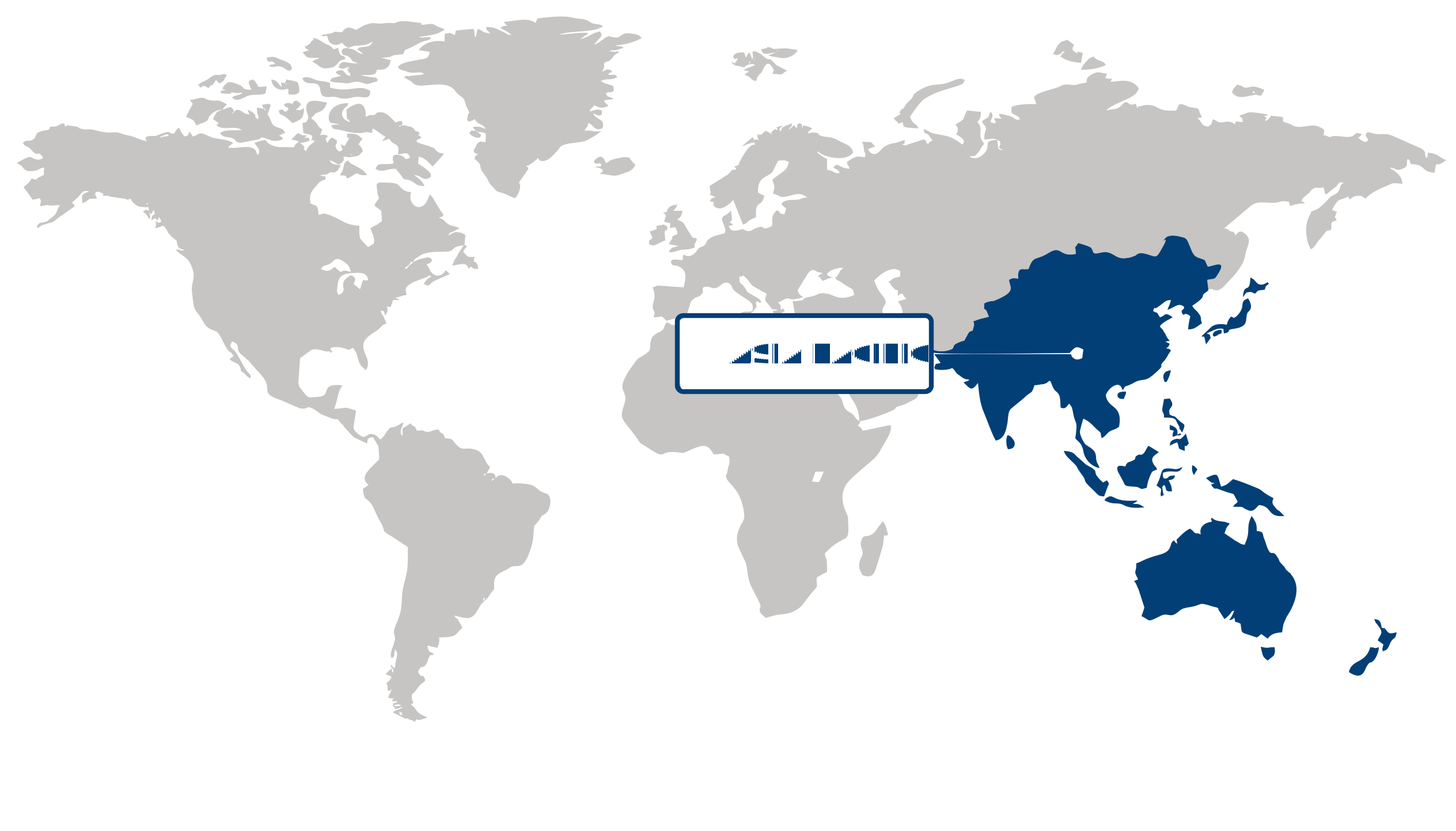
The Asia Pacific region dominated the rice seeds market, capturing over 69% of the global share in 2025, establishing it as the largest market worldwide. This leadership is primarily driven by the high adoption of hybrid rice varieties in major producing nations, which enhances yield and resilience, meeting escalating food demand in populous countries. According to the International Rice Research Institute, nations like China and India have intensified the use of hybrid seeds to boost productivity and address food security challenges. The region’s vast agricultural base, combined with investments in biotechnology and government-backed initiatives promoting sustainable farming, further accelerates market expansion. Digital transformation in supply chains and evolving consumer preferences towards quality and yield efficiency reinforce growth. Asia Pacific’s resilience amid global agricultural disruptions underscores its pivotal role, presenting investors and strategists with compelling opportunities for innovation and expansion in the rice seeds market.
China anchors the Asia Pacific rice seeds market, leveraging aggressive hybrid seed adoption to maintain its status as the world’s largest rice producer. The government’s supportive policies, including subsidies for hybrid seed research and deployment, catalyze uptake among farmers. The Ministry of Agriculture and Rural Affairs of China frequently endorses biotechnology partnerships, such as those with state-owned entities like COFCO, to develop high-yield and pest-resistant rice varieties. These strategies optimize production efficiency and stabilize rural economies, shaping China as a critical innovation hub. This dynamic positions China not only as a key consumption market but also as a technological benchmark, reinforcing Asia Pacific’s competitive advantage in the rice seeds market.
Japan plays a strategic role in the Asia Pacific rice seeds market, focusing on advanced research and the refinement of hybrid rice technologies suited to its unique climatic conditions. Organizations such as the Japan International Research Center for Agricultural Sciences (JIRCAS) emphasize developing seed varieties resilient to climate change and disease, enhancing food security in an aging agricultural workforce context. Additionally, Japan’s regulatory environment fosters rigorous seed quality standards that influence regional best practices, while private sector firms like Takii & Co. lead innovation in seed genetics. Japan’s integration of scientific excellence with sustainable practices strengthens Asia Pacific’s leadership, offering a model for improving productivity and seed quality across the region.
Europe Market Analysis:
Europe emerged as the fastest-growing region in the rice seeds market, registering a robust CAGR of 10.4%. This rapid expansion is primarily driven by an increasing shift toward sustainable agriculture and crop resilience across the continent. European policymakers and agribusinesses are responding to mounting climate challenges and stringent environmental regulations by promoting the adoption of rice seed varieties that ensure higher resistance to pests, diseases, and abiotic stresses. For instance, the European Commission’s Common Agricultural Policy emphasizes sustainable farming practices, encouraging farmers to select resilient crop inputs that reduce chemical dependency. This commitment to sustainability and resilience reflects evolving consumer preferences for eco-friendly food production and supports the region’s operational transformation through precision agriculture investments. Consequently, Europe offers significant opportunities in the rice seeds market, underpinned by innovative breeding programs and growing demand for high-quality, sustainable rice varieties in export and domestic markets.
Germany plays a pivotal role in Europe’s rice seeds market growth, driven by its progressive agricultural policies and emphasis on sustainable farming systems. German research institutions, such as the Julius Kühn-Institut, collaborate closely with seed producers to develop resilient rice varieties tailored to local climatic conditions, aligning with the country’s stringent environmental standards. Moreover, increasing consumer awareness about sustainability influences demand for traceable and eco-certified rice, which translates into rising seed quality requirements. Germany’s advanced agri-tech infrastructure facilitates the deployment of precision sowing and monitoring technologies that enhance seed performance, boosting yields and crop resilience. This positions Germany as a key contributor to Europe’s leadership in the rice seeds market, providing a competitive edge based on innovation and sustainability.
France also commands a notable presence in Europe’s rice seeds market, supported by strong government incentives for agricultural sustainability and crop diversification. The French Ministry of Agriculture’s initiatives to promote climate-resilient crops have led to investment in breeding programs focused on drought-tolerant and disease-resistant rice varieties. French rice growers benefit from integrated supply chains and collaborations with seed companies like Vilmorin & Cie, enabling faster adoption of improved seed genetics. Additionally, growing consumer demand for high-quality, sustainably produced rice in both domestic and export markets reinforces this trend. France’s strategic focus on combining agronomic research with market-driven seed innovation strengthens its position within the European rice seeds market, enhancing the region’s overall growth trajectory.
North America Market Trends:
North America held a commanding share in the rice seeds market, driven by its advanced agricultural infrastructure and emphasis on crop innovation. The region’s significance stems from its integration of precision farming technologies and adoption of genetically improved seed varieties, which enhance yield and stress resistance. Regulatory frameworks, such as those promoted by the United States Department of Agriculture (USDA), encourage sustainable cultivation practices and support research in seed genetics. Additionally, shifting consumer preferences toward sustainable and high-quality rice products have incentivized suppliers to invest in R&D and efficient supply chains, as reflected in reports from the U.S. Rice Federation. These dynamics position North America as a hub for innovation, ensuring resilience against climatic fluctuations and market volatility, thereby offering substantial growth opportunities in the rice seeds market.
The U.S. plays a pivotal role in the rice seeds market globally due to its research-led seed development and extensive producer networks. Demand for drought-tolerant and high-yielding rice seed varieties is rising, corresponding with USDA initiatives promoting sustainable crop production and digital agriculture adoption. For instance, advancements shared by Corteva Agriscience highlight the integration of biotechnology in breeding programs, catering to regional agronomic conditions and consumer quality expectations. This focus not only fortifies domestic rice production but also enhances the U.S.’s competitive advantage in seed exports. Consequently, the U.S. market dynamics exemplify how technological leadership and regulatory alignment enable North America to consolidate its influential position in the rice seeds market.
| Parameter | North America | Asia Pacific | Europe | Latin America | MEA |
|---|---|---|---|---|---|
| Innovation Hub i Scale Nascent Developing Advanced | |||||
| Cost-Sensitive Region i Scale Low Medium High | |||||
| Regulatory Environment i Scale Restrictive Neutral Supportive | |||||
| Demand Drivers i Scale Weak Moderate Strong | |||||
| Development Stage i Scale Emerging Developing Developed | |||||
| Adoption Rate i Scale Low Medium High | |||||
| New Entrants / Startups i Scale Sparse Moderate Dense | |||||
| Macro Indicators i Scale Weak Stable Strong |
Segment Leadership and Growth Trends
Rice Seeds Market Share (%), by Type, 2026
Go beyond the chart, access full insights & data tables
Request Free Sample ReportOpen-pollinated varieties held the largest share in the rice seeds market in 2025, reflecting strong farmer preference for cost-effective seeds with reliable and stable traits that can be replanted without incurring high input costs. This segment leads as it aligns with sustainable agricultural practices and resource-conscious farming, especially among smallholder farmers aiming to reduce dependence on purchased inputs. According to the International Rice Research Institute (IRRI), open-pollinated seeds enable diversification and adaptability in traditional farming systems. Such attributes make this segment strategically advantageous for both established seed companies and new entrants focusing on affordability and regional adaptability. Moving forward, this segment is poised to maintain its relevance as agricultural stakeholders continue emphasizing cost-efficiency and resilience amidst evolving climatic and economic conditions.
Analysis by Treatment
Untreated seeds represented the largest share of the rice seeds market in 2025, driven by the widespread adoption of seeds that require lower costs and simpler handling compared to treated alternatives. This segment benefits from the preferences of farmers valuing straightforward, chemical-free seed management, dovetailing with growing consumer demand for pesticide-free crop production. The Food and Agriculture Organization (FAO) highlights global trends encouraging minimal chemical seed treatments to address sustainability and environmental concerns. For seed producers, this segment offers opportunities to capture markets wary of complex regulatory barriers associated with treated seeds, while catering to organic and low-input farming systems. Given ongoing regulatory scrutiny and rising demand for eco-friendly agricultural inputs, untreated seeds are expected to sustain key market positioning.
Analysis by Hybridization Technique
The three-line hybridization technique dominated the rice seeds market in 2025, propelled by its ability to deliver higher hybrid seed yields through well-established breeding efficiencies. This approach benefits from refined cytoplasmic male sterility control and superior genetic purity, giving seed companies and growers a competitive edge in yield performance and crop uniformity. Industry leaders like Bayer and Corteva have emphasized the role of three-line technology in enhancing hybrid rice productivity under various agronomic conditions. Rapid improvements in molecular breeding tools and supply chain optimization further consolidate this segment’s leadership. The three-line technique is positioned for continued significance due to its demonstrated capacity to meet escalating global demand for high-yield rice varieties, essential for food security and commercial scalability.
| Segment | Sub-Segment | Largest Segment | Fastest Growing |
|---|---|---|---|
| Type | Open-Pollinated Varieties, Hybrid Pollinated Varieties | ||
| Treatment | Untreated Seeds, Treated Seeds | ||
| Hybridization Technique | Three-Line, Two-Line | ||
| Grain Size | Medium-Sized, Short-Sized, Long-Sized |
Competitive Landscape and Market Positioning
The competitive environment is dynamic, with leading companies investing significantly in integrating novel traits and hybrid varieties. Many players actively pursue strategic alliances and bolster their portfolios by incorporating digital farming tools to optimize yield predictions and seed performance. Acquisitions and cross-border partnerships have accelerated innovation, particularly in drought tolerance and pest resistance. Expanding product pipelines with region-specific seeds demonstrates a keen focus on diversifying offerings to meet shifting agronomic conditions and regulatory landscapes, reinforcing competitive positioning. Such integrated approaches amplify differentiation and enable players to navigate evolving market demands with agility.
Strategic / Actionable Recommendations for Regional Players
North American firms should deepen collaborations with technology startups specializing in precision agriculture, harnessing data-driven platforms to enhance seed customization and market adaptability. Engaging in joint ventures with bioscience innovators can accelerate pipeline development in traits addressing climate variability.
In the Asia Pacific, cultivating partnerships with local research institutions to refine high-yield and stress-resilient varieties will enable expanded reach in smallholder segments. Leveraging mobile-based farmer outreach and tailored agronomic advisory services can amplify adoption rates amid diverse cropping systems.
European participants might focus on integrating sustainable breeding practices coupled with advanced genomic selection, responding to regulatory mandates and environmental commitments. Strengthening alliances across the value chain—from R&D to distribution—can fortify competitive advantage in premium and organic seed segments.
| Company | Market Share | Company Revenue | Revenue CAGR (%) | Product Portfolio | Geographic Presence | Innovation / R&D Focus | Strategic Developments |
|---|---|---|---|---|---|---|---|
| No companies available. | |||||||
Industry Development/News
| Company Name | Date | Key Development |
|---|
Customize Your Report
Explore examples of how this report can be tailored to different research needs, including custom segments, additional topics or chapters, and related reports. Click a section of the wheel or its numbered marker to explore the available options.
Rice Seeds Market — Custom Segments
| Segment | Sub-Segment |
|---|---|
| No segment data available. | |
Rice Seeds Market — Custom TOC
| Custom Chapter | Custom Details | ||
|---|---|---|---|
| No custom TOC data available. | |||
Need a different cut of the data?
Request Custom ResearchHow is the rice seeds industry expected to grow over the next 10 years?
In which region is the rice seeds market share the greatest?
In which region is the rice seeds sector expanding at the quickest pace?
What factors give open-pollinated varieties segment a competitive edge in the rice seeds sector?
Which is the largest sub-segment within the treatment segment for rice seeds industry?
Why does three-line sub-segment dominate the hybridization technique segment of rice seeds sector?
How does long-sized segment fare in the rice seeds industry?
Which organizations are considered leaders in the rice seeds landscape?
Our Clients
"The report provided a thorough look at market trends, technological advancements, and the competitive landscape. The depth of insights was really valuable."
ITC Limited
"We would highly recommend Fundamental Business Insights & Consulting to anyone looking for reliable, detailed, and comprehensive market research in the Food industry."
Tyson Foods
"The clarity and presentation of the information were commendable. The report was delivered timely, which made the overall experience smooth and convenient."
Mondelēz International
Our Research Team & Methodology
Every Fundamental Business Insights report is built by a dedicated vertical research team, validated through a structured primary-and-secondary methodology, and reviewed for accuracy before it reaches you.
Research Team Overview
Prepared by the Food & Beverage Research Team
Delivery
Published
Demand
Available
Support
Trust & Compliance
Research Domains
10 coverage areasResearch Intelligence
| Source | Reference |
|---|---|
| Food and Agriculture Organization (FAO) | www.fao.org |
| World Health Organization (WHO) | www.who.int |
| U.S. Food & Drug Administration (FDA) | www.fda.gov |
| European Food Safety Authority (EFSA) | www.efsa.europa.eu |
| U.S. Department of Agriculture (USDA) | www.usda.gov |
| Codex Alimentarius Commission | www.fao.org/fao-who-codexalimentarius |
| International Organization for Standardization (ISO) | www.iso.org |
| AOAC INTERNATIONAL | www.aoac.org |
| Institute of Food Technologists (IFT) | www.ift.org |
| International Dairy Foods Association (IDFA) | www.idfa.org |
| International Sweeteners Association (ISA) | www.sweeteners.org |
| International Probiotics Association (IPA) | internationalprobiotics.org |
| Good Food Institute (GFI) | gfi.org |
| American Feed Industry Association (AFIA) | www.afia.org |
| International Feed Industry Federation (IFIF) | ifif.org |
| Specialty Food Association (SFA) | www.specialtyfood.com |
| Brewers Association | www.brewersassociation.org |
| International Bottled Water Association (IBWA) | bottledwater.org |
| International Alliance for Dietary/Food Supplement Associations (IADSA) | www.iadsa.org |
| OECD Agriculture & Food | www.oecd.org/agriculture |
Research Workflow & Quality Assurance
Data Collection
Verified information gathered through primary and secondary research.
Data Triangulation
Cross-validation using multiple independent data sources.
Forecast Modelling
Market estimates developed using historical trends and analytical models.
Analyst Validation
Findings reviewed by domain experts for accuracy and consistency.
Editorial & Quality Review
Final editorial, quality, and compliance checks before publication.
Final Publication
Released after successful completion of the internal review process.
Report Coverage
📊 Market Assessment
- Market Size & Forecast
- Market Segmentation
- Regional Analysis
- Growth Drivers & Challenges
- Market Dynamics
🏢 Competitive Intelligence
- Competitive Landscape
- Company Profiles
- Competitive Benchmarking
- Mergers & Acquisitions
- Market Share Analysis or Key Company Strategies
🔍 Strategic Analysis
- Value Chain Analysis
- Porter's Five Forces
- PESTLE Analysis
- Pricing Trends
- Supply-Demand Analysis
🚀 Future Outlook
- Technology Landscape
- Regulatory Landscape
- Investment & Funding Landscape
- Emerging Opportunities
- Future Market Outlook
Have a question about this report or need a custom scope?
Request Customization