Residential Energy Storage Market Size & Forecasts 2026-2035, By Segments (Technology, Connectivity Type, Utility, Ownership), Growth Opportunities, Innovation Landscape, Regulatory Shifts, Strategic Regional Insights (U.S., Japan, China, South Korea, UK, Germany, France), and Competitive Dynamics (Tesla, LG Energy Solution, Sonnen, Enphase Energy, Panasonic)
Market Size and Growth Outlook
Residential Energy Storage Market size is projected to expand significantly, moving from USD 1.14 billion in 2025 to USD 7.99 billion by 2035, with a CAGR of 21.5% during the 2026-2035 forecast period. The expected revenue for 2026 is USD 1.37 billion.
Get more details on this report
Request Free Sample ReportResidential Energy Storage Market Intelligence Snapshot
Regional Market Dynamics
Segment Momentum
Market Expansion Drivers
Leading Market Participants
Global Market Forecast Snapshot
Market Outlook
Regional and Segment Outlook
Market Growth Drivers and Industry Trends
The surge in residential solar installations is a key catalyst in the residential energy storage market's growth, driven by a growing consumer preference for sustainable and cost-effective energy solutions. Governments worldwide, including the U.S. Department of Energy, have increased incentives for solar adoption, which directly increases the demand for integrated storage systems to optimize self-consumption. Companies like Tesla and Sunrun are responding with bundled solar-plus-storage offerings, highlighting competitive strategies that leverage this trend. This driver enables established energy providers to diversify their portfolios, while new entrants can capitalize on innovative business models, such as community solar plus storage programs. As solar penetration deepens, energy storage becomes essential to managing variability, positioning the market for steady expansion aligned with evolving consumer energy autonomy.
Declining Battery Costs and Improved Storage Technologies
Declining battery costs, coupled with advancements in storage technologies, significantly accelerate the residential energy storage market by enhancing affordability and system performance. BloombergNEF reports that lithium-ion battery prices have dropped by nearly 90% over the past decade, spurring greater adoption in residential segments. Innovations from companies like LG Energy Solution and Panasonic improve storage efficiency, lifespan, and safety, addressing previous consumer concerns and opening access to broader demographics. These technological and cost improvements present strategic opportunities for manufacturers to differentiate through enhanced product offerings while allowing new market entrants to disrupt traditional energy models. This ongoing decline in cost and enhancement in technology solidifies energy storage as a core component of home energy management systems.
Grid Decentralization and Energy Independence Trends
Grid decentralization and rising consumer demand for energy independence are reshaping the residential energy storage market by redefining the utility-consumer dynamic. Increasing frequency of grid disruptions, notably reported by the California Independent System Operator (CAISO), has heightened interest in backup power solutions, pushing demand for home storage units capable of maintaining uninterrupted supply. This trend empowers consumers to reduce reliance on centralized grids, appealing to those motivated by sustainability and resilience concerns. Both incumbent utilities and tech-centric entrants must innovate with smart, scalable storage solutions to remain relevant. The continued evolution toward decentralized energy systems ensures that residential energy storage becomes not just an accessory, but a critical infrastructure asset in residential energy ecosystems.
Industry Restraints:
High Initial Capital Costs and Limited Consumer Affordability
The steep upfront investment required for residential energy storage systems remains a significant barrier to widespread adoption. Despite declining battery prices, the total installed cost—including inverters, installation, and permits—deters many consumers, particularly in price-sensitive markets. The U.S. Department of Energy highlights that high capital costs contribute to slower uptake compared to other energy technologies. This financial hurdle complicates value propositions for providers, who must overcome consumer cost hesitancy and tailor financing solutions. Established incumbents face pressure to innovate pricing models, while new entrants struggle to gain traction without scalable cost reductions. Given ongoing raw material cost volatility and financing challenges, affordability constraints will persist as a key market friction, delaying mass adoption and influencing product development cycles in the near to medium term.
Fragmented Regulatory Frameworks and Interconnection Delays
Complex and inconsistent regulatory environments continue to impede residential energy storage deployment globally. For example, the California Public Utilities Commission has encountered significant delays approving interconnection processes and tariff structures, limiting consumer access and project viability. Diverse regional policies create uncertainty for manufacturers and installers, forcing resource-intensive compliance efforts and inhibiting seamless market entry. These regulatory bottlenecks raise operational costs and elongate sales cycles for both legacy firms and startups. As decentralization and grid modernization evolve, regulatory bodies must streamline frameworks to sustain momentum. Absent coordinated policy reforms, fragmented regulations will remain a critical restraint, stalling scale-up and integration of residential batteries across key markets through the foreseeable future.
| Growth Driver | Impact on CAGR | Regulatory Influence | Geographic Relevance | Adoption Rate | Impact Timeline |
|---|---|---|---|---|---|
| Surge in residential solar installations | 3.50% | Short term (≤ 2 yrs) | North America, Europe (spillover: APAC) | Medium | Fast |
| Declining battery costs and improved storage technologies | 3.00% | Medium term (2–5 yrs) | APAC, North America | Medium | Fast |
| Grid decentralization and energy independence trends | 2.00% | Long term (5+ yrs) | Europe, North America | Low | Moderate |
Unlock insights tailored to your business with our bespoke market research solutions.
Click to get your customized report now.
Regional Demand Dynamics
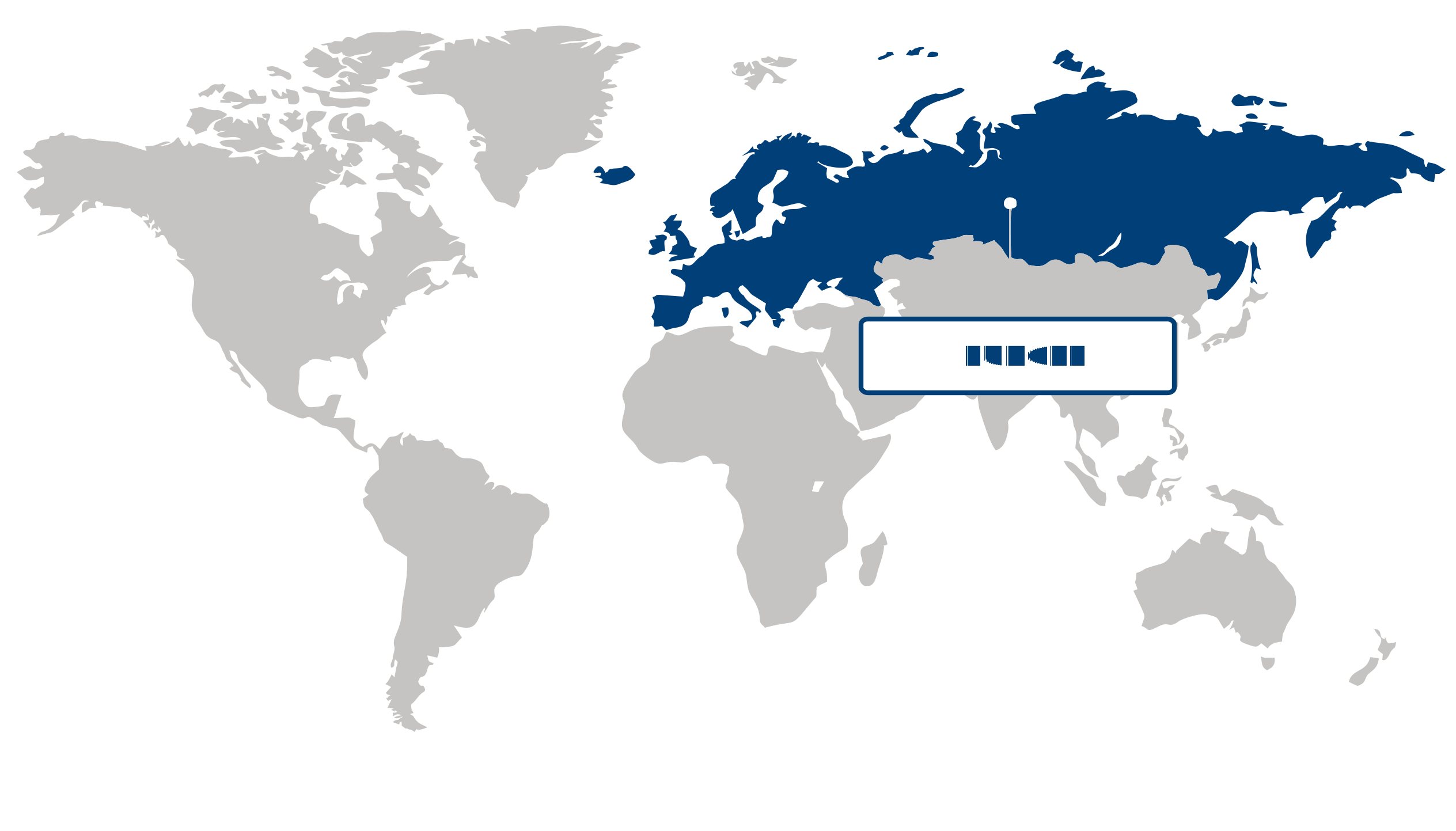
Europe dominated the residential energy storage market in 2025, capturing more than 34.8% of the global share. This leadership is driven primarily by aggressive climate policies and persistently high electricity prices that motivate consumers to invest in self-consumption technologies. Countries across Europe have adopted stringent renewable energy targets and incentives, exemplified by the European Commission’s Green Deal initiatives, pushing households to integrate energy storage solutions for enhanced grid independence. Additionally, rising electricity tariffs in key markets promote economic viability for residential storage adoption. Advanced smart-grid deployments and strong commitments to sustainability by utilities foster a competitive environment ripe for innovation. These dynamics, combined with increasing consumer awareness and regulatory backing from bodies like the German Federal Network Agency (Bundesnetzagentur), underscore Europe’s operational and strategic edge. Looking ahead, Europe’s cohesive policy frameworks and market integration present compelling opportunities for expanding residential energy storage penetration.
Germany anchors the European residential energy storage market, reflecting the region’s growth driver of strong climate policies and elevated electricity prices at a national level. Germany’s Energiewende policy aggressively supports renewable energy integration and residential storage adoption through feed-in tariffs, subsidies, and grid modernization efforts managed by the Federal Ministry for Economic Affairs and Energy. Companies like Sonnen and Bosch leverage these incentives to deliver innovative home battery systems, aligning with consumer demand for energy self-sufficiency amid volatile utility rates. This synergy enhances Germany’s role as Europe’s technological and market innovator, positioning it as a critical hub where policy, industry, and consumer preferences coalesce to drive market expansion.
France’s residential energy storage market complements the regional growth trajectory by capitalizing on similar drivers yet with a nuanced regulatory and cultural context. The French Environment and Energy Management Agency (ADEME) facilitates residential storage uptake through grants and pilot programs targeting energy resiliency and self-consumption. Rising electricity prices, especially in urban areas like Paris, further encourage household investments in home energy systems. Key players such as EDF have initiated integrated service offerings combining solar PV and storage solutions that cater to local consumer behaviors emphasizing sustainability. France’s evolving market dynamics reinforce Europe’s dominance by expanding innovation diffusion and enhancing demand-side flexibility across the region.
Asia Pacific Market Analysis:
Asia Pacific emerged as the fastest-growing region in the residential energy storage market, registering rapid growth with a robust CAGR of 25.8%. This surge is primarily driven by the rise in electric vehicle adoption combined with strong government subsidies for rooftop solar programs. The convergence of these factors has intensified consumer interest in energy autonomy, boosting demand for residential storage solutions that complement solar installations and EV use. Countries across Asia Pacific are advancing policy frameworks promoting renewable integration, evidenced by Japan’s Ministry of Economy, Trade and Industry (METI) and China’s National Energy Administration (NEA) launching targeted subsidy programs. This regulatory impetus, coupled with growing environmental consciousness and increased investment in smart grid technologies, positions Asia Pacific as a pivotal hub for innovation and deployment in residential energy storage. With escalating urbanization and sustainability commitments, this region presents significant expansion prospects for market participants aiming to capitalize on evolving clean energy ecosystems.
Japan plays a critical role in the Asia Pacific residential energy storage market through its strategic emphasis on integrating EV adoption with comprehensive rooftop solar incentives. Government agencies such as METI have implemented programs facilitating consumer uptake of energy storage by providing financial support for solar-battery hybrid systems. Japanese consumers show increasing preference for home energy management systems that enhance energy resilience amid natural disaster risk, further stimulating demand. Companies like Panasonic and Toshiba are innovating with high-efficiency battery solutions tailored for the local market’s specific grid requirements. Japan’s combination of policy support and advanced technology adoption reinforces the broader Asia Pacific growth trajectory, underscoring its influence in shaping competitive dynamics and accelerating residential storage penetration.
China stands as a powerhouse within Asia Pacific’s dynamic residential energy storage sector, propelled by the intersection of rapid EV deployment and expansive rooftop solar subsidies. The NEA’s ambitious targets to reach carbon neutrality have stimulated significant fiscal incentives, encouraging households to adopt home battery systems that maximize solar self-consumption and support grid stability. Leading manufacturers such as BYD and CATL leverage integrated supply chains and scale manufacturing efficiencies to meet escalating domestic demand. Urban and rural consumers alike are embracing residential storage driven by rising electricity costs and increasing grid constraints. China’s vast market base and innovative policy mechanisms amplify Asia Pacific’s overall momentum in residential energy storage, offering vast opportunities for investors and technology developers seeking to capitalize on systemic energy transitions across the region.
North America Market Trends:
North America held a substantial share in the residential energy storage market, driven by a blend of evolving consumer preferences toward energy independence and heightened regulatory support for clean energy solutions. Increasing investments in renewable installations paired with rising electricity costs have encouraged homeowners to adopt storage technologies that enhance grid resilience and reduce peak-time expenses. The U.S. Department of Energy’s SunShot Initiative highlights ongoing advancements in battery efficiency and cost reduction, which, alongside state-level incentives like California’s Self-Generation Incentive Program, further stimulate market penetration. Corporations such as Tesla and LG Chem have scaled up production capacities in the region, capitalizing on robust supply chains and established distribution networks. These developments position North America as a critical hub for innovation and adoption, underpinning its potential for sustained growth and market leadership in residential energy storage.
The U.S. continues to serve as the dominant player within the North American residential energy storage market, propelled by extensive policy frameworks encouraging residential solar-plus-storage solutions. State mandates and rebate programs, notably in California and Texas, facilitate consumer uptake while encouraging competitive differentiation among manufacturers. Tesla’s Powerwall deployment, coupled with Sunrun’s integrated solar and storage offers, exemplify market responsiveness to dynamic consumer demand. The U.S. also benefits from a mature technological ecosystem, supported by national laboratories such as the National Renewable Energy Laboratory (NREL), driving continuous product innovation and operational advancements. This leadership bolsters the broader region’s capacity to attract investment and scale cutting-edge residential energy storage solutions, reinforcing North America’s strategic importance in the global market landscape.
| Parameter | North America | Asia Pacific | Europe | Latin America | MEA |
|---|---|---|---|---|---|
| Innovation Hub i Scale Nascent Developing Advanced | |||||
| Cost-Sensitive Region i Scale Low Medium High | |||||
| Regulatory Environment i Scale Restrictive Neutral Supportive | |||||
| Demand Drivers i Scale Weak Moderate Strong | |||||
| Development Stage i Scale Emerging Developing Developed | |||||
| Adoption Rate i Scale Low Medium High | |||||
| New Entrants / Startups i Scale Sparse Moderate Dense | |||||
| Macro Indicators i Scale Weak Stable Strong |
Segment Leadership and Growth Trends
Residential Energy Storage Market Share (%), by Technology, 2026
Go beyond the chart, access full insights & data tables
Request Free Sample ReportLithium-ion technology held the largest share in the residential energy storage market in 2025, driven by the rapid deployment of on-grid lithium-ion systems that allow homeowners to store and export surplus solar energy, reducing costs and enhancing grid integration. This segment’s dominance is reinforced by technological advancements improving battery efficiency and lifespan, addressing consumer priorities for reliability and sustainability. Tesla’s Powerwall and LG Chem’s RESU series exemplify industry leadership, showcasing scalable solutions and strong supply chain support. These factors position lithium-ion as the preferred choice for both established firms seeking market penetration and startups focusing on innovation. Given ongoing improvements and supportive regulatory frameworks promoting renewable energy integration, lithium-ion systems are poised to maintain their market relevance.
Analysis by Connectivity Type
On-grid systems represented the largest share in the residential energy storage market by 2025, fueled by growing adoption of rooftop solar paired with net-metering programs that encourage homeowners to store excess generation and feed energy back into the grid. This segment benefits from increasing grid modernization efforts and utility incentives, which align consumer demand with grid stability objectives. Industry leaders such as Sunrun and Enphase have capitalized on these dynamics, offering integrated on-grid storage solutions that simplify installation and maximize economic returns. The segment's growth is further supported by regulatory milestones in regions like California and Germany, reinforcing its strategic appeal. Continued emphasis on smart grid technologies ensures that on-grid connectivity will remain vital for energy ecosystems.
Analysis by Utility
The 3 to 6 kW capacity segment dominated the residential energy storage market in 2025, driven by strong demand for mid-sized solutions that optimally balance cost with household energy requirements. This capacity range aligns well with the typical consumption patterns of single-family homes, reflecting demographic and cultural preferences for efficient yet affordable energy autonomy. Companies like Sonnen and BYD have tailored offerings within this range, facilitating adoption through user-friendly management systems and scalable installations. Policy support for residential solar-plus-storage initiatives underscores this segment’s appeal by reducing upfront costs and enhancing returns on investment. Given these market and regulatory conditions, 3 to 6 kW systems are expected to retain market leadership, catering to a broad spectrum of residential energy needs.
| Segment | Sub-Segment | Largest Segment | Fastest Growing |
|---|---|---|---|
| Technology | Lithium-Ion, Lead-Acid | ||
| Connectivity Type | Off-Grid, On-Grid | ||
| Utility | Above 10 kW, 6 to 10 kW, 3 to 6 kW | ||
| Ownership | Third-Party-Owned, Utility-Owned, Customer-Owned |
Competitive Landscape and Market Positioning
The competitive landscape is characterized by intense innovation and strategic alignment among these top-tier players. Collaborations between battery manufacturers and renewable energy firms accelerate deployment of integrated systems, while product refresh cycles introduce higher efficiency and modularity. Recent initiatives reflect increased investments in R&D aimed at enhancing cycle life and energy density, supporting differentiation. Some players have expanded their presence through strategic acquisitions to augment technological capabilities and expand geographic reach. These moves solidify their positions, respond dynamically to evolving regulatory frameworks, and cater to rising consumer preference for smart, scalable storage solutions, further raising entry barriers for emerging competitors.
Strategic / Actionable Recommendations for Regional Players
In North America, forging alliances with solar PV manufacturers and focusing on smart home integration could leverage the growing trend toward grid-interactive solutions, helping capitalize on robust policy incentives and consumer demand for resilience and energy independence.
Asia Pacific players should prioritize advanced lithium-ion chemistries and expand partnerships with electric vehicle manufacturers to tap into synergies between mobility and stationary storage markets, thereby enhancing scalability and cost competitiveness in a highly price-sensitive environment.
European market participants would benefit by deepening collaborative research on circular economy practices and increasing product offerings targeting decentralized energy hubs, meeting stringent regulatory targets and consumer preferences for sustainable, locally sourced energy solutions.
| Company | Market Share | Company Revenue | Revenue CAGR (%) | Product Portfolio | Geographic Presence | Innovation / R&D Focus | Strategic Developments |
|---|---|---|---|---|---|---|---|
| No companies available. | |||||||
Industry Development/News
| Company Name | Date | Key Development |
|---|
Customize Your Report
Explore examples of how this report can be tailored to different research needs, including custom segments, additional topics or chapters, and related reports. Click a section of the wheel or its numbered marker to explore the available options.
Residential Energy Storage Market — Custom Segments
| Segment | Sub-Segment |
|---|---|
| No segment data available. | |
Residential Energy Storage Market — Custom TOC
| Custom Chapter | Custom Details | ||
|---|---|---|---|
| No custom TOC data available. | |||
Need a different cut of the data?
Request Custom ResearchHow much is the residential energy storage industry expected to grow by 2035?
Which region captures the largest portion of the residential energy storage market value?
Where has the residential energy storage sector recorded the sharpest year-over-year increase?
Where is the lithium-ion segment seeing the strongest adoption within the residential energy storage industry?
When did on-grid sub-segment emerge as the largest sub-segment in the connectivity type segment of residential energy storage sector?
Why is the 3 to 6 kw segment leading in the residential energy storage industry?
Why does customer-owned sub-segment dominate the ownership segment of residential energy storage sector?
Which companies dominate the residential energy storage landscape?
Our Clients
"The information presented in the report was genuinely insightful. The data was clear and easy to understand, which made it much easier to interpret the findings."
Amara Raja Group
"The responsiveness and professionalism exhibited by the team were exemplary. They were readily available to address queries, provide clarifications, and offer additional insights."
ONGC
"The reports offered a comprehensive analysis of various segments within the market. The detailed insights into market trends, and regulatory landscapes were excellent."
TotalEnergies
Our Research Team & Methodology
Every Fundamental Business Insights report is built by a dedicated vertical research team, validated through a structured primary-and-secondary methodology, and reviewed for accuracy before it reaches you.
Research Team Overview
Prepared by the Energy & Power Research Team
Delivery
Published
Demand
Available
Support
Trust & Compliance
Research Domains
10 coverage areasResearch Intelligence
| Source | Reference |
|---|---|
| International Energy Agency (IEA) | www.iea.org |
| U.S. Energy Information Administration (EIA) | www.eia.gov |
| International Renewable Energy Agency (IRENA) | www.irena.org |
| International Electrotechnical Commission (IEC) | www.iec.ch |
| International Organization for Standardization (ISO) | www.iso.org |
| IEEE | www.ieee.org |
| CIGRE (International Council on Large Electric Systems) | www.cigre.org |
| World Energy Council (WEC) | www.worldenergy.org |
| U.S. Department of Energy (DOE) | www.energy.gov |
| International Atomic Energy Agency (IAEA) | www.iaea.org |
| American Petroleum Institute (API) | www.api.org |
| Society of Petroleum Engineers (SPE) | www.spe.org |
| Hydrogen Council | hydrogencouncil.com |
| Battery Council International (BCI) | batterycouncil.org |
| Global Wind Energy Council (GWEC) | gwec.net |
| SolarPower Europe | www.solarpowereurope.org |
| World Bioenergy Association (WBA) | worldbioenergy.org |
| International Hydropower Association (IHA) | www.hydropower.org |
| Edison Electric Institute (EEI) | www.eei.org |
| National Renewable Energy Laboratory (NREL) | www.nrel.gov |
Research Workflow & Quality Assurance
Data Collection
Verified information gathered through primary and secondary research.
Data Triangulation
Cross-validation using multiple independent data sources.
Forecast Modelling
Market estimates developed using historical trends and analytical models.
Analyst Validation
Findings reviewed by domain experts for accuracy and consistency.
Editorial & Quality Review
Final editorial, quality, and compliance checks before publication.
Final Publication
Released after successful completion of the internal review process.
Report Coverage
📊 Market Assessment
- Market Size & Forecast
- Market Segmentation
- Regional Analysis
- Growth Drivers & Challenges
- Market Dynamics
🏢 Competitive Intelligence
- Competitive Landscape
- Company Profiles
- Competitive Benchmarking
- Mergers & Acquisitions
- Market Share Analysis or Key Company Strategies
🔍 Strategic Analysis
- Value Chain Analysis
- Porter's Five Forces
- PESTLE Analysis
- Pricing Trends
- Supply-Demand Analysis
🚀 Future Outlook
- Technology Landscape
- Regulatory Landscape
- Investment & Funding Landscape
- Emerging Opportunities
- Future Market Outlook
Have a question about this report or need a custom scope?
Request Customization