Renewable Energy Market Size & Forecasts 2026-2035, By Segments (End Use Industry, Type), Growth Opportunities, Innovation Landscape, Regulatory Shifts, Strategic Regional Insights (U.S., Japan, China, South Korea, UK, Germany, France), and Competitive Dynamics (NextEra Energy, Iberdrola, Enel, Orsted, Vestas)
Market Size and Growth Outlook
Renewable Energy Market size is anticipated to rise from USD 1.62 trillion in 2025 to USD 7.92 trillion by 2035, reflecting a CAGR surpassing 17.2% over the forecast horizon of 2026-2035. The estimated revenue for 2026 is USD 1.87 trillion.
Get more details on this report
Request Free Sample ReportRenewable Energy Market Intelligence Snapshot
Regional Market Dynamics
Segment Momentum
Market Expansion Drivers
Leading Market Participants
Global Market Forecast Snapshot
Market Outlook
Regional and Segment Outlook
Market Growth Drivers and Industry Trends
Ambitious national and international commitments, such as the European Green Deal and the United States’ Inflation Reduction Act, are critical growth drivers in the renewable energy market. These policies establish clear decarbonization timelines and enforce stringent emissions reductions, prompting utilities and corporations to accelerate renewable adoption. According to the International Renewable Energy Agency (IRENA), over 140 countries have set renewable energy targets, creating a predictable regulatory landscape that de-risks long-term investments. This environment opens strategic opportunities for incumbents to deepen their market foothold via large-scale infrastructure upgrades, while new entrants can leverage policy incentives to innovate in niche segments like distributed generation. Continued policy evolution toward integration of renewables within broader energy and climate frameworks is expected to solidify these trends, reinforcing the market’s structural transformation.
Large-Scale Renewable Project Investments
The surge in large-scale renewable project investments, led by major players such as Ørsted and NextEra Energy, is reshaping the renewable energy market by expanding capacity and lowering costs through economies of scale. These investments are driven by growing corporate sustainability commitments and matching capital availability, as highlighted in BloombergNEF’s 2023 report on clean energy finance. Enhanced financial mechanisms, including green bonds and yieldcos, facilitate these projects, while grid infrastructure upgrades support their integration. Established companies benefit from reinforcing their supply chain dominance and geographic reach, whereas new market entrants can focus on project development and technology partnerships. As infrastructure maturity increases globally, the ongoing investment influx will underpin a more resilient and expansive renewable energy ecosystem.
Technological Advancements in Energy Storage
Breakthroughs in energy storage technologies, such as solid-state batteries and grid-scale lithium-ion solutions advanced by Tesla and Panasonic, are pivotal in overcoming renewable intermittency challenges within the renewable energy market. Enhanced storage capabilities enable smoother supply-demand balance and improved grid reliability, critical for integrating higher shares of wind and solar power. These innovations are pushing costs down and extending system lifespans, creating avenues for existing utilities to optimize asset utilization and for startups to introduce novel business models like virtual power plants. The Renewable Energy Storage Association (RESA) notes rapid growth in storage deployments, signaling that continued R&D and commercialization efforts will play a vital role in bolstering renewable markets and accelerating the transition to a fully decarbonized energy system.
Industry Restraints:
Intermittent Energy Generation and Grid Integration Challenges
The variability of renewable energy sources like solar and wind significantly hampers consistent power supply, leading to operational inefficiencies across grids. This intermittency complicates load balancing and demands costly investments in energy storage and advanced grid management technologies. The International Energy Agency (IEA) highlights that inadequate grid infrastructure and limited energy storage capacity constrain renewable adoption, especially in regions with aging electrical systems. For market players, these integration hurdles increase project complexity and financial risk, placing a premium on flexible solutions and technological innovation. New entrants may face higher barriers to entry due to capital intensity and expertise requirements. As renewable penetration deepens, addressing intermittency through smarter grids and scalable storage will remain critical, shaping strategic priorities for both regulators and industry stakeholders over the coming years.
Regulatory Fragmentation and Policy Uncertainty
Divergent regulatory frameworks and inconsistent policy signals across jurisdictions impede long-term investments in renewable energy. The Renewable Energy Policy Network for the 21st Century (REN21) reports that fluctuating subsidies and unclear permitting processes create an unpredictable operating environment, deterring both incumbents and newcomers. This fragmentation also leads to uneven market development, where some regions experience rapid growth while others lag due to bureaucratic bottlenecks or shifting political priorities. For corporations, navigating this regulatory maze demands extensive compliance resources and adaptive strategies, increasing transaction costs and slowing project timelines. Going forward, unless governments harmonize policies and establish stable, transparent frameworks, regulatory fragmentation will continue to limit market scalability and investor confidence globally.
| Growth Driver | Impact on CAGR | Regulatory Influence | Geographic Relevance | Adoption Rate | Impact Timeline |
|---|---|---|---|---|---|
| Global Renewable Energy Targets & Policies | 4.00% | Short term (≤ 2 yrs) | Europe, North America; Spillover: Asia Pacific | High | Fast |
| Large-Scale Renewable Project Investments | 5.00% | Medium term (2–5 yrs) | Asia Pacific, Europe; Spillover: North America | Medium | Moderate |
| Technological Advancements in Energy Storage | 4.00% | Long term (5+ yrs) | North America, Asia Pacific; Spillover: Europe | Medium | Moderate |
Unlock insights tailored to your business with our bespoke market research solutions.
Click to get your customized report now.
Regional Demand Dynamics
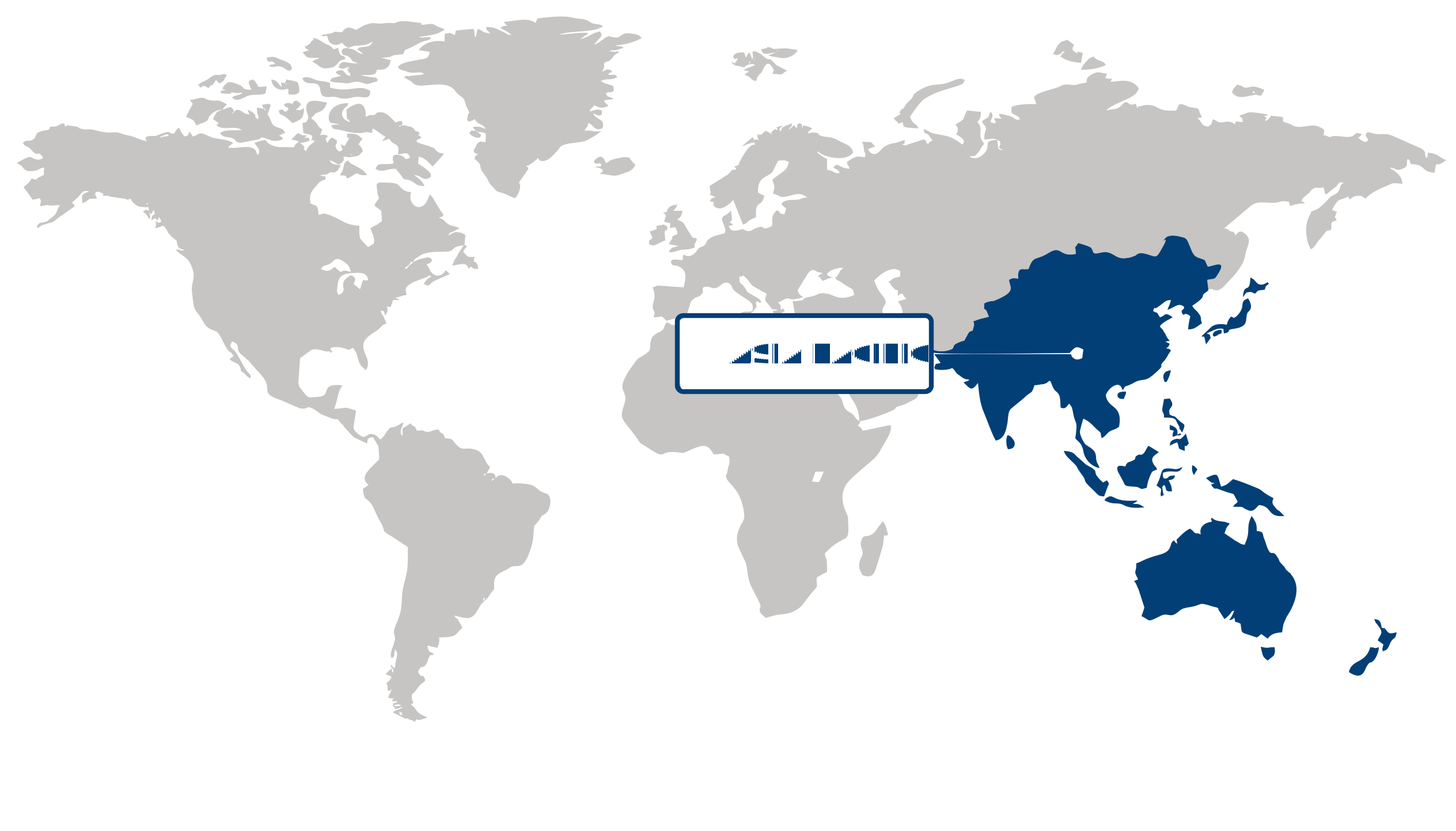
Asia Pacific dominated the renewable energy market in 2025, capturing over 55% of the global share while also registering the highest CAGR of 20.64%. This region's leadership is primarily driven by massive population growth and rapid industrialization in developing nations such as China and India, which have fueled surging energy demand. Governments across Asia Pacific are intensifying sustainability commitments, exemplified by China’s 2060 carbon neutrality target and India’s aggressive solar capacity expansion, supported by regulatory reforms and investment incentives. Technological advancements in solar and wind, along with enhanced supply chain capabilities by firms like JinkoSolar, reinforce capacity scale-up. Moreover, shifting consumer preferences towards cleaner energy, especially in urban centers, are accelerating adoption. Together, these dynamics position Asia Pacific as a critical arena for sustainable energy innovations and investment, promising substantial growth and transformative opportunities through the next decade.
China anchors the Asia Pacific renewable energy market with its massive industrial base and government-led green transition agenda. Policies from the National Energy Administration prioritize large-scale renewables deployment to address pollution and energy security concerns. The China General Nuclear Power Group’s expansions into offshore wind reflect a strategic push to diversify energy portfolios. Additionally, rising urban middle-class demand for eco-friendly electricity fosters corporate investments in clean power generation. Such initiatives elevate China’s role as a regional powerhouse in both renewable energy capacity and technological innovation. This centrality enhances Asia Pacific’s market dynamism by catalyzing supply chain efficiencies and fostering multinational partnerships, underscoring China’s pivotal influence on shaping regional market trajectories.
Japan is positioned as a pivotal hub in the Asia Pacific renewable energy market due to its aggressive policy shift post-Fukushima towards renewables and energy self-sufficiency. The Ministry of Economy, Trade and Industry’s support for renewable R&D and decarbonization projects has spurred innovation in hydrogen and offshore wind sectors. Corporations like Toshiba Renewable Energy have leveraged digital technologies to optimize grid integration and increase operational efficiency. Japan’s sophisticated consumer base increasingly values sustainability, shaping demand patterns and promoting decentralized energy solutions. This strategic environment enhances Japan’s contribution to regional renewable advancements, reinforcing Asia Pacific’s leadership by driving technology proliferation and robust regulatory frameworks essential for long-term market resilience.
North America Market Analysis:
North America emerged as one of the most lucrative regions in the renewable energy market, driven by significant investments and favorable policy frameworks. The surge in corporate commitments to sustainability, alongside federal incentives like the Inflation Reduction Act, has catalyzed adoption of renewable technologies across multiple sectors. This shift aligns with evolving consumer preferences for green energy sources and increasing utility-scale renewable projects facilitated by advances in grid infrastructure. Additionally, companies such as NextEra Energy and Ørsted have expanded their portfolios in the region, underlining strong operational capabilities and supply chain integration. Regulatory support from entities like the U.S. Department of Energy further bolsters market confidence, encouraging innovation and investments in clean energy solutions. As North America continues prioritizing climate goals and digital transformation in energy systems, the region presents substantial opportunities for growth and leadership in the renewable energy market.
The U.S. is a pivotal force within North America’s renewable energy market, driven by federal and state-level policies promoting clean energy adoption. Consumer demand in residential and commercial segments is accelerating renewable installations, aided by tax credits and streamlined permitting processes overseen by the U.S. Energy Information Administration. Leading utilities are deploying large-scale solar and wind farms, enhanced by technological advancements in energy storage and smart grid systems. Corporations such as Tesla and SunPower have expanded innovation in photovoltaic technologies, aligning with shifting consumer preferences toward sustainable solutions. Moreover, supply chain diversification and workforce development initiatives support the scaling of renewable projects nationwide. The U.S. stance on decarbonization and energy resilience underscores its critical role, bolstering regional prospects and attracting both domestic and foreign investments in renewable energy.
Europe Market Trends:
Europe maintained notable presence in the renewable energy market, driven by its ambitious climate targets and robust policy frameworks fostering clean energy adoption. The region’s substantial investment in wind and solar technologies, supported by the European Commission’s Green Deal initiatives, highlights a shift toward sustainable energy consumption patterns. Enhanced grid integration and digitalization efforts by key players, including Siemens Gamesa and Ørsted, reflect operational advancements optimizing renewable asset efficiency. Additionally, evolving consumer preferences favoring green energy, combined with resilience in supply chains amid global disruptions, further solidify Europe’s commanding share. These factors position the region as a fertile ground for innovation and large-scale deployments, underpinning significant growth opportunities as government incentives and corporate ESG commitments intensify.
Germany holds a pivotal role in Europe’s renewable energy market, leveraging its industrial base and policy incentives to accelerate clean energy deployment. The nation’s Energiewende strategy has propelled widespread integration of solar and wind power, with companies like E.ON and RWE spearheading capacity expansions. Germany’s focus on grid modernization and hydrogen technology exemplifies its commitment to balancing economic growth with sustainability priorities, as confirmed by the Bundesnetzagentur’s recent reports. This dynamic fosters competitive innovation while attracting global investments, reinforcing Germany’s position as a key driver for regional decarbonization efforts and operational excellence within the European renewable energy market.
France represents a strategic hub within Europe’s renewable energy market by channeling resources into expanding wind and solar capacity while diversifying its energy mix. French energy giant EDF’s aggressive investment in offshore wind projects and government-backed auctions illustrate a supportive regulatory environment encouraging project scalability and innovation. Additionally, France’s cultural embrace of environmental preservation, coupled with accelerating digital transformation initiatives, enhances consumer engagement and energy efficiency. These developments highlight France’s integral role in bolstering Europe’s renewable infrastructure, creating synergies that amplify the region’s market potential and pave the way for pioneering advances in clean energy technologies.
| Parameter | North America | Asia Pacific | Europe | Latin America | MEA |
|---|---|---|---|---|---|
| Innovation Hub i Scale Nascent Developing Advanced | |||||
| Cost-Sensitive Region i Scale Low Medium High | |||||
| Regulatory Environment i Scale Restrictive Neutral Supportive | |||||
| Demand Drivers i Scale Weak Moderate Strong | |||||
| Development Stage i Scale Emerging Developing Developed | |||||
| Adoption Rate i Scale Low Medium High | |||||
| New Entrants / Startups i Scale Sparse Moderate Dense | |||||
| Macro Indicators i Scale Weak Stable Strong |
Segment Leadership and Growth Trends
Renewable Energy Market Share (%), by End Use Industry, 2026
Go beyond the chart, access full insights & data tables
Request Free Sample ReportThe residential segment held the largest share of the renewable energy market in 2025, driven primarily by increasing household adoption of renewable solutions and supportive regulatory policies. This leadership reflects escalating consumer preferences for sustainable energy options and the growing emphasis on energy independence among homeowners. Government initiatives, such as tax credits and subsidy programs from agencies like the U.S. Department of Energy, have further stimulated residential solar panel and energy storage installations. The segment's expansion offers strategic advantages, enabling established energy providers and new entrants to innovate around smart home technologies and modular renewable systems. Given ongoing digital transformation in energy management and sustained policy backing, the residential segment is poised to remain a key pillar in the renewable energy market’s near- to medium-term growth.
Analysis by Type
Solar power represented the largest share of the renewable energy market in 2025, propelled by declining installation costs and robust government incentives worldwide. The segment’s dominance is further fueled by technological advancements in photovoltaic efficiency and streamlined supply chains that reduce project lead times. Corporations like First Solar and regulatory frameworks such as the European Green Deal underscore solar’s prominence through aggressive deployment targets and investment in grid integration. With growing demand from distributed generation and the shift toward decentralized energy systems, solar power creates compelling opportunities for both incumbents scaling utility projects and startups developing innovative storage and financing models. The convergence of cost competitiveness and policy momentum ensures solar power’s sustained relevance in the evolving renewable energy landscape.
| Segment | Sub-Segment | Largest Segment | Fastest Growing |
|---|---|---|---|
| End Use Industry | Residential, Commercial, Industrial, Others | ||
| Type | Solar, Biofuels, Geothermal, Hydropower, Wind Power |
Competitive Landscape and Market Positioning
The competitive landscape in renewable energy is marked by intensified efforts among these leaders to enhance technological capabilities and broaden asset portfolios. Many have forged partnerships and effectively integrated renewable assets to optimize energy generation and grid integration. For instance, collaborations on offshore wind projects reflect a strategic pivot toward scalable, sustainable energy solutions. Significant investments in R&D underpin advancements in turbine efficiency and solar panel performance, reinforcing product differentiation. Expansion through asset acquisitions or joint ventures has also consolidated market presence in emerging regions. This dynamic interplay ensures these companies remain at the forefront of innovation while responding to evolving regulatory and market demands, fostering a robust environment for sustained competitiveness.
Strategic / Actionable Recommendations for Regional Players
North American players would benefit from deepening alliances with technology innovators to address intermittency challenges and improve storage integration. This approach could bolster service reliability while expanding into underexploited segments such as distributed generation or community solar initiatives. Emphasizing synergies with grid modernization efforts will further differentiate offerings in a maturing market landscape.
In Asia Pacific, leveraging advances in next-generation photovoltaics and hybrid wind-solar systems can unlock value in rapidly urbanizing and industrializing areas. Aligning investments with governmental renewable targets and fostering collaboration with global technology suppliers will accelerate deployment and raise competitive positioning.
European stakeholders should focus on scaling offshore wind and harnessing digital technologies for enhanced asset management. Strengthening cross-border partnerships facilitates knowledge exchange and infrastructure development, enabling the region to maintain leadership in renewable innovation and policy influence.
| Company | Market Share | Company Revenue | Revenue CAGR (%) | Product Portfolio | Geographic Presence | Innovation / R&D Focus | Strategic Developments |
|---|---|---|---|---|---|---|---|
| No companies available. | |||||||
Industry Development/News
| Company Name | Date | Key Development |
|---|
Customize Your Report
Explore examples of how this report can be tailored to different research needs, including custom segments, additional topics or chapters, and related reports. Click a section of the wheel or its numbered marker to explore the available options.
Renewable Energy Market — Custom Segments
| Segment | Sub-Segment |
|---|---|
| No segment data available. | |
Renewable Energy Market — Custom TOC
| Custom Chapter | Custom Details | ||
|---|---|---|---|
| No custom TOC data available. | |||
Need a different cut of the data?
Request Custom ResearchWhat is the anticipated CAGR of the renewable energy industry?
Which geographic area exhibits the highest level of renewable energy market penetration?
What region has posted the highest CAGR in the renewable energy sector?
Why does residential sub-segment dominate the end use industry segment of renewable energy sector?
How does solar segment fare in the renewable energy industry?
Which organizations are considered leaders in the renewable energy landscape?
Our Clients
"The information presented in the report was genuinely insightful. The data was clear and easy to understand, which made it much easier to interpret the findings."
Amara Raja Group
"The responsiveness and professionalism exhibited by the team were exemplary. They were readily available to address queries, provide clarifications, and offer additional insights."
ONGC
"The reports offered a comprehensive analysis of various segments within the market. The detailed insights into market trends, and regulatory landscapes were excellent."
TotalEnergies
Our Research Team & Methodology
Every Fundamental Business Insights report is built by a dedicated vertical research team, validated through a structured primary-and-secondary methodology, and reviewed for accuracy before it reaches you.
Research Team Overview
Prepared by the Energy & Power Research Team
Delivery
Published
Demand
Available
Support
Trust & Compliance
Research Domains
10 coverage areasResearch Intelligence
| Source | Reference |
|---|---|
| International Energy Agency (IEA) | www.iea.org |
| U.S. Energy Information Administration (EIA) | www.eia.gov |
| International Renewable Energy Agency (IRENA) | www.irena.org |
| International Electrotechnical Commission (IEC) | www.iec.ch |
| International Organization for Standardization (ISO) | www.iso.org |
| IEEE | www.ieee.org |
| CIGRE (International Council on Large Electric Systems) | www.cigre.org |
| World Energy Council (WEC) | www.worldenergy.org |
| U.S. Department of Energy (DOE) | www.energy.gov |
| International Atomic Energy Agency (IAEA) | www.iaea.org |
| American Petroleum Institute (API) | www.api.org |
| Society of Petroleum Engineers (SPE) | www.spe.org |
| Hydrogen Council | hydrogencouncil.com |
| Battery Council International (BCI) | batterycouncil.org |
| Global Wind Energy Council (GWEC) | gwec.net |
| SolarPower Europe | www.solarpowereurope.org |
| World Bioenergy Association (WBA) | worldbioenergy.org |
| International Hydropower Association (IHA) | www.hydropower.org |
| Edison Electric Institute (EEI) | www.eei.org |
| National Renewable Energy Laboratory (NREL) | www.nrel.gov |
Research Workflow & Quality Assurance
Data Collection
Verified information gathered through primary and secondary research.
Data Triangulation
Cross-validation using multiple independent data sources.
Forecast Modelling
Market estimates developed using historical trends and analytical models.
Analyst Validation
Findings reviewed by domain experts for accuracy and consistency.
Editorial & Quality Review
Final editorial, quality, and compliance checks before publication.
Final Publication
Released after successful completion of the internal review process.
Report Coverage
📊 Market Assessment
- Market Size & Forecast
- Market Segmentation
- Regional Analysis
- Growth Drivers & Challenges
- Market Dynamics
🏢 Competitive Intelligence
- Competitive Landscape
- Company Profiles
- Competitive Benchmarking
- Mergers & Acquisitions
- Market Share Analysis or Key Company Strategies
🔍 Strategic Analysis
- Value Chain Analysis
- Porter's Five Forces
- PESTLE Analysis
- Pricing Trends
- Supply-Demand Analysis
🚀 Future Outlook
- Technology Landscape
- Regulatory Landscape
- Investment & Funding Landscape
- Emerging Opportunities
- Future Market Outlook
Have a question about this report or need a custom scope?
Request Customization