Renewable Energy Carbon Credit Market Size & Growth Forecast 2027–2036, By Segments (Type), Regional Demand Trends (North America, Asia Pacific, Europe), Key Country Insights (U.S., Japan, South Korea, Germany, France, Italy), and Competitive Landscape
Market Size and Growth Outlook
Renewable Energy Carbon Credit Market size stood at USD 54.61 Billion in 2026 and is predicted to grow at 16.85% CAGR from 2027 to 2036, crossing USD 259.15 Billion by 2036. The industry revenue for 2027 is calculated at USD 62.57 Billion.
Get more details on this report
Request Free Sample ReportRenewable Energy Carbon Credit Market Intelligence Snapshot
Regional Market Dynamics
- Europe leads through strong climate policies, established carbon market mechanisms, renewable energy deployment, and growing corporate focus on emissions management and environmental integrity.
- Asia Pacific is expanding rapidly as renewable capacity, clean energy investment, emissions-reduction efforts, and improving carbon market frameworks increase regional participation.
Segment Momentum
- The compliance segment leads the market because mandatory emissions reduction frameworks require regulated organizations to purchase carbon credits, while standardized verification and structured regulatory mechanisms provide stable and consistent demand.
- The voluntary segment is expanding as organizations strengthen sustainability strategies, support net-zero goals, and respond to growing stakeholder expectations and ESG initiatives through increased voluntary carbon credit purchases.
Market Expansion Drivers
- Tightening carbon pricing mechanisms and compliance frameworks accelerating carbon offset demand
- Expansion of renewable energy capacity increasing supply of high-quality tradable carbon credits
- Corporate net-zero commitments driving voluntary adoption of renewable-linked carbon credit trading
Leading Market Participants
- Major companies in the renewable energy carbon credit market include South Pole Group (Switzerland), Climate Impact Partners (United Kingdom), EcoAct SA (France), Carbon Direct Inc. (United States), 3Degrees Group Inc. (United States), ClimeCo LLC (United States), Atmosfair gGmbH (Germany), Ecosecurities Group (United Kingdom), The Carbon Trust (United Kingdom), NativeEnergy LLC (United States)
Global Market Forecast Snapshot
Market Outlook
- 2026 Market Size: USD 54.61 Billion
- 2027 Estimated Market Size: USD 62.57 Billion
- Projected Market Size: USD 259.15 Billion by 2036
- Growth Forecast: 16.85% CAGR (2027-2036)
Regional and Segment Outlook
- Leading Regional Market: Europe
- High-Growth Regional Hub: Asia Pacific
- Core Revenue Segment: Compliance (Type)
- Emerging Opportunity Segment: Voluntary (Type)
Market Growth Drivers and Industry Trends
Tightening carbon pricing mechanisms and compliance frameworks accelerating carbon offset demand
Governments and regulatory authorities are strengthening carbon pricing mechanisms and emissions compliance requirements to encourage industries to reduce their environmental footprint through market-based approaches. As these policies become more comprehensive across energy-intensive sectors, the renewable energy carbon credit market will drive higher demand for verified carbon offsets generated through clean energy projects. Organizations facing stricter emissions obligations increasingly incorporate carbon credits into their compliance strategies to complement direct emission reduction initiatives, while standardized verification and monitoring practices enhance confidence in the environmental integrity and traceability of eligible credits across regulated trading systems.
Expansion of renewable energy capacity increasing supply of high-quality tradable carbon credits
The continuous deployment of renewable energy projects across solar, wind, hydroelectric, and other clean power technologies is broadening the availability of verified emission reduction assets eligible for carbon trading. The renewable energy carbon credit market growth is supported by the expanding renewable energy capacity that generates a larger supply of high-quality tradable carbon credits through certified project development and transparent monitoring processes. Improved project validation methodologies and greater alignment with internationally recognized certification standards are also strengthening market credibility, allowing buyers to access credits with well-documented environmental attributes and measurable emissions reductions.
Corporate net-zero commitments driving voluntary adoption of renewable-linked carbon credit trading
An increasing number of businesses are incorporating long-term decarbonization objectives into their operational and sustainability strategies, creating stronger participation in voluntary carbon markets. Within the renewable energy carbon credit market, corporate net-zero commitments are encouraging organizations to purchase renewable-linked carbon credits as part of broader climate action programs that address residual emissions while supporting clean energy development. Companies are also integrating carbon credit procurement into environmental reporting frameworks and stakeholder engagement initiatives, placing greater emphasis on transparency, traceability, and the demonstrated environmental value of renewable energy-backed offset portfolios.
| Growth Driver | Impact on CAGR | Regulatory Influence | Geographic Relevance | Adoption Rate | Impact Timeline |
|---|---|---|---|---|---|
| Tightening carbon pricing mechanisms and compliance frameworks accelerating carbon offset demand | 2.9% | High | Europe, North America | High | Near Term |
| Expansion of renewable energy capacity increasing supply of high-quality tradable carbon credits | 2.6% | High | Asia Pacific, Europe | High | Mid Term |
| Corporate net-zero commitments driving voluntary adoption of renewable-linked carbon credit trading | 2.3% | High | Global | High | Mid Term |
Unlock insights tailored to your business with our bespoke market research solutions.
Click to get your customized report now.
Regional Demand Dynamics
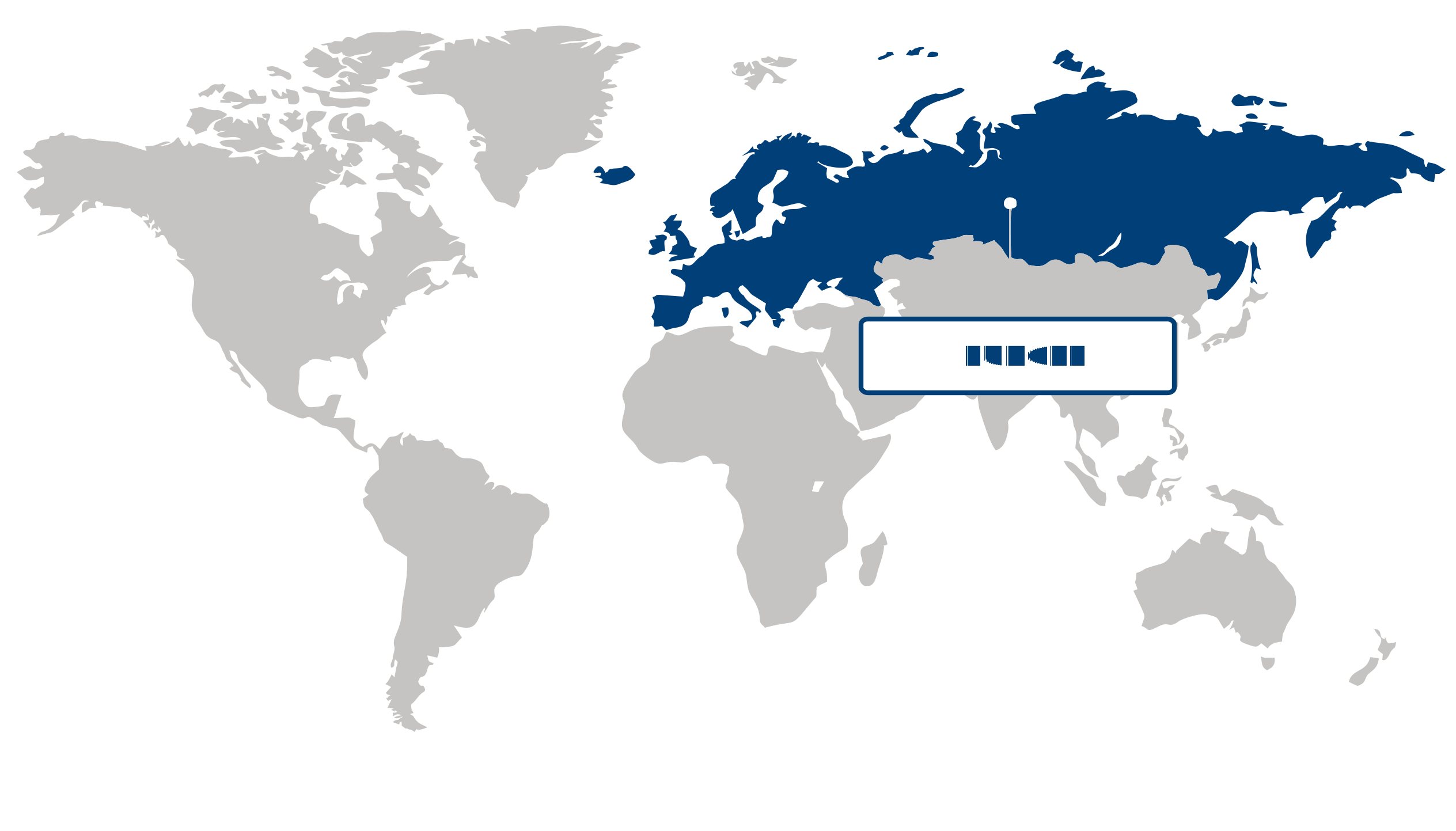
Europe (Largest Region)
Europe held the largest position in the renewable energy carbon credit market in 2026, supported by strong climate policy frameworks, established carbon market mechanisms, and continued efforts to reduce emissions from energy generation. The region's focus on renewable energy deployment and decarbonization is creating demand for credible carbon reduction instruments that can support environmental objectives and provide additional economic value to clean energy projects. Growing corporate attention to emissions management is also strengthening participation in carbon credit markets, while increasing emphasis on transparency, verification, and environmental integrity is encouraging more structured market development. The integration of renewable energy goals with broader sustainability strategies further reinforces the region's role in the market.
Asia Pacific (Fastest-Growing Region)
Asia Pacific is expected to experience the fastest growth as countries across the region expand renewable power capacity and intensify efforts to address emissions from rapidly developing economies. Growing energy demand, increasing investment in clean energy infrastructure, and the transition toward lower-carbon electricity generation are creating favorable conditions for renewable energy carbon credits. Governments and businesses are becoming more focused on emissions reduction and sustainable development, which is encouraging greater participation in carbon markets. Expanding renewable energy projects can also create additional opportunities for carbon credit generation, while improving market frameworks and environmental awareness are expected to support broader adoption across the region.
| Parameter | North America | Asia Pacific | Europe | Latin America | MEA |
|---|---|---|---|---|---|
| Innovation Hub i Scale Nascent Developing Advanced | |||||
| Cost-Sensitive Region i Scale Low Medium High | |||||
| Regulatory Environment i Scale Restrictive Neutral Supportive | |||||
| Demand Drivers i Scale Weak Moderate Strong | |||||
| Development Stage i Scale Emerging Developing Developed | |||||
| Adoption Rate i Scale Low Medium High | |||||
| New Entrants / Startups i Scale Sparse Moderate Dense | |||||
| Macro Indicators i Scale Weak Stable Strong |
Key Country Insights
United States 🇺🇸
Voluntary Market InnovationThe U.S. renewable energy carbon credit market is supported by expanding corporate decarbonization initiatives and renewable power procurement. Organizations in the U.S. increasingly use verified carbon credits alongside clean energy investments to strengthen sustainability strategies and emissions management.
Germany 🇩🇪
Industrial Decarbonization AlignmentGermany prioritizes renewable energy carbon credits that complement industrial emissions reduction and energy transition objectives. German companies increasingly seek transparent certification frameworks and high-quality renewable projects to support climate commitments and regulatory expectations.
Japan 🇯🇵
Corporate Offset IntegrationJapan is strengthening the use of renewable energy carbon credits as businesses pursue carbon neutrality across manufacturing and energy-intensive sectors. Japanese organizations emphasize traceable credits linked to renewable generation and long-term environmental credibility.
South Korea 🇰🇷
ESG Credit AdoptionSouth Korea is expanding renewable energy carbon credit participation through corporate ESG programs and industrial decarbonization efforts. Businesses in South Korea are incorporating verified renewable energy credits into broader sustainability reporting and environmental compliance initiatives.
France 🇫🇷
Certified Climate InstrumentsFrance encourages renewable energy carbon credit adoption through certified renewable projects and responsible environmental finance practices. French organizations increasingly prioritize high-integrity carbon credits that align with corporate sustainability goals and transparent reporting standards.
Italy 🇮🇹
Renewable Project FinancingItaly is utilizing renewable energy carbon credits to improve the commercial viability of clean energy developments and corporate climate programs. Italian project developers and businesses increasingly value credible credit verification to strengthen investment confidence and environmental performance.
Segment Leadership and Growth Trends
Renewable Energy Carbon Credit Market Share (%), by Type, 2026
Go beyond the chart, access full insights & data tables
Request Free Sample ReportType Segment Analysis: Compliance (Largest Segment) vs Voluntary (Fastest-Growing Segment)
The compliance segment held the largest share of the renewable energy carbon credit market in 2026. Its leadership is driven by mandatory emissions reduction frameworks that require regulated organizations to obtain carbon credits to meet established environmental obligations. Compliance markets benefit from structured regulatory mechanisms, standardized verification procedures, and broad participation from industries seeking to align with emission reduction requirements. These factors continue to provide a stable foundation for demand within the compliance segment.
The voluntary segment is anticipated to record the fastest growth as businesses increasingly pursue sustainability commitments beyond mandatory regulatory requirements. Organizations across diverse industries are purchasing voluntary carbon credits to offset emissions, strengthen environmental strategies, and demonstrate progress toward corporate climate objectives. Rising stakeholder expectations, expanding environmental, social, and governance initiatives, and greater emphasis on achieving net-zero ambitions are accelerating the adoption of voluntary renewable energy carbon credits.
| Segment | Sub-Segment | Largest Segment | Fastest Growing |
|---|---|---|---|
| Type | Voluntary, Compliance | Compliance | Voluntary |
Competitive Landscape and Market Positioning
Prominent players in the renewable energy carbon credit market:
- South Pole Group (Switzerland)
- Climate Impact Partners (United Kingdom)
- EcoAct SA (France)
- Carbon Direct, Inc. (United States)
- 3Degrees Group, Inc. (United States)
- ClimeCo LLC (United States)
- Atmosfair gGmbH (Germany)
- Ecosecurities Group (United Kingdom)
- The Carbon Trust (United Kingdom)
- NativeEnergy LLC (United States)
Market participants are increasingly distinguishing themselves through the credibility, traceability, and environmental integrity of the credits they bring to buyers rather than through transaction volume alone. As purchaser expectations become more rigorous, competition is shifting toward robust verification methodologies, transparent project monitoring, and stronger digital systems that enhance confidence throughout the credit lifecycle. Providers are also broadening their focus toward specialized project categories that demonstrate measurable environmental outcomes and align with evolving sustainability objectives, creating a competitive environment where trust, documentation quality, and long-term project stewardship carry greater strategic importance than simple market access.
| Company | Market Share | Company Revenue | Revenue CAGR (%) | Product Portfolio | Geographic Presence | Innovation / R&D Focus | Strategic Developments |
|---|---|---|---|---|---|---|---|
| South Pole Group (Switzerland) | |||||||
| Climate Impact Partners (United Kingdom) | |||||||
| EcoAct SA (France) | |||||||
| Carbon Direct Inc. (United States) | |||||||
| 3Degrees Group Inc. (United States) | |||||||
| ClimeCo LLC (United States) | |||||||
| Atmosfair gGmbH (Germany) | |||||||
| Ecosecurities Group (United Kingdom) | |||||||
| The Carbon Trust (United Kingdom) | |||||||
| NativeEnergy LLC (United States) |
Industry Development/News
| Company Name | Date | Key Development |
|---|---|---|
| South Pole | May-25 | Launched a Verra-approved carbon credit methodology designed to finance the early retirement of coal-fired power plants and accelerate their replacement with renewable energy assets, establishing a high-integrity market framework for coal-to-clean energy transition credits. |
| 3Degrees | Apr-25 | Introduced the Community Action Portfolio (CAP) to facilitate corporate investments in cost-effective and resilient renewable energy deployments across North America, expanding corporate access to market-based decarbonization and high-impact climate action mechanisms. |
| WayCarbon | Feb-25 | Formed a strategic partnership with Verde to support the development, carbon capture origination, and commercial monetization of carbon removal projects, leveraging Enhanced Rock Weathering and mineral utilization to generate verified carbon offsets. |
Customize Your Report
Explore examples of how this report can be tailored to different research needs, including custom segments, additional topics or chapters, and related reports. Click a section of the wheel or its numbered marker to explore the available options.
Renewable Energy Carbon Credit Market — Custom Segments
| Segment | Sub-Segment |
|---|---|
| Buyer Type | Corporates, Financial Institutions & Traders, Governments & Public-Sector Entities, Individuals & Small Businesses |
| Certification Standard | Verra VCS, Gold Standard, American Carbon Registry, Climate Action Reserve, Other Recognized Standards |
| Project Technology | Solar Power, Wind Power, Hydropower, Biomass & Biogas, Other Renewable Energy Projects |
Renewable Energy Carbon Credit Market — Custom TOC
| Custom Chapter | Custom Details |
|---|---|
| Carbon Credit Revenue Modeling |
|
| Carbon Credit Integrity Assessment |
|
| Offtake & Contracting Landscape |
|
Need a different cut of the data?
Request Custom ResearchHow much is the renewable energy carbon credit market worth?
How is the renewable energy carbon credit industry expected to grow over the next 10 years?
How are evolving carbon compliance policies influencing the renewable energy carbon credit market?
Why are corporate sustainability commitments strengthening renewable energy carbon credit demand?
Why does the compliance segment hold the largest share of the renewable energy carbon credit market?
What is driving the rapid growth of the voluntary carbon credit segment?
Why does Europe lead the renewable energy carbon credit market?
How is Asia Pacific accelerating growth in renewable energy carbon credits?
What are the key competitors in the renewable energy carbon credit landscape?
Our Clients
"The information presented in the report was genuinely insightful. The data was clear and easy to understand, which made it much easier to interpret the findings."
Amara Raja Group
"The responsiveness and professionalism exhibited by the team were exemplary. They were readily available to address queries, provide clarifications, and offer additional insights."
ONGC
"The reports offered a comprehensive analysis of various segments within the market. The detailed insights into market trends, and regulatory landscapes were excellent."
TotalEnergies
Our Research Team & Methodology
Every Fundamental Business Insights report is built by a dedicated vertical research team, validated through a structured primary-and-secondary methodology, and reviewed for accuracy before it reaches you.
Research Team Overview
Prepared by the Energy & Power Research Team
Delivery
Published
Demand
Available
Support
Trust & Compliance
Research Domains
10 coverage areasResearch Intelligence
| Source | Reference |
|---|---|
| International Energy Agency (IEA) | www.iea.org |
| U.S. Energy Information Administration (EIA) | www.eia.gov |
| International Renewable Energy Agency (IRENA) | www.irena.org |
| International Electrotechnical Commission (IEC) | www.iec.ch |
| International Organization for Standardization (ISO) | www.iso.org |
| IEEE | www.ieee.org |
| CIGRE (International Council on Large Electric Systems) | www.cigre.org |
| World Energy Council (WEC) | www.worldenergy.org |
| U.S. Department of Energy (DOE) | www.energy.gov |
| International Atomic Energy Agency (IAEA) | www.iaea.org |
| American Petroleum Institute (API) | www.api.org |
| Society of Petroleum Engineers (SPE) | www.spe.org |
| Hydrogen Council | hydrogencouncil.com |
| Battery Council International (BCI) | batterycouncil.org |
| Global Wind Energy Council (GWEC) | gwec.net |
| SolarPower Europe | www.solarpowereurope.org |
| World Bioenergy Association (WBA) | worldbioenergy.org |
| International Hydropower Association (IHA) | www.hydropower.org |
| Edison Electric Institute (EEI) | www.eei.org |
| National Renewable Energy Laboratory (NREL) | www.nrel.gov |
Research Workflow & Quality Assurance
Data Collection
Verified information gathered through primary and secondary research.
Data Triangulation
Cross-validation using multiple independent data sources.
Forecast Modelling
Market estimates developed using historical trends and analytical models.
Analyst Validation
Findings reviewed by domain experts for accuracy and consistency.
Editorial & Quality Review
Final editorial, quality, and compliance checks before publication.
Final Publication
Released after successful completion of the internal review process.
Report Coverage
📊 Market Assessment
- Market Size & Forecast
- Market Segmentation
- Regional Analysis
- Growth Drivers & Challenges
- Market Dynamics
🏢 Competitive Intelligence
- Competitive Landscape
- Company Profiles
- Competitive Benchmarking
- Mergers & Acquisitions
- Market Share Analysis or Key Company Strategies
🔍 Strategic Analysis
- Value Chain Analysis
- Porter's Five Forces
- PESTLE Analysis
- Pricing Trends
- Supply-Demand Analysis
🚀 Future Outlook
- Technology Landscape
- Regulatory Landscape
- Investment & Funding Landscape
- Emerging Opportunities
- Future Market Outlook
Have a question about this report or need a custom scope?
Request Customization