Regulatory Buoys Market Size & Forecasts 2026-2035, By Segments (Application, Type), Growth Opportunities, Innovation Landscape, Regulatory Shifts, Strategic Regional Insights (U.S., Japan, China, South Korea, UK, Germany, France), and Competitive Dynamics (Honeywell, Saab AB, VIKING Life-Saving Equipment, Ocean Signal, HALI Group)
Market Size and Growth Outlook
Regulatory Buoys Market size is anticipated to rise from USD 1.09 billion in 2025 to USD 1.79 billion by 2035, reflecting a CAGR surpassing 5.1% over the forecast horizon of 2026-2035. The estimated revenue for 2026 is USD 1.14 billion.
Get more details on this report
Request Free Sample ReportRegulatory Buoys Market Intelligence Snapshot
Regional Market Dynamics
Segment Momentum
Market Expansion Drivers
Leading Market Participants
Global Market Forecast Snapshot
Market Outlook
Regional and Segment Outlook
Market Growth Drivers and Industry Trends
The expansion of maritime safety programs significantly propels the regulatory buoys market by prioritizing navigational aids to reduce accidents and environmental hazards. Organizations such as the International Maritime Organization (IMO) have intensified safety protocols, mandating enhanced buoy deployment in vulnerable waterways. This growing emphasis influences port authorities and coastal nations to upgrade buoy infrastructure, driving demand for modern regulatory buoys. The increased focus on proactive risk management creates opportunities for established manufacturers to diversify product portfolios while encouraging new entrants to introduce innovative buoy designs tailored for specific safety programs. As safety mandates evolve, the regulatory buoys market will increasingly integrate with broader maritime risk mitigation frameworks, cementing its critical role in global maritime infrastructure.
Regulatory Compliance Mandates
Stringent regulatory compliance mandates are reshaping the regulatory buoys market by necessitating adherence to stricter navigational and environmental standards. Regulatory bodies like the U.S. Coast Guard and the European Maritime Safety Agency (EMSA) have rolled out updated buoy placement and monitoring requirements to ensure safer, more environmentally responsible maritime operations. Compliance-driven demand encourages incumbents to invest in buoy designs that meet evolving standards, including eco-friendly materials and smart sensor integrations. For new entrants, this landscape presents opportunities to develop cutting-edge solutions aligned with regulatory frameworks, facilitating quicker market entry. Continued regulatory tightening signals sustained market relevance for regulatory buoys, reinforcing the imperative for innovation aligned with compliance.
Adoption of Advanced Buoy Technologies
The adoption of advanced buoy technologies is a transformative growth driver for the regulatory buoys market, enhancing operational efficiency and real-time data capabilities. Integration of IoT sensors, AI analytics, and solar-powered systems, as highlighted by companies like Evaris Marine Technologies, is revolutionizing buoy performance and maintenance. This technology shift responds to maritime industry demands for remote monitoring and reduced operational costs, influencing buyer preferences and supplier offerings alike. Established players can capitalize on upgrading legacy systems, while startups are positioned to disrupt with novel, tech-enabled buoy solutions. As these technologies mature, the market is set to witness a continued transition toward smart regulatory buoys, embedding digitalization as a core component of maritime safety and navigation strategies.
Industry Restraints:
Complex Regulatory Approval Processes
Navigating the intricate landscape of maritime safety regulations significantly impedes the regulatory buoys market’s growth by prolonging product launch timelines and inflating compliance costs. Regulatory bodies such as the U.S. Coast Guard and the International Maritime Organization impose stringent standards on buoy design, installation, and maintenance, reflecting safety and environmental priorities. For example, the IMO’s recent amendments to the SOLAS Convention have added layers of certification requirements, complicating market entry especially for smaller manufacturers. These complex approval pathways force companies to allocate substantial resources toward compliance management rather than innovation or expansion. Consequently, both incumbents and new entrants face operational bottlenecks that restrict speed-to-market, limiting competitive differentiation. Moving forward, as regulatory agencies refine standards to address emerging maritime challenges, the requirement for robust certification protocols will likely sustain this bottleneck, compelling firms to enhance regulatory expertise and proactive engagement to mitigate delays and cost overruns.
Supply Chain Disruptions and Material Scarcity
The regulatory buoys market is constrained by ongoing supply chain volatility, particularly concerning the availability of high-grade plastics, corrosion-resistant metals, and electronic components essential for buoy functionality and durability. The World Bank’s recent commodity analysis highlights how global disruptions—such as lockdowns and geopolitical tensions—have sharply increased lead times and prices for these raw materials. Manufacturers reliant on just-in-time inventory systems struggle to maintain production schedules, leading to deferred deployments and increased project costs. Such supply chain fragility disproportionately affects emerging players lacking strategic supplier relationships or stockpiling capabilities, thereby reinforcing market concentration among established firms. In response, companies are investing in diversified sourcing strategies and closer supplier collaborations. As geopolitical uncertainties and trade restrictions persist, supply chain stabilization will remain a critical strategic imperative, shaping both product availability and pricing dynamics within the regulatory buoys ecosystem.
| Growth Driver | Impact on CAGR | Regulatory Influence | Geographic Relevance | Adoption Rate | Impact Timeline |
|---|---|---|---|---|---|
| Expansion of Maritime Safety Programs | 1.50% | Short term (≤ 2 yrs) | North America, Europe; Spillover: Asia Pacific | Medium | Moderate |
| Regulatory Compliance Mandates | 1.60% | Medium term (2–5 yrs) | Europe, North America; Spillover: MEA | High | Slow |
| Adoption of Advanced Buoy Technologies | 2.00% | Long term (5+ yrs) | Asia Pacific, Europe; Spillover: North America | Medium | Moderate |
Unlock insights tailored to your business with our bespoke market research solutions.
Click to get your customized report now.
Regional Demand Dynamics
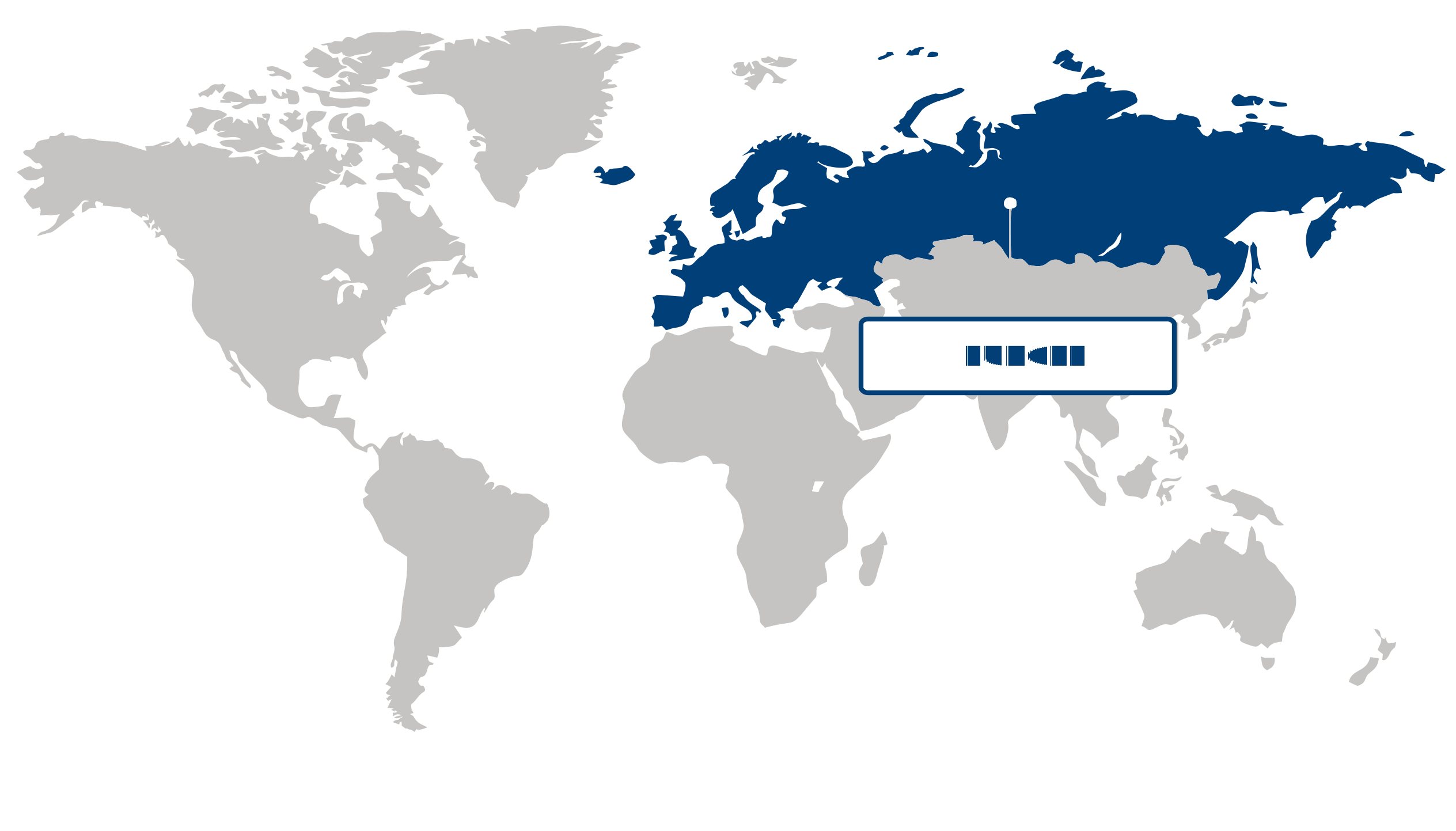
Europe dominated the regulatory buoys market in 2025, capturing approximately 39% of the global share. This leadership is driven primarily by stringent maritime safety regulations and an increasing number of offshore wind projects across the region. The European Union’s continued emphasis on sustainable energy transitions, exemplified by initiatives like the European Green Deal, has heightened demand for regulatory buoys to ensure secure navigation around offshore installations. Agencies such as Germany’s Federal Maritime and Hydrographic Agency (BSH) and the European Maritime Safety Agency (EMSA) have reinforced compliance standards, prompting widespread adoption of advanced buoy technologies. Additionally, digital integration and enhanced operational efficiency in ports strengthen Europe's market position. Given the accelerating pace of offshore renewable projects and maritime safety investments, Europe presents significant growth avenues for manufacturers and service providers in the regulatory buoys market.
Germany anchors Europe’s regulatory buoys market through its expansive offshore wind capacity and strict enforcement of navigation safety norms. The BSH’s robust regulatory framework mandates extensive buoy deployment to safeguard offshore wind farms in the North Sea, while German firms actively pilot innovative sensor-equipped buoys, as noted in Siemens Gamesa press releases. The nation’s commitment to decarbonization and maritime infrastructure modernization drives unique market demand, positioning Germany as a regional innovation hub. This dynamic bolsters Europe-wide opportunities by establishing high standards that influence adjacent markets.
France plays a pivotal role in the regulatory buoys market within Europe, leveraging its strategic coastal position and expanding maritime sectors. The French Maritime Prefecture’s rigorous safety protocols enhance buoy deployment around key shipping lanes and offshore wind projects, supported by programs from the French Ministry of Ecological Transition. Collaboration between French offshore wind developers and buoy manufacturers, as highlighted in EDF Renewables communications, reflects an integrated approach driving market growth. France’s increasing investment in sustainable maritime infrastructure complements broader European trends, reinforcing the region’s dominant position and promising sustained market momentum.
Asia Pacific Market Analysis:
Asia Pacific emerged as the fastest-growing region in the regulatory buoys market, registering a robust CAGR of 6%. This rapid expansion is primarily driven by extensive investments in shipping lanes and port infrastructure, reflecting the region’s strategic emphasis on enhancing maritime safety and efficiency. The Asia Pacific’s dynamic trade environment, supported by rising maritime traffic due to global supply chain integration, has amplified the demand for advanced regulatory buoys. Initiatives like China's Belt and Road Initiative and Japan’s focus on expanding smart port technologies underscore the region’s commitment to modernizing navigational aids. Additionally, regulatory frameworks promoting safer and environmentally compliant maritime operations further catalyze the adoption of regulatory buoys. According to the Japan Ministry of Land, Infrastructure, Transport and Tourism, continuous upgrades to port infrastructure elevate maritime operational standards, positioning Asia Pacific as a critical hub for buoy deployment. The region’s forward momentum in maritime infrastructure offers sustained opportunities for growth, innovation, and market expansion in regulatory buoys.
Japan is pivotal in the Asia Pacific regulatory buoys market, leveraging its advanced port infrastructure and stringent maritime safety regulations. The country’s growing focus on integrating digital navigation systems with regulatory buoys enhances the precision and reliability of vessel guidance, meeting the needs of increasing transshipment volumes at its ports. The Japan Coast Guard’s recent announcement of buoy modernization projects highlights efforts to deploy state-of-the-art navigation aids, supporting safer maritime corridors. Consumer demand for high-quality and durable buoy systems aligns with Japan’s commitment to maritime safety and environmental stewardship, reflecting sophisticated purchasing patterns favoring innovation. Japan’s leadership in technical excellence and regulatory compliance strengthens overall regional growth and innovation in regulatory buoy solutions.
China plays a transformative role, fueled by massive investments in expanding shipping lanes under the Belt and Road Initiative, which facilitate growing export-import volumes and maritime traffic. The Chinese government’s proactive policies mandating enhanced navigational safety equipment foster the widespread adoption of regulatory buoys, supporting commercial fleet expansions and port modernization. State-owned enterprises such as China Communication Construction Company have been instrumental in deploying advanced buoy networks to improve maritime navigation across key ports like Shanghai and Shenzhen. These developments reflect evolving logistical demands and competitiveness, driving operational efficiency in shipping lanes. China’s strategic enhancements in maritime infrastructure directly reinforce the Asia Pacific’s position as the fastest-growing market in regulatory buoys, presenting considerable opportunities for long-term regional dominance.
North America Market Trends:
North America held a commanding share in the regulatory buoys market, driven by stringent maritime safety regulations and an extensive coastline requiring advanced navigational aids. The region’s emphasis on maintaining safe and efficient shipping lanes, supported by agencies like the U.S. Coast Guard, has spurred investments in high-reliability buoy systems incorporating real-time monitoring and eco-friendly materials. Rising trade volumes across key ports and ongoing modernization efforts in coastal infrastructure further fuel demand. Additionally, the shift towards digital transformation with IoT-enabled buoys enhances situational awareness and operational efficiency, positioning North America as a hub of innovation. According to the U.S. Department of Transportation Maritime Administration, these trends underscore sustained spending on maritime safety, revealing North America as a lucrative landscape for regulatory buoy manufacturers, with expanding opportunities tied to evolving environmental standards and technological integration.
The U.S. dominates North America’s regulatory buoys market, underpinned by its proactive regulatory framework led by the U.S. Coast Guard, which mandates rigorous buoy maintenance and deployment for navigational safety. Federal initiatives targeting coastal resilience, such as the National Oceanic and Atmospheric Administration’s (NOAA) buoy programs, highlight investments in sensor-equipped regulatory buoys that improve hazard warnings and environmental data collection. Such government-backed programs reflect a mature market with advanced technological adoption, harmonizing safety with environmental stewardship. This strong regulatory impetus supports competitive intensity among buoy manufacturers and incentivizes continuous innovation. The U.S.’s role amplifies regional opportunities, facilitating expanded market penetration and encouraging partnerships focused on smart buoy systems that align with North America’s strategic maritime priorities.
| Parameter | North America | Asia Pacific | Europe | Latin America | MEA |
|---|---|---|---|---|---|
| Innovation Hub i Scale Nascent Developing Advanced | |||||
| Cost-Sensitive Region i Scale Low Medium High | |||||
| Regulatory Environment i Scale Restrictive Neutral Supportive | |||||
| Demand Drivers i Scale Weak Moderate Strong | |||||
| Development Stage i Scale Emerging Developing Developed | |||||
| Adoption Rate i Scale Low Medium High | |||||
| New Entrants / Startups i Scale Sparse Moderate Dense | |||||
| Macro Indicators i Scale Weak Stable Strong |
Segment Leadership and Growth Trends
Regulatory Buoys Market Share (%), by Application, 2026
Go beyond the chart, access full insights & data tables
Request Free Sample ReportThe coastal & harbor segment held the largest share in the regulatory buoys market in 2025, driven primarily by stringent maritime safety regulations mandating buoy deployment for effective traffic management in congested coastal and harbor areas. This leadership reflects increasing global emphasis on navigational safety, supported by international conventions such as the International Maritime Organization’s (IMO) updated safety protocols. Growing commercial port activities and coastal urbanization reinforce demand for precise buoy placement, aligned with evolving regulatory milestones. Authorities like the U.S. Coast Guard have actively promoted the deployment of these buoys to mitigate accidents and environmental risks. The segment thus offers strategic advantages for firms specializing in high-durability buoy systems and real-time monitoring technologies. Given ongoing regulatory tightening and increased maritime traffic density, this segment is set to maintain its relevance as a critical enabler of safe and efficient coastal navigation.
Analysis by Type
Lateral markers represented the largest share of the regulatory buoys market in 2025, propelled by rigorous regulatory mandates for standardized navigational aids that enhance port approach and channel safety. This segment benefits from widespread adoption of the IALA (International Association of Marine Aids to Navigation and Lighthouse Authorities) buoyage system, ensuring consistency across international waters. The focus on uniform marking systems is reinforced by port authorities and maritime agencies aiming to minimize vessel groundings and collisions. Competitive dynamics favor manufacturers offering robust, easy-to-install lateral markers compatible with digital navigation tools. Sustainability trends also encourage the use of eco-friendly materials to reduce environmental footprints. Established players and innovators alike find opportunities in adapting lateral markers to evolving smart navigation ecosystems. With sustained regulatory emphasis on navigational consistency, the dominance of this segment is expected to continue in the near to medium term.
| Segment | Sub-Segment | Largest Segment | Fastest Growing |
|---|---|---|---|
| Application | Coastal & Harbor, Offshore | ||
| Type | Lateral Markers, Adjustment Markers |
Competitive Landscape and Market Positioning
The competitive landscape reflects rigorous technological refinement and strategic partnerships among the top manufacturers. Investment in research and development propels product enhancements, enabling integration of digital signaling, IoT sensors, and sustainable materials. Recent collaborations among key firms streamline supply chains and boost global deployment efficiency, while selective acquisitions expand technological portfolios and market reach. Launches of next-generation regulatory buoys emphasize compliance with international maritime standards and environmental mandates, strengthening brand differentiation. These moves cultivate a landscape characterized by agile adaptability and innovation focus, compelling players to continuously update offerings while capitalizing on evolving maritime safety regulations.
Strategic / Actionable Recommendations for Regional Players
North American entities should fortify alliances with technology innovators and governmental bodies to amplify regulatory buoy deployment in complex marine environments, leveraging advanced telemetry and smart monitoring. This approach would enhance situational responsiveness and compliance visibility across critical shipping lanes.
In Asia Pacific, tapping growth potential involves integrating emerging sensor technologies and partnering with local maritime authorities to address rising demand in coastal management and port safety. Embracing customization aligned with regional regulatory nuances can significantly enhance market penetration and user adoption.
European players might concentrate on collaborative developments focusing on eco-friendly materials and interoperability standards to maintain leadership amid stringent environmental regulations. Enhancing cross-border coordination and standard harmonization will consolidate their competitive edge within highly regulated waters.
| Company | Market Share | Company Revenue | Revenue CAGR (%) | Product Portfolio | Geographic Presence | Innovation / R&D Focus | Strategic Developments |
|---|---|---|---|---|---|---|---|
| No companies available. | |||||||
Industry Development/News
| Company Name | Date | Key Development |
|---|
Customize Your Report
Explore examples of how this report can be tailored to different research needs, including custom segments, additional topics or chapters, and related reports. Click a section of the wheel or its numbered marker to explore the available options.
Regulatory Buoys Market — Custom Segments
| Segment | Sub-Segment |
|---|---|
| No segment data available. | |
Regulatory Buoys Market — Custom TOC
| Custom Chapter | Custom Details | ||
|---|---|---|---|
| No custom TOC data available. | |||
Need a different cut of the data?
Request Custom ResearchWhat is the anticipated CAGR of the regulatory buoys industry?
Which part of the world represents the largest segment of the regulatory buoys market?
Which region is experiencing the fastest growth in the regulatory buoys sector?
Why is the coastal & harbor segment leading in the regulatory buoys industry?
Why does lateral markers sub-segment dominate the type segment of regulatory buoys sector?
What are the key competitors in the regulatory buoys landscape?
Our Clients
"The team at Fundamental Business Insights & Consulting demonstrated a commitment to excellence, not only in the quality of the report but also in their client-centric approach."
FANUC
"The level of detail in the market segmentation provided were particularly noteworthy. The detailed country-level insights were also very helpful."
B&R Industrial Automation GmbH
"The consultant took the time to understand our specific business objectives, ensuring that the reports were tailored to address our unique challenges and opportunities."
KUKA SE & Co. KGaA
Our Research Team & Methodology
Every Fundamental Business Insights report is built by a dedicated vertical research team, validated through a structured primary-and-secondary methodology, and reviewed for accuracy before it reaches you.
Research Team Overview
Prepared by the Industrial Automation & Equipment Research Team
Delivery
Published
Demand
Available
Support
Trust & Compliance
Research Domains
10 coverage areasResearch Intelligence
| Source | Reference |
|---|---|
| International Society of Automation (ISA) | www.isa.org |
| International Organization for Standardization (ISO) | www.iso.org |
| National Institute of Standards and Technology (NIST) | www.nist.gov |
| IEEE | www.ieee.org |
| VDMA (German Mechanical Engineering Industry Association) | www.vdma.org |
| Association for Advancing Automation (A3) | www.automate.org |
| International Federation of Robotics (IFR) | ifr.org |
| ASME (American Society of Mechanical Engineers) | www.asme.org |
| ASHRAE | www.ashrae.org |
| American Society of Heating, Refrigerating and Air-Conditioning Engineers (ASHRAE) | www.ashrae.org |
| Material Handling Industry (MHI) | www.mhi.org |
| OSHA (Occupational Safety and Health Administration) | www.osha.gov |
| National Fire Protection Association (NFPA) | www.nfpa.org |
| ASTM International | www.astm.org |
| International Electrotechnical Commission (IEC) | www.iec.ch |
| Open Process Automation Forum (The Open Group) | www.opengroup.org/open-process-automation-forum |
| AGMA (American Gear Manufacturers Association) | www.agma.org |
| Association of Equipment Manufacturers (AEM) | www.aem.org |
| Food and Agriculture Organization (FAO) | www.fao.org |
| International Labour Organization (ILO) | www.ilo.org |
Research Workflow & Quality Assurance
Data Collection
Verified information gathered through primary and secondary research.
Data Triangulation
Cross-validation using multiple independent data sources.
Forecast Modelling
Market estimates developed using historical trends and analytical models.
Analyst Validation
Findings reviewed by domain experts for accuracy and consistency.
Editorial & Quality Review
Final editorial, quality, and compliance checks before publication.
Final Publication
Released after successful completion of the internal review process.
Report Coverage
📊 Market Assessment
- Market Size & Forecast
- Market Segmentation
- Regional Analysis
- Growth Drivers & Challenges
- Market Dynamics
🏢 Competitive Intelligence
- Competitive Landscape
- Company Profiles
- Competitive Benchmarking
- Mergers & Acquisitions
- Market Share Analysis or Key Company Strategies
🔍 Strategic Analysis
- Value Chain Analysis
- Porter's Five Forces
- PESTLE Analysis
- Pricing Trends
- Supply-Demand Analysis
🚀 Future Outlook
- Technology Landscape
- Regulatory Landscape
- Investment & Funding Landscape
- Emerging Opportunities
- Future Market Outlook
Have a question about this report or need a custom scope?
Request Customization