Refrigeration Coolers Market Size & Forecasts 2026-2035, By Segments (End Use, Type, Application, Cooling Technology), Growth Opportunities, Innovation Landscape, Regulatory Shifts, Strategic Regional Insights (U.S., Japan, China, South Korea, UK, Germany, France), and Competitive Dynamics (Carrier, Daikin, LG Electronics, Whirlpool, Electrolux)
Market Size and Growth Outlook
Refrigeration Coolers Market size is anticipated to rise from USD 27.27 billion in 2025 to USD 39.98 billion by 2035, reflecting a CAGR surpassing 3.9% over the forecast horizon of 2026-2035. The estimated revenue for 2026 is USD 28.18 billion.
Get more details on this report
Request Free Sample ReportRefrigeration Coolers Market Intelligence Snapshot
Regional Market Dynamics
Segment Momentum
Market Expansion Drivers
Leading Market Participants
Global Market Forecast Snapshot
Market Outlook
Regional and Segment Outlook
Market Growth Drivers and Industry Trends
The rising demand for refrigeration coolers in food retail is driven by evolving consumer preferences for fresh and perishable goods, fueling supermarket and convenience store expansion. Retailers such as Walmart and Kroger have increased investments in advanced refrigeration solutions to ensure product quality and extend shelf life, according to their corporate press releases. This trend underscores the need for versatile, reliable cooling systems, presenting opportunities for manufacturers to innovate with modular and customizable units. Established companies can leverage their supply chain scale to meet large retail contracts, while startups might focus on niche segments like organic or specialty food stores. The refrigeration coolers market will continue to evolve as consumer focus on food safety and urban retail footprint growth intensifies.
Expansion of Cold Logistics and Food Distribution Chains
The growth of cold chain logistics, propelled by globalized food supply networks and online grocery shopping, is a key driver shaping the refrigeration coolers market. Logistics companies like DHL and Maersk are investing in temperature-controlled transport and storage infrastructure to maintain product integrity over longer distances, as confirmed in their sustainability and operational reports. This development creates strategic opportunities for cooler manufacturers to supply durable, mobile refrigeration units suitable for transit environments. Both incumbents and new entrants can capitalize on the rising demand for integrated solutions linking storage and transportation. The refrigeration coolers market will increasingly intersect with logistics innovation, responding to expanding demand for fresh and frozen goods globally.
Long-term Shift to Energy-efficient Cooling Technologies
Regulatory pressure and sustainability commitments, exemplified by the U.S. Environmental Protection Agency’s ENERGY STAR program, are accelerating the shift toward energy-efficient refrigeration coolers. Consumers and businesses alike prioritize reduced environmental impact and operational cost savings, influencing purchasing decisions. Companies such as Carrier and Danfoss are leading with eco-friendly products featuring advanced insulation and refrigerants with low global warming potential, as highlighted in their product releases. This transition encourages innovation where established players can maintain competitiveness through technological R&D, while agile newcomers can exploit emerging green technologies. The refrigeration coolers market is poised to align closely with global climate initiatives, emphasizing sustainability as a core value driver.
Industry Restraints:
Stringent Regulatory Compliance on Refrigerants
Regulatory constraints driven by global environmental policies significantly impede innovation and adoption within the refrigeration coolers market. The Kigali Amendment to the Montreal Protocol, enforced by agencies like the United Nations Environment Programme (UNEP), mandates progressive phase-downs of hydrofluorocarbons (HFCs), compelling manufacturers to transition toward low-global warming potential (GWP) refrigerants. This transition entails substantial R&D costs, redesigns, and certification delays, disproportionately affecting smaller players lacking capital reserves, as noted in the U.S. Environmental Protection Agency’s (EPA) SNAP program updates. Established companies must navigate complex certification and compliance processes, slowing product launches and market responsiveness. Moving forward, these regulatory pressures will continue to drive consolidation and strategic alliances favoring firms with innovation capacity and regulatory expertise, shaping the competitive landscape through heightened barriers to entry and escalating operational costs.
Rising Raw Material and Component Costs
Volatility in raw material prices, especially metals like copper and aluminum critical to refrigeration components, presents a persistent market impediment. Issues such as supply chain disruptions highlighted by the International Copper Study Group (ICSG) and inflationary pressures documented by the World Bank inflate production costs, squeezing manufacturers’ margins. This dynamic forces some companies to delay new product developments or reduce feature scopes to contain expenses, restraining technological advancement. Established incumbents with diversified supplier networks can mitigate impacts better than newcomers, who face heightened vulnerability to cost shocks. Strategically, players must prioritize supply chain resilience and cost-optimization strategies to remain competitive. Cost fluctuations are likely to persist, making price stability a critical focus in near- to medium-term supply and product planning within the refrigeration coolers market.
| Growth Driver | Impact on CAGR | Regulatory Influence | Geographic Relevance | Adoption Rate | Impact Timeline |
|---|---|---|---|---|---|
| Growth in commercial refrigeration for food retail | 0.80% | Short term (≤ 2 yrs) | North America, Europe | Medium | Moderate |
| Expansion of cold logistics and food distribution chains | 0.70% | Medium term (2–5 yrs) | Asia Pacific, Latin America | Low | Moderate |
| Long-term shift to energy-efficient cooling technologies | 0.70% | Long term (5+ yrs) | Europe, North America | Medium | Slow |
Unlock insights tailored to your business with our bespoke market research solutions.
Click to get your customized report now.
Regional Demand Dynamics
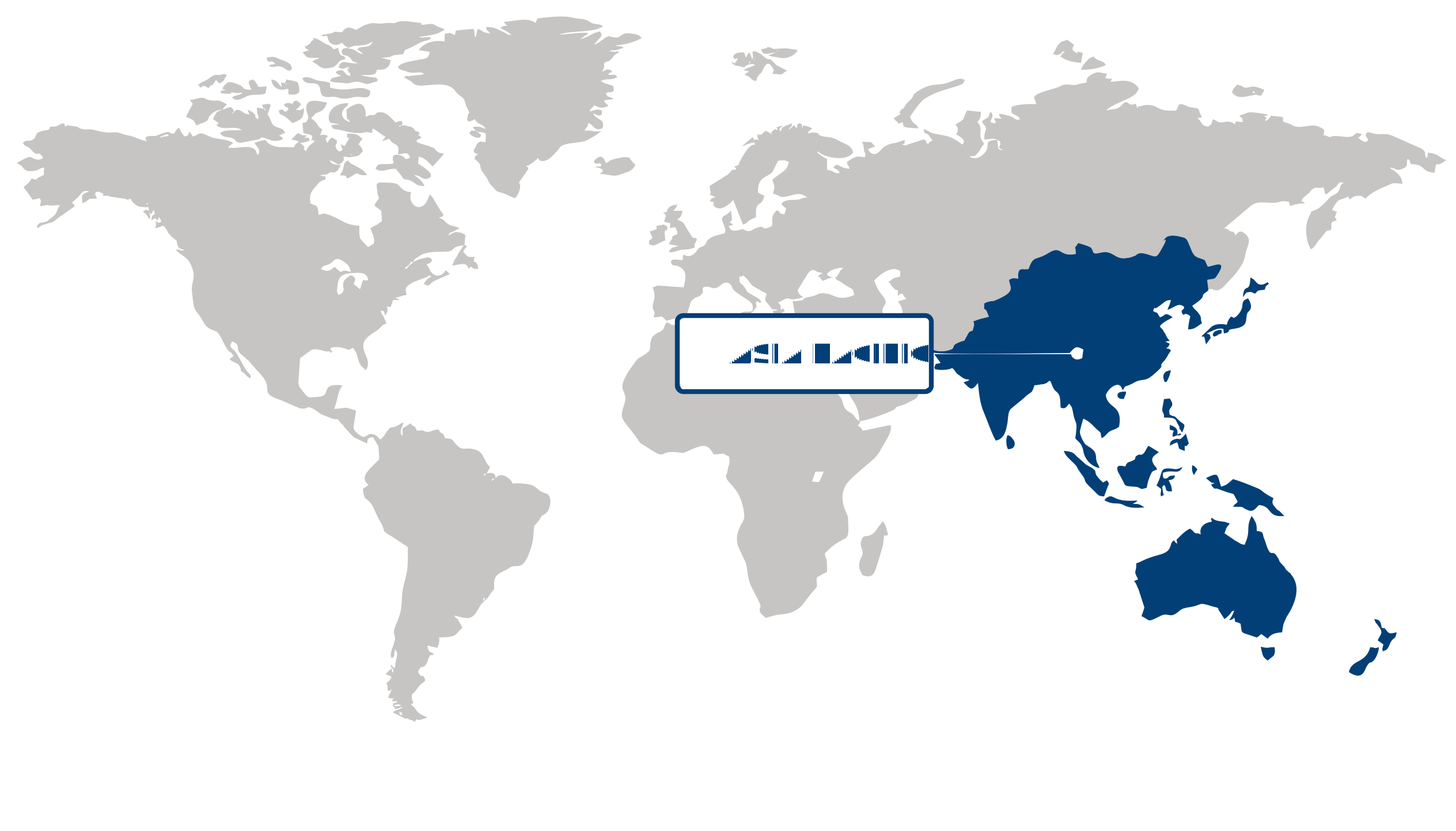
The Asia Pacific refrigeration coolers market captured over 43% of the global share in 2025, standing as the largest and fastest-growing region with a 5.85% CAGR. This leadership is driven by rapid urbanization, expanding disposable incomes, and escalating demand for cold-chain logistics, retail, and agricultural refrigeration solutions. Countries in the region are witnessing shifts in consumer spending toward fresh and frozen products, supported by technological advancements in energy-efficient cooling systems. For instance, Panasonic Corporation has introduced smart refrigeration units aligned with sustainability trends, enhancing operational efficiency. Additionally, regulatory frameworks in countries like South Korea and India incentivize reduced carbon emissions, further boosting demand. Together, these factors, coupled with robust infrastructure development and digital transformation in supply chains, position Asia Pacific as a crucial hub for refrigeration cooler innovation and uptake, offering sustained growth opportunities for investors and industry players.
Japan serves as a pivotal hub in the Asia Pacific refrigeration coolers market, leveraging its advanced technological ecosystem and stringent energy efficiency regulations. Domestic firms such as Mitsubishi Electric promote eco-friendly refrigeration technologies that resonate with consumers’ increasing environmental consciousness and government mandates. Japan's well-established cold-chain network also supports diversified sectors including pharmaceuticals and food retail, enhancing the market’s depth. Meanwhile, policy initiatives by Japan’s Ministry of Economy, Trade and Industry stimulate innovation and market competitiveness. These dynamics reinforce Japan’s role in elevating the regional refrigeration coolers market, contributing advanced solutions and setting benchmarks that promote wider adoption across Asia Pacific.
China anchors the Asia Pacific refrigeration coolers market with its vast consumer base and pivotal role in the cold-chain and retail refrigeration sectors. Rising incomes and urban migration fuel strong demand for household and commercial coolers, while government programs such as the Cold Chain Development Plan emphasize infrastructure enhancement and energy-efficient technologies. Industry leaders like Haier Smart Home are pioneering IoT-enabled refrigeration units, catering to evolving consumer preferences for convenience and connectivity. Additionally, China’s competitive manufacturing landscape drives cost-effective innovation, further capturing market share. These country-specific trends underscore China’s strategic importance in sustaining the growth momentum of Asia Pacific’s refrigeration coolers market and expanding regional reach.
North America Market Analysis:
North America held a commanding share in the refrigeration coolers market, driven by strong demand for energy-efficient and technologically advanced cooling solutions. Increasing consumer spending on premium and sustainable refrigeration units, coupled with stringent regulatory policies from the U.S. Environmental Protection Agency (EPA) aimed at reducing greenhouse gas emissions, have incentivized manufacturers to innovate. The presence of major retail chains such as Walmart and Kroger investing in state-of-the-art refrigeration technology further underlines the region’s market strength. Additionally, North America’s well-established supply chains and skilled workforce support efficient distribution and product development. With ongoing digital transformation and growing emphasis on eco-friendly appliances, North America is poised to maintain its leadership and offer significant opportunities for new entrants and established players alike.
The U.S. plays a pivotal role in North America’s refrigeration coolers market, influenced by shifting consumer preferences toward high-performance, low-emission models. Progressive federal regulations, including the EPA’s SNAP program updates, promote the adoption of refrigerants with minimal environmental impact, fostering innovation by manufacturers such as Whirlpool and Emerson Electric. U.S. consumers increasingly favor smart cooling systems integrated with IoT capabilities, enhancing energy management and operational efficiency. Retail sector investments, exemplified by Target’s introduction of advanced refrigeration units in stores nationwide, demonstrate rising commercial demand. This dynamic positions the U.S. as a critical driver of regional growth, setting trends that shape the broader North American refrigeration coolers market landscape.
Europe Market Trends:
Europe maintained a notable presence in the refrigeration coolers market, driven by its evolving retail and foodservice sectors that adapt to rising consumer expectations for energy-efficient and sustainable solutions. The region’s emphasis on stringent environmental regulations, as evidenced by the European Environment Agency’s enforcement of the F-gas Regulation, compels manufacturers to innovate with low-global-warming-potential refrigerants and smart cooling technologies. Meanwhile, increasing digital integration within logistics and warehousing has improved supply chain efficiency, supporting consistent product availability across diverse markets. Corporate commitments by European firms like Liebherr, focusing on eco-friendly refrigeration units, underscore the alignment of market offerings with evolving regulatory and consumer priorities. These dynamics, coupled with steady urbanization and affluent consumer bases, suggest Europe will continue to present moderate growth opportunities, particularly for technologies balancing performance with sustainability.
Germany occupies a leading position in Europe’s refrigeration coolers market, fueled by robust industrial infrastructure and proactive regulatory compliance frameworks. German retailers and hospitality sectors are increasingly adopting advanced, IoT-enabled cooling systems to optimize energy consumption and meet the Federal Environment Agency’s guidelines on energy efficiency. Companies like Miele have launched high-efficiency refrigeration coolers tailored to these standards, reflecting the integration of innovation and sustainability. This blend of regulation-driven demand and technology adoption creates a competitive landscape for manufacturers focusing on premium, eco-conscious products. Germany’s market dynamics exemplify how regulatory rigor and technological readiness can drive regional growth, offering manufacturers pathways to scale innovative refrigeration solutions across Europe.
France presents a significant growth arena within the European refrigeration coolers market, propelled by shifting consumer preferences towards healthier, fresher food options and an expanding modern retail infrastructure. The French Agency for the Environment and Energy Management’s (ADEME) initiatives for reducing carbon footprints have influenced retailers to invest in next-generation refrigeration coolers that reduce energy waste. Companies such as Carrier have responded with products emphasizing sustainable design and remote monitoring capabilities, aligning with evolving market demands. This growing emphasis on environmental stewardship combined with France’s expanding urban demographics enhances the market’s appeal as a strategic hub for introducing and scaling refrigeration innovations. France’s trajectory reinforces Europe’s overall moderate growth, underscoring its potential as a testing ground for progressive refrigeration technologies.
| Parameter | North America | Asia Pacific | Europe | Latin America | MEA |
|---|---|---|---|---|---|
| Innovation Hub i Scale Nascent Developing Advanced | |||||
| Cost-Sensitive Region i Scale Low Medium High | |||||
| Regulatory Environment i Scale Restrictive Neutral Supportive | |||||
| Demand Drivers i Scale Weak Moderate Strong | |||||
| Development Stage i Scale Emerging Developing Developed | |||||
| Adoption Rate i Scale Low Medium High | |||||
| New Entrants / Startups i Scale Sparse Moderate Dense | |||||
| Macro Indicators i Scale Weak Stable Strong |
Segment Leadership and Growth Trends
Refrigeration Coolers Market Share (%), by End Use, 2026
Go beyond the chart, access full insights & data tables
Request Free Sample ReportThe commercial segment held the largest share in the refrigeration coolers market in 2025, driven primarily by robust demand from food service and retail sectors. This leadership stems from escalating requirements for food preservation in restaurants, cafes, and retail outlets, where freshness and safety are paramount. Consumer preferences increasingly favor ready-to-eat and fresh food options, propelling demand for reliable refrigeration solutions. Regulatory guidelines from bodies such as the U.S. Food and Drug Administration (FDA) emphasize stringent temperature controls, reinforcing the need for advanced commercial coolers. Moreover, supply chain modernization in retail chains supports adoption of energy-efficient systems. This segment presents strategic growth opportunities for both established manufacturers and startups focusing on innovative, eco-friendly technologies. Given ongoing urbanization and evolving dining habits, commercial refrigeration coolers are poised to maintain their pivotal role in food safety and quality assurance.
Analysis by Type
The display coolers segment represented the largest share in the refrigeration coolers market in 2025, fueled by surging demand from supermarkets and convenience stores. This segment benefits from enhanced in-store consumer engagement driven by transparent, attractive refrigeration solutions that support impulse purchases and brand visibility. Rising investor interest in digital transformation, such as smart shelving and IoT-enabled temperature monitoring highlighted by companies like Nestlé and Walmart, further consolidates this segment’s dominance. Trends toward sustainability and energy efficiency also align well with new display cooler innovations designed to reduce carbon footprints. This creates a fertile space for market players to introduce cutting-edge products that blend functionality with consumer appeal. With retail landscapes evolving and convenience culture deepening, display coolers are expected to sustain their relevance through continuous technological integration and compliance with environmental standards.
Analysis by Application
The food and beverage segment dominated the refrigeration coolers market in 2025, supported by expanding cold storage requirements for perishable foods. This segment’s market leadership is intertwined with the global shift toward healthier diets and fresh food consumption, driving demand for sophisticated refrigeration to maintain quality and shelf life. Institutional frameworks, such as guidelines from the World Health Organization (WHO) on food safety and cold chain management, underpin the critical role of refrigeration coolers in minimizing spoilage and waste. Additionally, demographic trends including rising middle-class populations elevate consumption levels, further propelling demand. The segment offers lucrative avenues for businesses innovating in smart cooling systems and sustainable refrigerants. As consumer priorities converge on food safety and environmental responsibility, refrigeration coolers in the food and beverage sector will remain essential to supply chain resilience and competitive differentiation.
| Segment | Sub-Segment | Largest Segment | Fastest Growing |
|---|---|---|---|
| End Use | Residential, Commercial, Industrial | ||
| Type | Portable Coolers, Built-in Coolers, Industrial Coolers, Display Coolers | ||
| Application | Food and Beverage, Pharmaceuticals, Chemical Storage, Agriculture | ||
| Cooling Technology | Vapor Compression, Thermoelectric, Absorption, Magnetic Refrigeration |
Competitive Landscape and Market Positioning
The competitive landscape in refrigeration coolers is marked by dynamic collaborations and continuous investment in advanced R&D. The Top 10 companies consistently introduce cutting-edge features focusing on energy efficiency, smart connectivity, and sustainability, reinforcing their market positions. Several players have expanded product portfolios and regional reach through strategic acquisitions or partnerships, enabling agile adaptation to evolving consumer preferences. Concurrently, technology integration—such as IoT-enabled cooling systems and environmentally friendly refrigerants—has become pivotal in maintaining competitiveness. These efforts not only intensify rivalry but also accelerate innovation cycles, compelling firms to continually refine their value propositions and capture differentiated customer segments.
Strategic / Actionable Recommendations for Regional Players
In North America, collaboration with technology startups specializing in IoT and renewable energy solutions can bolster product innovation and meet regulatory demands for sustainability. Emphasizing smart refrigeration solutions tuned to commercial and residential market niches will enhance differentiation, especially amid increasing demand for connected appliances.
Within the Asia Pacific region, investing in scalable manufacturing enhancements and forming alliances with regional e-commerce platforms can help penetrate expanding urban markets efficiently. Prioritizing affordability and energy-efficient models tailored to emerging middle-class consumers will also support deeper market integration and competitive resilience.
In Europe, focusing on partnerships with environmental certification bodies and accelerating advances in low-impact refrigerant technologies can address stringent ecological standards. Innovation aimed at premium, high-performance refrigeration coolers combined with customization for regional consumer preferences can further strengthen brand loyalty and market share.
| Company | Market Share | Company Revenue | Revenue CAGR (%) | Product Portfolio | Geographic Presence | Innovation / R&D Focus | Strategic Developments |
|---|---|---|---|---|---|---|---|
| No companies available. | |||||||
Industry Development/News
| Company Name | Date | Key Development |
|---|
Customize Your Report
Explore examples of how this report can be tailored to different research needs, including custom segments, additional topics or chapters, and related reports. Click a section of the wheel or its numbered marker to explore the available options.
Refrigeration Coolers Market — Custom Segments
| Segment | Sub-Segment |
|---|---|
| No segment data available. | |
Refrigeration Coolers Market — Custom TOC
| Custom Chapter | Custom Details | ||
|---|---|---|---|
| No custom TOC data available. | |||
Need a different cut of the data?
Request Custom ResearchWhat is the anticipated CAGR of the refrigeration coolers industry?
Which geographic area exhibits the highest level of refrigeration coolers market penetration?
In which region is the refrigeration coolers sector expanding at the quickest pace?
Which is the largest sub-segment within the end use segment for refrigeration coolers industry?
Why does display coolers sub-segment dominate the type segment of refrigeration coolers sector?
How does food and beverage segment fare in the refrigeration coolers industry?
What share does vapor compression segment hold in the refrigeration coolers sector as of 2025?
What are the key competitors in the refrigeration coolers landscape?
Our Clients
"The team at Fundamental Business Insights & Consulting demonstrated a commitment to excellence, not only in the quality of the report but also in their client-centric approach."
FANUC
"The level of detail in the market segmentation provided were particularly noteworthy. The detailed country-level insights were also very helpful."
B&R Industrial Automation GmbH
"The consultant took the time to understand our specific business objectives, ensuring that the reports were tailored to address our unique challenges and opportunities."
KUKA SE & Co. KGaA
Our Research Team & Methodology
Every Fundamental Business Insights report is built by a dedicated vertical research team, validated through a structured primary-and-secondary methodology, and reviewed for accuracy before it reaches you.
Research Team Overview
Prepared by the Industrial Automation & Equipment Research Team
Delivery
Published
Demand
Available
Support
Trust & Compliance
Research Domains
10 coverage areasResearch Intelligence
| Source | Reference |
|---|---|
| International Society of Automation (ISA) | www.isa.org |
| International Organization for Standardization (ISO) | www.iso.org |
| National Institute of Standards and Technology (NIST) | www.nist.gov |
| IEEE | www.ieee.org |
| VDMA (German Mechanical Engineering Industry Association) | www.vdma.org |
| Association for Advancing Automation (A3) | www.automate.org |
| International Federation of Robotics (IFR) | ifr.org |
| ASME (American Society of Mechanical Engineers) | www.asme.org |
| ASHRAE | www.ashrae.org |
| American Society of Heating, Refrigerating and Air-Conditioning Engineers (ASHRAE) | www.ashrae.org |
| Material Handling Industry (MHI) | www.mhi.org |
| OSHA (Occupational Safety and Health Administration) | www.osha.gov |
| National Fire Protection Association (NFPA) | www.nfpa.org |
| ASTM International | www.astm.org |
| International Electrotechnical Commission (IEC) | www.iec.ch |
| Open Process Automation Forum (The Open Group) | www.opengroup.org/open-process-automation-forum |
| AGMA (American Gear Manufacturers Association) | www.agma.org |
| Association of Equipment Manufacturers (AEM) | www.aem.org |
| Food and Agriculture Organization (FAO) | www.fao.org |
| International Labour Organization (ILO) | www.ilo.org |
Research Workflow & Quality Assurance
Data Collection
Verified information gathered through primary and secondary research.
Data Triangulation
Cross-validation using multiple independent data sources.
Forecast Modelling
Market estimates developed using historical trends and analytical models.
Analyst Validation
Findings reviewed by domain experts for accuracy and consistency.
Editorial & Quality Review
Final editorial, quality, and compliance checks before publication.
Final Publication
Released after successful completion of the internal review process.
Report Coverage
📊 Market Assessment
- Market Size & Forecast
- Market Segmentation
- Regional Analysis
- Growth Drivers & Challenges
- Market Dynamics
🏢 Competitive Intelligence
- Competitive Landscape
- Company Profiles
- Competitive Benchmarking
- Mergers & Acquisitions
- Market Share Analysis or Key Company Strategies
🔍 Strategic Analysis
- Value Chain Analysis
- Porter's Five Forces
- PESTLE Analysis
- Pricing Trends
- Supply-Demand Analysis
🚀 Future Outlook
- Technology Landscape
- Regulatory Landscape
- Investment & Funding Landscape
- Emerging Opportunities
- Future Market Outlook
Have a question about this report or need a custom scope?
Request Customization