Reconstructed Skin Models Market Size & Growth Forecast 2027–2036, By Segments (End-user, Application, Type), Regional Demand Trends (North America, Asia Pacific, Europe), Key Country Insights (U.S., Japan, South Korea, Germany, France, Italy), and Competitive Landscape
Market Size and Growth Outlook
Reconstructed Skin Models Market size stood at USD 52.7 Million in 2026 and is predicted to grow at 15.18% CAGR from 2027 to 2036, reaching USD 216.56 Million by 2036. The industry revenue for 2027 is assessed at USD 59.62 Million.
Get more details on this report
Request Free Sample ReportReconstructed Skin Models Market Intelligence Snapshot
Regional Market Dynamics
- Europe leads through advanced biomedical research, established pharmaceutical and dermatological infrastructure, and growing adoption of alternative testing methods.
- Expanding life sciences research, biotechnology investment, pharmaceutical and cosmetics activity, and improving laboratory capabilities are increasing regional adoption.
Segment Momentum
- Cosmetics and cosmeceutical companies accounted for 60% of the market in 2026 by using reconstructed skin models for ethical safety and efficacy testing, regulatory compliance, and faster product development.
- Reconstructed human epidermis is gaining momentum because it closely mimics human skin, supports standardized laboratory testing, and is widely used for toxicity, irritation, and product efficacy evaluations.
Market Expansion Drivers
- Regulatory shift toward animal-testing alternatives boosting adoption of reconstructed skin models
- Rising skin disorder prevalence increasing demand for advanced in-vitro dermatological testing models
- Cosmetic industry shift toward precision testing accelerating adoption of engineered skin platforms
Leading Market Participants
- Major players in the reconstructed skin models market include EPISKIN (France), BICO Group AB (Sweden), ZenBio, Inc. (USA), Japan Tissue Engineering Co., Ltd. (Japan), AIVITA Biomedical, Inc. (USA), StratiCELL SA (Belgium), MatTek Corporation (USA), CellnTec Advanced Cell Systems AG (Switzerland), Henkel AG & Co. KGaA (Germany)
Global Market Forecast Snapshot
Market Outlook
- 2026 Market Size: USD 52.7 Million
- 2027 Estimated Market Size: USD 59.62 Million
- Projected Market Size: USD 216.56 Million by 2036
- Growth Forecast: 15.18% CAGR (2027-2036)
Regional and Segment Outlook
- Leading Regional Market: Europe
- High-Growth Regional Hub: Asia Pacific
- Core Revenue Segment: Cosmetics and Cosmeceutical Companies (End-user) | Skin Irritation Test (Application) | Reconstructed Human Epidermis (Type)
- Emerging Opportunity Segment: Cosmetics and Cosmeceutical Companies (End-user) | Skin Irritation Test (Application) | Reconstructed Human Epidermis (Type)
Market Growth Drivers and Industry Trends
Regulatory shift toward animal-testing alternatives boosting adoption of reconstructed skin models
Regulatory agencies are increasingly encouraging the use of alternative testing methods that reduce dependence on animal-based studies while maintaining high standards of scientific reliability. This shift will drive the reconstructed skin models market growth as pharmaceutical, cosmetic, and chemical manufacturers adopt engineered skin models to meet evolving regulatory expectations for product safety assessments. Reconstructed skin platforms provide controlled and reproducible testing environments that support irritation, corrosion, and toxicity evaluations while improving laboratory efficiency. Their growing regulatory acceptance is strengthening confidence in advanced in-vitro methodologies across research and product development activities.
Rising skin disorder prevalence increasing demand for advanced in-vitro dermatological testing models
The increasing occurrence of dermatological conditions is expanding research efforts aimed at understanding disease mechanisms and evaluating new therapeutic approaches. The reconstructed skin models market benefits from this trend because researchers require physiologically relevant in-vitro platforms that closely replicate human skin architecture for disease modeling and preclinical investigations. These models support studies involving inflammation, wound healing, barrier function, and tissue responses while reducing variability associated with conventional testing approaches. Their ability to provide consistent experimental conditions makes them valuable tools for dermatological research and therapeutic development.
Cosmetic industry shift toward precision testing accelerating adoption of engineered skin platforms
Cosmetic manufacturers are placing greater emphasis on product performance, ingredient compatibility, and consumer safety through more sophisticated evaluation methods. This evolution will propel the reconstructed skin models market growth as engineered skin platforms enable precise assessment of formulation efficacy, irritation potential, and biological interactions before commercial launch. These advanced testing systems allow developers to evaluate multiple product formulations under standardized laboratory conditions while supporting innovation in skincare and personal care products. The increasing demand for scientifically validated testing approaches is encouraging broader integration of reconstructed skin technologies throughout cosmetic research and product development workflows.
| Growth Driver | Impact on CAGR | Regulatory Influence | Geographic Relevance | Adoption Rate | Impact Timeline |
|---|---|---|---|---|---|
| Regulatory shift toward animal-testing alternatives boosting adoption of reconstructed skin models | 2.6% | High | Europe, North America | High | Near Term |
| Rising skin disorder prevalence increasing demand for advanced in-vitro dermatological testing models | 2.4% | Moderate | North America, Europe | High | Mid Term |
| Cosmetic industry shift toward precision testing accelerating adoption of engineered skin platforms | 2.5% | Moderate | Asia Pacific, North America | Medium | Mid Term |
Unlock insights tailored to your business with our bespoke market research solutions.
Click to get your customized report now.
Regional Demand Dynamics
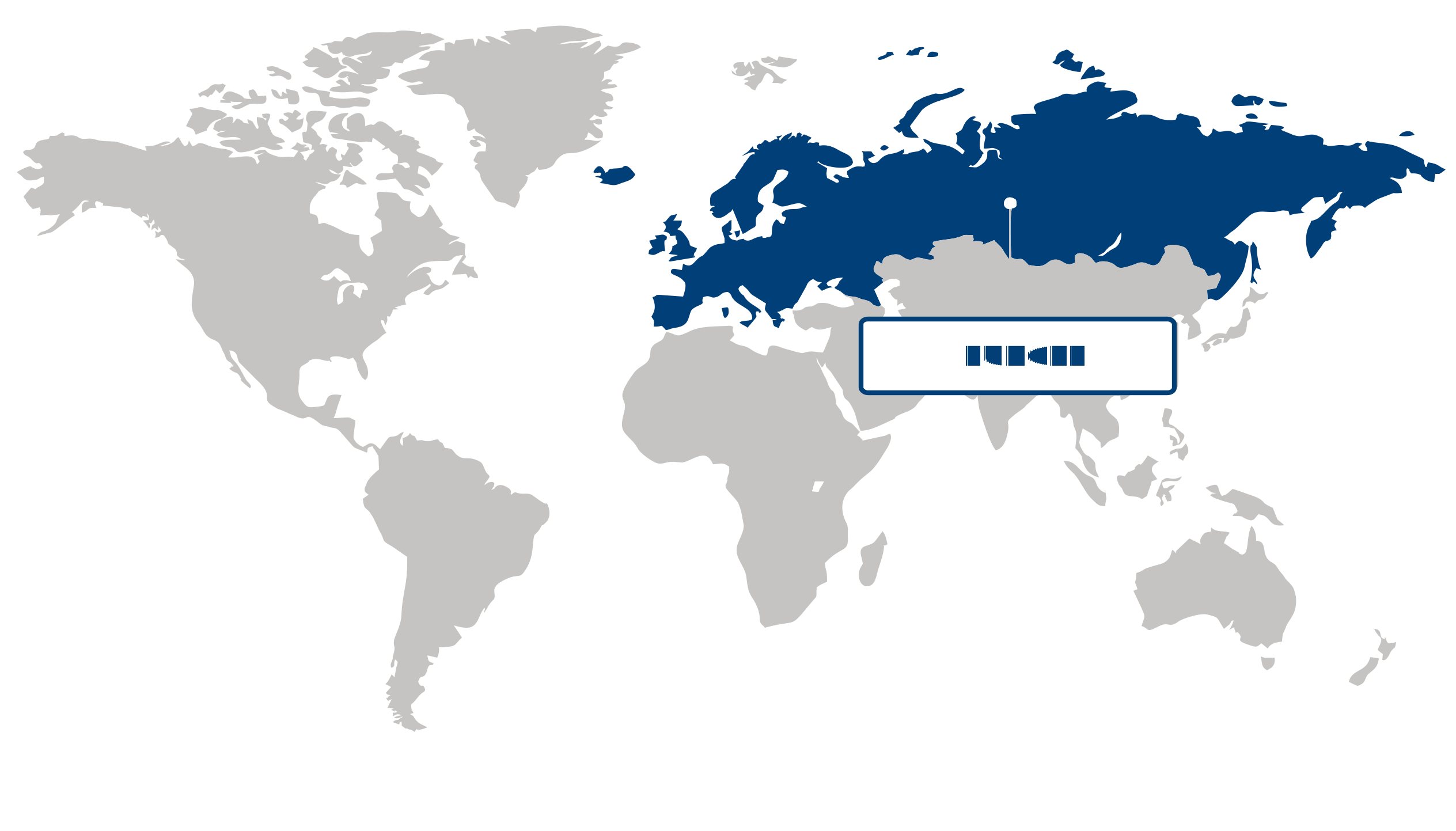
Europe (Largest Region)
Europe held the leading position in the reconstructed skin models market in 2026, supported by advanced biomedical research capabilities, established pharmaceutical and dermatological research infrastructure, and increasing use of alternative testing approaches. Strong interest in reducing reliance on conventional animal testing is encouraging the adoption of reconstructed tissue models for drug development, cosmetics assessment, disease research, and toxicity studies. The region's emphasis on research quality, regulatory alignment, and innovative in-vitro methodologies further reinforces its market position.
Asia Pacific (Fastest-Growing Region)
Asia Pacific is expected to witness the fastest growth, driven by expanding life sciences research, increasing investment in biotechnology infrastructure, and growing adoption of advanced laboratory models. Rising pharmaceutical and cosmetics research activity is creating broader applications for reconstructed skin models, while improvements in research capabilities and technical expertise are supporting regional adoption. Greater attention to efficient and ethically aligned testing methods is also creating favorable conditions for market expansion.
| Parameter | North America | Asia Pacific | Europe | Latin America | MEA |
|---|---|---|---|---|---|
| Innovation Hub i Scale Nascent Developing Advanced | |||||
| Cost-Sensitive Region i Scale Low Medium High | |||||
| Regulatory Environment i Scale Restrictive Neutral Supportive | |||||
| Demand Drivers i Scale Weak Moderate Strong | |||||
| Development Stage i Scale Emerging Developing Developed | |||||
| Adoption Rate i Scale Low Medium High | |||||
| New Entrants / Startups i Scale Sparse Moderate Dense | |||||
| Macro Indicators i Scale Weak Stable Strong |
Key Country Insights
United States 🇺🇸
Alternative Testing AdvancementThe U.S. is expanding reconstructed skin model applications across cosmetics, pharmaceuticals, and toxicology research. Organizations are increasing investment in human-relevant in vitro testing platforms that improve product evaluation while reducing dependence on conventional animal testing methods.
Germany 🇩🇪
Regulatory Testing ExcellenceGermany prioritizes reconstructed skin models for validated safety assessment and biomedical research. Research institutions and manufacturers are advancing standardized testing protocols and innovative tissue engineering technologies to support regulatory compliance and product development activities.
Japan 🇯🇵
Tissue Engineering InnovationJapan is strengthening reconstructed skin model development through advances in regenerative medicine and biomedical research. Companies are integrating sophisticated tissue models into cosmetic testing and therapeutic research to improve predictive laboratory outcomes and product evaluation efficiency.
South Korea 🇰🇷
Cosmetic Research ApplicationsSouth Korea utilizes reconstructed skin models extensively to support cosmetic innovation and ingredient safety evaluation. Research organizations are developing advanced skin equivalents that enable efficient product testing while addressing increasing demand for non-animal testing approaches.
France 🇫🇷
Ethical Testing SolutionsFrance is expanding reconstructed skin model adoption across cosmetic safety assessment and dermatological research. Industry participants are emphasizing validated alternative testing methods and high-quality tissue models that align with evolving scientific and regulatory expectations.
Italy 🇮🇹
Biomedical Research SupportItaly is increasing the use of reconstructed skin models in pharmaceutical research, dermatology, and academic laboratories. Institutions are prioritizing advanced tissue engineering platforms that improve preclinical testing reliability and accelerate innovation in skin-related research applications.
Segment Leadership and Growth Trends
Reconstructed Skin Models Market Share (%), by End-user, 2026
Go beyond the chart, access full insights & data tables
Request Free Sample ReportEnd-user Segment Analysis: Cosmetics and Cosmeceutical Companies (Largest & Fastest-Growing Segment)
The cosmetics and cosmeceutical companies segment dominated the reconstructed skin models market with a 60% share in 2026 and also represented the fastest-growing end-user segment. Its leadership is supported by increasing investment in alternative testing methods that enable comprehensive safety and efficacy evaluations without relying on animal testing. Reconstructed skin models help manufacturers assess irritation, absorption, and product performance while supporting regulatory compliance and accelerating product development. The growing demand for innovative skincare formulations, ethical testing practices, and advanced cosmetic research continues to strengthen the segment's market position.
Application Segment Analysis: Skin Irritation Test (Largest & Fastest-Growing Segment)
The skin irritation test segment led the reconstructed skin models market, accounting for 28.3% in 2026 while also emerging as the fastest-growing application. Its prominence is driven by widespread use in evaluating the safety of cosmetic, pharmaceutical, and chemical products before commercialization. Reconstructed skin models provide reliable and reproducible testing environments that improve assessment accuracy while reducing dependence on conventional testing methods. Expanding regulatory acceptance of in vitro testing and increasing emphasis on consumer product safety continue to support the sustained growth of this application.
Type Segment Analysis: Reconstructed Human Epidermis (Largest & Fastest-Growing Segment)
In the reconstructed skin models market, the reconstructed human epidermis segment held the largest share in 2026 and simultaneously remained the fastest-growing type. The segment is widely adopted because it closely replicates the structure and barrier properties of human epidermal tissue, making it highly suitable for toxicity evaluation, irritation studies, and efficacy testing. Its compatibility with standardized laboratory protocols, broad acceptance across research applications, and growing use in product development continue to reinforce its dominant and expanding position.
| Segment | Sub-Segment | Largest Segment | Fastest Growing |
|---|---|---|---|
| End-user | Cosmetics and Cosmeceutical Companies, Chemical Companies, Others | Cosmetics and Cosmeceutical Companies | Cosmetics and Cosmeceutical Companies |
| Application | Skin Irritation Test, Skin Corrosion Test, Skin Sensitization Test, Skin Biopsy, Radioallergosorbent Test, Skin Pigmentation Test, Others | Skin Irritation Test | Skin Irritation Test |
| Type | Reconstructed Human Epidermis, Reconstructed Human Skin | Reconstructed Human Epidermis | Reconstructed Human Epidermis |
Competitive Landscape and Market Positioning
Key companies in the reconstructed skin models market:
- EPISKIN (France)
- BICO Group AB (Sweden)
- ZenBio, Inc. (USA)
- Japan Tissue Engineering Co., Ltd. (Japan)
- AIVITA Biomedical, Inc. (USA)
- StratiCELL SA (Belgium)
- MatTek Corporation (USA)
- CellnTec Advanced Cell Systems AG (Switzerland)
- Henkel AG & Co. KGaA (Germany)
The reconstructed skin models market is evolving through competition centered on biological accuracy, research applicability, and customization for specialized testing requirements. Developers are advancing model complexity to better replicate human skin responses, enabling broader use across medical research, cosmetic evaluation, and therapeutic development. Market participants are differentiating through improved consistency, expanded model capabilities, and solutions that help researchers reduce reliance on conventional testing methods while meeting increasingly sophisticated study demands.
| Company | Market Share | Company Revenue | Revenue CAGR (%) | Product Portfolio | Geographic Presence | Innovation / R&D Focus | Strategic Developments |
|---|---|---|---|---|---|---|---|
| EPISKIN (France) | |||||||
| BICO Group AB (Sweden) | |||||||
| ZenBio Inc. (USA) | |||||||
| Japan Tissue Engineering Co. Ltd. (Japan) | |||||||
| AIVITA Biomedical Inc. (USA) | |||||||
| StratiCELL SA (Belgium) | |||||||
| MatTek Corporation (USA) | |||||||
| CellnTec Advanced Cell Systems AG (Switzerland) | |||||||
| Henkel AG & Co. KGaA (Germany) |
Industry Development/News
| Company Name | Date | Key Development |
|---|---|---|
| Mallinckrodt plc | Sep-23 | Mallinckrodt plc secured US FDA approval for a label update for StrataGraft, an allogeneic cultured skin tissue product composed of human keratinocytes and dermal fibroblasts. This regulatory milestone simplifies administration guidelines and reduces reliance on xenotransplantation, accelerating the clinical commercialization of engineered skin substitutes. |
| EPISKIN | Aug-23 | EPISKIN expanded its tissue engineering portfolio by commercializing the SkinEthic Human Bladder Epithelium model. Launched to address growing demand for non-animal testing alternatives, this specialized tissue model strengthens the company's competitive positioning in the broader in vitro toxicology and reconstructed epithelium research markets. |
Customize Your Report
Explore examples of how this report can be tailored to different research needs, including custom segments, additional topics or chapters, and related reports. Click a section of the wheel or its numbered marker to explore the available options.
Reconstructed Skin Models Market — Custom Segments
| Segment | Sub-Segment |
|---|---|
| Testing Standard | OECD Guidelines, ISO Standards, European Pharmacopoeia Standards, Other Recognized Standards |
| Model Complexity | Single-Layer Models, Multi-Layer Models, Full-Thickness Models, Advanced 3D Models |
| Commercial Offering Model | Product-Based Models, Testing-as-a-Service Models, Customized Model Development |
Reconstructed Skin Models Market — Custom TOC
| Custom Chapter | Custom Details |
|---|---|
| Procedure-Wise Demand Opportunity Assessment |
|
| Outpatient Care Adoption Outlook |
|
| Healthcare Reimbursement Impact Assessment |
|
Need a different cut of the data?
Request Custom ResearchWhat is the current revenue of the reconstructed skin models market?
What is the projected value of the reconstructed skin models industry by 2036?
How are regulatory changes influencing adoption of reconstructed skin models?
Why are engineered skin platforms gaining importance in cosmetic and dermatological research?
Why are cosmetics and cosmeceutical companies the largest end users of reconstructed skin models?
What makes the reconstructed human epidermis segment the fastest-growing type?
Why does Europe hold the leading position in reconstructed skin models?
What is driving faster growth in Asia Pacific?
Which companies are driving growth in the reconstructed skin models landscape?
Our Clients
"The team took the time to understand our specific business needs and delivered a report that was well aligned with our objectives. Their expertise and understanding of the industry were clearly reflected in the quality and relevance of the insights provided."
Siemens Healthcare
"Our experience in acquiring the research report has been excellent. The depth of analysis, and actionable insights provided have been extremely valuable in supporting our ongoing R&D efforts."
GC Biopharma
"The report offered a comprehensive view of the market trends. The in-depth segmentation and analysis of emerging opportunities gave us a better understanding of the market."
Medtronic
Our Research Team & Methodology
Every Fundamental Business Insights report is built by a dedicated vertical research team, validated through a structured primary-and-secondary methodology, and reviewed for accuracy before it reaches you.
Research Team Overview
Prepared by the Healthcare & Medical Devices Research Team
Delivery
Published
Demand
Available
Support
Trust & Compliance
Research Domains
10 coverage areasResearch Intelligence
| Source | Reference |
|---|---|
| World Health Organization (WHO) | www.who.int |
| U.S. Food & Drug Administration (FDA) | www.fda.gov |
| European Medicines Agency (EMA) | www.ema.europa.eu |
| Centers for Disease Control and Prevention (CDC) | www.cdc.gov |
| National Institutes of Health (NIH) | www.nih.gov |
| National Center for Biotechnology Information (NCBI) | www.ncbi.nlm.nih.gov |
| PubMed | pubmed.ncbi.nlm.nih.gov |
| ClinicalTrials.gov | clinicaltrials.gov |
| International Organization for Standardization (ISO) | www.iso.org |
| ASTM International | www.astm.org |
| Advanced Medical Technology Association (AdvaMed) | www.advamed.org |
| Medical Device Innovation Consortium (MDIC) | mdic.org |
| Biotechnology Innovation Organization (BIO) | www.bio.org |
| International Federation of Pharmaceutical Manufacturers & Associations (IFPMA) | www.ifpma.org |
| U.S. Pharmacopeia (USP) | www.usp.org |
| European Directorate for the Quality of Medicines & HealthCare (EDQM) | www.edqm.eu |
| World Organisation for Animal Health (WOAH) | www.woah.org |
| American Hospital Association (AHA) | www.aha.org |
| OECD Health | www.oecd.org/health |
| World Bank Data | data.worldbank.org |
Research Workflow & Quality Assurance
Data Collection
Verified information gathered through primary and secondary research.
Data Triangulation
Cross-validation using multiple independent data sources.
Forecast Modelling
Market estimates developed using historical trends and analytical models.
Analyst Validation
Findings reviewed by domain experts for accuracy and consistency.
Editorial & Quality Review
Final editorial, quality, and compliance checks before publication.
Final Publication
Released after successful completion of the internal review process.
Report Coverage
📊 Market Assessment
- Market Size & Forecast
- Market Segmentation
- Regional Analysis
- Growth Drivers & Challenges
- Market Dynamics
🏢 Competitive Intelligence
- Competitive Landscape
- Company Profiles
- Competitive Benchmarking
- Mergers & Acquisitions
- Market Share Analysis or Key Company Strategies
🔍 Strategic Analysis
- Value Chain Analysis
- Porter's Five Forces
- PESTLE Analysis
- Pricing Trends
- Supply-Demand Analysis
🚀 Future Outlook
- Technology Landscape
- Regulatory Landscape
- Investment & Funding Landscape
- Emerging Opportunities
- Future Market Outlook
Have a question about this report or need a custom scope?
Request Customization