Railroad Tie Market Size & Growth Forecast 2027–2036, By Segments (Train Type, Tie Type, Distribution Channel, Application), Regional Demand Trends (North America, Asia Pacific, Europe), Key Country Insights (U.S., Japan, South Korea, Germany, France, Italy), and Competitive Landscape
Market Size and Growth Outlook
Railroad Tie Market size was worth USD 6.13 Billion in 2026 and is expected to grow at 4.64% CAGR between 2027 and 2036, exceeding USD 9.65 Billion by 2036. The industry revenue for 2027 is assessed at USD 6.37 Billion.
Get more details on this report
Request Free Sample ReportRailroad Tie Market Intelligence Snapshot
Regional Market Dynamics
- Asia Pacific held 34.56% in 2026 and led growth through extensive railway networks, infrastructure modernization, urbanization, and expanding passenger and high-speed rail systems.
- Ongoing investment in intercity and freight rail, alongside efforts to improve railway capacity, safety, and operational efficiency, is supporting demand for durable track components.
Segment Momentum
- Freight trains held 72.48% of the market in 2026 because heavy axle loads and continuous operations require durable, high-strength railroad ties for reliable long-term performance in cargo transportation.
- Composite/plastic ties are gaining momentum due to their durability, low maintenance requirements, resistance to moisture and decay, longer service life, and suitability for modern, sustainable rail infrastructure projects.
Market Expansion Drivers
- Increasing investment in rail infrastructure modernization projects worldwide
- Rising adoption of concrete ties for enhanced rail durability and performance
- Growing high-speed rail network expansion supporting tie replacement demand
Leading Market Participants
- Leading companies in the railroad tie market include Stella-Jones Inc. (Canada), Koppers Inc. (United States), Vossloh AG (Germany), L.B. Foster Company (United States), Pandrol (United Kingdom), Gerdau S.A. (Brazil), JENNMAR Corporation (United States), AGICO Group (China), TieTek Global (United States), Tarmac Holdings (United Kingdom)
Global Market Forecast Snapshot
Market Outlook
- 2026 Market Size: USD 6.13 Billion
- 2027 Estimated Market Size: USD 6.37 Billion
- Projected Market Size: USD 9.65 Billion by 2036
- Growth Forecast: 4.64% CAGR (2027-2036)
Regional and Segment Outlook
- Leading Regional Market: Asia Pacific
- High-Growth Regional Hub: Asia Pacific
- Core Revenue Segment: Freight Trains (Train Type) | Wood Tie (Tie Type) | Direct Sales (Distribution Channel) | Tangent (Application)
- Emerging Opportunity Segment: Passenger Type (Train Type) | Composite/Plastic Tie (Tie Type) | Indirect Sales (Distribution Channel) | Turnouts (Application)
Market Growth Drivers and Industry Trends
Increasing investment in rail infrastructure modernization projects worldwide
Governments and railway operators are prioritizing upgrades to existing rail networks to improve operational reliability, increase capacity, and support more efficient transportation systems. The railroad tie market is gaining momentum as modernization programs require replacement of aging track components with durable tie solutions capable of supporting higher traffic volumes and enhanced track stability. These infrastructure investments extend across freight corridors, urban transit systems, and intercity rail lines where long-term asset performance remains a key operational priority.
Rising adoption of concrete ties for enhanced rail durability and performance
Rail operators are increasingly selecting concrete ties because of their ability to deliver improved structural strength, dimensional stability, and longer service life under demanding operating conditions. Wider adoption of these materials will drive the railroad tie market growth by supporting railway projects that prioritize reduced maintenance requirements, higher load-bearing capacity, and greater resistance to environmental wear. Concrete ties are particularly well suited for heavily utilized rail corridors where consistent track geometry is essential for safe and efficient operations.
Growing high-speed rail network expansion supporting tie replacement demand
The continued expansion of high-speed rail systems is creating additional demand for track components engineered to withstand higher operational speeds and increased mechanical stress. As new high-speed corridors are developed and existing lines are upgraded, the railroad tie market benefits from the need for precision-engineered ties that provide superior track stability, vibration control, and long-term reliability. These projects also require replacement of conventional track infrastructure with components designed to meet the rigorous performance standards associated with high-speed railway operations.
| Growth Driver | Impact on CAGR | Regulatory Influence | Geographic Relevance | Adoption Rate | Impact Timeline |
|---|---|---|---|---|---|
| Increasing investment in rail infrastructure modernization projects worldwide | 1.9% | Moderate | Asia Pacific, North America | High | Mid Term |
| Rising adoption of concrete ties for enhanced rail durability and performance | 1.6% | Low | Europe, Asia Pacific | Medium | Mid Term |
| Growing high-speed rail network expansion supporting tie replacement demand | 1.3% | Moderate | Asia Pacific, Europe | Emerging | Long Term |
Unlock insights tailored to your business with our bespoke market research solutions.
Click to get your customized report now.
Regional Demand Dynamics
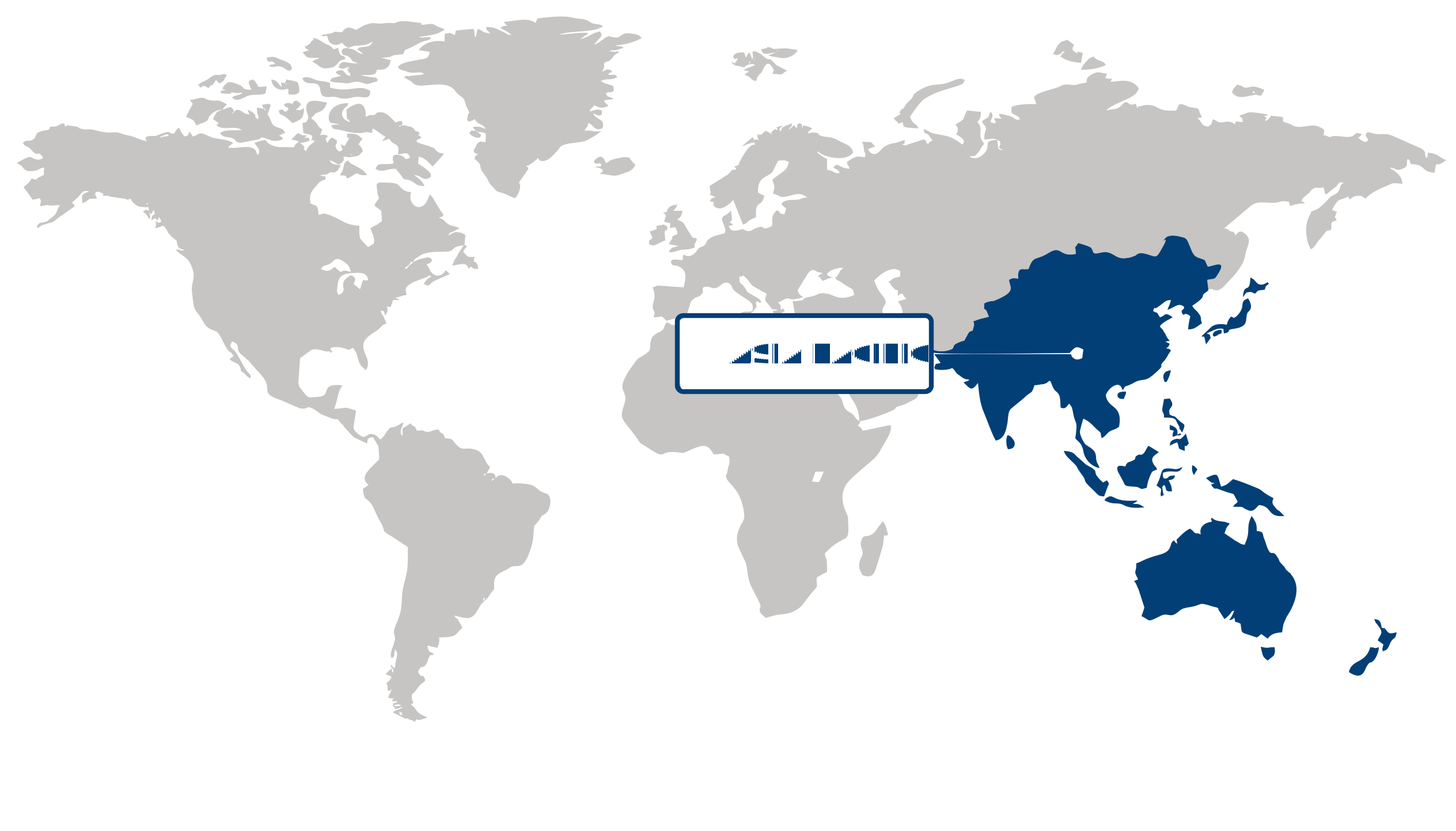
Asia Pacific (Largest & Fastest-Growing Region)
Asia Pacific dominated the railroad tie market and accounted for a 34.56% share in 2026, while also representing the fastest-growing regional market. The region's position is supported by extensive railway networks, ongoing rail infrastructure modernization, and continued investment in passenger and freight transportation systems. Rapid urbanization and the expansion of intercity and high-speed rail networks are generating demand for durable track components, including railroad ties. Infrastructure development across emerging economies, together with efforts to improve railway capacity, safety, and operational efficiency, is further supporting regional market expansion.
| Parameter | North America | Asia Pacific | Europe | Latin America | MEA |
|---|---|---|---|---|---|
| Innovation Hub i Scale Nascent Developing Advanced | |||||
| Cost-Sensitive Region i Scale Low Medium High | |||||
| Regulatory Environment i Scale Restrictive Neutral Supportive | |||||
| Demand Drivers i Scale Weak Moderate Strong | |||||
| Development Stage i Scale Emerging Developing Developed | |||||
| Adoption Rate i Scale Low Medium High | |||||
| New Entrants / Startups i Scale Sparse Moderate Dense | |||||
| Macro Indicators i Scale Weak Stable Strong |
Key Country Insights
United States 🇺🇸
Freight Network RenewalThe U.S. railroad tie market is supported by continuous freight rail maintenance and replacement programs across extensive rail networks. U.S. rail operators increasingly prioritize durable materials, longer service life, and efficient installation to reduce maintenance disruptions.
Germany 🇩🇪
Sustainable Rail UpgradesGermany emphasizes railroad ties that support modern rail infrastructure with strong durability and environmental compliance. German infrastructure projects increasingly evaluate recycled materials and lifecycle performance alongside reliability for passenger and freight operations.
Japan 🇯🇵
High-Performance Track SystemsJapan focuses on railroad ties capable of supporting high-frequency rail traffic with precise track stability. Japanese rail operators favor advanced materials and maintenance-efficient solutions that enhance operational reliability across urban and intercity rail networks.
South Korea 🇰🇷
Urban Rail ModernizationSouth Korea continues upgrading metro and national railway infrastructure, supporting demand for durable railroad ties. South Korean rail authorities increasingly seek products that improve maintenance efficiency while meeting stringent safety and performance standards.
France 🇫🇷
Infrastructure Lifecycle FocusFrance prioritizes railroad ties that extend asset life and support dependable railway operations across passenger and freight corridors. French infrastructure managers increasingly adopt materials that balance structural performance with environmental considerations.
Italy 🇮🇹
Regional Network RehabilitationItaly is investing in railway maintenance and corridor improvements that sustain demand for replacement railroad ties. Italian rail projects emphasize resilient track components that simplify maintenance and improve long-term operational reliability.
Segment Leadership and Growth Trends
Railroad Tie Market Share (%), by Train Type, 2026
Go beyond the chart, access full insights & data tables
Request Free Sample ReportTrain Type Segment Analysis: Freight Trains (Largest Segment) vs Passenger Type (Fastest-Growing Segment)
Holding the largest share of the railroad tie market, the freight trains segment accounted for 72.48% in 2026. Its dominance is supported by the heavy axle loads and continuous operations associated with freight transportation, which require durable and high-strength railroad ties capable of withstanding significant mechanical stress. Ongoing investments in freight rail infrastructure, industrial logistics, and long-distance cargo transportation continue to sustain strong demand for railroad ties designed for freight applications.
The passenger type train segment is the fastest-growing category. Increasing investments in urban transit systems, high-speed rail corridors, and modernization of passenger railway infrastructure are driving the need for advanced railroad ties that enhance safety, ride quality, and long-term track stability. Rising emphasis on efficient public transportation and rail network expansion is further supporting the segment's growth.
Tie Type Segment Analysis: Wood Tie (Largest Segment) vs Composite/Plastic Tie (Fastest-Growing Segment)
The wood tie segment accounted for 58.41% of the market share in 2026, making it the largest segment. Its leadership is attributed to its long-established use in railway infrastructure, cost-effectiveness, and ease of installation and replacement. Wood ties continue to be widely utilized across conventional rail networks due to their proven performance, vibration absorption properties, and compatibility with existing track systems.
In the railroad tie market, the composite/plastic tie segment is emerging as the fastest-growing category. Growing demand for durable, low-maintenance, and environmentally resilient railway components is encouraging adoption of composite and plastic ties. Their resistance to moisture, insects, and decay, along with extended service life and sustainability benefits, makes them increasingly attractive for modern rail infrastructure projects.
Distribution Channel Segment Analysis: Direct Sales (Largest Segment) vs Indirect Sales (Fastest-Growing Segment)
The direct sales distribution channel held the largest share of the market in 2026. Its strong position is supported by direct procurement practices adopted by railway operators, government authorities, and infrastructure contractors for large-scale projects requiring customized specifications, quality assurance, and long-term supply agreements. Direct engagement with manufacturers also enables better project coordination and technical support.
The indirect sales distribution channel is the fastest-growing segment in the railroad tie market. Expanding regional distribution networks and increasing participation of specialized suppliers are improving product accessibility across a broader customer base. Growing infrastructure development in emerging markets and the need for efficient supply chain solutions continue to accelerate the adoption of indirect sales channels.
| Segment | Sub-Segment | Largest Segment | Fastest Growing |
|---|---|---|---|
| Train Type | Passenger Type, Freight Trains | Freight Trains | Passenger Type |
| Tie Type | Wood Tie, Concrete Tie, Composite/Plastic Tie, Steel Tie | Wood Tie | Composite/Plastic Tie |
| Distribution Channel | Direct Sales, Indirect Sales | Direct Sales | Indirect Sales |
| Application | Tangent, Bridges, Tunnels, Turnouts | Tangent | Turnouts |
Competitive Landscape and Market Positioning
Major players in the railroad tie market:
- Stella-Jones, Inc. (Canada)
- Koppers, Inc. (United States)
- Vossloh AG (Germany)
- L.B. Foster Company (United States)
- Pandrol (United Kingdom)
- Gerdau S.A. (Brazil)
- JENNMAR Corporation (United States)
- AGICO Group (China)
- TieTek Global (United States)
- Tarmac Holdings (United Kingdom)
Competitive dynamics are evolving as infrastructure owners place greater emphasis on durability, maintenance efficiency, and long-term asset performance when selecting railroad ties. Suppliers are investing in advanced materials, improved manufacturing processes, and quality assurance to extend service life under demanding rail conditions while addressing evolving environmental expectations. The market is also witnessing stronger differentiation through customized solutions for varying rail applications, where consistent structural performance and compatibility with modern track systems increasingly influence purchasing decisions beyond initial procurement considerations.
| Company | Market Share | Company Revenue | Revenue CAGR (%) | Product Portfolio | Geographic Presence | Innovation / R&D Focus | Strategic Developments |
|---|---|---|---|---|---|---|---|
| Stella-Jones Inc. (Canada) | |||||||
| Koppers Inc. (United States) | |||||||
| Vossloh AG (Germany) | |||||||
| L.B. Foster Company (United States) | |||||||
| Pandrol (United Kingdom) | |||||||
| Gerdau S.A. (Brazil) | |||||||
| JENNMAR Corporation (United States) | |||||||
| AGICO Group (China) | |||||||
| TieTek Global (United States) | |||||||
| Tarmac Holdings (United Kingdom) |
Industry Development/News
| Company Name | Date | Key Development |
|---|---|---|
| Track Line Rail LLC | Oct-25 | Track Line Rail LLC advanced plans to establish a dedicated creosote-treated railroad tie shredding and grinding facility in Dunnellon, Florida. The development expands regional industrial processing capacity for end-of-lifecycle treated wood ties following the company's relocation from a previous site in Newberry. |
| Sumitomo Corporation | Jan-25 | Sumitomo Corporation executed a strategic investment in Evertrak, a North American manufacturer of composite railroad ties. The capital injection is directly structured to scale Evertrak's manufacturing operations and accelerate the commercialization and deployment of alternative composite infrastructure solutions across the North American rail network. |
| L.B. Foster Company | Jul-23 | L.B. Foster Company completed the sale of substantially all operating assets of its prestressed concrete railroad tie business, operated via its CXT, Incorporated subsidiary in Spokane, Washington, to voestalpine Railway Systems Nortrak, LLC. The divestiture alters the competitive landscape for concrete ties in the Pacific Northwest region. |
| Koppers Inc. | Oct-22 | Koppers Inc. signed a definitive agreement to acquire substantially all assets of Gross & Janes Co., the largest independent supplier of untreated railroad crossties in North America. The acquisition includes production operations in Missouri and Arkansas, significantly expanding Koppers' sourcing network and procurement capacity within the wood ties value chain. |
Customize Your Report
Explore examples of how this report can be tailored to different research needs, including custom segments, additional topics or chapters, and related reports. Click a section of the wheel or its numbered marker to explore the available options.
Railroad Tie Market — Custom Segments
| Segment | Sub-Segment |
|---|---|
| Railway Track Gauge | Standard Gauge, Broad Gauge, Narrow Gauge |
| Replacement Cycle | Short-Cycle Replacement, Medium-Cycle Replacement, Long-Cycle Replacement |
| Climate & Environmental Conditions | Temperate Climates, Hot & Arid Climates, Cold & Snowy Climates, Tropical & Humid Climates |
Railroad Tie Market — Custom TOC
| Custom Chapter | Custom Details |
|---|---|
| Railway Procurement & Tendering Intelligence |
|
| Tie Material Transition Strategy |
|
| Tie Recycling & Circularity Opportunities |
|
Need a different cut of the data?
Request Custom ResearchHow much revenue does the railroad tie market generate?
What is the forecasted size of the railroad tie industry?
How are rail infrastructure modernization projects influencing demand in the railroad tie market?
Why is the adoption of concrete ties accelerating in the railroad tie market?
Why do freight trains account for the largest share of the railroad tie market?
Why are composite/plastic ties the fastest-growing tie type in the railroad tie market?
Why does Asia Pacific lead the railroad tie market?
What is driving continued railroad tie demand in Asia Pacific?
What are the prominent companies operating in the railroad tie landscape?
Our Clients
"Your insights on workforce structures were spot-on. The analysis on mid-to-senior level roles validated some of our hiring decisions and highlighted gaps."
Ateliers De France
"The report gave us insights on competitors in the market. It helped our team refine our bidding strategy for upcoming contracts."
Clark Construction
"The reports provided a deep dive into market trends, and competitive landscape. The strategic insights and recommendations have been very helpful."
Rudolph and Sletten
Our Research Team & Methodology
Every Fundamental Business Insights report is built by a dedicated vertical research team, validated through a structured primary-and-secondary methodology, and reviewed for accuracy before it reaches you.
Research Team Overview
Prepared by the Construction & Manufacturing Research Team
Delivery
Published
Demand
Available
Support
Trust & Compliance
Research Domains
10 coverage areasResearch Intelligence
| Source | Reference |
|---|---|
| International Organization for Standardization (ISO) | www.iso.org |
| ASTM International | www.astm.org |
| National Institute of Standards and Technology (NIST) | www.nist.gov |
| International Code Council (ICC) | www.iccsafe.org |
| American Concrete Institute (ACI) | www.concrete.org |
| American Institute of Steel Construction (AISC) | www.aisc.org |
| Construction Industry Institute (CII) | www.construction-institute.org |
| Associated General Contractors of America (AGC) | www.agc.org |
| Association of Equipment Manufacturers (AEM) | www.aem.org |
| Building Owners and Managers Association (BOMA) | www.boma.org |
| American Society of Civil Engineers (ASCE) | www.asce.org |
| National Ready Mixed Concrete Association (NRMCA) | www.nrmca.org |
| International Facility Management Association (IFMA) | www.ifma.org |
| World Green Building Council (WorldGBC) | worldgbc.org |
| International Federation of Consulting Engineers (FIDIC) | fidic.org |
| International Labour Organization (ILO) | www.ilo.org |
| American Society of Mechanical Engineers (ASME) | www.asme.org |
| Society of Manufacturing Engineers (SME) | www.sme.org |
| National Association of Home Builders (NAHB) | www.nahb.org |
| European Construction Industry Federation (FIEC) | www.fiec.eu |
Research Workflow & Quality Assurance
Data Collection
Verified information gathered through primary and secondary research.
Data Triangulation
Cross-validation using multiple independent data sources.
Forecast Modelling
Market estimates developed using historical trends and analytical models.
Analyst Validation
Findings reviewed by domain experts for accuracy and consistency.
Editorial & Quality Review
Final editorial, quality, and compliance checks before publication.
Final Publication
Released after successful completion of the internal review process.
Report Coverage
📊 Market Assessment
- Market Size & Forecast
- Market Segmentation
- Regional Analysis
- Growth Drivers & Challenges
- Market Dynamics
🏢 Competitive Intelligence
- Competitive Landscape
- Company Profiles
- Competitive Benchmarking
- Mergers & Acquisitions
- Market Share Analysis or Key Company Strategies
🔍 Strategic Analysis
- Value Chain Analysis
- Porter's Five Forces
- PESTLE Analysis
- Pricing Trends
- Supply-Demand Analysis
🚀 Future Outlook
- Technology Landscape
- Regulatory Landscape
- Investment & Funding Landscape
- Emerging Opportunities
- Future Market Outlook
Have a question about this report or need a custom scope?
Request Customization