Prestressed Concrete Steel Strand Market Size & Forecasts 2026-2035, By Segments (Type, Coating Type, End-User, Application), Growth Opportunities, Innovation Landscape, Regulatory Shifts, Strategic Regional Insights (U.S., Japan, China, South Korea, UK, Germany, France), and Competitive Dynamics (Baosteel, Tata Steel, POSCO, JFE Steel, Nucor)
Market Size and Growth Outlook
Prestressed Concrete Steel Strand Market size is set to grow from USD 6.09 billion in 2025 to USD 11.76 billion by 2035, reflecting a CAGR greater than 6.8% through 2026-2035. Industry revenues in 2026 are estimated at USD 6.45 billion.
Get more details on this report
Request Free Sample ReportPrestressed Concrete Steel Strand Market Intelligence Snapshot
Regional Market Dynamics
Segment Momentum
Market Expansion Drivers
Leading Market Participants
Global Market Forecast Snapshot
Market Outlook
Regional and Segment Outlook
Market Growth Drivers and Industry Trends
The surge in global infrastructure investments, particularly in emerging economies, is a key catalyst for the prestressed concrete steel strand market. Governments and multinational agencies, such as the World Bank and Asian Development Bank, are financing extensive transport, energy, and urban development initiatives, increasing demand for materials that support durable, large-scale concrete structures. This growth aligns with urbanization trends and economic recovery efforts post-pandemic. For market participants, these projects open avenues for scaling production and entering untapped geographic regions with robust public-sector funding. The increasing focus on infrastructure resilience also mandates materials with superior performance, making the prestressed concrete steel strand market central to modern construction needs. Industry players prepared to align supply capacities with these expansive projects will secure competitive positioning as governments prioritize smart, longevity-focused infrastructure solutions.
Increased Adoption in High-Rise and Large-Scale Construction
The growing preference for high-rise buildings and large-scale commercial developments worldwide is reshaping demand dynamics within the prestressed concrete steel strand market. Urban population growth and limited land availability drive vertical construction, where prestressed strands provide critical structural integrity and reduce material costs. Leading real estate developers, including China State Construction Engineering Corporation and Skanska, have publicly emphasized the importance of high-strength prestressed components to meet safety and efficiency standards. This trend incentivizes innovation in steel strand manufacturing and customization, presenting opportunities for manufacturers to collaborate closely with architects and contractors. Established firms can leverage their expertise to offer tailored solutions, while new entrants with cutting-edge technology may disrupt traditional supply chains, further embedding the prestressed concrete steel strand market in design-led construction.
Technological Advancements in Corrosion Protection and Performance
Innovation in corrosion-resistant coatings and enhanced strand performance is significantly advancing the prestressed concrete steel strand market by extending structural lifespan and reducing maintenance costs. Companies like Bekaert and ArcelorMittal have introduced proprietary treatments that improve strand durability under harsh environmental conditions, addressing growing regulatory mandates on sustainability and safety from agencies like the International Code Council. These improvements allow builders to comply with stricter building codes while promoting eco-efficient construction. For industry players, investing in research and development to enhance product longevity offers a pathway to differentiate in a competitive marketplace increasingly focused on sustainability credentials. As environmental regulations tighten and durability standards rise globally, these performance-oriented innovations will shape procurement decisions and market leadership trajectories within the prestressed concrete steel strand sector.
Industry Restraints:
Volatility in Raw Material Costs
Fluctuating prices of steel and related alloys significantly constrain the prestressed concrete steel strand market by elevating production costs and compressing margins. This volatility, driven by global geopolitical tensions and supply-demand imbalances highlighted in the latest reports by the World Steel Association, disrupts procurement strategies and compels manufacturers to adopt conservative investment approaches. For established players, cost unpredictability complicates contract bidding and long-term project planning, while new entrants face heightened barriers due to capital intensity and pricing risks. Strategically, companies must enhance supply chain agility and explore vertical integration to mitigate exposure. Given persistent global supply chain uncertainties reported by the International Trade Centre, this cost pressure will likely remain a critical challenge, necessitating continued focus on operational efficiencies and raw material sourcing innovations.
Stringent Environmental Regulations
Increasingly rigorous environmental standards, especially those targeting emissions and resource usage during steel production, impose operational constraints on prestressed concrete steel strand manufacturers. Agencies like the U.S. Environmental Protection Agency and the European Environment Agency have intensified regulations that prolong compliance timelines and inflate capital expenditures for clean technology adoption. Such regulatory burdens restrict rapid market expansion by raising entry costs and complicating capacity scaling, impacting smaller players disproportionately due to limited resources. Industry leaders including ArcelorMittal have publicly acknowledged the need for substantial investment in sustainable steelmaking processes to meet these norms. Looking ahead, evolving environmental mandates will continue to drive consolidation and innovation within the market as firms balance compliance imperatives with profitability objectives.
| Growth Driver | Impact on CAGR | Regulatory Influence | Geographic Relevance | Adoption Rate | Impact Timeline |
|---|---|---|---|---|---|
| Growth in construction and infrastructure projects | 2.50% | Short term (≤ 2 yrs) | Asia Pacific (Primary), North America (Spillover) | Medium | Fast |
| Rising use in high-rise and large-scale construction | 2.00% | Medium term (2–5 yrs) | Europe, North America | Low | Moderate |
| Advancements in strand corrosion protection and performance | 1.50% | Long term (5+ yrs) | Asia Pacific (Primary), Europe (Spillover) | Low | Moderate |
Unlock insights tailored to your business with our bespoke market research solutions.
Click to get your customized report now.
Regional Demand Dynamics
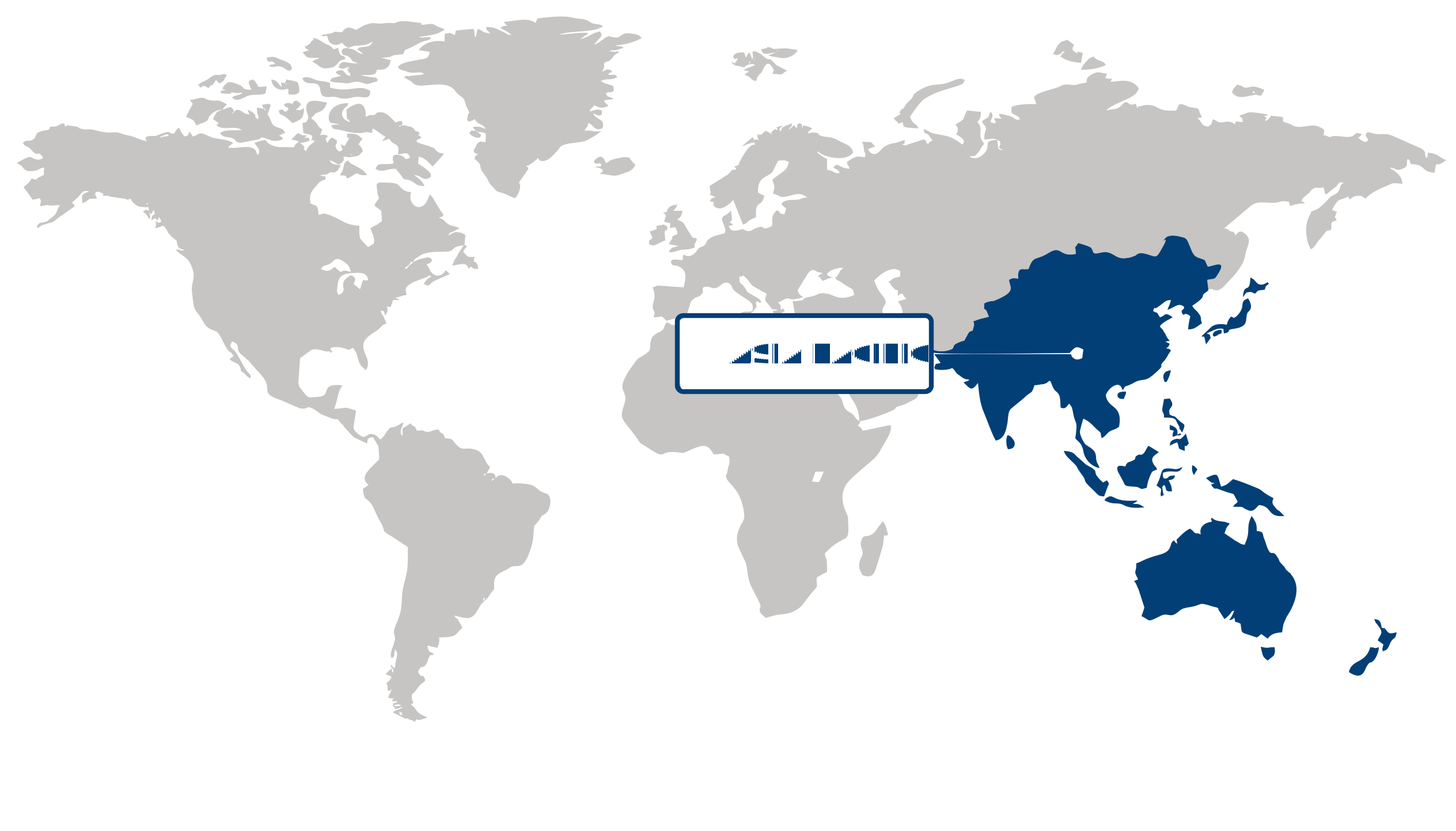
Asia Pacific dominated the prestressed concrete steel strand market with a commanding 43.9% share in 2025, standing as the largest and fastest-growing region with an 8.8% CAGR. This leadership stems primarily from robust state-backed infrastructure projects and the expansive construction of high-speed rail viaducts, particularly in countries aggressively modernizing transportation networks. For instance, China’s National Development and Reform Commission has spearheaded large-scale infrastructure spending, stimulating demand for high-grade steel strands used in prestressed concrete applications. The region’s ability to integrate advanced manufacturing technologies and streamline supply chains has also enhanced operational efficiency, reinforcing its competitive edge. As government commitments align with evolving urbanization needs, Asia Pacific presents significant long-term growth potential in the prestressed concrete steel strand market, driven by sustained capital allocation and technological innovation.
Japan anchors the Asia Pacific prestressed concrete steel strand market through its strategic focus on resilient infrastructure and seismic-resistant construction. The Japan Ministry of Land, Infrastructure, Transport and Tourism actively promotes advanced construction standards, encouraging the use of high-performance prestressed concrete materials in new transportation and urban projects. Japan’s emphasis on durability and safety drives demand for superior steel strands compatible with its infrastructure overhaul plans. This national focus supports regional momentum by showcasing how regulatory rigor and quality requirements can elevate material performance standards. Consequently, Japan’s leadership role highlights the critical intersection of policy-driven infrastructure enhancement and market growth within Asia Pacific.
China plays a pivotal role in the Asia Pacific prestressed concrete steel strand market, propelled by relentless infrastructure expansion and urban transit development. The China Railway Corporation’s continuous rollout of high-speed rail networks fosters massive utilization of prestressed concrete steel strands tailored for viaduct construction. Coupled with robust government investment in urbanization and smart city initiatives, China’s dynamic market environment fuels demand for scalable and durable construction materials. Competitive local manufacturing capabilities and favorable trade policies further optimize supply dynamics. China’s dominant industrial frameworks and infrastructural ambitions intricately reinforce Asia Pacific’s position as the global leader, solidifying the region as a crucial arena for innovation and strategic investment within the prestressed concrete steel strand market.
North America Market Analysis:
North America held a substantial share in the prestressed concrete steel strand market, driven by its robust infrastructure base and steady investment in transportation and commercial construction projects. The region's demand is buoyed by government initiatives such as the U.S. Infrastructure Investment and Jobs Act, which emphasizes upgrading aging bridges and highways, fostering increased adoption of prestressed concrete steel strands for durability and cost efficiency. Additionally, rising environmental standards and a growing focus on sustainable construction materials have encouraged the integration of advanced steel strand technologies that enhance structural resilience. According to the American Road & Transportation Builders Association (ARTBA), public infrastructure spending in North America has remained resilient amidst economic uncertainties, supporting a stable market dynamic. These factors position North America as a key region with enduring opportunities in the prestressed concrete steel strand market, driven by ongoing modernization and technological advancements in construction materials.
The U.S. plays a pivotal role in North America’s prestressed concrete steel strand market, largely influenced by expansive federal and state-level infrastructure programs targeting bridge repairs, transit developments, and public facilities enhancement. Growing preferences for high-strength, lightweight materials that reduce construction timelines and maintenance costs align with the country's shift towards innovative engineering solutions. The Federal Highway Administration’s (FHWA) promotion of prestressed concrete elements as part of the National Bridge Inventory program underscores strong regulatory support for such materials. Furthermore, prominent construction firms like Granite Construction Inc. have publicly highlighted the benefits of prestressed steel strands in improving project sustainability and lifecycle performance. These trends underscore the U.S. as a strategic hub reinforcing North America’s substantial market presence through continued policy backing and industry adoption.
Europe Market Trends:
Europe maintained a notable presence in the prestressed concrete steel strand market, driven by steady infrastructure investments and robust urban development initiatives across the region. The emphasis on sustainable construction has prompted greater use of durable, high-performance materials such as prestressed steel strands, supported by stringent EU regulations promoting environmental efficiency and structural safety. Strategic logistics hubs enhance the supply chain efficiency, while innovation in manufacturing processes spearheaded by firms like ArcelorMittal boost competitive differentiation. According to the European Steel Association (EUROFER), shifting preferences towards long-lasting infrastructure have underpinned moderate growth, particularly as governments increase spending on transport and energy projects. This regional environment positions Europe as an attractive landscape for stakeholders aiming to leverage evolving standards and expanding green construction mandates.
Germany plays a pivotal role in the European prestressed concrete steel strand market, driven by its leadership in precision engineering and expansive transport infrastructure upgrades. The country’s commitment to the Federal Ministry of Transport and Digital Infrastructure’s modernization plans has catalyzed demand for high-strength construction materials, aligning with broader sustainability targets. Companies such as Thyssenkrupp have intensified production capabilities with advanced quality assurance systems, facilitating adoption in large-scale bridge and rail projects. This dynamic underscores Germany’s strategic function as an innovation hub and key consumer, reinforcing regional market growth through advancements in product performance and regulatory compliance.
France is integral to Europe’s prestressed concrete steel strand market, with growth underpinned by government-backed initiatives targeting urban renewal and climate-resilient infrastructure. The French Ministry of Ecological Transition’s focus on sustainable construction incentivizes the use of prestressed materials that enhance durability and reduce carbon footprints. Corporations like Stendalto have collaborated with public agencies to implement cutting-edge solutions in metro and highway projects, reflecting evolving demand patterns. France’s expanding portfolio of eco-friendly infrastructure solidifies its contribution to regional development, offering valuable insights for investors seeking to capitalize on Europe’s moderate growth trajectory in this sector.
| Parameter | North America | Asia Pacific | Europe | Latin America | MEA |
|---|---|---|---|---|---|
| Innovation Hub i Scale Nascent Developing Advanced | |||||
| Cost-Sensitive Region i Scale Low Medium High | |||||
| Regulatory Environment i Scale Restrictive Neutral Supportive | |||||
| Demand Drivers i Scale Weak Moderate Strong | |||||
| Development Stage i Scale Emerging Developing Developed | |||||
| Adoption Rate i Scale Low Medium High | |||||
| New Entrants / Startups i Scale Sparse Moderate Dense | |||||
| Macro Indicators i Scale Weak Stable Strong |
Segment Leadership and Growth Trends
Prestressed Concrete Steel Strand Market Share (%), by Type, 2026
Go beyond the chart, access full insights & data tables
Request Free Sample ReportUncoated held the largest share in the prestressed concrete steel strand market in 2025, primarily due to its cost-effectiveness and extensive application in standard infrastructure projects. This segment’s leadership reflects a strong preference among contractors and developers for economical solutions that maintain adequate performance in less corrosive environments. Industry stakeholders such as the American Concrete Institute emphasize the balance of affordability and reliability that uncoated strands provide in conventional construction practices. Moreover, supply chain efficiencies in raw material sourcing help sustain competitive pricing, benefiting both established manufacturers and new entrants. Given ongoing investments in infrastructure globally, particularly in regions with moderate environmental exposure, the uncoated segment remains strategically positioned to capitalize on steady demand ahead.
Analysis by Coating Type
Bare prestressed concrete steel strand segment dominated the prestressed concrete steel strand market in 2025, driven by escalating infrastructure and construction activities worldwide boosting its demand for cost-effective reinforcement solutions. Bare strands offer essential performance attributes for reinforced concrete structures, favored due to minimal processing and reduced supply costs. Agencies like the International Federation for Structural Concrete note the widespread adoption of bare strands in rapid construction techniques where budget constraints and efficiency are critical. The competitive landscape benefits from streamlined manufacturing, allowing both incumbents and newcomers to exploit this segment's high adaptability. With sustained global urbanization and infrastructure upgrades, bare prestressed steel strands will continue to serve as a foundational element in large-scale civil engineering projects.
Analysis by End-User
The construction segment represented the largest share in the prestressed concrete steel strand market in 2025, propelled by the rapid global expansion of construction projects requiring structural reinforcement. Rising urbanization and increasing demand for residential, commercial, and industrial buildings intensify the use of prestressed concrete steel strands in the construction industry. Reports from the U.S. Green Building Council highlight the preference for durable and sustainable materials like prestressed strands that optimize structural integrity while supporting greener construction practices. This end-user segment benefits from a dynamic labor force skilled in modern concrete technologies and the integration of digital design tools that improve project efficiency. Given the ongoing surge in urban infrastructure development worldwide, the construction segment is set to maintain its dominance with attractive growth opportunities for market players.
| Segment | Sub-Segment | Largest Segment | Fastest Growing |
|---|---|---|---|
| Type | Uncoated, Galvanized, Epoxy Coated | ||
| Coating Type | Bare, Greased, Waxed, Others | ||
| End-User | Construction, Infrastructure, Energy, Others | ||
| Application | Bridges, Buildings, Railways, Energy, Others |
Competitive Landscape and Market Positioning
The competitive environment is marked by active investment in process enhancements and collaboration, underscoring the dynamic nature of this market. Strategic asset integrations and partnerships among top players have accelerated innovation pipelines, bringing forth higher tensile strength and corrosion-resistant strand variants tailored for evolving infrastructure demands. Companies are revitalizing production lines with cutting-edge metallurgical technologies, ensuring robustness and cost-effectiveness. Cross-regional alliances are expanding footprints, optimizing raw material sourcing and logistics. These combined efforts strengthen resilience against market volatility, facilitating adaptability while consolidating leadership positions through differentiated product offerings and enhanced service ecosystems.
Strategic / Actionable Recommendations for Regional Players
North American entities should capitalize on emerging digital metallurgical techniques and foster alliances with construction firms focusing on sustainable infrastructure. By enhancing technological agility and aligning with green building trends, they can fortify market relevance amidst competitive innovation waves from Asia and Europe.
Asian players might benefit from deepening integration with downstream construction markets and expanding R&D collaborations targeting ultra-high-strength strands. Embracing smart manufacturing and automation could further optimize production efficiency, sustaining leadership in volume and quality.
European manufacturers are advised to prioritize niche product differentiation and heightened sustainability credentials through circular economy practices. Strategic partnerships with innovative startups and research institutes can fuel novel product development, enhancing competitiveness against large multinational players expanding into Europe.
| Company | Market Share | Company Revenue | Revenue CAGR (%) | Product Portfolio | Geographic Presence | Innovation / R&D Focus | Strategic Developments |
|---|---|---|---|---|---|---|---|
| No companies available. | |||||||
Industry Development/News
| Company Name | Date | Key Development |
|---|
Customize Your Report
Explore examples of how this report can be tailored to different research needs, including custom segments, additional topics or chapters, and related reports. Click a section of the wheel or its numbered marker to explore the available options.
Prestressed Concrete Steel Strand Market — Custom Segments
| Segment | Sub-Segment |
|---|---|
| No segment data available. | |
Prestressed Concrete Steel Strand Market — Custom TOC
| Custom Chapter | Custom Details | ||
|---|---|---|---|
| No custom TOC data available. | |||
Need a different cut of the data?
Request Custom ResearchHow is the prestressed concrete steel strand industry projected to perform over the next decade?
In which region is the prestressed concrete steel strand market most concentrated?
Who is driving the fastest regional growth in the prestressed concrete steel strand sector?
When did uncoated sub-segment emerge as the largest sub-segment in the type segment of prestressed concrete steel strand sector?
Why is the bare segment leading in the prestressed concrete steel strand industry?
Why does construction sub-segment dominate the end-user segment of prestressed concrete steel strand sector?
How much is the bridges segment expected to grow in the prestressed concrete steel strand industry beyond 2025?
What are the key competitors in the prestressed concrete steel strand landscape?
Our Clients
"Your insights on workforce structures were spot-on. The analysis on mid-to-senior level roles validated some of our hiring decisions and highlighted gaps."
Ateliers De France
"The report gave us insights on competitors in the market. It helped our team refine our bidding strategy for upcoming contracts."
Clark Construction
"The reports provided a deep dive into market trends, and competitive landscape. The strategic insights and recommendations have been very helpful."
Rudolph and Sletten
Our Research Team & Methodology
Every Fundamental Business Insights report is built by a dedicated vertical research team, validated through a structured primary-and-secondary methodology, and reviewed for accuracy before it reaches you.
Research Team Overview
Prepared by the Construction & Manufacturing Research Team
Delivery
Published
Demand
Available
Support
Trust & Compliance
Research Domains
10 coverage areasResearch Intelligence
| Source | Reference |
|---|---|
| International Organization for Standardization (ISO) | www.iso.org |
| ASTM International | www.astm.org |
| National Institute of Standards and Technology (NIST) | www.nist.gov |
| International Code Council (ICC) | www.iccsafe.org |
| American Concrete Institute (ACI) | www.concrete.org |
| American Institute of Steel Construction (AISC) | www.aisc.org |
| Construction Industry Institute (CII) | www.construction-institute.org |
| Associated General Contractors of America (AGC) | www.agc.org |
| Association of Equipment Manufacturers (AEM) | www.aem.org |
| Building Owners and Managers Association (BOMA) | www.boma.org |
| American Society of Civil Engineers (ASCE) | www.asce.org |
| National Ready Mixed Concrete Association (NRMCA) | www.nrmca.org |
| International Facility Management Association (IFMA) | www.ifma.org |
| World Green Building Council (WorldGBC) | worldgbc.org |
| International Federation of Consulting Engineers (FIDIC) | fidic.org |
| International Labour Organization (ILO) | www.ilo.org |
| American Society of Mechanical Engineers (ASME) | www.asme.org |
| Society of Manufacturing Engineers (SME) | www.sme.org |
| National Association of Home Builders (NAHB) | www.nahb.org |
| European Construction Industry Federation (FIEC) | www.fiec.eu |
Research Workflow & Quality Assurance
Data Collection
Verified information gathered through primary and secondary research.
Data Triangulation
Cross-validation using multiple independent data sources.
Forecast Modelling
Market estimates developed using historical trends and analytical models.
Analyst Validation
Findings reviewed by domain experts for accuracy and consistency.
Editorial & Quality Review
Final editorial, quality, and compliance checks before publication.
Final Publication
Released after successful completion of the internal review process.
Report Coverage
📊 Market Assessment
- Market Size & Forecast
- Market Segmentation
- Regional Analysis
- Growth Drivers & Challenges
- Market Dynamics
🏢 Competitive Intelligence
- Competitive Landscape
- Company Profiles
- Competitive Benchmarking
- Mergers & Acquisitions
- Market Share Analysis or Key Company Strategies
🔍 Strategic Analysis
- Value Chain Analysis
- Porter's Five Forces
- PESTLE Analysis
- Pricing Trends
- Supply-Demand Analysis
🚀 Future Outlook
- Technology Landscape
- Regulatory Landscape
- Investment & Funding Landscape
- Emerging Opportunities
- Future Market Outlook
Have a question about this report or need a custom scope?
Request Customization