Power Plant Control System Market Size & Forecasts 2026-2035, By Segments (Solution, Component, Application, Plant Type), Growth Opportunities, Innovation Landscape, Regulatory Shifts, Strategic Regional Insights (U.S., Japan, China, South Korea, UK, Germany, France), and Competitive Dynamics (Siemens, ABB, Honeywell, Schneider Electric, General Electric)
Market Size and Growth Outlook
Power Plant Control System Market size is forecast to climb from USD 8.45 billion in 2025 to USD 12.51 billion by 2035, expanding at a CAGR of over 4% during 2026-2035. Industry revenue in 2026 is projected at USD 8.74 billion.
Get more details on this report
Request Free Sample ReportPower Plant Control System Market Intelligence Snapshot
Regional Market Dynamics
Segment Momentum
Market Expansion Drivers
Leading Market Participants
Global Market Forecast Snapshot
Market Outlook
Regional and Segment Outlook
Market Growth Drivers and Industry Trends
The growing integration of automation technology is revolutionizing the power plant control system market by enabling real-time monitoring, reduced human error, and enhanced operational reliability. Industry leaders like Siemens and ABB have invested heavily in automated solutions that streamline control processes and minimize downtime. This shift aligns with broader trends of digital transformation in industrial sectors, where operational agility and precision drive competitive advantage. Automation opens pathways for new entrants specializing in software and sensor technologies to collaborate with traditional equipment providers, fostering innovation ecosystems. As regulatory bodies emphasize grid stability and fault management, automated control systems will become essential, encouraging stakeholders to prioritize scalable, interoperable platforms that can adapt to evolving energy landscapes.
Rising Focus on Efficiency and Emissions Reduction
Heightened regulatory scrutiny and global sustainability commitments are steering the power plant control system market toward solutions that optimize efficiency while curbing environmental impact. Organizations such as the U.S. Environmental Protection Agency (EPA) and the International Energy Agency (IEA) underscore stringent emissions standards and energy use benchmarks, compelling power operators to upgrade control systems. This regulatory environment creates tangible opportunities for technology providers offering advanced energy management and emissions monitoring capabilities. Established players can leverage their existing infrastructures to offer retrofit solutions, whereas startups may capitalize on niche innovations that target specific emissions control challenges. Given the continuous tightening of environmental policies, this driver underpins an imperative for adaptive systems that support cleaner power generation.
Adoption of Advanced Control Systems and AI-based Optimization
The incorporation of AI and machine learning algorithms into power plant control systems is setting a new standard for predictive maintenance, load balancing, and resource allocation. Companies like General Electric and Schneider Electric are pioneering AI-powered platforms that analyze vast datasets to enhance decision-making and reduce operational costs. This technology not only improves plant responsiveness but also supports the integration of renewable energy sources by managing variability and uncertainty more effectively. For incumbents, investing in AI capabilities strengthens their value proposition with smarter, more resilient solutions. Meanwhile, tech startups focusing on AI and big data analytics find fertile ground within this market. Continued advancements in AI-driven controls are poised to reshape competitive dynamics by making intelligent automation indispensable for future-ready power plants.
Industry Restraints:
Regulatory Complexity and Compliance Costs
The intricate and evolving regulatory environment governing power plants significantly restrains the control systems market by imposing costly compliance burdens and elongating project timelines. For instance, the U.S. Environmental Protection Agency’s (EPA) stringent emissions standards necessitate frequent upgrades to control systems, increasing operational inefficiencies and investment risk for plant operators. The European Network of Transmission System Operators for Electricity (ENTSO-E) also enforces rigorous grid compliance protocols that complicate system integration. These regulatory demands disproportionately challenge smaller vendors and new entrants unable to absorb high certification and customization costs, thereby reinforcing incumbents’ dominance. As governments tighten carbon emission goals and cyber-physical security mandates, navigating compliance complexity will remain a critical barrier, compelling market players to prioritize adaptable, standards-compliant technologies while managing escalating development expenditures.
Legacy Infrastructure and Integration Challenges
The prevalence of aging power generation infrastructure constrains control system market growth by limiting seamless integration and modernization efforts. Many older plants operate on outdated analog systems, as exemplified by reliability reports from the International Atomic Energy Agency (IAEA), complicating replacement with digital control technologies that require specialized retrofitting. This creates significant operational disruptions and escalates project costs, deterring swift upgrades. Legacy constraints also heighten cybersecurity vulnerabilities, a concern emphasized by the U.S. Department of Energy, necessitating incremental system overhauls rather than wholesale modernization. Both established firms and startups face challenges customizing solutions for disparate legacy frameworks, slowing adoption rates. Continuation of these integration hurdles will ensure that incremental upgrades dominate over transformative system deployments, shaping investment decisions and technology roadmaps in the near to medium term.
| Growth Driver | Impact on CAGR | Regulatory Influence | Geographic Relevance | Adoption Rate | Impact Timeline |
|---|---|---|---|---|---|
| Increasing automation in power plant operations | 1.50% | Short term (≤ 2 yrs) | North America, Europe; Spillover: Asia Pacific | Medium | Fast |
| Rising focus on efficiency and emissions reduction | 1.30% | Medium term (2–5 yrs) | Europe, North America; Spillover: Asia Pacific | Medium | Moderate |
| Adoption of advanced control systems and AI-based optimization | 1.20% | Long term (5+ yrs) | North America, Europe; Spillover: Asia Pacific | Low | Moderate |
Unlock insights tailored to your business with our bespoke market research solutions.
Click to get your customized report now.
Regional Demand Dynamics
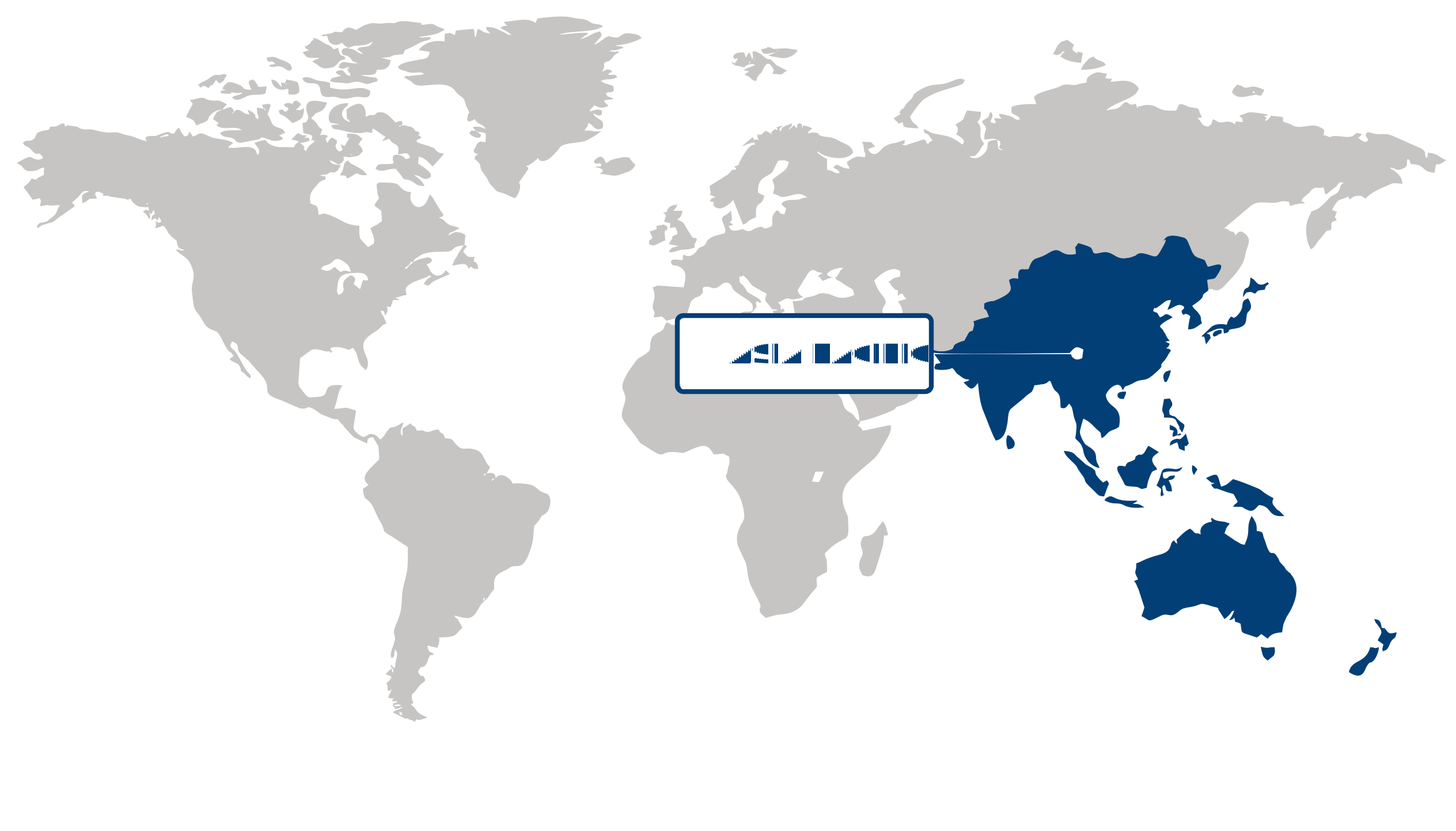
Asia Pacific dominated the power plant control system market with a 35% share in 2025, driven by a robust 5.6% CAGR, marking it as both the largest and fastest-growing region globally. This leadership stems from substantial energy infrastructure investments and widespread plant modernizations across emerging economies such as India and Southeast Asia. Governments prioritize upgrading aging power plants to enhance efficiency and integrate renewable sources, reflecting shifting policy landscapes. For instance, China’s National Energy Administration actively supports smart grid and digital control technologies, enhancing system reliability. Additionally, companies like Mitsubishi Electric and ABB are expanding their footprint in the region, leveraging technological advancements and rising demand for sustainable power operations. These dynamics create a fertile environment for ongoing innovation and capacity expansion, positioning Asia Pacific as a vital growth frontier for power plant control system providers.
Japan anchors the Asia Pacific power plant control system market by blending advanced technology adoption with stringent regulatory frameworks emphasizing energy efficiency and decarbonization. Japan’s Ministry of Economy, Trade and Industry (METI) promotes next-generation control systems, reflecting a keen focus on digital integration and resilience amid evolving energy policies. Companies such as Toshiba and Hitachi lead in deploying integrated automation solutions within thermal and nuclear power plants, catering to domestic and export markets. This technological maturity supports Japan’s strategic role within the regional ecosystem, fostering innovation spillovers and supplying cutting-edge platforms that enhance Asia Pacific’s overall market growth trajectory.
China plays a pivotal role in Asia Pacific’s power plant control system market, driven by its vast energy infrastructure development and reforms targeting cleaner, smarter operations. The government’s 14th Five-Year Plan emphasizes upgrading existing coal-fired plants with advanced control systems to reduce emissions and improve operational performance. State Grid Corporation of China and China Southern Power Grid invest heavily in control automation and digitalization efforts, facilitating increased grid stability and integration of renewable energy sources. This aggressive modernization not only bolsters domestic energy security but also stimulates demand for sophisticated control solutions, reinforcing Asia Pacific’s dominance and creating scalable opportunities for global suppliers in the evolving power landscape.
North America Market Analysis:
North America held a substantial share in the power plant control system market, driven by its mature energy infrastructure and sustained investments in grid modernization and digitalization. The region’s focus on enhancing operational efficiency and integrating renewable energy sources has led utilities to upgrade control systems with advanced automation and real-time analytics capabilities. Regulatory frameworks, notably from the U.S. Federal Energy Regulatory Commission (FERC), encourage reliability and cybersecurity enhancements, fostering demand for sophisticated control solutions. Additionally, North America's energy transition initiatives, such as those promoted by the U.S. Department of Energy, fuel innovations in power plant management. These factors collectively reinforce the region's strategic importance, positioning it as a pivotal hub for technology rollouts that balance reliability, sustainability, and cost-effectiveness in the power plant control system market.
The U.S. plays a central role in North America’s power plant control system market, driven by its leadership in adopting smart grid technologies and stringent regulatory mandates focused on emission reductions and grid resilience. U.S. utilities are increasingly prioritizing digital control platforms that support distributed energy resources and optimize generation dispatch, as evidenced by investments detailed in reports from the Electric Power Research Institute (EPRI). The government's support through standardized cybersecurity frameworks further propels the market by ensuring secure operations. Moreover, initiatives like the Grid Modernization Initiative by the U.S. Department of Energy demonstrate proactive steps toward system upgrades. The country's combination of demand for reliability, regulatory oversight, and innovation highlights its critical influence on North America’s overall growth trajectory in the power plant control system market.
Europe Market Trends:
Europe maintained a notable presence in the power plant control system market, driven by its transition toward cleaner energy sources and stringent environmental regulations. The region’s emphasis on upgrading legacy infrastructure and integrating advanced automation solutions reflects a balanced demand for modernization and sustainability. The European Network of Transmission System Operators for Electricity (ENTSO-E) highlights ongoing investments in smart grid technologies and real-time operational control, underscoring the region’s commitment to enhancing grid reliability and efficiency. Additionally, evolving consumer preferences toward energy transparency and efficiency, coupled with regulatory frameworks from the European Commission, create a stable environment for moderate growth. Supply chain resilience and skilled workforce availability further support technological adoption. Going forward, Europe’s focus on hybrid energy sources and digital transformation presents compelling opportunities for innovative power plant control solutions.
Germany plays a leading role in Europe’s power plant control system market, stimulated by its Energiewende policy, which drives the integration of renewable energy and phase-out of coal-fired power plants. This policy has necessitated sophisticated control systems to manage a more complex, decentralized grid, as evidenced in Siemens Energy’s latest deployments of digital control technologies enabling flexible power generation. Regulatory mandates from the Federal Network Agency ensure that power plants comply with stringent operational and environmental standards, encouraging regulatory-driven upgrades. Germany’s robust industrial base and digital infrastructure further facilitate these advancements, positioning the country as a critical innovation hub. Consequently, Germany’s evolving energy landscape reinforces Europe’s broader market momentum by pushing demand for cutting-edge control systems.
France holds a key position in the European power plant control system market due to its reliance on nuclear power and increasing investments in grid modernization to enhance operational safety and efficiency. The French Nuclear Safety Authority (ASN) advocates for upgraded control systems to meet rigorous safety criteria, prompting utilities like EDF to implement advanced supervisory control and data acquisition (SCADA) systems. Concurrently, France’s strategic focus on diversifying energy sources and integrating renewables generates moderate demand for flexible and interoperable control solutions. With ongoing initiatives recorded by the French Environment and Energy Management Agency (ADEME) to promote digital innovation in power infrastructure, France emerges as a vital market segment within Europe. This reinforces the region’s growth potential by anchoring innovation in high-stakes, safety-critical environments.
| Parameter | North America | Asia Pacific | Europe | Latin America | MEA |
|---|---|---|---|---|---|
| Innovation Hub i Scale Nascent Developing Advanced | |||||
| Cost-Sensitive Region i Scale Low Medium High | |||||
| Regulatory Environment i Scale Restrictive Neutral Supportive | |||||
| Demand Drivers i Scale Weak Moderate Strong | |||||
| Development Stage i Scale Emerging Developing Developed | |||||
| Adoption Rate i Scale Low Medium High | |||||
| New Entrants / Startups i Scale Sparse Moderate Dense | |||||
| Macro Indicators i Scale Weak Stable Strong |
Segment Leadership and Growth Trends
Power Plant Control System Market Share (%), by Solution, 2026
Go beyond the chart, access full insights & data tables
Request Free Sample ReportThe power plant control system market in 2025 is led by the distributed control system (DCS) segment, which holds the largest share due to its broad adoption for integrated and centralized plant operations. DCS offers seamless coordination across diverse plant units, meeting customer demands for enhanced operational efficiency and real-time responsiveness. According to Siemens’ latest release, the integration capabilities of DCS significantly reduce downtime and improve system reliability, aligning with increasing regulatory focus on safety and environmental compliance. This segment presents strategic opportunities for both incumbent vendors expanding digital portfolios and new entrants specializing in scalable automation solutions. With continuous advancements in connectivity and process analytics, DCS is poised to remain central in power plant digital transformation agendas for optimized asset management and performance.
Analysis by Component
Hardware represented the largest share in the power plant control system market in 2025, driven by the extensive deployment of physical control components essential for automation systems. The increasing complexity of modern power plants necessitates robust, high-quality sensors, controllers, and actuators, which are foundational to system reliability. ABB’s recent announcements underscore investments in ruggedized hardware designed to withstand harsh operational environments and support smart grid integration. Demand patterns favor durable hardware capable of supporting evolving software capabilities while meeting stringent industry standards. This segment offers compelling advantages for manufacturers focusing on innovation in embedded systems and modular designs. Given ongoing modernization and capacity expansions, hardware remains a critical pillar sustaining the power plant control system ecosystem.
Analysis by Application
In the power plant control system market, the boiler segment captured the largest share in 2025, owing to the critical role of boiler control in optimizing thermal power plant efficiency. Accurate monitoring and control of combustion processes directly influence fuel consumption and emissions, making this segment a focal point amid tightening environmental regulations. The U.S. Department of Energy highlights advanced boiler control systems as instrumental in achieving substantial efficiency gains and reducing greenhouse gas output. Operators increasingly prioritize precision control to balance power output with sustainability goals, creating demand for sophisticated control solutions. This positioning grants significant opportunity for technology providers specializing in thermal process optimization. As emissions standards tighten globally, the boiler segment will continue to be pivotal in driving energy efficiency improvements within power plants.
| Segment | Sub-Segment | Largest Segment | Fastest Growing |
|---|---|---|---|
| Solution | PLC, SCADA, DCS | ||
| Component | Hardware, Software, Services | ||
| Application | Turbine, Boiler, Balance of Plant, Generator, Reactor | ||
| Plant Type | Natural Gas, Coal, Nuclear, Hydroelectric, Renewables, Oil |
Competitive Landscape and Market Positioning
The competitive landscape is marked by ongoing enhancements in control system capabilities driven by these dominant players. They continually refine their offerings by integrating advanced automation, real-time monitoring, and AI-driven analytics, fostering operational efficiency. Cross-industry collaborations and technology-sharing initiatives strengthen their competitive advantage, enabling innovation while addressing evolving regulatory and environmental standards. By expanding modular control solutions and upgrading legacy systems, these entities effectively respond to shifting customer demands, maintaining market leadership. This dynamic environment accelerates technological convergence, placing emphasis on cybersecurity and digital transformation as key differentiators.
Strategic / Actionable Recommendations for Regional Players
In North America, aligning with technology innovators and engaging in collaborative ventures can enhance system integration and digital upgrade opportunities. Capitalizing on renewable and hybrid power segments may further differentiate offerings while meeting tightening emissions regulations.
Across the Asia Pacific, focusing on flexible, scalable control platforms that address diverse regulatory frameworks and infrastructure maturity will prove advantageous. Building local partnerships and emphasizing cost-effective solutions can boost market penetration amid rapidly expanding power infrastructures.
European entities could benefit from embedding sustainability and energy efficiency more deeply within control system design. Leveraging advances in edge computing and predictive maintenance will help respond proactively to grid modernization efforts and intensified competition from established multinational corporations.
| Company | Market Share | Company Revenue | Revenue CAGR (%) | Product Portfolio | Geographic Presence | Innovation / R&D Focus | Strategic Developments |
|---|---|---|---|---|---|---|---|
| No companies available. | |||||||
Industry Development/News
| Company Name | Date | Key Development |
|---|
Customize Your Report
Explore examples of how this report can be tailored to different research needs, including custom segments, additional topics or chapters, and related reports. Click a section of the wheel or its numbered marker to explore the available options.
Power Plant Control System Market — Custom Segments
| Segment | Sub-Segment |
|---|---|
| No segment data available. | |
Power Plant Control System Market — Custom TOC
| Custom Chapter | Custom Details | ||
|---|---|---|---|
| No custom TOC data available. | |||
Need a different cut of the data?
Request Custom ResearchWhat is the forecasted size of the power plant control system industry?
Which geographical area accounts for the highest portion of the power plant control system market?
In which region is the power plant control system sector expanding at the quickest pace?
Why does DCS sub-segment dominate the solution segment of power plant control system sector?
How much is the hardware segment expected to grow in the power plant control system industry beyond 2025?
What factors give boiler segment a competitive edge in the power plant control system sector?
Which is the largest sub-segment within the plant type segment for power plant control system industry?
Which companies are driving growth in the power plant control system landscape?
Our Clients
"The information presented in the report was genuinely insightful. The data was clear and easy to understand, which made it much easier to interpret the findings."
Amara Raja Group
"The responsiveness and professionalism exhibited by the team were exemplary. They were readily available to address queries, provide clarifications, and offer additional insights."
ONGC
"The reports offered a comprehensive analysis of various segments within the market. The detailed insights into market trends, and regulatory landscapes were excellent."
TotalEnergies
Our Research Team & Methodology
Every Fundamental Business Insights report is built by a dedicated vertical research team, validated through a structured primary-and-secondary methodology, and reviewed for accuracy before it reaches you.
Research Team Overview
Prepared by the Energy & Power Research Team
Delivery
Published
Demand
Available
Support
Trust & Compliance
Research Intelligence
Research Workflow & Quality Assurance
Data Collection
Verified information gathered through primary and secondary research.
Data Triangulation
Cross-validation using multiple independent data sources.
Forecast Modelling
Market estimates developed using historical trends and analytical models.
Analyst Validation
Findings reviewed by domain experts for accuracy and consistency.
Editorial & Quality Review
Final editorial, quality, and compliance checks before publication.
Final Publication
Released after successful completion of the internal review process.
Report Coverage
📊 Market Assessment
- Market Size & Forecast
- Market Segmentation
- Regional Analysis
- Growth Drivers & Challenges
- Market Dynamics
🏢 Competitive Intelligence
- Competitive Landscape
- Company Profiles
- Competitive Benchmarking
- Mergers & Acquisitions
- Market Share Analysis or Key Company Strategies
🔍 Strategic Analysis
- Value Chain Analysis
- Porter's Five Forces
- PESTLE Analysis
- Pricing Trends
- Supply-Demand Analysis
🚀 Future Outlook
- Technology Landscape
- Regulatory Landscape
- Investment & Funding Landscape
- Emerging Opportunities
- Future Market Outlook
Have a question about this report or need a custom scope?
Request Customization