Postpartum Products Market Size & Growth Forecast 2027–2036, By Segments (Product, Sales Channel), Regional Demand Trends (North America, Asia Pacific, Europe), Key Country Insights (U.S., Japan, South Korea, Germany, France, Italy), and Competitive Landscape
Market Size and Growth Outlook
Postpartum Products Market size stood at USD 2.97 billion in 2026 and is predicted to grow at a 6.18% CAGR from 2027 to 2036, attaining USD 5.41 billion by 2036. The industry revenue for 2027 is calculated at USD 3.12 billion.
Get more details on this report
Request Free Sample ReportPostpartum Products Market Intelligence Snapshot
Regional Market Dynamics
- Asia Pacific accounted for a 45.36% market share in 2026, supported by a large childbirth base, expanding retail access, and strong demand for postpartum recovery and maternal care products.
- Asia Pacific is projected to grow at a 7.46% CAGR as awareness of postnatal care increases and wider availability across pharmacies, supermarkets, and digital channels encourages consistent product adoption.
Segment Momentum
- Breastfeeding accessories lead with 83.61% share due to continuous daily use for feeding, milk expression, storage, and comfort needs, making them an essential and recurring part of postpartum care routines.
- E-commerce is the fastest-growing channel as it offers convenience, privacy, and easy access to specialized postpartum essentials, enabling mothers to reorder or discover products without physical store visits during recovery.
Market Expansion Drivers
- Rising women workforce participation driving demand for postpartum care and recovery products.
- Increasing awareness of maternal health and breastfeeding support accelerating product adoption.
- Expanding e-commerce distribution improving accessibility of postpartum and maternal care products.
Leading Market Participants
- Major players in the postpartum products market include Koninklijke Philips N.V. (Netherlands), Medela AG (Switzerland), Pigeon Corporation (Japan), Newell Brands Inc. (United States), Mayborn Group Limited (United Kingdom), Ameda, Inc. (Switzerland), Artsana S.p.A. (Italy), Handi-Craft Company (United States), Edgewell Personal Care Company (United States), Nuby (United States).
Global Market Forecast Snapshot
Market Outlook
- 2026 Market Size: USD 2.97 billion
- 2027 Estimated Market Size: USD 3.12 billion.
- Projected Market Size: USD 5.41 billion by 2036
- Growth Forecast: 6.18% CAGR (2027-2036)
Regional and Segment Outlook
- Leading Regional Market: Asia Pacific
- High-Growth Regional Hub: Asia Pacific
- Core Revenue Segment: Breastfeeding Accessories (Product) | Hospital Pharmacy (Inpatient) (Sales Channel)
- Emerging Opportunity Segment: Perineal Cooling Pads (Product) | E-Commerce (Sales Channel)
Market Growth Drivers and Industry Trends
Rising women workforce participation driving demand for postpartum care and recovery products
Increasing participation of women in the workforce is supporting the postpartum products market as employed mothers seek convenient solutions that help manage physical recovery and daily childcare responsibilities after childbirth. Products designed for postpartum hygiene, recovery, breastfeeding, and comfort can provide practical support for women balancing professional commitments with maternal care. The need for products that are easy to use at home, during commuting, or in workplace settings is also encouraging greater consideration of specialized postpartum solutions. As working mothers place greater emphasis on maintaining comfort and managing recovery efficiently, demand is increasing for products that address different stages of the postnatal period.
Increasing awareness of maternal health and breastfeeding support accelerating product adoption
Greater awareness of maternal well-being is strengthening the postpartum products market as women become more informed about recovery needs, breastfeeding challenges, hygiene, and physical comfort following childbirth. Access to educational content and broader discussions around maternal health are helping reduce hesitation around using specialized products for common postpartum needs. Breastfeeding support products, recovery aids, personal care items, and related solutions are increasingly viewed as practical components of postnatal care rather than optional purchases. Increased attention to maternal health also encourages families and caregivers to prioritize products that can support mothers during recovery and breastfeeding.
Expanding e-commerce distribution improving accessibility of postpartum and maternal care products
The expansion of online retail channels is improving access to specialized maternal care solutions and supporting the postpartum products market by allowing consumers to purchase products privately and conveniently. E-commerce platforms provide broader product selections than many physical retail outlets, including postpartum recovery aids, nursing accessories, personal hygiene products, and comfort-focused solutions. Home delivery is particularly relevant for new mothers who may have limited mobility or prefer avoiding frequent shopping trips during the recovery period. Online product information, customer reviews, and convenient purchasing options also make it easier for consumers to compare different postpartum care products.
| Growth Driver | Impact on CAGR | Regulatory Influence | Geographic Relevance | Adoption Rate | Impact Timeline |
|---|---|---|---|---|---|
| Rising women workforce participation driving demand for postpartum care and recovery products | 2.30% | High | Asia Pacific, North America | High | Near Term |
| Increasing awareness of maternal health and breastfeeding support accelerating product adoption | 2.00% | High | North America, Europe | High | Near Term |
| Expanding e-commerce distribution improving accessibility of postpartum and maternal care products | 1.60% | High | Asia Pacific, Middle East & Africa | High | Near Term |
Unlock insights tailored to your business with our bespoke market research solutions.
Click to get your customized report now.
Regional Demand Dynamics
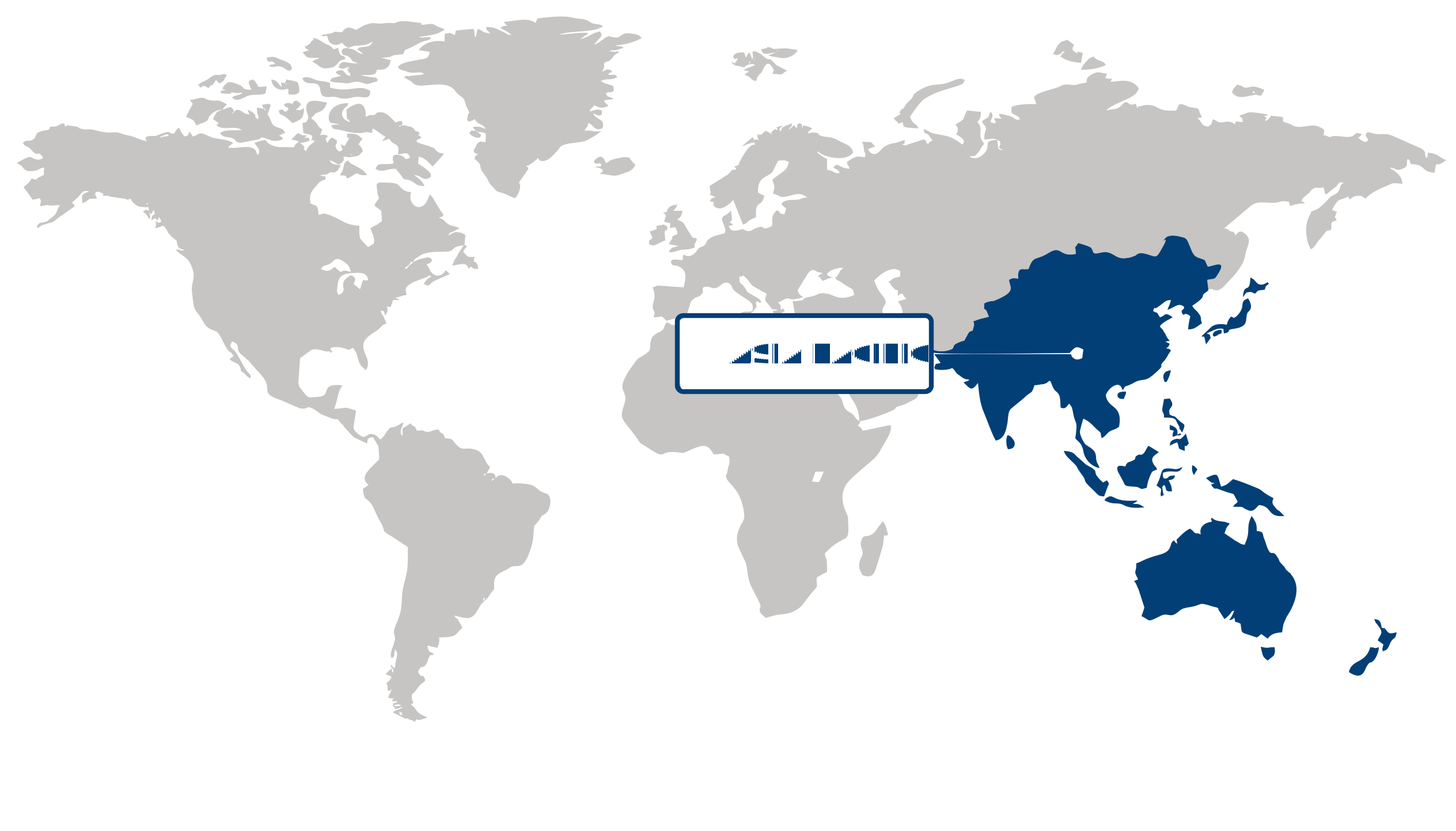
Asia Pacific (Largest & Fastest-Growing Region)
The postpartum products market in Asia Pacific held the largest share of 45.36% in 2026, supported by rising maternal healthcare awareness, expanding access to specialized postpartum care, and growing recognition of recovery needs following childbirth. Increasing urbanization and improvements in healthcare infrastructure are encouraging women to seek products designed for physical recovery, personal hygiene, lactation support, and post-delivery comfort. At the same time, greater exposure to digital health information and changing consumer attitudes toward maternal wellness are strengthening demand for convenient and purpose-specific postpartum solutions. The region’s large and diverse population, combined with expanding healthcare spending and improving availability of maternity-focused products through pharmacies, hospitals, specialty retailers, and e-commerce platforms, provides a strong foundation for continued market expansion. Growth is further supported by increasing attention to maternal well-being beyond delivery, creating broader opportunities for products that address recovery, nutrition, breastfeeding, and everyday postpartum needs.
| Parameter | North America | Asia Pacific | Europe | Latin America | MEA |
|---|---|---|---|---|---|
| Innovation Hub i Scale Nascent Developing Advanced | |||||
| Cost-Sensitive Region i Scale Low Medium High | |||||
| Regulatory Environment i Scale Restrictive Neutral Supportive | |||||
| Demand Drivers i Scale Weak Moderate Strong | |||||
| Development Stage i Scale Emerging Developing Developed | |||||
| Adoption Rate i Scale Low Medium High | |||||
| New Entrants / Startups i Scale Sparse Moderate Dense | |||||
| Macro Indicators i Scale Weak Stable Strong |
Key Country Insights
Germany 🇩🇪
Clinically Guided SolutionsGermany emphasizes clinically supported postpartum products that prioritize comfort, hygiene, and product safety. Healthcare providers and manufacturers increasingly promote evidence-based recovery solutions that address the evolving needs of new mothers.
France 🇫🇷
Natural Care PreferenceFrance supports the postpartum products market through demand for gentle formulations and naturally derived personal care products. Manufacturers strengthen product differentiation with dermatologically tested ingredients and sustainable packaging suited to maternal care.
Italy 🇮🇹
Specialized Maternity SupportItaly continues expanding postpartum product availability through pharmacies, healthcare channels, and specialty baby care retailers. Producers focus on recovery-focused product innovation and practical solutions that support maternal comfort during the postnatal period.
Japan 🇯🇵
Comfort-Centered RecoveryJapan's postpartum products market focuses on high-quality recovery essentials with compact, convenient formats for home use. Companies develop gentle personal care products and nursing accessories that align with consumer expectations for comfort and reliability.
South Korea 🇰🇷
Premium Maternal WellnessSouth Korea integrates postpartum products into broader maternal wellness offerings through innovative personal care and recovery solutions. Brands emphasize premium formulations, convenient packaging, and digital retail engagement to reach new parents effectively.
United States 🇺🇸
Comprehensive Recovery CareThe U.S. postpartum products market is expanding through greater awareness of maternal recovery and wellness. Manufacturers broaden portfolios with recovery kits, nursing essentials, and personal care products designed to improve comfort during the postnatal period.
Segment Leadership and Growth Trends
Postpartum Products Market Share (%), by Product, 2026
Go beyond the chart, access full insights & data tables
Request Free Sample ReportProduct Segment Analysis: Breastfeeding Accessories (Largest Segment) vs Perineal Cooling Pads (Fastest-Growing Segment)
Breastfeeding accessories represented the largest share of the postpartum products market, accounting for 83.61% in 2026. Their strong position reflects the essential role these products play in supporting breastfeeding routines and addressing practical needs during the postpartum period. Accessories designed to improve comfort, convenience, and feeding efficiency can help mothers manage breastfeeding more effectively throughout daily activities. Increasing awareness of postpartum care and greater attention to maternal comfort continue to reinforce demand for breastfeeding-related products.
The perineal cooling pads segment is growing at the fastest pace, supported by increasing awareness of products designed to address discomfort and support recovery following childbirth. Cooling solutions can provide targeted relief during the postpartum period and offer a convenient option for personal care at home. Greater emphasis on maternal recovery, comfort, and accessible postpartum wellness products is encouraging consumers to seek specialized solutions, supporting the expansion of this product category.
Sales Channel Segment Analysis: Hospital Pharmacy (Inpatient) (Largest Segment) vs E-Commerce (Fastest-Growing Segment)
Hospital pharmacy (inpatient) held the largest share of the postpartum products market, representing 40.7% in 2026. Its leading position is closely associated with the immediate availability of postpartum care products within healthcare facilities following childbirth. Hospital pharmacies provide convenient access to products recommended or required during the early recovery period, allowing patients to obtain relevant supplies before discharge or while receiving inpatient care. The integration of product access with maternity services supports continued demand through this channel.
E-Commerce is the fastest-growing sales channel, benefiting from the convenience, privacy, and broader product access offered through online purchasing. Postpartum consumers can compare products, review available options, and arrange delivery without needing to visit physical stores, which can be particularly valuable during the recovery period. Expanding digital commerce and increasing consumer comfort with purchasing personal-care products online are further supporting the shift toward e-commerce distribution.
| Segment | Sub-Segment | Largest Segment | Fastest Growing |
|---|---|---|---|
| Product | Breastfeeding Accessories, Perineal Cooling Pads, Others | Breastfeeding Accessories | Perineal Cooling Pads |
| Sales Channel | Hospital Pharmacy (Inpatient), Retail Store, E-Commerce, Wholesaler/Distributor, Direct Purchase | Hospital Pharmacy (Inpatient) | E-Commerce |
Competitive Landscape and Market Positioning
Prominent players in the postpartum products market:
1. Koninklijke Philips N.V. (Netherlands)
2. Medela AG (Switzerland)
3. Pigeon Corporation (Japan)
4. Newell Brands Inc. (United States)
5. Mayborn Group Limited (United Kingdom)
6. Ameda Inc. (Switzerland)
7. Artsana S.p.A. (Italy)
8. Handi-Craft Company (United States)
9. Edgewell Personal Care Company (United States)
10. Nuby (United States)
Increasing awareness of maternal wellness is driving innovation in postnatal care products. Natural materials and comfort-focused designs are becoming more prominent in product development. The postpartum products market is expanding with solutions tailored to physical recovery and emotional well-being.
| Company | Market Share | Company Revenue | Revenue CAGR (%) | Product Portfolio | Geographic Presence | Innovation / R&D Focus | Strategic Developments |
|---|---|---|---|---|---|---|---|
| Koninklijke Philips N.V. (Netherlands) | |||||||
| Medela AG (Switzerland) | |||||||
| Pigeon Corporation (Japan) | |||||||
| Newell Brands Inc. (United States) | |||||||
| Mayborn Group Limited (United Kingdom) | |||||||
| Ameda Inc. (Switzerland) | |||||||
| Artsana S.p.A. (Italy) | |||||||
| Handi-Craft Company (United States) | |||||||
| Edgewell Personal Care Company (United States) | |||||||
| Nuby (United States). |
Industry Development/News
| Company Name | Date | Key Development |
|---|---|---|
| LOLA | Sep-25 | LOLA executed a strategic diversification of its product portfolio, moving beyond its core organic period care segment into the postpartum and sexual wellness categories. This expansion into adjacent women’s health areas reflects a broader corporate objective to capture a larger share of the maternal and postpartum recovery lifecycle while navigating evolving supply chain and tariff environments. |
| Pigeon Corporation | Mar-25 | Pigeon Corporation continued its geographic expansion strategy by establishing a dedicated R&D facility in the Free Trade Zone in Izmir, Turkey. This investment strengthens the company’s regional manufacturing and innovation capabilities, facilitating deeper penetration into developing economies and supporting its long-term strategy of global operational scaling across Asia, Europe, and the Americas. |
| Lizeth Cuara | Mar-25 | Apparel brand Lizeth Cuara is scaling the commercial reach of traditional Mexican postpartum shapewear by targeting mainstream, international markets. By positioning cultural recovery practices as a distinct wellness movement, the company is successfully transitioning localized health traditions into standardized, commercially viable postpartum recovery products, diversifying the current landscape of maternal wellness offerings. |
| Nua | Feb-25 | Wellness brand Nua secured Rs 35 crore in funding to accelerate its operational scaling and product development efforts. Having achieved profitability, the company is leveraging this capital to deepen its market penetration within the postpartum and broader women’s wellness segment, positioning itself for sustained growth amidst increasing demand for integrated health and recovery solutions. |
| Frida | Oct-24 | Frida significantly scaled its retail distribution footprint by entering 3,400 additional Walmart locations, bringing its total presence to approximately 4,000 retail stores. This large-scale expansion underscores the increasing mass-market demand for specialized postpartum recovery products and strengthens the company’s competitive positioning by securing critical access across major national retail channels. |
| Medela AG | Aug-21 | Medela AG introduced a silicone breast milk collector to the North American market, a targeted innovation aimed at increasing operational efficiency for lactating mothers. This product launch served as a strategic initiative to minimize milk loss, thereby enhancing the company’s technical value proposition and expanding its competitive market share within the regional lactation aid segment. |
Customize Your Report
Explore examples of how this report can be tailored to different research needs, including custom segments, additional topics or chapters, and related reports. Click a section of the wheel or its numbered marker to explore the available options.
Postpartum Products Market — Custom Segments
| Segment | Sub-Segment |
|---|---|
| Postpartum Stage | Immediate Postpartum, Early Postpartum, Extended Postpartum |
| Birth Type | Vaginal Birth, Cesarean Birth |
| Care Setting | Hospital & Clinical Care, Home Care, Postpartum Care Centers |
Postpartum Products Market — Custom TOC
| Custom Chapter | Custom Details |
|---|---|
| Postpartum Consumer Journey Assessment |
|
| Healthcare Provider Adoption Landscape |
|
| Sustainable Postpartum Product Strategy |
|
Need a different cut of the data?
Request Custom ResearchWhat is the market size of postpartum products?
What is the anticipated CAGR of the postpartum products industry?
How is growing maternal health awareness reshaping purchasing behavior in the postpartum products market?
Why is e-commerce becoming a strategic growth channel for postpartum products?
Why do breastfeeding accessories dominate postpartum product demand?
How is e-commerce changing postpartum product purchasing behavior?
Why does Asia Pacific lead the postpartum products market?
What is driving continued growth of the postpartum products market in Asia Pacific?
Which organizations are considered leaders in the postpartum products landscape?
Our Clients
"The team took the time to understand our specific business needs and delivered a report that was well aligned with our objectives. Their expertise and understanding of the industry were clearly reflected in the quality and relevance of the insights provided."
Siemens Healthcare
"Our experience in acquiring the research report has been excellent. The depth of analysis, and actionable insights provided have been extremely valuable in supporting our ongoing R&D efforts."
GC Biopharma
"The report offered a comprehensive view of the market trends. The in-depth segmentation and analysis of emerging opportunities gave us a better understanding of the market."
Medtronic
Our Research Team & Methodology
Every Fundamental Business Insights report is built by a dedicated vertical research team, validated through a structured primary-and-secondary methodology, and reviewed for accuracy before it reaches you.
Research Team Overview
Prepared by the Healthcare & Medical Devices Research Team
Delivery
Published
Demand
Available
Support
Trust & Compliance
Research Domains
10 coverage areasResearch Intelligence
| Source | Reference |
|---|---|
| World Health Organization (WHO) | www.who.int |
| U.S. Food & Drug Administration (FDA) | www.fda.gov |
| European Medicines Agency (EMA) | www.ema.europa.eu |
| Centers for Disease Control and Prevention (CDC) | www.cdc.gov |
| National Institutes of Health (NIH) | www.nih.gov |
| National Center for Biotechnology Information (NCBI) | www.ncbi.nlm.nih.gov |
| PubMed | pubmed.ncbi.nlm.nih.gov |
| ClinicalTrials.gov | clinicaltrials.gov |
| International Organization for Standardization (ISO) | www.iso.org |
| ASTM International | www.astm.org |
| Advanced Medical Technology Association (AdvaMed) | www.advamed.org |
| Medical Device Innovation Consortium (MDIC) | mdic.org |
| Biotechnology Innovation Organization (BIO) | www.bio.org |
| International Federation of Pharmaceutical Manufacturers & Associations (IFPMA) | www.ifpma.org |
| U.S. Pharmacopeia (USP) | www.usp.org |
| European Directorate for the Quality of Medicines & HealthCare (EDQM) | www.edqm.eu |
| World Organisation for Animal Health (WOAH) | www.woah.org |
| American Hospital Association (AHA) | www.aha.org |
| OECD Health | www.oecd.org/health |
| World Bank Data | data.worldbank.org |
Research Workflow & Quality Assurance
Data Collection
Verified information gathered through primary and secondary research.
Data Triangulation
Cross-validation using multiple independent data sources.
Forecast Modelling
Market estimates developed using historical trends and analytical models.
Analyst Validation
Findings reviewed by domain experts for accuracy and consistency.
Editorial & Quality Review
Final editorial, quality, and compliance checks before publication.
Final Publication
Released after successful completion of the internal review process.
Report Coverage
📊 Market Assessment
- Market Size & Forecast
- Market Segmentation
- Regional Analysis
- Growth Drivers & Challenges
- Market Dynamics
🏢 Competitive Intelligence
- Competitive Landscape
- Company Profiles
- Competitive Benchmarking
- Mergers & Acquisitions
- Market Share Analysis or Key Company Strategies
🔍 Strategic Analysis
- Value Chain Analysis
- Porter's Five Forces
- PESTLE Analysis
- Pricing Trends
- Supply-Demand Analysis
🚀 Future Outlook
- Technology Landscape
- Regulatory Landscape
- Investment & Funding Landscape
- Emerging Opportunities
- Future Market Outlook
Have a question about this report or need a custom scope?
Request Customization